

11 Clever Small Laundry Room Ideas
A small laundry room has to do more than fit a washer and dryer: it needs to hold supplies, manage sorting, and leave enough room to move. The most effective small laundry room ideas make use of vertical space, give everyday items a clear home, and help each surface do more than one job.
Whether your laundry area is a closet, a narrow hallway nook, or a compact room, a few thoughtful changes can make it easier to wash, fold, and put things away. Start by noticing what gets in your way most: crowded floors, nowhere to fold, or supplies that are hard to find.
These ideas range from simple add-ons, such as magnetic caddies and slide-in baskets, to bigger changes like stacking machines or switching to a pocket door. Check your appliance dimensions and the layout of your room before making changes, and choose the solutions that fit how you actually do laundry.
1. Stack Washer and Dryer in a Compact Laundry Nook
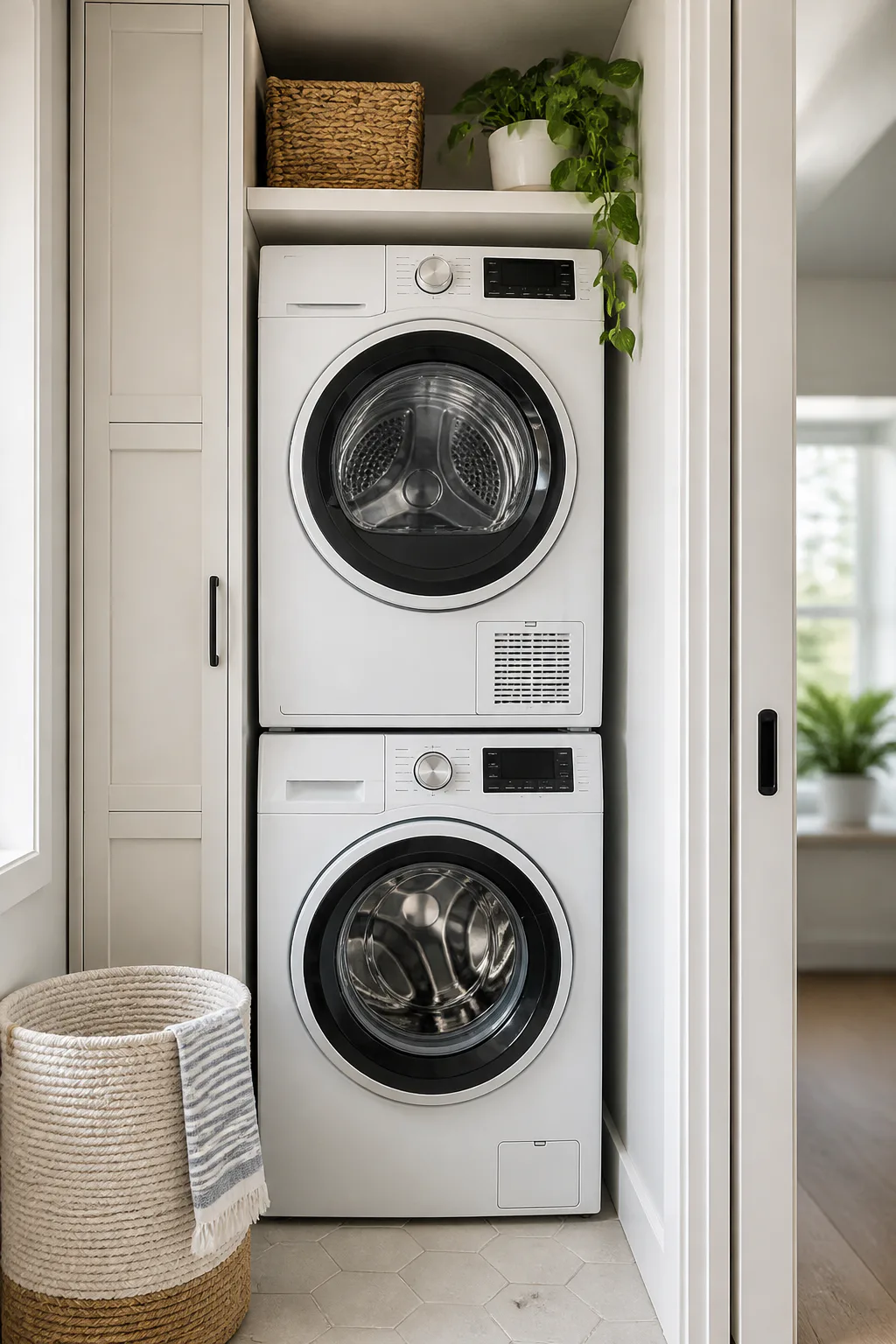
When a small laundry room has side-by-side machines, the appliances can take up nearly all the usable floor space. Stacking compatible front-loading washer and dryer units uses the same footprint for both machines, leaving more room for a narrow storage cabinet, a hamper, or simply easier access.
This arrangement can work especially well in a closet or a tight nook where width is limited but there is enough vertical clearance. It changes the feel of the room, too: the open area beside the machines can become a useful landing spot rather than a squeeze-through gap.
Plan the layout before stacking
Confirm that the appliances are designed to be stacked and use the appropriate stacking hardware. Measure the full height, including required clearances, and make sure you can still reach the controls and safely load and unload both machines.
- Check the appliance manuals for stacking compatibility and installation requirements.
- Measure doorways, ceiling height, and the route the units must take into the space.
- Use the newly freed floor area for a slim hamper or a tall, shallow storage unit.
Stacking is a larger change than adding a shelf, but it can make a cramped laundry nook feel much more workable.
2. Add a Countertop Over Front-Loading Machines

A counter over front-loading machines turns an often-unused surface into a handy place to fold, sort, or set down a laundry basket. A simple wood or laminate top can also give separate appliances a more built-in look, helping the room feel considered instead of crowded.
This idea suits laundry rooms where the washer and dryer sit side by side and there is little space for a freestanding table. Keep the counter shallow enough to preserve a comfortable walkway, and leave access to the doors, detergent drawer, and any controls that need regular attention.
Choose a practical, stable surface
Measure across both machines and check their installation guidance before fitting a top. The counter needs secure support and should not interfere with appliance movement, ventilation, or servicing; a fixed design may need a frame or brackets rather than resting directly on the machines.
- Pick a wipeable surface that can handle occasional splashes and detergent residue.
- Leave enough room to open appliance doors fully and reach the controls.
- Use a small tray to keep stain treatments or loose items from spreading across the counter.
- Keep the folding area mostly clear so it is ready when a load finishes.
With a little planning, the top becomes a useful work zone without adding another piece of furniture to the floor.
3. Install Floor-to-Ceiling Open Laundry Shelves
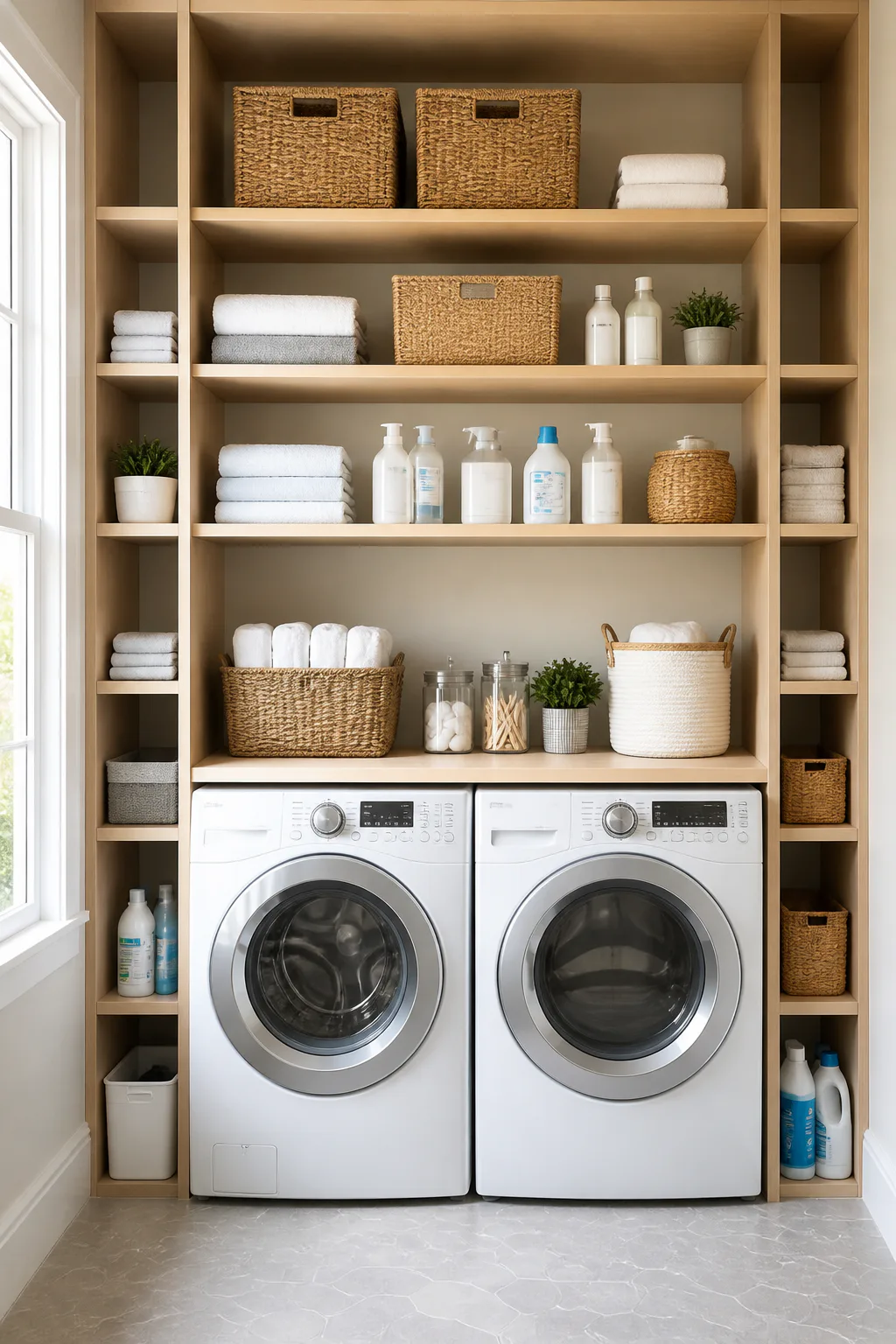
Open shelves make use of the wall space above and around laundry machines, where bottles and baskets can be stored without taking up precious floor area. Extending shelves upward can create room for supplies, folded linens, and spare hangers while keeping frequently used items visible.
This approach fits a closet or narrow laundry room particularly well, but it works best when the shelves are arranged around the machines rather than added wherever there is a gap. Keep the items you reach for often at a comfortable height, and reserve higher shelves for lighter, less frequently used supplies.
Make vertical storage easy to manage
Choose shelving that suits the wall and the weight it needs to hold, and secure it properly. If children or pets use the home, store detergents and other potentially harmful products in a closed or otherwise inaccessible spot rather than on an easy-to-reach open shelf.
- Measure around pipes, outlets, vents, and appliance doors before planning shelf widths.
- Group supplies in bins so small items do not look scattered.
- Place everyday detergent and stain products at an accessible, safe height.
- Use the highest shelf for spare towels, seasonal items, or backstock.
A simple shelf plan can turn blank wall space into useful storage while keeping the work area below clear.
4. Hide Sorting Hampers Inside Pull-Out Cabinets
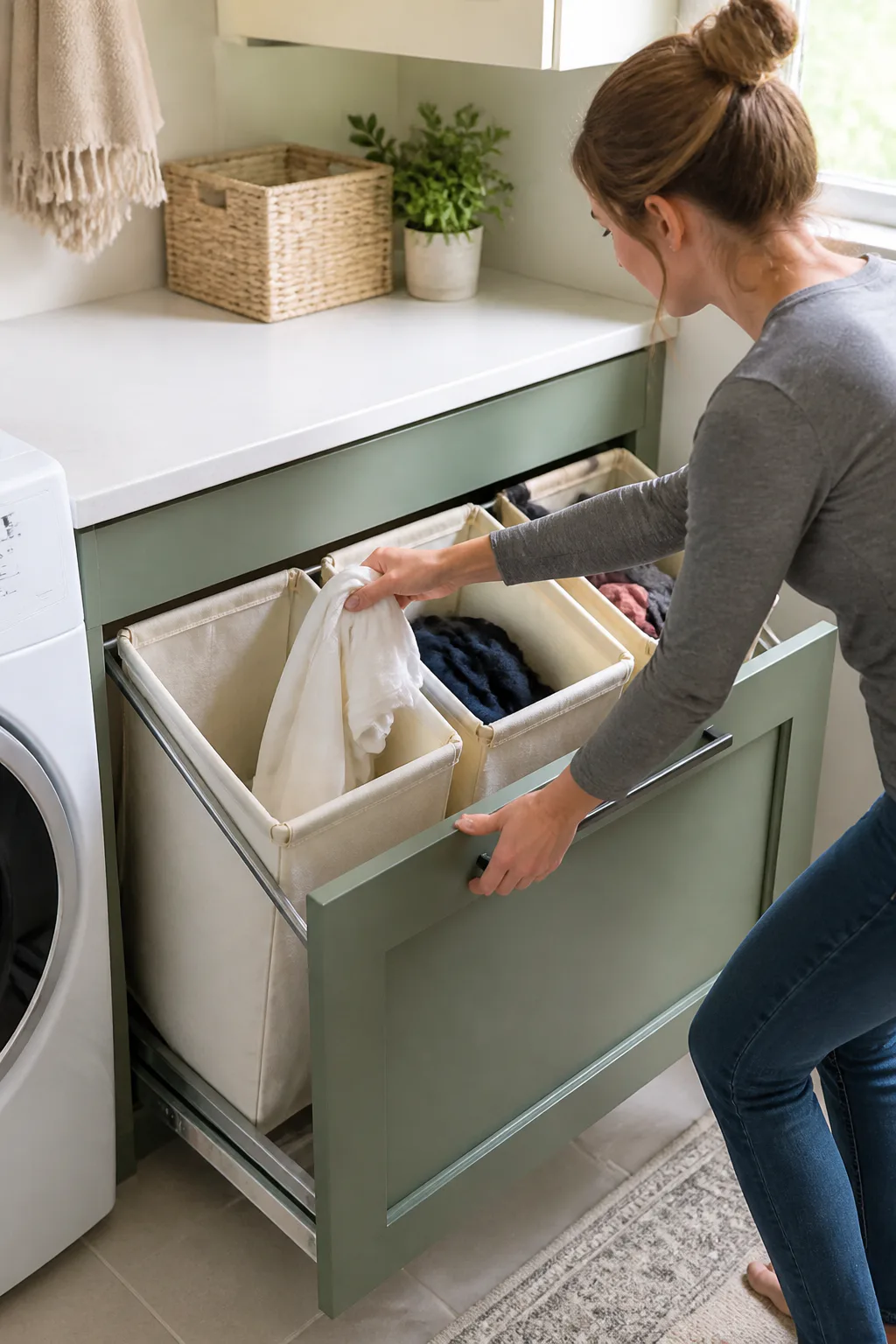
Laundry baskets can quickly crowd a small room, especially when whites, darks, and colors are sorted separately. A pull-out or tilt-out hamper cabinet keeps the sorting system tucked behind a neat front, so the floor stays clearer and the laundry area feels less cluttered.
This idea works well beside the machines or beneath a counter, provided there is enough clearance for the compartments to open. If more than one person does laundry, labeled sections can make it easy for everyone to sort clothes as they take them off rather than leaving piles on the floor.
Design for easy loading and emptying
Consider how much laundry you usually collect and whether the hampers can be lifted out or emptied without awkward reaching. A cabinet that looks tidy but is difficult to use may lead to clothes piling up elsewhere, so prioritize access as much as appearance.
- Choose separate compartments for the categories you actually sort.
- Check the cabinet’s full open depth against nearby doors and walkways.
- Use removable, washable liners if you want to carry loads to another room.
- Label sections clearly for a shared household laundry routine.
Concealed hampers make sorting part of the room’s storage plan instead of another obstacle to work around.
5. Create a Magnetic Supply Station Beside the Machines
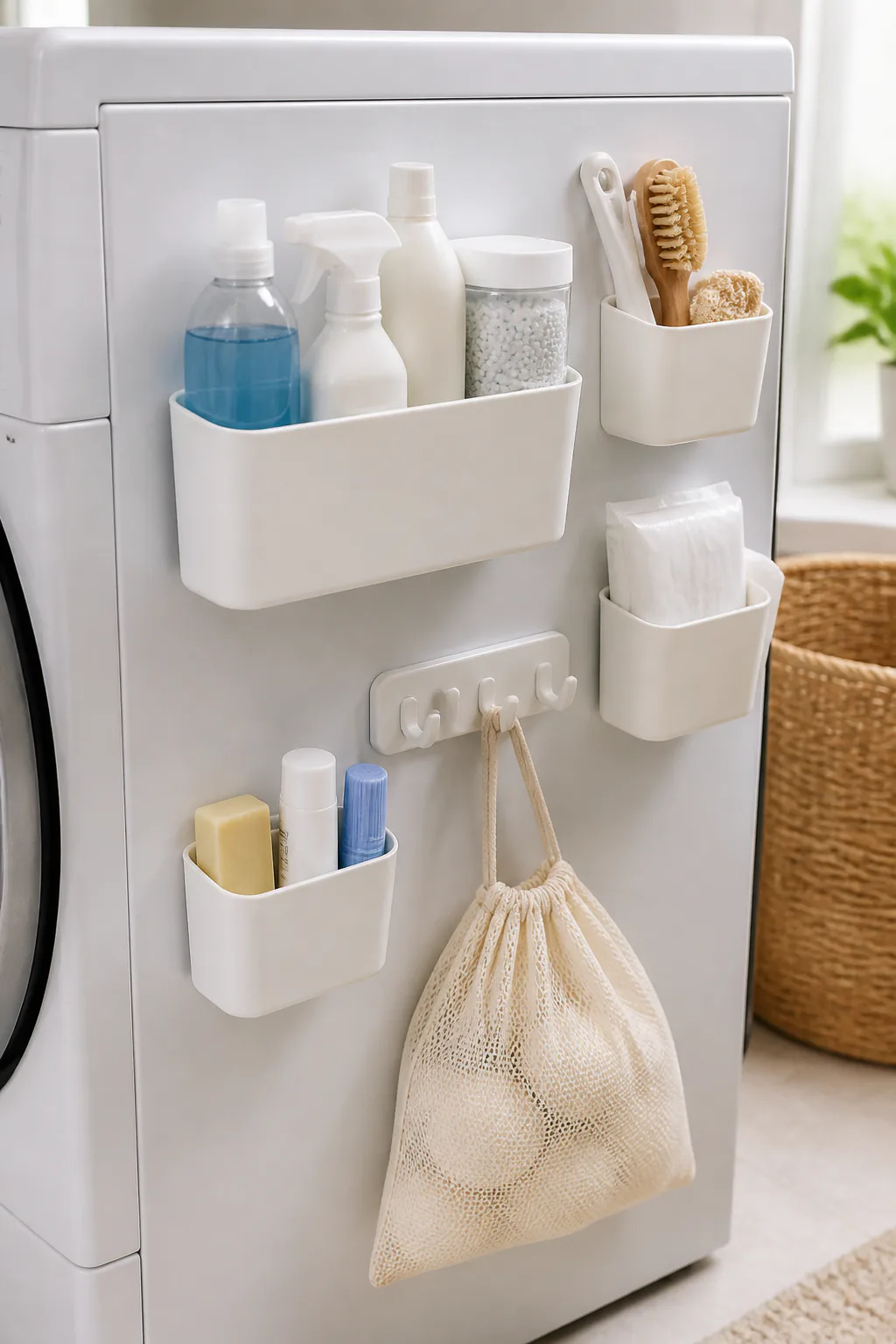
The sides of a washer or dryer can provide a convenient home for small laundry essentials, especially when shelves are already full. Magnetic caddies or holders can keep stain sticks, dryer sheets, and other lightweight items close at hand without adding a cabinet or using counter space.
This is a useful option for renters or anyone looking for a low-commitment way to organize a narrow laundry area. It can also make a small space easier to reset: instead of leaving little products on top of the machines, give them a consistent place beside the appliance.
Keep the setup secure and uncluttered
First check whether the appliance side is magnetic; not every surface will hold a magnet. Choose holders that sit securely and do not block vents, controls, or access panels, and avoid putting heavy or breakable containers where they could fall.
- Use separate caddies for stain care, dryer sheets, and small tools.
- Keep frequently used items at a comfortable reach height.
- Store liquids upright in a holder with enough support to prevent tipping.
- Move anything that interferes with appliance access or safe operation.
A compact supply station is most helpful when it holds only the essentials, not every product in the laundry room.
6. Mount a Fold-Flat Drying Rack on the Wall
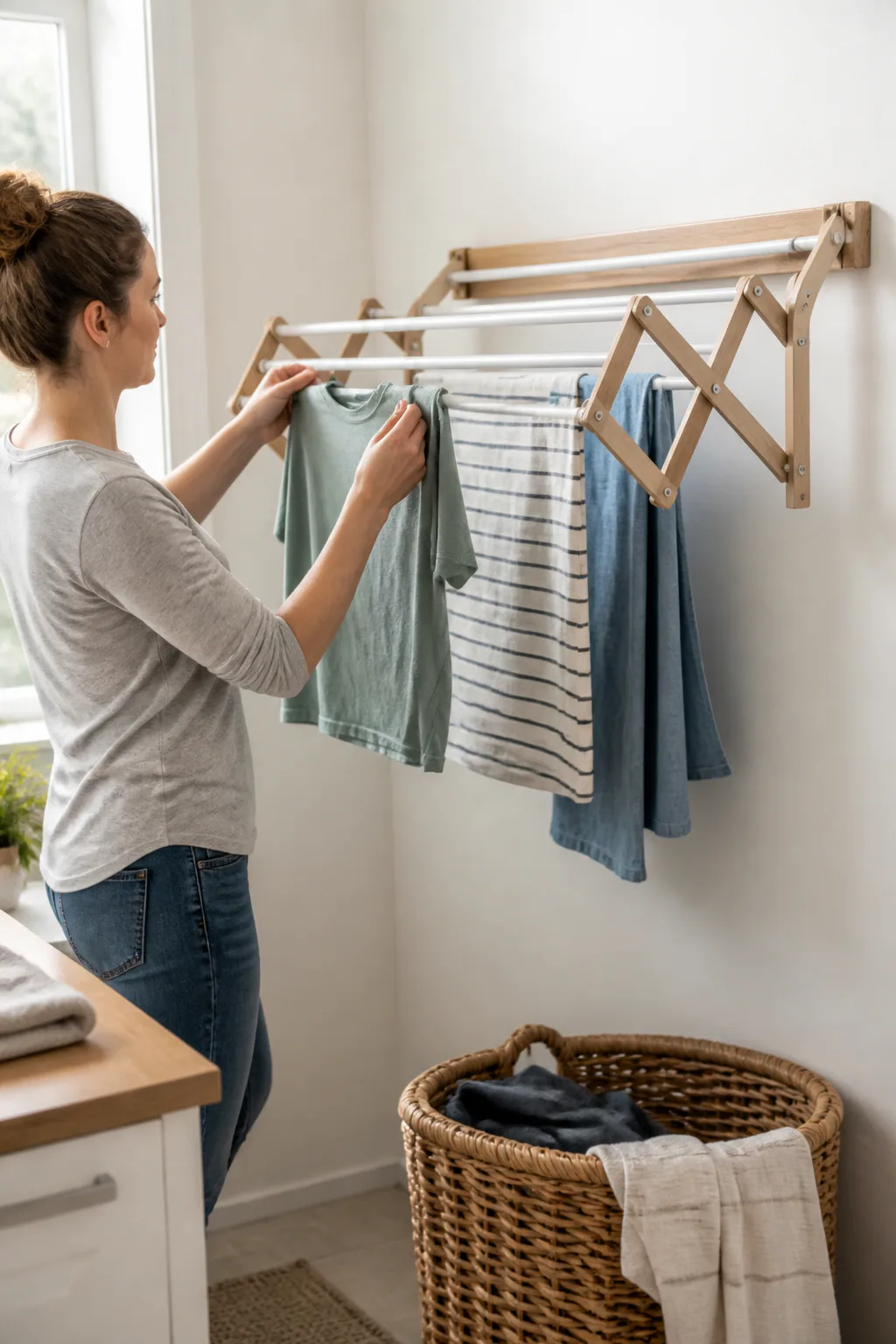
Air-drying clothes usually calls for a rack that takes up room even when it is empty. A wall-mounted accordion or fold-down rack solves that problem by opening when needed and folding flat against the wall when the clothes are dry.
It is a practical fit for a laundry closet, a narrow room, or any space where a freestanding rack would block the walkway. Position it where damp items can hang without touching the machines or preventing access to shelves, doors, and controls.
Choose a location that supports the routine
Check the rack’s dimensions when open as well as when folded, and fasten it to a suitable wall surface using the right hardware. Leave enough space between garments for air to circulate, and consider whether the chosen location is convenient for transferring items from the washer.
- Measure the full open projection to make sure the rack will not block a path.
- Mount it at a height that is comfortable for hanging and removing clothes.
- Use it for items that need gentle drying or cannot go in the dryer.
- Fold it away after use to restore clear floor and wall space.
By giving air-drying a designated spot, you can keep wet garments off doorways and machine tops.
7. Replace the Swinging Door with a Pocket Door

A traditional door needs a clear arc to swing open, which can be awkward in a narrow hallway or laundry closet. A pocket door slides into the wall, while a sliding door travels along a track, freeing the area that would otherwise need to stay clear.
This change can make it easier to reach machines, hampers, or nearby cabinets without moving around a door panel. It is particularly useful when the laundry area opens directly onto a tight passage, though the right option depends on the wall and the space available beside the opening.
Check the opening and wall conditions
A pocket door requires room inside the wall for the panel and its hardware, so plumbing, wiring, or structural details may affect whether it is possible. A surface-mounted sliding door can be an alternative, but it needs clear wall space for the door to rest when open.
- Measure the doorway and the adjacent wall before choosing a door style.
- Check for wall obstructions before planning a pocket-door installation.
- Make sure the closed door still provides the privacy or sound separation you want.
- Consider a professional installation if the change involves modifying the wall.
Removing the door swing can improve circulation even when the laundry room itself stays the same size.
8. Add Slide-In Baskets Beneath Laundry Shelves
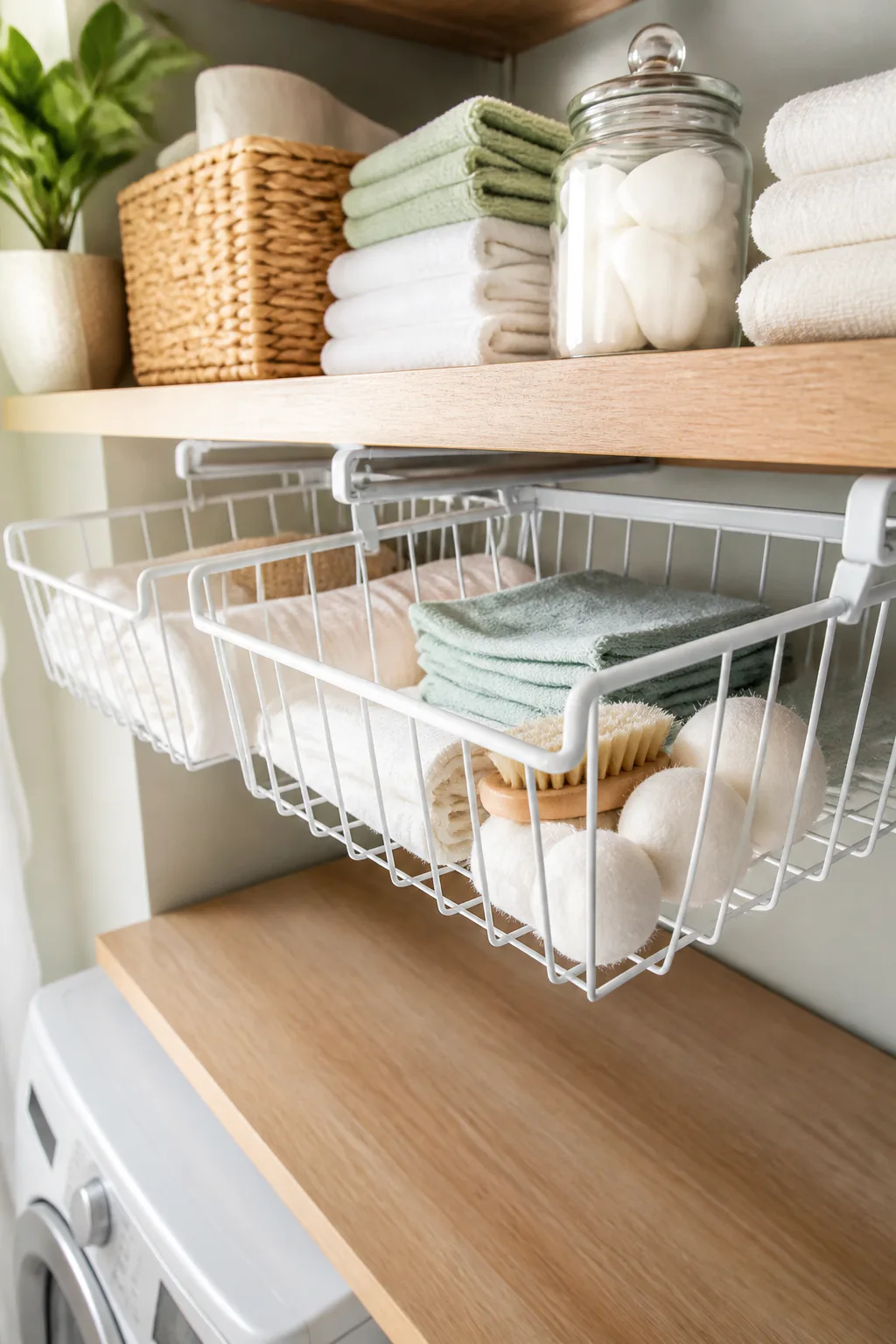
When upper shelves hold supplies but leave unused space beneath them, slide-in wire baskets can add accessible storage without claiming more floor area. They are useful for folded towels, cleaning cloths, spare hangers, or small laundry items that tend to disappear at the back of a shelf.
This is a flexible idea for a laundry room with existing shelving, especially if installing a new cabinet is not practical. Baskets also make it easier to group items by purpose, so one can hold linens while another keeps stain treatments or miscellaneous supplies together.
Match baskets to the shelf
Measure the shelf depth and the clear space beneath it before choosing a basket. Some designs hook onto a shelf while others need a specific rail or support, so check how the basket attaches and how much weight the shelf can safely hold.
- Use a basket size that slides in and out without catching on nearby items.
- Reserve each basket for a clear category to make supplies easy to find.
- Keep heavier products on a stable shelf rather than in a lightly supported basket.
- Leave enough clearance to remove the basket when you need to clean or restock.
These small add-ons can make existing shelving work harder without a full room makeover.
9. Brighten the Laundry Room with Pale Finishes and LEDs
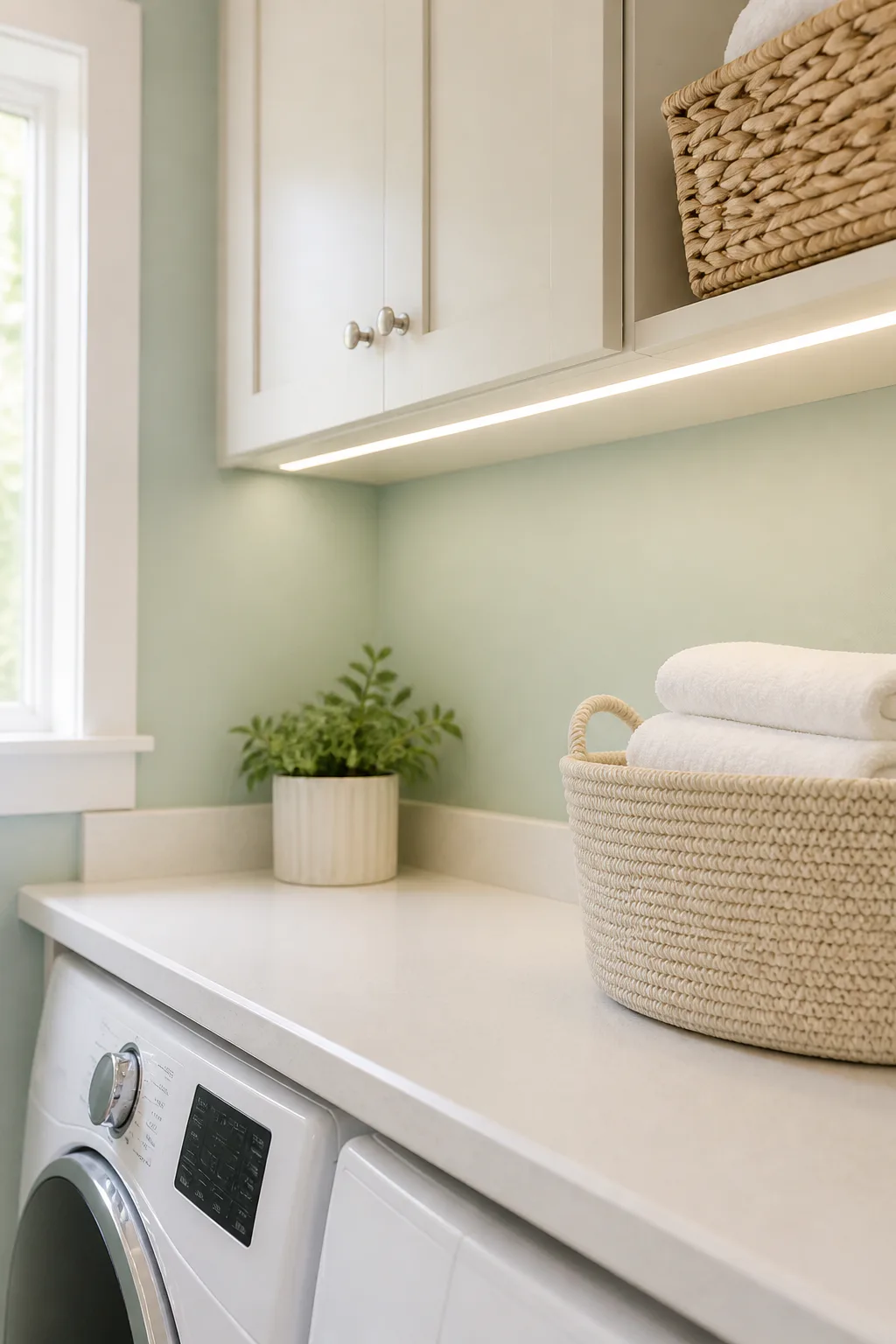
Light-colored walls and good task lighting can make a small laundry room feel more open and easier to use. Soft white, pale sage, and airy blue are examples of colors that reflect light without making the space feel stark, while under-cabinet LEDs can brighten counters and shelves.
This approach suits rooms that feel shadowy or enclosed, including laundry closets with little natural light. Lighting is practical as well as decorative: it helps you see stains, read product labels, and find smaller items tucked into a basket or cabinet.
Layer light and keep surfaces calm
Choose a wall finish that is easy to wipe clean, and plan lighting around the work areas rather than relying on one dim ceiling fixture. Install lights according to their instructions, and make sure cords and fixtures stay clear of water, heat, and appliance movement.
- Try a pale wall color to reflect available light around the room.
- Add LED strips beneath upper cabinets or shelves to illuminate the counter.
- Use a simple, coordinated palette for baskets and containers to reduce visual clutter.
- Keep the brightest light focused on folding and sorting surfaces.
Bright finishes cannot add square footage, but they can make every part of the room feel more welcoming.
10. Install a Hanging Rod Beneath Upper Cabinets

A short hanging rod beneath upper cabinets creates a handy spot for shirts and other items straight from the washer. It can help prevent wrinkles and keeps air-drying garments off the machines, where they might otherwise be piled or draped over a door.
This idea works best when there is enough clearance between the rod and the counter or appliances below. In a compact laundry room, a rod placed above a folding surface can combine two useful tasks in one area: hang damp clothes overhead and sort or fold items beneath them.
Make sure the rod fits the space
Measure the width and height available, including the length of hangers and garments. Secure the rod to a suitable support, such as cabinet sides or properly placed brackets, and avoid loading it beyond its intended capacity.
- Choose a rod length that leaves room to reach cabinets and machine controls.
- Use hangers that fit comfortably without bunching clothes together.
- Position the rod where dripping garments will not damage nearby surfaces.
- Keep the hanging area clear of lights, shelves, and door movement.
A simple rod makes air-drying part of the laundry workflow without demanding a separate rack.
11. Build a Wall-Mounted Laundry Tool Station
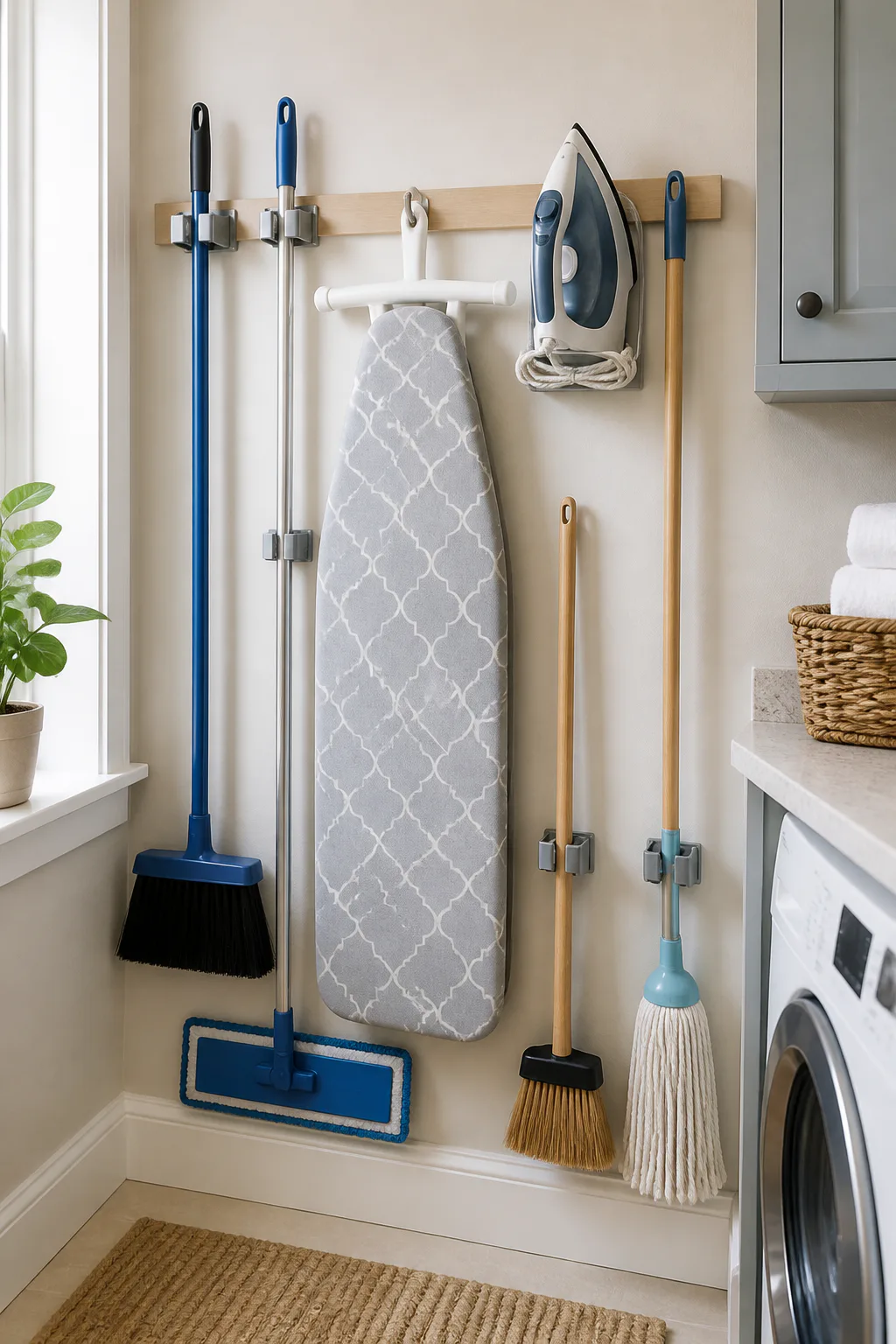
Irons, ironing boards, brooms, and mops are useful, but they can be difficult to store in a narrow laundry room. A wall-mounted tool station keeps these bulky items off the floor and gives them a consistent place beside the machines or on the side of a cabinet.
Hooks can work well on a clear wall or a sturdy cabinet side, as long as the tools do not block doors, shelves, or the main walkway. Grouping them together also makes it easier to find what you need, rather than leaning a mop behind a hamper or leaving an ironing board against the wall.
Arrange hooks around the tools
Choose hooks suited to the weight and shape of each item, and fasten them to a surface that can support the load. Space the hooks so handles and boards can be lifted off without knocking into one another, and keep cleaning tools away from stored laundry.
- Use a dedicated hook or holder for the ironing board and iron.
- Hang brooms and mops with their heads off the floor.
- Place cleaning tools away from detergent storage and folded linens.
- Check that hanging items do not interfere with the appliance doors.
A small, organized tool station clears floor space and helps the room stay tidy between laundry days.
Final Thoughts
The best small laundry room ideas are the ones that solve the problems you notice every time you do a load. Stacking machines can free floor area, a counter can create a folding zone, and shelves, baskets, or hooks can give supplies and tools a place to live.
You do not need to tackle every idea at once. Start with one change that fits your layout and routine, then see how it affects the way you use the room. A few well-chosen improvements can make even a compact laundry space feel more organized and comfortable.



