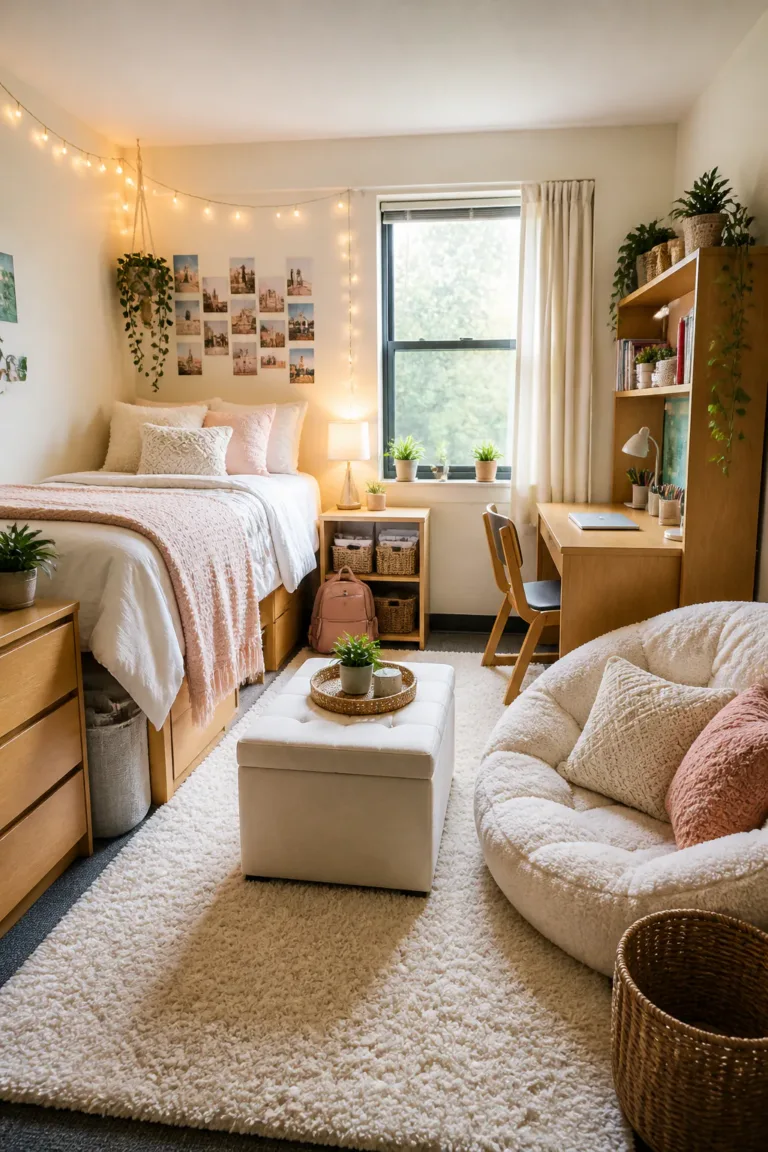
16 Clever Small Space Living Hacks to Maximize Every Inch
Small homes can feel crowded when everyday belongings compete for the same counters, closets, and walkways. The best small space living hacks make use of overlooked areas, help furniture do more than one job, or make a room feel more open without adding square footage.
These ideas work in apartments, studios, and compact houses, whether you own your home or need renter-friendly options. Start with the room or storage problem that bothers you most, then choose a few changes that fit your layout and daily routine.
Some projects require wall attachments or cabinet modifications, so check your lease and locate studs or utilities before drilling. For a quick refresh, begin with movable solutions like baskets, nesting tables, and under-bed bins; you can add built-ins or wall storage when you’re ready.
1. Take Storage All the Way to the Ceiling
The upper part of a wall often goes unused, even when closets and lower shelves are full. Tall bookcases, high cabinets, or floating shelves can turn that empty space into storage while drawing the eye upward, which helps a compact room feel taller.
Use easy-to-reach shelves for items you use every day and reserve the highest spots for seasonal or occasional belongings. In a living room, a tall bookcase can hold books and display pieces; in a kitchen, high shelves can keep serving dishes within sight but out of the daily work zone.
How to make vertical storage practical
Keep the arrangement balanced and make sure shelves are securely anchored, especially in homes with children or pets. A small step stool can make upper storage more useful, but avoid storing anything heavy or fragile where it’s difficult to reach safely.
- Measure wall height and check for vents, trim, and light switches first.
- Put frequently used items between waist and eye level.
- Use matching bins up high to keep small belongings contained.
- Leave some open space so the wall doesn’t feel crowded.
Going upward can free lower shelves for the things you reach for most often.
2. Turn Doors into Hanging Storage
A door can provide useful storage without taking up floor space. Over-the-door organizers are especially helpful in pantries, bathrooms, and closets, where small items tend to gather in drawers or on narrow shelves.
Choose the organizer based on what you plan to store. Deep pockets suit bottles or cleaning supplies, while smaller compartments can corral toiletries, accessories, or shoes. Before buying, check that the door can still close comfortably and that the hooks won’t interfere with nearby trim.
Set up a door organizer that stays useful
Group similar items together so the organizer functions like a mini cabinet rather than a catch-all. Keep heavier products low and check the door’s weight limit, since an overloaded organizer can swing, scrape, or strain its mounting hardware.
- Use pantry doors for packets, wraps, and lightweight supplies.
- Store bathroom extras where they’re easy to reach but away from splashes.
- Put frequently used shoes in the lower pockets.
- Leave enough room for knobs, handles, and door movement.
This simple addition is most effective when every pocket has a clear purpose.
3. Mount a Magnetic Strip for Small Metal Items

A magnetic strip can move small metal tools off crowded counters and into an easy-to-see spot. In the kitchen, it’s a familiar way to store knives; in a bathroom, it can hold compatible grooming tools such as tweezers or nail clippers.
Mounting items on the wall makes them quick to grab and easier to return than tools tucked into a drawer. It can also free up valuable counter or drawer space in a compact room, but placement matters: the strip should be convenient without being within easy reach of young children.
Choose a safe, useful location
Follow the strip’s installation instructions and use hardware suited to the wall surface. Check that each item is securely attached before letting go, and don’t assume every metal object will be magnetic; test items first and keep sharp tools positioned safely.
- Place kitchen knives away from food-prep edges and children’s reach.
- Use the bathroom strip for small tools that are confirmed magnetic.
- Leave enough space between items for easy removal.
- Wipe the strip and tools regularly to prevent buildup.
When the tools are visible and neatly arranged, a small strip can replace a surprisingly cluttered drawer.
4. Hang Bikes and Gear on Blank Walls
Bicycles, yoga mats, and musical instruments can occupy a large amount of floor space when they’re leaned against a wall. A vertical hook or purpose-made wall mount gives these belongings a defined home and clears room for walking, seating, or storage.
Look for a blank wall in an entry, garage, hallway, or multipurpose room. The right spot depends on how often you use the gear: everyday items should be easy to reach, while less-used equipment can go higher, as long as it remains safe to lift down.
Mount gear without creating a hazard
Use hardware designed for the item and wall type, and anchor it securely rather than relying on a small nail or adhesive hook. Check the manufacturer’s guidance for weight and positioning, and make sure hanging equipment won’t block a doorway or become an obstacle in a narrow passage.
- Measure the item’s height and clearance before installing a hook.
- Use a protective cover or padded mount for delicate finishes.
- Keep helmets, locks, or accessories in a nearby basket.
- Arrange gear so it can be removed without moving other items.
Using vertical wall space can make active hobbies easier to store and easier to enjoy.
5. Fold Away Your Desk When Work Is Done
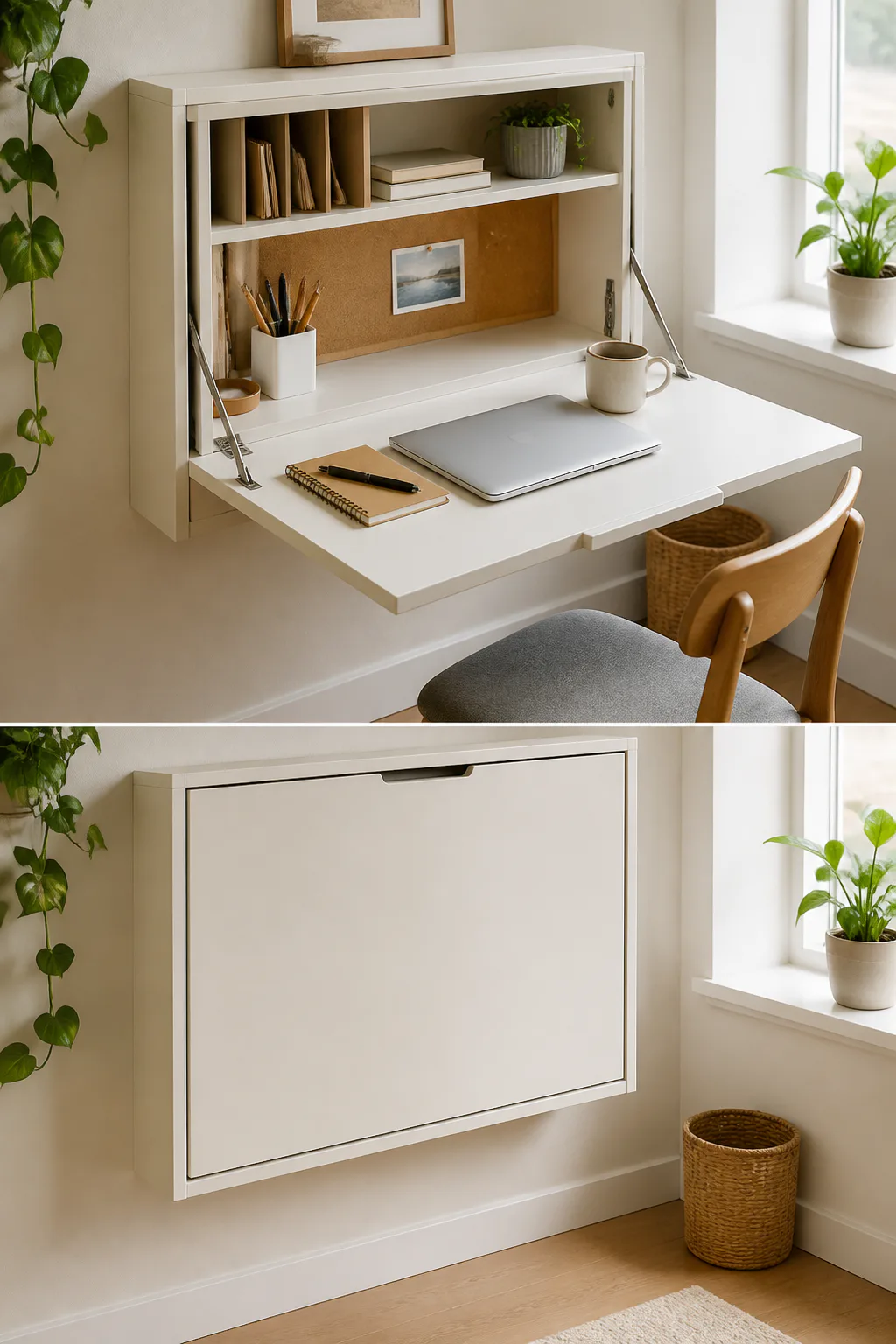
A full-size desk can dominate a small room, even when it’s only used for part of the day. A fold-down wall desk or a secretary desk provides a work surface when you need one and lets the room return to its other purpose afterward.
This approach works well in a studio, bedroom, or living area where a permanent office setup would crowd the layout. A secretary desk has the added benefit of concealing papers and supplies when closed, while a wall-mounted desk can keep the floor clear beneath it.
Make a compact work zone comfortable
Before choosing a desk, measure the open and closed footprint and consider where a chair will go. Check that the wall can support the installation and plan for a lamp, charging needs, and a place to put the chair when work is finished.
- Store daily work supplies in a small nearby drawer or bin.
- Choose a location with comfortable light and an outlet if needed.
- Keep the desktop simple so it’s quick to fold away.
- Use a chair that can tuck under or move easily.
A desk that closes up helps work fit into the room without taking it over.
6. Mix Book Stacks with Upright Rows

Bookshelves often have unused gaps above short books or beside a rigid row of spines. Mixing upright books with horizontal stacks helps use shelf height more efficiently and creates small platforms for objects like a reading light or framed photo.
This arrangement is useful in living rooms, bedrooms, and home offices, especially when a shelf needs to hold more than books. Horizontal stacks can also keep oversized books from leaning awkwardly, while upright rows make frequently referenced titles easy to pull out.
Arrange books for easy access
Start by grouping books by height or subject, then test different orientations to see what fits. Keep heavier books on lower shelves and avoid packing the shelf so tightly that removing one volume pulls the whole row out of place.
- Stack larger books flat to make use of low headroom.
- Use upright rows for books you reach for often.
- Leave a little space for convenient removal.
- Place small decorative items on stable stacks, not wobbly piles.
A flexible shelf layout can hold more while still looking intentional and easy to browse.
7. Use a Pull-Out Bed for Overnight Guests
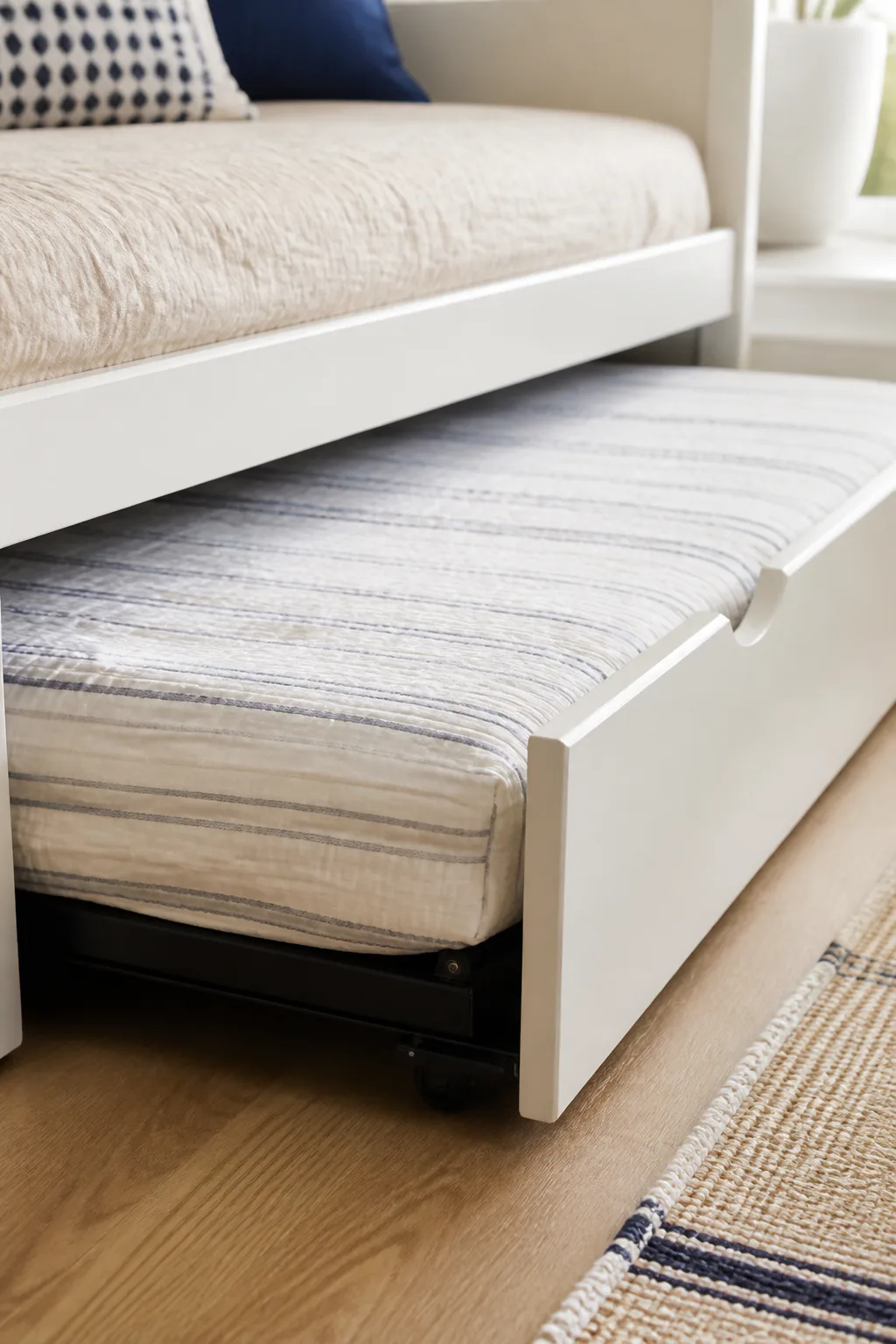
A guest bed can be difficult to justify in a room that needs to serve another purpose every day. A trundle, Murphy bed, or rollaway offers a place for visitors to sleep without dedicating the entire room to a permanent bed.
A trundle can work beneath a daybed in a living room or office, while a Murphy bed folds away against the wall. A rollaway is easier to move and store when not in use, provided there’s a closet or other suitable spot to keep it.
Plan for both sleeping and everyday use
Think through how the bed will open, where bedding will be stored, and whether furniture needs to move for guests. Check the clearance and follow installation guidance for any wall-mounted bed, since safe operation depends on proper fitting and use.
- Measure the room with the bed fully extended.
- Keep a compact bedding set in a nearby closet or lidded bin.
- Choose a setup that one person can open and close comfortably.
- Leave a clear path to the door when the bed is in use.
A flexible sleeping option lets one room welcome guests and still work for everyday life.
8. Tuck Nesting Tables Away Between Uses
Nesting tables provide extra surfaces when you need them without permanently filling a small living room. Smaller tables slide beneath a larger one, so the set can spread out for snacks, drinks, or projects and tuck together when floor space matters more.
They’re useful beside a sofa, in a studio, or anywhere a traditional coffee table feels too large. Instead of choosing one oversized table, you can bring out only the surfaces needed for the moment and keep the rest compact.
Choose a set that fits your layout
Check the dimensions of each table and make sure the smaller pieces can slide underneath without scraping. Lightweight tables are easier to rearrange, but they should still feel stable enough for their intended use. Keep pathways clear when the set is expanded.
- Use the largest table as the main coffee table.
- Pull out smaller tables for guests or hobbies.
- Choose finishes that work with nearby furniture.
- Return the tables to their nested position after use.
Nesting furniture makes a room adaptable without adding a permanent obstacle.
9. Slide Rolling Bins Under the Bed

The space beneath a bed can hold useful belongings instead of collecting dust. Low-profile rolling bins make it easier to store off-season clothing, spare bedding, or other items you don’t need every day.
Choose bins that fit the available clearance and can be pulled out without catching on the bed frame. Clear containers make contents easy to identify, while opaque bins can keep the view calmer if the storage area is visible from across the room.
Keep under-bed storage easy to manage
Group similar belongings together and label containers so you don’t have to pull out every bin to find one item. Store clean, dry textiles, and avoid putting anything under the bed that needs frequent access if reaching the space is awkward.
- Measure the height and depth beneath the bed before shopping.
- Use a lidded bin to protect clothing and linens from dust.
- Reserve one bin for each clear category.
- Keep the floor around the bed clear for smooth access.
Using this hidden area can reduce pressure on closets without adding another cabinet.
10. Add Slim Racks Inside Cabinet Doors

The inside of a cabinet door is often empty, even when shelves are crowded. Slim baskets or small boxes can hold lightweight items such as sponges, packets, toiletries, or other supplies that otherwise take up valuable shelf space.
This hack works in kitchens and bathrooms, but the storage needs to fit the cabinet. Check the door’s movement and the depth of the shelves so the added rack won’t bump into stored items or prevent the door from closing.
Install with clearance in mind
Pick a rack suited to the cabinet’s surface and the weight of what it will hold. Adhesive options may be convenient for some spaces, while screw-mounted racks may require permission or more permanent changes. Follow the product directions and avoid overloading the door.
- Measure the door and interior clearance before choosing a rack.
- Store light, frequently used items in easy-to-reach compartments.
- Keep cleaning products secured and out of children’s reach.
- Test the door after installation before filling the organizer.
A few inches of overlooked space can make a busy cabinet feel much more organized.
11. Double Cupboard Space with Riser Shelves
Riser shelves create a second level inside cupboards or refrigerators, making it easier to see and reach items that would otherwise be stacked. They’re especially helpful for cups, small dishes, pantry containers, and jars that leave unused vertical space above them.
Unlike tall stacks, a tiered insert keeps items more visible and can reduce the need to move several things just to reach one. In the fridge, it can help group small containers; in a cupboard, it can separate everyday dishes from pieces stored above.
Pick a stable insert for the task
Measure the shelf width, depth, and height before adding a riser. Choose a design that sits securely and can support the items you plan to store; keep heavier pieces on the main shelf rather than balancing them high above other dishes.
- Use a riser for mugs, small bowls, or pantry jars.
- Keep frequently used items at the front and within reach.
- Check that the insert leaves room for the cabinet door to close.
- Arrange fridge items so air vents aren’t blocked.
Adding a level can make existing shelves work harder without changing the cabinet itself.
12. Turn Cabinet Toe-Kicks into Drawers

The recessed space beneath lower cabinets is easy to overlook, but a shallow toe-kick drawer can make it useful. These drawers suit flat items that are awkward to store in regular cabinets, such as baking sheets, trays, or other slim kitchen pieces.
Because this is a built-in modification, it’s most practical during a kitchen or vanity renovation. The available depth and cabinet construction will determine what can fit, so the drawer should be planned around the space rather than treated as a one-size-fits-all project.
Plan the conversion carefully
Check whether the cabinet base can accommodate a drawer and whether plumbing, wiring, or structural parts are in the way. If you’re renting, ask before making permanent changes; if you’re renovating, coordinate the drawer dimensions with the cabinet layout and flooring.
- Measure the toe-kick height, width, and usable depth.
- Reserve the drawer for thin items that fit without forcing it.
- Use smooth-running hardware suited to a shallow drawer.
- Keep the opening clear of nearby rugs or floor obstructions.
It’s a more involved project, but it can reclaim space that normally serves no storage purpose.
13. Divide a Studio with Open Shelving
In a studio, a freestanding bookcase or modular shelf can separate sleeping, working, and living areas without closing off the room. Open shelves create a visual boundary while allowing daylight and sightlines to pass through, which can feel lighter than a solid partition.
The shelf can also provide storage on one or both sides, making the divider earn its footprint. Use it to define a bed area, create a subtle entry zone, or give a desk a sense of separation from the rest of the room.
Keep the divider airy and stable
Choose a depth that provides useful storage without narrowing walkways, and secure tall shelving according to its instructions. Arrange objects thoughtfully: too many solid boxes can make an open shelf feel like a wall, while a mix of books and open space preserves light.
- Measure walking paths before positioning the unit.
- Use baskets to contain small items on lower shelves.
- Keep heavier belongings on lower levels for stability.
- Leave selected sections open to maintain a sense of flow.
An open divider can give a small home clearer zones without making it feel boxed in.
14. Bounce Window Light with a Mirror

A large mirror placed opposite a window can reflect daylight deeper into a compact room. The reflection adds brightness and gives the impression of another view, which may make a narrow living room or dim entry feel more open.
Mirrors work best when they reflect something pleasant, such as natural light, a plant, or a tidy part of the room. If the reflection faces clutter or an awkward corner, the mirror can draw attention to the very thing you hoped to soften.
Find the right position
Try different angles during the day before committing to a wall placement. A floor mirror can be easier to reposition, while a wall-mounted mirror needs secure hardware suited to its size and weight. Keep reflective surfaces out of direct glare where they could be uncomfortable.
- Place the mirror across from or beside a window to catch daylight.
- Check the reflection from the main seating and entry points.
- Use a larger mirror for a broader visual effect.
- Keep the glass clean so it reflects light clearly.
A well-placed mirror adds brightness without taking up much usable floor area.
15. Choose Slim-Leg Furniture to Open Sightlines
Furniture with exposed legs lets more of the floor remain visible, which can make a small room feel less crowded. A sofa or chair with a raised base often looks lighter than a bulky, skirted piece that reaches all the way to the floor.
This doesn’t mean every compact room needs delicate furniture. The goal is to balance comfortable seating with a shape that leaves open space around and beneath it, especially in a living room where the sofa is often the largest object.
Compare proportions before replacing furniture
Measure the room and note the width of walkways before choosing a new piece. Slim legs can improve the visual flow, but the overall footprint still matters; prioritize furniture that fits the room and supports the way you actually use it.
- Look for raised sofas, chairs, and sideboards with visible legs.
- Keep furniture arms and backs proportionate to the room.
- Leave clear paths between seating and doors.
- Choose a finish that works with the rest of the space.
When more floor is visible, even familiar furniture can feel less imposing.
16. Use Woven Baskets to Hide Everyday Clutter
Small everyday items can make a room feel untidy even when there isn’t much of them. Woven baskets give blankets, cords, mail, and other frequently used belongings a defined place while adding texture that feels at home in a living room or bedroom.
Use a basket where clutter naturally gathers, such as beside the sofa or near the entry. The most useful spot is usually close to where an item is used or dropped, so putting things away feels easy rather than like an extra chore.
Make baskets part of the system
Choose sizes that fit the belongings and the available floor or shelf space. A basket should contain a category, not become a hiding place for everything; empty it regularly and make sure cords or small items are stored safely.
- Keep a blanket basket beside the sofa or favorite chair.
- Use a small entry basket for mail or daily essentials.
- Store cords in a separate container to prevent tangles.
- Choose sturdy baskets that are easy to carry and clean.
Thoughtful catch-alls make everyday tidying quicker while keeping useful items close by.
Final Thoughts
Making a small home work better doesn’t require a major renovation. Using wall height, door backs, cabinet interiors, and under-bed areas can create storage where you might not have thought to look, while flexible furniture helps a room adapt to different needs.
Choose one problem area and try a solution that suits your space, routine, and whether permanent changes are allowed. A few practical adjustments can make daily life feel more organized and leave more room for the things you enjoy.