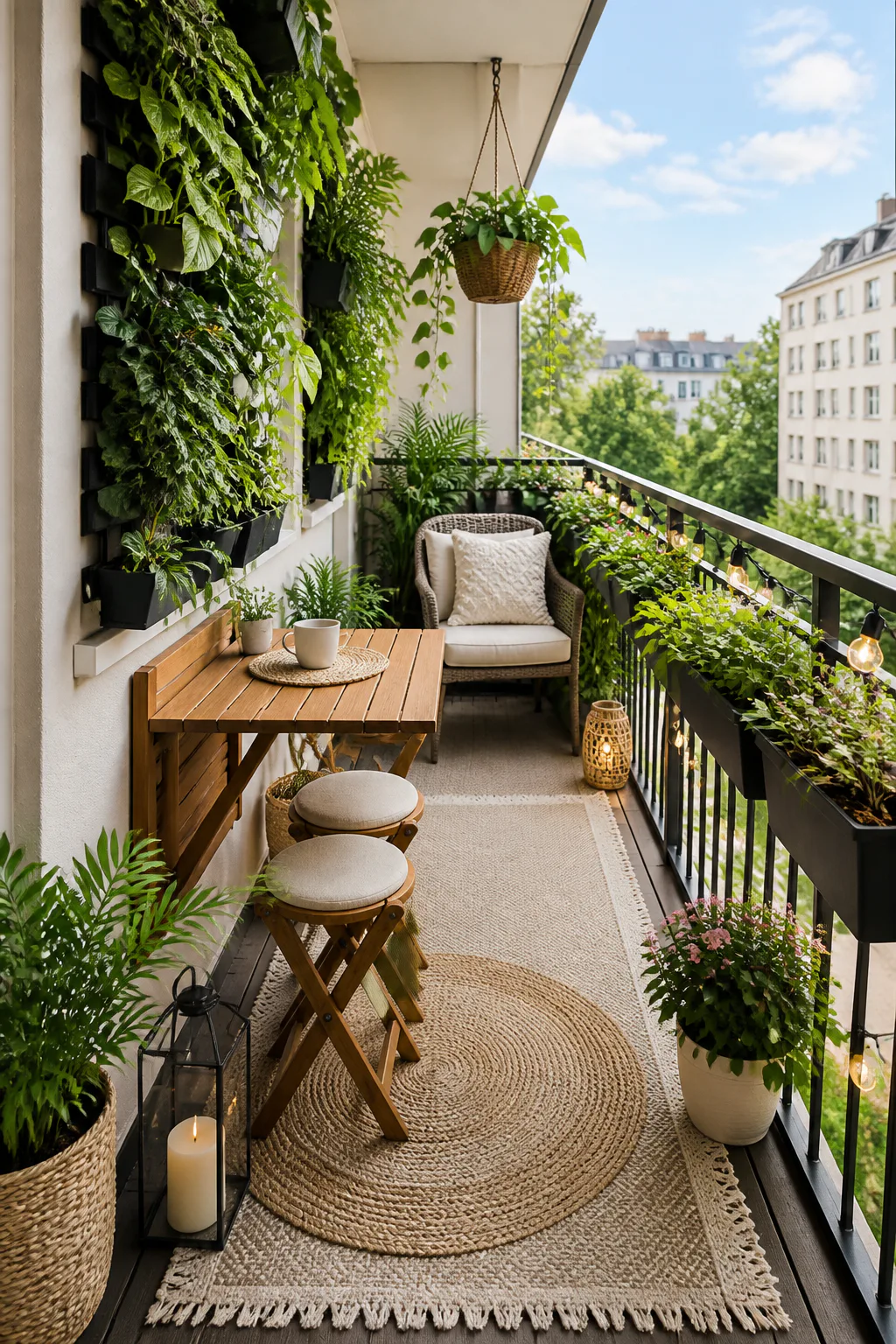
15 Clever Small Balcony Decor Ideas
A small balcony can serve as a place to sip coffee, grow herbs, read, or unwind outdoors—even when there’s barely room to turn around. The key is choosing decor that earns its footprint and making use of walls, railings, and corners as well as the floor.
These small balcony decor ideas mix greenery, seating, lighting, privacy, and storage, with practical ways to adapt each one to a compact layout. You don’t need to use every idea; a few well-chosen pieces can make the space feel more inviting without making it feel crowded.
Whether you’re decorating a narrow apartment balcony or a tiny outdoor landing, start by considering how you want to use the space and what needs to stay clear. Check that any wall-mounted, railing-mounted, or suspended decor is suitable for your building and securely installed before adding plants or other weight.
1. Create a Vertical Plant Wall

A vertical plant wall brings greenery into a small balcony without letting pots take over the floor. A wall-mounted grid, tiered stand, or compact rack can hold several plants in the space of one or two floor planters, leaving more room to walk or pull up a chair.
This approach works especially well on a bare wall beside a seating area or at the far end of a narrow balcony. Mixing leafy plants with herbs or flowers adds variation, while repeating a few pot colors helps the display look intentional rather than cluttered.
How to make it work
Choose a sturdy support and make sure the wall or surface can safely take its load, especially once pots are watered. Place plants according to their light needs, and keep watering and drainage in mind so moisture doesn’t damage the balcony surface or the wall.
- Use lightweight containers to reduce the load.
- Keep frequently used herbs at an easy-to-reach height.
- Leave room to remove pots for watering or seasonal care.
A vertical display can become the balcony’s focal point while preserving precious floor space.
2. Add Planters Over the Railing

Railing planters bring flowers and foliage to the edge of the balcony, where they can be enjoyed without occupying legroom. They’re a useful choice when the floor is too narrow for large pots but you still want a colorful, planted space.
Flower boxes can soften a metal railing and add a view of greenery from both inside and outside. Choose plants that suit the balcony’s sun and wind exposure, and keep the overall arrangement simple so the railing doesn’t look crowded.
Choose and secure your planters
Before buying, check the planter’s fit against your railing and any building rules about items attached to it. Use a design made for that railing type, secure it according to its instructions, and consider how water will drain so it doesn’t drip onto neighbors or below.
- Match the planter brackets to the railing’s width and shape.
- Choose compact plants that won’t become top-heavy in wind.
- Use a liner or tray if it helps manage drainage.
When safely installed, railing boxes add a garden-like border without stealing space from your seating area.
3. Install a Fold-Down Bistro Table
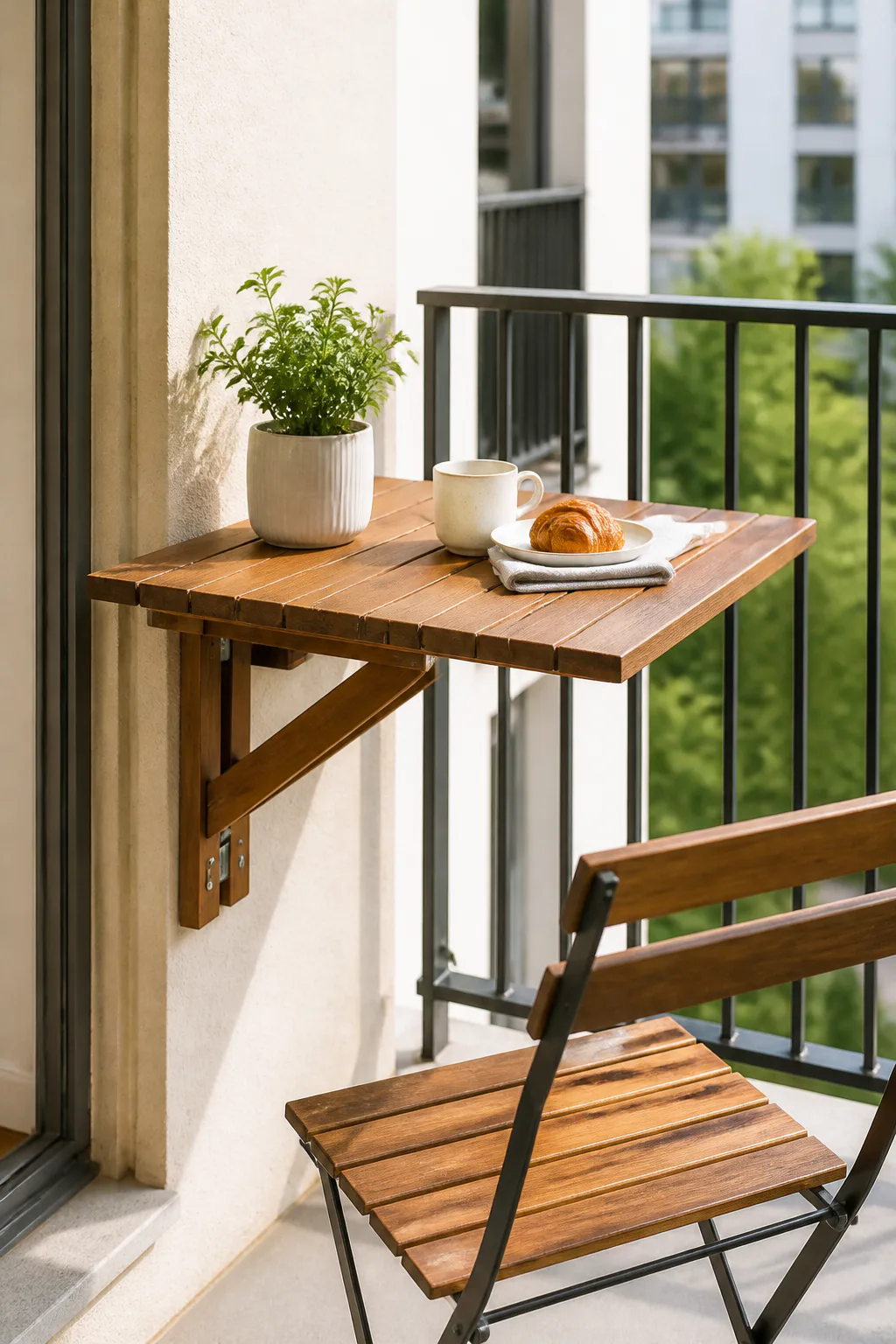
A fold-down bistro table gives a small balcony a handy surface for breakfast, a drink, or a book, then folds flat when you need room to move. Unlike a fixed table, it can adapt to how you use the balcony throughout the day.
Mount it to a suitable wall or other approved surface where it won’t block a doorway or interfere with the railing. A narrow tabletop is often enough for two cups and a small plate, so you can keep the footprint modest and leave more space for chairs or plants.
Plan the mounting and clearance
Think through the table’s full open and closed positions before installing it. The mounting surface must support the table safely, and the open tabletop should allow comfortable access without making the route in and out awkward.
- Measure the wall and the table’s open depth.
- Check that the folded table won’t obstruct a door or walkway.
- Pair it with folding chairs or stools that can be put away.
A fold-down table makes a balcony feel ready for everyday use without committing to a permanent dining setup.
4. Anchor the Balcony with a Layered Rug

A patterned outdoor rug can make plain concrete feel warmer and help a compact balcony read as an outdoor room. It visually marks the spot for seating, while a layer of color or texture can tie together otherwise mismatched furniture and planters.
Choose a rug made for outdoor use and sized to suit the layout. On a narrow balcony, a runner can define the length of the space; a smaller rectangular rug can anchor a chair and table without covering every inch of the floor.
Keep the floor practical
Look for a material that can handle the weather your balcony receives and is easy to clean. Let the surface dry as needed, and avoid trapping moisture beneath the rug; a rug pad intended for outdoor use may help it stay in place if the floor is smooth.
- Measure around doors and furniture before choosing a size.
- Pick a pattern that complements, rather than competes with, plants.
- Shake out leaves and debris and air the rug regularly.
The right rug adds comfort underfoot and gives even a simple seating arrangement a more finished look.
5. Tuck Stacking Stools into a Corner

Stacking stools offer flexible seating without the bulk of several full-size chairs. Bring them out when friends visit or when you want a place to set down a drink, then stack them neatly in a corner to reclaim the floor.
They’re especially useful on narrow balconies where furniture has to move aside for everyday access. Lightweight metal or wood styles can suit different looks, but consider how the material will hold up outdoors and whether the stools are comfortable enough for the way you plan to use them.
Make flexible seating comfortable
Choose stools that stack securely and don’t become difficult to lift or move. A small outdoor cushion can make a simple seat more inviting, as long as it can be stored or brought inside when the weather changes.
- Measure the stacked footprint to find a suitable corner.
- Keep the main route to the door clear when stools are stored.
- Use one stool as a side table when extra seating isn’t needed.
Because they can serve more than one purpose, stacking stools are a practical choice for a balcony that changes from day to day.
6. Fit a Slim Bistro Set into the Space

A slim bistro set can create a dedicated spot for coffee or a casual meal without filling the entire balcony. A small round or compact table paired with narrow-footprint chairs usually takes up less room than a full outdoor dining set.
Place the set where chairs can be pulled out without blocking the doorway or the main walking route. On a long, narrow balcony, a table against one end may leave a clearer path; on a squarer layout, it can sit in the middle if there’s enough clearance around it.
Choose a set that fits your routine
Check the dimensions of both the table and the chairs, including the space needed to sit down and stand up. Open, lightweight designs can help a small area feel less visually heavy, while weather-suitable materials make regular outdoor use easier.
- Measure the balcony before choosing a table shape.
- Look for chairs that tuck beneath the tabletop.
- Keep decor on the table minimal so it stays useful.
A well-fitted bistro set turns a small balcony into an everyday dining nook without requiring a large furniture arrangement.
7. Hang a Cozy Chair or Hammock

A hanging chair or hammock can create a relaxed lounging spot while keeping the floor underneath relatively open. Its gentle movement and soft shape bring a cozy feel that’s different from a standard patio chair, making it a natural choice for a reading or resting nook.
This idea depends on having suitable overhead framing or another support designed to carry the load. Never assume a ceiling, overhang, or railing is strong enough; check the structure and follow appropriate installation guidance before hanging a seat.
Make safety and clearance the priority
Plan for the chair’s full movement, not just its resting position. It needs enough space to swing without hitting a wall, railing, or furniture, and the entrance to the balcony should remain easy to use.
- Confirm that the attachment point is suitable for a hanging seat.
- Choose a compact chair shape for a tight footprint.
- Add a removable cushion that can be stored during wet weather.
If your balcony has the right support and clearance, one hanging seat can make it feel like a special destination.
8. Drape String Lights Along the Railing

String lights bring a soft glow to a balcony after sunset and can make a plain railing feel more inviting. Run them along the railing or around an overhead perimeter to define the space without adding another bulky object to the floor.
Warm-toned bulbs suit a relaxed seating area, while smaller lights can create a more subtle sparkle. Keep the arrangement simple and tidy so the lights add atmosphere without tangling with plants, doors, or other balcony features.
Set up a neat, weather-aware display
Use lights intended for outdoor conditions and follow the manufacturer’s directions for placement and power. Secure the strand with suitable clips rather than letting it hang loosely, and keep connections away from areas where water may collect.
- Measure the railing or perimeter before choosing a strand length.
- Leave doors and moving parts free of cords.
- Use clips that won’t damage the railing finish.
Thoughtful lighting makes the balcony feel welcoming in the evening while keeping the daytime layout uncluttered.
9. Screen the Balcony with Bamboo

A bamboo screen can soften the look of a stark metal railing and offer a little more privacy. Its natural texture creates a warmer backdrop for plants and seating, helping a small balcony feel like a sheltered nook rather than an exposed platform.
Attach a screen only in a way that’s appropriate for your building and local conditions. A loose covering can catch wind, so it needs secure fastening and regular checks; also consider whether the screen could block airflow or conflict with building rules.
Balance privacy with light and upkeep
Choose a screen height that helps with the views you want to soften without making the balcony feel closed in. Natural bamboo has an organic look, while a similar-style outdoor screen may be easier to maintain depending on the weather it will face.
- Measure the railing before selecting a screen.
- Secure the covering at multiple points to reduce movement.
- Pair it with a few plants rather than a crowded display.
A simple screen can provide a calmer background and make the rest of your balcony decor feel more cohesive.
10. Make a Lounge with Floor Cushions

Floor cushions and a pouf offer a casual way to create a low-key lounging area without bringing in a full outdoor sofa. They can be arranged for reading, stretching out, or informal conversation, then stacked or moved when you need the floor space back.
This setup works best when there’s a dry, comfortable surface beneath the cushions, such as an outdoor rug. Keep the arrangement low and compact so it doesn’t block the door or make a narrow balcony difficult to cross.
Keep soft seating easy to manage
Choose cushions with covers suited to outdoor use, and plan where they’ll go when the weather turns. A lidded storage box or a simple indoor storage spot can help keep them dry and ready for the next time you want to lounge outside.
- Use a small mix of cushions rather than filling the whole floor.
- Add a pouf that can double as a footrest or occasional seat.
- Bring cushions inside or store them when not in use.
Soft, movable seating helps a tiny balcony feel relaxed and flexible rather than overly formal.
11. Build a Corner Plant Ladder

A leaning plant ladder makes use of a corner that might otherwise go unused. Its tiers can display herbs, succulents, and a few small decorative pieces while keeping the arrangement more compact than a collection of pots spread across the floor.
Place the ladder where it won’t narrow the main path or block access to a door. The stepped shelves create different heights, adding visual interest and giving smaller plants a chance to stand out among taller foliage.
Arrange the tiers thoughtfully
Use a stable ladder shelf intended for the setting, and position it securely so it won’t shift in wind or when you reach for a pot. Keep heavier containers on lower shelves and choose plants that suit the light available at each level.
- Group herbs together for easy watering and harvesting.
- Use lower tiers for heavier pots and taller plants.
- Leave some open space so the display doesn’t feel crowded.
A corner ladder brings a small garden upward while keeping the balcony’s central floor area open.
12. Group Solar Lanterns Around the Edges

Solar-powered lanterns provide ambient light without requiring extension cords across a compact balcony. Grouping them along the perimeter can create a gentle evening glow while keeping the center open for a table, chair, or clear walking space.
Lanterns also add a decorative touch during the day, especially when their shapes and finishes coordinate with nearby planters or furniture. Since solar lights need access to daylight, choose positions that receive enough sun for the style you select.
Make the lighting feel balanced
Rather than lining every edge with lights, use a few lanterns to highlight a seating corner or frame a doorway. Keep them stable and out of the way, and check product guidance for outdoor placement and charging conditions.
- Place lanterns where they can receive daylight.
- Use a small group in varying heights for visual interest.
- Keep the main walkway and door clearance unobstructed.
Cord-free lanterns make it easy to add a soft, welcoming layer of light to a small outdoor room.
13. Hang Small Storage Pockets

Wall-mounted storage pockets keep everyday balcony items close at hand without adding a cabinet or storage bin to the floor. They can hold a book, gardening snips, gloves, or other small essentials, helping the space stay tidy and ready to use.
Fabric organizers bring a softer look, while metal pockets can suit a more streamlined arrangement. Mount the organizer on a suitable wall or approved surface where it won’t interfere with the door, seating, or plants.
Store only what belongs outdoors
Choose pockets that are easy to reach and suited to the conditions they’ll face. Avoid leaving items that could be damaged by rain or heat, and don’t overload the organizer; keeping it edited makes both the storage and the balcony look neater.
- Reserve one pocket for gardening tools and another for reading items.
- Check that the mounting method suits the wall surface.
- Empty or bring in contents that need protection from weather.
A few small pockets can reduce clutter while making everyday balcony routines more convenient.
14. Create a Trailing Greenery Canopy

Trailing plants can add a lush, sheltered feeling to a balcony by drawing the eye upward and letting greenery cascade from an upper shelf. Pothos, ivy, or suitable faux foliage can soften bare walls and make a compact seating area feel like a garden nook.
Place trailing greenery above or beside a chair, rather than across the main route or in front of a frequently used door. Live plants need conditions that suit their light and watering needs, while faux greenery can offer the look with less care but still needs occasional cleaning.
Keep the display secure and contained
Use a stable shelf or planter support that is appropriate for the weight and location. Consider wind, drainage, and how long the vines may grow, and trim or reposition them before they interfere with railings, neighbors, or access.
- Choose real plants based on the balcony’s light conditions.
- Use faux trailing foliage where plant care is impractical.
- Keep vines clear of doors and walking paths.
Overhead greenery adds depth and a garden-like mood without requiring more floor-level planters.
15. Add an Outdoor Mirror Panel

An outdoor-rated mirror can reflect light and make a small balcony feel visually more open. Hung on a solid wall, it can also reflect greenery or a brighter part of the space, adding a sense of depth without taking up floor area.
Use a mirror designed to withstand outdoor conditions and mount it securely in a location where it won’t be bumped by furniture or people passing through. Before settling on the position, consider what it will reflect and whether direct sun could create unwanted glare.
Choose a safe, useful placement
Keep the mirror away from exposed edges and install it using hardware suitable for the wall and the mirror’s weight. A modest panel is often enough to brighten a corner, while a simple frame can help it sit comfortably alongside the rest of your decor.
- Check that the mirror is rated for outdoor use.
- Position it to reflect light or plants rather than clutter.
- Secure it firmly and keep it clear of the main walkway.
Used thoughtfully, a mirror adds brightness and a little visual breathing room to a compact balcony.
Final Thoughts
The best small balcony decor ideas make the most of the space without asking it to do everything at once. Vertical plants, railing planters, foldable furniture, and wall-mounted storage help preserve floor area, while rugs, cushions, and lighting add comfort and personality.
Start with the way you want to use your balcony, then choose a few ideas that support that purpose. Measure before adding furniture, keep the route clear, and make sure anything mounted or suspended is appropriate for your building and securely installed. With a few thoughtful choices, even a tiny balcony can feel like a natural extension of home.