13 Beautiful Garden Border Ideas for Beds, Paths, and Lawns
A garden border does more than mark where the lawn ends. It can give planting beds a crisp outline, add texture to a pathway, or soften a hard edge with foliage and flowers. The right choice depends on the style of your garden, the shape of the beds, and how much upkeep you want to take on.
These garden border ideas range from clean-lined metal and stone to low hedges, herbs, and rustic woven materials. Some are designed to make mowing easier, while others bring color, fragrance, or a natural look right to the edge of the bed.
Use these ideas for lawn-to-bed transitions, path edges, or planting areas that need a little more definition. Consider your soil, climate, and the plants already growing nearby before choosing a material or living border, so the finished edge feels both attractive and practical.
1. Edge Garden Beds with Corten Steel Strips

Corten steel makes a slim, tidy outline that lets flowers and foliage take center stage. Its warm rust-like patina contrasts beautifully with green leaves, pale gravel, and contemporary paving, making it a natural fit for modern gardens as well as relaxed planting schemes.
Because thin steel edging can follow curves, it works especially well around rounded beds, winding paths, and trees. A narrow strip defines the bed without taking up much space, and it can help keep lawn from creeping into the planting area.
How to pull it off
Mark the intended line with a hose or string before digging a narrow trench. Set the edging at a consistent height, with enough of it below ground to keep it stable and only a modest amount showing above the soil. Follow the product’s installation guidance, especially around joins and corners.
- Use smooth curves to complement informal planting.
- Choose a straighter line for a clean, architectural effect.
- Keep the visible edge low so plants remain the focus.
The result is a quiet boundary that can make even a loosely planted bed feel intentional.
2. Stack Natural Flagstones Along Garden Beds
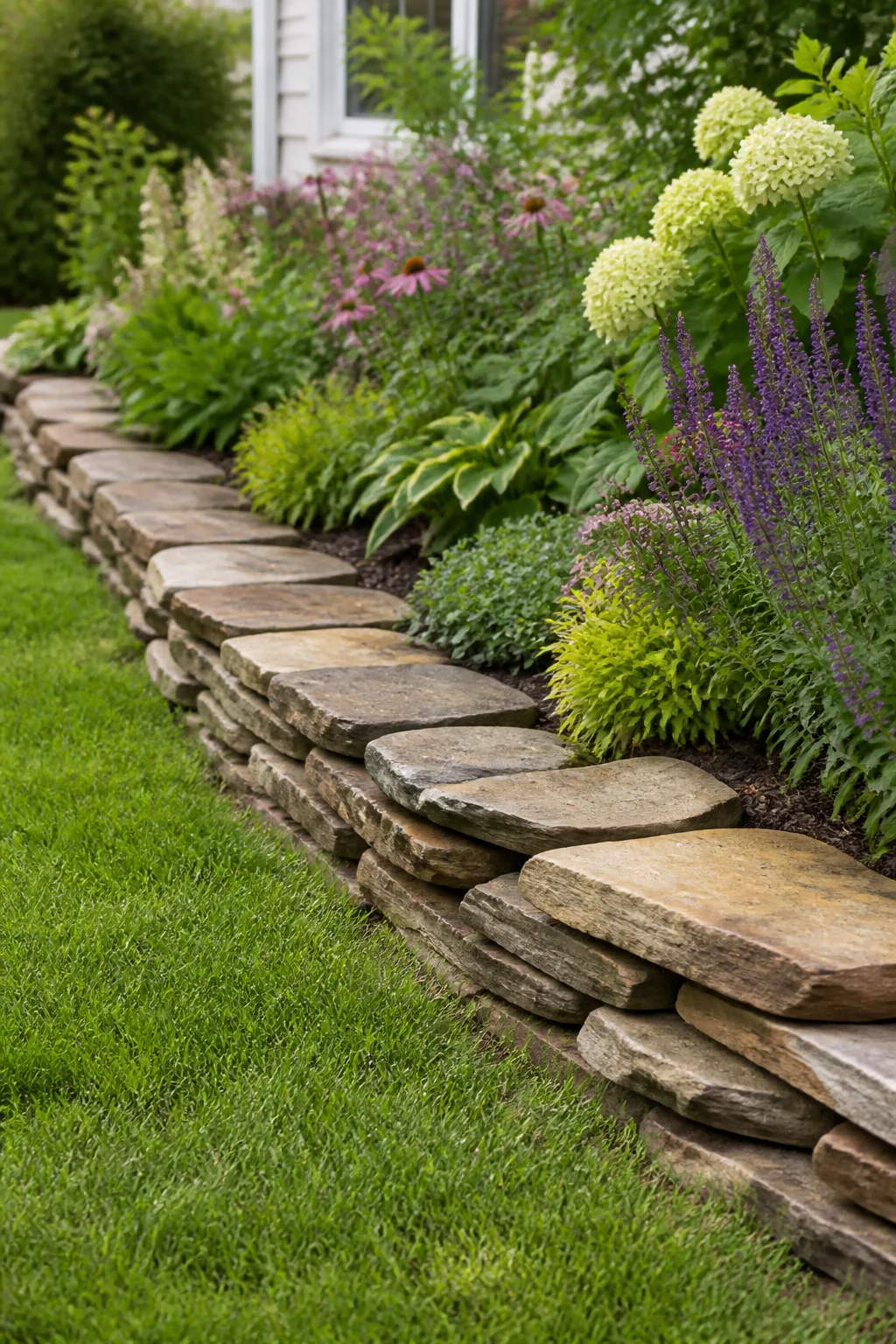
Irregular flat stones create a relaxed border with the character of an old garden wall. Laid in a low row, flagstones add a small step-up between the lawn and planting bed while bringing natural color and texture to the edge.
This style suits cottage gardens, woodland borders, and beds alongside informal paths. Each stone has its own shape, so the finished line feels less exact than a manufactured edging. That organic look can sit especially well beside leafy perennials and shrubs.
How to set the stones
Start with a shallow, level base so the stones sit securely rather than rocking underfoot. Arrange larger pieces where the edge needs more visual weight, then use smaller stones to fill gaps. A slight variation in height looks natural, but avoid unstable stacks that might shift.
- Choose stones with broad, relatively flat faces.
- Set them close together for a defined edge.
- Leave small planting pockets only where they will not weaken the line.
Keep the stones low if you want the border to define the bed without blocking the view of flowers behind it.
3. Set Cobblestones in a Classic Border

A row of cobblestones gives garden beds a traditional, European-inspired outline. Granite has a naturally varied, timeworn appearance, while brick cobbles offer warmer tones that can echo a nearby path or house. The compact scale makes this a good choice when you want a distinct edge without building a tall wall.
Half-submerging the stones creates a sturdy transition between lawn and bed. Their firm surface can also make it easier to guide a mower along the border, particularly where a garden bed meets turf in a straight or gently curving line.
Installation details
Dig a trench wide enough to arrange the cobbles with their faces aligned, then prepare a firm, even base. Set each piece partly below ground and check the height as you work. A consistent top line looks polished, while subtle variation can suit a more relaxed garden.
- Use a string line to keep long edges straight.
- Turn cobbles carefully around curves rather than forcing tight bends.
- Match the stone or brick tone to nearby hardscape where possible.
A simple row can add a lot of definition without competing with the planting.
4. Lay Bricks in a Soldier-Course Edge
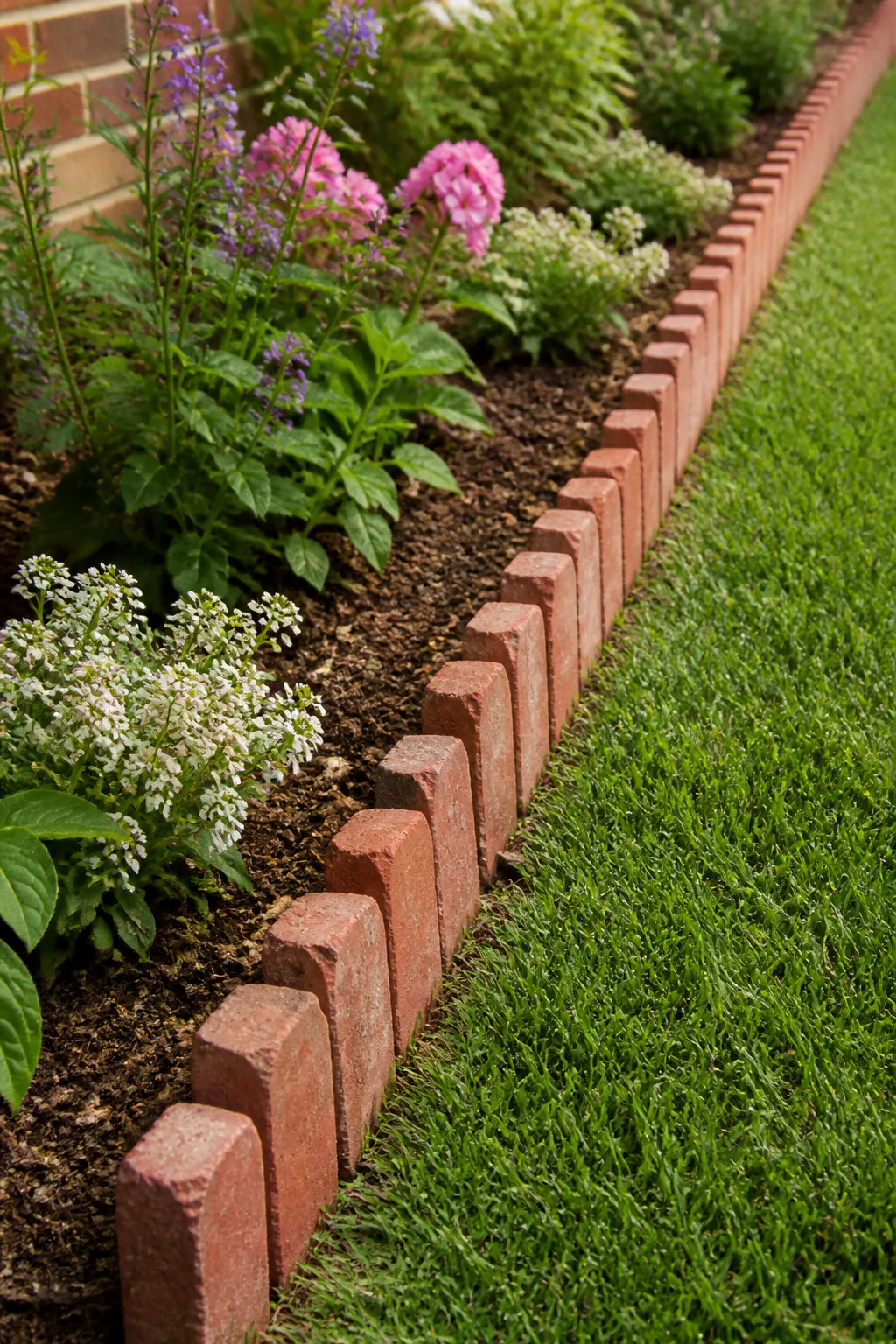
In a soldier-course border, bricks stand vertically in a row beside the lawn. The repeated shape creates a clear, orderly edge that works with traditional homes, cottage beds, and simple modern layouts. Bricks can also tie a planting area to a nearby patio, walkway, or brick facade.
Set the row in a straight line for a crisp finish, or angle the bricks to create a sawtooth pattern. The latter gives the border a little more movement while keeping the same compact footprint. With the tops aligned, the edge can help guide a mower wheel along the bed.
Plan the brick line
Lay out the bricks before installing them so you can see how the pattern meets corners and curves. Prepare a firm trench and seat each brick securely, checking alignment as you go. Reclaimed bricks may vary in size and color, which can make the finished edge feel pleasantly aged.
- Choose a consistent brick orientation for a neat line.
- Use a shallow sawtooth pattern for added visual rhythm.
- Keep the upper edges level where the border meets lawn.
This is a practical way to frame beds while adding a familiar, time-tested material.
5. Build a Mini Gabion Rock Border
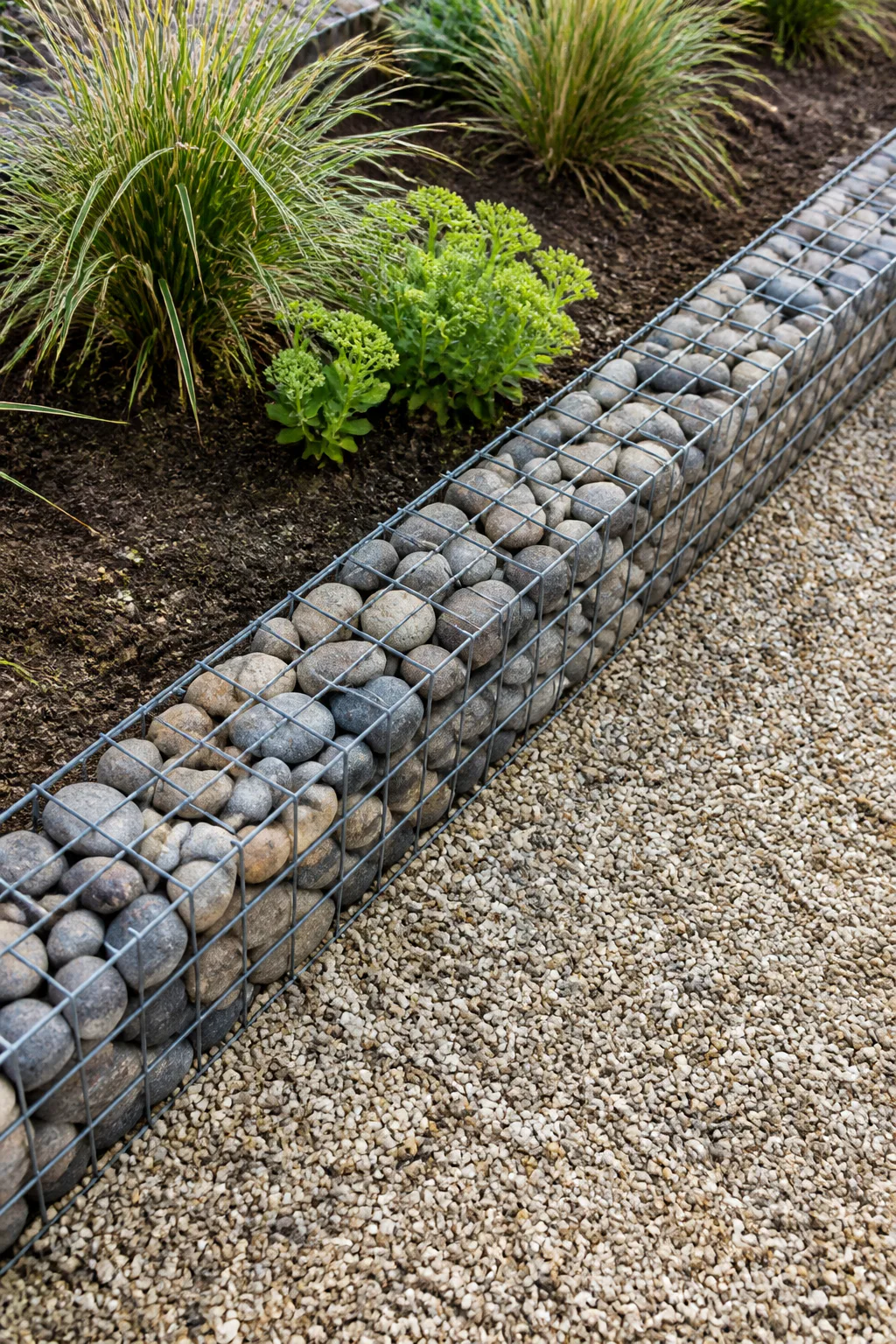
A mini gabion border pairs wire cages with stones to create a textured divider. The mesh gives the edge a structured shape, while the fill brings color and variation. It can add a modern, slightly industrial note beside ornamental grasses, bold foliage, or simple gravel paths.
Narrow cages are useful when a full retaining wall would feel too imposing. Their visual weight makes them stand out, so they often work best as a feature along a short section of bed or where a strong boundary is needed between planting and a path.
Choose and fill the cages
Set the cages on a stable, reasonably level base and secure them according to their construction. Select stones that fit the mesh openings and arrange the most attractive faces toward the outside. River rock gives a smoother look, while slate creates a flatter, darker texture.
- Keep the cage proportions low and narrow for a border effect.
- Use a consistent stone type for a calmer appearance.
- Check that the wire is suitable for outdoor use.
Repeat the gabion sections sparingly if you want definition without making the garden feel overly hard or heavy.
6. Use Corrugated Metal for a Rugged Edge

Low corrugated metal panels create a bold contrast against soft leaves and flowers. Their ridged surface brings a farmhouse or modern-ranch character to a garden, and reclaimed pieces can add a weathered, lived-in quality. The material is especially striking beside green planting or pale stone.
Because the panels have a strong visual presence, they are often most effective when used selectively. A short run can define a vegetable bed, mark a boundary beside a path, or complement other simple materials without overwhelming the entire yard.
Keep the finish intentional
Choose panels that are sound and suitable for garden use, and cut them to a low height so the planting remains visible. Secure them firmly and cover any sharp or exposed edges. If you are using reclaimed metal, inspect it closely and avoid pieces with unsafe damage or contamination.
- Pair the ridged texture with soft, rounded foliage.
- Use straight runs for a crisp, contemporary outline.
- Repeat the metal elsewhere in small details for cohesion.
Against a lush bed, this rugged edge can make both the greenery and the material feel more distinctive.
7. Pour a Smooth Concrete Garden Ribbon

A smooth concrete strip creates a continuous, minimalist boundary between lawn and planting. Its clean surface suits contemporary gardens, but it can also provide a simple visual counterpoint to abundant, informal flowers. As a mowing strip, it offers a firm edge for guiding a mower along the bed.
The ribbon can follow a straight line or a gentle curve, depending on the layout. Its permanent character makes planning important: take time to test the shape and width before committing, especially around corners and existing trees or paths.
Plan for a clean finish
Mark the proposed route and check how it looks from the house and main garden paths. Prepare the base and form the strip carefully so the surface sits at a useful height beside the lawn. For a long or complex installation, consider getting help with the concrete work.
- Keep the strip wide enough to serve its intended purpose.
- Use gentle curves that are easy to mow around.
- Think about drainage and nearby soil levels before pouring.
Once in place, the understated ribbon lets the planting provide most of the color and movement.
8. Plant a Clipped Boxwood or Hornbeam Hedge

A low, clipped hedge gives a garden bed a living outline with a formal, composed look. Boxwood is a classic choice, while hornbeam can provide a similar structured effect where it suits local conditions. A neat green line brings order to mixed flowers, shrubs, and paths.
This border works well in front gardens, symmetrical layouts, and spaces where a clear edge is part of the design. Unlike stone or metal, a hedge changes with the seasons and grows over time, so it needs room and regular attention to keep its shape.
Shape the living edge
Choose plants suited to your climate, soil, and available light, then space them according to their mature size and the look you want. Water new plants as needed while they establish. Trim lightly and regularly rather than waiting until the hedge becomes too large to manage.
- Keep the hedge low enough to preserve views into the bed.
- Use a taut guide to maintain a straight top and side.
- Leave enough space for future growth and trimming access.
A carefully maintained hedge frames the garden without introducing a hard material.
9. Create a Soft Ornamental Grass Ribbon
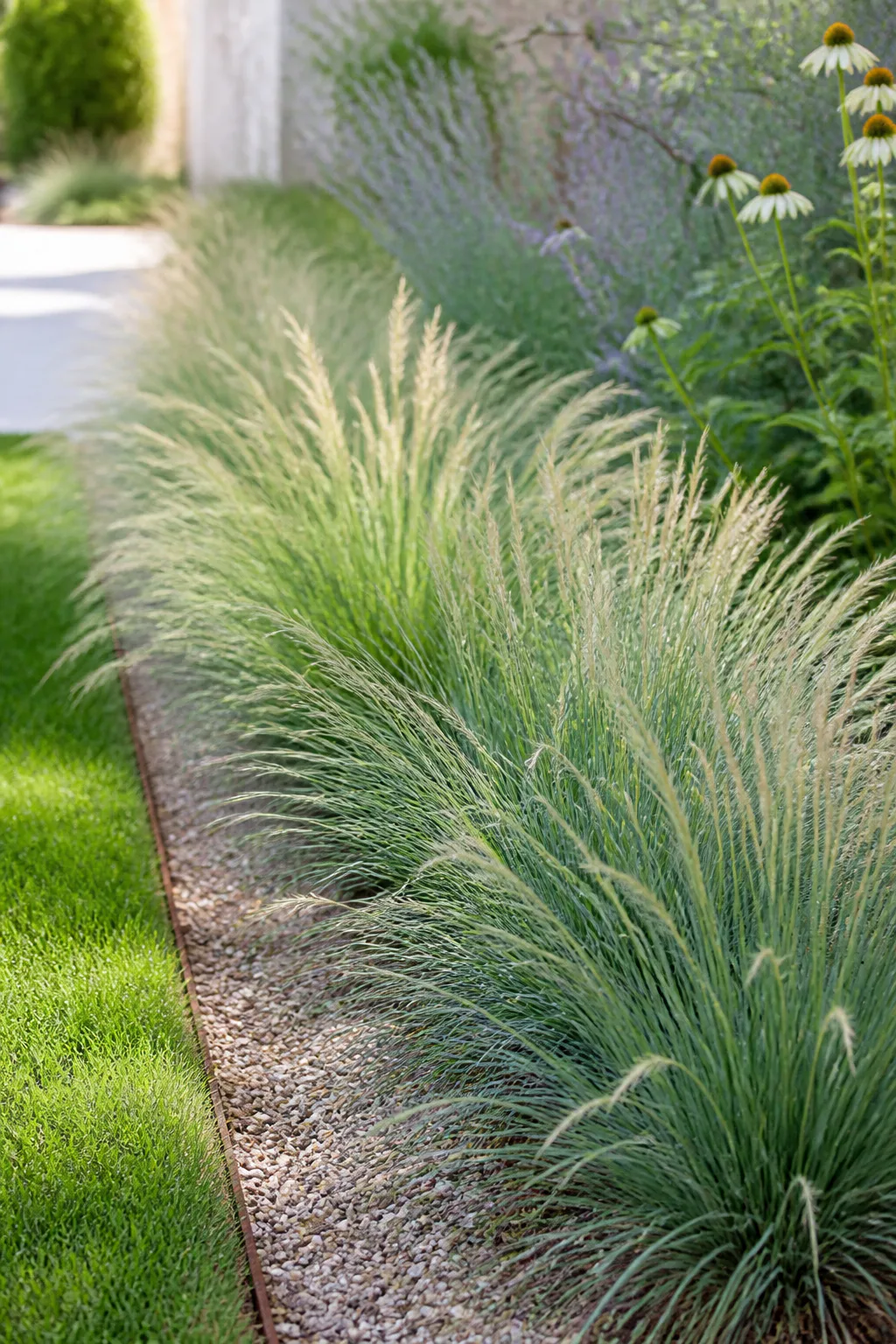
A ribbon of compact ornamental grasses gives a border gentle movement and texture. Repeating similar plants along the edge creates a pleasing rhythm, while fine blades soften the transition between lawn, paving, or gravel and the rest of the bed.
Grasses can suit both naturalistic and contemporary gardens, depending on the varieties and spacing. Lower choices such as carex or blue fescue can form a tidy edge, while compact fountain grasses bring a fuller shape where there is more room. Check mature size before planting.
Repeat for a cohesive look
Lay out the plants in their pots first and view the pattern from different angles. Even spacing creates a clear ribbon; slightly varied spacing looks more relaxed. Give each plant enough room to develop, and leave access for trimming or dividing if the variety needs it.
- Repeat one variety for a simple, unified border.
- Choose grasses that suit the light and soil conditions.
- Allow the foliage to spill gently without covering a path.
This living edge is especially effective when its soft shapes contrast with a crisp stone or concrete path.
10. Fill the Bed Edge with Perennial Blooms

A dense ribbon of perennial flowers brings color right to the edge of a garden bed. Catmint, salvia, and lady’s mantle are examples of plants that can soften a lawn-to-bed line with foliage and blooms. Their loose shapes make a border feel welcoming rather than strictly outlined.
This approach suits cottage gardens, mixed perennial beds, and paths that would benefit from a softer margin. A continuous band can also help link separate areas of planting, though it is worth choosing plants that will not flop into the lawn or block a narrow walkway.
Build a balanced flower edge
Choose plants that suit your growing conditions and check how tall and wide they become. Arrange them in a generous ribbon rather than a single scattered row if you want a fuller effect. Mix flowering times where possible so the edge remains interesting beyond one brief flush of bloom.
- Use catmint for a relaxed, billowing outline.
- Plant salvia where upright flower spikes suit the design.
- Use lady’s mantle for soft foliage along a path or lawn.
Regular deadheading or trimming, as appropriate for each plant, helps keep the border looking intentional.
11. Edge the Garden with Fragrant Herbs
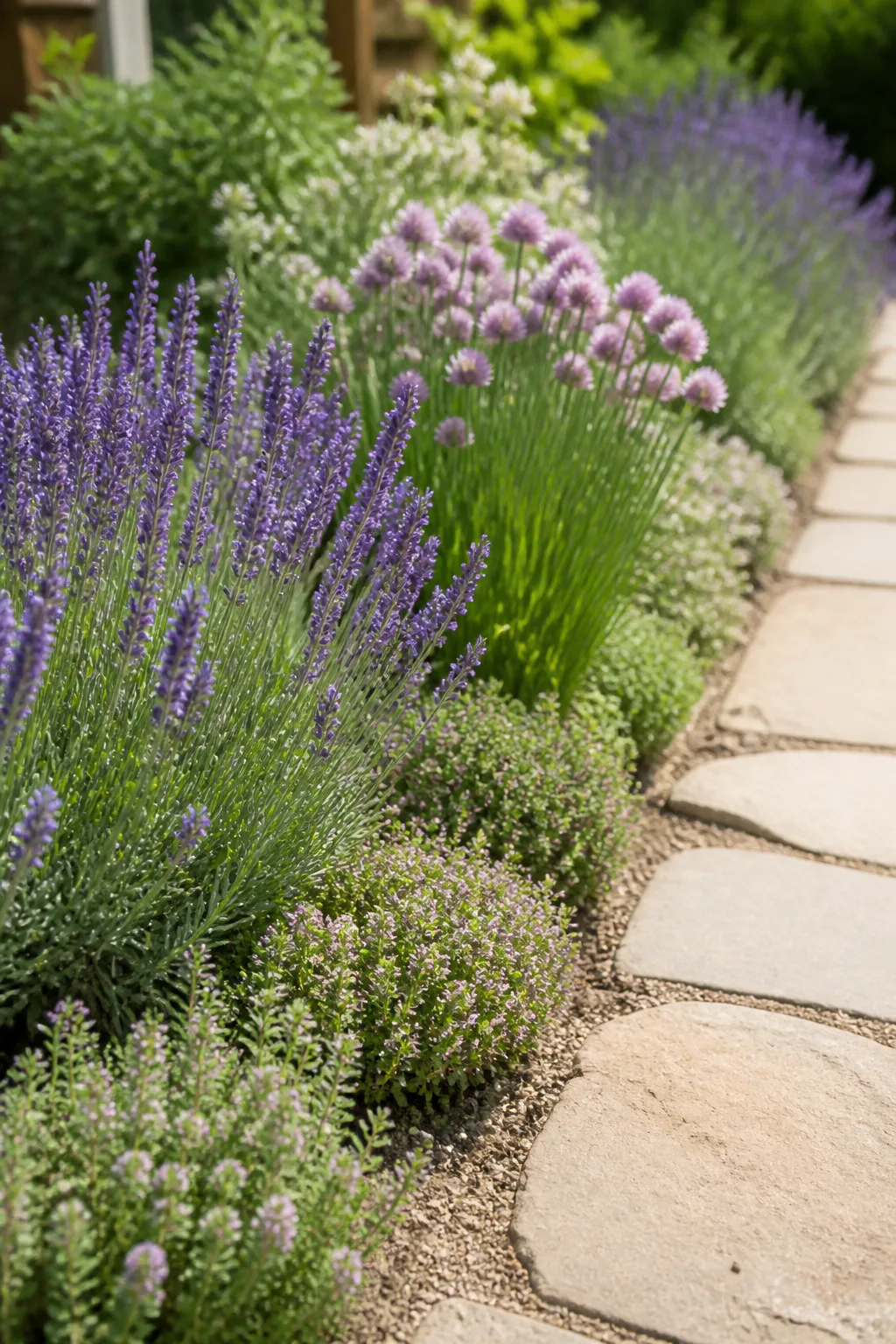
Low herbs make a garden border both attractive and useful. Lavender, thyme, and chives bring distinct foliage, flowers, and fragrance to the edge, while their blooms can appeal to pollinators. Brushing past the plants on a path can make the border feel especially inviting.
Herbs work well near a kitchen garden, along sunny paths, or at the front of a mixed bed. Their needs vary, so group plants with similar preferences rather than placing every herb together by default. Lavender and thyme generally appreciate a different setting from herbs that prefer more moisture.
Choose herbs for the site
Check the light, drainage, and mature size of each plant before setting out a row. Leave enough room for air to move around the foliage and for plants to reach their natural shape. A consistent spacing pattern creates a neat edge, while small groups can look more informal.
- Use lavender where the border is sunny and well drained.
- Try thyme along a warm, low edge that will not be heavily walked on.
- Plant chives where their upright foliage and flowers fit the bed.
With thoughtful placement, this border adds scent and seasonal interest without relying on a hard edge.
12. Weave a Low Willow Hurdle Border
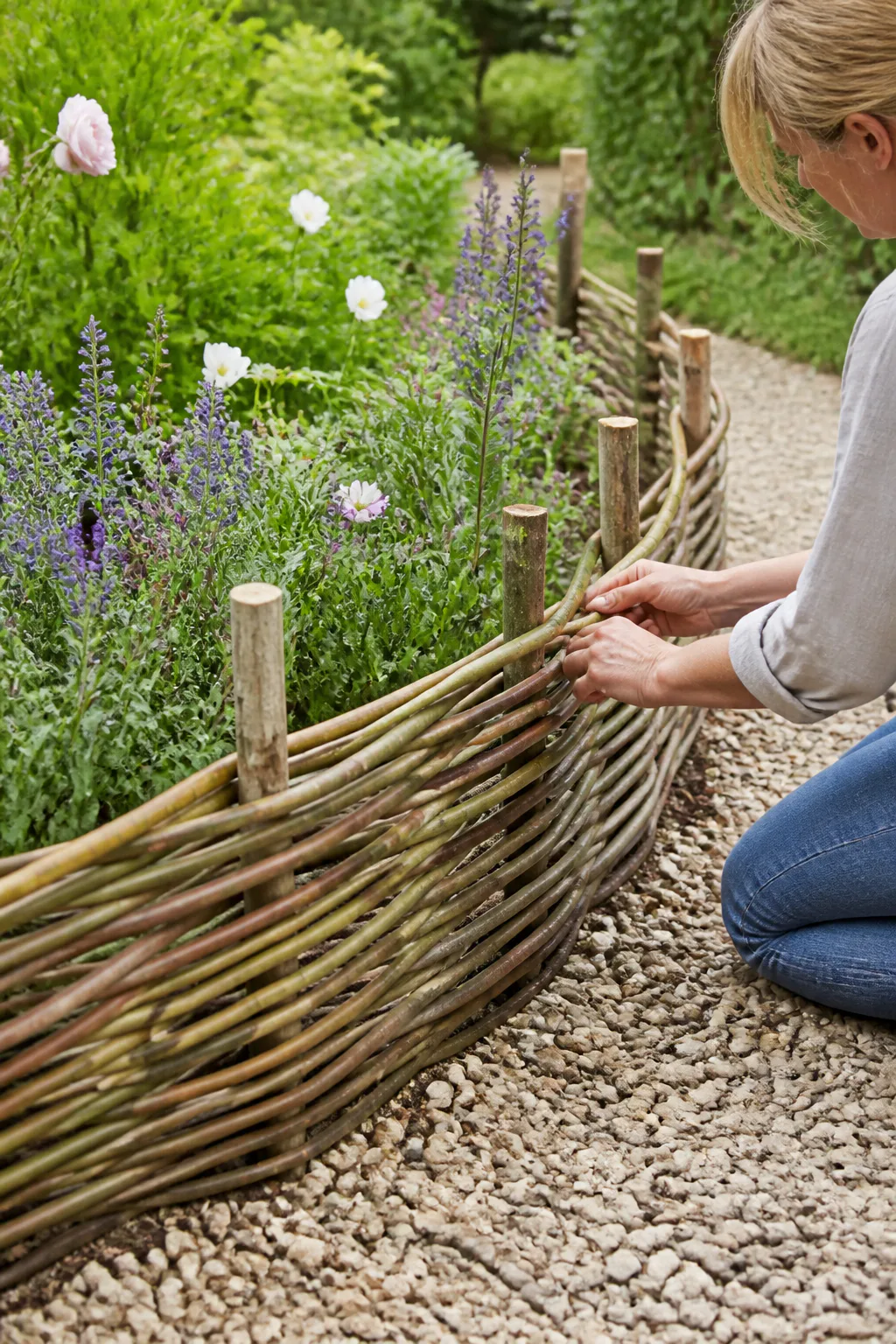
A low willow or hazel hurdle creates a rustic boundary with handmade character. The woven twigs form a light screen that can make a bed feel tucked in without blocking it from view. This natural texture suits cottage gardens, informal paths, and planting schemes with plenty of foliage.
Short panels can help define a loose edge or protect a small planting area from casual foot traffic. Because the material is relatively delicate compared with stone or metal, think of it as a decorative border rather than a barrier designed to withstand heavy pressure.
Set the hurdles securely
Position the panels along the bed and anchor them with stakes suited to the ground and the hurdle design. Follow a gentle curve where the bed shape calls for one, or keep the line straight for a more orderly effect. Check the woven material from time to time for loose or damaged sections.
- Choose low panels so plants remain visible behind them.
- Repeat the woven texture near a path or seating area for cohesion.
- Leave room to reach plants for weeding and seasonal care.
The woven edge adds a soft, handcrafted note that pairs naturally with abundant planting.
13. Line Garden Beds with Timber Slices

Branch rounds or small peeled logs bring a woodland-inspired look to garden beds. Arranged in a row, their natural grain and varied shapes create a warm, tactile edge that suits shade gardens, cabin-style spaces, and informal planting. The timber can also echo nearby trees or other wooden garden details.
Small slices make a low border with a patterned top edge, while short logs can create a more substantial outline. Either way, the material looks most at home when its natural variation is part of the design rather than something to disguise.
Arrange a stable row
Choose pieces that are similar enough in size to form a consistent boundary, then set them securely in the soil. Pin or anchor the wood as needed so it does not shift. Timber naturally weathers outdoors, so inspect it periodically and replace pieces if they become loose or deteriorate.
- Use branch rounds for a playful, varied pattern.
- Choose small logs for a more continuous woodland edge.
- Keep the border low beside lawns and frequently used paths.
This simple material brings a grounded, natural finish to beds filled with ferns, grasses, or woodland flowers.
Final Thoughts
The best garden border is one that suits both the way you use your yard and the look you want to create. Steel, brick, stone, and concrete offer clear definition, while hedges, grasses, flowers, herbs, willow, and timber bring softer textures and seasonal change.
Before choosing, consider the bed’s shape, the nearby surfaces, and the amount of maintenance you are comfortable with. You can also test an idea on a short stretch first, then repeat it elsewhere once you know how it looks and works in your garden.