
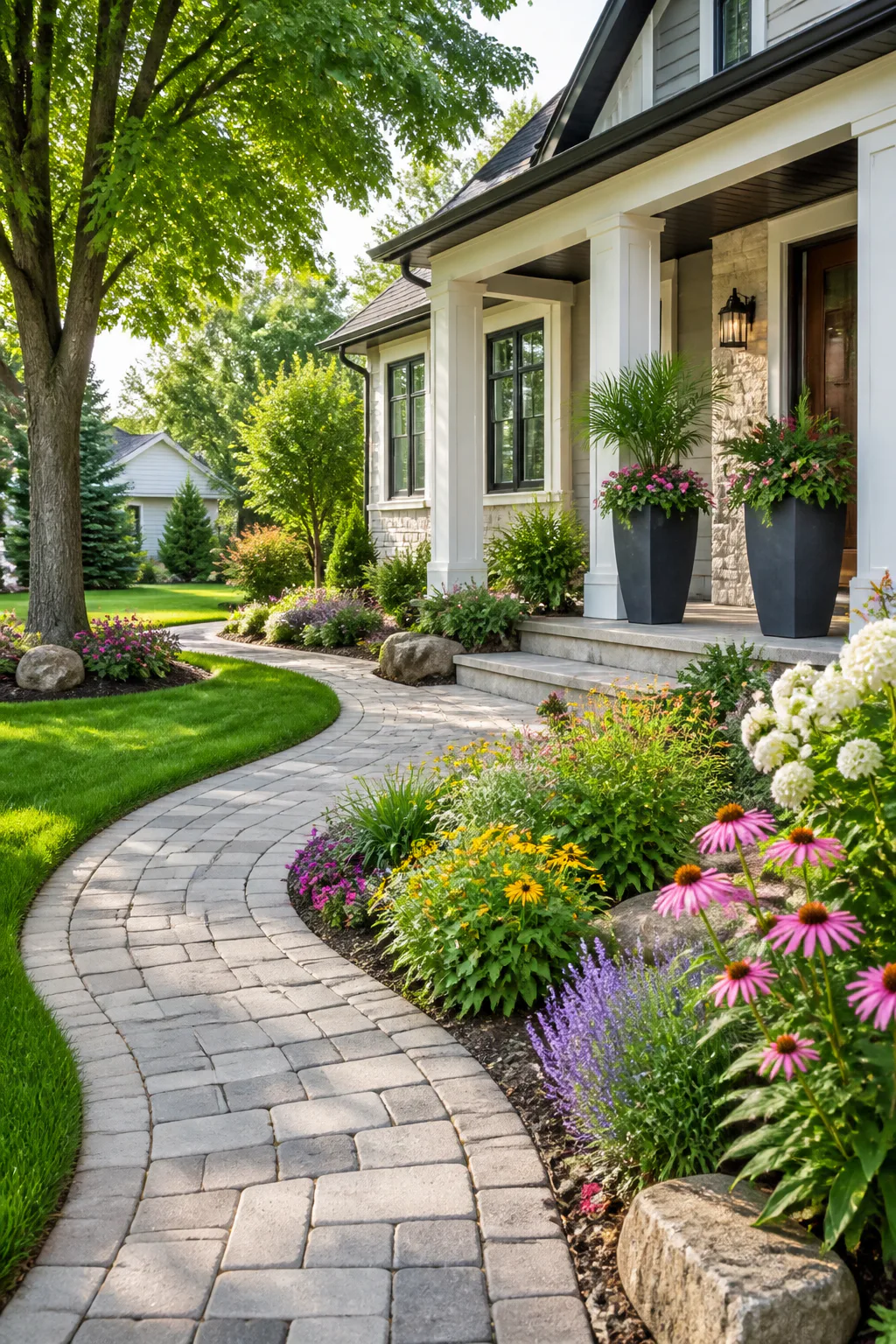
15 Stunning Front Yard Landscaping Ideas for Better Curb Appeal
A thoughtfully designed front yard can make your home feel more welcoming before anyone even reaches the door. The best landscaping ideas balance curb appeal with practical details such as sunlight, drainage, walkways, and the amount of maintenance you want to take on.
These ideas range from simple updates, like sharpening flower-bed edges, to bigger changes, such as terracing a slope or creating a small patio. You can use one as a starting point or combine a few elements to give your entry a more cohesive look.
Whether you have a compact city lot, a sloping yard, or a wide lawn, choose plants and materials suited to your local climate and the conditions around your home. A clear plan helps each feature feel intentional and keeps the finished landscape easy to enjoy.
1. Create a Curved Paver Walkway
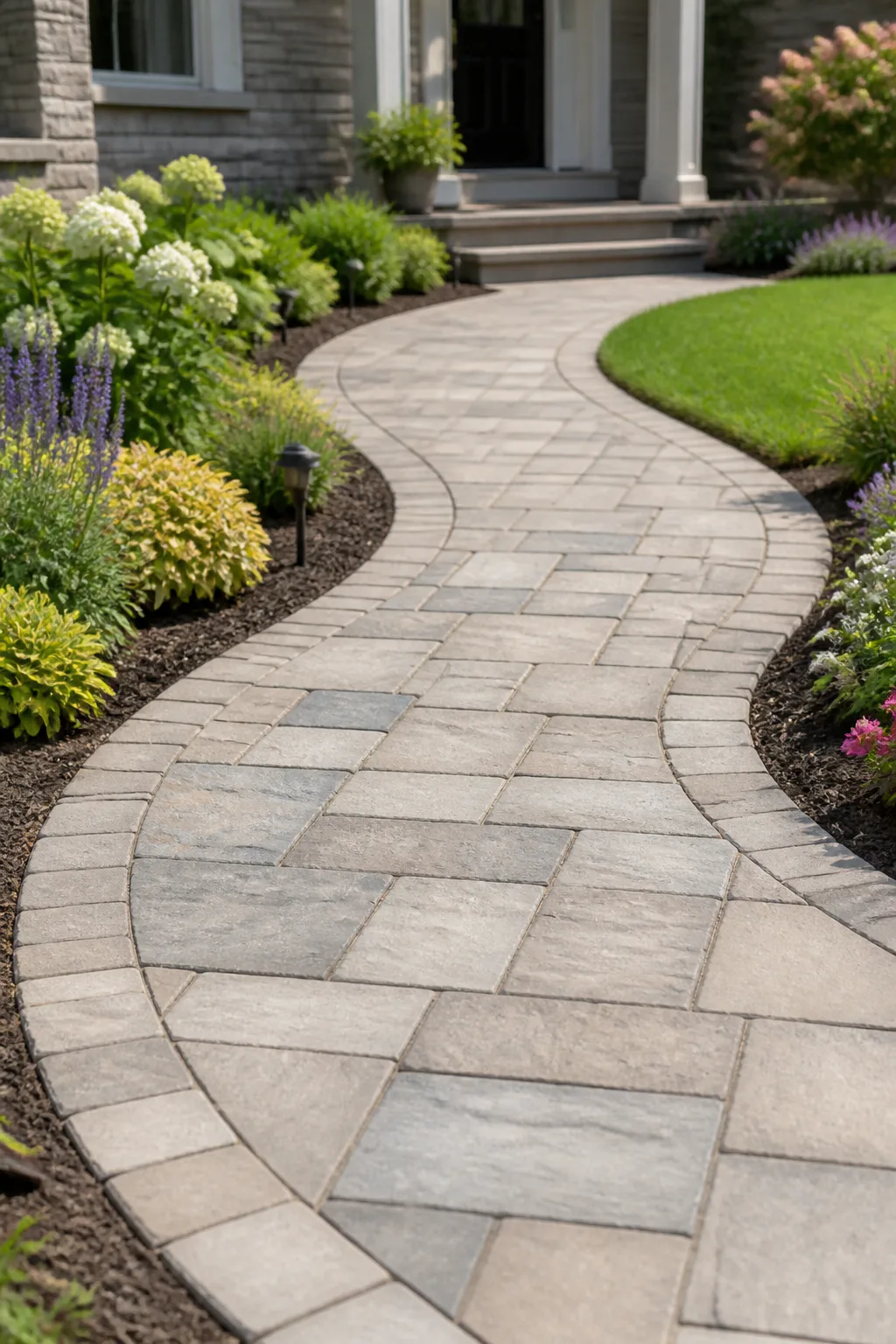
A gently curving walkway gives the approach to your front door a softer, more inviting shape than a straight path. Natural stone or pavers can guide the eye toward the entrance while creating room for planting beds along the way.
This idea works especially well in a front yard with space for a broad curve. In a smaller area, a subtle bend can still add interest without making the route feel indirect. Keep the path wide and steady enough for everyday use, and make sure its destination is easy to see from the sidewalk.
How to plan the route
Before choosing materials, mark the proposed path with a garden hose or rope and walk it from both directions. That simple mock-up can help you spot awkward turns and decide how the walkway relates to the porch, driveway, and garden beds.
- Choose pavers or stone that complement the home’s exterior.
- Keep the walking surface stable and even, especially near steps.
- Use planting beds beside the curve to make its shape feel intentional.
A curved path can become the organizing feature that ties the rest of the front yard together.
2. Layer Foundation Plantings by Height
Planting in graduated tiers gives the area along your home’s foundation depth and a more finished appearance. Taller shrubs toward the back, medium-height perennials in the middle, and lower flowers or groundcover at the front create a natural transition between the house and lawn.
This arrangement suits many home styles because the plants can be selected to match either a tidy or relaxed look. It also makes it easier to see each layer, rather than letting shorter plants disappear behind a row of tall shrubs. Leave enough room for plants to reach their mature size and for access to windows, siding, and utility areas.
Build a balanced planting bed
Start by noting the sun and shade patterns along the foundation, since conditions may change from one end of the house to the other. Repeat a few plant types to create rhythm, then add seasonal flowers or foliage for variety.
- Place taller shrubs where they won’t block windows or walkways.
- Use mid-height perennials to connect shrubs with the lawn edge.
- Choose low groundcover for the front of the bed and around borders.
- Check mature widths before planting to avoid overcrowding.
A layered bed can look lush while remaining orderly when each plant has a clear place.
3. Build a Modern Xeriscape Garden
A xeriscape garden uses plants suited to dry conditions and reduces reliance on thirsty lawn areas. Ornamental grasses, succulents, and other locally appropriate drought-tolerant plants can sit among gravel or decomposed granite for a clean, contemporary effect.
This approach can be a good fit for a sunny front yard or a spot where maintaining turf is difficult. It still needs thoughtful planning: plant choices should suit your climate, and new plants may need regular watering while they become established. Gravel also looks best when its edges are clearly defined and weeds are managed.
Keep the design simple and cohesive
Use a limited palette of plant shapes and hardscape colors so the garden feels calm rather than scattered. Group plants with similar water needs together, and leave enough space for grasses or succulents to reach their intended size.
- Choose species adapted to your region and site conditions.
- Group plants by water needs to make care more straightforward.
- Use decorative gravel to define open areas between plant groupings.
- Add stepping stones where you’ll need access for maintenance.
A well-planned xeriscape can bring strong texture and structure to the front yard with less dependence on a traditional lawn.
4. Frame the Porch with Oversized Planters
Large containers can make an entry feel welcoming even when there isn’t room for extensive garden beds. Set a pair beside the front door or place one on each side of the porch steps to create a clear visual frame around the entrance.
For an appealing mix, combine an upright feature plant with fuller plants around it and trailing varieties near the container’s edge. The result adds height, color, and movement in one compact display. Planters are also easy to refresh as seasons change, making them useful for renters or homeowners who want flexibility.
Compose a container display
Choose containers that suit the scale of the porch and leave enough space for people to pass comfortably. Make sure each pot has drainage, and select plants that match the light and exposure at the entry.
- Use a tall plant as the focal point of the arrangement.
- Fill around it with plants that offer contrasting foliage or flowers.
- Add a trailing variety to soften the container’s rim.
- Repeat colors or materials from the door, trim, or porch furniture.
Oversized planters bring a polished focal point to the porch without requiring a permanent planting bed.
5. Terrace a Sloped Yard with Low Walls
A sloping front yard can be difficult to plant and maintain, but low retaining walls can turn the grade into a series of usable planting levels. Stone, brick, or concrete walls create clear horizontal lines and give shrubs, perennials, and groundcover defined places to grow.
Terracing can also make a steep landscape feel more organized and connect the home to the street in a deliberate way. Wall height, drainage, and soil conditions matter, so consider professional guidance for larger or more complex projects. Even modest tiers should be planned so water can move away safely rather than collecting behind a wall.
Plan the tiers for planting and access
Think about how each level will be reached for planting, pruning, and watering. A mix of low walls and planted slopes can feel softer than a row of solid barriers, particularly when the materials relate to the house or existing paths.
- Choose wall materials that complement nearby masonry or paving.
- Include suitable drainage behind retaining walls.
- Reserve wider tiers for shrubs and smaller ones for perennials.
- Use groundcover where it can help soften the edges of each level.
Terracing transforms a challenging grade into a structured landscape with several layers of interest.
6. Plant a Pollinator-Friendly Front Garden
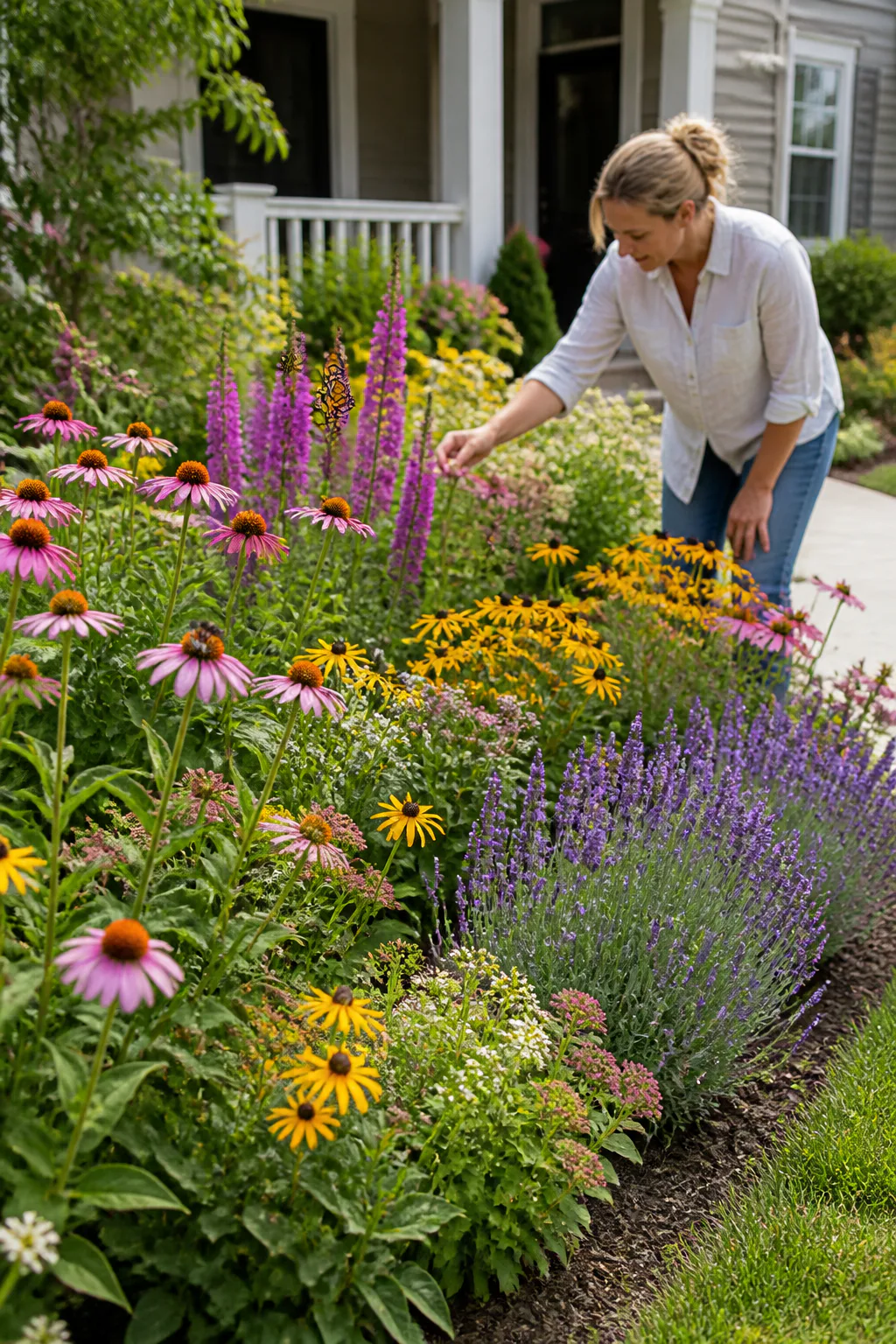
A pollinator-friendly planting bed brings color and movement to the front yard while offering flowers that attract bees and butterflies. Coneflowers, lavender, and black-eyed Susans are examples of plants that can create a relaxed meadow-inspired look, though the best choices depend on your region and growing conditions.
This style can be more naturalistic than a tightly clipped foundation bed, but it still benefits from a clear outline. Planting in generous groups helps flowers read as intentional masses, while paths or crisp borders keep the garden from spilling into the lawn or walkway.
Make a meadow-style bed feel considered
Choose a mix of bloom times and plant heights so the bed changes through the season. Leave space for plants to mature, and check whether selected flowers are appropriate for your area before planting.
- Include several flowering species rather than relying on one type.
- Group plants in clusters for a more cohesive visual effect.
- Use a defined edge beside the lawn or sidewalk.
- Choose varieties that suit the light, soil, and climate of your yard.
A pollinator garden can feel abundant and lively while still looking at home beside the front door.
7. Light the Walkway and Feature Trees
Outdoor lighting helps guests find the entrance after dark and gives the front yard another layer of atmosphere. Low path lights can mark the route to the door, while discreet uplights can emphasize a tree’s branching shape or a distinctive planting bed.
Rather than lighting every part of the yard equally, focus on the features people need to see and the details you want to highlight. Step lights can make changes in level easier to notice, and warm-toned light often creates a welcoming effect. Consider where fixtures will be viewed from inside as well as from the street.
Layer light with purpose
Place fixtures where they help with navigation without creating glare. A few carefully positioned lights can feel more balanced than a continuous row, especially when their scale and finish suit the home.
- Use path lights to mark key turns and the approach to the entrance.
- Direct uplights toward a feature tree rather than into windows.
- Add step lighting near stairs or changes in elevation.
- Check fixture placement from the sidewalk and indoor rooms.
Thoughtful lighting makes the landscape easier to navigate and gives its strongest features a gentle evening presence.
8. Create a Semi-Private Front Courtyard
A small courtyard near the front entrance offers a more sheltered place to sit without completely closing off the home from the street. A horizontal slat screen or living hedge can define the area, soften views, and make a porch or patio feel like an outdoor room.
This idea works best when the screen is scaled to the yard and still allows the entry to feel welcoming. A solid barrier can make a small space seem closed in, while a more open design preserves light and a sense of connection. Pair the boundary with simple seating and planting to make the courtyard feel complete.
Choose a boundary that suits the space
Consider whether you want a crisp architectural look or a softer green edge. A screen can provide structure right away, while a hedge will grow and change over time. Check local rules and sightlines before adding a fence or wall near the street.
- Use slats or planting to create privacy without making a solid barrier.
- Leave a clear, convenient route to the front door.
- Add a bench or chairs sized to the available space.
- Repeat materials or colors used elsewhere on the home.
A defined courtyard can make a front entry feel more personal while remaining open and inviting.
9. Add a Bubbling Water Feature

A small water feature can bring sound and movement to the front garden without taking over the landscape. A bubbling basalt stone or minimalist fountain works as a focal point near the entrance, beside a courtyard, or at the end of a walkway.
Keep the scale in proportion to the yard: a modest feature can be more effective than one that competes with the house. Consider how the sound will carry, where the water will splash, and how the feature can be maintained. A visible, easy-to-reach location makes routine care less of a chore.
Give the feature a natural setting
Use nearby plants, gravel, or stone to integrate the fountain with the rest of the garden. The surrounding area should feel intentional and provide enough room to reach the feature for cleaning or seasonal care.
- Choose a location where the feature can be seen from the entry.
- Keep water contained and away from the main walking route.
- Use materials that relate to nearby pavers or garden stone.
- Plan access to the power or water connections it requires.
A bubbling fountain can add a calming focal point while giving the entrance a distinct sense of place.
10. Make a Specimen Tree the Lawn’s Centerpiece

A distinctive tree can anchor the front yard and give the landscape a focal point through changing seasons. A Japanese maple, flowering dogwood, or ornamental cherry may offer an appealing form, blossoms, foliage, or color, depending on the variety and local growing conditions.
Position the tree where it has room to mature and where its shape can be appreciated from the house or street. It can sit within a lawn, but a simple planting bed beneath it helps mark the tree as intentional and reduces the need to mow right up to the trunk.
Choose a tree for the site
Look beyond the tree’s appearance at its mature size, sun requirements, and suitability for your climate. Consider overhead wires, foundations, paths, and the amount of shade it may cast as it grows.
- Select a species suited to your region and available space.
- Check mature height and spread before deciding on placement.
- Keep the trunk clear of hard surfaces and crowded planting.
- Use a simple bed or groundcover to frame the tree’s base.
One well-placed specimen tree can give the rest of the front-yard design a clear center of attention.
11. Define Flower Beds with Crisp Edging
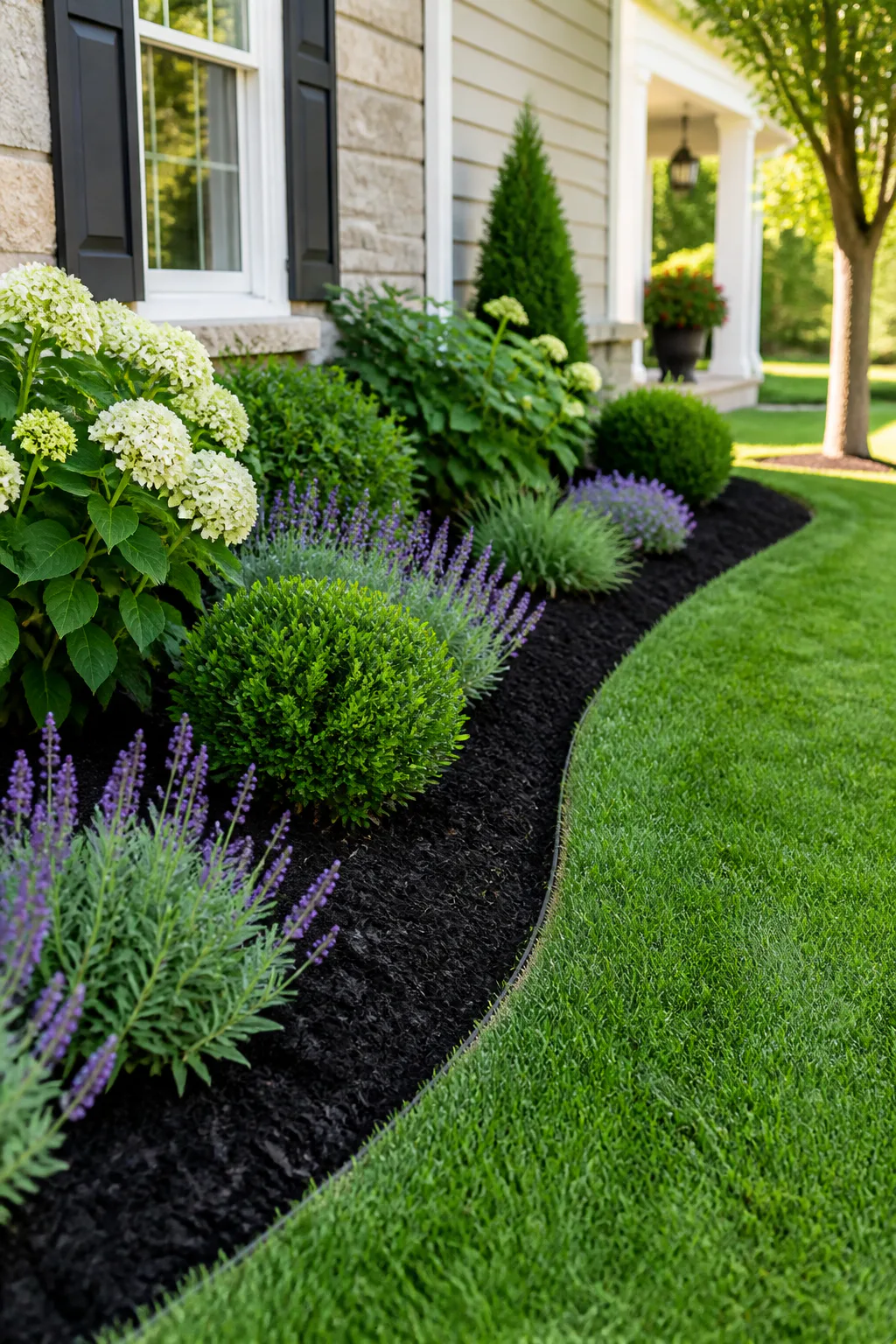
A sharply defined bed edge can make an established front garden look noticeably neater. The contrast between a clean lawn line, fresh mulch, and layered planting helps individual shapes stand out without requiring a complete redesign.
This is a flexible update for homeowners who want a more polished look but prefer to keep existing plants. Use an edging material that suits the home, or create a natural cut edge and maintain it regularly. Fresh mulch can unify the bed, but keep it clear of plant stems and tree trunks.
Refresh the bed’s outline
Walk the garden and decide whether the edge should echo a walkway, curve around a tree, or create a simple border along the house. Consistent shapes tend to look more deliberate than many small, unrelated curves.
- Mark the proposed edge before cutting or installing materials.
- Choose edging that complements nearby paving and exterior finishes.
- Apply mulch evenly without piling it against stems or trunks.
- Maintain the lawn edge so the bed keeps its crisp outline.
Clean borders provide a simple visual framework that makes flowers and shrubs feel more carefully arranged.
12. Frame the Walkway with an Arbor and Gate
An arbor and gate can turn the walk to the front door into a memorable entrance. Placed along a walkway or at a fence opening, the structure creates a transition between the street and the garden, while climbing plants add seasonal color and softness.
Wood or iron can suit different styles, from cottage-inspired to more formal. Choose a size that allows people to pass comfortably and does not overwhelm the path. Climbing roses or clematis can be options where they suit the climate, but leave room for growth and make sure the structure can support the mature plant.
Pair structure with climbers
Set the arbor where it naturally marks a garden threshold rather than placing it in the middle of an otherwise open path. Keep the gate easy to open and maintain a clear route through it as plants fill in.
- Match the arbor’s material and finish to the home or fence.
- Choose climbers suited to the sun and climate at the site.
- Train new growth along the structure as the plant establishes.
- Keep the opening wide enough for comfortable daily access.
A planted arbor gives the walkway a welcoming landmark and adds vertical interest to the front yard.
13. Replace Turf with Ornamental Grasses
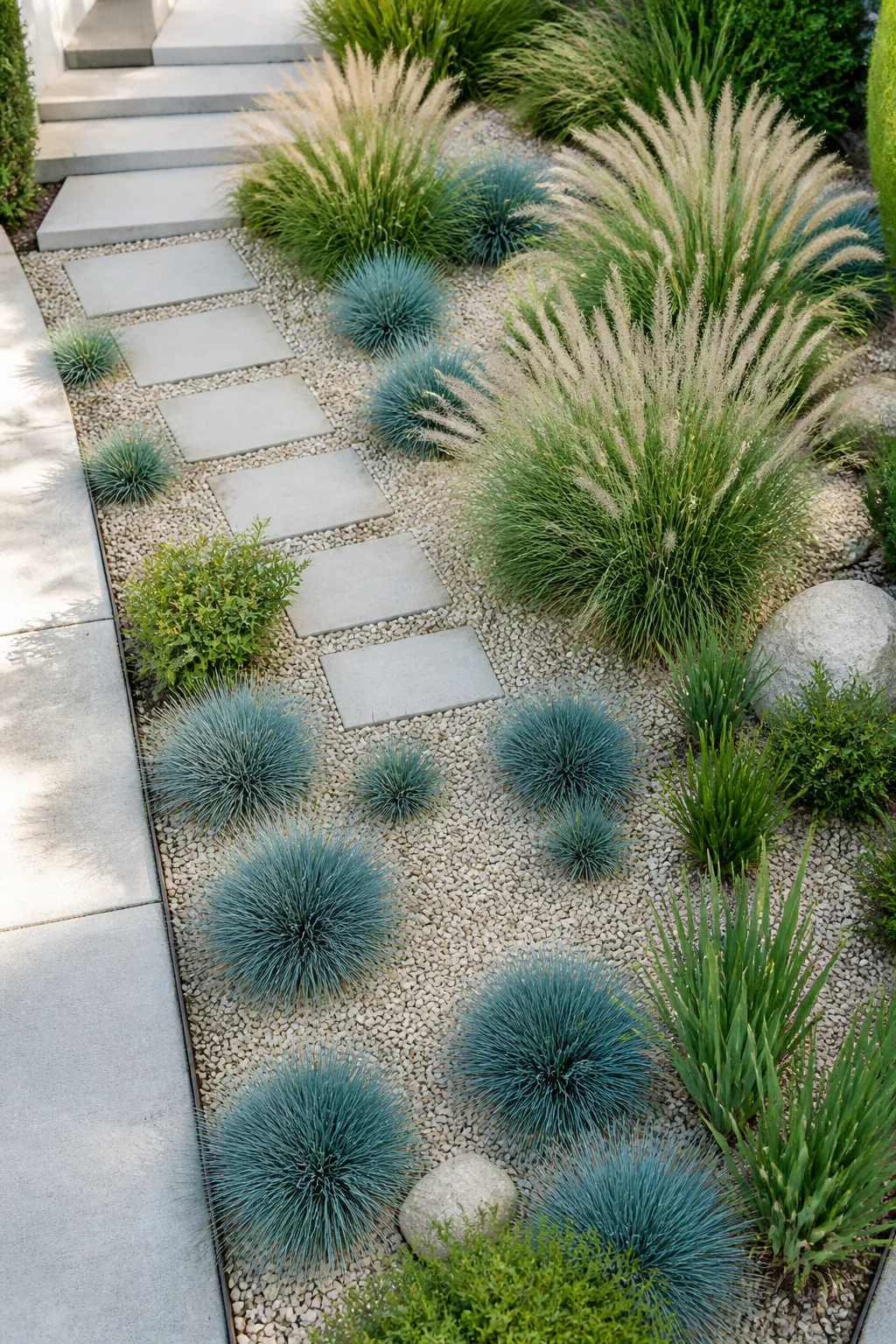
Ornamental grasses can create a soft, flowing look in a front yard where a traditional lawn is not essential. Feather reed grass or blue fescue, for example, can add texture and movement, with different forms bringing either upright structure or low mounds.
This approach may suit an area where you want less lawn to mow, but it is not a universal low-maintenance shortcut. Grasses still need to match the site and may require seasonal care. A defined edge, repeated planting groups, and a clear route through the yard help the design look intentional rather than untended.
Shape the planting for rhythm
Use larger groups of the same grass for a sweeping effect, or repeat smaller clumps along a path. Combine the grasses with gravel or a few complementary perennials if you want additional contrast without making the planting busy.
- Choose grasses that fit the region and available sunlight.
- Check their mature height and spread before planting.
- Define the area with edging or a walkway border.
- Group varieties to create a clear visual pattern.
A grass-focused garden brings movement and texture to a front yard while reducing reliance on a conventional turf lawn.
14. Coordinate House Numbers and Mailbox

House numbers and the mailbox are small details, but they can help the front entry feel more cohesive. Coordinating their finishes with nearby lighting, door hardware, or exterior trim turns practical features into part of the landscape design.
A compact garden around the mailbox or address plaque can connect these elements to the rest of the yard. Keep the display easy to read from the street and leave clear access for deliveries. Low plants are often a practical choice around the base because they are less likely to hide the numbers or interfere with the mailbox.
Bring the details together
Start with the home’s existing materials and choose a finish that feels related rather than introducing a competing accent. A small planting bed or simple groundcover can soften the post without making the area difficult to maintain.
- Choose numbers that are clearly visible from the street.
- Coordinate the mailbox or plaque finish with nearby hardware.
- Keep plants low and away from the delivery opening.
- Use a neat border to define a small garden around the post.
These practical accents can become a polished entry feature when their materials and surrounding planting work together.
15. Pave a Front Yard Mini-Patio
A small seating area can turn an underused patch of lawn into a place to enjoy a morning coffee or greet a neighbor. Gravel or pavers offer a clear surface for a pair of chairs and a compact table, especially near the porch or within a front courtyard.
Think about how the patio will connect to the front door and sidewalk so it feels like part of the landscape rather than an isolated corner. Leave room for people to walk around the furniture, and consider nearby windows and sightlines when choosing the location. A planter or low garden edge can help define the space without enclosing it.
Make a comfortable outdoor spot
Choose a surface that suits the home and is practical for the furniture you plan to use. Gravel can create a relaxed look, while pavers provide a firmer, more regular base. Both benefit from a tidy border and a well-planned path to the entrance.
- Size the patio to fit seating while keeping routes clear.
- Use pavers or gravel that complement the home’s exterior.
- Add a small table for a useful, welcoming touch.
- Frame the area with containers or low planting where space allows.
A mini-patio adds a functional destination to the front yard and makes outdoor living part of the everyday entry experience.
Final Thoughts
The most successful front yard landscaping ideas are the ones that suit your home, climate, and daily routines. A curved path, layered planting bed, or carefully placed light can make a noticeable difference, while larger projects such as a courtyard or terraced garden can reshape how you use the space.
Start with one feature that addresses a real need or catches your eye, then build around it with compatible plants and materials. With a little planning, your front yard can feel welcoming, practical, and distinctly yours.



