11 Clever Budget Garden Decor Ideas
Decorating a garden on a budget is less about buying a matching set and more about giving useful, overlooked, or inexpensive things a second life. Thrift stores, leftover paint, fallen branches, and recycled jars can add color and character without making your outdoor space feel overdone.
These garden decor ideas on a budget work for everything from a compact patio to a larger backyard. Some are quick refreshes, while others take a little more planning, so you can choose projects that suit your space, tools, and available time.
Before you begin, consider how much sun and rain each spot gets, and choose materials that can handle outdoor conditions. A thoughtful placement and a few personal touches can make even a simple DIY project feel right at home among your plants.
Quick Answer
The best garden decor ideas on a budget are colorful glassware flowers, one-of-a-kind vintage finds, blooms displayed in painted thrift containers, personalized river rocks and glowing path lights. Other low-cost projects include hanging woven baskets of flowers, a vertical herb garden, a fence mirror, painted terra cotta pots, a rustic trellis made from fallen branches and a whimsical bird bath.
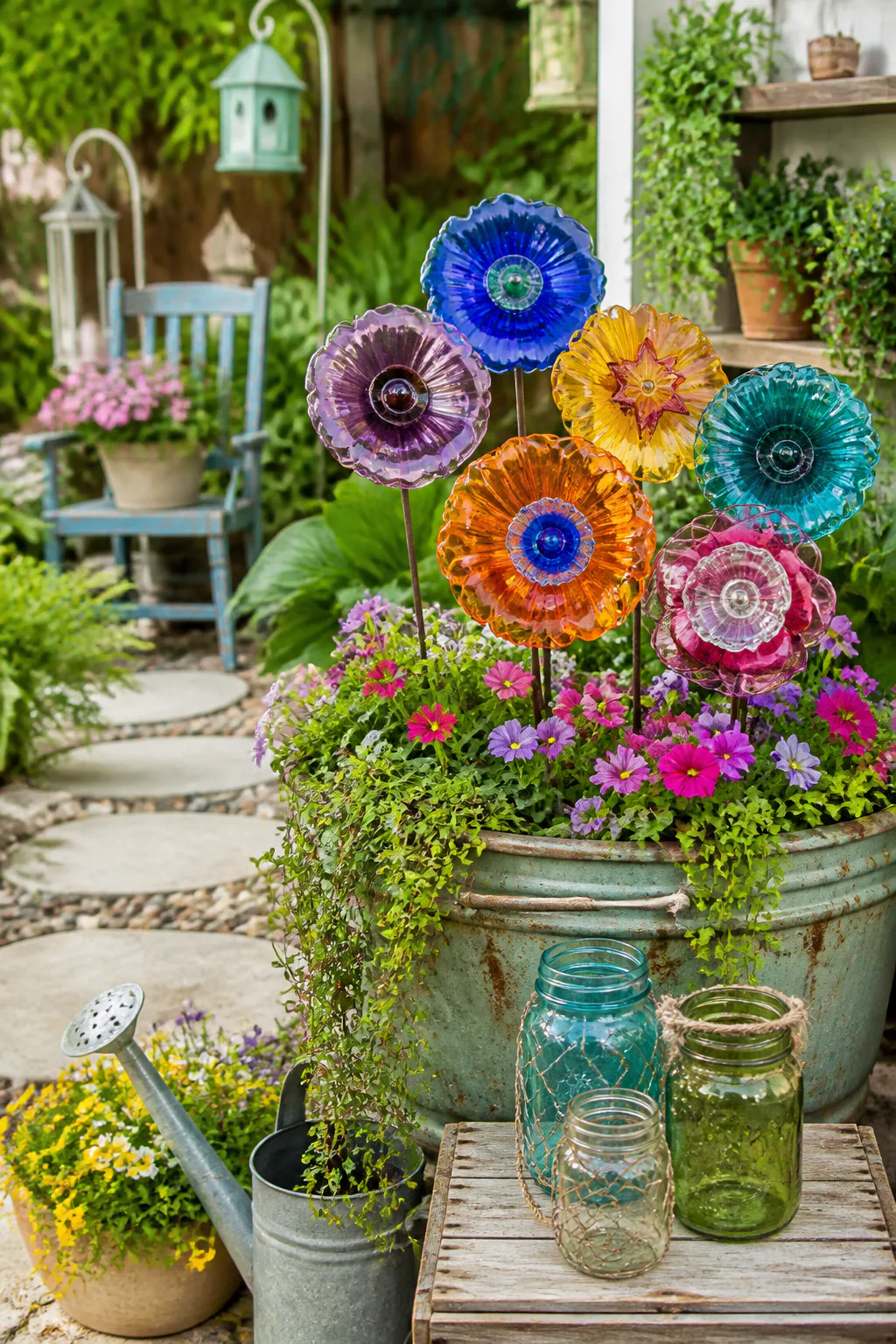
1. Create Colorful Glassware Flowers for the Garden
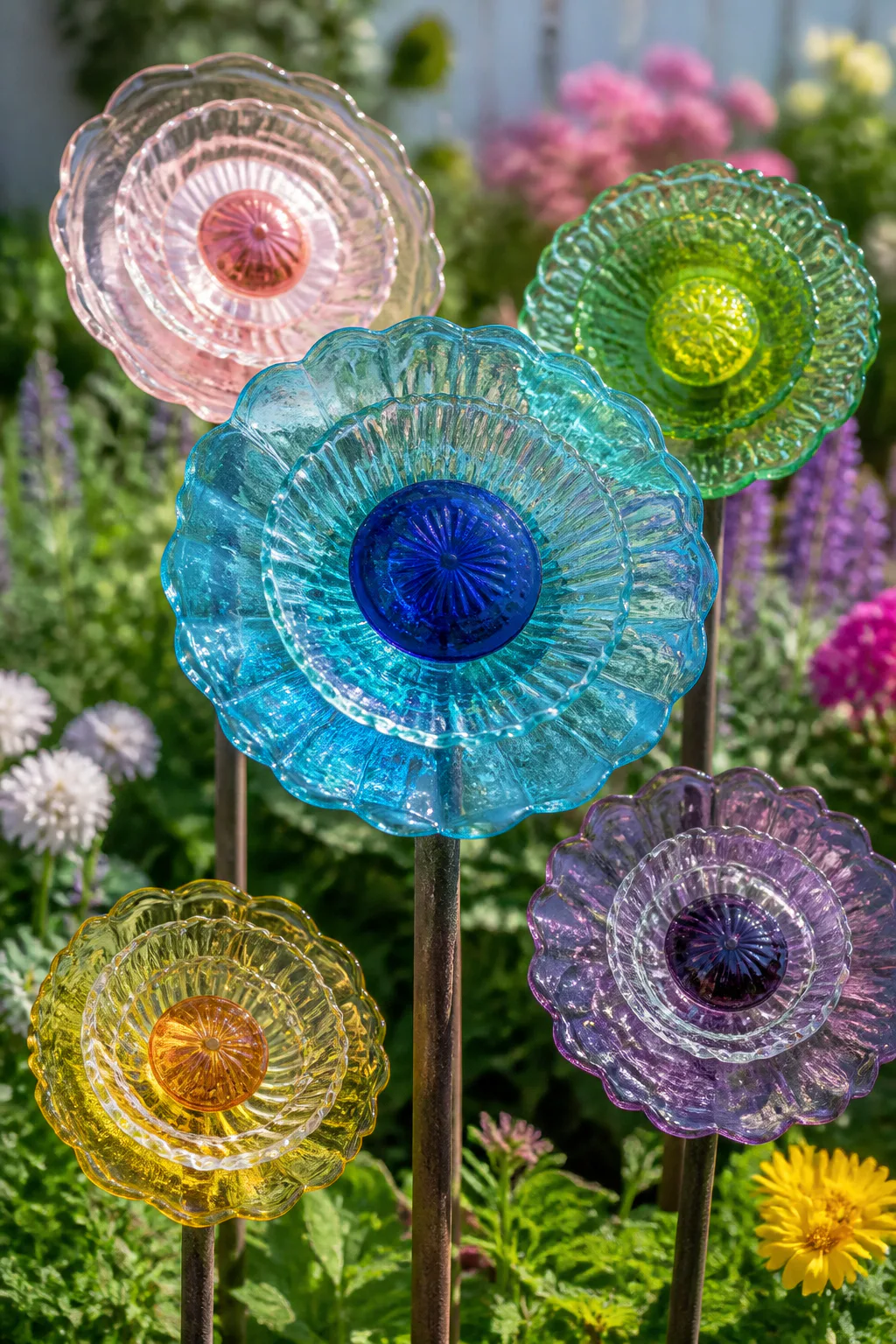
Thrifted plates, shallow bowls, and glass globes can become playful flower-shaped yard art. Look for pieces in colors that complement your blooms, or mix patterns for a more collected, cottage-garden feel. A flower made from glass can bring color to a quiet corner even when nothing is in bloom.
These decorations work especially well along a garden border, beside a shed, or tucked among low-growing plants. Choose a sturdy stake and arrange the glass pieces before attaching them so you can test the shape and balance. Keep the finished piece where it can catch the light without obstructing a pathway.
How to assemble your glass flower
Use an adhesive intended for outdoor conditions and follow its directions for clean surfaces and curing time. Build the flower from the back forward, with the largest plate as the main bloom and smaller pieces as a center. Secure the completed decoration firmly to its stake.
- Choose pieces with smooth edges and no major cracks.
- Try a single color family for a calmer look, or combine contrasting hues for a brighter display.
- Place the stake securely in the soil, away from spots where it could be knocked over.
A few glass flowers can add a cheerful focal point without taking up planting space.
2. Turn Vintage Finds into One-of-a-Kind Planters

Unusual containers can make your flowers feel more personal than a row of matching pots. Metal colanders, wooden crates, galvanized buckets, and even old boots can all become garden planters when they are clean and suitable for outdoor use. Their existing scuffs and patina often add to the charm.
Place a repurposed planter where its shape can be noticed, such as beside an entry, at the end of a path, or among more traditional pots. Think about the plant as well as the container: a trailing variety can soften the edges of a bucket, while upright flowers can make a boot or crate look like a little garden feature.
Make the container work for plants
Good drainage matters, so add holes to the bottom of containers that do not already have them. Use an appropriate drill bit for the material, and set the planter on a surface where excess water can escape. A liner can help protect a wooden crate, but it should not block drainage.
- Check that the container is sturdy enough to hold soil when wet.
- Match the container size to the plant’s roots and growth habit.
- Group different repurposed planters together to create a collected display.
These one-of-a-kind pots bring personality to the garden while making use of items you already have or can find secondhand.
3. Display Blooms on Painted Thrifted Plant Stands

An old chair, small step stool, or simple plant stand can give potted flowers a more visible spot. Raising one container above the ground adds height to a border or patio, helping a collection of plants feel layered rather than lined up. It can also draw attention to a favorite pot or a particularly full bloom.
Look for a piece with a stable frame and a shape that suits your garden. A chair can make a welcoming feature near a porch, while a step stool fits neatly into a small corner. A fresh coat of exterior paint can tie an old find to your existing cushions, planters, or fence color.
Refresh and style your stand
Clean the surface, let it dry, and prepare it according to the paint instructions before applying a weather-resistant finish. Check that the piece can safely support the weight of a pot, especially after watering. Keep it on a level surface and avoid using a wobbly stand as a display.
- Choose a paint color that complements nearby flowers instead of competing with them.
- Use one large pot for a simple statement or several smaller pots on a broader stand.
- Place the display where you can enjoy it without narrowing a walkway.
One elevated planter can add a fresh focal point without requiring a new garden structure.
4. Make a Personalized River Rock Stepping-Stone Path
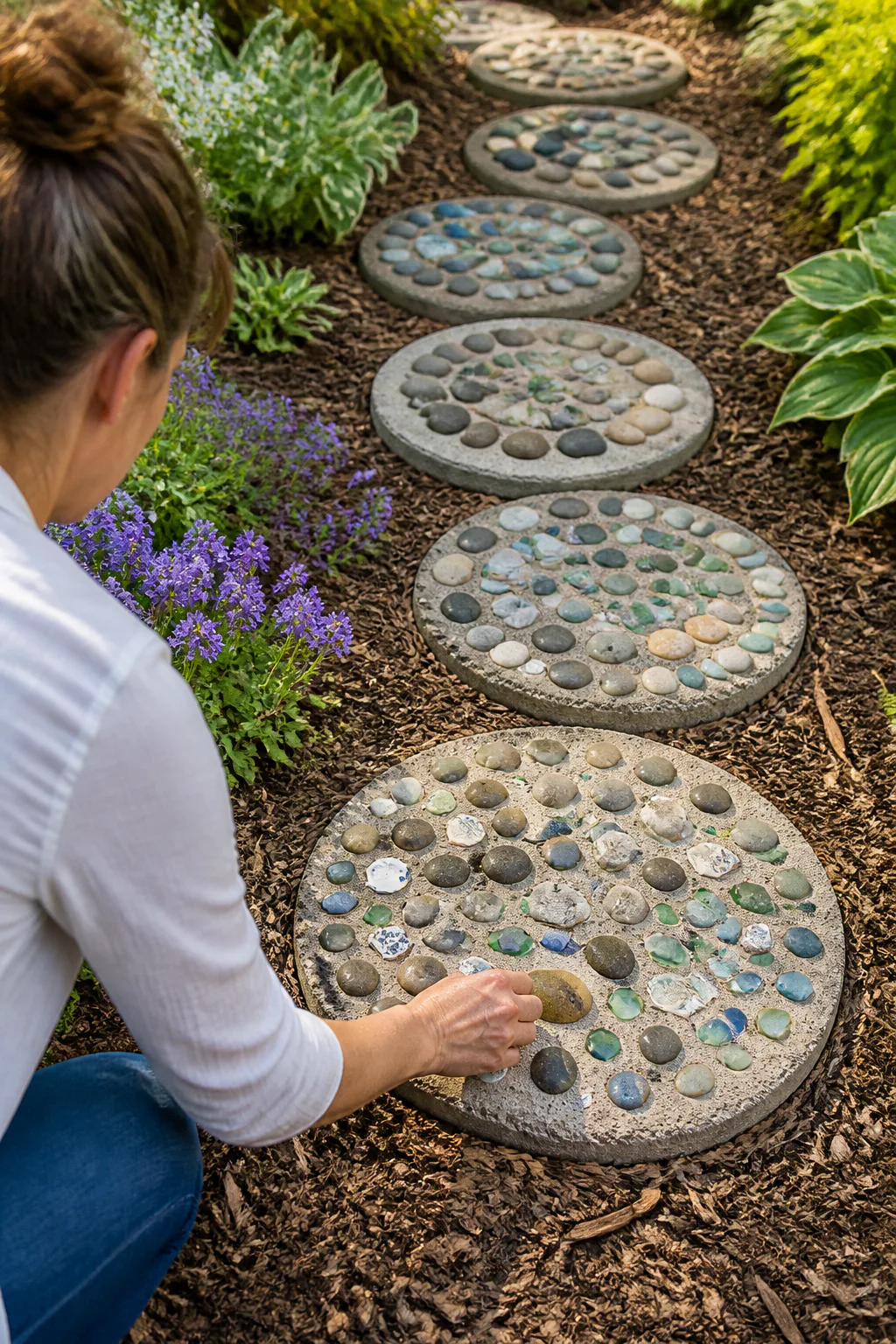
Stepping stones can give a garden path a handmade look while helping guide visitors across a planted area. River rocks, sea glass, and broken ceramic pieces offer different colors and textures, so the finished design can feel natural, bright, or carefully patterned. Arrange the stones to echo the materials and colors already in your garden.
This project suits a side yard, a route through a lawn, or the approach to a small seating area. You can make each stone different or repeat a simple motif for a more coordinated path. Before pouring anything, lay out the route and consider comfortable spacing for your stride.
Plan the pattern before the concrete sets
Prepare a suitable mold and mix the concrete according to its package directions. Press decorative pieces into the surface while it is workable, taking care not to leave sharp edges exposed where people will walk. Allow each stone to cure fully as directed before placing it in the garden.
- Sort your rocks or ceramic pieces by color and size before starting.
- Make a small test arrangement to check the pattern and spacing.
- Keep the walking surface as even and comfortable as possible.
A few custom stones can turn a practical route into a detail that feels uniquely yours.
5. Line Garden Paths with Glowing Mason Jar Lights

Recycled glass jars can provide a gentle evening glow along a path, patio edge, or garden bed. Add battery-operated tea lights to clean jars for a simple display that is easy to move as your layout changes. The glass softens the light and brings a warm, welcoming feel to an outdoor space after sunset.
Use a small cluster near a seating area or space jars at intervals to mark the edge of a walkway. Keep the arrangement low and unobtrusive so it adds atmosphere without getting in the way. If you prefer a more natural look, clear jars blend easily with surrounding plants; colored glass can create a brighter accent.
Set up a simple glowing border
Choose jars that sit securely on a flat surface and are easy to reach when you need to switch the lights on or replace batteries. Follow the light manufacturer’s directions for outdoor use, and bring the jars inside during severe weather if needed. Avoid placing them where people may trip over them.
- Use jars of similar sizes for a tidy, repeated look.
- Mix jar heights for a more casual display beside a garden bed.
- Test the light placement after dark to see whether the path is clearly marked.
These small lights add atmosphere with materials that may already be in your kitchen or recycling bin.
6. Hang Woven Baskets Filled with Trailing Flowers

A thrifted wicker or rattan basket can become a hanging planter that adds greenery above ground level. Trailing annuals spill over the sides and soften a fence, porch, or sheltered garden wall. Hanging baskets are especially useful when ground space is limited or you want to add a little height to a plain vertical surface.
Choose a basket in sound condition, with a shape that can hold soil and a plant comfortably. Its natural texture pairs well with colorful flowers, while a simple green planting keeps the look relaxed. Check the location’s light before choosing plants, and make sure you can reach the basket for watering and upkeep.
Line and plant the basket
Line the inside with burlap and moss to help contain the growing medium, then add plants suited to the conditions in that spot. Use a secure hanging point capable of supporting the basket when it is full and damp. Water regularly, since hanging planters can dry out faster than plants in the ground.
- Look for a basket with sturdy handles or a frame suitable for hanging.
- Choose trailing flowers that match the available sun or shade.
- Hang the basket where it will not obstruct a doorway or walkway.
A single basket can add a lively, layered touch to a fence or small patio.
7. Build a Vertical Herb Garden from a Pallet

A pallet set upright against a fence or wall can turn an unused vertical surface into a compact growing display. Its slats create separate spaces for herbs or succulents, making this a practical option for a small patio, narrow yard, or sunny outdoor kitchen area. The finished garden also adds texture and greenery at eye level.
Choose a pallet that is sound and stable, and use it only if you can secure it safely in place. Before planting, consider how much sunlight the wall receives and whether you can reach each pocket for watering and harvesting. A vertical herb garden is most useful when it is close enough to your kitchen or seating area to enjoy.
Prepare the pallet for planting
Line the back and bottoms of the slats with landscape fabric so soil stays in place, then fill each section with growing medium. Secure the pallet to a sturdy fence or wall rather than relying on it to lean unsupported. Start with a manageable selection of herbs that suit the light and space.
- Check the pallet for loose boards, protruding fasteners, or signs of damage.
- Place herbs with similar light and watering needs near one another.
- Label the plants if you are growing several herbs in similar-looking pockets.
This upcycled feature combines useful planting space with a simple rustic backdrop.
8. Add a Fence Mirror for a Secret-Garden Effect

An old mirror can make a quiet garden corner feel brighter and more intriguing. Hung on a sturdy fence or wall, it reflects nearby foliage and light, creating the impression of a view beyond the boundary. This can be especially effective in a small courtyard or enclosed garden where a blank wall feels dominant.
Position the mirror to reflect plants, a pretty path, or a bright part of the garden rather than an unappealing storage area. A weathered frame can suit a relaxed, vintage look, while a simple frame blends into a more understated space. Remember that the reflection will change as plants grow and the light moves through the day.
Choose and place the mirror thoughtfully
Use a mirror and mounting method suited to outdoor conditions, and fasten it securely to a stable surface. Consider how rain and weather may affect both the frame and the backing. Check the reflection from different angles so the mirror enhances the garden rather than creating a distracting glare.
- Hang it at a height that reflects greenery or a garden feature.
- Make sure the fence or wall can support the mirror safely.
- Keep the area around it uncluttered so the reflected view feels intentional.
Used carefully, a mirror adds depth and a little sense of discovery without requiring new planting space.
9. Give Plain Terra Cotta Pots a Painted Makeover
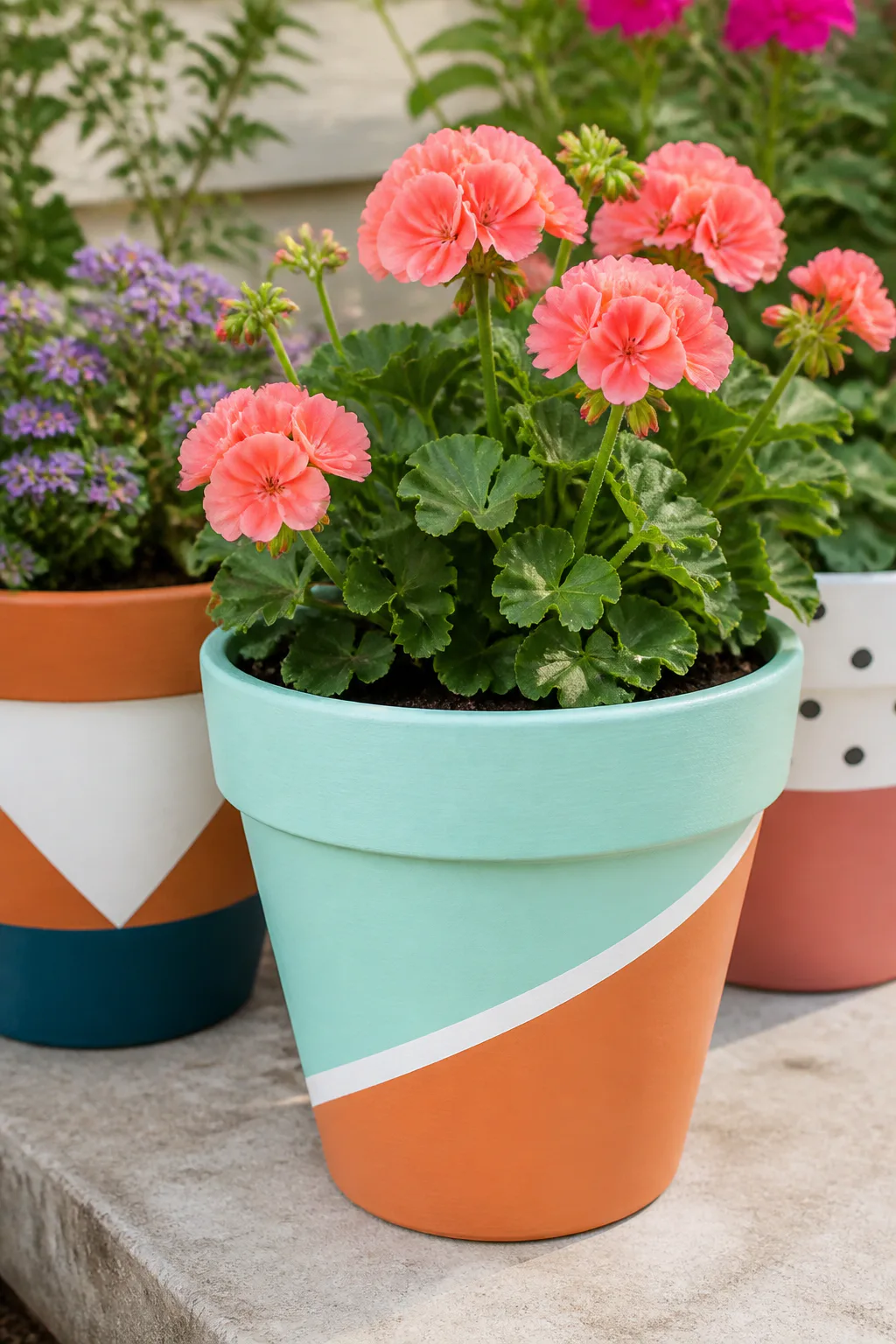
Plain terra cotta pots are easy to find and work with many garden styles, but a little paint can make them feel more personal. Geometric patterns, color blocking, or a distressed whitewash finish each create a different effect. Try a coordinated set for a neat display or decorate individual pots to add small accents among the greenery.
Painted pots look at home on a patio, windowsill, plant stand, or grouped beside a garden path. Repeating one color across several containers can tie a mixed collection together, while a single bold pot can stand out among neutral planters. Keep the design simple if you want the flowers and foliage to remain the main focus.
Make a pot that suits your space
Start with clean, dry pots and use paint appropriate for the material and intended outdoor conditions. Let the finish dry as directed before planting or exposing it to weather. You can sketch a pattern first or use painter’s tape to help create straight edges and crisp color blocks.
- Choose two or three colors that already appear in your outdoor space.
- Try stripes, simple shapes, or a soft whitewash for an easy design.
- Keep drainage holes clear when painting the base of each pot.
A small paint project can refresh inexpensive pots and make a collection feel more cohesive.
10. Shape Fallen Branches into a Rustic Plant Trellis
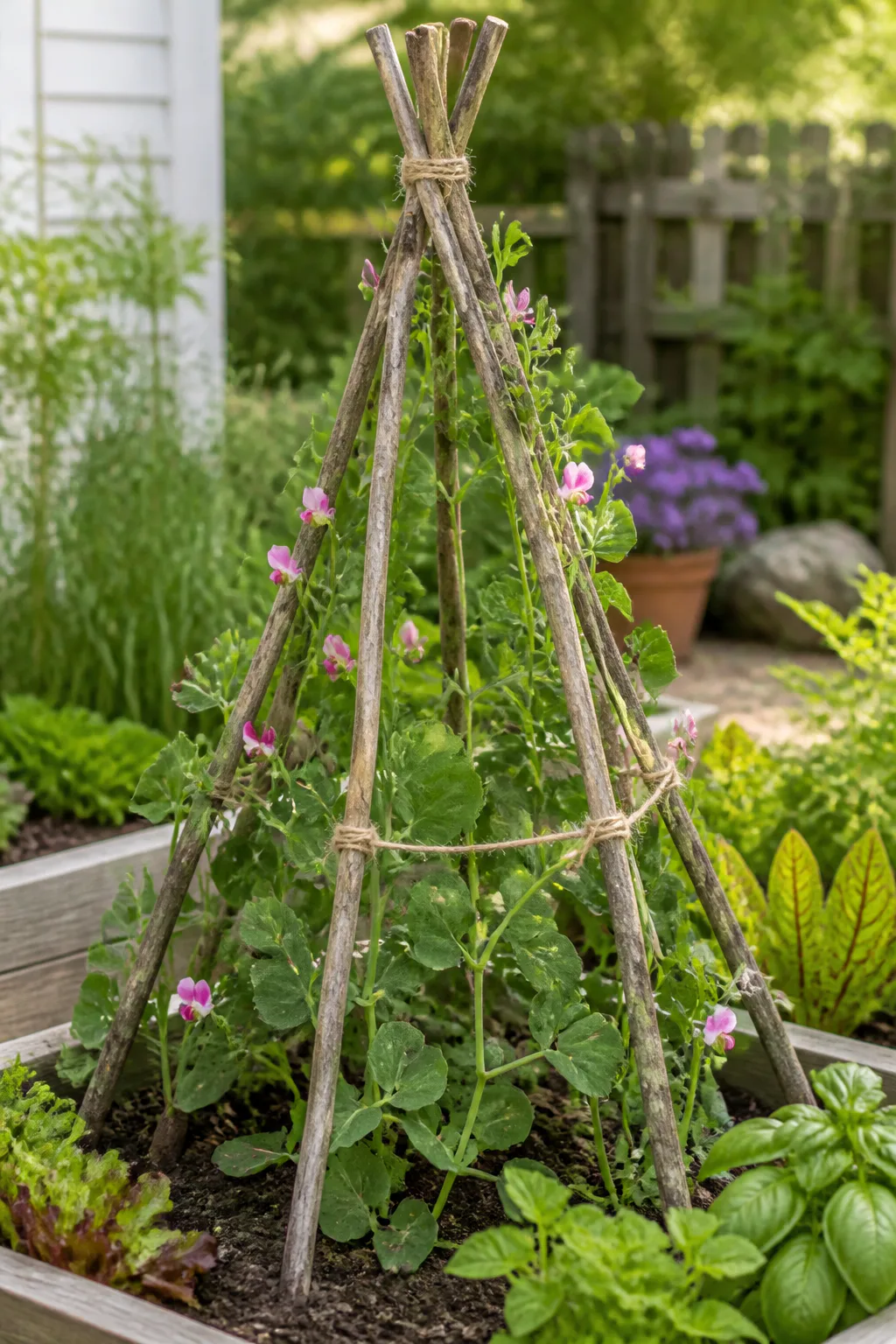
Sturdy fallen branches can be tied together to create a natural-looking trellis for climbing plants. A teepee shape works well in a garden bed or large container, while a grid can suit a fence or narrow planting area. The branches add structure without introducing a polished, manufactured look.
Use the trellis for sweet peas, beans, or ivy, choosing a location that gives the plants room to grow. The finished support can also bring vertical interest to an otherwise low planting bed. Gather branches that are strong enough to hold the expected growth, but avoid cutting living branches when fallen material will do.
Build a simple branch support
Arrange the branches into a teepee or grid and bind the intersections with garden twine. Push the lower ends firmly into the soil and check that the structure stays steady before adding plants. As climbers grow, guide their stems gently toward the support rather than forcing them into place.
- Choose branches of similar length for a more balanced teepee.
- Use extra ties at the points that carry the most weight.
- Place the structure where it will not lean into a path as plants fill out.
This easy-to-adjust feature makes use of natural materials while giving climbing plants a clear place to grow.
11. Create a Whimsical Bird Bath from a Vintage Bowl

A shallow bowl can become a simple water feature and a resting spot for visiting birds. Set a glass or ceramic bowl on a stable concrete pillar, or place a terracotta saucer on a short stake for a more understated look. The shape and color of a vintage bowl can also serve as a decorative accent among flowers.
Position the bird bath where you can see it, but leave enough open space nearby for birds to approach. A spot that is easy to reach makes it simpler to refresh the water and keep the bowl clean. Choose a stable base so the bowl does not wobble or tip in wind or when touched.
Keep the bird bath practical
Use a shallow, sturdy bowl and check that its surface is not slippery or damaged. Set it at a comfortable height for regular maintenance, and refresh the water as needed. A plain terracotta saucer can be an easy alternative if you want a simple project with fewer pieces to balance.
- Test the base for stability before adding water.
- Place the bowl where it is visible but not in the middle of a busy walkway.
- Clean and refill it regularly to keep the water fresh.
A thoughtfully placed bird bath adds movement and a welcoming detail to the garden.
Frequently Asked Questions
How can I decorate my garden for free?
Use what you already have: fallen branches for trellises, river rocks for markers, and old jars, tins or teacups as planters.
What are cheap ways to add color to a garden?
Painted pots, glass bottles, colorful planters and annual flowers grown from seed add color for very little money.
How do I make thrifted garden decor last outdoors?
Seal painted pieces with an outdoor-rated clear coat, add drainage holes to containers, and bring glass and ceramics inside in freezing weather.
Final Thoughts
Budget-friendly garden decor can begin with a single thrifted find, leftover paint, or material gathered from your own yard. Whether you choose a painted pot, a glass flower, or a handmade path, the best projects are the ones that suit your space and feel enjoyable to make.
Start with one idea that solves a practical need or brightens a spot you notice every day. As your garden changes, you can move displays, add another small project, or let your plants become the main feature. A few thoughtful details are often all it takes to make an outdoor space feel more personal.
More garden ideas: see our DIY garden decor ideas and patio container garden ideas.