15 Stunning Patio Container Garden Ideas
A patio container garden can add color, fresh herbs, privacy, and personality without requiring a traditional garden bed. With the right mix of containers and plants, you can make a compact balcony feel lush or give a larger patio a more welcoming, finished look.
These ideas range from easy-to-move statement pots to vertical displays and edible plantings. Each one can be adapted to your available space, the amount of sun your patio receives, and how much time you want to spend watering and tending plants.
Use the suggestions as starting points rather than strict recipes: check plant labels for light and water needs, and make sure every container has suitable drainage. Whether you’re growing flowers, foliage, or dinner ingredients, a few thoughtful choices can make your patio work harder and feel more like an outdoor room.
Quick Answer
The best patio container garden ideas are thriller-filler-spiller pots, a vertical ladder herb display, movable oversized planters, a living privacy screen and flowers in vintage garden containers. Also try a back-door herb wheel, a monochromatic group of pots, a corner planter, a canopy of hanging flower baskets, a pallet herb wall, a succulent coffee-table bowl, a tiered plant stand, a sculptural statement plant, a salad garden in a whiskey barrel and fragrant night-blooming plants.
1. Create a Thriller-Filler-Spiller Statement Pot
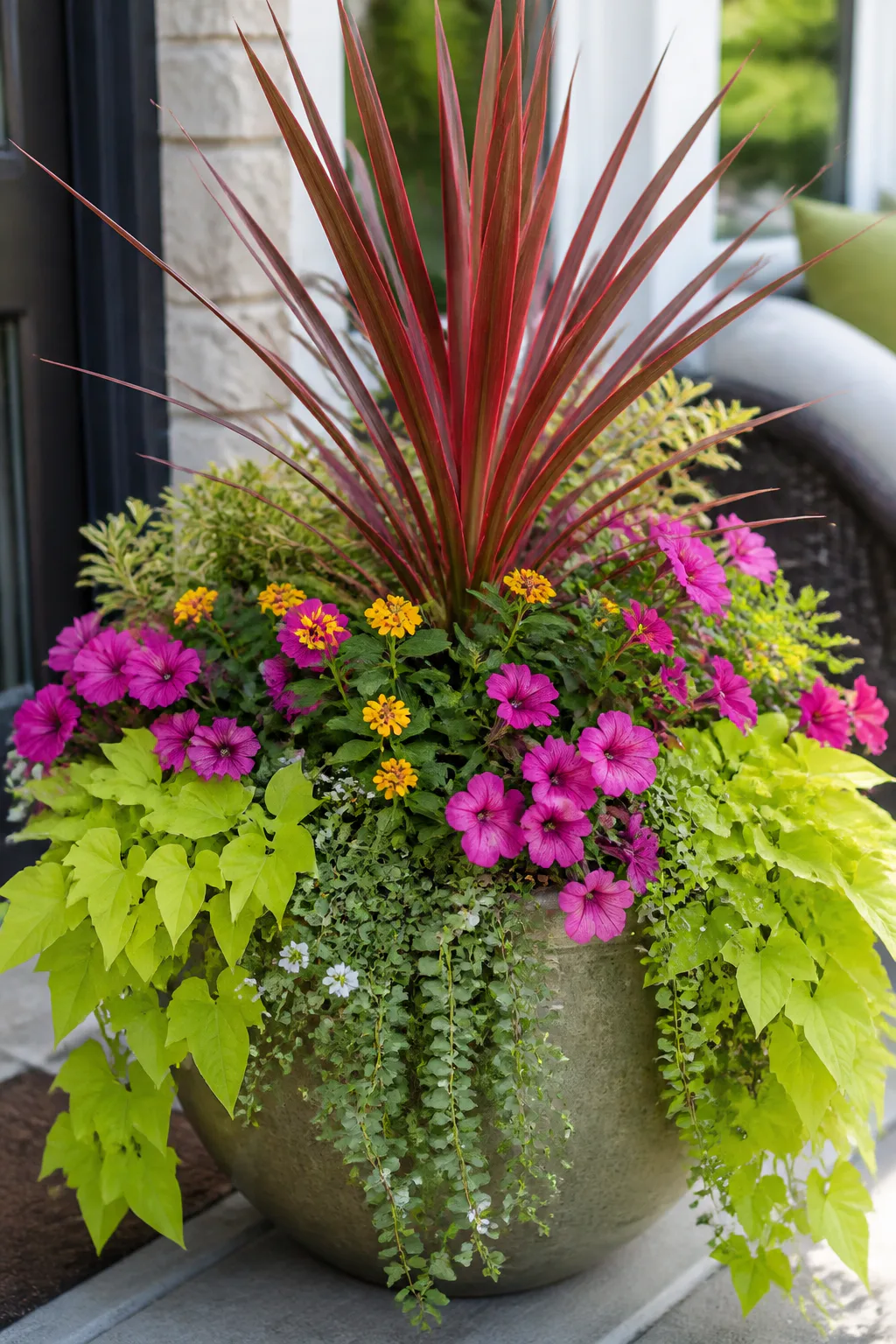
A thriller-filler-spiller arrangement gives one large container the presence of a complete garden bed. Place a tall, eye-catching plant in the center, surround it with lower flowering plants, and let a trailing variety spill over the rim. The different heights and shapes make the pot feel abundant from every angle.
This approach works well beside an entry, at the end of a bench, or in a patio corner that needs a focal point. Choose plants with compatible light and watering needs so the combination stays healthy together. A sunny pot might pair an upright ornamental grass with petunias and trailing sweet potato vine, while a shadier spot calls for different selections.
How to build the combination
Start with the tallest plant, then position the fillers around it and leave room near the edge for spillers. Keep the arrangement balanced, but don’t worry about making it perfectly symmetrical.
- Choose a container wide enough to give roots room to grow.
- Check that all three plant types suit the same light conditions.
- Use quality potting mix and keep drainage holes clear.
- Water slowly until moisture reaches the root zone.
2. Build a Vertical Ladder Herb Display
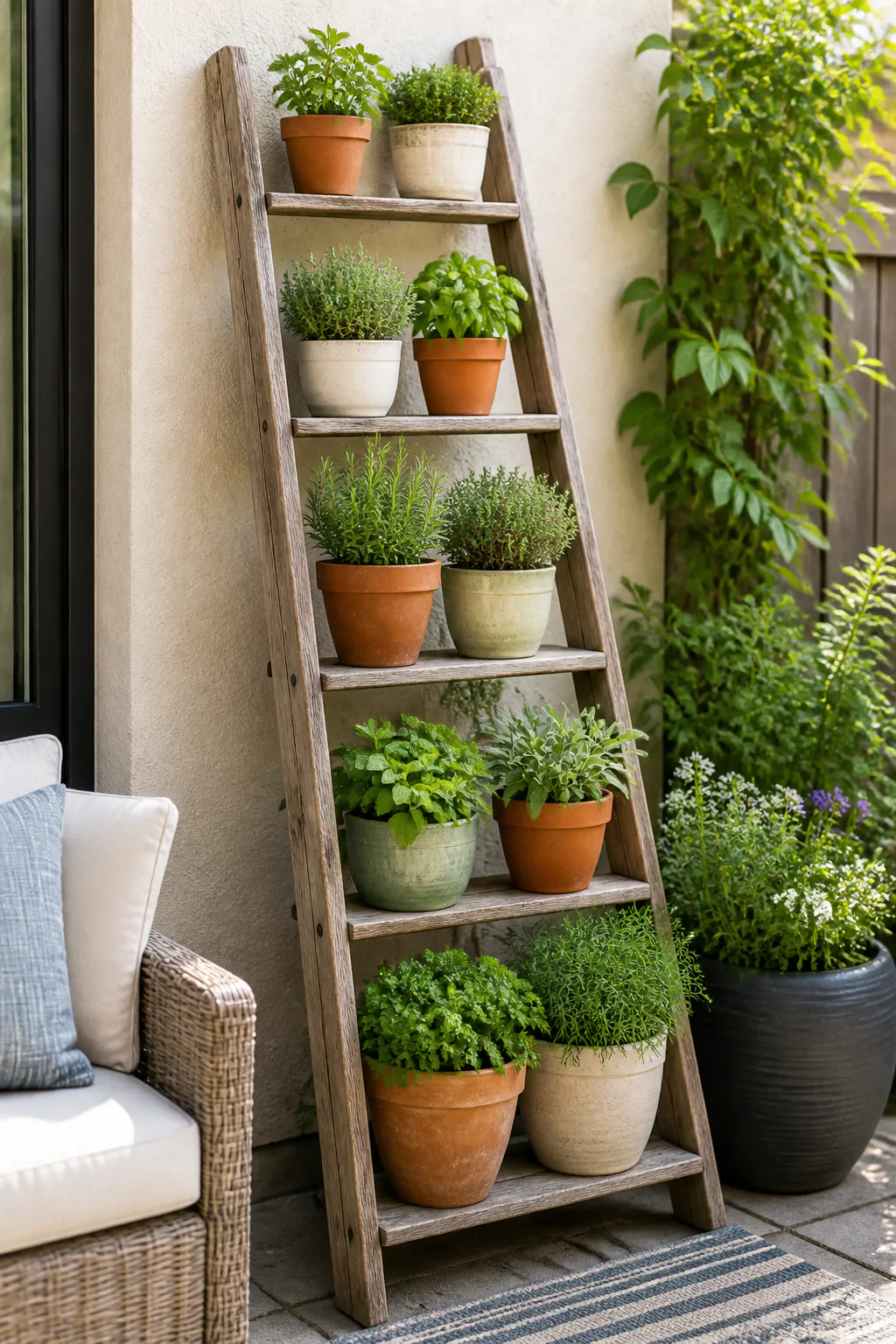
A leaning ladder turns a bare patio wall into a compact, layered display. Rest pots on its steps, placing smaller containers higher and heavier ones lower for a balanced look. Herbs make the setup useful as well as decorative, while succulents or compact flowers can add variety between edible plants.
This is especially helpful on a narrow patio where floor space is limited. Position the ladder where you can reach every pot for watering and harvesting, and make sure it is stable before adding containers. A rustic wooden ladder brings a relaxed garden feel, but a simple finish that suits your patio furniture can make the display feel more intentional.
Set up a sturdy display
Choose a ladder with broad, steady steps, and lean it against a secure wall. If the surface is exposed to weather, use a ladder and finish suitable for outdoor conditions.
- Put heavier pots on the bottom steps.
- Group herbs with similar sunlight and watering needs.
- Use saucers or trays to catch drips without holding excess water.
- Leave room between pots for airflow and easy harvesting.
3. Add Moveable Oversized Planters
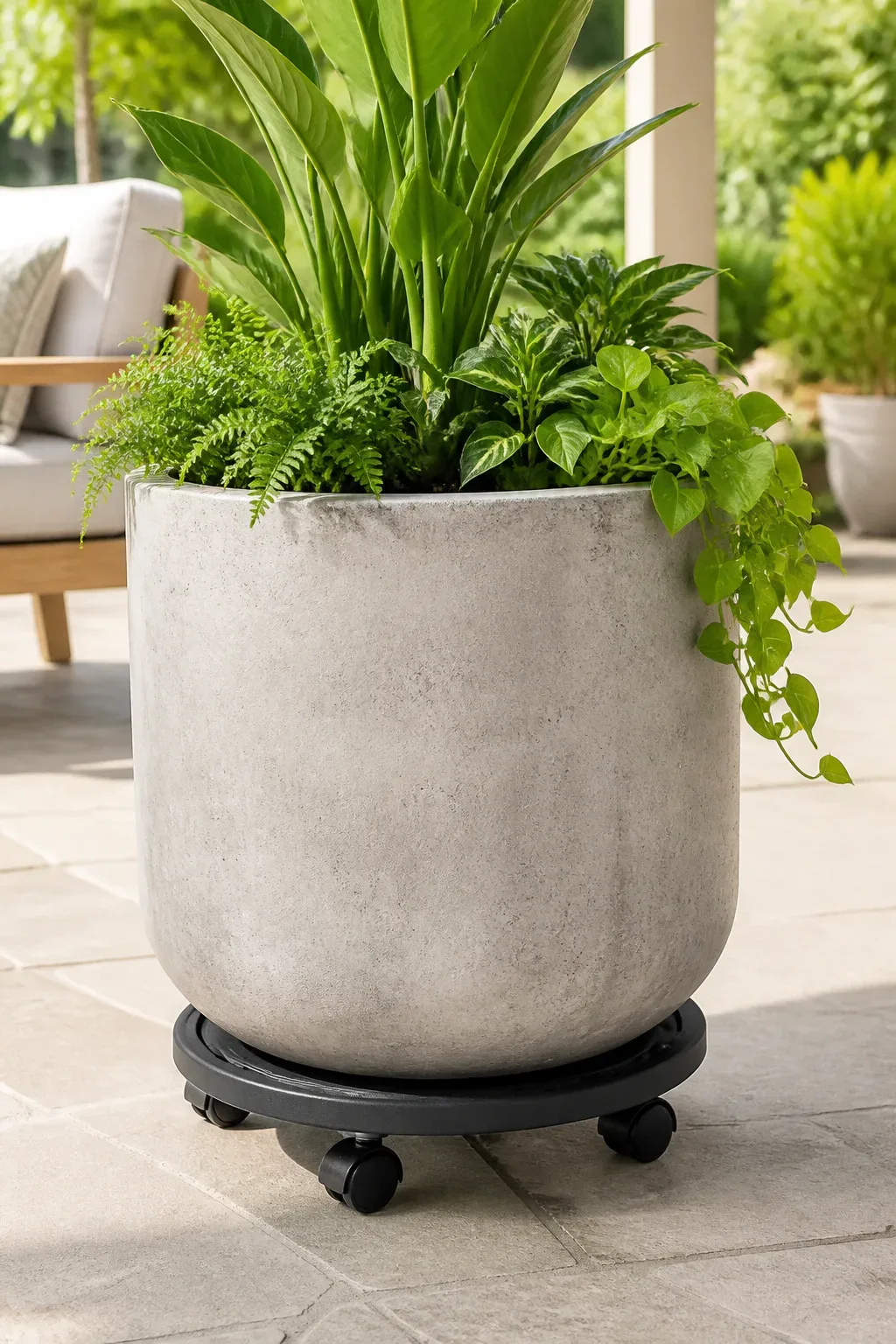
Large planters can anchor a patio, but their weight makes it difficult to adjust the layout once they are filled. Set them on sturdy plant dollies or casters designed to support the pot, and you can move them to follow the sun, clear space for guests, or refresh the arrangement for a different season.
Rolling planters are useful for patios that receive changing patterns of light throughout the day. They can also help when you need to move a tender plant to a more sheltered spot. Before choosing a wheeled base, consider the planter’s size and the surface it will travel across; wheels that work on smooth paving may not roll easily over rough stone.
Make mobility practical
Place the planter securely in the center of its rolling base and check that the wheels lock, if locking wheels are included. Move slowly and avoid shifting a tall, top-heavy pot over uneven ground.
- Match the caster’s load capacity to the filled planter.
- Check wheel size and material for your patio surface.
- Keep drainage unobstructed so water can escape.
- Use the mobility to adjust light exposure, not to ignore plant needs.
4. Line the Patio with a Living Privacy Screen
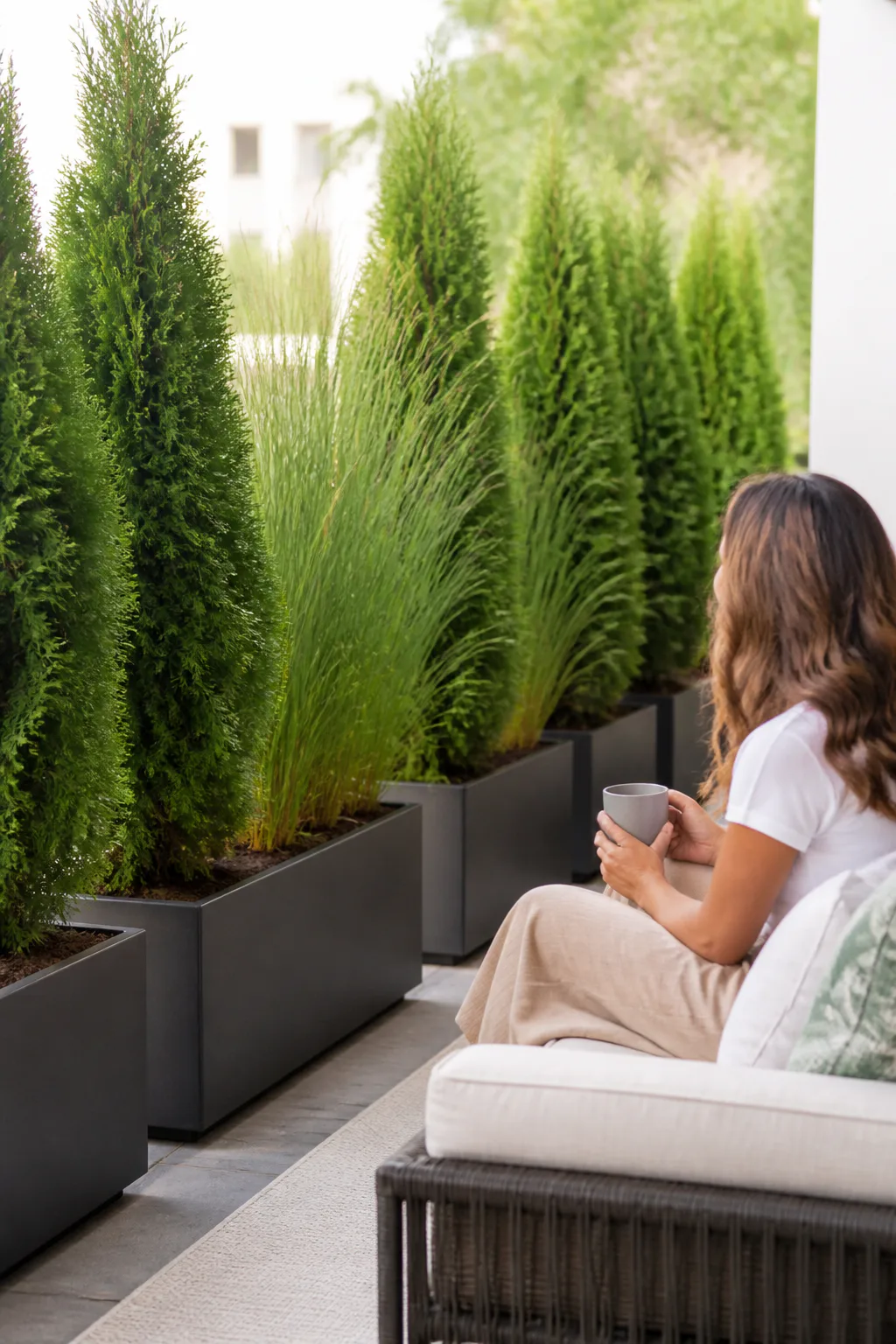
A row of tall, narrow planters can create a soft boundary between your patio and neighboring views. Fill them with upright plants such as ornamental grasses, arborvitae, or bamboo, choosing varieties suited to your climate and container growing. Unlike a solid barrier, a planted screen brings texture and greenery into the space.
This arrangement works along an exposed railing, patio edge, or seating area where you want a little more visual separation. Repeat similar planters to make the line look cohesive, and allow enough room for plants to mature. Consider wind exposure, too: tall growth in narrow containers can catch gusts, so choose stable planters and place them securely.
Plan for a healthy screen
Measure the area before buying containers, then consider how much coverage you need while leaving space to move through the patio. Select plants based on mature size rather than how small they look at the nursery.
- Use deep, stable containers with drainage holes.
- Choose plants that suit your local conditions and available light.
- Space planters so foliage can fill in without crowding.
- Water consistently, since container-grown screens can dry out quickly.
5. Plant Flowers in Vintage Garden Containers
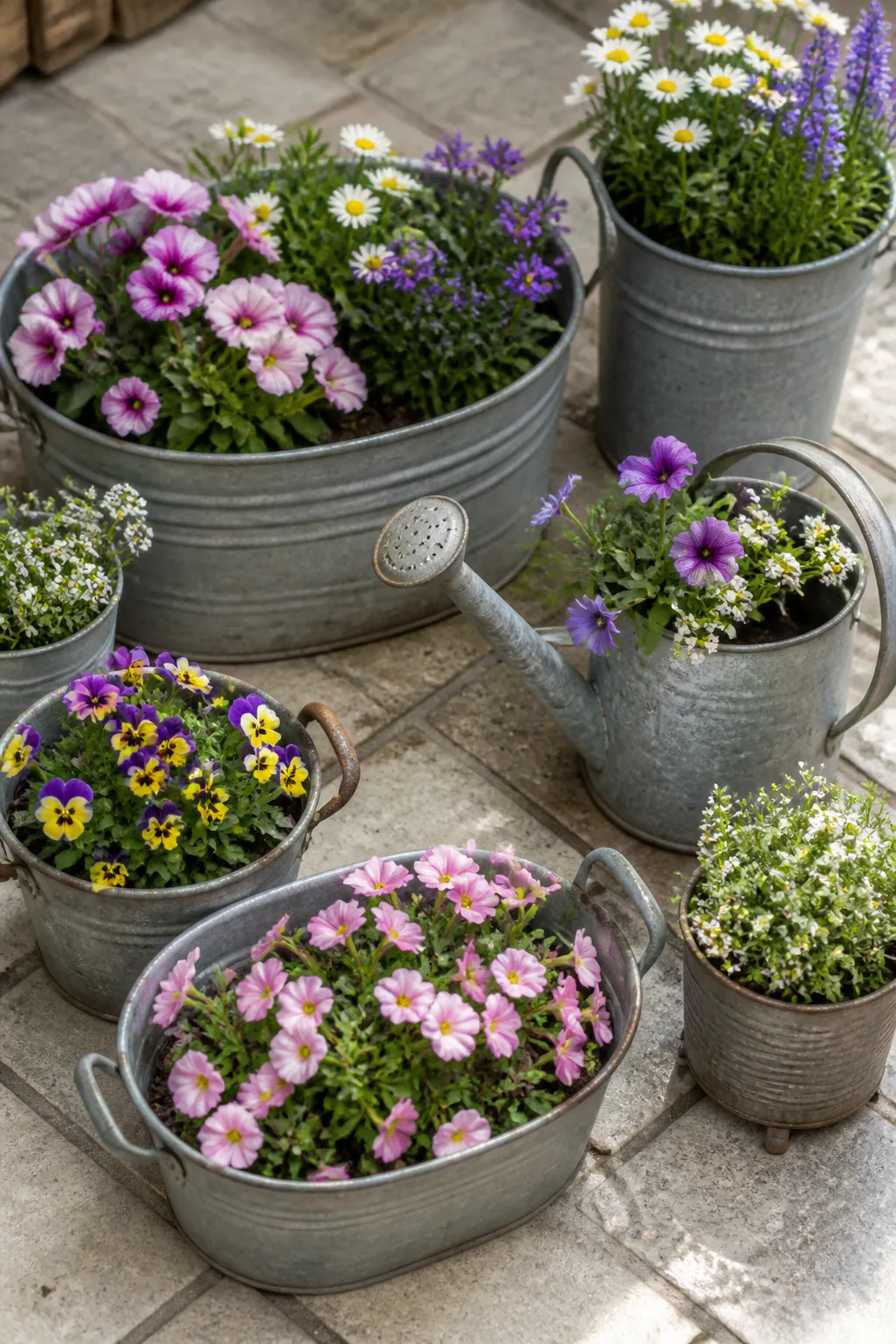
Galvanized buckets, old washtubs, and watering cans can give a patio garden a collected, lived-in character. Their varied shapes and finishes make even simple flowers feel thoughtfully displayed. Place one beside a doorway as a welcome accent, or group several pieces together for a relaxed container vignette.
Before planting, check whether the vessel can safely hold potting mix and water. Many vintage containers need drainage holes added, and some are better used as decorative outer sleeves around a nursery pot. This makes it easier to remove the plant for watering and helps protect a container that you don’t want to alter.
Prepare the container first
Clean the vessel and check for sharp edges, flaking finishes, or signs of weakness. Choose flowers that fit the scale of the container and the amount of sun the patio receives.
- Add drainage holes if the container is suitable for drilling.
- Use a separate nursery pot inside delicate or hard-to-drill pieces.
- Keep the planting simple so the container remains part of the display.
- Raise the vessel slightly if needed to prevent blocked drainage.
6. Create a Back-Door Herb Wheel
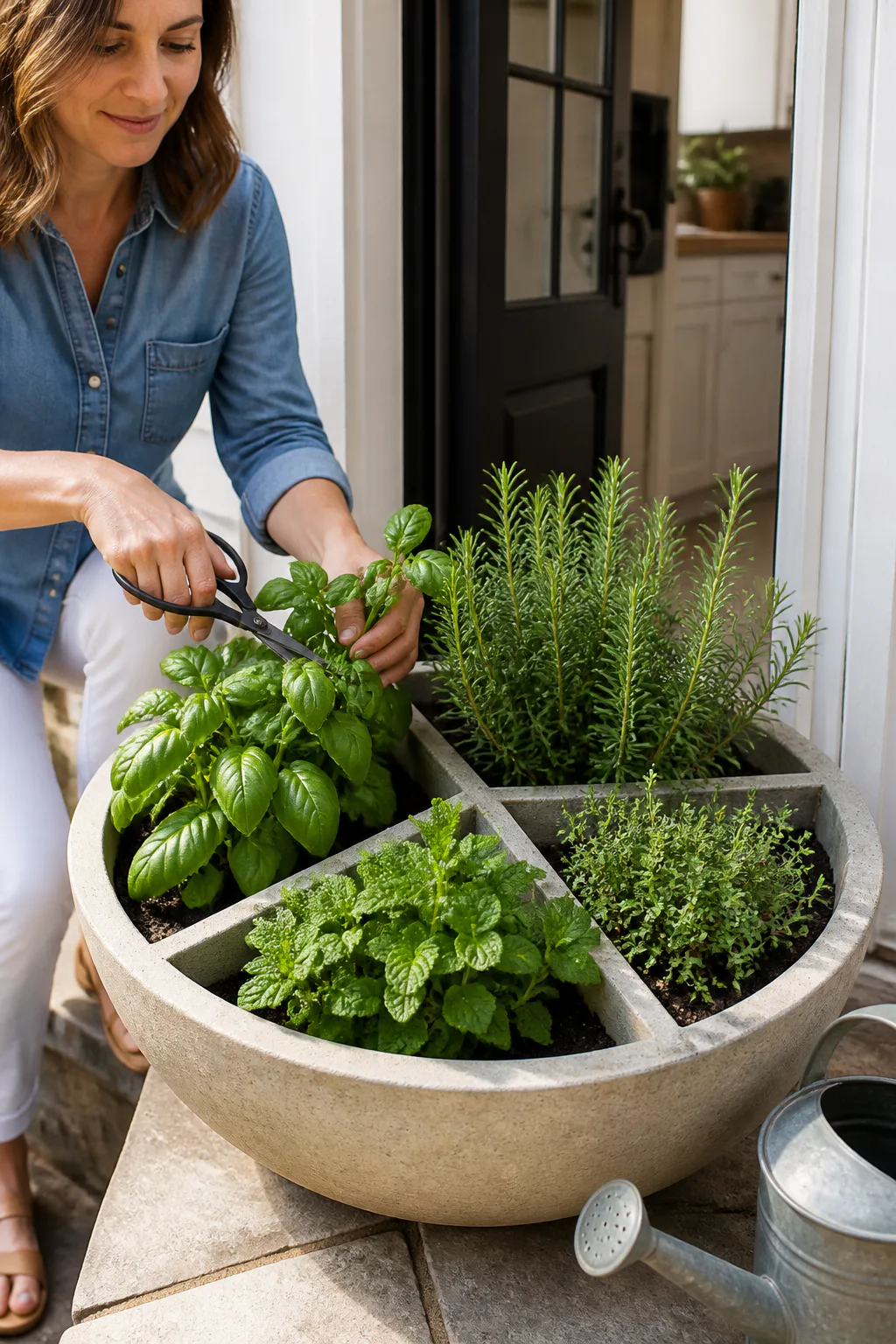
A wide, partitioned bowl makes it easy to keep several culinary herbs close at hand. Place it near the back door so you can snip basil, rosemary, thyme, and other favorites while cooking. The divided layout gives each herb a defined spot and creates the look of a small, organized kitchen garden.
Not every herb has the same preferences, so use the compartments to group plants thoughtfully. Mint tends to spread and is often easiest to manage in its own section, while woody herbs such as rosemary appreciate conditions that differ from moisture-loving basil. A container with separate planting pockets can help, but matching sunlight and watering needs still matters.
Keep the harvest within reach
Choose a bowl with enough depth for roots and drainage openings at the bottom. Set it where the herbs receive suitable light, and keep a pair of clean scissors nearby for quick harvests.
- Give mint its own partition to limit spreading.
- Group herbs with similar water needs together.
- Harvest a little at a time to encourage fresh growth.
- Rotate the bowl if sunlight reaches it unevenly.
7. Group Pots in a Monochromatic Palette
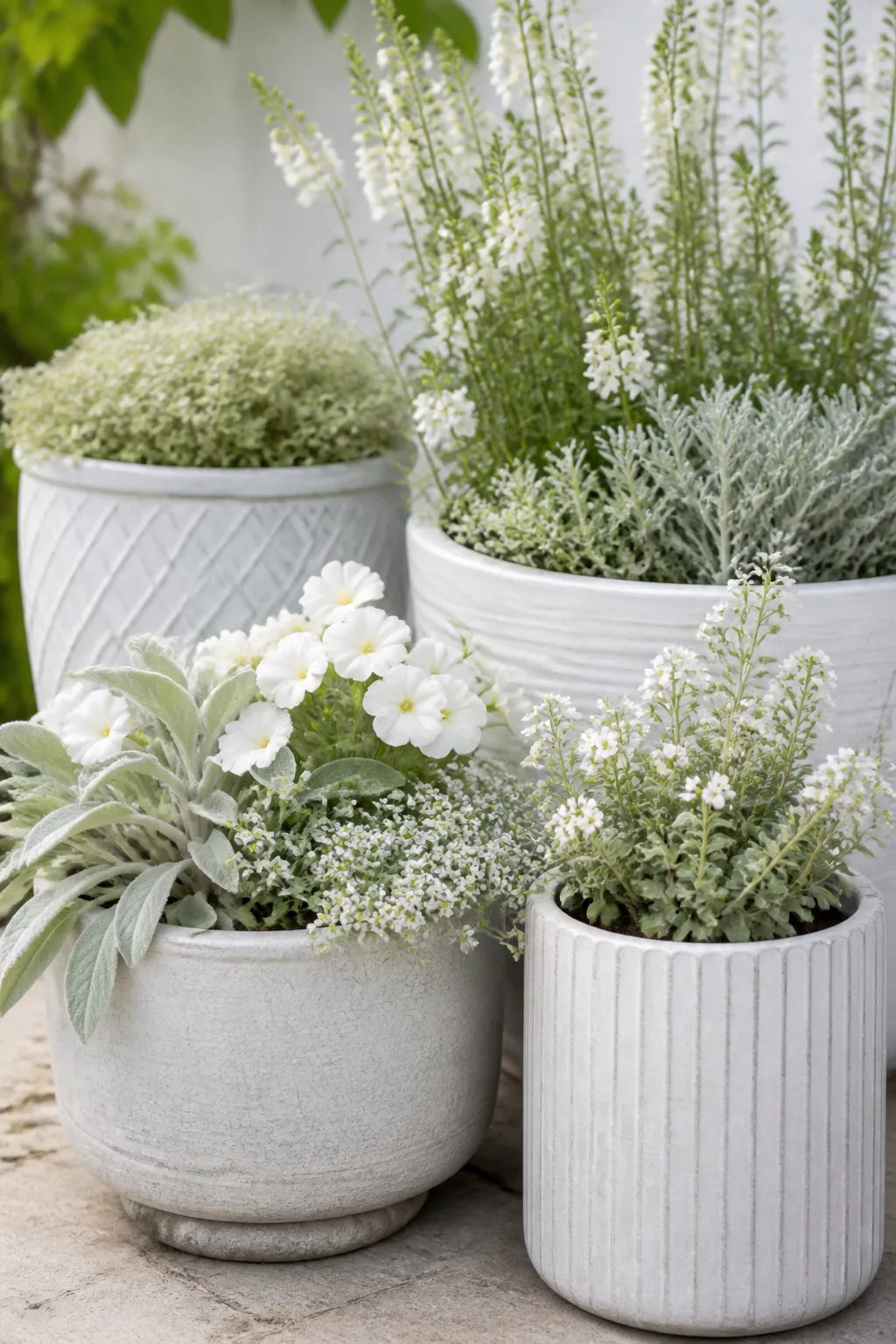
A single-color planting palette can make a collection of different pots feel calm and coordinated. Try white flowers with silver foliage, or choose another restrained color family that suits your patio. Varying leaf shapes and flower forms keeps the arrangement interesting even when the colors remain consistent.
Arrange containers at different heights to create a gentle rhythm rather than a flat row. This idea works beside a wall, around a seating area, or in a patio corner where you want a more composed look. Repeating one or two container finishes can tie the plants together, while a few differences in texture keep the grouping from feeling too uniform.
Build depth with repetition
Pick a palette first, then choose plants with different heights, foliage textures, and blooming habits. Think about how the colors will look against your patio floor and nearby furniture.
- Repeat the main color in more than one container.
- Mix upright, rounded, and trailing plant forms.
- Use plant stands or sturdy supports to vary pot height.
- Keep light and water requirements compatible within each pot.
8. Anchor a Patio Corner with a Citrus Tree
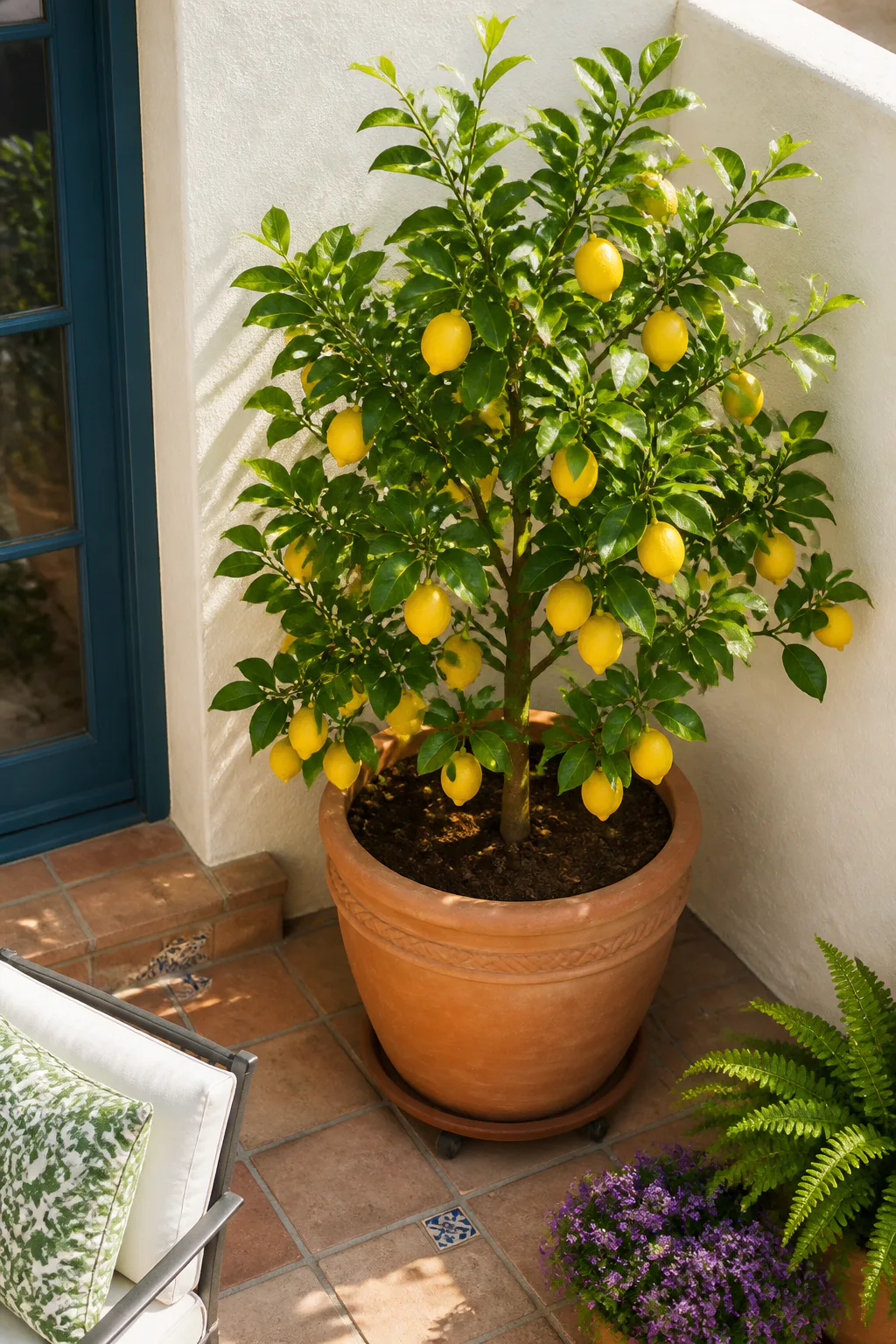
A potted lemon or calamondin orange tree can turn an empty patio corner into a lively focal point. The upright shape, glossy leaves, and colorful fruit bring a Mediterranean note to the space, while an oversized terra-cotta pot gives the tree a substantial base. It can stand on its own or sit near a cluster of smaller containers.
Citrus trees need conditions that suit their variety, and container growing makes it easier to move them when light or weather changes. Choose a location that provides the light the tree needs, and keep in mind that a large pot will be heavy once filled. A wheeled base can help with repositioning, provided it safely supports the container.
Give the tree a good start
Select a pot with drainage holes and room for the root ball, but avoid planting in a container without an escape route for excess water. Check local guidance for overwintering if your climate gets cold.
- Place the tree where it receives appropriate sunlight.
- Use a potting mix suitable for container plants.
- Water when the mix begins to dry, rather than on a rigid schedule.
- Turn or move the pot as needed to keep growth balanced.
9. Hang a Canopy of Flower Baskets
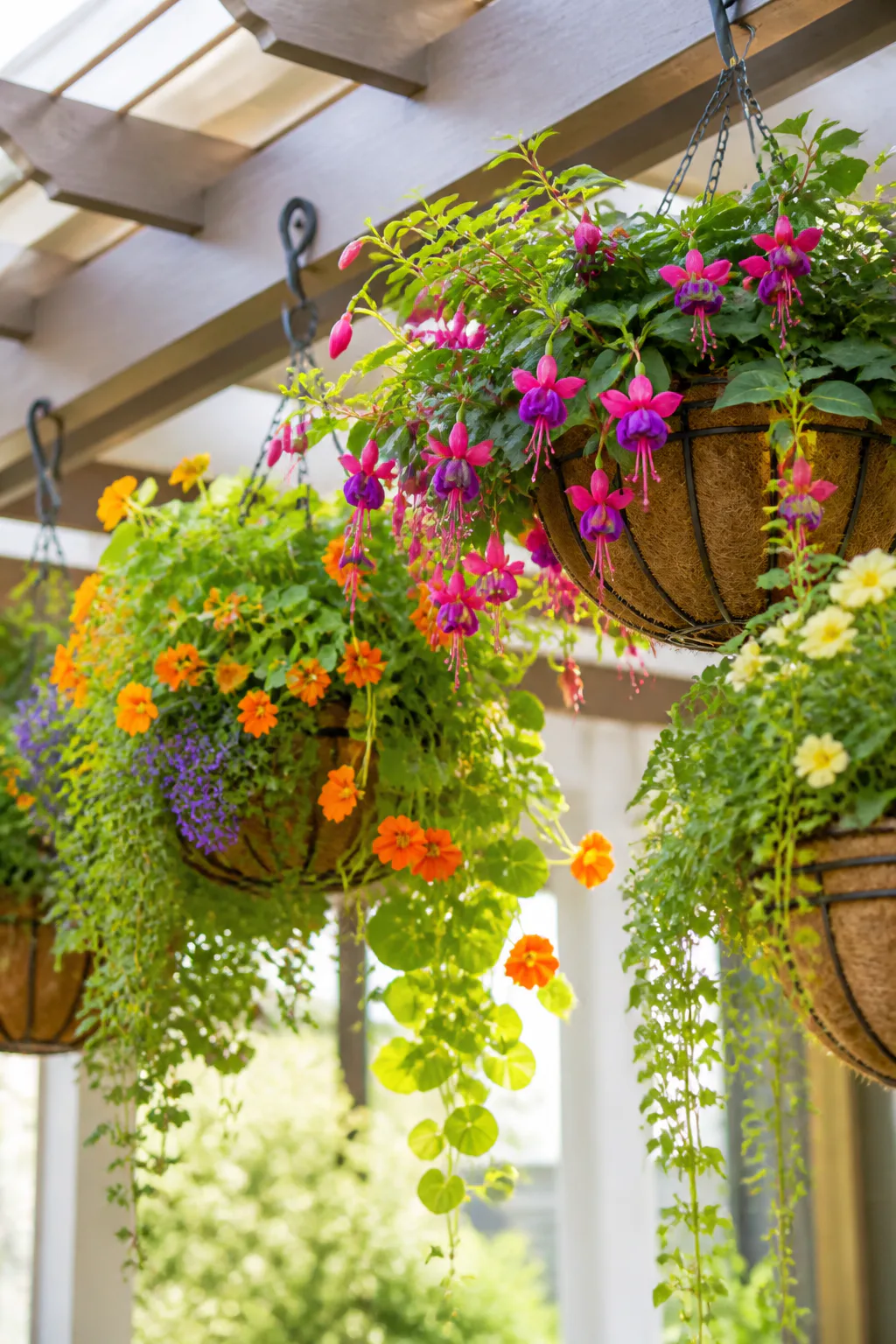
Hanging baskets draw the eye upward and bring flowers into view at the level of a pergola or patio overhang. Fill them with fuchsias, trailing nasturtiums, or other plants suited to the light and exposure in that spot. A series of baskets can make a simple overhead structure feel softer and more garden-like.
Check the strength of the support before hanging anything, especially once the basket is watered. Baskets exposed to sun and wind may dry out quickly, so their placement should be attractive but also easy to reach. If the patio has limited floor space, overhead planting can add plenty of color without taking up room around chairs and tables.
Hang baskets safely
Use suitable hooks or brackets attached to a secure structure, and make sure you can reach the baskets for care. Choose plants that match the available light rather than relying on appearance alone.
- Check the weight of the planted, watered basket.
- Leave enough clearance for people walking underneath.
- Water thoroughly and watch for faster drying in warm weather.
- Trim trailing growth if it begins to obstruct the space.
10. Mount a Pallet Herb Wall
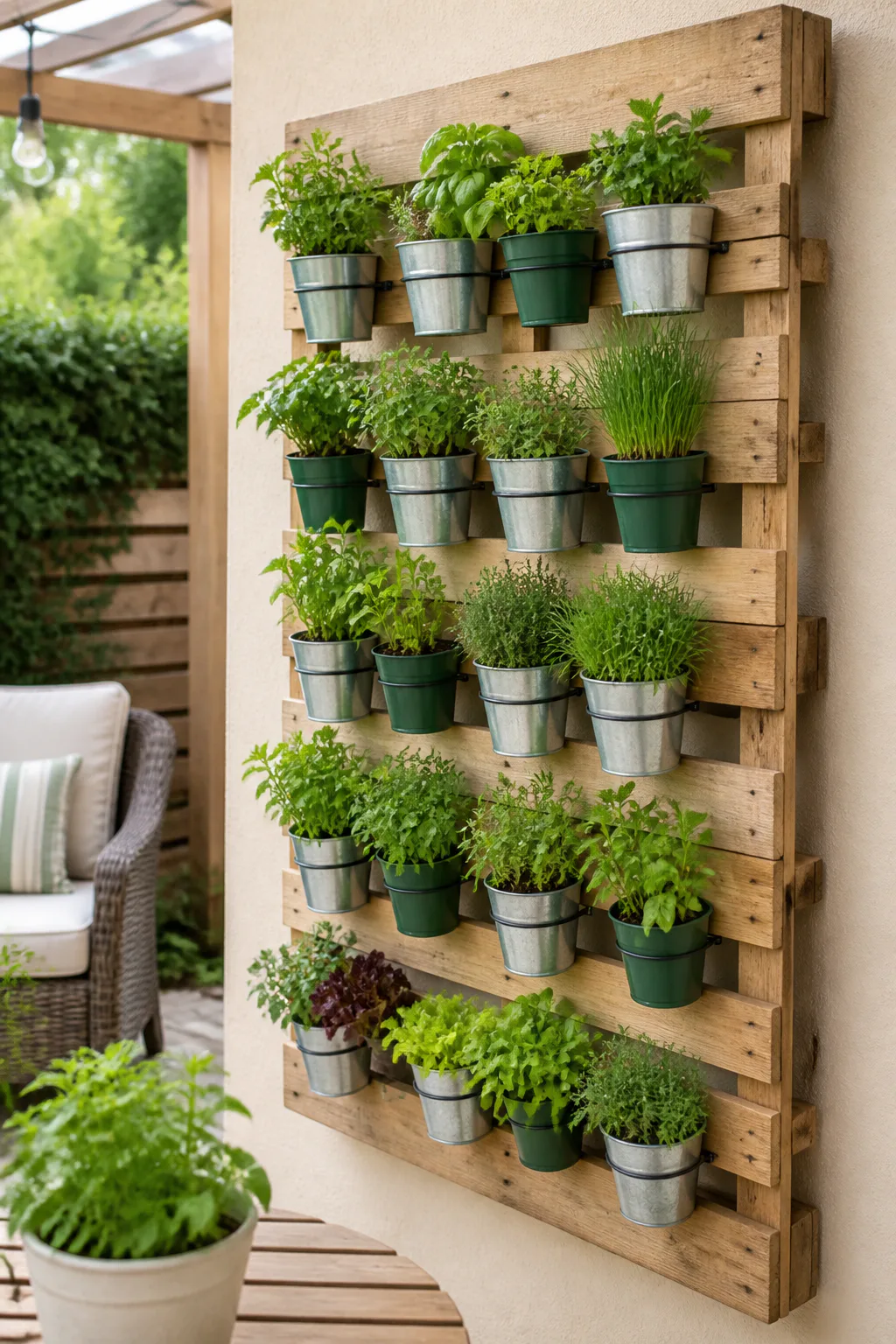
A treated wooden pallet can become a vertical growing space for compact herbs or salad greens. Secure small containers to the pallet and mount it against a patio wall, turning an unused surface into a practical display. The vertical arrangement keeps plants visible and within reach while freeing up floor space for seating or larger pots.
Use a pallet and mounting method appropriate for outdoor exposure, and make sure the wall can support the finished structure. Individual pots are easier to replace and water than planting directly into narrow pallet gaps. This also helps you move herbs around if you discover that one level receives more sun than another.
Make the wall useful
Plan the placement of containers before mounting the pallet, leaving room to lift each one out. Choose compact plants and put the herbs you harvest most often at an easy-to-reach height.
- Secure the pallet firmly to a suitable wall or support.
- Use containers with drainage and a way to catch drips.
- Put sun-loving plants where they receive the best exposure.
- Check moisture regularly, since small pots can dry quickly.
11. Style a Succulent Coffee-Table Bowl
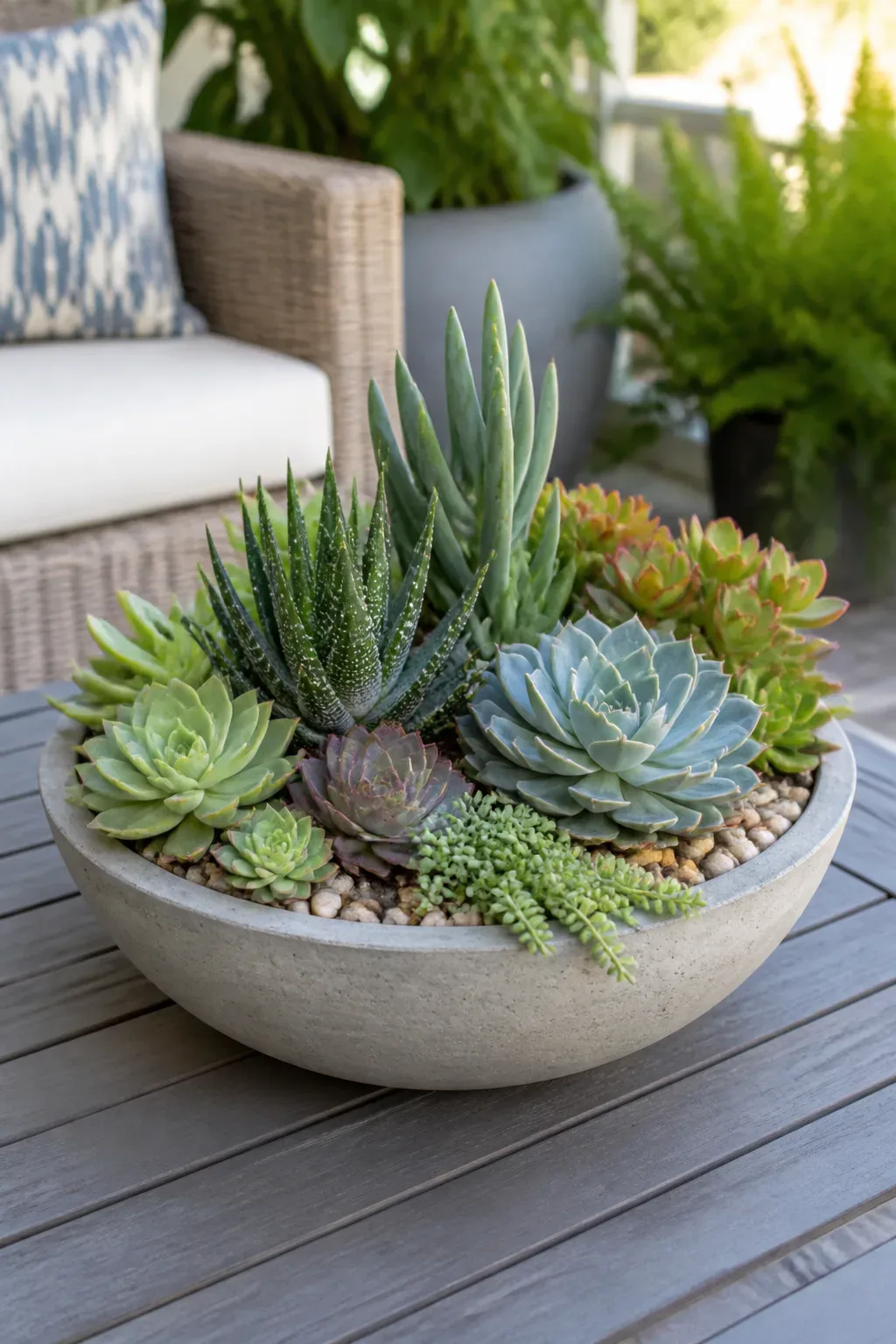
A shallow bowl planted with succulents can serve as a sculptural centerpiece for an outdoor coffee table. Combine architectural forms, such as upright and rosette-shaped plants, for contrast without relying on a lot of flowers. A concrete bowl suits a modern patio, but another low, stable container can work just as well.
Because this display sits at table height, keep the planting low enough that it doesn’t block conversation or crowd serving space. Succulents generally need conditions that match their care needs, including a well-draining setup. Place the bowl where it receives suitable light, and move it when needed rather than leaving it in a spot that stays damp.
Keep the centerpiece simple
Use a container with drainage, or make sure the planting method provides a safe way for excess water to escape. Leave a little breathing room between plants so their shapes remain distinct as they grow.
- Choose succulents suited to your patio’s light conditions.
- Use a fast-draining potting mix appropriate for succulents.
- Keep the bowl stable and clear of the table’s main working area.
- Water sparingly and let the growing medium dry as appropriate.
12. Display Pots on a Tiered Plant Stand
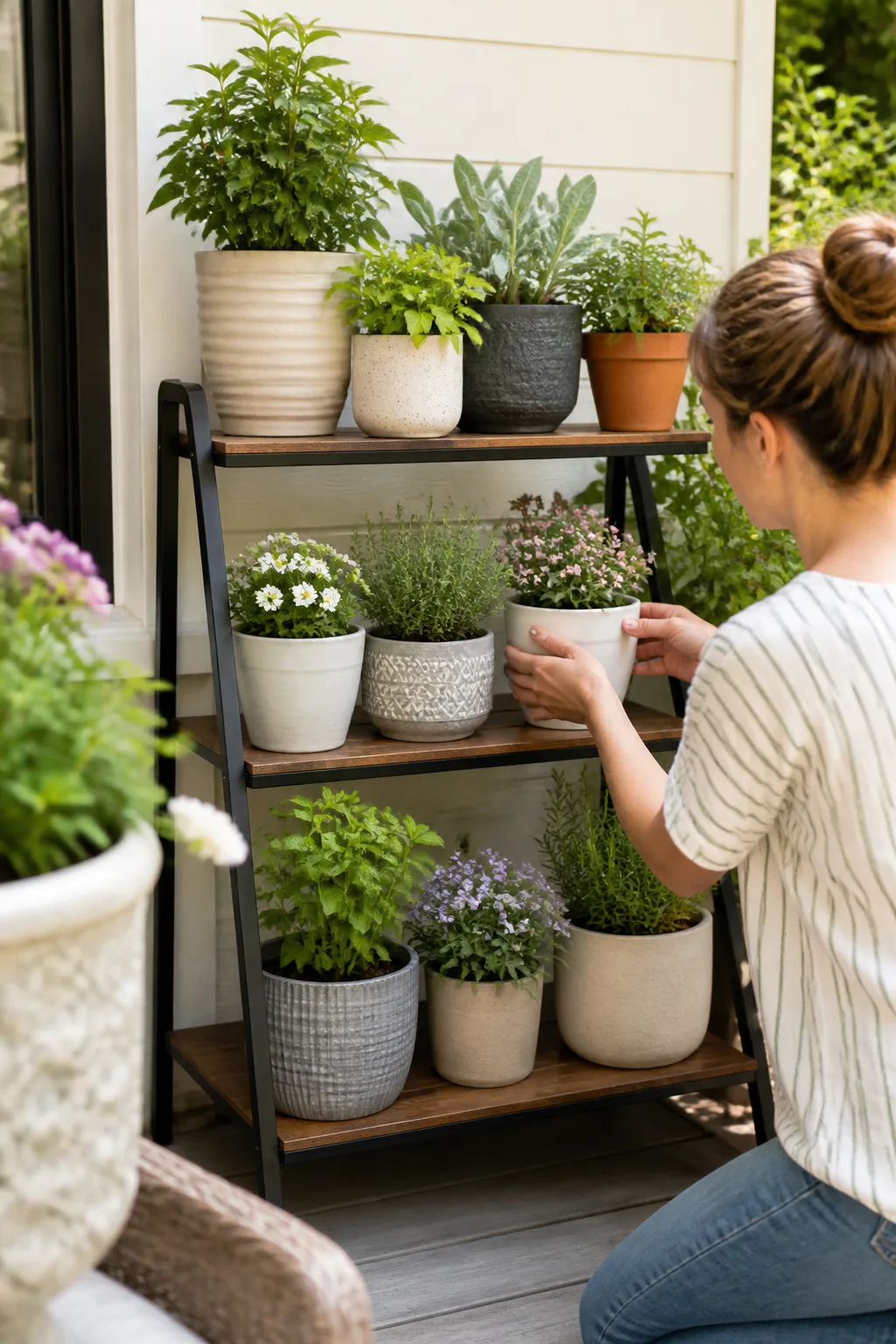
A tiered plant stand lets you display several small and medium pots in a compact footprint. By lifting some plants above others, it adds depth and makes a collection feel fuller without spreading across the patio floor. It works beside a wall, near a seating area, or in an empty corner that needs a little vertical interest.
Choose a stand that suits the scale of your patio and the weight of the containers you plan to use. Place sturdy, heavier pots on lower levels, then use the upper shelves for smaller plants that are easy to reach. A mix of foliage shapes and flower colors keeps the display lively, while repeating a few pot finishes helps it feel cohesive.
Layer pots with care
Think about how much light each shelf receives before deciding where plants will go. Arrange the stand so you can water the pots without splashing furniture or leaving water trapped on the patio.
- Check the stand’s stability and weight limits.
- Put heavier containers on the lowest level.
- Leave enough space between plants for airflow.
- Rotate pots if one side receives less light.
13. Feature a Sculptural Plant in an Oversized Urn

A Japanese maple or neatly shaped boxwood can make a strong statement when planted alone in an oversized urn. This simple arrangement lets the plant’s form take center stage instead of competing with a mix of smaller blooms. It brings a polished, minimalist look to an entry, patio corner, or the end of a dining area.
Choose a specimen whose mature size suits the container and the amount of room around it. A sculptural plant can provide year-round structure, but its needs still depend on the variety and your local conditions. Give it enough space for healthy roots, and make sure the urn has drainage so the display stays practical as well as beautiful.
Let the shape stand out
Keep the planting uncluttered and position the urn where the plant can be seen from the main seating area. Use a stable location for a tall or top-heavy arrangement, especially if the patio is exposed to wind.
- Choose a plant suited to container life and local conditions.
- Match the urn’s size to the root ball and mature form.
- Check drainage before adding potting mix.
- Prune only as appropriate for the plant’s natural shape.
14. Grow a Salad Garden in a Whiskey Barrel
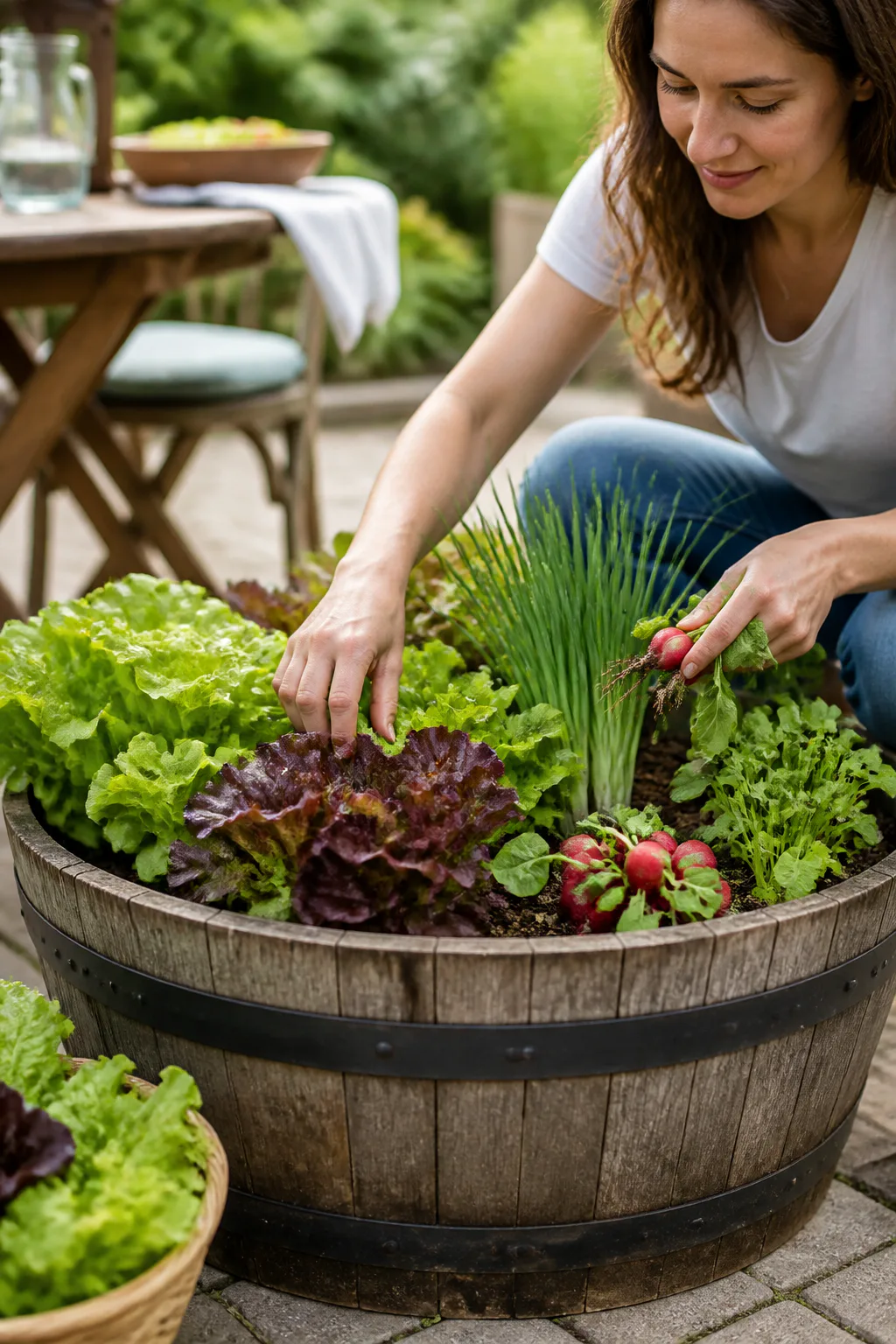
A wide, shallow whiskey barrel half offers room to grow a small mix of salad ingredients. Plant loose-leaf lettuce, radishes, and chives together for a useful display that can sit close to the kitchen or near an outdoor dining area. The broad surface makes it easy to harvest small amounts as needed.
Choose crops that fit the available light and the depth of the container, and avoid overcrowding so leaves have room to grow. A barrel half can dry out more slowly than a small pot, but it still needs regular moisture checks, especially during warm or windy weather. Position it where you can reach the plants comfortably from all sides.
Plan for steady picking
Fill the barrel with fresh potting mix and sow or plant according to the guidance for each crop. Staggering plantings can help keep the container productive rather than having everything ready at once.
- Confirm that the barrel has drainage holes.
- Place taller plants where they won’t shade shorter ones.
- Harvest outer leaves carefully to encourage continued growth.
- Keep the soil evenly moist without leaving it waterlogged.
15. Create a Fragrant Night-Blooming Corner
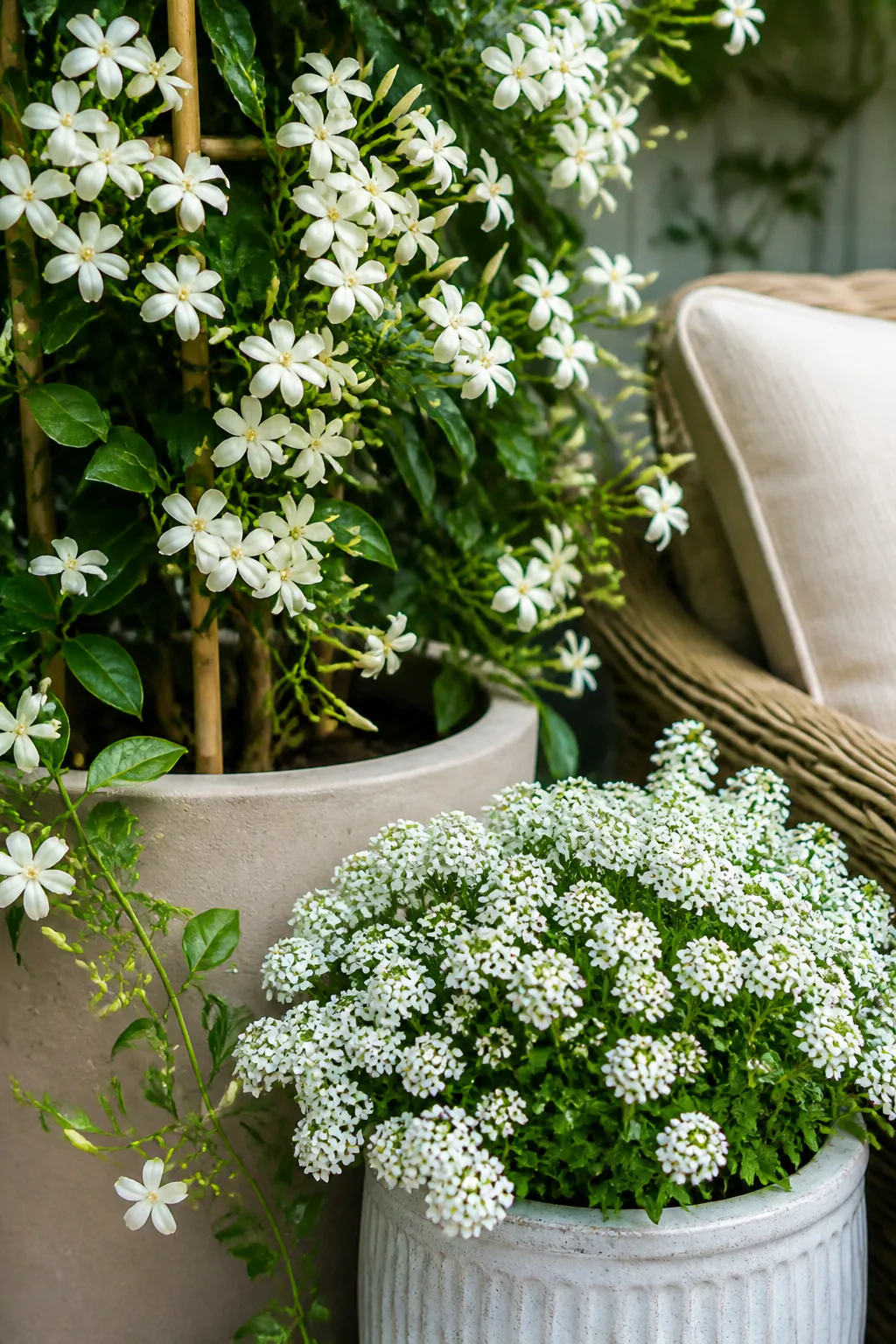
A fragrant planting near patio seating can make evenings outdoors feel especially inviting. Group pots of jasmine or sweet alyssum close to a bench or dining area, where their scent can be enjoyed without needing to walk through the garden. The plants also add a soft, lush look to a corner that might otherwise feel bare.
Check the particular plant’s flowering habits and care requirements before choosing a spot. Some options may suit a sunny patio, while others need different conditions, and fragrance is best appreciated when the pots are near—but not in the way of—seating. Combining a climber with lower flowering plants can add height and fill the area at several levels.
Place fragrance where you gather
Arrange the pots near an outdoor chair or dining table, then make sure there is still room to move comfortably. If you choose a climbing jasmine, provide a suitable support and guide its growth as needed.
- Choose fragrant plants suited to your light and climate.
- Place containers close enough to enjoy but away from walkways.
- Group plants with compatible watering needs.
- Trim or guide growth to keep the seating area open.
Frequently Asked Questions
What grows well in patio containers?
Herbs, lettuce, cherry tomatoes, peppers, petunias, geraniums and ornamental grasses all suit pots. Match each plant to the amount of sun your patio gets.
What size pots are best for a container garden?
Bigger pots hold more soil and moisture, so they need watering less often. Most vegetables need at least 12 to 18 inches of soil depth.
How often should I water container plants?
Check daily in summer by feeling the soil about an inch down, and water when it feels dry. Pots dry out faster than garden beds.
Final Thoughts
Container gardens can be colorful, practical, or quietly sculptural—and they don’t need a large patio to make an impact. Start with one idea that solves a real need, such as adding privacy, making herbs easy to reach, or bringing height into an empty corner.
As your plants grow, adjust their placement and care to suit the light, weather, and way you use the space. A few well-chosen containers can turn a patio into a more personal outdoor room, one pot at a time.
More outdoor ideas: see our small patio decorating ideas and budget garden decor ideas.