

11 Stunning Small Courtyard Garden Ideas
A small courtyard can feel like a peaceful garden retreat, even when it is enclosed by walls or short on floor space. The key is to make every feature work thoughtfully: use vertical surfaces, choose furniture that fits, and keep clear paths through the space.
These small courtyard garden ideas offer ways to add greenery, seating, light, and character without crowding the footprint. Some focus on simple updates, while others introduce a stronger focal point or architectural feature.
Whether you are planning a shady urban courtyard or a sunny nook outside your home, start with the conditions you have. Consider how much light reaches the space, where rainwater drains, and how you want to use the courtyard before choosing the ideas that suit you best.
1. Cover a Courtyard Wall with Climbing Greenery

In a compact courtyard, walls are valuable planting space. A trellis, a row of pocket planters, or climbing vines can soften a hard boundary and draw the eye upward, creating a lush backdrop without taking up much floor area.
Vertical greenery works especially well behind a bench or along a blank side wall where it can add depth without interrupting the main walkway. Choose plants suited to the courtyard’s light and local climate, and check whether the wall and climbing structure can support the planting you have in mind.
How to make it work
Plan for access to water and occasional pruning before attaching a growing system. A trellis set slightly away from the wall can give vines room to grow, while mounted containers make it easier to use a mix of compact plants.
- Use a sturdy trellis secured appropriately for the wall.
- Choose climbers based on sun exposure and maintenance needs.
- Group pocket planters where watering is convenient.
Keep the greenery concentrated on one or two walls so the courtyard still feels open and balanced.
2. Build a Floating Bench Along the Perimeter
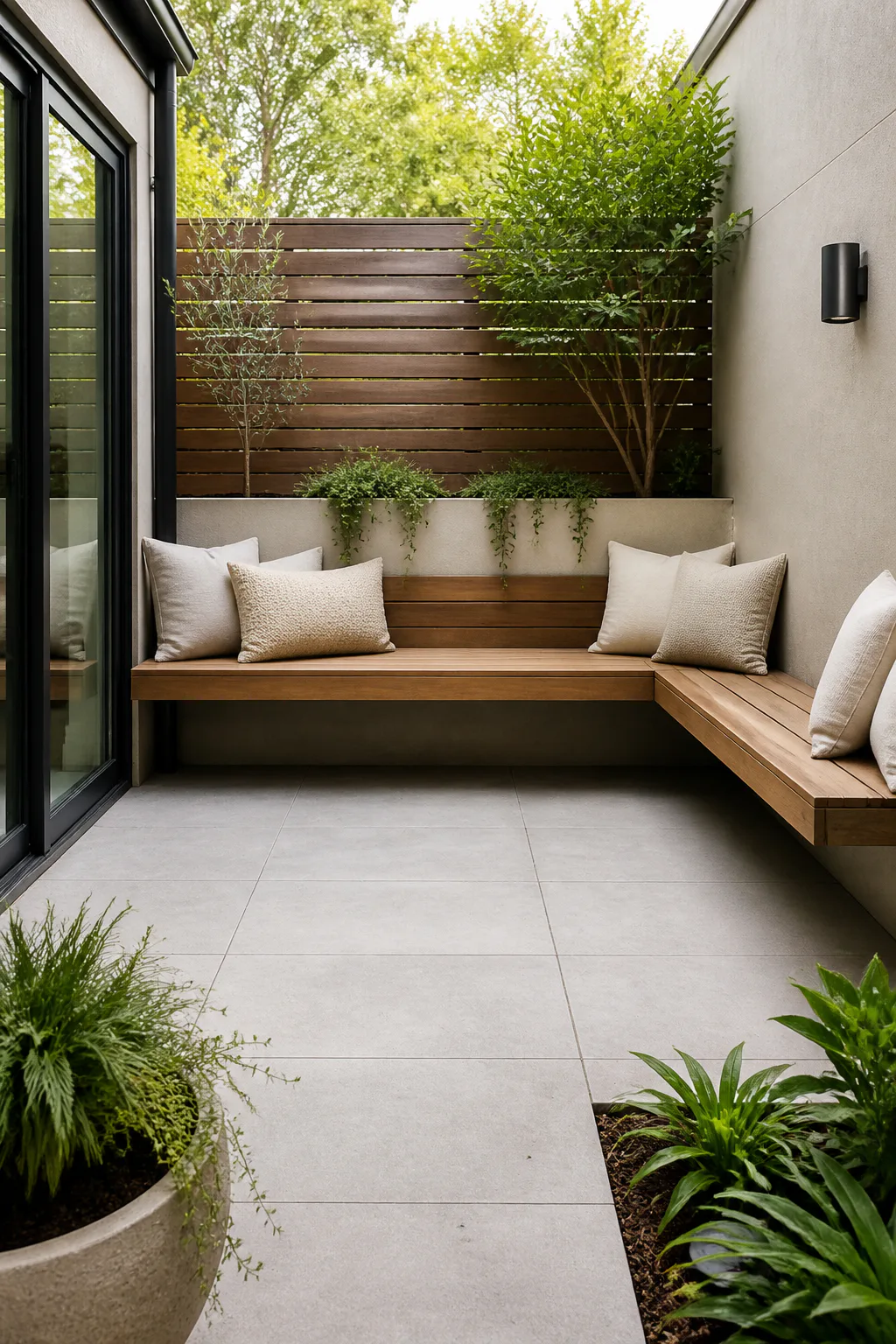
A floating bench uses the edge of a courtyard for seating while leaving more of the floor clear. Wall-mounted or fence-integrated seating can feel visually lighter than several separate chairs, making it easier to move around and arrange planters or a small table.
Run a bench along one side to create a defined place to sit, or use a short section in a corner for a cozy nook. The built-in look also gives the courtyard a more intentional layout, especially when the bench follows the lines of a wall, fence, or raised planter.
Design tips
Before building, consider how the bench will be supported and whether the wall or fence is suitable for that installation. Leave enough room in front for comfortable movement, and choose an outdoor-appropriate finish that suits the surrounding materials.
- Keep the bench depth comfortable but proportional to the space.
- Add outdoor cushions that can be stored when not in use.
- Use the area beneath the seat for discreet storage if practical.
- Pair the bench with a small movable table instead of bulky furniture.
A clear central floor helps the seating feel like part of the architecture rather than another obstacle.
3. Create a Gravel Courtyard with Flexible Layouts

Gravel or pea stone provides a simple, informal base that can suit a small courtyard with changing needs. Its loose texture softens the look of hard walls and paving, while the permeable surface can help water pass through when the base and drainage are prepared appropriately.
A gravel floor is also adaptable: planters, chairs, and a bistro table can be rearranged without the fixed grid of a paved surface. Use edging to keep the stone contained and define the planting areas, particularly if the courtyard connects directly to a doorway or path.
How to pull it off
Good preparation matters. A stable, well-draining base and suitable ground covering help create a more even surface and reduce unwanted growth, while stepping stones can make a comfortable route across the gravel.
- Select a stone size and color that complement the walls.
- Install firm edging to separate gravel from beds and thresholds.
- Add stepping stones where people will walk most often.
- Choose outdoor furniture that sits securely on the surface.
The result is a relaxed foundation that can evolve as your planting and furniture needs change.
4. Plant a Specimen Tree as the Courtyard Focal Point

One carefully chosen tree can give a small courtyard a clear focal point without requiring a complicated planting scheme. A Japanese maple, olive, or other architectural tree can bring shape, seasonal interest, or a sculptural trunk into the space, depending on the conditions and style you prefer.
Position the tree where it can be appreciated from inside the home as well as from the courtyard. A corner or raised bed often works well, keeping the central area open while allowing branches to soften the lines of the walls. Check the mature size and growing needs before choosing a variety.
Choosing the right spot
Think about light, exposure, drainage, and the room the tree will need as it grows. A container can be useful when in-ground planting is not possible, but it will need an appropriate pot and regular care suited to the plant.
- Pick a tree whose mature form fits the courtyard.
- Check whether the location is sunny, shaded, or exposed to wind.
- Keep branches clear of doors, windows, and walking routes.
- Use restrained underplanting so the tree remains the feature.
With thoughtful placement, a single tree can make the whole courtyard feel more composed.
5. Add a Compact Fountain to a Courtyard Corner

A small fountain can bring movement and a soothing sound to a courtyard without taking over the layout. A wall-mounted feature uses little floor space, while a compact bubbling basin can sit in a corner as a modest focal point among pots or greenery.
Water can help a hard, enclosed courtyard feel calmer, particularly when the space is close to neighboring homes or a busy street. The sound and movement give the eye something to settle on, but scale matters: a simple, quiet design is often easier to live with than a feature that dominates the setting.
Things to consider
Choose a location with access to power or a suitable self-contained setup, and plan for maintenance before installation. Make sure the feature is stable, easy to reach for cleaning, and placed where splashing will not make the main walkway slippery.
- Use a wall-mounted fountain to preserve floor space.
- Place a basin on a stable, level surface.
- Keep nearby plants suited to the moisture and light conditions.
- Consider the sound level in relation to the size of the courtyard.
A compact water feature can add a tranquil note while leaving room for everyday use.
6. Brighten Enclosed Walls with Mirrors and Pale Paint

Light-colored walls can make an enclosed courtyard feel fresher and more open. Soft white, pale gray, or a gentle sage can reflect available daylight and create a calm background for foliage, furniture, and architectural details.
An outdoor-rated mirror can add another reflective surface, helping bounce light into a shaded corner and suggesting a little more depth. It works best when it reflects greenery or an attractive view rather than a cluttered storage area, and it should be positioned so it feels like part of the design.
Make the most of the light
Test paint samples in the courtyard at different times of day, since surrounding walls and changing light can affect how a color appears. For a mirror, use a product intended for outdoor conditions and secure it appropriately for the wall and location.
- Choose a pale wall color that complements the home’s exterior.
- Place a mirror where it reflects plants or open sky.
- Avoid directing strong reflected light toward neighboring windows.
- Keep the surrounding area simple so the reflection stays restful.
Together, a brighter wall and a considered reflection can lift a shady courtyard without adding clutter.
7. Frame the Courtyard with Raised Planter Beds

Raised planters along the edges of a courtyard create defined planting zones and keep soil contained. Timber or masonry beds can also introduce structure, making the space feel organized while bringing flowers, herbs, or foliage closer to eye level.
Use a continuous bed to emphasize the courtyard’s shape, or place shorter planters where you want to separate a seating area from a path. In a tight layout, planter edges may double as casual perches, but leave enough clear space for comfortable access and movement.
Plan the planting layers
Before building, think about the depth available for roots, where water will drain, and how you will reach plants for care. Mixing plants of different heights can give the beds a fuller look without needing to fill every inch.
- Set beds along the perimeter to preserve the central floor.
- Combine upright plants with lower, spreading varieties.
- Choose materials that work with the courtyard’s paving and walls.
- Leave convenient access for watering and maintenance.
Raised beds can make even a simple courtyard feel layered and intentionally planted.
8. Make a Courtyard Glow with Bench and Step Lights

Low-level lighting can make a courtyard feel inviting after sunset without relying on a harsh overhead flood. Warm LED strips beneath a bench or discreet lights along steps highlight useful features while adding a soft glow close to the ground.
This approach is especially effective in a small space because it defines edges without filling the courtyard with large fixtures. Light can also help distinguish a seating area from a path, giving the layout a welcoming feel in the evening as well as making changes in level easier to notice.
Layer light thoughtfully
Plan lighting around how you move through the courtyard and where you like to sit. Use products designed for outdoor conditions, and follow appropriate installation guidance, particularly for any hardwired fixtures or lighting near water.
- Place step lights where changes in level need to be visible.
- Hide LED strips beneath benches or planter edges.
- Choose warm-toned light for a relaxed atmosphere.
- Avoid aiming fixtures directly into seating areas or windows.
A few carefully placed sources can make the courtyard feel polished without overwhelming it.
9. Fit a Folding Bistro Set into a Cozy Courtyard

A folding bistro set can create a comfortable coffee spot for two without committing the whole courtyard to a permanent dining area. Its compact scale suits a corner or a small paved section, and the chairs and table can be folded away when you need more room for other activities.
Look for proportions that fit the available floor space, not just furniture that appears small in a store or photograph. Leave a clear route to doors and gates, and consider how the chairs move when someone sits down or pulls them back from the table.
Set up a useful coffee spot
Place the set where it feels pleasant to linger, perhaps near a planter or under partial shade. Lightweight, outdoor-suitable materials are practical for furniture that may be moved or stored regularly.
- Measure the open area with chairs pulled out.
- Choose a folding table that suits how you plan to use it.
- Keep the main walkway clear when the set is in use.
- Add a small pot or outdoor cushion for a personal touch.
When the furniture can fold away, the courtyard stays flexible throughout the day.
10. Lay Large-Format Pavers for a Clean Courtyard Floor

Large-format stone or porcelain pavers can give a small courtyard a calmer, more continuous floor. Because there are fewer visible joints than with many smaller tiles, the surface may feel less busy and help the eye travel across the space.
Simple rectangular or square layouts work well with clean-lined walls and compact furniture. The paving can also provide a stable base for a bistro set or pots, but the finish should suit the courtyard’s exposure and intended use, including how it feels underfoot when wet.
Choose the layout with care
Consider the shape of the courtyard before deciding how to orient the pavers. Laying them in a direction that follows the longer lines of the space can reinforce a sense of flow, while consistent spacing keeps the overall pattern composed.
- Select an outdoor-rated surface suitable for the conditions.
- Use a restrained color that works with walls and planting.
- Plan drainage and a stable base before installation.
- Keep the pattern simple to preserve a clean visual effect.
A quieter floor gives greenery and furniture room to stand out.
11. Top the Courtyard with a Compact Slatted Pergola

A compact slatted pergola can frame the top of a courtyard and create partial shade without making the space feel fully enclosed. Its overhead lines add architectural character, while the open slats allow light to filter through and keep the courtyard connected to the sky.
A pergola can also provide a useful structure for hanging lights or training suitable trailing plants. In a small courtyard, a simple design is often the easiest to integrate; keep its scale in proportion to the walls and avoid filling every beam with accessories.
Design for shade and openness
Think about where the sun falls and how you want to use the space before choosing the pergola’s position. Check local requirements and use an appropriate support method, particularly if the structure will carry lighting or plants.
- Choose a footprint that leaves the main route unobstructed.
- Use slats to create filtered rather than complete shade.
- Hang lights where they will not interfere with movement.
- Train only suitable plants along the structure.
Used sparingly, a pergola gives the courtyard a finished frame while preserving an airy feel.
Final Thoughts
The best small courtyard garden ideas make the most of what is already there: walls become planting space, edges become seating or beds, and thoughtful lighting helps the garden work after dark. A strong focal point, whether it is a tree, a fountain, or a simple arrangement of greenery, can bring the design together.
You do not need to use every idea at once. Start with the courtyard’s light, drainage, and daily needs, then choose a few features that complement one another and leave the space comfortable to move through. Even a small, gradual update can turn an enclosed courtyard into a practical place to pause and enjoy.



