

14 Clever Small Courtyard Garden Ideas for a Stylish, Space-Saving Retreat
A small courtyard can feel like a private garden, an outdoor living room, or a little of both. The key is to make each choice earn its space: draw the eye upward, keep the floor visually calm, and use seating and planting in ways that leave room to move.
These ideas work for enclosed patios, narrow urban courtyards, and compact spaces just outside a back door. Some are simple styling changes, while others involve installation, so consider your building’s rules, exposure to weather, and drainage before you begin.
You do not need to use every idea at once. Choose a few that address what your courtyard needs most—more greenery, a comfortable place to sit, shade, or a softer atmosphere—and let those choices guide the rest of the design.
1. Cover a Bare Wall with a Living Garden

A blank wall can make a small courtyard feel stark, but it also offers useful planting space that does not take up the floor. Modular planters, wall pockets, or a sturdy trellis bring greenery into view and lead the eye upward, making the courtyard feel taller and more layered.
Use this approach on a wall that is visible from indoors or from the main seating area. A mix of trailing plants and upright foliage can soften brick or concrete, while a trellis gives climbers room to spread without requiring a wide planter bed.
How to make a vertical garden work
Start by checking that the wall and fixing method can support the planters when they are full and wet. Choose plants for the light and airflow the wall actually receives, and make watering accessible rather than an awkward daily chore.
- Use matching planters for a neat, uninterrupted pattern.
- Mix trailing and upright plants for varied texture.
- Protect the wall from moisture and allow water to drain safely.
A living wall can become the courtyard’s main feature, so keep nearby furniture and pots simple enough to let the foliage stand out.
2. Continue Indoor Flooring into the Courtyard
When the flooring inside and outside shares a similar color, scale, or pattern, the boundary between the rooms feels less abrupt. That visual continuity can make a small courtyard seem like an extension of the living room rather than a separate, cramped area.
This idea is especially effective when the courtyard sits directly beyond a wide door or large window. Matching paving can make the view feel more settled, while a consistent line from indoors to outdoors helps guide the eye across both spaces.
Choose materials for both settings
Exact matching is not always practical: outdoor surfaces need to cope with water, temperature changes, and foot traffic. If the interior flooring is unsuitable outside, choose a weather-ready material in a complementary tone and use a similar format to preserve the connection.
- Check that outdoor paving has an appropriate slip-resistant finish.
- Plan drainage so water does not collect near the doorway.
- Keep grout lines and laying direction visually consistent.
A carefully chosen transition can still feel seamless, even when the two surfaces are not identical.
3. Add a Slim Wall-Mounted Water Feature
A compact wall fountain or narrow recirculating basin adds movement and sound without claiming much floor space. The gentle splash can create a soothing focal point and help soften everyday neighborhood noise, making the courtyard feel more secluded.
Place the feature where it can be seen from a bench or through a nearby window. A simple design suits a narrow courtyard particularly well; an oversized basin or elaborate surround can quickly compete with the seating and planting.
Plan for power, water, and upkeep
Before installation, consider how the pump will be powered, how the feature will be filled, and where any splash or overflow will go. Follow the manufacturer’s guidance for outdoor use, and make sure the wall can safely hold the fixture.
- Choose a scale that leaves the walkway clear.
- Position it where splashes will not damage doors or walls.
- Keep the pump accessible for cleaning and maintenance.
With a restrained shape and a suitable location, water can add atmosphere without making a small garden feel crowded.
4. Create a Tiered Courtyard Planting Bed
Layering plants at different heights gives a compact courtyard depth and a more garden-like feel. A slender tree can provide an upper focal point, while grasses, boxwood, or lower foliage fill the space around its base without creating a wall of greenery.
This arrangement works well in a corner or along one edge, where the tallest plant can draw the eye upward while leaving the center open. An olive tree or Japanese maple may suit the look, but the right choice depends on your local climate, light, and available root space.
Build a balanced planting composition
Think about mature size before choosing plants; a tree that looks delicate in a nursery pot may eventually overwhelm a narrow courtyard. Use pots or a raised bed with room for healthy roots, and leave enough space to reach plants for watering and pruning.
- Place the tallest plant at the back or in a corner.
- Use lower plants to soften the base of the tree.
- Repeat a few foliage shapes for a unified look.
Varying height adds interest while a limited plant palette keeps the display calm.
5. Design a Calm Courtyard in One Color Palette
A restrained palette makes the different elements of a small courtyard feel connected. Charcoal paving, white walls, and soft green foliage, for example, can create a composed backdrop without relying on lots of decoration or competing colors.
Color can also help clarify the layout. Repeating one or two shades across pots, cushions, and paving makes separate pieces feel intentional, while plants provide natural variation in texture and tone.
Repeat colors without making the space flat
Choose a base color for large surfaces, then add one or two supporting shades in smaller details. Build contrast through finish and texture—matte pots beside smooth paving, or fine leaves against a plain wall—so the courtyard stays interesting even with a limited palette.
- Use the palest tones where you want to reflect light.
- Repeat pot colors to make mixed plantings feel cohesive.
- Add warmth with wood or textiles if the palette feels cool.
A consistent color story makes even practical pieces feel like part of the design.
6. Hang a Garden Mirror on a Feature Wall
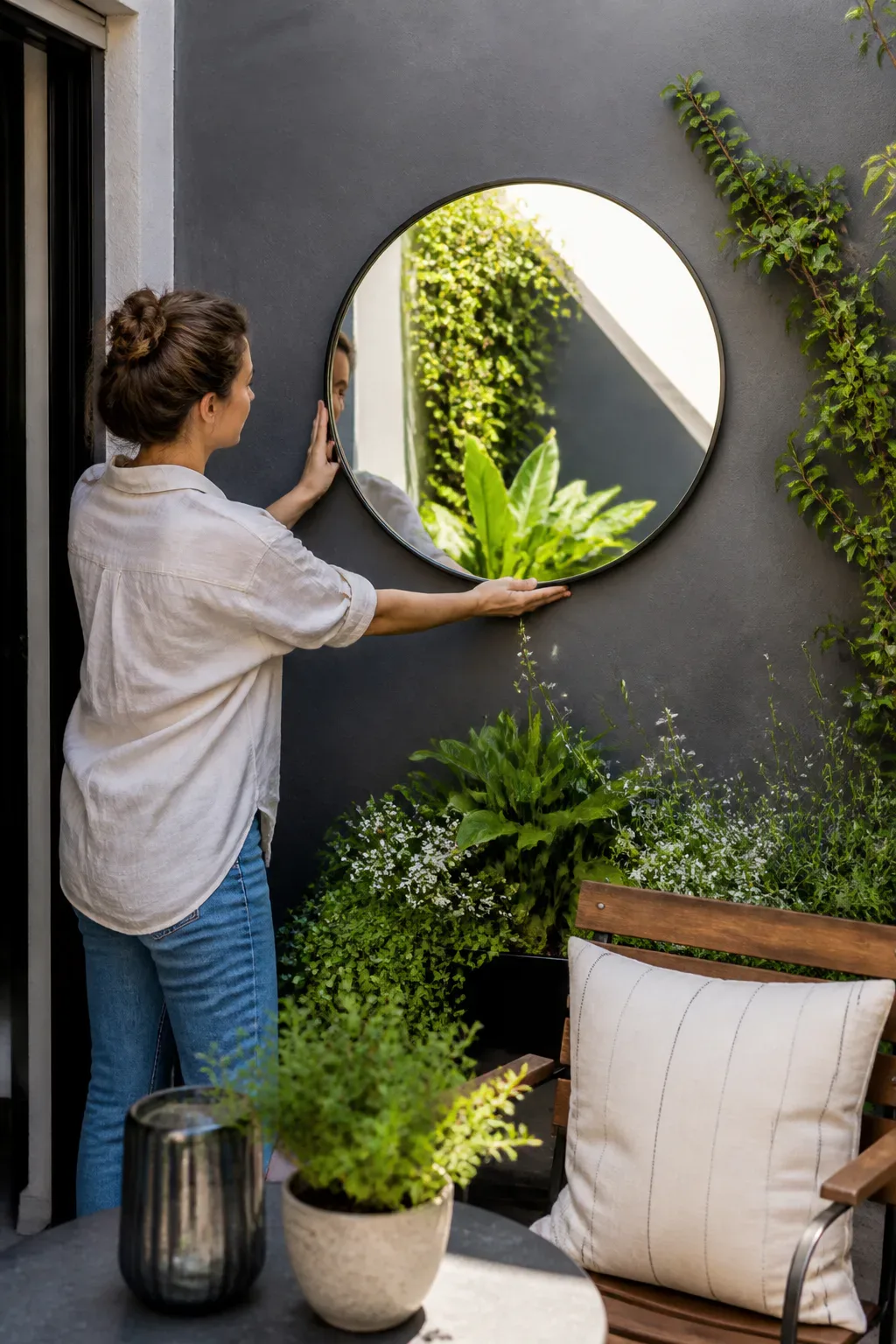
An outdoor-rated mirror can reflect a patch of foliage or a brighter part of the sky, making a darker courtyard corner feel more open. It also creates a focal point on a plain wall, especially where there is little room for a large planting display.
Place the mirror where it reflects something pleasant, such as a leafy planter or a view through the courtyard—not a utility area or a blank wall. In a narrow space, a well-positioned reflection can suggest more depth without adding anything to the floor.
Choose a safe and useful position
Use a mirror designed for outdoor conditions and secure it with appropriate fixings. Consider glare and privacy before hanging it; the reflection should brighten the space without shining into a neighbor’s window or creating an uncomfortable spot in direct sun.
- Reflect greenery or daylight rather than clutter.
- Keep the mirror away from areas where it could be easily struck.
- Check the view from both inside and outside the courtyard.
Used thoughtfully, a mirror adds light and a sense of depth while keeping the courtyard’s footprint unchanged.
7. Build an L-Shaped Bench with Hidden Storage

An L-shaped bench makes use of two courtyard edges and leaves the middle open for circulation. Compared with several separate chairs, a built-in banquette can create generous seating in a defined footprint and help the space feel organized.
Storage below the seat is useful for cushions, small garden tools, or outdoor accessories that might otherwise collect on the floor. The bench can also establish a comfortable gathering corner, with a small table positioned within easy reach.
Make the bench fit the courtyard
Measure carefully so the seat depth feels comfortable without narrowing the walkway. Choose weather-suitable materials and include a practical way for stored items to stay dry and ventilated, especially if the courtyard is exposed to rain.
- Keep the seat height comfortable for getting in and out.
- Use a lift-up or hinged lid that is easy to access.
- Add cushions that can be removed or stored when wet.
A built-in bench can do double duty as seating and storage while giving the rest of the courtyard more breathing room.
8. Turn the Courtyard into a Lantern-Lit Lounge
Thoughtful lighting makes a small courtyard feel welcoming after sunset and encourages you to use it beyond daylight hours. Warm string lights, discreet bench lighting, or slender lanterns can create a relaxed glow without filling the space with bulky fixtures.
Layering light at different heights gives the courtyard a softer atmosphere than relying on one bright overhead source. A gentle glow along a wall or beneath a bench can also make the edges feel defined while leaving the center available for seating or movement.
Layer light with care
Choose outdoor-rated lighting and plan where cords, switches, or power sources will go before hanging anything. Aim lights away from neighboring windows, and keep the overall effect comfortable enough for conversation rather than overly bright.
- Hang string lights overhead if there is a safe fixing point.
- Use lanterns to mark a corner or seating area.
- Try low-level lighting under a bench for a subtle glow.
A few well-placed sources can make the courtyard feel intimate without making it visually busy.
9. Lay Large Stone Slabs Across the Courtyard
Large-format stone slabs or concrete pavers create a calmer floor than many small, tightly patterned pieces. Fewer visible joints can make a compact courtyard feel less fragmented and give the eye a clean surface to travel across.
This is a useful choice when the existing floor feels busy or when you want the paving to provide a quiet backdrop for plants and furniture. Simple slabs can work with both contemporary and traditional planting, depending on their finish and surrounding materials.
Get the layout and surface right
Consider how the slab pattern will meet walls, thresholds, and drains before installation. Large pieces need a stable base and a suitable outdoor finish, and the paving must be laid so rainwater drains away rather than toward the house.
- Choose a surface suitable for wet outdoor conditions.
- Use a consistent joint width for a tidy appearance.
- Align the layout with the doorway or longest courtyard edge.
Simple paving gives the rest of the garden room space to stand out.
10. Group Oversized Pots into a Container Garden
A few larger pots grouped together can look more intentional than many small containers scattered around the courtyard. Different heights add dimension, while a clustered arrangement keeps plants together and leaves clearer paths through the space.
Use the grouping to create a focal point near a wall, doorway, or seating area. Choose pots that suit the scale of the courtyard and repeat a material or color so the display feels curated rather than like a collection of unrelated containers.
Arrange pots for balance and easy care
Place the tallest container at the back and lower ones toward the front so each plant remains visible. Before filling the pots, check their weight, drainage, and access to water; large containers can be difficult to move once planted.
- Combine different heights while repeating a finish.
- Choose plants with similar light and watering needs.
- Leave a clear route past the grouping.
A deliberate cluster brings lushness to the courtyard without scattering pots across every available surface.
11. Suspend a Compact Chair from the Wall
A hanging chair or wall-anchored lounger can create a relaxed perch without taking up the same floor area as a conventional armchair. Its suspended shape also adds a distinctive feature, making a small courtyard feel more like a destination than a passageway.
This idea is best where there is enough headroom and a suitable place to mount the chair. A compact swing can sit near a planted wall or in a quiet corner, provided it does not block a doorway or swing into the main route through the courtyard.
Check the structure before choosing a seat
Do not rely on a decorative wall surface alone to support a hanging seat. Confirm that the fixing point and hardware are appropriate for the intended load, and follow installation guidance or get qualified help if needed.
- Measure the chair’s full swing path before mounting it.
- Keep the seat clear of windows, doors, and walkways.
- Choose weather-suitable materials and removable cushions.
With secure installation and enough clearance, one compact seat can add comfort without crowding the ground.
12. Make a Fire Bowl Table the Courtyard Centerpiece
A compact fire table can give a seating area a natural focal point and make cool evenings outdoors feel more inviting. Its low, central placement helps gather the furniture around it, giving a courtyard a clear purpose without needing a large outdoor fireplace.
Choose a model sized for the available space and the way you plan to sit. A fire feature should not squeeze the walkway or sit too close to plants, walls, cushions, or overhead coverings, so check the required clearances before deciding where it belongs.
Plan for safe use and storage
Propane and ethanol models each have their own operating and storage requirements. Follow the manufacturer’s instructions, check local rules, and make sure the flame can be supervised and fully extinguished whenever the seating area is left unattended.
- Keep the fire feature on a stable, suitable surface.
- Maintain the specified clearance from walls and furnishings.
- Store fuel and accessories according to safety guidance.
When safety and scale come first, a fire table can anchor the courtyard without overwhelming it.
13. Plant Fragrant Herbs beside the Seating

Fragrant plants add an inviting sensory layer to a courtyard, especially when placed near a bench or doorway where their scent can reach you. Rosemary, lavender, mint, and jasmine offer different shapes and aromas, allowing even a small container garden to feel generous.
Keep pots close enough to enjoy but not so close that they obstruct a path or become difficult to care for. A cluster beside a seating area can make the spot feel more sheltered, while herbs near the door are easy to reach when you are cooking.
Match plants to the conditions
Choose varieties suited to the available sun, shade, and local climate, since fragrant plants do not all have identical needs. Use containers with drainage, and keep mint in its own pot so its growth does not crowd neighboring plants.
- Place aromatic pots where people will brush past or sit nearby.
- Group plants with similar watering and light needs.
- Trim herbs regularly to keep them compact and useful.
Fragrance makes a courtyard feel personal without requiring extra furniture or decoration.
14. Frame the Courtyard with a Retractable Shade
A shade sail or louvered pergola gives a courtyard a defined overhead feature while helping manage strong sun. The frame draws attention upward and can make an open patio feel more like an outdoor room, especially when paired with comfortable seating below.
Retractable or adjustable coverage offers flexibility: you can create shade when the courtyard is exposed and open the sky when you want more light. Some systems can also offer protection from light rain, but performance depends on the design and installation.
Choose coverage that suits the space
Check how the shade will attach to walls or posts and whether the structure is appropriate for local wind and weather conditions. Keep the design in scale with the courtyard, and consider how the material will affect daylight entering nearby rooms.
- Measure the area to shade before choosing a sail or pergola.
- Allow for proper drainage and avoid trapping rainwater overhead.
- Use an adjustable option if sun exposure changes through the day.
Overhead shade can make the courtyard more comfortable while giving the whole layout a finished frame.
Final Thoughts
The most successful small courtyard garden ideas make careful use of every surface. Vertical planting, simple paving, thoughtful lighting, and built-in seating can add comfort and character while keeping the floor open enough to move through easily.
Start with the change that would make the biggest difference to how you use the space, then build around it with a consistent palette and plants suited to your conditions. Even a few considered choices can turn a compact courtyard into a welcoming outdoor room.



