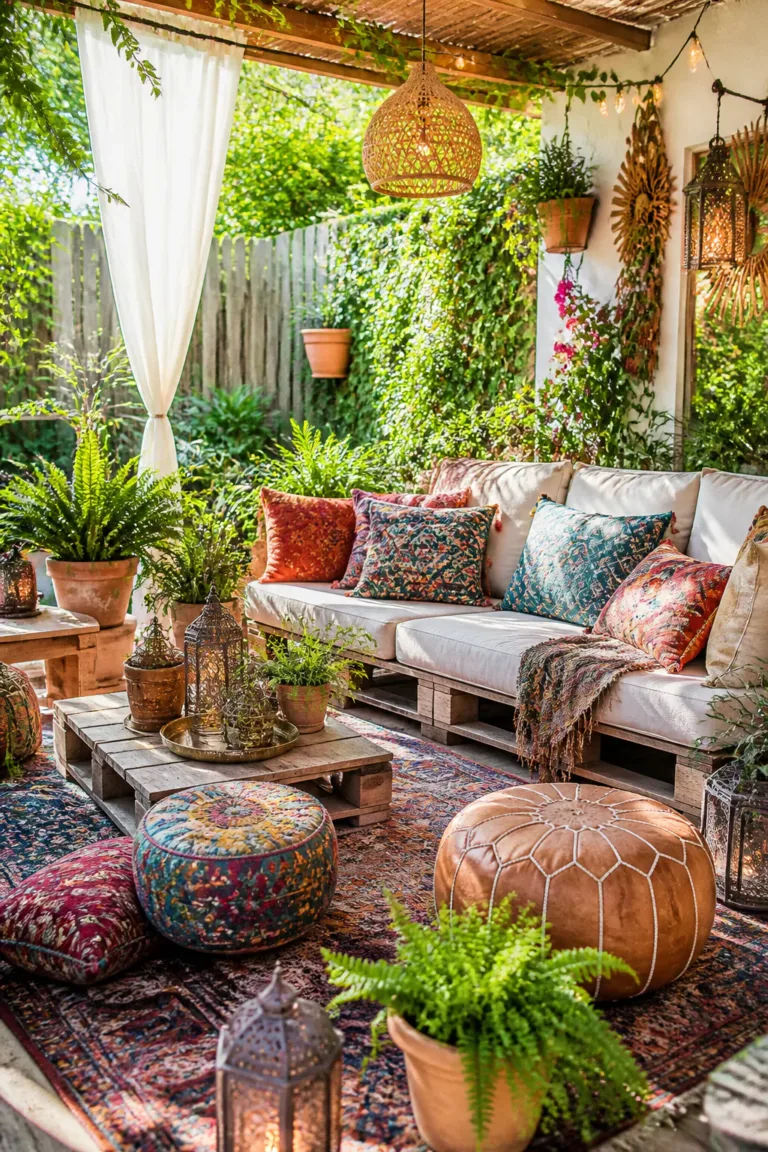
12 Stunning Landscaping Ideas for a More Beautiful Yard
A thoughtful landscape can make a yard feel more welcoming, useful, and connected to your home. The best improvements don’t have to happen all at once: a sharper garden border or a small lighting update can make a difference, while a patio or retaining wall can shape a larger renovation.
These landscaping ideas cover hardscaping, planting, lighting, and outdoor living. Some suit a weekend refresh, while others call for careful planning and professional help, especially when a project involves slopes, drainage, or permanent structures.
Whether you’re working with a compact patio, a shady side yard, or a spacious backyard, start with how you want to use the space. Then choose materials and plants that fit your climate, maintenance preferences, and existing layout.
1. Create a Herringbone Paver Patio
A patio can be more than a level place for a table and chairs. A herringbone paver pattern gives the surface movement, while a contrasting band in a simpler linear layout creates a visual frame. This combination draws the eye toward the patio and helps it feel like a deliberate feature of the yard.
Use the pattern where you want a defined gathering spot, such as outside a back door or beside a garden. For a small patio, keep the color palette restrained so the pattern adds interest without making the area feel busy. In a larger space, a border can distinguish the seating zone from a walkway or planting bed.
How to pull it off
Plan the patio dimensions and pattern before choosing pavers. A stable, properly prepared base matters for both appearance and drainage, so consider professional installation if you’re unsure about grading or excavation.
- Choose two complementary paver tones for contrast.
- Use a linear band to frame the herringbone field.
- Keep furniture placement in mind when laying out the pattern.
Repeat one of the paver colors elsewhere, such as along a path, to make the patio feel connected to the rest of the landscape.
2. Layer Stone and Reclaimed Wood
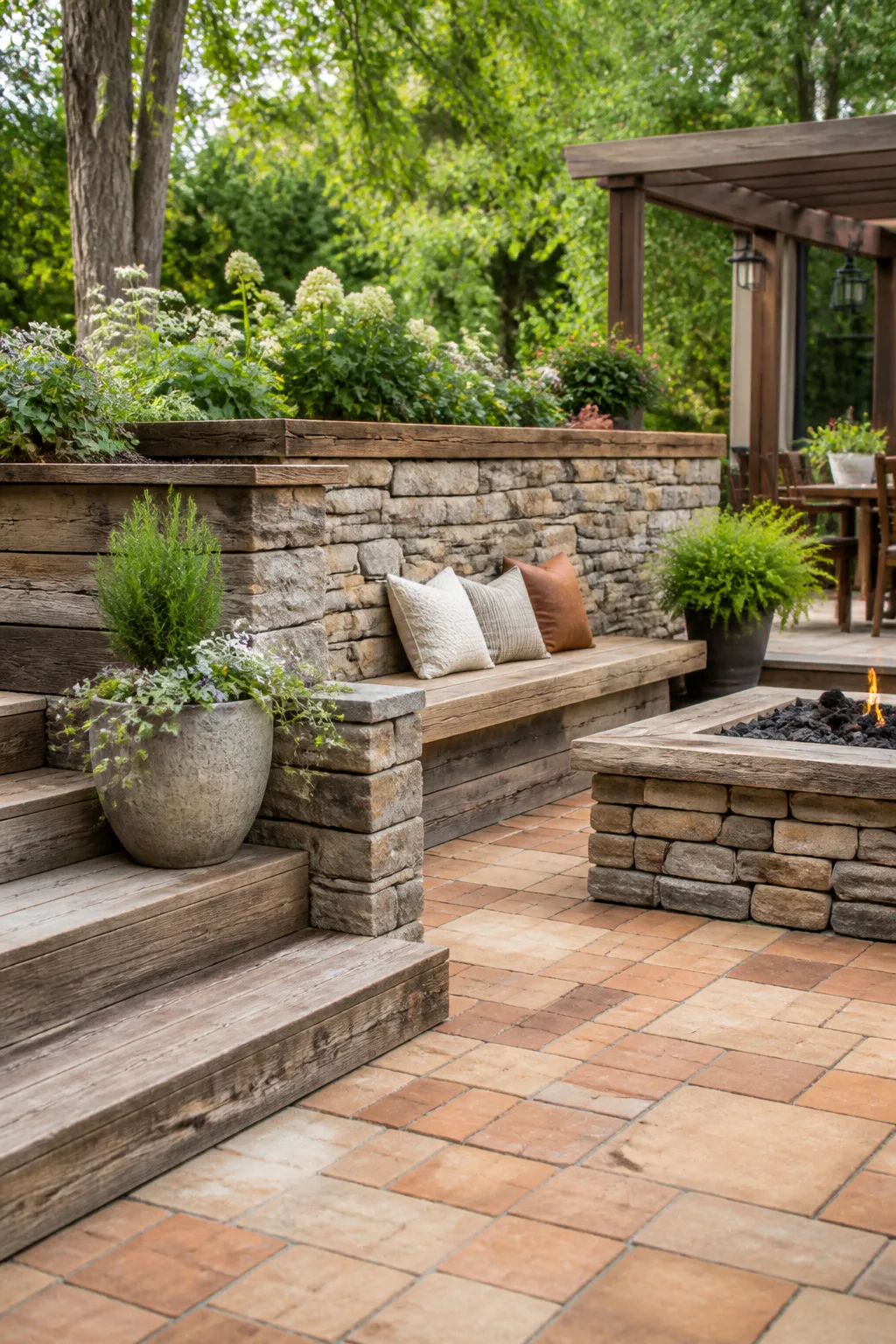
Stacked stone, reclaimed wood, and warm-toned pavers bring different textures together for a grounded outdoor feature. Stone adds a natural, solid feel, while aged wood softens the look and introduces warmth. Pavers in terracotta or sandstone tones can bridge the two materials and keep the overall palette cohesive.
This mix works well around a patio, outdoor seating area, or garden feature where you want a rustic look that still feels considered. Use it selectively: a stone accent wall or wood detail can be enough to give a space character without making every surface compete for attention.
Designing with mixed materials
Choose a lead material first, then use the others as accents. Pay attention to how each surface will weather outdoors, and select materials suited to your local climate and the level of upkeep you’re comfortable with.
- Repeat warm tones across paving and wood details.
- Pair rough stone with simpler, clean-lined surfaces.
- Use reclaimed wood where it can be properly protected and maintained.
The result feels most harmonious when the textures vary but the colors share a common thread.
3. Build Terraced Retaining Wall Gardens
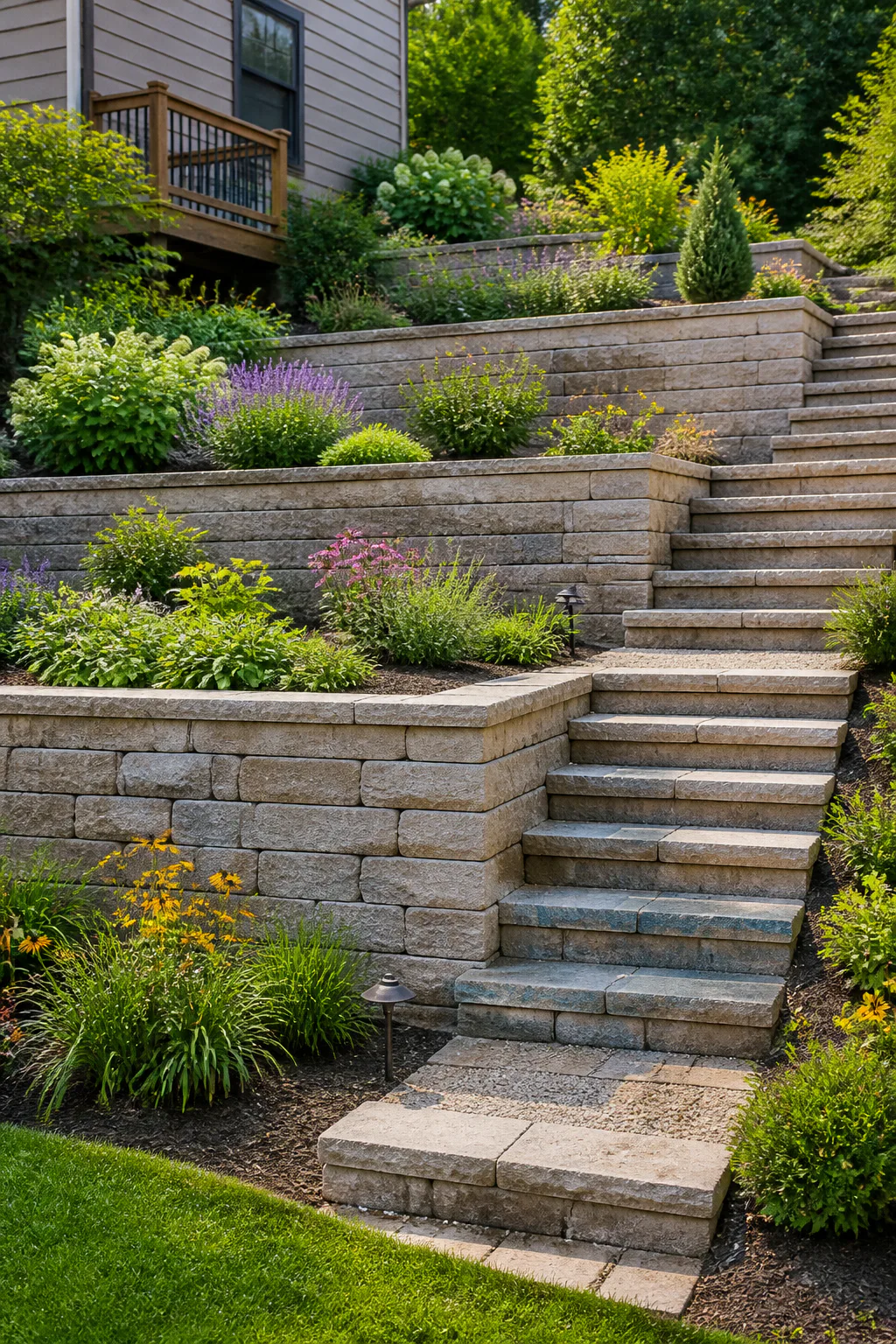
A sloped yard can be difficult to walk across or plant, but stepped retaining walls can turn it into a series of usable garden areas. Each level can serve as a raised bed, a small sitting area, or a transition between the house and the lower yard. The tiers also give plants a clearer setting than a single steep bank.
Stone walls create a natural, substantial look, while timber can feel more informal. Choose a material that suits the home and surrounding landscape, and think about how people will move between levels. Steps or a gently sloped route can make the garden easier to access and enjoy.
Plan for slope and drainage
Retaining walls need to manage soil pressure and water, not just look attractive. For significant slopes or taller walls, consult a qualified professional about construction, drainage, and any local requirements before work begins.
- Map out how each terrace will be used.
- Leave room for drainage behind the walls.
- Choose plants suited to the sun and soil on each level.
Well-planned terraces make a challenging grade feel like a collection of garden rooms.
4. Frame Planting Beds with Steel Edging
Clean edging gives a planting bed a finished outline and helps separate soil or mulch from lawn, gravel, and paths. Steel edging creates a slim, crisp border that suits both modern and naturalistic gardens. Stone edging offers a more substantial look and can echo materials already used on a patio or walkway.
This is a useful update for beds that look untidy or have gradually spread into the lawn. A defined curve can soften a straight yard, while a straight edge can bring order to a more casual planting scheme. The right border makes existing plants and mulch look more intentional.
Choose an edge that fits the yard
Consider the shape of the bed, nearby materials, and how you maintain the lawn. A border should be visible enough to do its job without becoming the main feature of the garden.
- Use steel for a narrow, understated outline.
- Choose stone when you want a more pronounced border.
- Mark the bed’s shape before installing edging.
Once the lines are in place, refresh the mulch and trim plants that spill over walkways to complete the tidy effect.
5. Plant a Native Pollinator Corridor

A connected stretch of regional flowers can provide food and habitat for bees, butterflies, and songbirds. Instead of planting one isolated patch, link beds along a fence, walkway, or yard edge to create a corridor. Native plants suited to your area can also be a practical choice when you want a garden that responds well to local conditions.
Choose a mix of plants that flower at different times so the planting offers changing color and interest through the growing season. Coneflowers, wild bergamot, and milkweed are examples to explore, but the best choices depend on your region, soil, and sun exposure. A local native plant resource can help narrow the options.
Build a connected planting
Repeat a few plant varieties along the route for continuity, then add smaller groups of complementary flowers. Leave enough room for mature plants and keep the corridor connected rather than breaking it into scattered, unrelated patches.
- Check which native species suit your growing conditions.
- Include flowers with varied bloom times.
- Provide a clear route for people beside the planting.
A pollinator corridor can bring movement and seasonal color to an otherwise overlooked boundary.
6. Brighten Tree Shade with Layered Perennials
Shady areas beneath trees or along fences can feel like difficult spaces to landscape, but foliage plants offer texture even when flowers aren’t in bloom. Hostas, ferns, and astilbes bring different leaf shapes and heights, making it possible to build a layered planting that feels lush and intentional.
Use taller plants toward the back of a bed or near a fence, then place lower, spreading foliage near the front. Under trees, leave space around trunks and be mindful of roots when planting. Conditions vary even within one yard, so observe how much light and moisture the area receives before selecting plants.
Make a shade planting feel full
Group plants in repeating clusters rather than placing one of each variety throughout the bed. This creates a calmer composition and makes it easier to see which plants are thriving in the available conditions.
- Combine broad leaves with fine, feathery foliage.
- Check mature plant sizes before spacing.
- Choose varieties suited to the site’s moisture and light.
A well-layered shade bed can turn a dim corner into a restful garden backdrop.
7. Install an Elevated Kitchen Garden
Raised beds bring herbs, vegetables, and cut flowers into an organized, accessible growing space. Modular beds can be arranged in a sunny part of the yard or near the kitchen, making it easier to tend plants and harvest what you need. Wood and corrugated metal offer different looks, so choose a style that complements the house and surrounding hardscape.
Before setting up the beds, consider how much sun the crops need and how you’ll reach each planting area. Paths between beds make watering, weeding, and harvesting more comfortable. A compact layout can work well in a small yard, while a larger garden can separate edible plants from flowers.
Set up beds for everyday use
Keep the arrangement simple at first, with space for the plants you’re most likely to use. Make sure the bed material is appropriate for outdoor growing, and plan a convenient way to provide water.
- Place beds where they receive suitable sunlight.
- Leave comfortable paths between planting areas.
- Group herbs, vegetables, and flowers by their growing needs.
A practical kitchen garden can be productive while still adding structure and color to the yard.
8. Cover a Blank Fence with Vertical Greenery
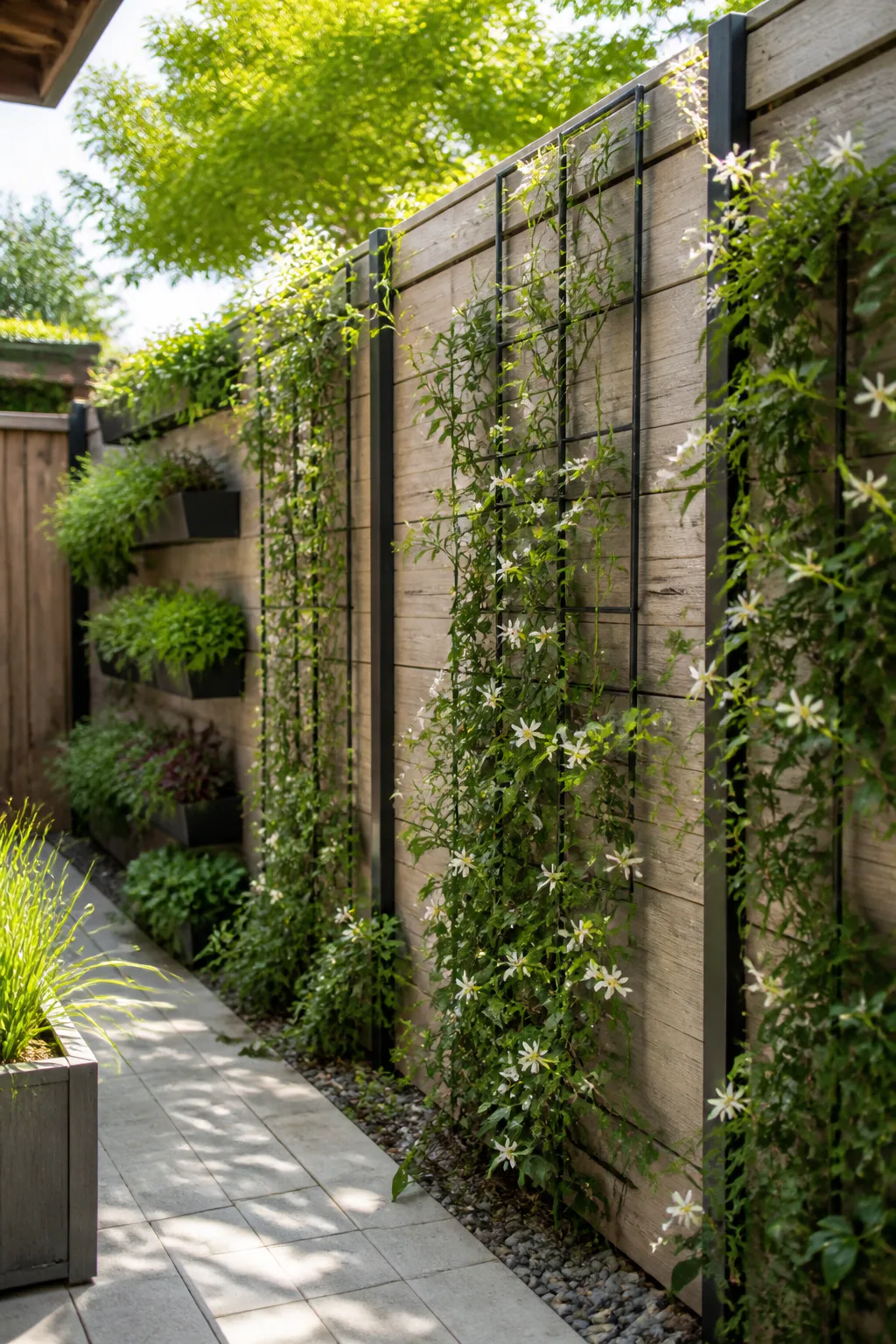
A bare fence can dominate a yard, especially when it runs along a patio or narrow side path. Growing upward with climbing vines, espalier fruit trees, or wall-mounted planters adds greenery without taking much ground space. It also gives the eye something softer to focus on than a long, plain surface.
Choose an approach based on the fence’s condition, the available light, and how much care you want to provide. Vines can create a leafy screen, while espalier trees bring a more structured look. Wall-mounted containers are useful when you want flexible planting or can’t use the ground directly beside the fence.
Give vertical plants the right support
Check that the fence or wall can support the chosen system and that plants won’t obstruct gates or access. Select varieties suited to your region, and leave room to prune and maintain them as they grow.
- Use a suitable trellis or support for climbing plants.
- Consider sunlight before choosing vines or planters.
- Keep access available for pruning and fence repairs.
Vertical greenery helps a boundary feel like part of the garden instead of a backdrop to hide.
9. Line Walkways with Warm Path Lights
Low-voltage path lights make routes easier to see after dark and add a gentle glow to the landscape. Placed along a walkway, they can clarify edges and help guide guests from the house to a patio or garden. Hidden uplights beneath trees or architectural plants add depth without filling the yard with bright, uniform lighting.
Think about how the lighting will look from both outdoors and indoors. A few carefully positioned fixtures often feel more inviting than a line of lights placed too close together. Warm-toned illumination can support a relaxed atmosphere around seating areas and paths.
Layer light with intention
Plan lighting around the routes people actually use and the features you want to notice at night. Follow product guidance for installation, and consult a qualified electrician if you’re unsure about wiring or safe placement.
- Space path lights to make the route legible without glare.
- Use uplights selectively beneath trees or large plants.
- Keep fixtures clear of mowing and walking routes.
Subtle lighting can make the yard feel welcoming after sunset while preserving a calm nighttime mood.
10. Anchor Seating Around a Built-In Fire Pit
A permanent fire pit can give a backyard seating area a clear center. A stone or modular surround helps define the gathering spot, while chairs arranged around it encourage conversation. This setup works on a patio or in a dedicated seating zone with enough room to move around comfortably.
Think about the fire feature as part of the overall layout, not as an object placed wherever space remains. Its location should make sense for access, seating, and nearby structures. Choose materials and a design that relate to the patio or garden, so the fire pit feels integrated rather than added on.
Plan the gathering area
Before building, check local fire rules and manufacturer guidance, and keep the installation clear of anything that could create a hazard. Professional advice can help with permanent construction and site-specific safety needs.
- Allow enough room for chairs and a clear walking route.
- Choose a surround that suits the existing hardscape.
- Keep required clearances and safety guidance in mind.
With a thoughtful layout, the fire pit can anchor an outdoor room for relaxing and hosting.
11. Add a Disappearing Basin Fountain
A disappearing-basin fountain brings the sound of moving water to a yard without the open surface of a traditional pond. Water bubbles over a low-profile feature and drains into a hidden basin, creating a compact focal point. It can suit a small patio, a garden bed, or a quiet corner where a larger water feature would feel out of scale.
Choose a location where the sound can be enjoyed from a seating area or heard through an open window. The feature’s materials and shape should fit the surrounding planting and hardscape. A simple bubbler can blend into a naturalistic garden, while a more defined fountain can add structure to a formal space.
Keep the feature practical
Plan for safe installation, access to power if required, and regular maintenance. Follow the fountain’s setup instructions, and consider how leaves, debris, and seasonal weather may affect the basin and pump.
- Place the fountain where its sound will be noticeable.
- Choose a scale that fits the nearby seating or planting.
- Make the basin accessible for cleaning and upkeep.
The gentle sound can make a garden feel more peaceful without taking over the landscape.
12. Create Outdoor Rooms with Pergola Screens
Outdoor rooms give a yard a sense of purpose, whether you want a dining area, a coffee nook, or a quiet reading spot. Pergolas, screens, and changes in ground material can define these zones without closing them off completely. The result is a landscape that feels organized while remaining open to views, air, and greenery.
This idea works in both small and large yards. A screen can make a seating corner feel private, while a pergola can establish a dining space beside the house. In a compact garden, a change from pavers to gravel or lawn can signal a new use without adding a large structure.
Define zones without crowding them
Start by deciding how you want to use each area, then choose the lightest way to mark its boundaries. Keep routes between spaces clear, and make sure structures suit the yard and comply with any relevant requirements.
- Use a pergola to give a dining area a clear identity.
- Add a screen where a seating spot needs more privacy.
- Use ground materials to distinguish zones subtly.
Distinct outdoor rooms can make the whole yard feel more functional and welcoming.
Final Thoughts
The most successful landscaping ideas are the ones that suit the way you live and the conditions in your yard. A patterned patio, a native planting corridor, or a softly lit path can each make a space feel more complete, even when you focus on one improvement at a time.
Start with a clear goal, check the practical details, and build from there. Whether you’re refreshing a small corner or reworking the whole backyard, thoughtful materials, useful planting, and comfortable places to gather can help your outdoor space feel like an extension of home.