14 Stunning Wooden Dressing Table Design Ideas
A wooden dressing table can bring warmth, useful storage, and a dedicated place to get ready into your bedroom. The right design depends on more than wood tone: its shape, mirror, lighting, and storage should all suit the space you have.
These 14 ideas range from pared-back oak tables to built-in dressing nooks, with options for small rooms, traditional interiors, and bedrooms that need a little extra character. Each one pairs a distinct look with practical details to consider before you choose or build.
Use the ideas as a starting point, then check the available wall and floor space, the position of outlets, and how much room you need to sit comfortably. A well-planned wooden dressing table should feel like a natural part of the room—not an obstacle in your daily routine.
1. Create a Light Oak Table with Tapered Legs
A light oak dressing table with visible grain and slim tapered legs brings a calm, Scandinavian-inspired feel to a bedroom. Its simple shape lets the wood provide the visual interest, while understated hardware keeps the overall design from feeling busy.
This style works well beside a window or against a pale wall, where natural light can bring out the oak’s texture. It is also easy to pair with neutral bedding, woven baskets, or a colorful upholstered stool if you want a little contrast.
How to pull it off
Keep the tabletop clear enough for daily use, and choose drawers sized for the items you reach for most. Brass or matte black pulls can add a small accent without taking attention away from the grain.
- Choose a finish that complements other wood tones in the room.
- Look for tapered legs with enough clearance for a stool.
- Pair the table with a simple wall mirror and warm task lighting.
The result is a versatile piece that feels light in the room while still offering a practical getting-ready spot.
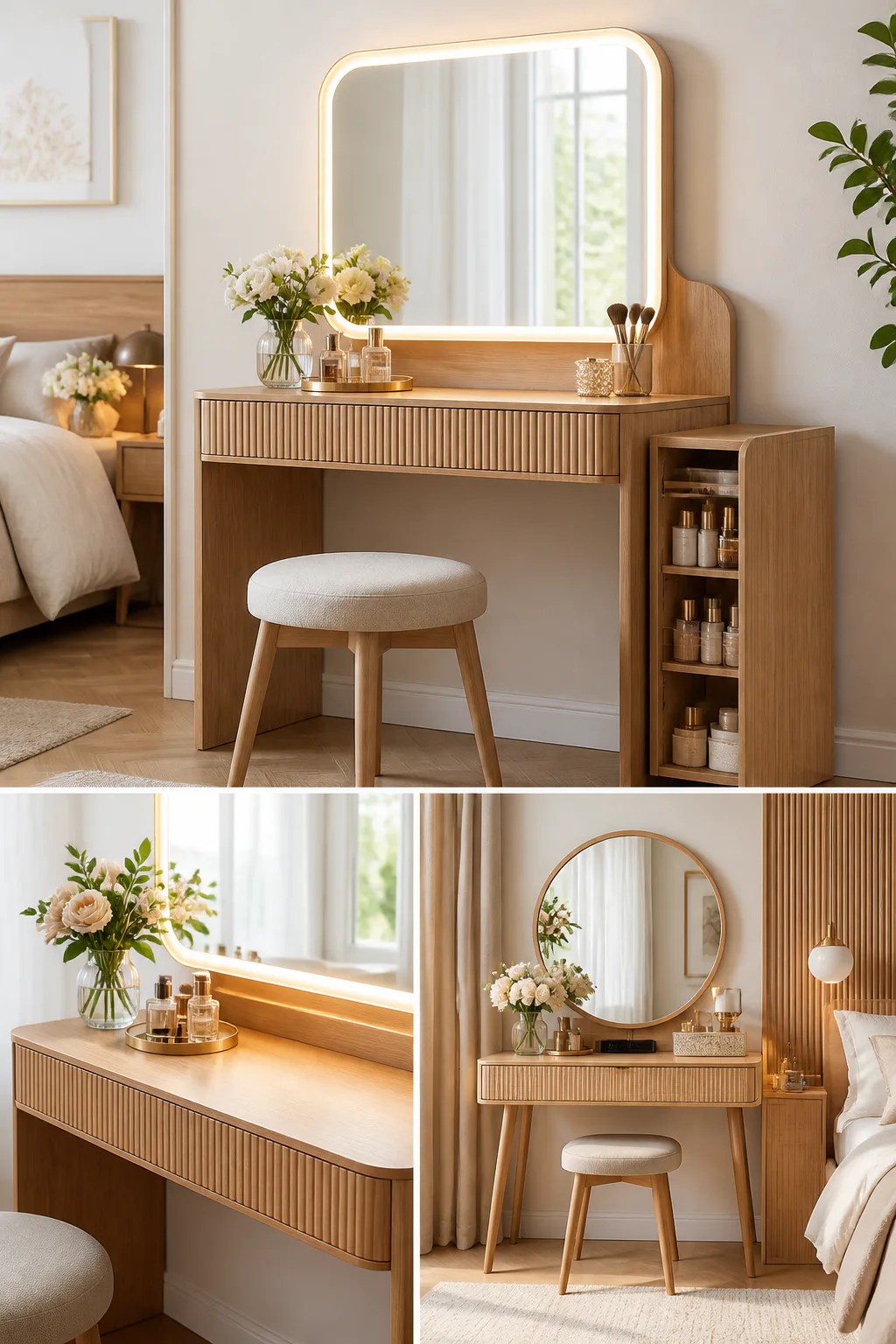
2. Add a Fluted Wood Vanity with LED Mirror
Vertical fluting gives a wooden vanity base a tactile, architectural quality. The repeated grooves add depth and soft shadow, making even a simple cabinet feel like a considered focal point rather than just a storage unit.
A circular backlit mirror complements the vertical lines with a softer shape and gives the arrangement a clean, contemporary finish. This combination suits a modern bedroom, especially when the vanity sits on a plain wall with room around it to stand out.
Design tips
Let the fluting remain the main detail by keeping nearby accessories restrained. Before installing a lighted mirror, plan where the power source will go and check that the light is comfortable for close-up tasks.
- Choose a wood tone that relates to the bed frame or flooring.
- Use a round mirror to balance the linear cabinet texture.
- Keep the tabletop simple so the fluted front stays visible.
This design works best when its texture, mirror, and lighting read as one coordinated feature.
3. Fit a Retractable Side Cabinet Beside the Table
A retractable side cabinet adds flexible storage without permanently taking up extra floor space. Depending on the design, it can slide outward or form an L-shaped surface when you need room for cosmetics, brushes, or a small lamp.
When the cabinet tucks back in, the dressing table returns to a compact footprint. That makes this idea useful in a small bedroom, a shared room, or any layout where a fixed wide vanity would make movement feel cramped.
Plan for flexible use
Measure the table in both its closed and expanded positions. Leave enough clearance for the cabinet to move smoothly and for a stool or chair to remain usable when the extra surface is open.
- Store everyday items in the most accessible drawers.
- Check that the extension does not block a closet or walkway.
- Choose a matching wood finish for a unified appearance.
A modular piece can adapt to changing routines while keeping the room neat when its extra surface is not needed.
4. Showcase Sheesham Wood with a Hinged Mirror

Sheesham wood is known for its distinctive, varied grain, making it a natural choice when you want the dressing table to feel rich and full of character. A warm finish can emphasize those patterns, while deep drawers give the piece a substantial, traditional presence.
A hinged mirror framed in matching wood completes the look and can be adjusted for different angles. This design fits comfortably in a classic bedroom, but it can also bring warmth to a more neutral space when the rest of the furnishings are kept simple.
Bring out the wood’s character
Let the grain remain visible rather than covering the table with too many decorative objects. Check that the mirror opens freely and that the table has enough depth for both the mirror frame and useful tabletop space.
- Use a finish that enhances the natural variation in the wood.
- Choose deep drawers for larger grooming tools and accessories.
- Balance the darker, richer tones with light walls or textiles.
The hinged mirror and generous storage make this a practical take on a time-honored dressing table style.
5. Build a Teak Vanity with Splayed Legs
Warm teak, softly curved edges, and slender splayed legs give this vanity a mid-century-inspired look. Flush drawers keep the front smooth and uncluttered, while the angled legs add a sense of lightness beneath a solid tabletop.
This design suits a bedroom that already has simple shapes and natural materials, though it can also stand on its own as a warm accent. Place it where the legs remain visible rather than pushing it tightly between bulky furniture.
Keep the silhouette balanced
Choose drawer pulls that sit neatly within the clean front, or use a push-to-open design for an especially seamless look. A compact stool with curved or tapered details can echo the table without making the set feel too matched.
- Look for smooth edges that feel comfortable in a compact room.
- Keep the tabletop lightly styled to show off the teak.
- Make sure the angled legs leave enough room for seating.
Its warm color and streamlined form make this vanity both distinctive and easy to live with.
6. Hide a Mirror Beneath a Lift-Top Table
A lift-top dressing table conceals its mirror beneath the tabletop, creating a dual-purpose surface for a bedroom that needs furniture to work harder. Lift the center section when you are getting ready, then close it to return the table to a clean, uninterrupted surface.
The space beneath the top can also hold divided trays for jewelry and small accessories. This is especially useful if you prefer to keep personal items out of sight or want a table that can double as a writing surface when the mirror is closed.
Make the hidden storage useful
Check that the lid opens comfortably and stays supported while in use. Arrange compartments around the items you actually own, leaving larger areas for pieces that do not fit neatly into small dividers.
- Use separate sections for rings, earrings, and everyday essentials.
- Keep a clear area on the closed top for other bedroom tasks.
- Position the table where overhead or nearby light reaches the mirror.
This clever arrangement combines a tidy appearance with an easy-to-access getting-ready station.
7. Mount a Slim Wooden Dressing Table on the Wall
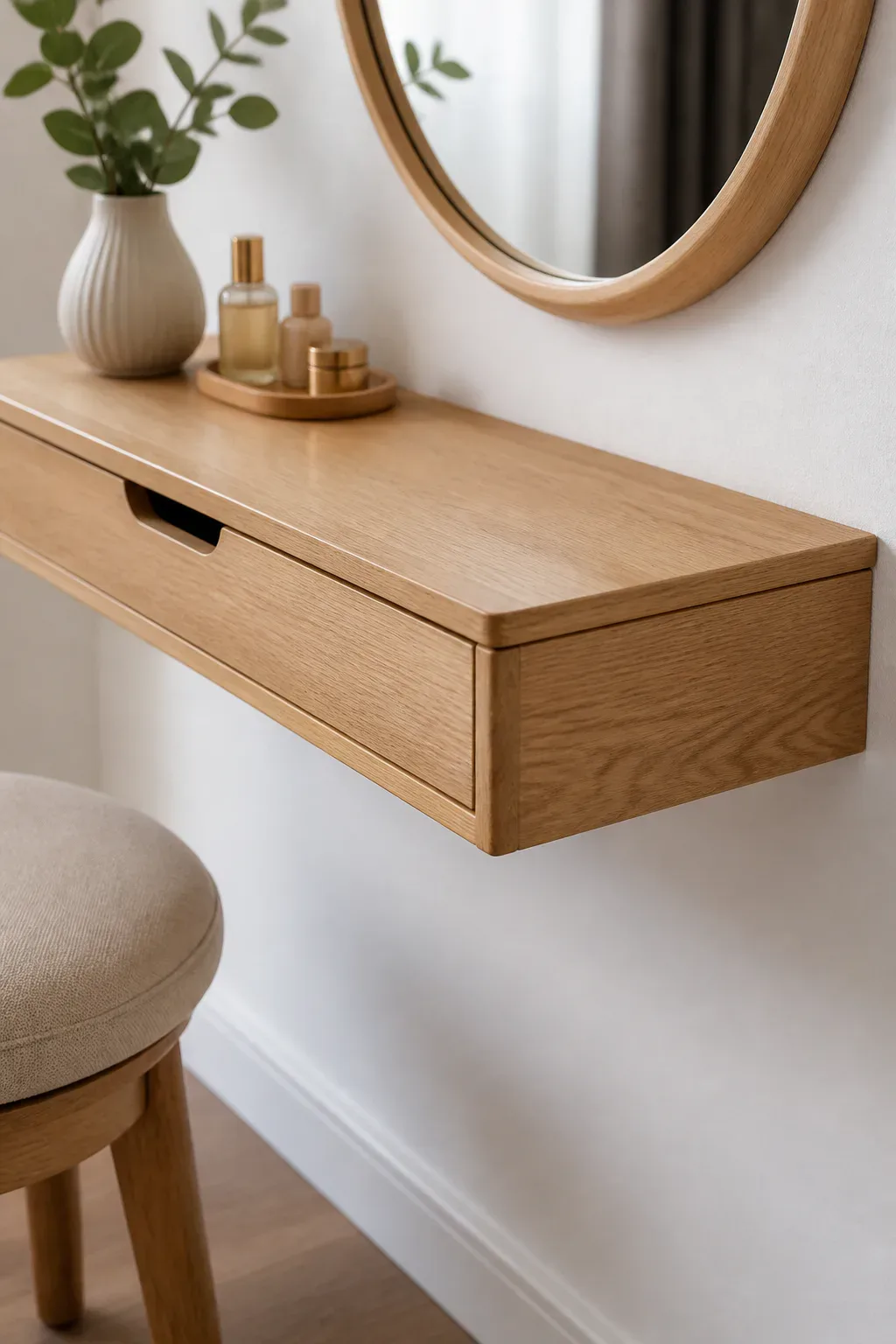
A floating wooden dressing table frees up floor space and gives a small bedroom a more open feel. A solid plank or shallow desk with a discreet drawer can provide just enough room for daily essentials without the visual weight of a full set of legs.
Pair it with a hanging mirror, and the wall becomes a compact dressing area rather than a furniture-heavy corner. This setup can work beside a closet or in an otherwise unused stretch of wall, provided there is comfortable room to sit.
Install it thoughtfully
Secure the table to suitable wall framing or a support system designed for its weight and intended use. Decide on the sitting height before installation, and check that the drawer can open without hitting a chair or nearby furniture.
- Choose a shallow drawer for makeup or small accessories.
- Use a mirror sized to balance the width of the wood plank.
- Keep a stool that can slide underneath when not in use.
A restrained design can turn a tight footprint into a useful, uncluttered dressing spot.
8. Repurpose Reclaimed Timber into a Rustic Vanity
Reclaimed timber gives a dressing table visible history through its weathered surface, varied color, and natural marks. Paired with dark iron hardware, it creates a rustic vanity that feels relaxed and grounded rather than overly polished.
This look suits farmhouse-inspired bedrooms, but it can also add warmth to a room with plain walls and modern bedding. The key is to let the wood’s uneven character stand out while keeping surrounding decor simple enough to avoid a cluttered effect.
Work with the material
Before repurposing old boards, make sure they are clean, stable, and suitable for furniture. A protective finish can help the surface handle everyday use while preserving its texture and timeworn appearance.
- Pair the timber with simple iron pulls or brackets.
- Use a smooth mirror frame to balance the rougher wood.
- Keep the stool and nearby textiles soft and understated.
The combination of sturdy materials and useful storage makes rustic character feel practical, not purely decorative.
9. Add Cane-Webbing to Wooden Vanity Drawers
Cane-webbing drawer fronts bring woven texture and visual lightness to a wooden dressing table. Set into oak or ash, the natural pattern breaks up solid cabinet fronts without introducing a bold color or heavy decorative detail.
This approach works especially well in airy, relaxed bedrooms and interiors that mix natural fibers with simple furniture. It can soften a boxy vanity and connect the piece to a woven rug, basket, or chair elsewhere in the room.
Balance texture and function
Use cane on selected drawers rather than every surface if you want the design to feel subtle. Since the woven panels are a feature, keep nearby accessories from crowding the front and choose a tabletop finish that complements the wood.
- Combine cane fronts with a clean-lined oak or ash frame.
- Repeat a woven texture elsewhere for a gentle connection.
- Keep small items organized inside to maintain a tidy surface.
The mix of wood and weaving makes a familiar vanity feel lighter and more handcrafted.
10. Build a Tall Armoire with a Pull-Out Vanity
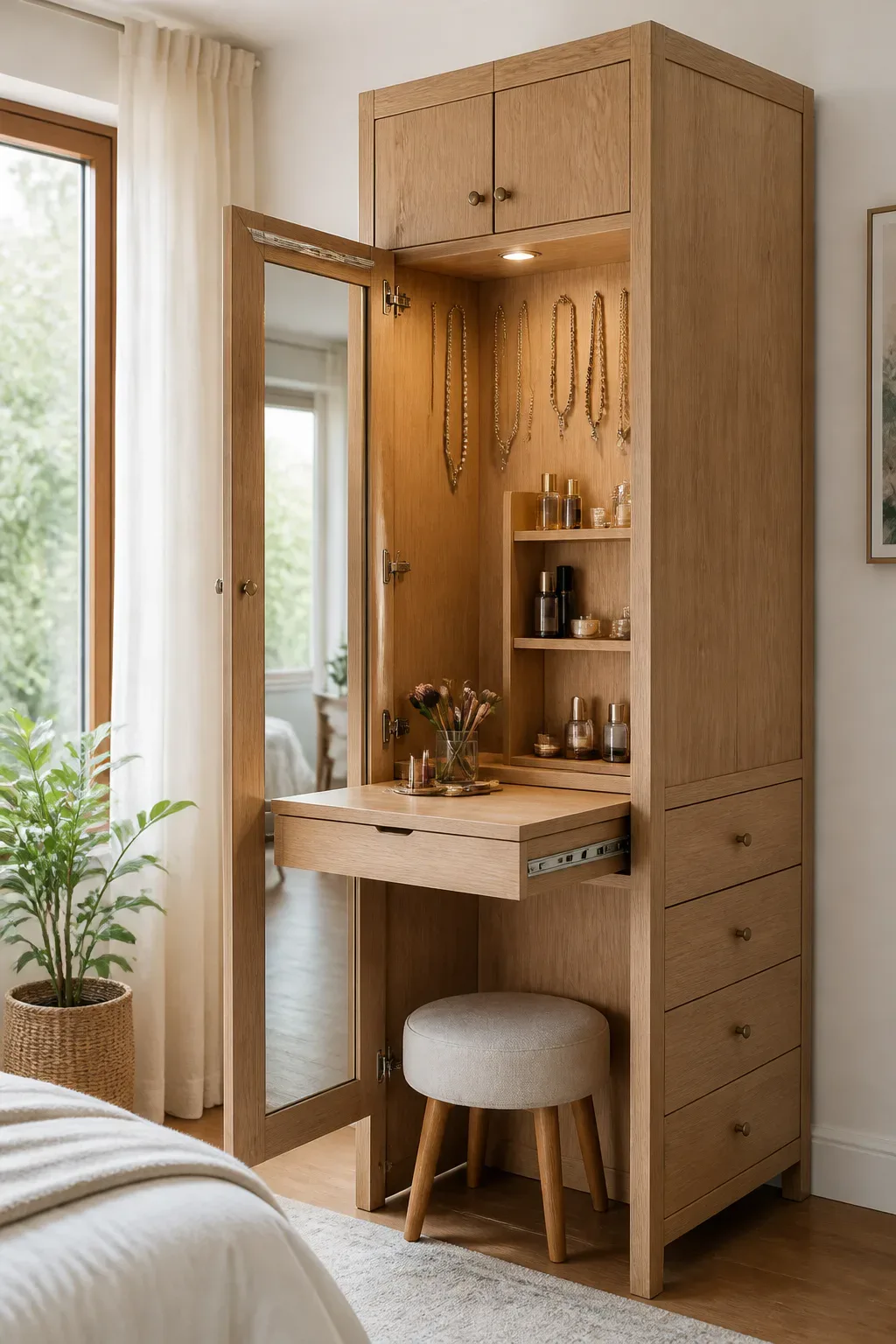
A tall armoire-style dressing unit uses vertical space to combine a compact work surface with concealed storage. A pull-out desk can serve as the dressing table when needed, while a full-length mirror door helps the piece function as a wardrobe or mirror cabinet.
Behind the door, hooks and shelves can keep necklaces, small accessories, and everyday grooming items together. This design is useful when floor space is limited but a single compact unit can occupy a taller section of the room.
Organize the interior
Plan the inside around what you need to reach quickly, and make sure the pull-out surface feels stable when extended. The mirror door also needs enough swing clearance, so consider nearby furniture and the path through the room.
- Use hooks for necklaces and shelves for small containers.
- Keep frequently used items near the pull-out surface.
- Check that the full-length mirror can open without obstruction.
By combining several functions in one footprint, an armoire vanity helps a bedroom stay orderly.
11. Pair a Wooden Vanity with a Lighted Gold Mirror
A wooden table with gold-toned legs pairs warmth with a more glamorous accent. A lacquered or dark-stained body gives the metal finish room to stand out, while a marquee-style mirror adds a bright focal point above the surface.
This design can bring personality to a modern bedroom or create a dressing corner with a little vintage-inspired polish. To keep the effect intentional, repeat the gold tone in only a few small details rather than scattering metallic finishes around the room.
Keep the glam look comfortable
Choose mirror lighting that feels useful for getting ready and does not overwhelm the bedroom at night. Leave enough tabletop space beside it for daily essentials, and consider a simple stool to balance the mirror’s statement-making frame.
- Pair dark wood with gold for stronger contrast.
- Coordinate the mirror frame with the table legs.
- Use a restrained palette for nearby accessories and textiles.
The mix of wood, warm metal, and practical mirror lighting creates a distinctive but functional corner.
12. Fit an L-Shaped Wooden Vanity into a Corner
An L-shaped wooden vanity makes use of a bedroom corner that might otherwise go unused. Its wraparound desktop provides room for a mirror and everyday items, while the second side can offer a work surface or additional space for organizing accessories.
Tiered side shelving adds vertical storage without spreading the furniture across the room. This layout is especially useful when a straight table would interrupt a walkway or leave an awkward gap beside the bed or closet.
Plan the corner layout
Measure both walls and check how the chair or stool will fit before choosing the proportions. Keep the mirror positioned for a comfortable seated view, and avoid placing shelves where they interfere with movement or access to drawers.
- Use the shorter side for shelves or frequently used items.
- Leave clear legroom beneath the main dressing surface.
- Choose a finish that connects with nearby bedroom furniture.
A well-planned corner vanity turns an overlooked area into a compact, organized destination.
13. Set a Dark Wood Vanity on a Black Iron Frame
A dark wood tabletop on a matte black iron frame gives a dressing table an industrial edge. The contrast between the substantial wood surface and the crisp metal base feels bold, while the open frame keeps the piece from appearing like a solid block.
This style fits loft-inspired rooms and bedrooms with exposed or dark accents, but it can also serve as a single contrast piece in a softer space. A simple mirror and restrained accessories help the materials remain the focus.
Make the contrast feel intentional
Choose a wood finish with visible grain so the top has warmth as well as depth. Check that the frame feels stable and that its supports do not interfere with a stool or the way you sit at the table.
- Repeat matte black in a lamp, mirror detail, or drawer pull.
- Balance the darker materials with lighter walls or bedding.
- Keep the tabletop clear enough to show its wood character.
The result is a sturdy-looking vanity that blends raw materials with everyday function.
14. Turn a Wall Alcove into a Built-In Dressing Nook
A built-in dressing nook makes an alcove feel purposeful by fitting wooden cabinetry to the recess. A compact desktop, flush drawers, and open perfume ledges can create a complete getting-ready area without adding a freestanding piece that projects into the bedroom.
Integrated LED strips can brighten the work surface and highlight the shelves, while custom dimensions make it easier to use an awkward wall opening. This idea suits a renovation or a space where the alcove already offers a natural boundary for a small vanity.
Design around the recess
Take careful measurements and plan the mirror, lighting, and storage together before fitting cabinetry. Keep the open ledges for a few useful or attractive items, and use closed storage below for anything that would otherwise crowd the nook.
- Match the wood tone to trim or other built-in details.
- Place lighting to reduce shadows at the mirror.
- Include drawers sized for the essentials you use daily.
A tailored nook can feel like a natural extension of the room while making every inch count.
Final Thoughts
The best wooden dressing table design is one that fits your bedroom’s space, storage needs, and overall style. Light oak and floating tables can keep a small room feeling open, while reclaimed timber, Sheesham, or dark wood can add a more distinctive focal point.
Before settling on a design, consider how you will use the mirror, where the light will fall, and whether you need hidden storage or extra surface area. With thoughtful measurements and a few well-chosen details, you can create a dressing spot that feels both personal and easy to use every day.