16 Stunning Bedroom Decor Ideas for a Cozy, Stylish Space
A bedroom can feel more inviting without a full renovation. The right mix of restful colors, tactile materials, thoughtful furniture, and greenery can make the space feel more personal while keeping it comfortable for sleep and everyday routines.
These 16 bedroom decor ideas move from clean, modern touches to rustic details, patterned textiles, and natural accents. Try one change as a starting point, or combine a few ideas that share a palette or material so the room feels collected rather than crowded.
Whether you’re refreshing a small bedroom, softening a plain wall, or adding warmth to a simple bed, you’ll find practical ways to adapt each idea to your layout. Consider the room’s existing light, storage needs, and walking space as you choose what to bring in.
1. Style a Low-Profile Platform Bed

A low-profile platform bed gives the room a clean, grounded focal point. Its simple silhouette can suit modern, minimalist, or relaxed natural interiors, while the lower height leaves more of the wall visible and may make the ceiling feel taller.
Choose a wooden frame for warmth or an upholstered one for a softer look. Since the bed itself has a streamlined shape, bedding and nearby furniture can bring in texture without making the arrangement feel busy. This approach works especially well in rooms where a tall headboard or bulky frame would overwhelm the space.
How to pull it off
Keep the visual balance in mind: a low bed looks most intentional when the bedside pieces and lighting relate to its height. Make sure the mattress height is comfortable for getting in and out, and leave enough room to move around the frame.
- Choose a simple wood finish to add natural warmth.
- Use a low, softly upholstered headboard for a cozier feel.
- Layer pillows or a throw to add height and texture.
A restrained frame lets the rest of the room feel open while still giving the bed a clear place of importance.
2. Add a Limewash Accent Wall Behind the Bed
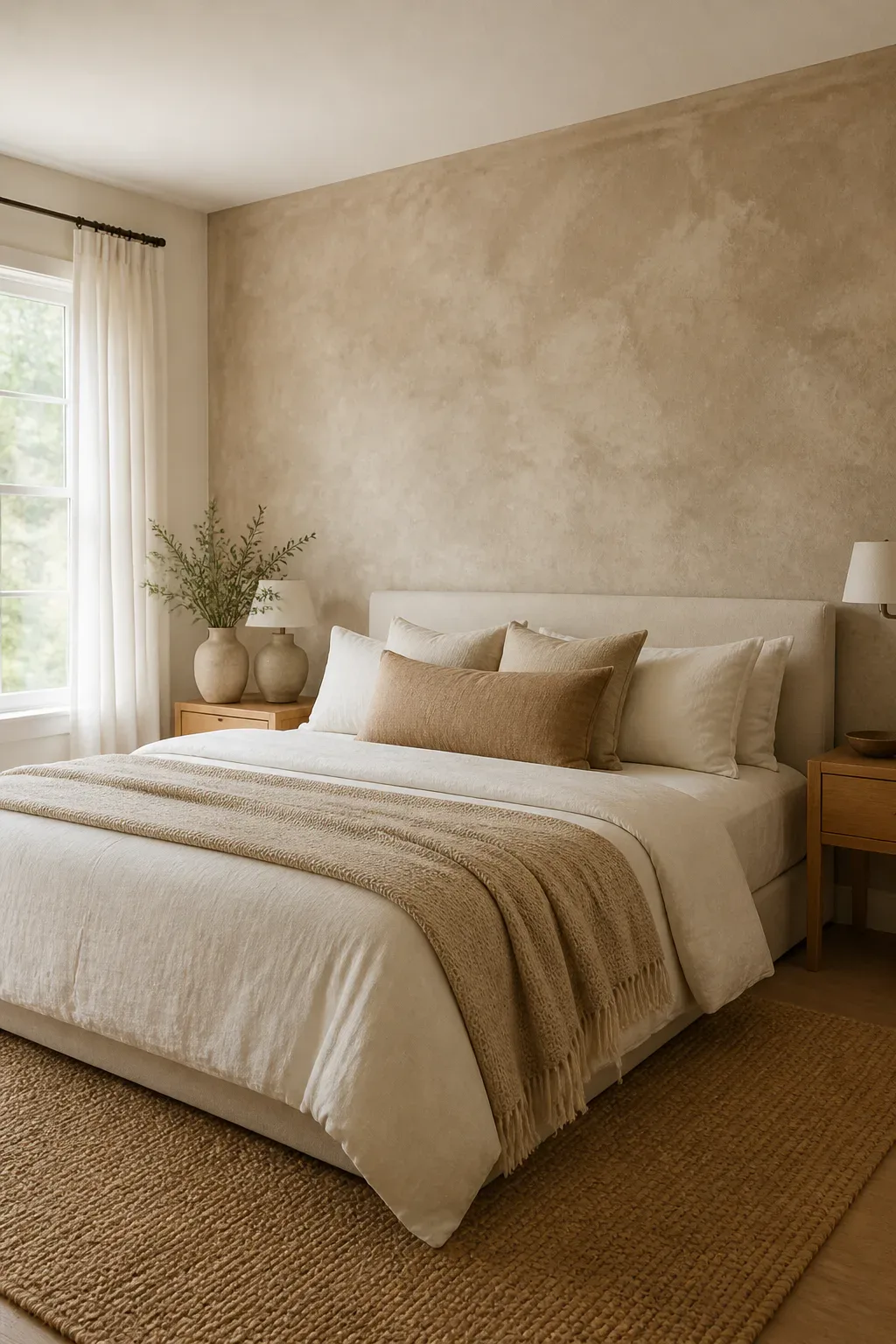
A limewash-style finish adds soft variation to the wall behind the bed without relying on a bold pattern. Its matte, gently mottled appearance brings depth to warm beige, stone, or soft gray tones, making a plain surface feel more considered.
Because the finish is subtle, it can create a focal point without competing with bedding, art, or nearby furniture. Use it across the headboard wall to frame the bed, especially in a room with simple furnishings and a limited color palette. The effect pairs naturally with wood, linen, and other quiet materials.
Design tips
Test the color and finish in the room before committing, since daylight and artificial lighting can change how a soft neutral reads. Keep adjacent walls comparatively simple so the textured surface has room to stand out.
- Try warm beige for a sunlit, earthy feel.
- Choose stone or soft gray for a cooler, understated palette.
- Keep bedding tonal to let the wall’s surface variation show.
The result is a calm backdrop that gives the bed definition without adding visual clutter.
3. Install Floating Nightstands

Floating nightstands attach to the wall instead of resting on the floor, creating a lighter look around the bed. They’re useful in compact rooms because the visible floor continues beneath the furniture, helping the layout feel more open and making it easier to clean.
A small drawer or shelf can hold the essentials without taking up much space. These nightstands work on one or both sides of the bed, depending on the room’s layout, and suit minimalist interiors as well as spaces where a bulky pair of tables would feel crowded.
Plan the placement
Before mounting anything, check the bedside height against the mattress and consider what you actually use at night. Secure the piece appropriately for the wall and its intended load, and plan nearby lighting so cords and switches remain convenient.
- Use a drawer to keep small items out of sight.
- Choose an open shelf for a book or a small display.
- Leave enough clearance for bedding and easy access.
A streamlined bedside setup can make the bed feel less boxed in while still giving everyday necessities a practical home.
4. Layer Monochromatic Linen Bedding
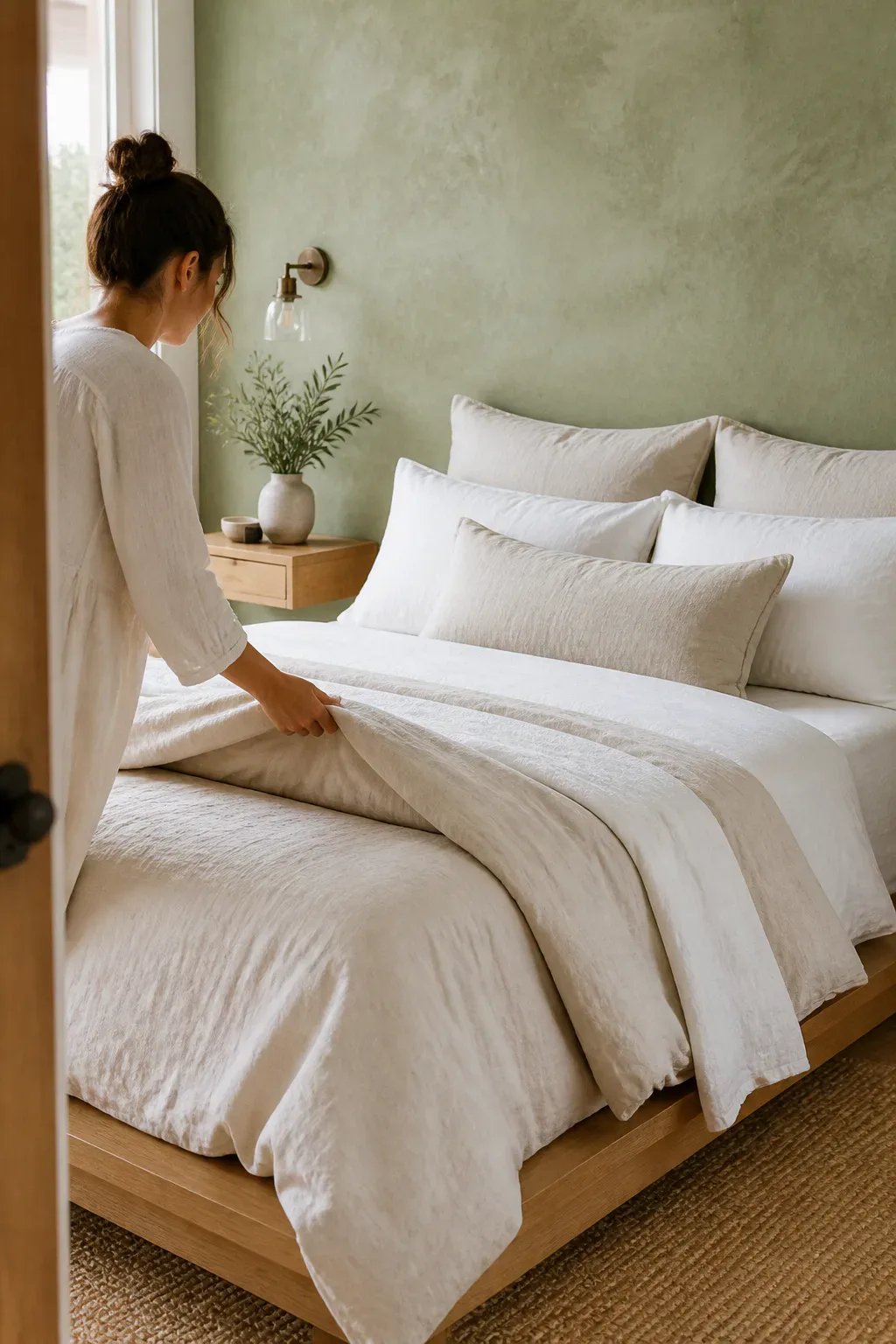
Monochromatic bedding creates a restful bed by using several shades within one color family. Crisp white or oatmeal sheets paired with a slightly darker duvet add gentle contrast while keeping the overall look calm and cohesive.
Linen brings a relaxed texture that prevents a single-color palette from feeling flat. This idea works in minimalist rooms, but it can also balance patterned flooring, a textured wall, or more decorative furniture. A few changes in tone and weave are enough to make the bed feel thoughtfully layered.
Build a soft tonal mix
Start with the lightest layer closest to the mattress, then add a duvet or coverlet in a deeper version of the same neutral. Keep the mix comfortable and practical; a bed should look inviting, not so perfectly arranged that it feels difficult to use.
- Pair white sheets with an oatmeal duvet for gentle warmth.
- Mix smooth and slubby fabrics to create texture.
- Fold a lighter coverlet at the foot for another tonal layer.
The effect is easy to refresh over time because the palette stays flexible as the rest of the room evolves.
5. Anchor the Room with a Spindle Bed Frame

A spindle bed frame can bring classic character to a bedroom without requiring much additional decoration. The open lines of a black metal or turned-wood design let the frame stand out while still allowing the wall and bedding to remain visible.
Pairing this traditional silhouette with a patterned quilt creates a cozy, lived-in look. It suits farmhouse and vintage-inspired rooms, but the frame can also add welcome contrast to otherwise simple furnishings. Keep the surrounding pieces relatively restrained if you want the bed to remain the main feature.
Balance classic and cozy
Consider how the frame’s finish relates to other details in the room, such as hardware, lamps, or wood furniture. A patterned quilt can supply color and personality, while pillows in quieter shades help prevent too many prints from competing.
- Choose black metal for a crisp, graphic outline.
- Try turned wood for a warmer, more traditional feel.
- Layer a patterned quilt over simple sheets for contrast.
This combination makes the bed feel like a centerpiece while preserving a relaxed bedroom atmosphere.
6. Add Exposed Wood Beams Above the Bed

Stained wood beams can bring architectural warmth to a plain ceiling and give the bed area a stronger sense of place. Their natural grain introduces texture overhead, drawing the eye upward and adding character to a room with otherwise simple walls.
Beams are especially effective when their tone relates to existing wood furniture or flooring. They can suit rustic and farmhouse rooms, but a clean, understated finish may also complement a more modern space. Keep the rest of the ceiling and walls visually quiet so the beams do not make the room feel overfilled.
Consider the room’s proportions
Think about the ceiling height and the scale of the beams before deciding on a layout. The goal is to add definition, not make the overhead plane feel heavy. If a permanent architectural change is not suitable, consider a finish or treatment that creates a similar wood-focused effect.
- Choose a stain that complements the room’s other wood tones.
- Use a restrained beam arrangement for a calmer look.
- Keep bedding and wall decor simple to balance the ceiling.
When thoughtfully scaled, beams add a cozy, established feeling above the bed.
7. Panel a Bedroom Wall with Shiplap

Shiplap adds a layer of wood texture that can make a simple bedroom wall feel more distinctive. Vertical paneling draws the eye upward and works particularly well behind the bed, where it can act as a built-in-looking backdrop without requiring a busy pattern.
Painted boards create a lighter, more understated effect, while a natural wood finish brings out warmth and grain. Shiplap suits farmhouse interiors, but it can also work in a relaxed contemporary room when paired with simple bedding and clean-lined furniture.
Choose a finish and direction
Decide whether the wall should blend into the room or become a focal point. A finish close to the surrounding wall color keeps the effect subtle, while a contrasting tone makes the paneling more noticeable. Consider how the board direction relates to the room’s proportions.
- Use vertical boards to emphasize height.
- Paint the paneling a soft neutral for a quiet backdrop.
- Pair wood texture with plain bedding to avoid visual competition.
One paneled wall can bring character to the room while keeping the rest of the decor uncomplicated.
8. Place a Woven Bench at the Foot of the Bed
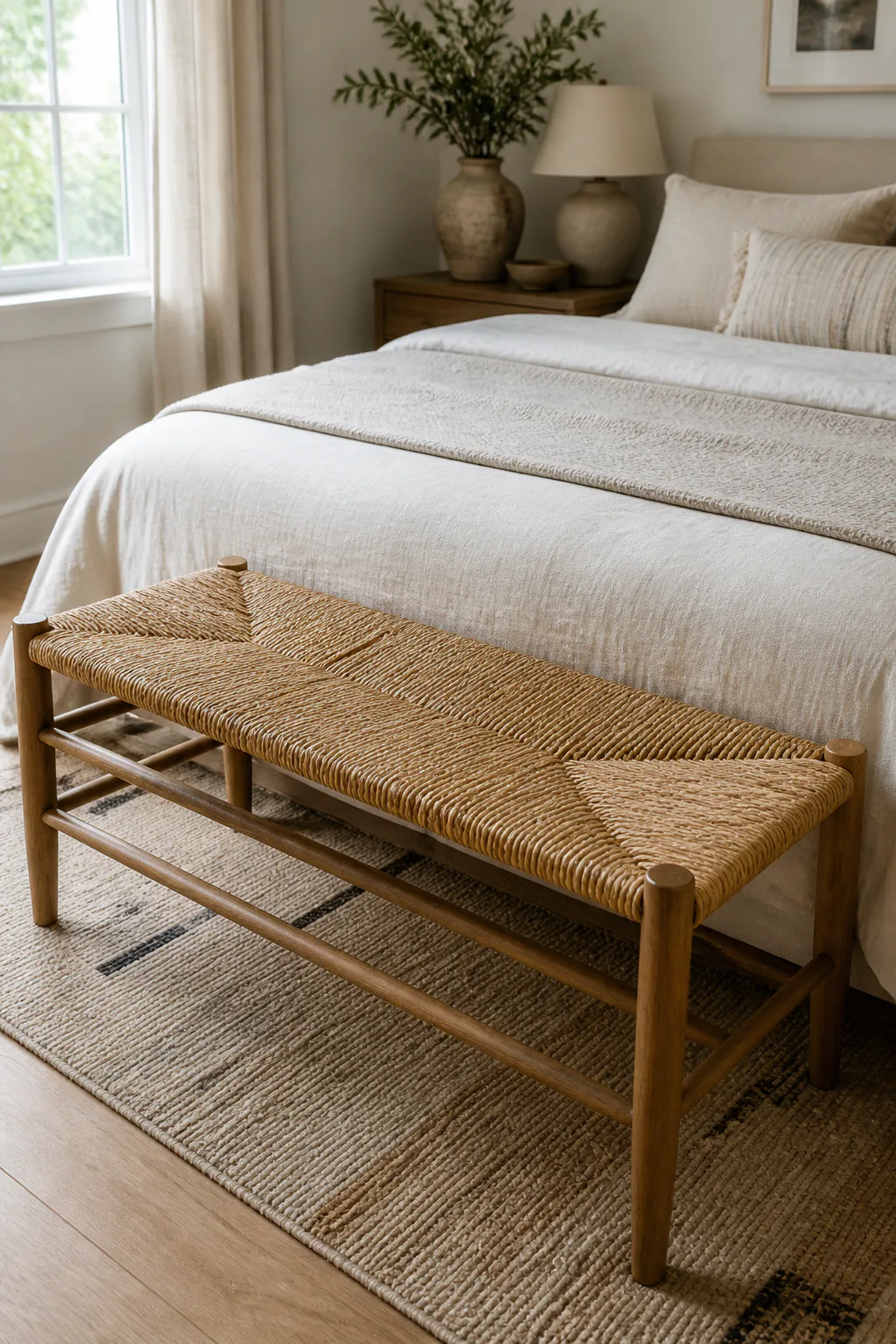
A woven bench at the foot of the bed adds a useful landing spot and a natural texture. A rustic wood-and-rush design softens the transition between the bed and the rest of the room, while a vintage trunk can provide a similar accent with added blanket storage.
This idea works best when there is enough space to walk comfortably around the bench. In a larger bedroom, it can visually complete the bed arrangement; in a smaller one, a narrower or open design may provide function without making the area feel blocked.
Make it practical
Think about how the bench will be used, whether for sitting while getting dressed, setting down a folded throw, or storing extra linens. Keep the top clear enough to serve its purpose, and choose a shape that relates to the bed’s width.
- Pick woven rush for a light, tactile look.
- Choose a trunk when concealed storage is helpful.
- Leave a clear walkway between the bench and nearby furniture.
The combination of usefulness and texture makes this a simple way to add a more finished feel.
9. Hang a Woven Pendant Over the Bed

A woven pendant creates a soft, sculptural focal point and brings natural texture into the bedroom. Its open or textured form can make overhead lighting feel more decorative, especially above the sleeping area where a plain ceiling might otherwise go unnoticed.
Natural-fiber shades pair easily with wood furniture, linen bedding, and neutral palettes. They can also soften sharper modern finishes. Before choosing a size or position, consider the bed layout and how the pendant relates to other light sources so the room remains comfortable and functional.
Keep light and placement in mind
Use a bulb and shade combination that provides suitable ambient light without feeling harsh when you are winding down. Follow appropriate installation guidance, and make sure the fixture is positioned safely and does not interfere with movement around the bed.
- Choose a woven shape that suits the scale of the room.
- Use bedside lamps or wall lights for focused nighttime tasks.
- Repeat a natural texture elsewhere to make the pendant feel connected.
The fixture can tie together a relaxed bedroom palette while adding interest above eye level.
10. Display a Macramé Hanging Above the Headboard

A macramé hanging adds handmade texture to the wall behind the bed. Its knotted fibers bring softness to a room with smooth painted walls and simple furnishings, creating a gentle focal point without relying on a framed print or strong color.
This detail works well in bohemian, relaxed, or natural-inspired bedrooms. Choose a size that relates to the headboard and wall area so the hanging feels intentional rather than lost or oversized. Neutral fibers keep the effect subtle, while a bit of color can connect it to bedding or other textiles.
Style the wall thoughtfully
Give the piece some breathing room, especially if the bed already has a tall or detailed headboard. Make sure it is securely hung and positioned where it will not snag on pillows or become difficult to maintain.
- Match the fiber tone to wood, baskets, or other natural accents.
- Choose a simple design for a calm, minimal room.
- Use a more detailed weave when the wall needs a stronger focal point.
Macramé gives the bed wall a cozy, personal finish while keeping the palette soft.
11. Layer a Kilim Rug Over Jute

Layering a colorful kilim or Moroccan shag rug over jute combines pattern with natural texture. The jute provides a quiet base, while the smaller rug adds warmth and a concentrated patch of color near the bed.
This approach can help define the sleeping area and soften the feel underfoot. It suits eclectic and bohemian interiors, but a carefully chosen rug can also bring personality to a neutral bedroom. Let the color or pattern relate to one other element, such as a throw or accent pillow, rather than repeating it everywhere.
Make the layers feel intentional
Arrange the rugs so they stay stable and do not create an awkward edge in a walking path. Consider how much of each rug will show around the bed and whether the textures feel comfortable where you step each morning.
- Use jute as a larger, understated foundation.
- Place a patterned rug where it will be visible beside or at the foot of the bed.
- Choose colors that echo existing textiles without matching every detail.
The layered look adds depth and makes the floor part of the room’s overall composition.
12. Trail Pothos from a Bedroom Shelf

A trailing pothos can bring greenery into a bedroom without taking up valuable floor space. Set on a shelf or high ledge, its leaves can cascade gently down the wall and add a relaxed, living detail to an otherwise plain corner.
This idea works near a window or wherever the plant can receive suitable light. It can soften the straight lines of shelving and furniture, and it pairs naturally with wood, woven accents, and neutral bedding. Keep the placement practical so watering and plant care remain manageable.
Choose a sensible spot
Check the light conditions in the intended location and leave enough room to reach the pot. Use a stable shelf and a container that can catch excess water, taking care not to place the plant where drips could damage furniture, bedding, or walls.
- Set the pot where its trailing leaves will not block a walkway.
- Choose a shelf that can safely support the container.
- Keep care supplies and watering access in mind when positioning it.
A single plant can add a fresh, organic note without requiring a large display.
13. Arrange Ferns Around the Bed
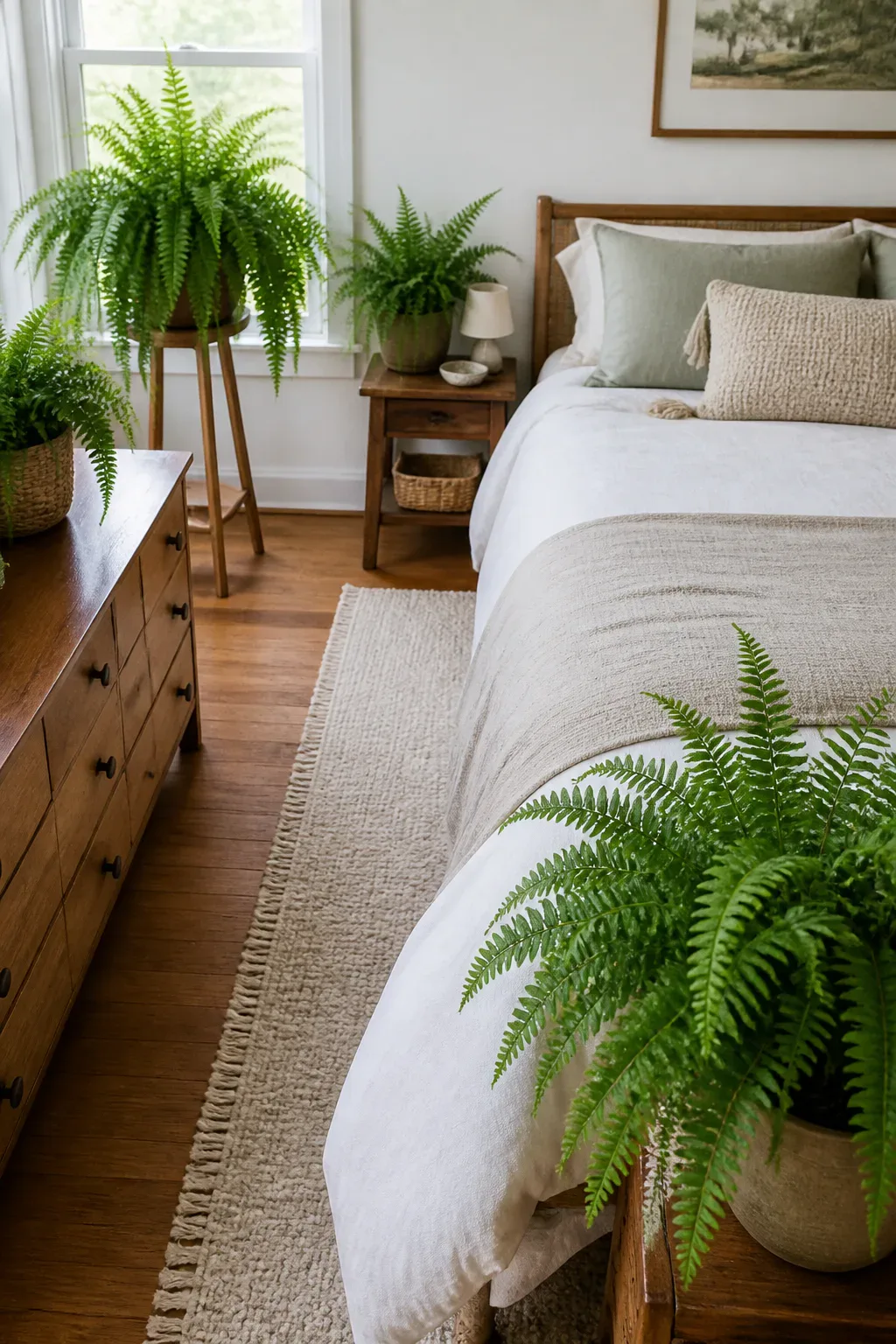
Ferns bring leafy texture and a relaxed, plant-filled feeling to the bedroom. Their softer outlines can balance the straight edges of a bed frame or dresser, helping the room feel more restful and connected to natural materials.
Use one fern as a quiet accent or arrange a few around the bed if there is enough space. A plant can sit on a stand, dresser, or other suitable surface, but avoid crowding the bedside area or narrowing routes through the room. The best placement is one that looks good and supports easy care.
Build a balanced plant arrangement
Consider the light, humidity, and care needs of the particular fern you choose, since conditions vary by plant and room. Grouping greenery at different heights can add dimension, but leave clear surfaces and keep the arrangement from competing with bedside essentials.
- Place a fern on a stand to give it visual height.
- Use a textured pot that complements the room’s natural finishes.
- Leave space around the bed for comfortable movement and cleaning.
Thoughtful placement makes greenery feel like part of the room rather than an afterthought.
14. Add a Snake Plant Beside the Bed

A snake plant beside the bed offers a simple way to introduce greenery and a sculptural shape. Its upright leaves bring a different silhouette from soft bedding and low furniture, while a woven or textured pot adds another natural detail.
Place it where it can fit comfortably without narrowing the path around the bed. A bedside corner, dresser edge, or nearby open area may work, depending on the room’s layout and available light. Keep the container in scale with its surroundings so the plant feels integrated rather than oversized.
Choose a fitting container
Use a stable pot with suitable drainage and a surface beneath it to protect floors or furniture. As with any houseplant, check the care requirements for the particular plant and location, and make sure the leaves will not interfere with drawers, doors, or bedding.
- Try a woven cover for a softer, bohemian finish.
- Choose a simple textured pot for a more minimal look.
- Keep the plant clear of the main walking route.
This small green accent can add shape and warmth without requiring a full plant display.
15. Mix Global Patterns Across the Bedding

Global-inspired patterns can give a bedroom an eclectic, collected character. Bring the look to life with patterned textiles layered across the bed, using a mix of motifs and textures that feel related rather than competing for attention.
A patterned quilt can become the main feature, while smaller accents add supporting detail. This approach works especially well in a room with simple walls and furniture, where the bed can carry most of the color and visual interest. A few solid pieces help the patterns feel balanced and comfortable.
Find a common thread
Choose one element to connect the textiles, such as a shared color, similar warmth, or a consistent level of contrast. Varying the scale of motifs can keep the layers from feeling too repetitive, while leaving some bedding plain gives the eye a place to rest.
- Start with one patterned quilt or coverlet as the anchor.
- Add a smaller-scale print in a related color family.
- Use solid sheets or pillows to create visual breathing room.
When the colors and patterns relate, the bed feels expressive without making the whole room feel busy.
16. Create a Natural-Fiber Bedroom Accent

A focused natural-fiber accent brings woven texture and greenery together in one corner or bedside display. A basket, woven pot cover, or small fiber detail can add warmth, while a plant supplies a fresh contrast to the room’s softer textiles and furnishings.
This is an easy idea to adapt when you want a bohemian touch without changing the whole bedroom. Use an open corner, a dresser top, or a bedside surface, depending on the available space. Keeping the materials and greenery grouped gives the detail a clear purpose rather than spreading small accents throughout the room.
Keep the grouping simple
Choose a few pieces with different textures but a related natural palette. Make sure the arrangement does not crowd items you use daily, and consider how sunlight, watering, and cleaning will work in the chosen spot.
- Pair a woven basket or pot cover with a leafy plant.
- Add one small natural-fiber accent instead of several competing pieces.
- Repeat a nearby wood or linen tone to connect the grouping to the room.
A small, intentional vignette can bring a relaxed natural finish to the bedroom.
Final Thoughts
Refreshing a bedroom does not mean changing everything at once. A low-profile bed, a softly textured wall, layered linens, or a thoughtful plant can each shift the room’s mood while keeping its everyday function in view.
Start with the idea that best fits your layout and the feeling you want to create, then build around it with complementary colors and materials. By balancing useful choices with texture and personal touches, you can make a bedroom feel more restful, welcoming, and distinctly yours.