13 Stunning Boho Bedroom Decor Ideas for a Cozy, Relaxed Space
Boho bedroom decor is less about matching every piece and more about bringing together natural materials, relaxed layers, and objects that feel personal. A warm palette of cream, clay, rust, and wood tones gives the room an easy starting point, while woven textures and soft lighting make it feel inviting.
These ideas work in bedrooms of different sizes and styles. You can use one statement detail, such as a rattan headboard, or combine several smaller touches like layered pillows, plants, and vintage-inspired art.
If you are refreshing a room gradually, start with the bed and work outward. Choose pieces that suit your space and daily routine, then add texture and color in a way that feels comfortable rather than overly arranged.
Quick Answer
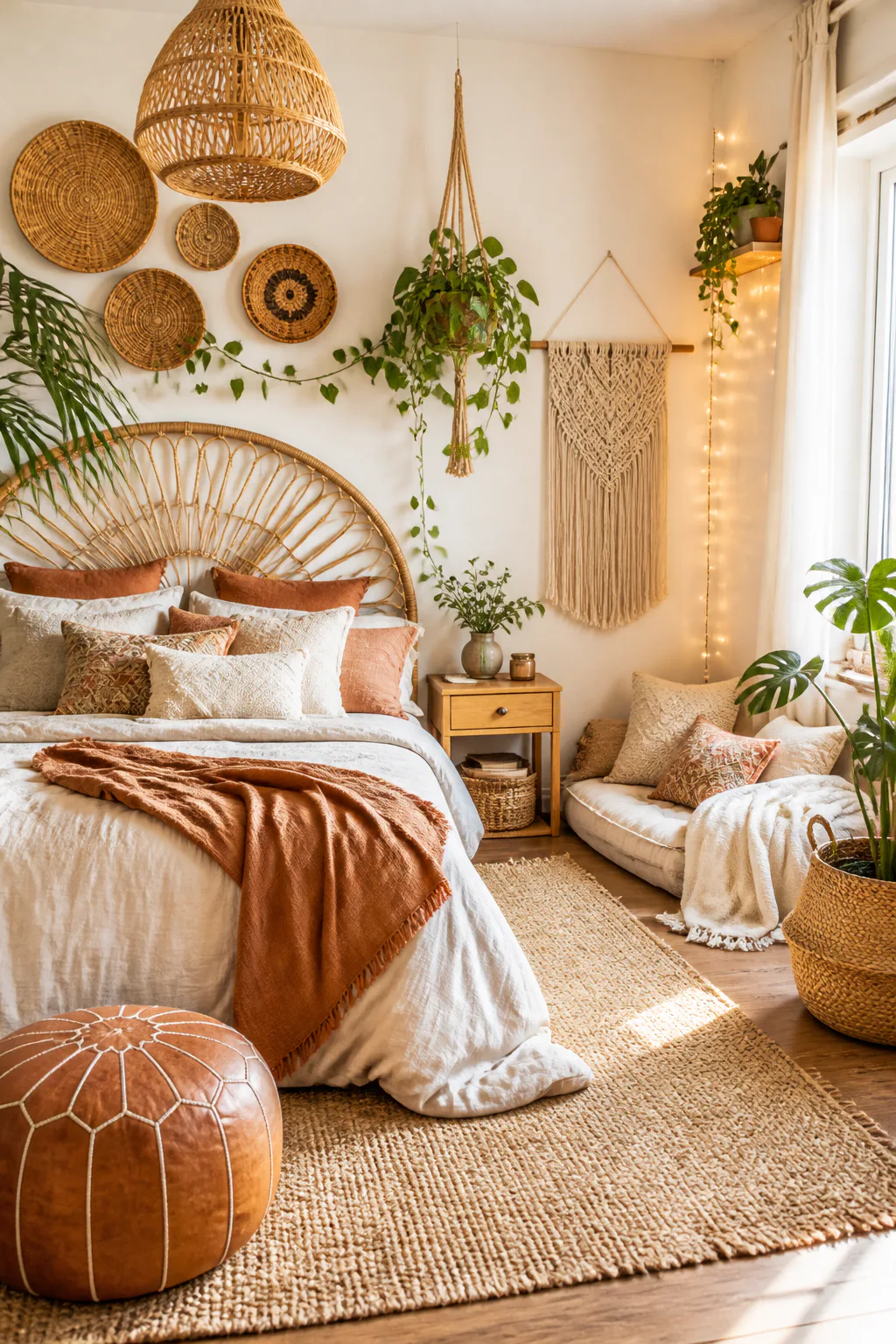
The best boho bedroom decor ideas are layered earthy bedding, a rattan headboard, macramé above the bed, a woven basket gallery wall and a vintage rug layered over natural fiber. Add trailing plants beside the bed, a rattan pendant with fairy lights, a floor-cushion reading nook, eclectic art on a floating ledge, tassel-trimmed bedding, an arched rattan floor mirror, reclaimed wood side tables and a sheer canopy.
1. Style the Bed with Layered Earthy Linen
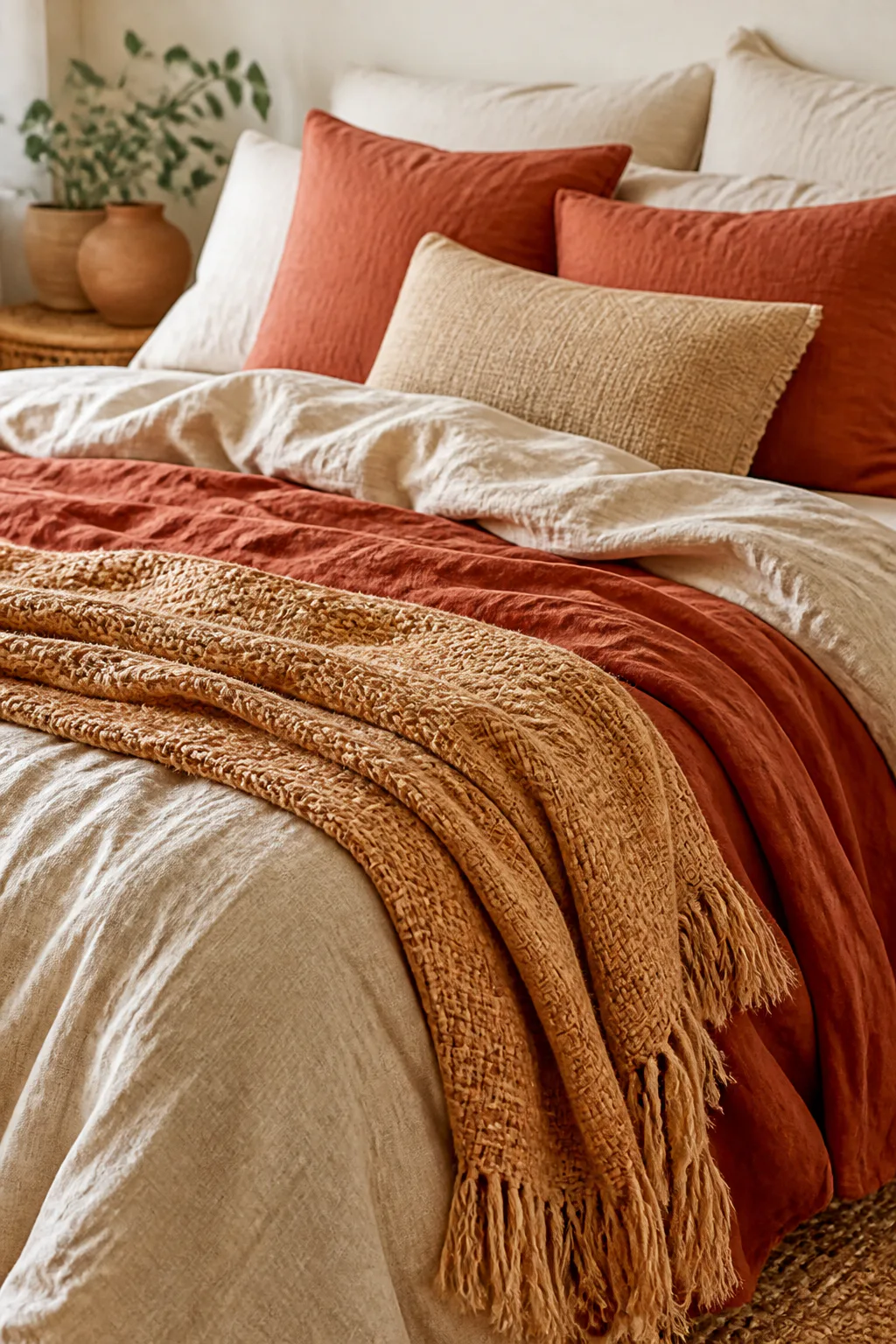
Layered bedding gives the bed a relaxed, welcoming look and makes it the natural focal point of a boho bedroom. Start with breathable linen or textured cotton in cream, terracotta, rust, or another warm neutral, then add pieces with slightly different weights and finishes.
The mix does not need to look perfectly coordinated. A softly rumpled duvet, a woven blanket folded near the foot, and a few cushions create depth while keeping the room restful. This approach works especially well when the walls and larger furniture are simple, because the bedding can bring in color without making the whole room feel busy.
How to build a relaxed bed
Keep the main bedding color calm, then introduce one or two accent shades through smaller layers. Leave some of the duvet loosely draped rather than tucking every edge tightly for a lived-in finish.
- Choose cream, clay, rust, or muted ochre as a starting palette.
- Combine linen with cotton, knit, or a lightly quilted layer.
- Fold a textured throw across the foot of the bed.
- Repeat one accent color in pillows or nearby decor.
A thoughtfully layered bed sets the tone for the rest of the room without requiring a dramatic makeover.
2. Anchor the Bed with a Rattan Headboard
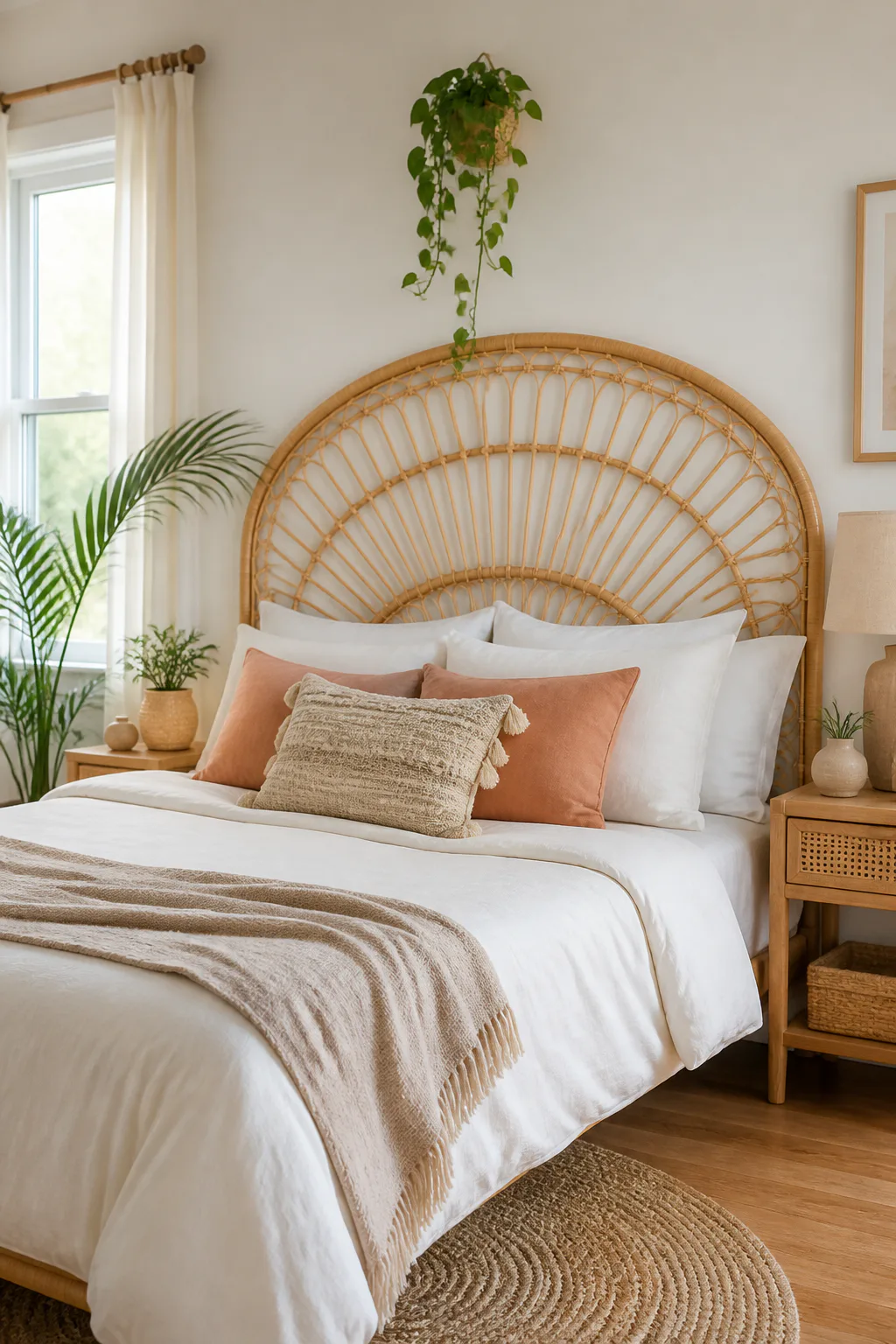
A rattan, cane, or peacock-style headboard adds natural texture right where the eye lands when entering the bedroom. Its open weave feels lighter than a solid upholstered or wooden piece, so it can make the bed look distinctive without overwhelming the space.
This idea suits a range of rooms, from a minimal bedroom that needs warmth to a more collected space with layered textiles and vintage accents. The woven pattern also creates a subtle backdrop for crisp bedding, colorful pillows, and wall decor. If the room already has several patterns, a simpler cane design can provide texture without adding visual clutter.
Choose a shape that fits the room
Consider the width and height of the bed, as well as how much wall space is available. A broad, sculptural shape can stand on its own, while a lower, simpler weave leaves more room for art or a hanging above it.
- Use a peacock shape for a bold, statement-making silhouette.
- Try cane or a simpler woven panel for a quieter look.
- Echo the headboard texture with baskets or a woven pendant.
- Keep nearby bedding relatively calm if the weave is intricate.
One natural focal point can help the rest of the bedroom feel more intentionally arranged.
3. Hang Macramé Above the Bed
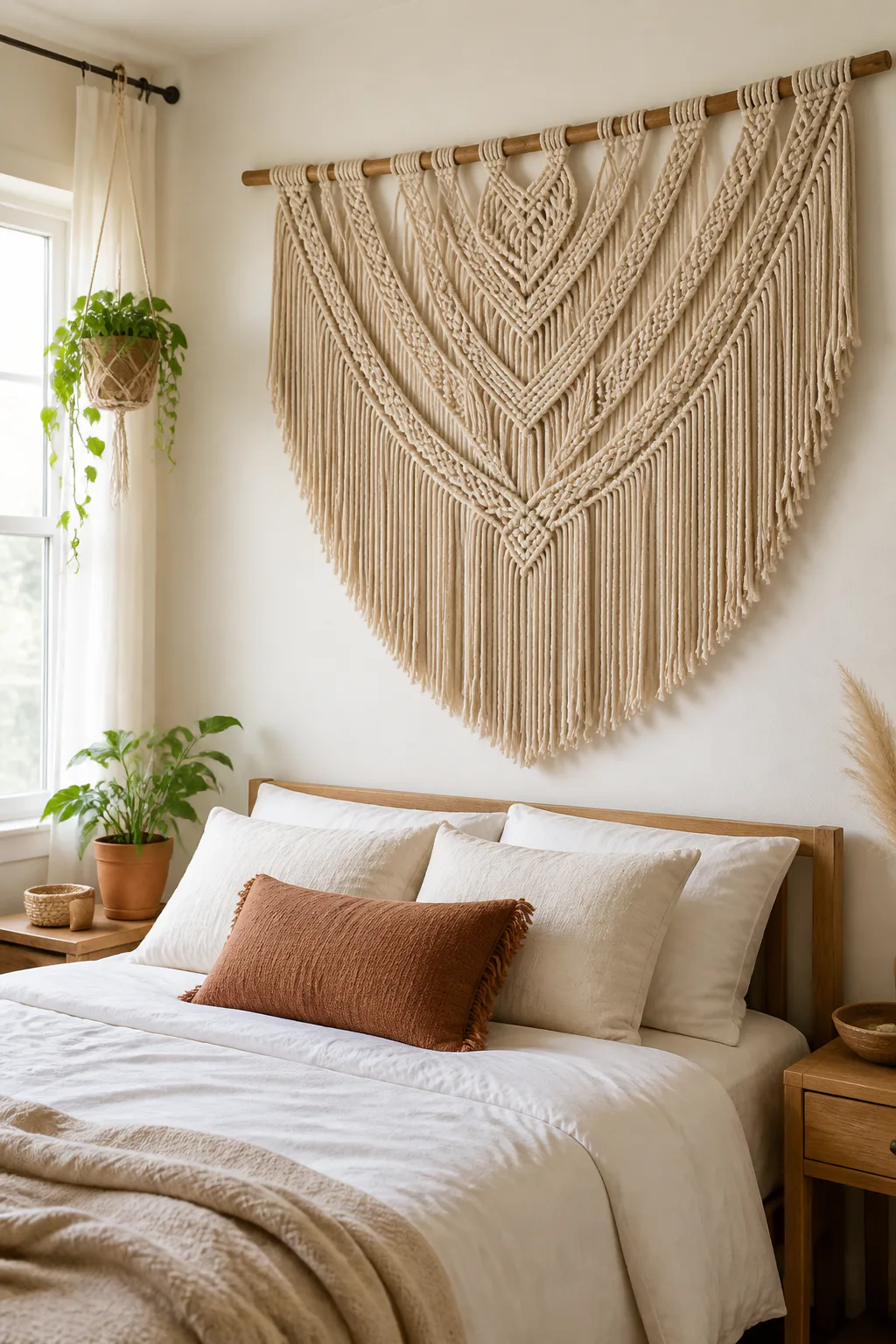
A large macramé wall hanging softens the wall above the bed with handmade texture and gentle movement. Its knotted fibers offer a cozy contrast to smooth paint, plain bedding, or a simple headboard, making it a useful choice when the room feels a little bare.
Macramé works particularly well in a neutral or earthy palette, where its detail can add interest without introducing a strong new color. Choose a piece sized to suit the bed and wall: a small hanging can disappear above a wide bed, while an oversized one may crowd a narrow space. Give it breathing room so the pattern remains easy to see.
Make the hanging feel balanced
Center the piece over the bed or align it with the headboard rather than the entire wall. If the headboard is tall or decorative, select a narrower design or hang the artwork slightly higher to keep the layers distinct.
- Look for fiber colors that complement your bedding and wood tones.
- Use a wide piece above a larger bed, or a vertical one in a compact room.
- Pair it with plain bedding when you want the knots to stand out.
- Keep the surrounding wall decor simple and spaced apart.
The result is a soft, tactile focal point that brings a handmade note to the sleeping area.
4. Create a Woven Basket Gallery Wall
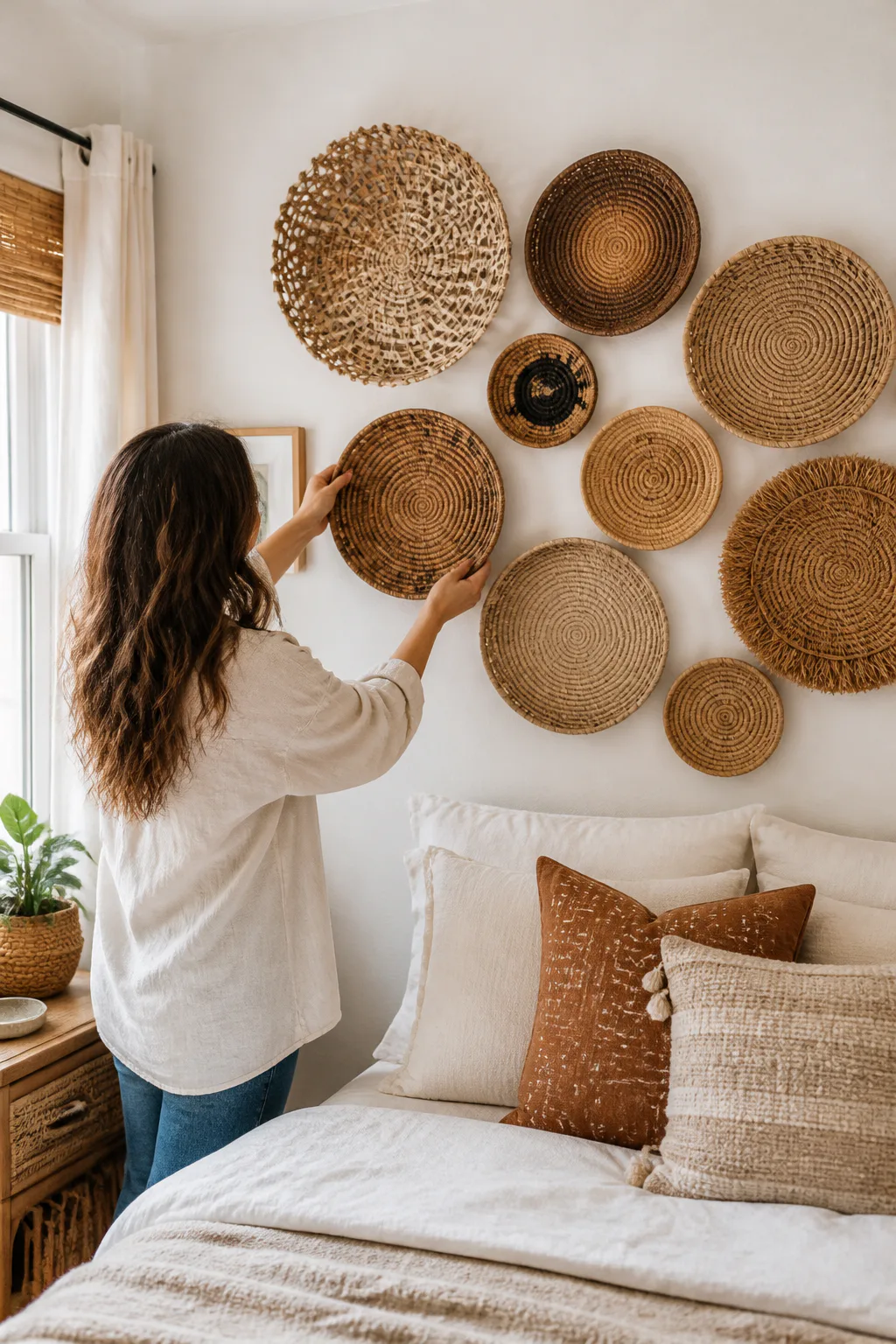
A basket gallery wall brings three-dimensional texture to a blank bedroom wall. Seagrass, wicker, and hemp baskets offer natural variations in tone and weave, creating an artful display that feels relaxed rather than formal.
Arrange the baskets above a bed, dresser, or reading nook, depending on where you want to draw attention. A loose grouping looks especially at home in a boho room, but it still benefits from a little planning. Mixing shallow and more dimensional pieces gives the arrangement depth, while repeating a few colors keeps the different patterns connected.
Plan the arrangement before hanging
Lay the baskets on the floor first and move them around until the group feels balanced. Keep the overall shape in proportion to the furniture below it, and leave enough space between pieces for each weave to show clearly.
- Combine varied basket sizes and weave patterns.
- Repeat natural tones to tie the display together.
- Use the largest pieces as anchors, then fill gaps with smaller ones.
- Keep the arrangement loosely symmetrical or intentionally organic.
This is a practical way to give an empty wall character without relying on a row of matching frames.
5. Layer a Vintage Rug over Natural Jute
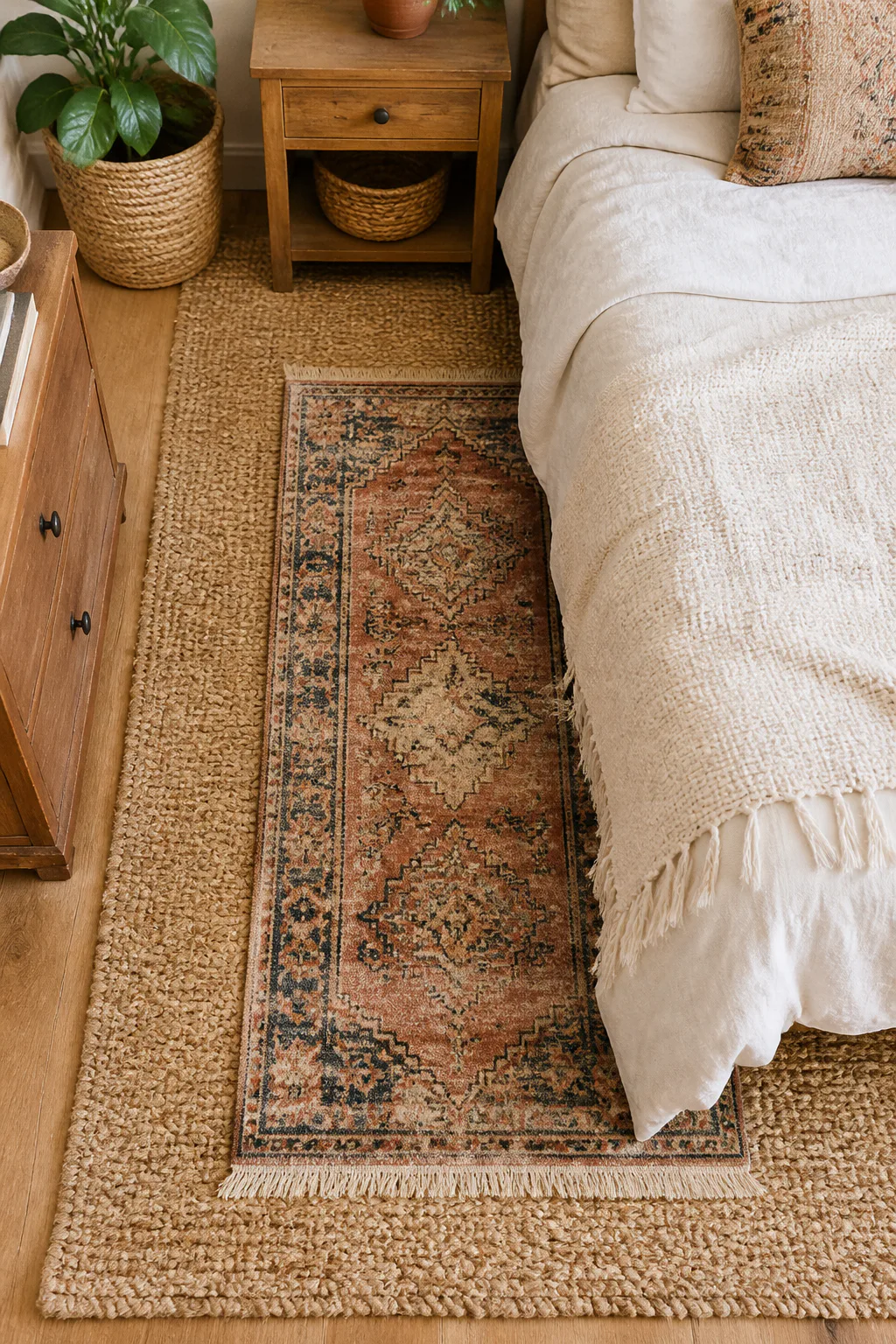
A jute or sisal rug grounds the bed with a sturdy, earthy texture. Its natural tone can connect wood furniture, woven accents, and neutral bedding, while the visible fibers add warmth underfoot and make a bedroom feel more finished.
For extra depth, place a smaller vintage-style rug on top. The layered combination brings together rougher natural texture and a softer pattern, which can introduce color without taking over the room. Position the rugs so the accent piece is visible at the side or foot of the bed, rather than hidden entirely beneath the larger layer.
Layer with scale and comfort in mind
Think about where your feet land when you get out of bed and how much floor you want the rug to cover. A flat natural-fiber base can be paired with a smaller, softer accent in a pattern that echoes the room’s colors.
- Choose a jute or sisal base that extends beyond the bed.
- Place a smaller vintage-inspired rug where its design can be seen.
- Repeat one or two accent colors elsewhere in the room.
- Use a rug pad if needed to help keep the layers in place.
The layered look gives the floor as much personality as the bedding and walls.
6. Hang Trailing Plants beside the Bed
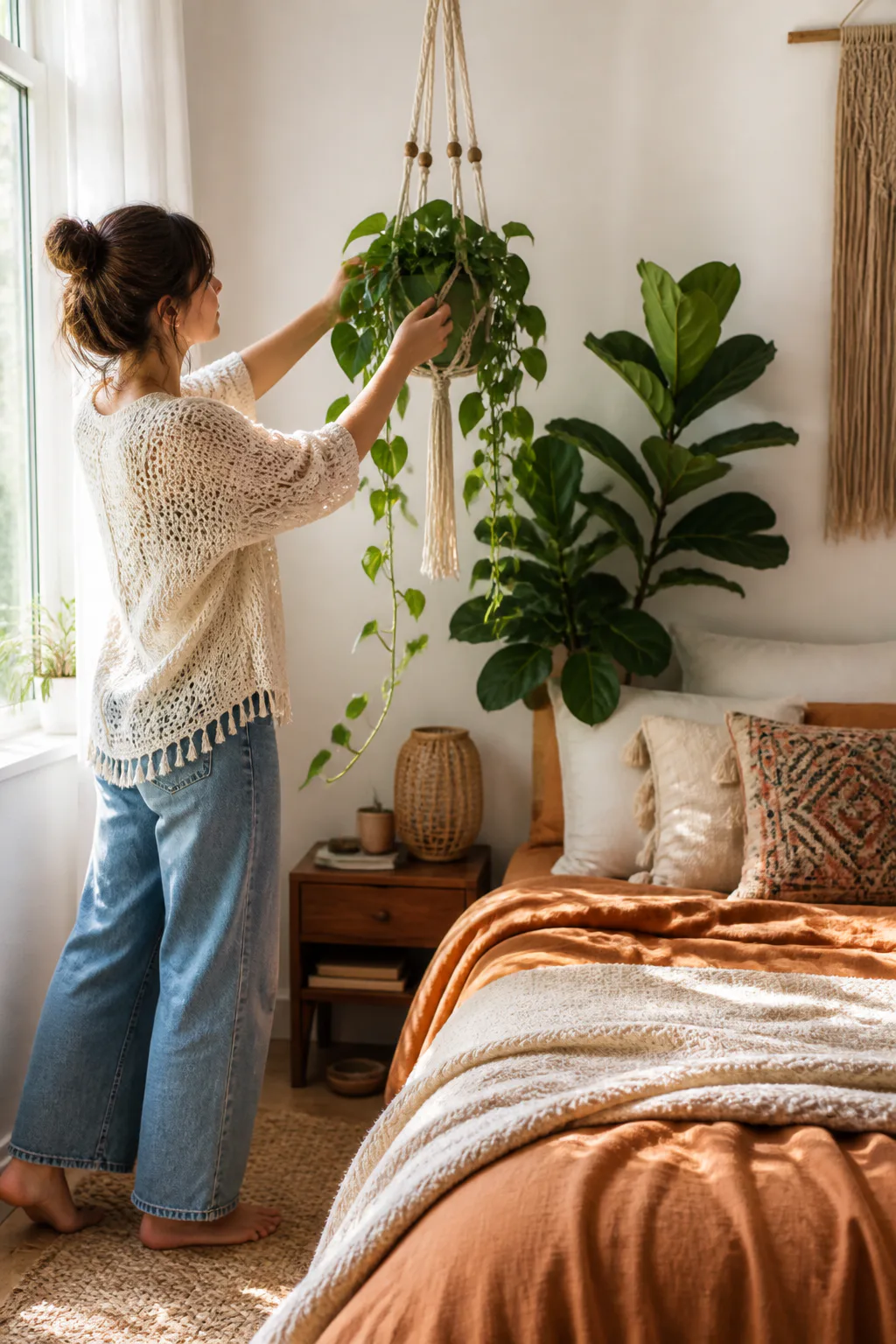
Trailing plants add a fresh, living layer to a boho bedroom. A pothos or philodendron in a macramé hanger can bring greenery beside the bed, while a leafy floor plant in a corner helps soften the edges of furniture and walls.
Plants work best when their placement suits both the room and their care needs. Think about available light, the path of trailing stems, and whether a hanging pot will be easy to water. A few well-placed plants can make the space feel connected to the outdoors without crowding surfaces or blocking useful walkways.
Find the right spots for greenery
Use a hanging planter near a window or in another bright spot that suits the plant, and keep it clear of places where stems might brush your face or catch on bedding. A floor plant can fill an unused corner and balance the visual weight of the bed.
- Choose pothos or philodendron for a trailing look.
- Use a macramé hanger to repeat the room’s woven textures.
- Place a larger leafy plant in an open corner.
- Check light and watering access before settling on a location.
Greenery adds a natural accent that complements warm textiles and wood finishes.
7. Add a Rattan Pendant and Fairy-Lit Headboard

Warm lighting can make the bedroom feel softer and more inviting, especially in the evening. A rattan pendant shade adds a woven element overhead, while delicate fairy lights around the headboard create a gentle glow close to the bed.
Rather than relying on one bright overhead source, use lighting in layers. The pendant can help define the center of the room, and small lights can highlight the bed without competing with other decor. This combination is particularly effective with earthy bedding and natural materials, since warm illumination brings out their texture and color.
Keep the glow comfortable
Choose lighting that feels calm enough for winding down, and arrange cords neatly so they do not become a distraction. If you use fairy lights near the bed, keep them secure and follow the product’s safety instructions.
- Select a woven pendant shade that suits the room’s scale.
- Use fairy lights sparingly around the headboard or bed frame.
- Choose warm-toned illumination for a softer atmosphere.
- Keep switches or controls easy to reach from the bed.
Layered light adds atmosphere while reinforcing the bedroom’s relaxed, handcrafted style.
8. Build a Floor-Cushion Reading Nook
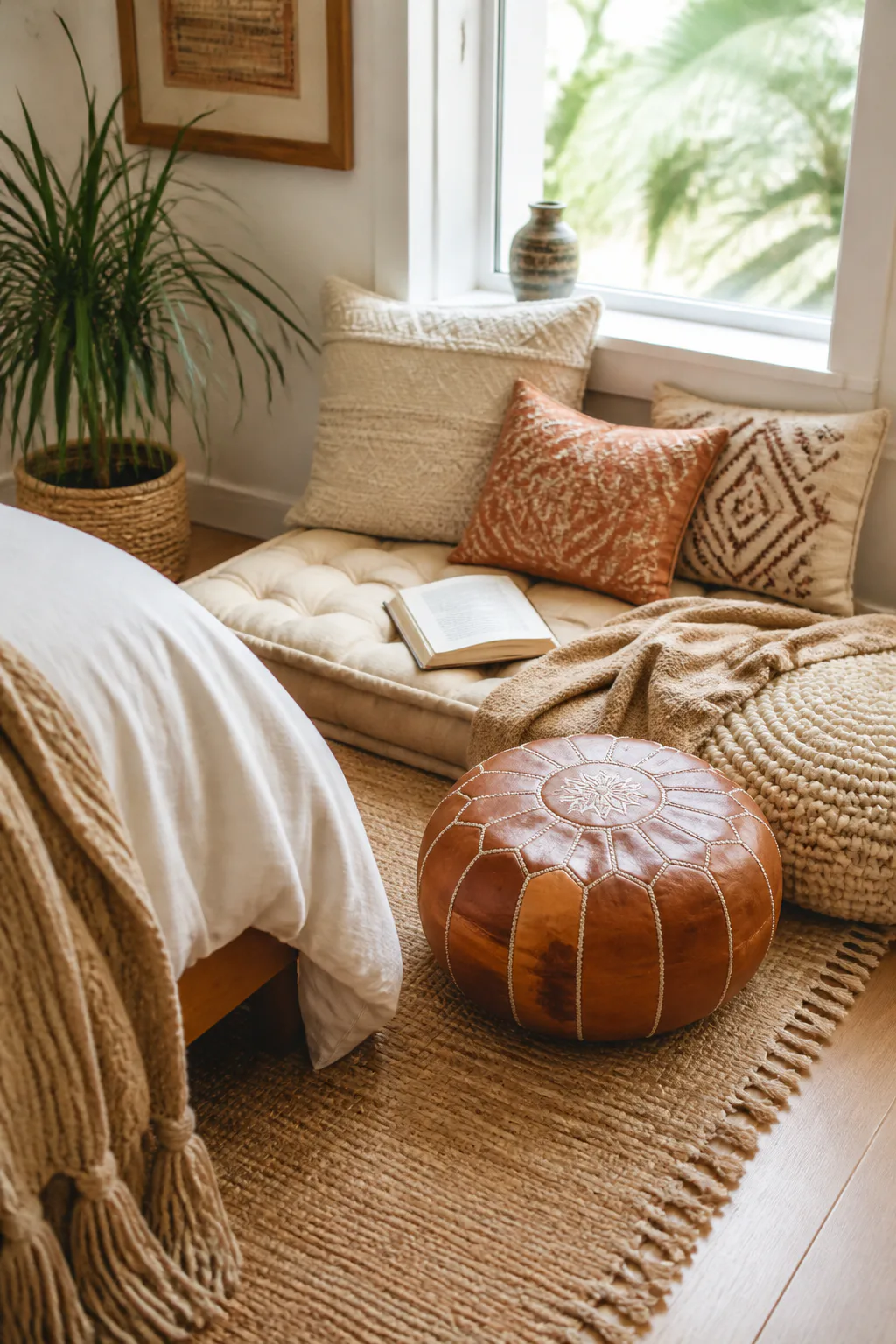
A small floor-cushion nook gives the bedroom a comfortable place to read, pause, or simply stretch out. Set it near the foot of the bed or beside a window, using Moroccan poufs or chunky cushions to make the spot feel distinct from the sleeping area.
This idea is especially useful in a room with a little open floor space but no room for an extra chair. Varying cushion sizes and textures creates a casual, inviting arrangement, while a small stack of books or a soft throw can make the nook feel ready to use. Keep the layout flexible so cushions can be moved when you need more space.
Make a small nook feel intentional
Start with a comfortable base cushion or pouf, then add one or two supporting layers rather than filling the entire floor. Place the nook where it receives comfortable natural light or can be reached easily from a lamp.
- Combine a pouf with a larger floor cushion for varied seating.
- Choose textures that relate to the bed’s throws and pillows.
- Add a soft blanket for cooler evenings.
- Leave a clear path around the bed and doorway.
A modest lounging corner can make the bedroom feel more personal and useful throughout the day.
9. Display Eclectic Art on a Floating Shelf

A floating shelf lets you display art in a way that feels collected and easy to change. Mix botanical prints, earth-tone watercolors, and vintage landscapes to bring color and personality to a wall without committing to a fixed gallery arrangement.
This approach works above a dresser, beside the bed, or along a wall that needs a little more interest. Leaning the pieces instead of hanging every frame keeps the display relaxed, while a few small objects can add height and texture. The key is to create variety without making the shelf look crowded or unstable.
Curate a casual art mix
Begin with a few pieces in different sizes, then layer them so the tallest artwork sits toward the back. Bring in one or two small accents, such as a simple vase or a natural object, while leaving some open shelf space.
- Mix botanical images with abstract or landscape artwork.
- Use frames or prints in a range of sizes.
- Repeat warm, earthy colors across the artwork.
- Secure the shelf and heavier pieces appropriately.
A changeable display is an easy way to let your interests evolve with the room.
10. Dress the Bed with Tassel and Fringe Pillows
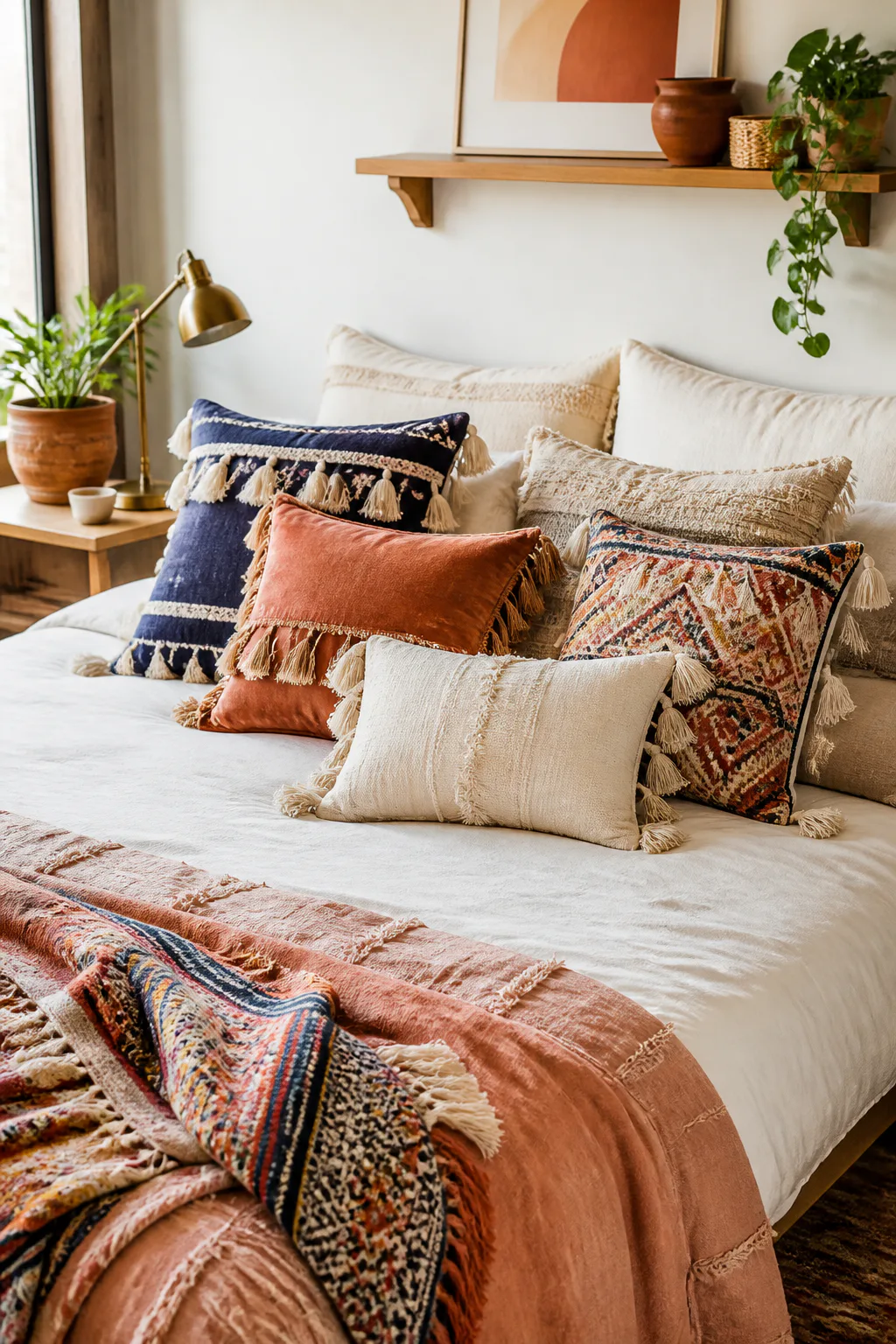
Pillows are a simple way to add color, pattern, and tactile detail to a boho bed. Velvet or linen cushions with embroidery, fringe, tassels, or geometric designs bring variety to the bedding while keeping the overall look soft and welcoming.
Instead of choosing a matching set, combine a few different finishes that share a color or visual theme. For example, a patterned cushion can sit beside a solid earthy shade, while a fringed pillow adds a handmade detail. The arrangement should still leave room to sleep comfortably, so choose a number that suits the bed and can be moved easily.
Mix texture without overdoing it
Vary the sizes of the cushions and let one pattern take the lead. If the duvet already has visible texture or a strong color, keep some pillows simpler so the bed feels layered rather than crowded.
- Pair velvet or linen with embroidered or woven details.
- Use tassels or fringe as accents rather than on every pillow.
- Repeat colors from the bedding, rug, or wall art.
- Keep a clear place to set decorative pillows at night.
Thoughtful pillow layers add personality while making the bed feel finished.
11. Lean an Arched Rattan Floor Mirror
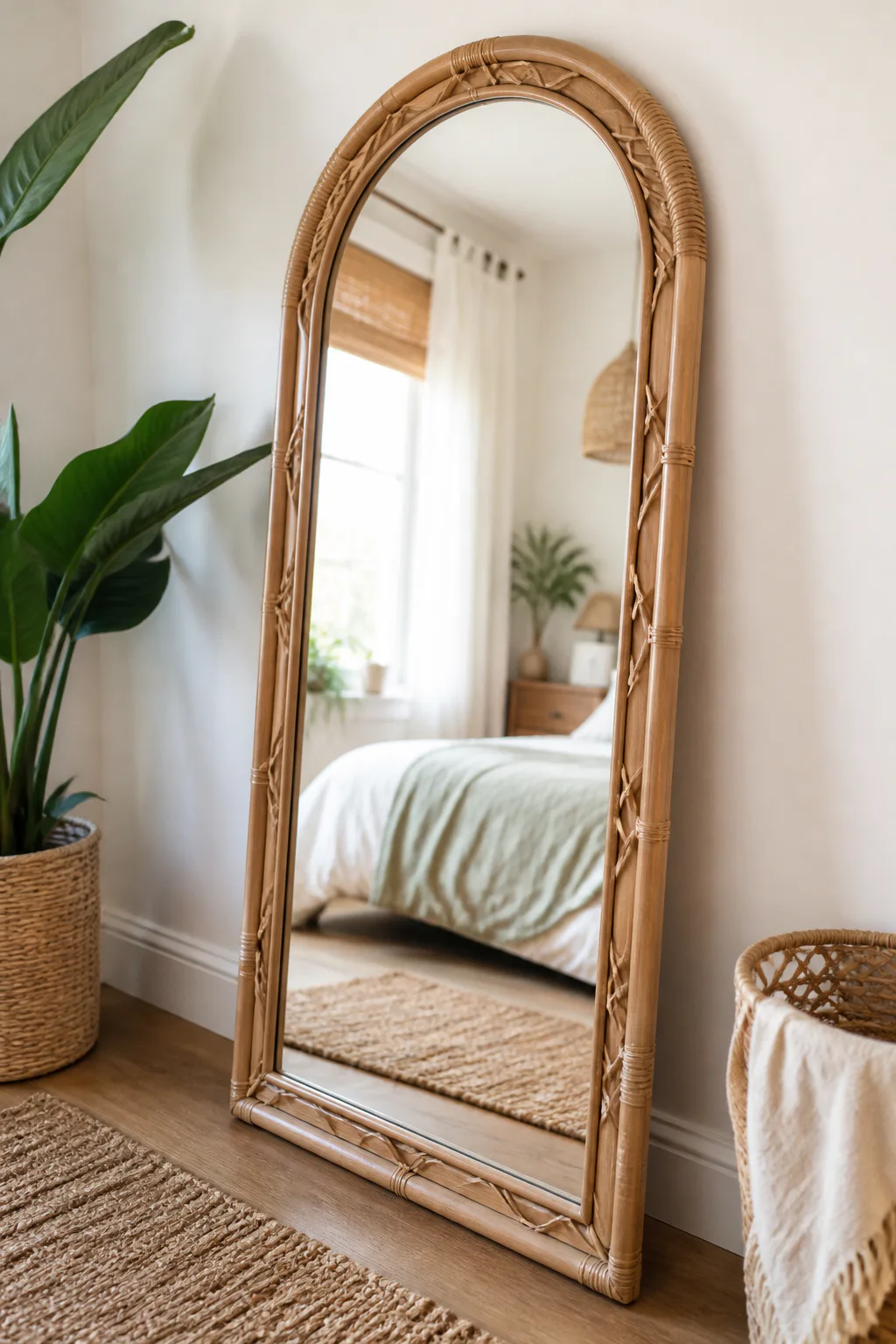
A full-length mirror with an arched rattan or wooden frame adds shape and natural texture to the bedroom. Its reflective surface can help light travel around the room, while the curved top softens the straight lines of beds, dressers, and windows.
Leaning a mirror against the wall creates a casual, relaxed look and makes it easy to reposition when you are rearranging. Place it where it reflects a pleasant view or catches available daylight, rather than aiming it toward a cluttered corner. In a smaller room, the reflection can help the space feel more open, though the frame should still suit the available floor area.
Place and style the mirror thoughtfully
Check the angle and stability before leaving a full-length mirror in a leaning position. A suitable wall anchor or other secure installation can help keep it safely in place, especially in a busy bedroom.
- Choose an arched frame to add a gentle curved shape.
- Position the mirror to reflect light or a favorite room detail.
- Keep enough floor space clear for comfortable use.
- Secure the mirror according to its design and wall conditions.
The mirror can serve a practical purpose while acting as a sculptural decor piece.
12. Pair the Bed with Reclaimed Wood Nightstands
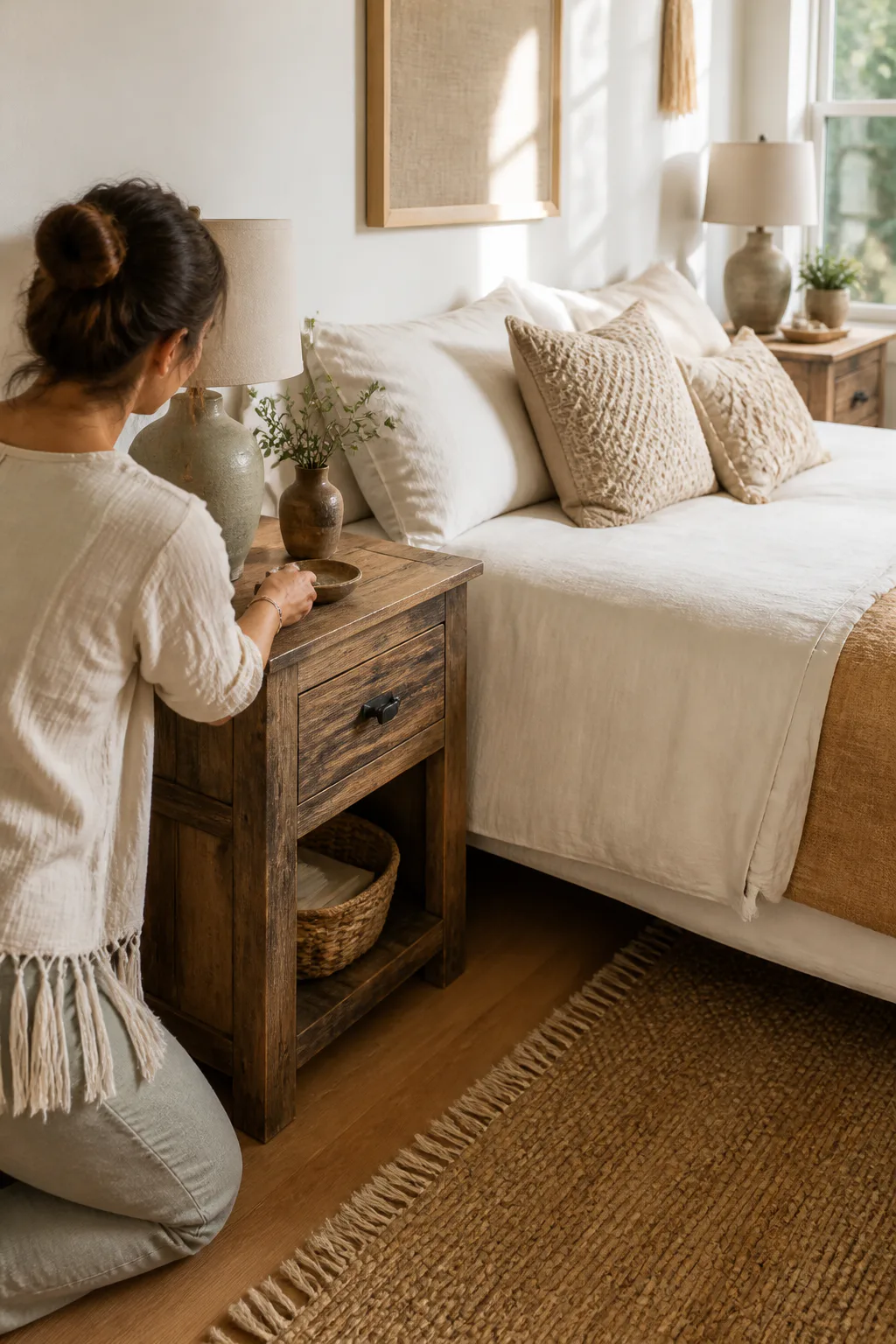
Reclaimed or weathered wood nightstands bring grounded character to a boho bedroom. Their natural grain and imperfect finish add warmth beside soft bedding, while the solid material helps balance lighter details such as rattan, linen, and macramé.
Nightstands do not need to match exactly to feel cohesive. Two pieces with related wood tones or a similar sense of texture can create a collected look, especially when paired with simple lamps and a few useful objects. In a smaller room, choose compact tables that provide a surface for essentials without crowding the bed or interrupting the walkway.
Balance character with everyday function
Think about what you actually need beside the bed, such as a place for a book, a glass of water, or a lamp. A drawer or lower shelf can help keep smaller items tidy, while the wood finish supplies visual interest.
- Look for visible grain, weathering, or a raw wood finish.
- Choose a size that fits comfortably beside the bed.
- Mix related finishes rather than insisting on identical tables.
- Style the surface with only a few useful or meaningful pieces.
Natural wood gives the room a steady foundation for softer, more decorative layers.
13. Frame the Bed with Sheer Canopy Drapes
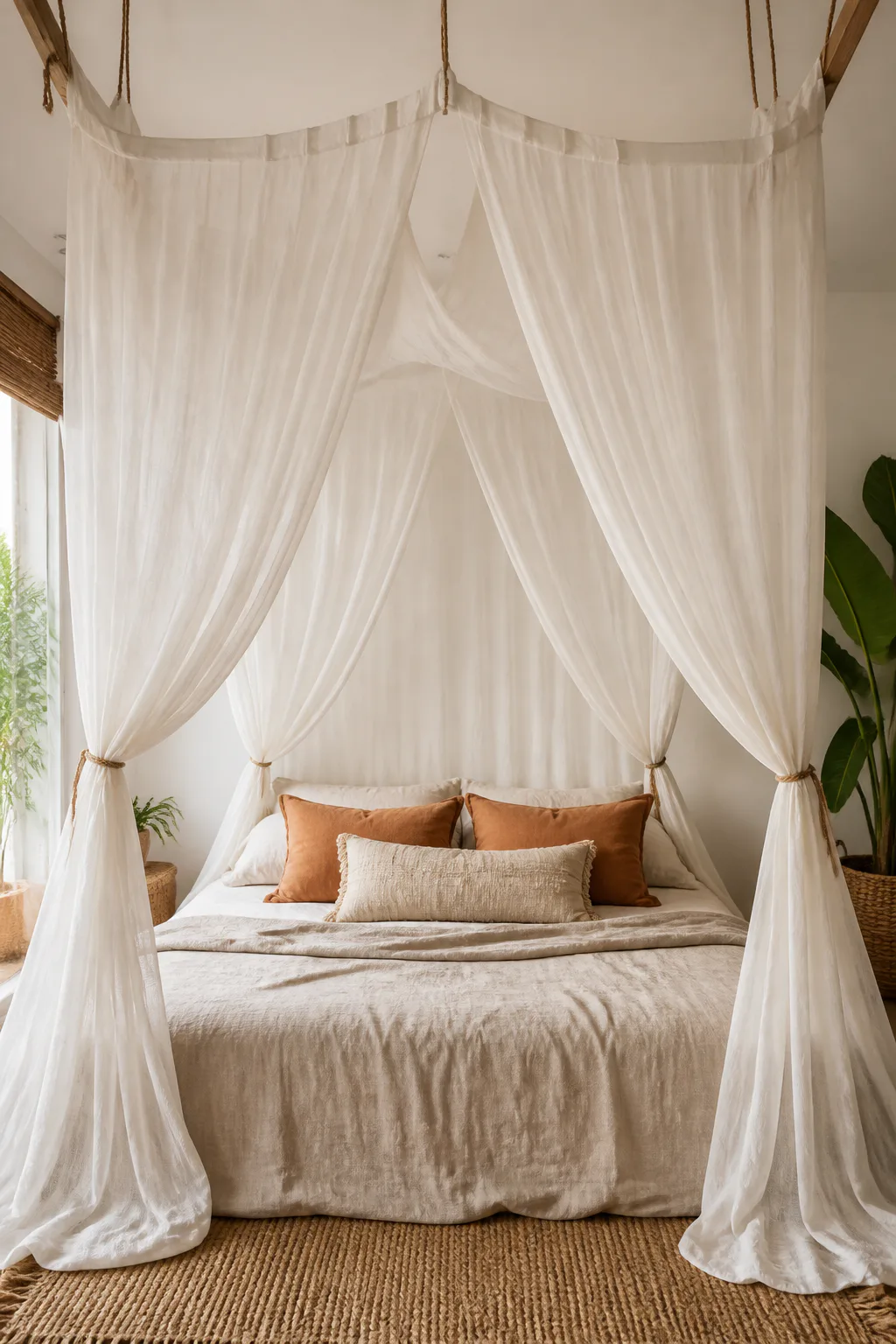
Sheer cotton or linen drapes create a soft, tented effect around the bed. Hung from the ceiling, they add movement and a sense of enclosure while keeping the space airy, making this a romantic option for a bedroom that needs a gentle focal point.
The effect can be subtle or more dramatic depending on the amount of fabric and how it is arranged. Light, neutral curtains blend easily with earthy bedding, while a warmer shade can echo terracotta or wood tones. Make sure the drapes do not interfere with windows, lighting, fans, or everyday movement around the bed.
Keep the canopy light and practical
Plan the hanging points before choosing the final arrangement, and use hardware suited to the ceiling and fabric. Let the panels fall naturally, keeping them loose enough to move aside when making the bed or opening a window.
- Choose lightweight cotton or linen for an airy look.
- Use a shade that complements the bedding and wall color.
- Keep fabric clear of heat sources and lighting fixtures.
- Secure ceiling hardware properly and check it over time.
Sheer drapes add a dreamy layer while keeping the bedroom’s natural palette soft and relaxed.
Frequently Asked Questions
What colors are used in a boho bedroom?
Warm, earthy tones such as cream, terracotta, rust, mustard and sage, balanced with natural wood and woven textures.
How do you make a boho bedroom feel calm, not cluttered?
Keep a neutral base, limit patterns to two or three, and repeat natural materials like rattan, jute and linen.
Can a small bedroom be boho?
Yes. Focus on bedding, a woven headboard and one wall feature, and use hanging plants or a wall basket display instead of extra furniture.
Final Thoughts
Boho bedroom decor comes together through a thoughtful mix of earthy color, natural texture, and pieces that feel meaningful to you. Layered linen, woven details, greenery, and warm lighting can each contribute to a cozy atmosphere without requiring every element to match.
Start with one change that will make the biggest difference in your room, such as refreshing the bedding or adding a textured focal point above the bed. Then build gradually, keeping comfort and function in mind as you combine the details that make the space feel like your own.
More bedroom inspiration: see our cozy small bedroom ideas and cozy living room decor ideas.