12 Stunning Nautical Nursery Ideas for a Calm Coastal Room
A nautical nursery can feel playful without becoming overly themed. Navy, white, ocean-inspired details, and natural textures bring a sense of the coast into the room, while a few carefully chosen accents keep the space calm and comfortable for everyday routines.
These ideas range from classic sailboat artwork and shiplap to softer coastal colors and keepsake displays. You can use one as a focal point or combine a few, repeating colors and materials so the room feels thoughtfully put together rather than crowded.
This list is for parents and caregivers planning a nursery, refreshing a child’s room, or looking for a nautical direction that can grow with their family. As you decorate, keep the sleep area clear and secure wall decor and furniture carefully; decorative objects should stay out of the crib and beyond a baby’s reach.
1. Frame the Crib in Navy and Crisp White
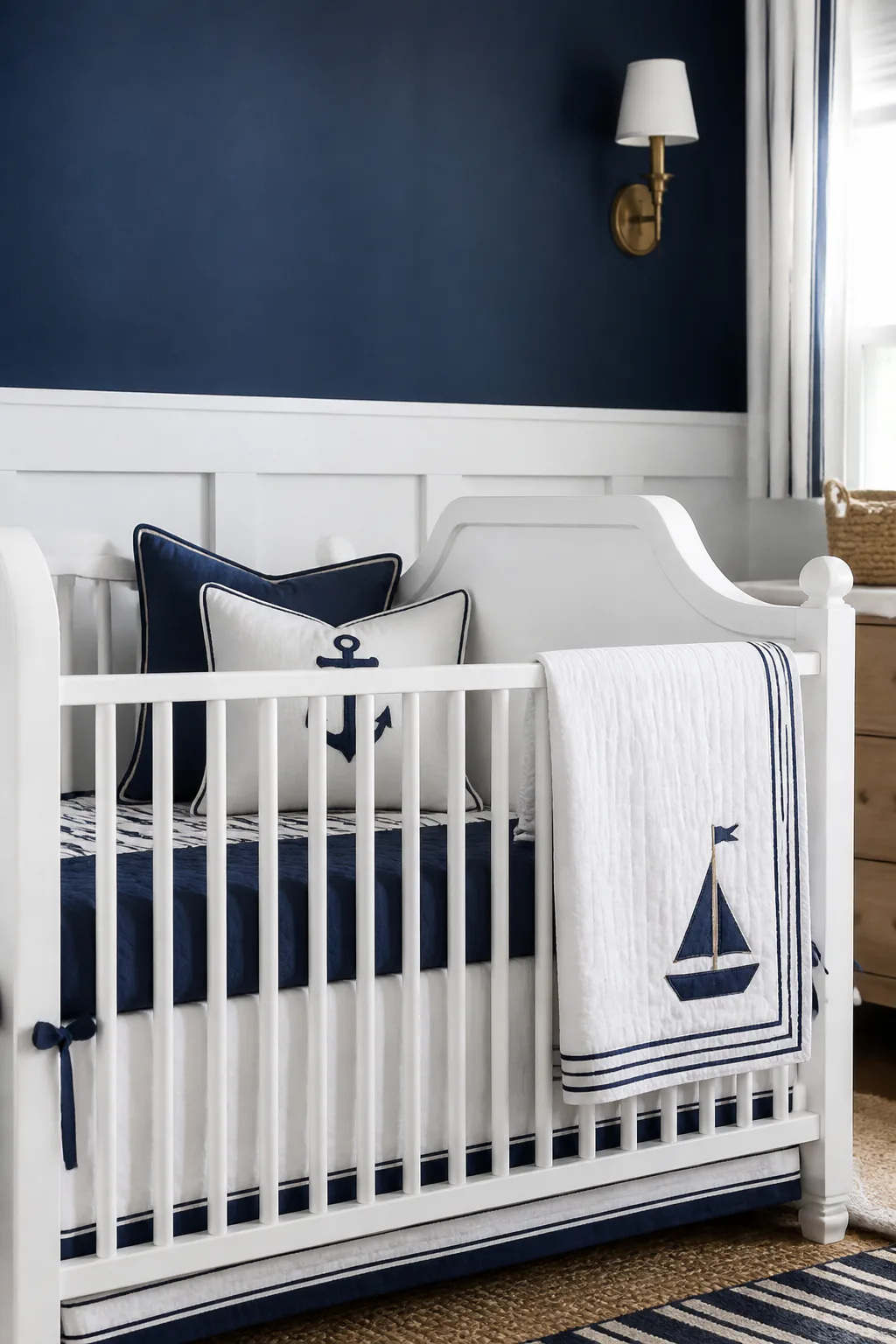
A navy-and-white focal wall gives a nautical nursery a clear starting point. Paint the wall behind the crib navy, use crisp white paneling, or bring in the colors through bedding and artwork on an otherwise light wall. The contrast feels classic and helps the crib stand out without requiring lots of small themed decorations.
To keep the palette inviting rather than stark, add warm details such as a natural wood dresser, woven accents, or brass-toned hardware. These softer finishes balance navy’s depth and white’s brightness, making the room feel more like a cozy coastal cabin than a formal sailor’s quarters.
How to pull it off
Choose one main navy element and let white do the visual breathing room. Repeat the palette in a few places—perhaps a rug, curtains, or framed prints—so the room feels connected without matching every surface.
- Use navy on one wall or a limited set of accents.
- Bring in natural wood to warm up the contrast.
- Keep the crib free of loose decor and unsecured items.
This simple foundation works especially well if you want a nautical look that will still feel timeless as your child grows.
2. Add Wave Wallpaper Behind the Crib

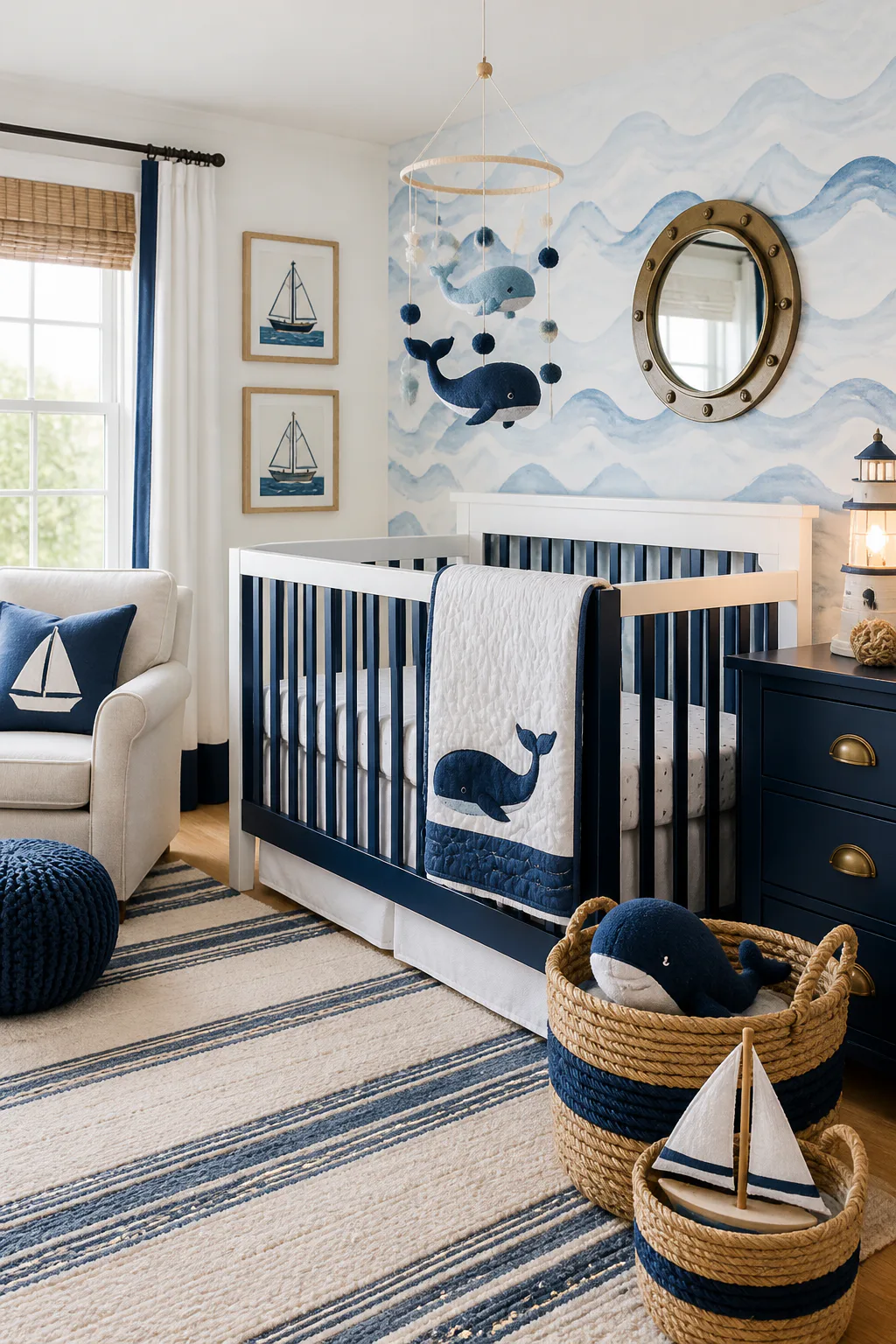
Ocean-wave wallpaper or a brushstroke pattern brings movement to a nursery without needing literal boats and anchors everywhere. A single accent wall behind the crib can suggest the sea while giving the room depth and a clear focal point. Choose a pattern with enough open space that it feels soothing from across the room.
Soft blue waves pair naturally with white furniture, pale wood, and sandy neutrals. If the wallpaper is more graphic, keep nearby decor simple; if it is subtle, you can layer in a few extra coastal details. Either way, a restrained palette helps the pattern feel restful instead of busy.
Design tips
Before committing to a full wall, look at a sample in the room at different times of day. The pattern’s scale and contrast can feel different under daylight and evening lighting, so consider how it will look from the doorway as well as beside the crib.
- Use wallpaper on one wall to keep the room balanced.
- Pair blue patterns with white or warm neutral furnishings.
- Choose nearby artwork with simpler shapes and colors.
The result is a gentle nod to the ocean that can anchor the nursery while leaving plenty of room for personal touches.
3. Display Vintage Sailboat Prints Above the Dresser
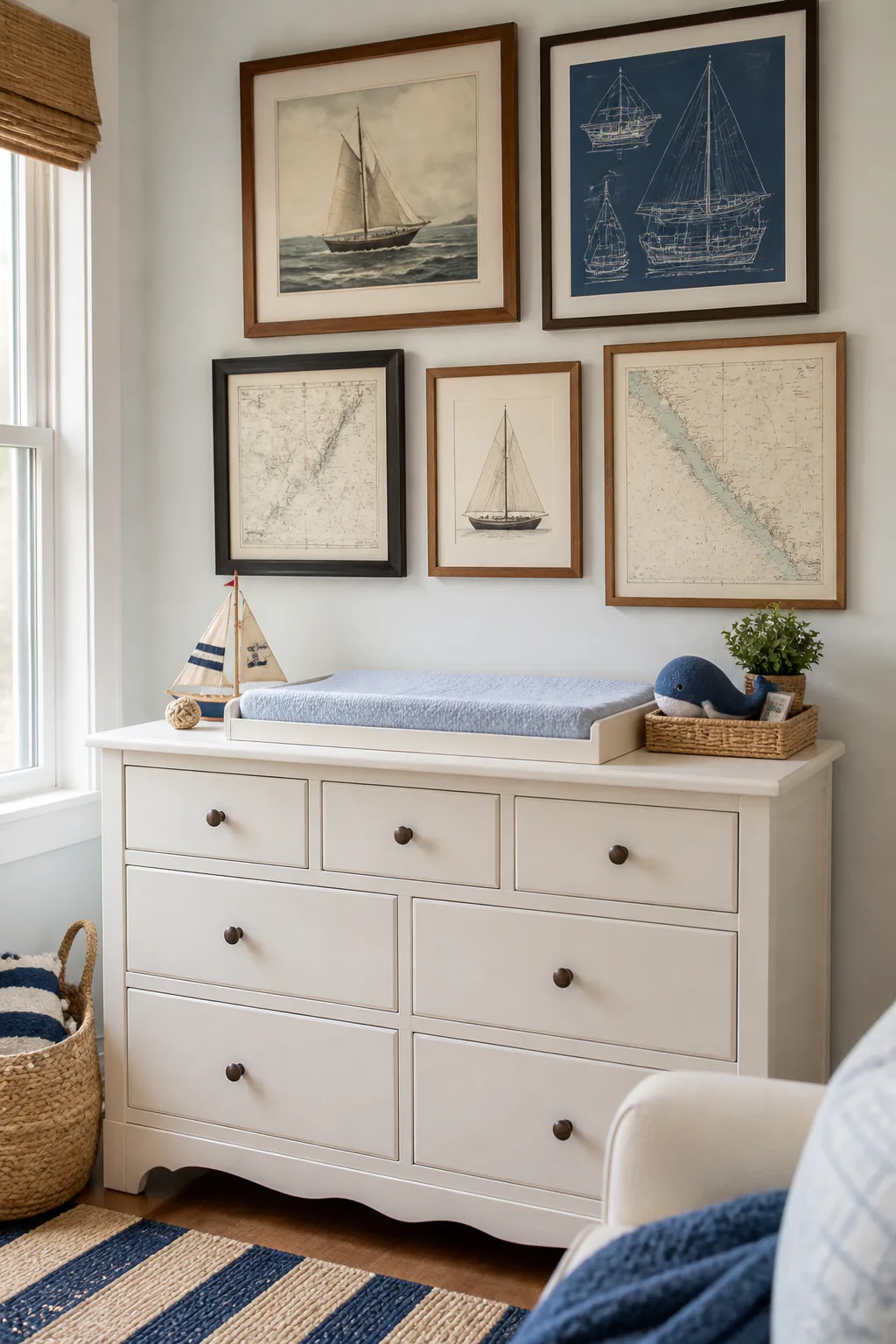
Vintage sailboat paintings, nautical blueprints, and sea charts add character without taking up useful floor space. A small collection above the dresser or changing area can create a polished gallery moment and bring in the history and craftsmanship associated with old sailing imagery.
For a coordinated display, choose prints that share a color family, such as faded blues, cream, and warm brown. Frames do not have to match exactly, but repeating one finish or shape helps the arrangement feel intentional. A mix of boat illustrations and map details can add variety while keeping the subject consistent.
Arrange a small gallery
Lay the frames out on the floor first to test their spacing and overall shape. Hang them securely and position them where they are not within a child’s reach; avoid placing heavy or glass-fronted art directly above the crib.
- Mix sailboat art with a sea chart or simple blueprint.
- Repeat one frame color to bring the pieces together.
- Use secure hanging hardware suited to the wall.
These prints can remain in the room as your child grows, making them a practical choice as well as a decorative one.
4. Create a Rope-and-Jute Toy Storage Corner
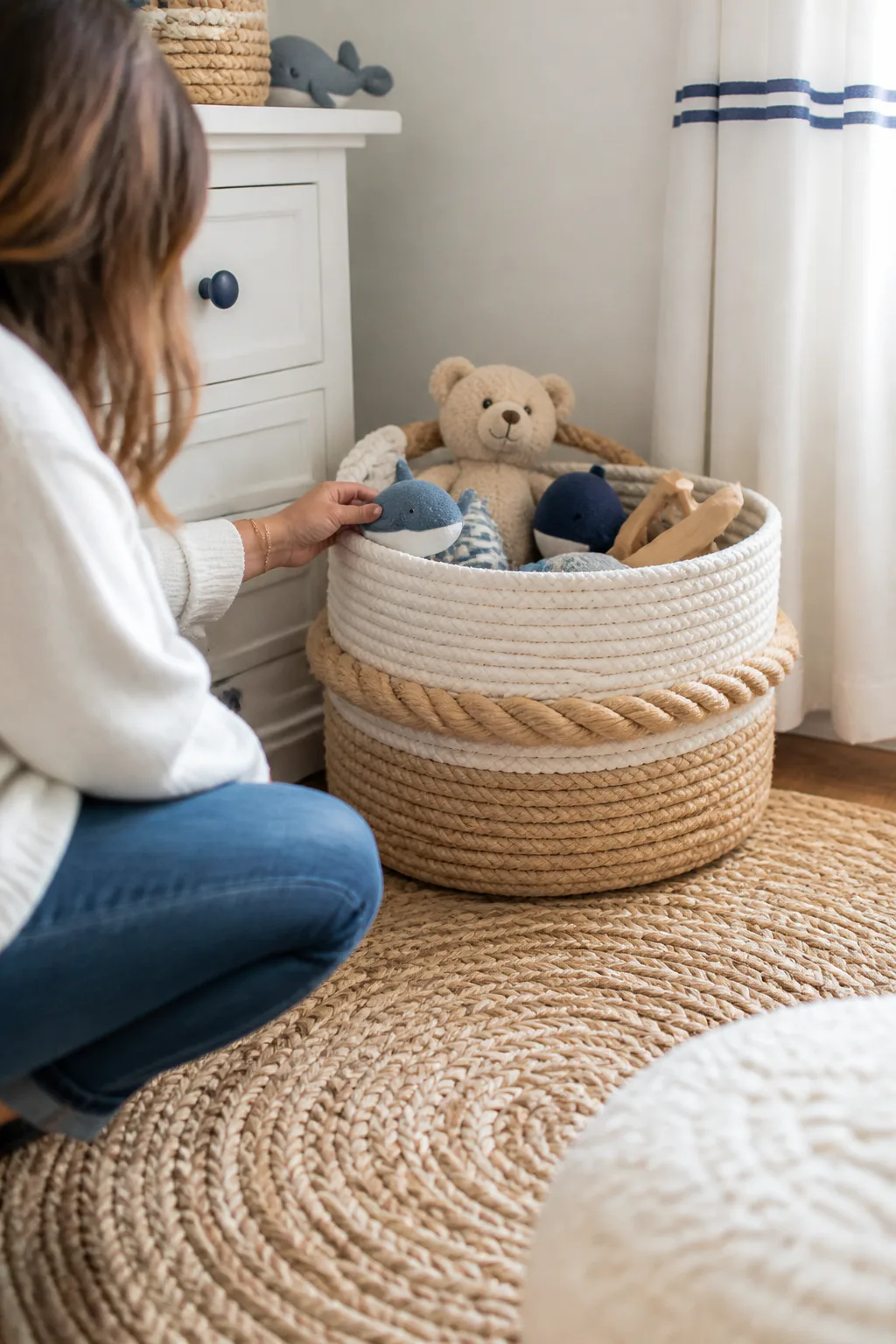
A braided jute rug and thick rope basket give a nursery a tactile, natural layer that recalls dock lines and seaside textures. Set them together in an open corner to create a practical landing spot for toys, books, or soft blankets. Their sandy tones also balance stronger colors like navy and ocean blue.
Because these materials have visible texture, they can make a room feel finished even when the rest of the decor is simple. Pair them with smooth white furniture or painted walls so the corner feels warm rather than overly rustic. Keep the basket’s contents easy to reach as your child gets older, and leave clear paths around the room.
Build a useful corner
Think about what you will store before choosing the basket’s size. A wide, stable container can make tidying easier, while a rug should sit flat and not create a tripping edge near the changing area or doorway.
- Choose a rug size that fits the available floor space.
- Use the rope basket for lightweight, everyday items.
- Keep small toys and loose pieces out of the sleep space.
This corner adds coastal texture while making everyday cleanup feel a little more organized.
5. Hang a Porthole Mirror as a Wall Focal Point
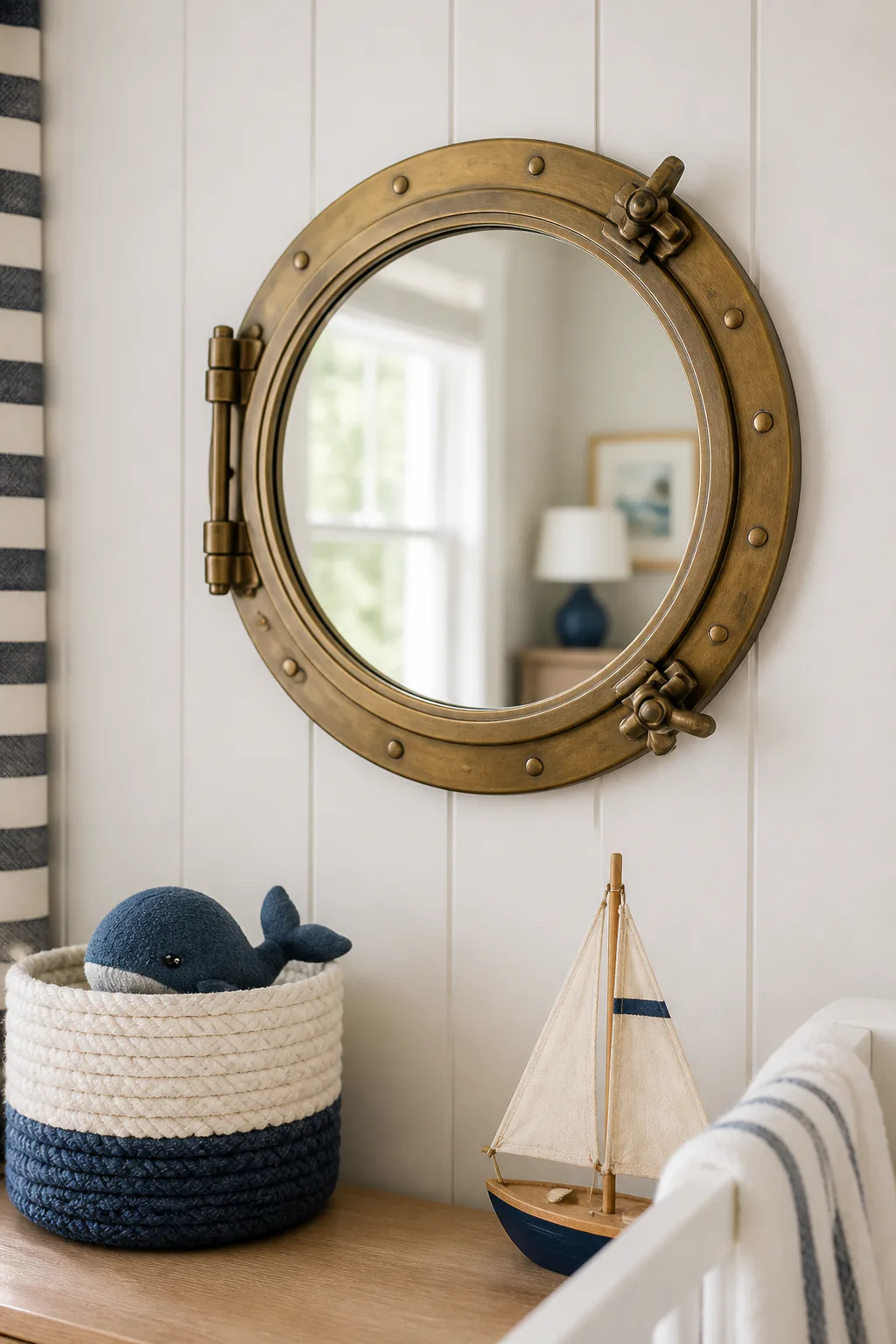
A round porthole-style mirror brings a ship-inspired shape to the nursery while reflecting light around the room. Its circular outline provides a nice contrast to the straight edges of a crib, dresser, and wall paneling. A wooden captain’s wheel can create a similar focal point if you prefer a decorative accent without reflective glass.
Place the feature on a wall where it can be appreciated without crowding other artwork. Near a dresser, a mirror can be useful during daily routines, while a wheel can add character above a reading chair or along a hallway wall. Keep the surrounding decor simple so the round shape remains easy to notice.
Make it a safe feature
Secure any mirror or wheel firmly to the wall, using appropriate hardware and checking that it cannot be pulled down. Avoid hanging a heavy object above the crib, and position the feature beyond a child’s reach as they begin to stand and explore.
- Choose a frame finish that complements the room’s wood tones.
- Give the round feature space instead of crowding it with art.
- Use secure mounting and keep it away from the crib.
A well-placed porthole shape adds nautical character without needing a full ship-themed wall.
6. Place a Lighthouse Nightlight by the Crib
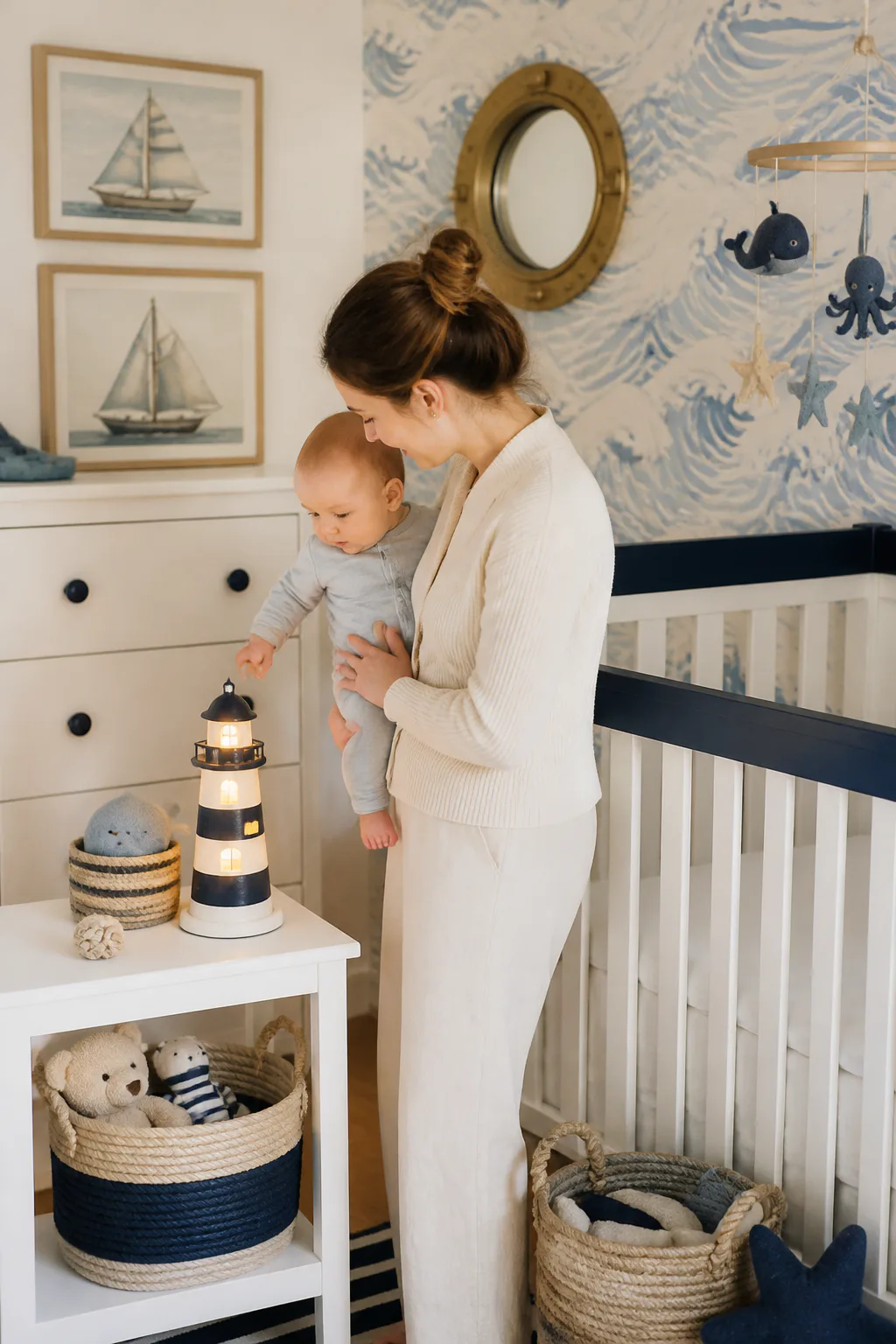
A lighthouse nightlight is a charming way to bring a recognizable coastal detail into the nursery. Its soft glow can provide gentle ambient light for nighttime feeds and check-ins, while the tower shape adds a little storybook character to a shelf or table. Choose a design that suits the room’s overall style, from simple wood to a painted ceramic look.
Rather than making it the centerpiece, let the light sit among a few practical items on a nearby surface. A calm glow works best when it does not compete with brighter overhead lighting, and the room can remain peaceful when the light is switched off during the day.
Place it thoughtfully
Keep the nightlight on a stable surface and follow its use and placement instructions. Cords and small decorative objects should be kept away from the crib and out of a baby’s reach; a shelf secured to the wall can be a safer option than a wobbly side table.
- Look for a gentle glow rather than a harsh beam.
- Set it on a stable, uncluttered surface.
- Keep cords and small parts well away from the sleep area.
This small accent makes nighttime routines feel more considered while reinforcing the nursery’s coastal theme.
7. Suspend a Sea Creature Mobile Above the Crib
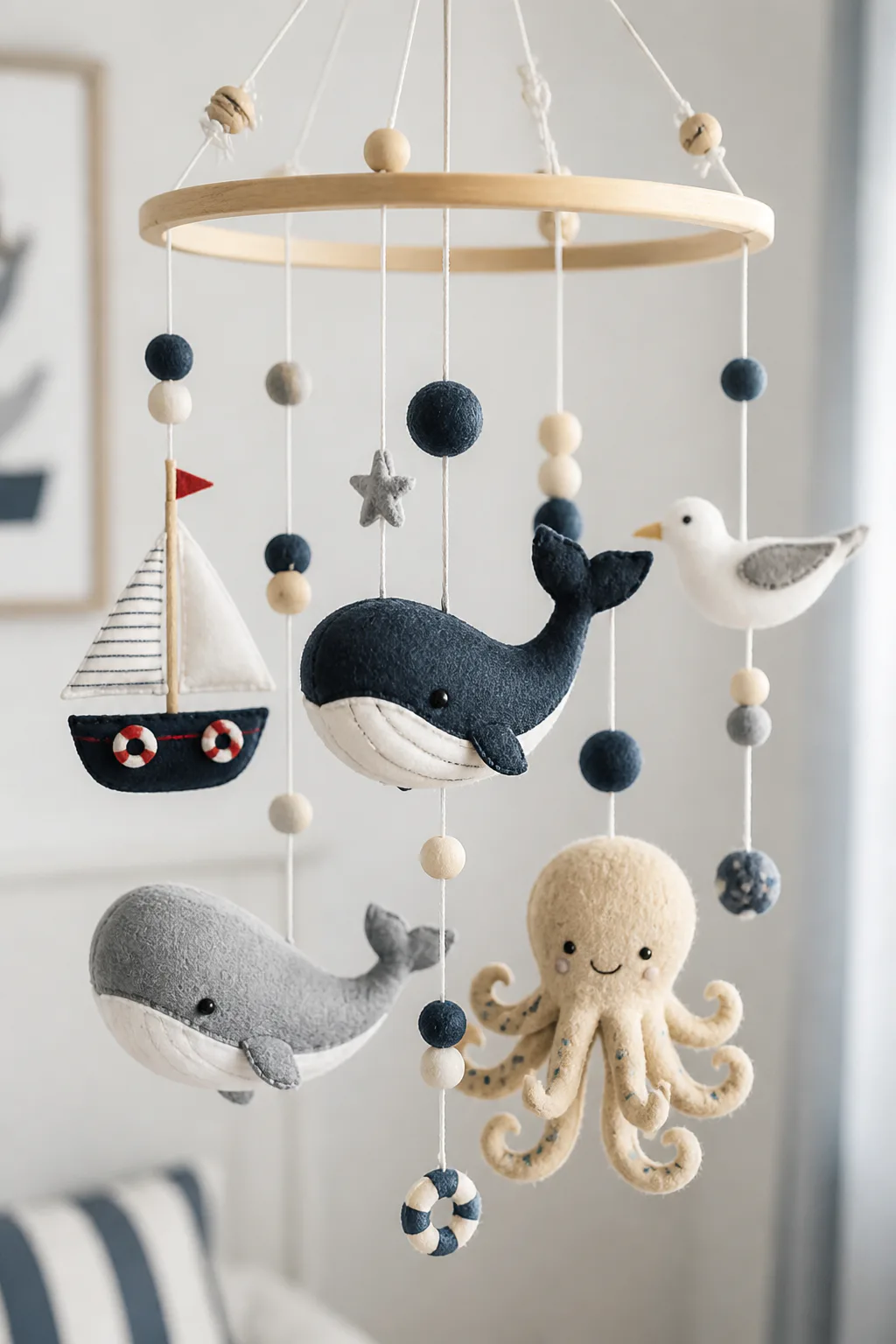
A mobile featuring whales, octopuses, sailboats, or seagulls adds movement and a playful sea-inspired detail to the nursery. Felt versions often feel soft and whimsical, while wooden shapes can create a cleaner, more graphic look. Choose a design whose colors tie into the room instead of introducing a completely separate palette.
Consider how the mobile will look from different parts of the room, including the doorway and the chair where you might sit. Its gentle movement can make the crib area feel special, but the mobile should be treated as decor rather than a toy for a baby to reach.
Keep the setup safe
Follow the mobile’s installation directions and attach it securely. Keep it well out of reach, and remove it when your baby can push up on hands and knees or reach for objects, following current safe-sleep guidance for your child.
- Choose a few clear shapes rather than a crowded design.
- Repeat the mobile’s colors in nearby art or textiles.
- Check mounting regularly and keep it beyond reach.
A thoughtfully chosen mobile gives the room a light, whimsical focal point while keeping the rest of the crib area simple.
8. Build a Whale-Themed Reading Corner

A reading corner can give the nursery a cozy destination beyond the crib. Start with a comfortable chair or floor cushion, a small book basket, and an oversized nautical plush such as a blue whale or friendly octopus. The soft creature adds personality and makes the corner feel inviting without requiring a large collection of themed accessories.
Use a few colors from the plush in nearby cushions, a rug, or book covers to tie the nook into the room. As your child grows, the corner can shift from a place for shared story time to a comfortable spot for looking through books independently.
Make the nook comfortable
Choose furniture that suits the room’s available space and keep the route to the crib and door clear. Store books and toys in a low, stable basket or shelf, and supervise access to plush items according to your child’s age and safe-sleep needs.
- Pick one oversized sea creature as the main accent.
- Add a small basket for favorite picture books.
- Keep the reading spot clear of loose items at bedtime.
This corner brings the nautical theme down to a child-friendly scale and creates a welcoming place for quiet routines.
9. Install White Shiplap Wainscoting
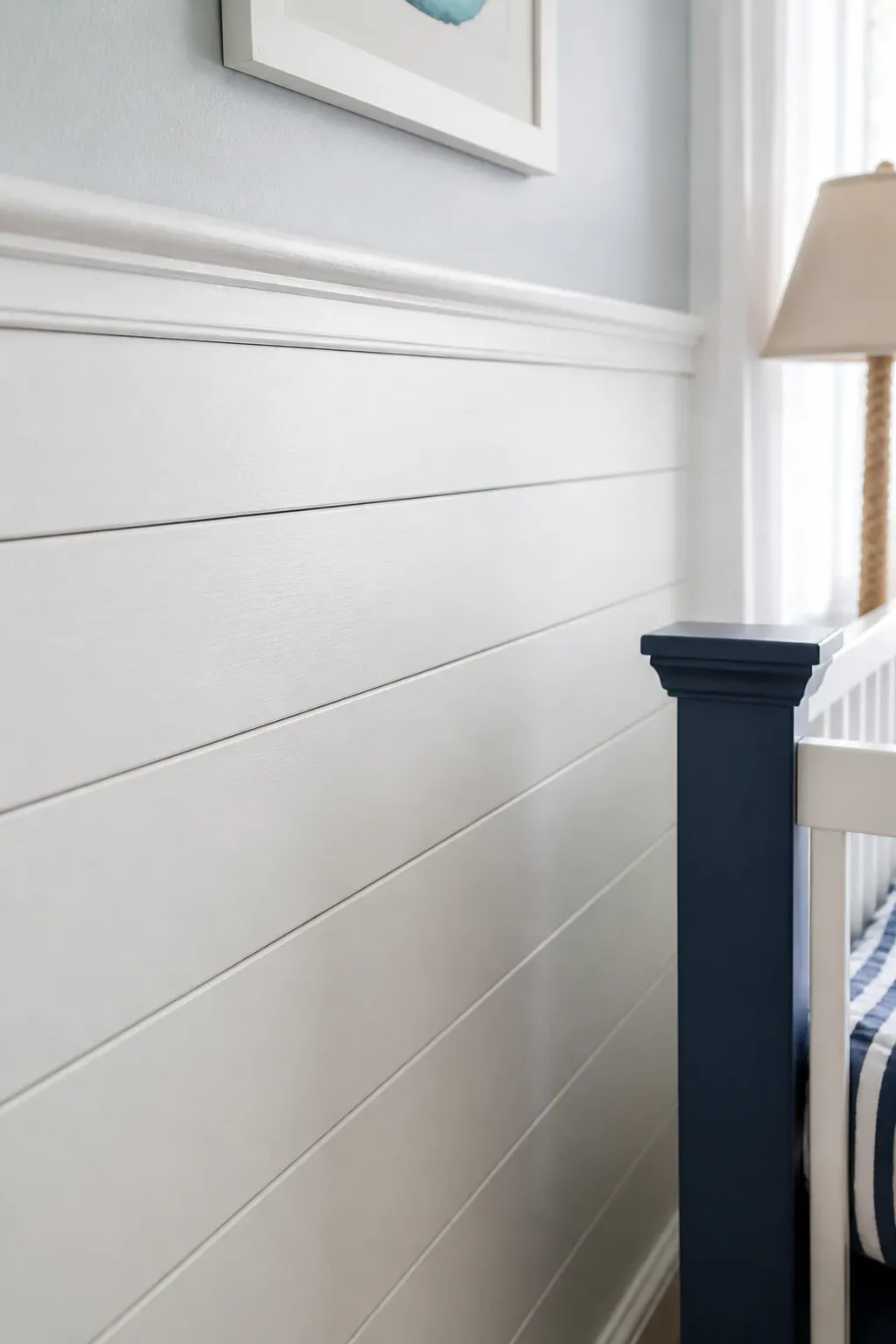
White shiplap wainscoting adds the relaxed character of a coastal cottage or captain’s cabin. Running the boards horizontally halfway up the wall introduces texture without overwhelming the room, and the white finish pairs easily with navy, pale blue, sandy beige, or even blush pink.
The upper wall can stay a soft neutral or hold a simple pattern, giving you options for artwork and color. Shiplap also creates a clear visual boundary, which can make a room feel considered even when the furniture and accessories are straightforward. If a permanent installation is not practical, a similar painted panel effect may offer a lighter-touch alternative.
Plan the wall treatment
Measure the room and decide how the paneling will meet doorways, windows, and furniture before beginning. If you are installing boards, use suitable materials and secure them properly; keep the finish smooth and easy to clean around high-touch areas.
- Use white to keep the lower wall feeling bright.
- Repeat the horizontal lines with simple, clean furnishings.
- Keep upper-wall decor light and securely mounted.
Shiplap can provide a coastal backdrop that feels architectural rather than overtly themed.
10. Hang a Signal Flag Banner by the Window
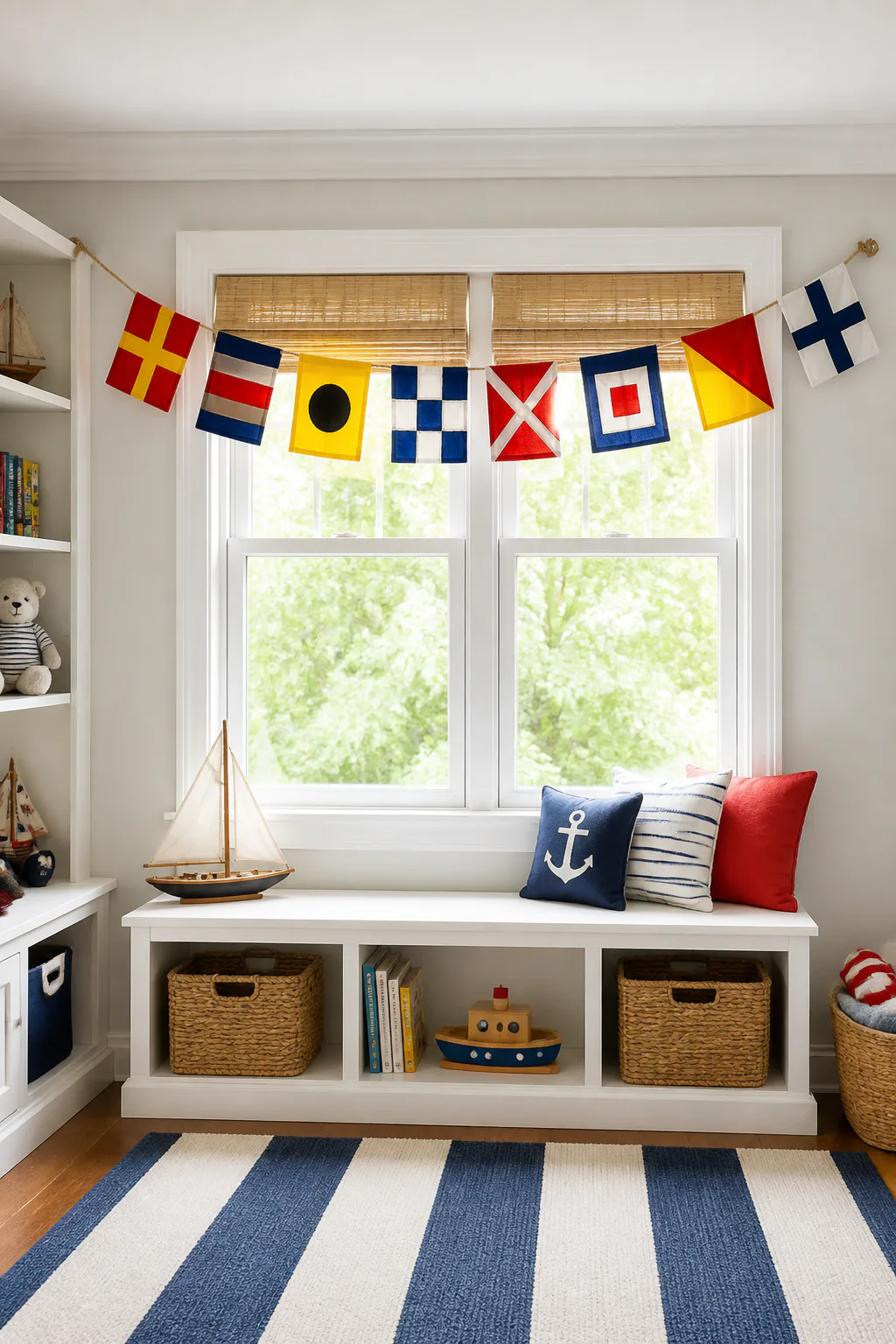
A fabric signal flag banner adds color and a playful maritime reference to a window wall or bookshelf. Its bold shapes can introduce reds, blues, yellows, and other accents into a room that is otherwise mostly white and navy. A banner spelling initials or a name can make the nursery feel personal, while a simple run of flags keeps the look more understated.
Because signal flags are graphic, they work well as a single colorful detail rather than one of many competing patterns. Echo one or two banner colors in a cushion, print, or toy basket, then let the rest of the room stay relatively calm.
Choose a spot and style
Hang the banner where it can be seen but will not interfere with window operation, curtains, or blinds. Keep cords and fabric ties out of a child’s reach, and use secure fittings so the display stays in place as the room is used.
- Use initials for a personal touch or flags for a simple accent.
- Repeat a couple of banner colors elsewhere in the room.
- Keep fabric and hanging cords away from the crib.
This easy-to-notice detail adds a lively note while keeping the overall design flexible.
11. Design a Blush Pink Cape Cod Nursery
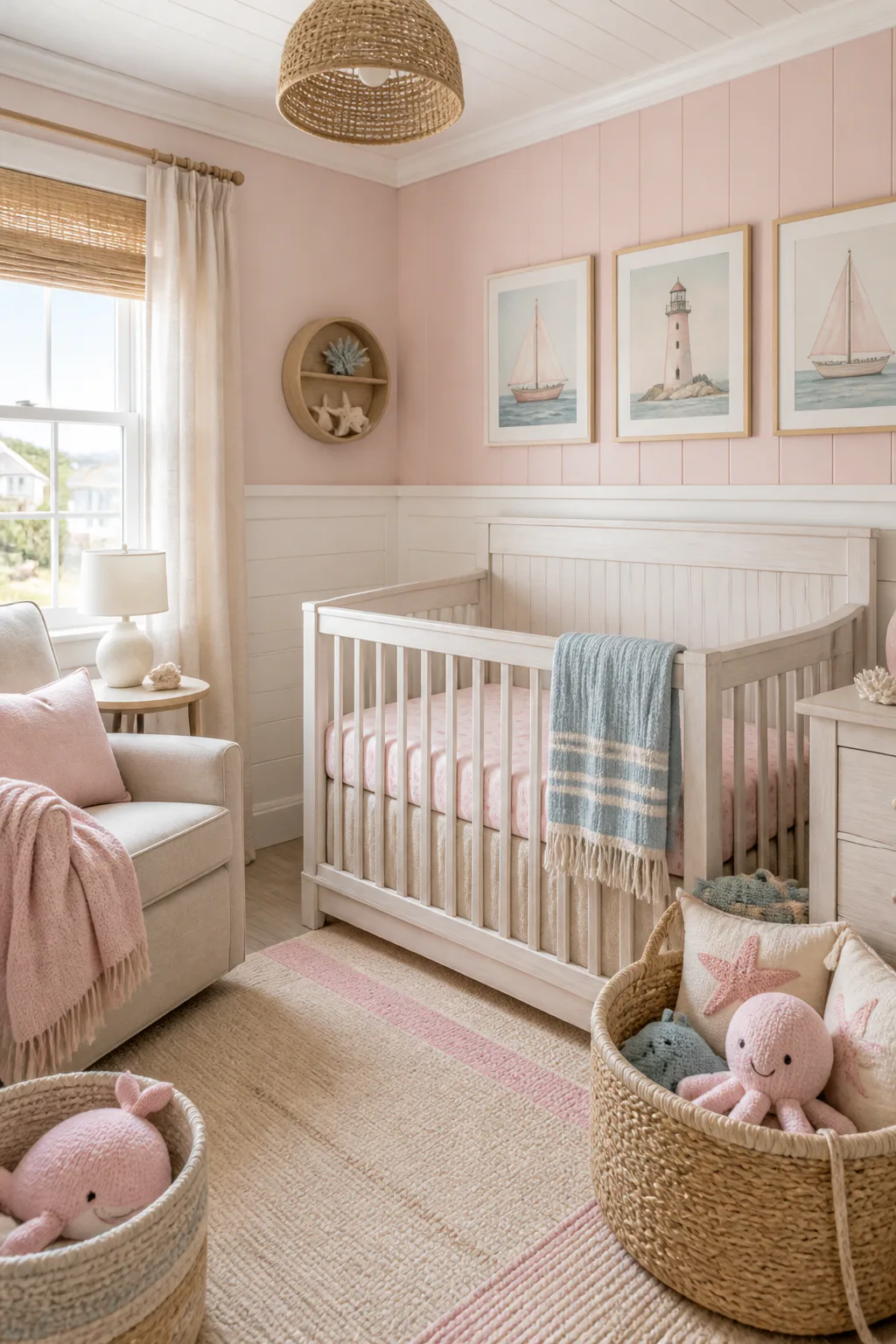
A blush pink Cape Cod nursery offers a softer take on classic nautical style. Combine blush with sandy beige, whitewashed wood, and touches of pale blue for a coastal palette that feels warm and relaxed. The result can feel just as maritime as navy and white, but with a lighter, gentler mood.
Use pink as an accent or make it the room’s main color, depending on how much warmth you want. White furniture and natural textures help the palette stay airy, while small details such as sailboat art or a porthole-shaped mirror keep the connection to the coast clear without making the room feel overly themed.
Balance the palette
Start with two or three main colors, then add nautical references through shapes and artwork. Keeping large surfaces neutral makes it easier to refresh the room later with new bedding, prints, or accessories.
- Pair blush with whitewashed wood and sandy neutrals.
- Add pale blue in a small, repeated detail.
- Use nautical art to connect the colors to the theme.
This approach is especially useful if you want a coastal nursery that feels personal, soft, and easy to adapt over time.
12. Style a Ship-in-a-Bottle Keepsake Shelf

A small display ledge can give meaningful keepsakes a place in the nursery without covering every wall with decor. Style it with a miniature compass, a bottle holding a tiny rolled map, smooth ocean rocks, or shells collected or chosen for the room. Together, these objects suggest a little voyage and bring personal character to the nautical theme.
Keep the arrangement edited so each item has room to be seen. A few objects in varied shapes are more effective than a crowded shelf, especially when the display sits near artwork or a patterned wall. Natural materials and muted colors help the keepsakes look cohesive with wood furniture and coastal textiles.
Curate a small display
Mount the ledge securely and place it where a child cannot reach or pull on the objects. Small items, glass, and shells should remain well away from the crib and changing surface; consider replacing fragile keepsakes with safer decorative alternatives as your child grows.
- Choose a few objects with different heights and textures.
- Use a stable ledge with secure wall mounting.
- Keep small or fragile keepsakes out of reach.
A carefully styled shelf turns a handful of meaningful pieces into a quiet focal point that can evolve with the family.
Final Thoughts
Nautical nursery style can be crisp and classic, soft and coastal, or playful and full of sea-inspired details. Choose one or two ideas that suit your room, then repeat a small palette of colors and materials to make everything feel connected. A focal wall, a few framed prints, or a cozy reading nook can be enough to set the direction.
As you finish the space, balance decorative choices with everyday comfort and safe placement. Keep the crib clear, secure wall features and shelves, and reserve small keepsakes for places beyond a baby’s reach. With thoughtful details and room to grow, your nursery can feel welcoming long after the first voyage begins.