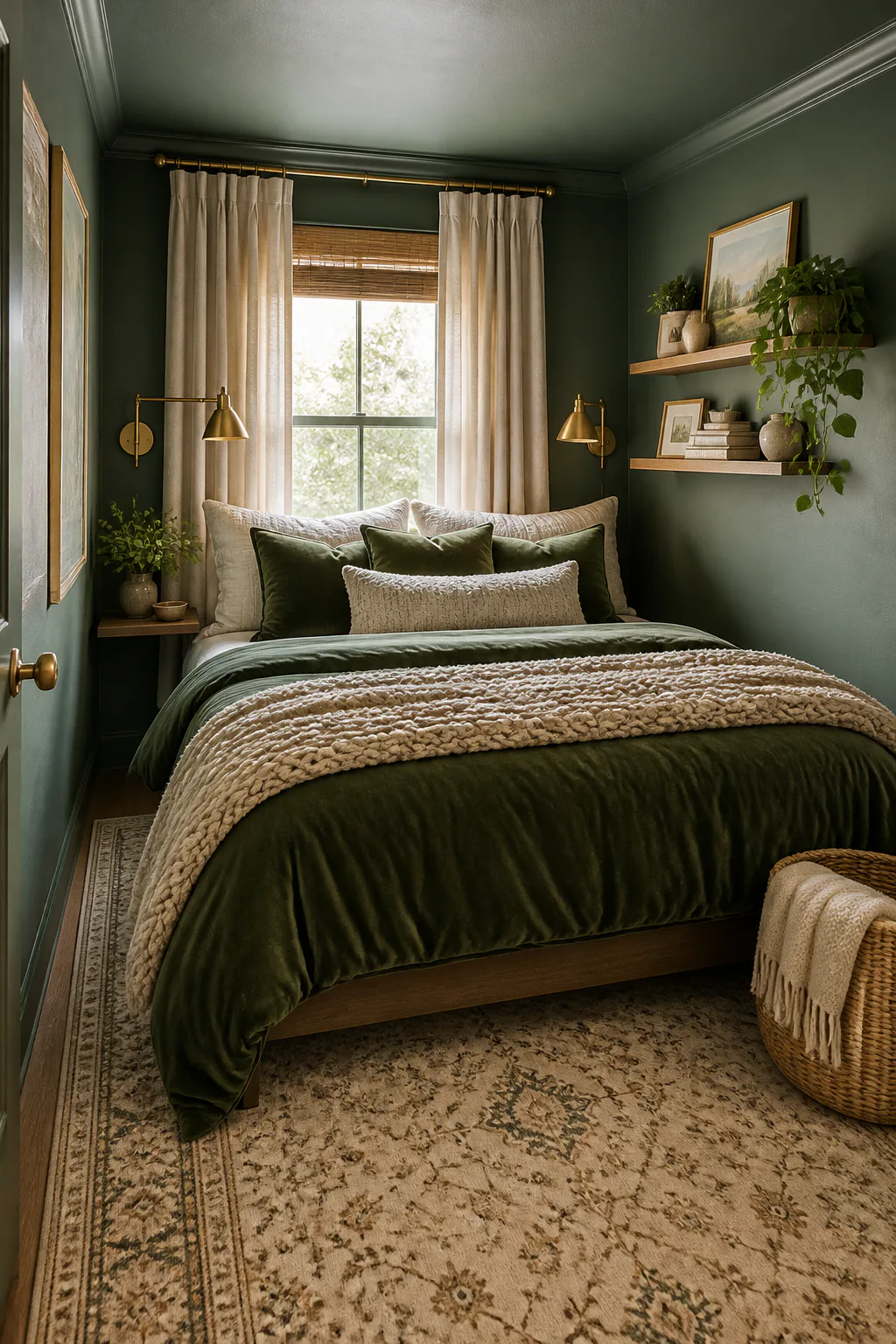
12 Clever Small Bedroom Ideas for a Cozy Space
A small bedroom can feel inviting without feeling crowded. The key is to make each choice work a little harder: use texture to add warmth, lighting to soften the mood, and layouts that preserve useful floor space.
These ideas suit apartments, guest rooms, and compact primary bedrooms alike. Some are simple styling updates, while others involve mounting or arranging furniture, so choose the changes that fit your room and your comfort level.
Start with one or two changes that solve a real need, such as adding storage or freeing up a nightstand. Then layer in cozy details—soft bedding, warm light, and a considered color palette—to make the whole room feel more connected.
Quick Answer
To make a small bedroom cozy, color-drench the walls, trim and ceiling in one warm shade, layer chunky knits and velvet bedding, and hang long curtains above the window. Save space with swing-arm sconces, rolling under-bed drawers and floating shelves instead of nightstands, then add warmth with a large plush rug, soft LED lighting behind the headboard, a cushioned wall-panel headboard and a daybed if the room doubles as an office.
1. Color-Drench the Walls, Trim, and Ceiling
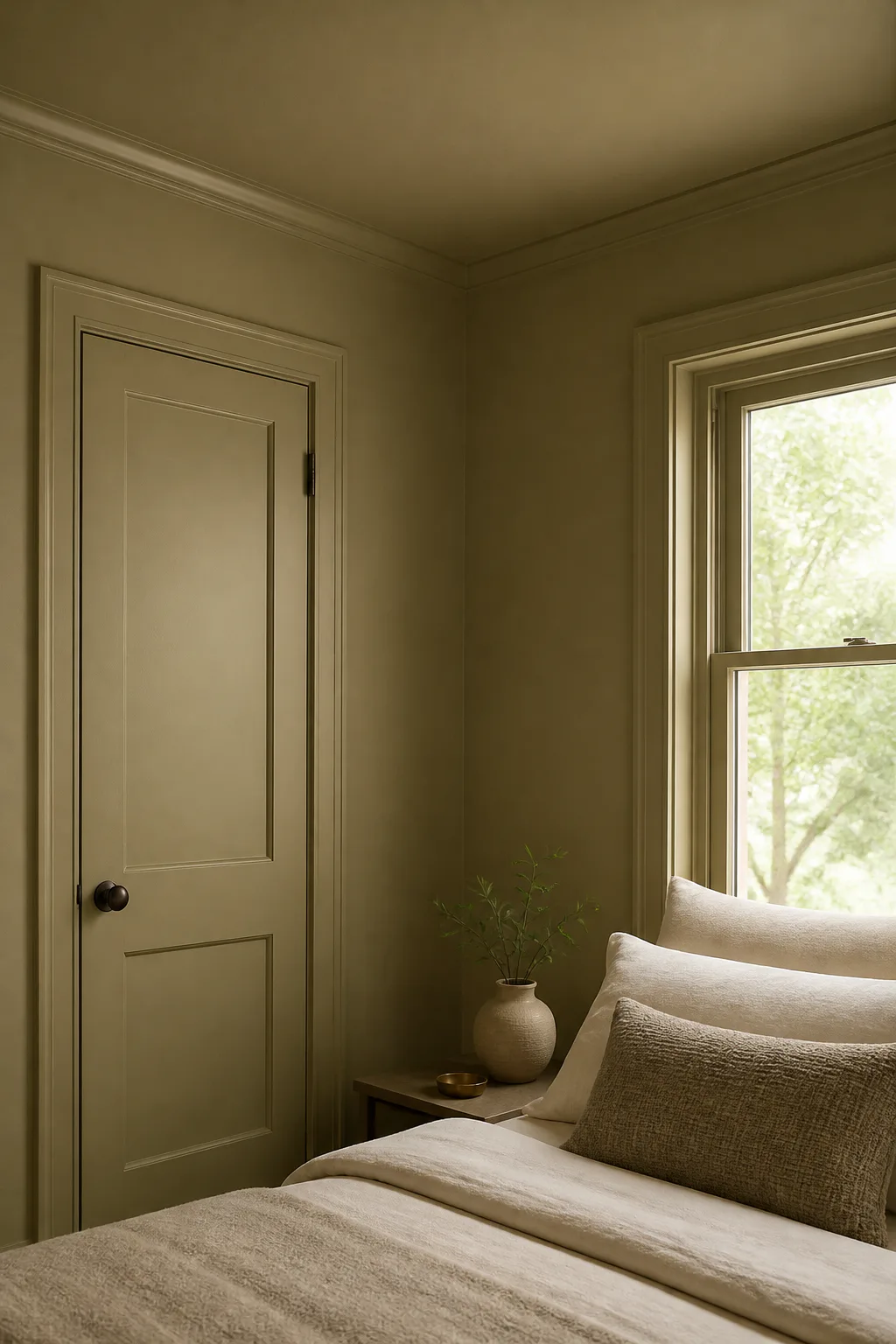
Best for: making a small room feel calm and wrapped in color
Effort: a paint project; test samples first
Painting the walls, trim, and ceiling in the same warm shade gives a small bedroom a wrapped, cocoon-like feeling. Rather than breaking the room into contrasting bands, one continuous color lets the eye move around the space more smoothly. Olive, warm taupe, muted clay, and soft charcoal can all create a restful backdrop, depending on how light or moody you want the room to feel.
This approach works especially well when the room has awkward corners or a low ceiling, because fewer color changes can make the architecture feel less visually busy. It also gives simple furniture and layered bedding room to stand out without requiring a bold accent wall.
How to pull it off
Test a paint sample in both daylight and lamplight before committing, since a cozy shade can look quite different at night. Keep larger furnishings and linens within a related palette, then introduce contrast through small details such as natural wood, cream bedding, or a patterned pillow.
- Use a matte or low-sheen finish on walls and ceiling for a soft look.
- Paint trim the same shade to reduce sharp visual breaks.
- Choose lighter bedding if you want the room to feel balanced rather than enclosed.
2. Layer Chunky Knits and Velvet Bedding
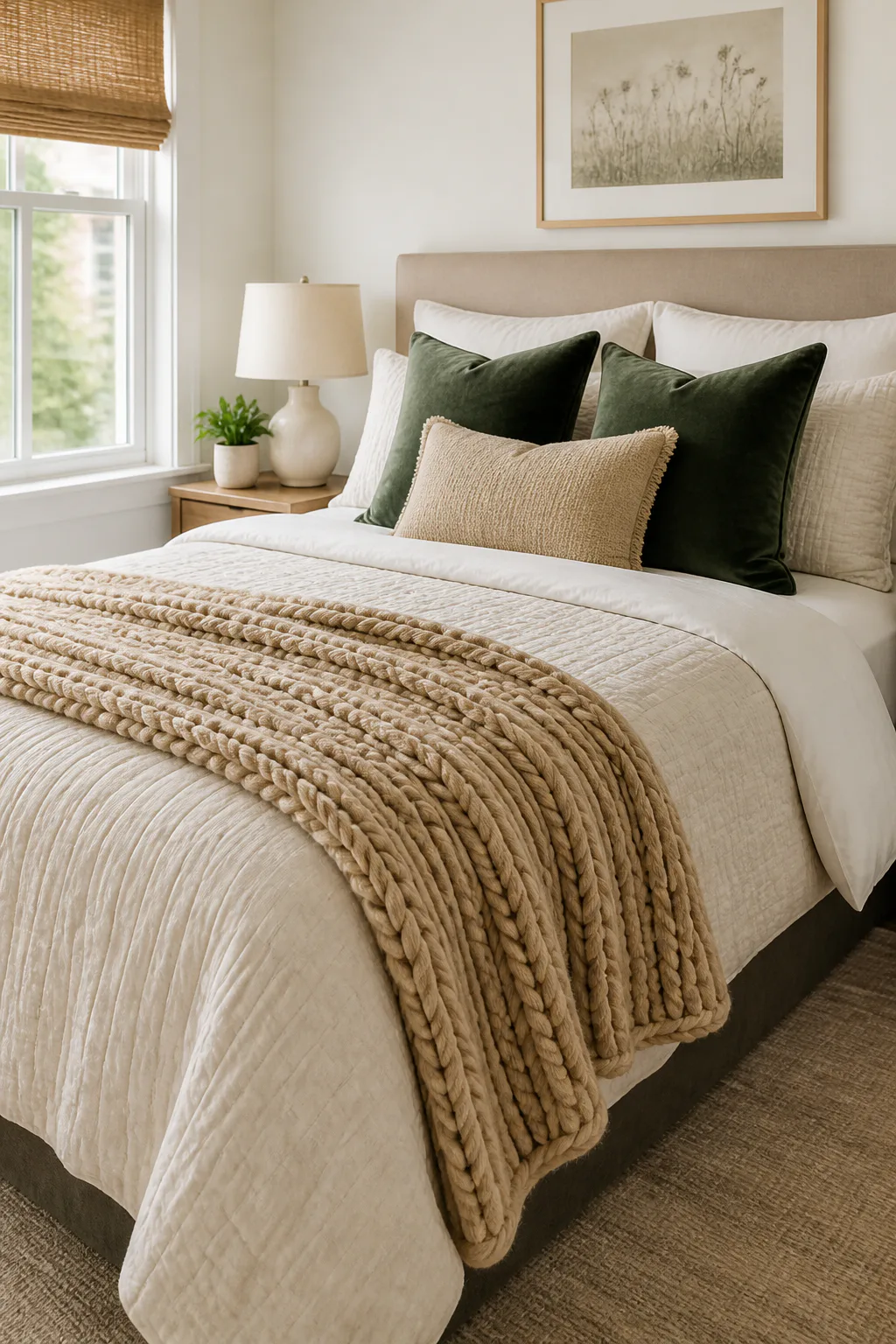
Best for: an instant cozy upgrade
Effort: easy, no tools needed
A bed often takes up the largest visual area in a small bedroom, so making it feel inviting can shape the mood of the entire room. Layering a chunky knit throw with velvet pillows and a quilted comforter adds depth through texture instead of relying on lots of extra decor. The mix feels plush and considered while keeping the focus on one cozy focal point.
Different textures help a simple color scheme feel rich without making the room look cluttered. A smooth cotton sheet, a softly quilted cover, and one nubby throw each bring a distinct finish. This idea fits well in rooms where there is little space for decorative furniture or accessories.
Build a balanced bed
Keep the base layer simple, then add tactile pieces in a few complementary shades. If the bed already has a patterned comforter, use mostly solid pillows and a throw; if the bedding is plain, a velvet cushion or textured blanket can supply the detail.
- Fold a chunky knit throw across the foot of the bed rather than spreading it everywhere.
- Use velvet pillows as accents, not a full set, to keep the look relaxed.
- Choose washable or easy-care layers for bedding you use every day.
3. Hang Puddle-Length Drapes Above the Window

Best for: small or low windows that need more height
Effort: easy: hang the rod higher and wider
Long curtains can make a compact bedroom feel softer and visually taller. Mounting the rod above the window frame draws the eye upward, while extending it beyond the sides lets the fabric sit clear of the glass when open. Letting the hems gently meet or pool on the floor adds a relaxed, romantic finish that suits a cozy room.
This treatment is useful when a small window feels undersized or the wall needs a tall vertical element. Full-length fabric also softens hard edges around the bed and window, bringing warmth without taking up floor area with another piece of furniture.
Get the proportions right
Measure from the planned rod position to the floor, and consider how much fabric you want to rest at the bottom. A light pool feels casual, but too much length can become a tripping or cleaning nuisance in a tight walkway. Choose a fabric weight that suits the room’s light and privacy needs.
- Place the rod closer to the ceiling to emphasize height.
- Extend the rod beyond the window so open curtains do not block much light.
- Use lined panels if you need more privacy or want to soften incoming light.
4. Frame the Bed with Swing-Arm Sconces

Best for: tight bedside space with no room for lamps
Effort: plug-in sconces are easy; hardwired ones are a bigger job
Wall-mounted sconces provide useful bedside light without occupying the surface of a nightstand. Swing-arm styles are particularly practical because you can direct the light toward a book, then move the fixture closer to the wall when it is not in use. Installed on either side of the bed, they also create a balanced frame that makes the sleeping area feel intentional.
This idea is a good fit when the bed sits close to a wall or when a conventional bedside table would make the walkway feel cramped. The fixtures can bring a warm, finished look while leaving room for essentials such as a glass of water or a phone.
Plan placement before mounting
Check where you naturally sit or lie down to read, and position each light so it is easy to reach without leaning awkwardly. If permanent wiring is not practical, plug-in sconces can offer a similar space-saving effect; plan where cords will run so they stay tidy and out of the way.
- Choose shades that direct light where you need it rather than into your eyes.
- Use warm-toned bulbs for a softer evening atmosphere.
- Confirm the fixture’s reach works with your bed and pillow placement.
5. Tuck the Bed into a Cozy Corner
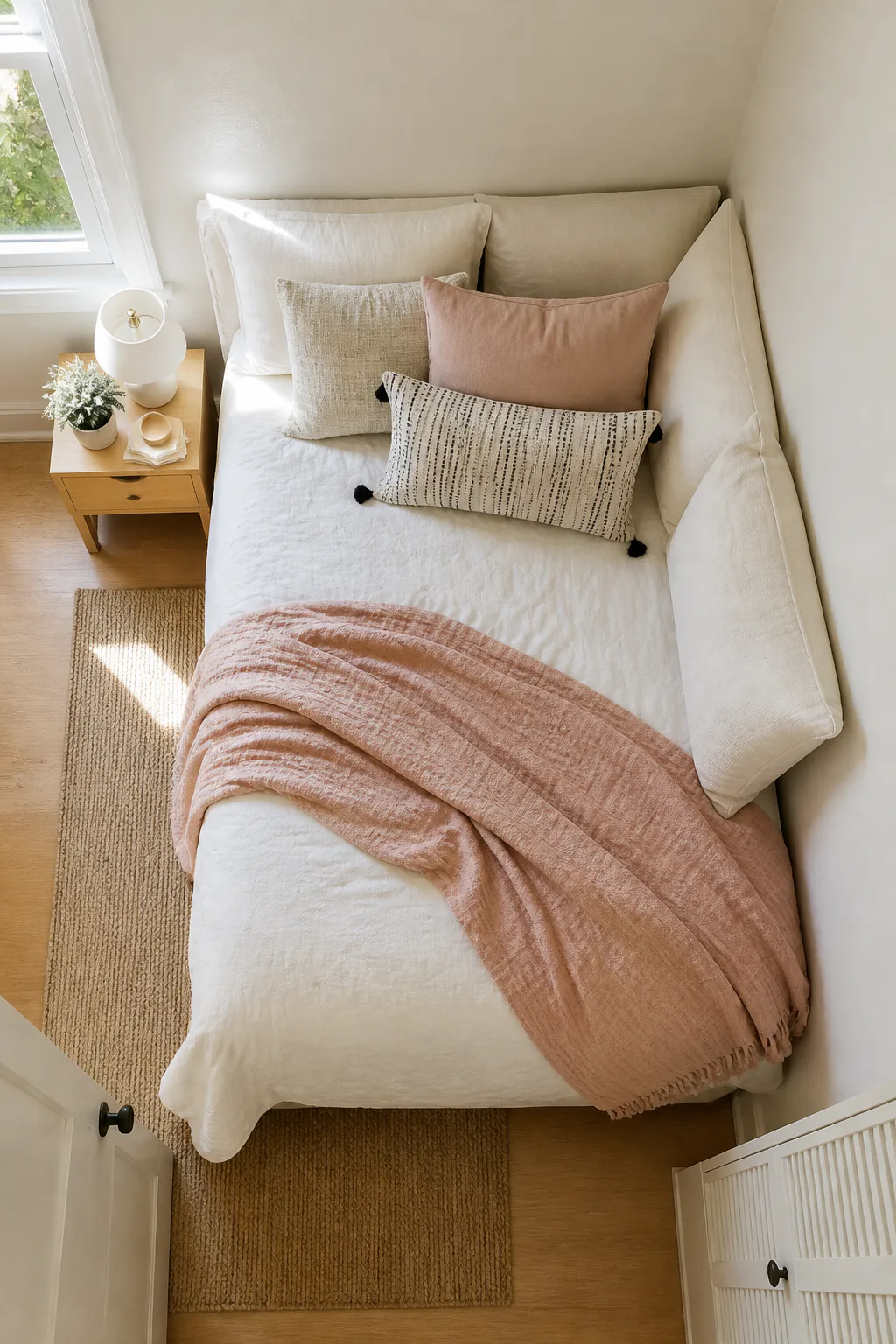
Best for: freeing up floor space
Effort: easy: just rearrange
Placing a bed against two walls can turn an underused corner into a snug sleeping nook. The surrounding walls create a sheltered, daybed-like feeling, which can be especially comforting in a small room. This arrangement may also open up a clearer central area for dressing, storage, or moving through the space.
A corner layout is most useful when centering the bed would leave narrow paths on both sides or force furniture into awkward positions. It can work in a recessed nook, beneath a window, or along two adjoining walls, as long as you can still make the bed and reach the essentials comfortably.
Make the nook feel deliberate
Use pillows along the wall-facing sides to create a comfortable backrest, and add a small shelf or sconce where you can reach it. Before shifting the bed, check access to outlets, closet doors, and windows. A cozy arrangement should feel tucked in, not difficult to use.
- Leave enough clearance for the bedroom door and closet to open fully.
- Use a washable wall cushion or firm pillows where the bed meets the wall.
- Keep frequently used items within reach on the open side of the bed.
6. Add Rolling Drawers Beneath the Bed
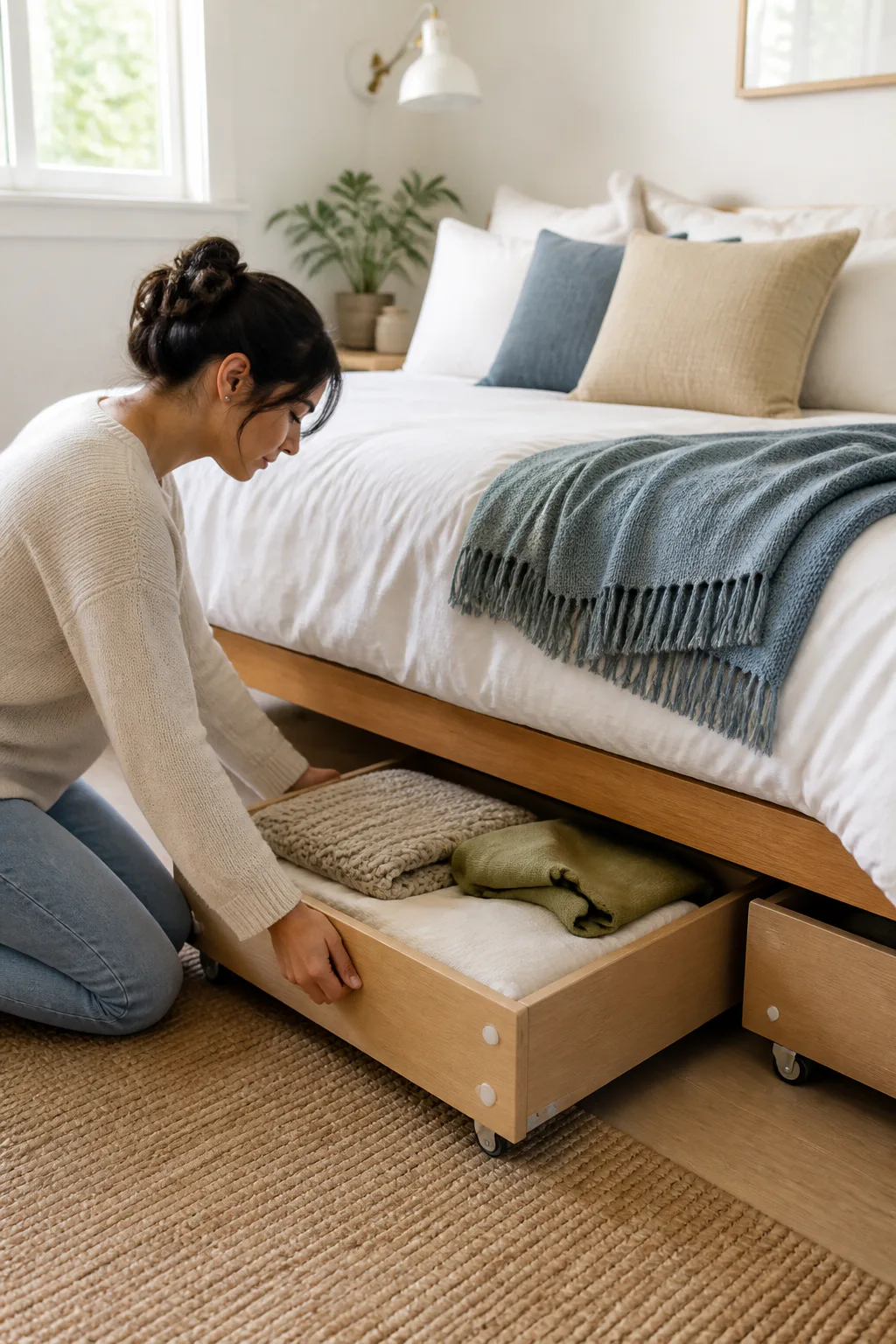
Best for: rooms short on closet space
Effort: easy
The space below a bed is valuable storage in a small bedroom, especially when there is no room for a large dresser. Rolling drawers or low storage bins can hold extra bedding, off-season clothes, or items you do not need every day. Keeping these belongings concealed makes the room feel calmer while making use of an area that might otherwise collect dust.
Measure the clearance beneath the bed before choosing containers, including any frame supports that could block a drawer. Smooth-rolling options are convenient if you expect to access the contents often; lidded bins can be a better choice for seasonal items you retrieve less frequently.
Keep under-bed storage easy to use
Group similar items together and label containers discreetly so you can find what you need without pulling everything out. Avoid overfilling drawers, which can make them difficult to slide and encourage clutter to migrate beneath the bed.
- Measure the height and depth available beneath the frame.
- Store clean, dry linens in covered containers to keep them protected.
- Reserve the easiest-to-reach drawer for items you use regularly.
7. Layer an Oversized Plush Rug Under the Bed

Best for: warming up hard floors
Effort: easy
A generously sized rug can make a small bedroom feel warmer and more grounded. When it extends beneath the bed, it visually anchors the largest piece of furniture and gives you a soft landing when you get up. A plush surface also adds comfort underfoot, helping the room feel more like a retreat even if the rest of the furnishings are simple.
Choosing a rug that is too small can make the bed feel disconnected from the room, while a well-scaled one can help define the sleeping zone. In a compact layout, the rug does not need to cover every inch of floor; it should provide a noticeable border around the bed where space allows.
Choose the right placement
Slide the rug under the lower portion of the bed or position it so it extends along the sides where you step down. Check that doors can open freely and use a nonslip pad if the rug shifts on a smooth floor.
- Measure the bed and available floor area before shopping.
- Choose a low-pile option if doors or drawers need extra clearance.
- Pick a color or texture that complements the bedding without competing with it.
8. Replace Bulky Nightstands with Floating Shelves
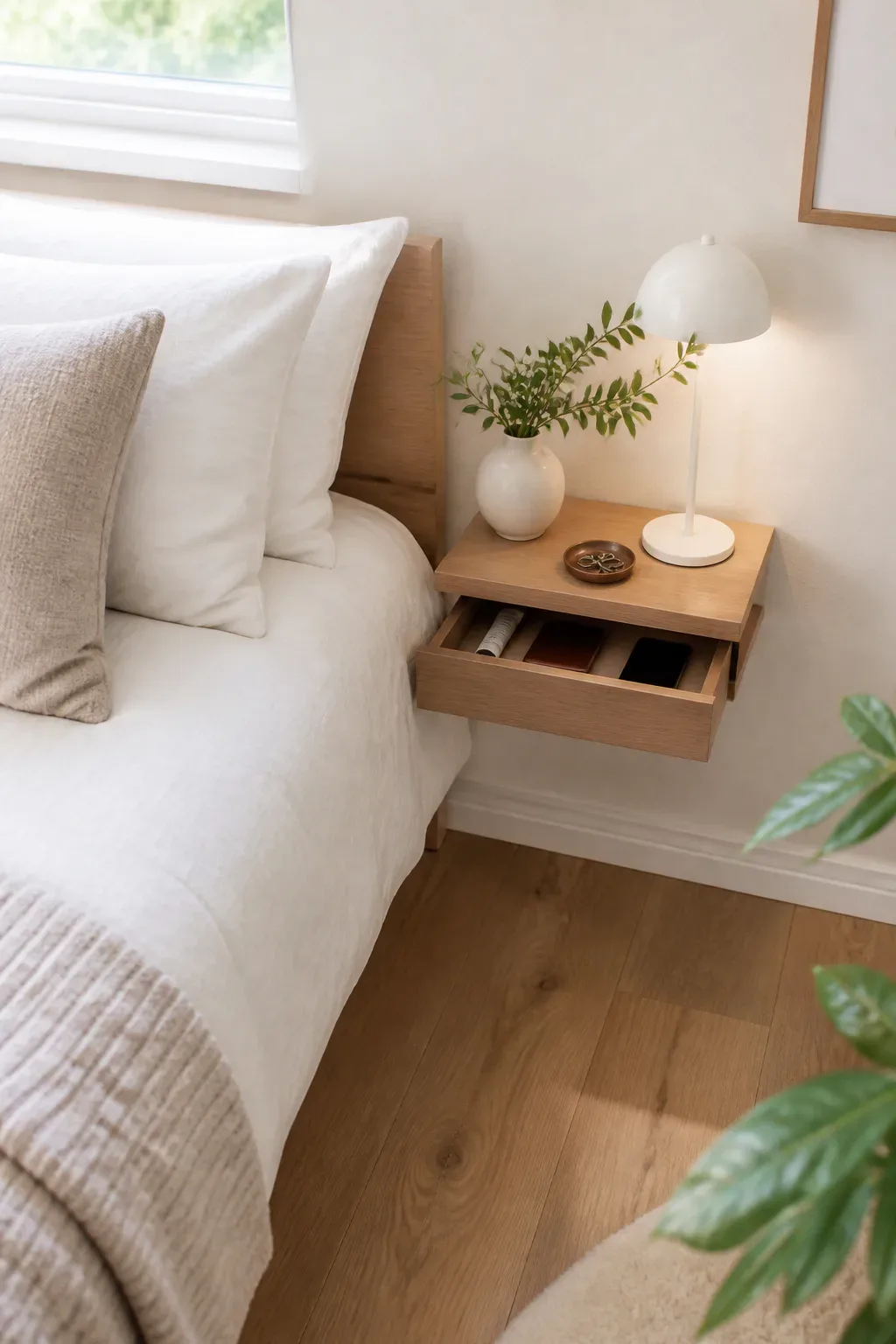
Best for: narrow gaps beside the bed
Effort: simple wall mounting
Floating shelves or wall-mounted drawers keep bedside essentials close without adding another furniture footprint. Because the floor remains visible beneath them, the room can feel more open than it would with two bulky nightstands. This is especially useful beside a bed that already sits close to a wall or leaves only a narrow walkway.
A slim shelf can hold a book, phone, or small lamp, while a shallow drawer gives you a place to hide smaller items. The best option depends on what you actually use at bedtime; a minimal surface is often easier to keep tidy than a larger table that invites clutter.
Keep the bedside practical
Before installing shelves, consider the height of your mattress and how far you can comfortably reach while lying down. Check the wall construction and use mounting hardware appropriate for the shelf and its intended load. If you rent, look for options that suit your lease and can be installed without permanent changes.
- Choose a shelf deep enough for essentials but not so deep it crowds the bed.
- Mount it where you can reach items without stretching.
- Use a small tray to keep loose everyday objects contained.
9. Glow Up the Headboard with Warm LED Strips
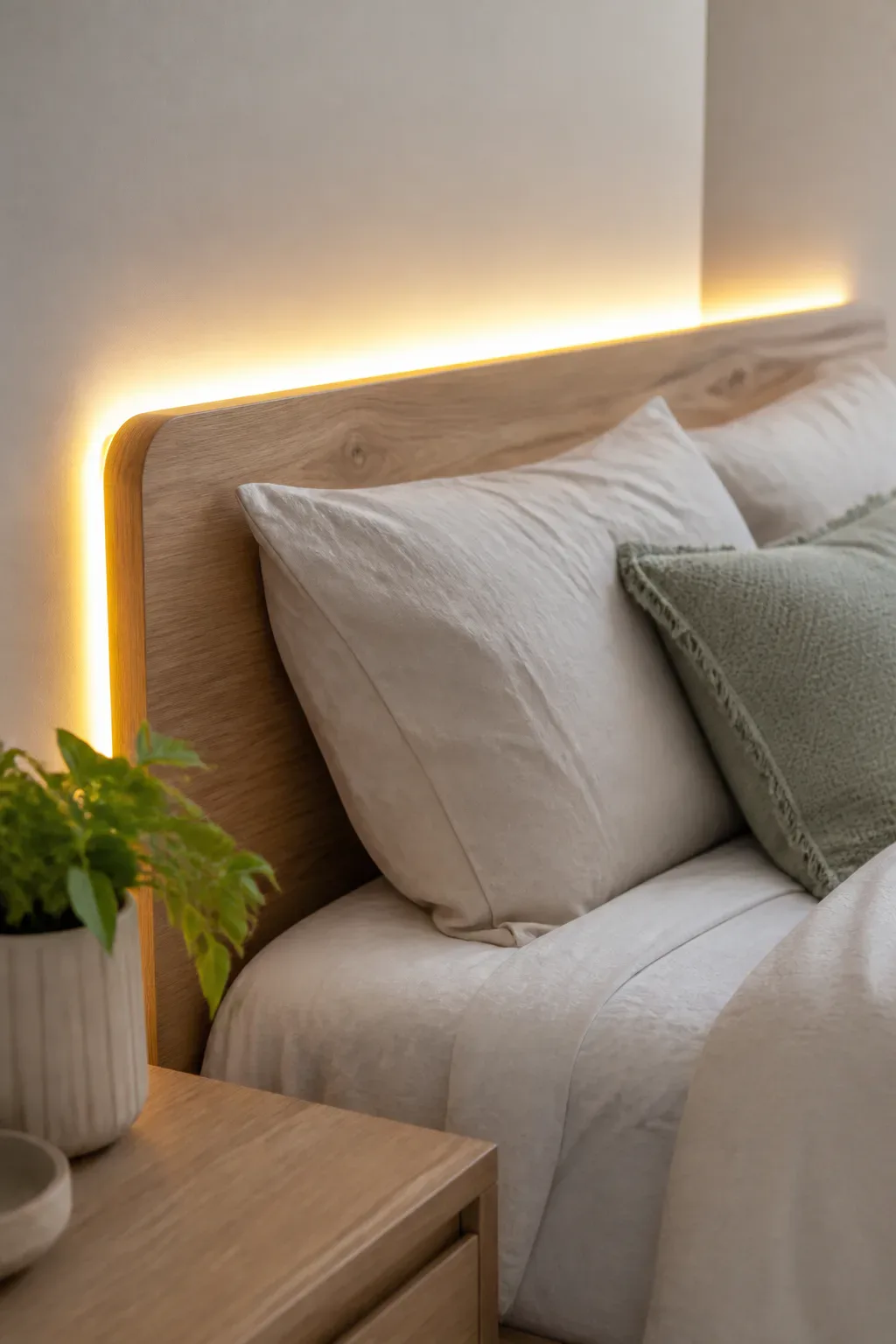
Best for: soft evening light
Effort: easy
A soft glow behind the headboard can make the bed feel like the heart of the room. Warm LED strip lighting adds atmosphere without requiring a large lamp or a prominent new fixture, so it works well when bedside surfaces are limited. Hidden from direct view, the light can softly outline the bed and make an evening room feel more restful.
This lighting is most effective as a gentle layer rather than the bedroom’s only source of illumination. Combine it with a reading light or another practical lamp, and use the glow to create a calmer backdrop for winding down. The effect can be especially appealing behind a simple headboard or a bed positioned against a plain wall.
Install it neatly
Follow the lighting product’s instructions and place the strip where the LEDs are concealed from your usual view. Plan the route to the power source before attaching it, and avoid pinching the strip behind furniture or covering components in ways the instructions do not allow.
- Select a warm light tone for a softer, cozier effect.
- Use a dimmer or adjustable setting if available.
- Keep cords arranged safely and out of walking paths.
10. Install a Cushioned Wall-Panel Headboard
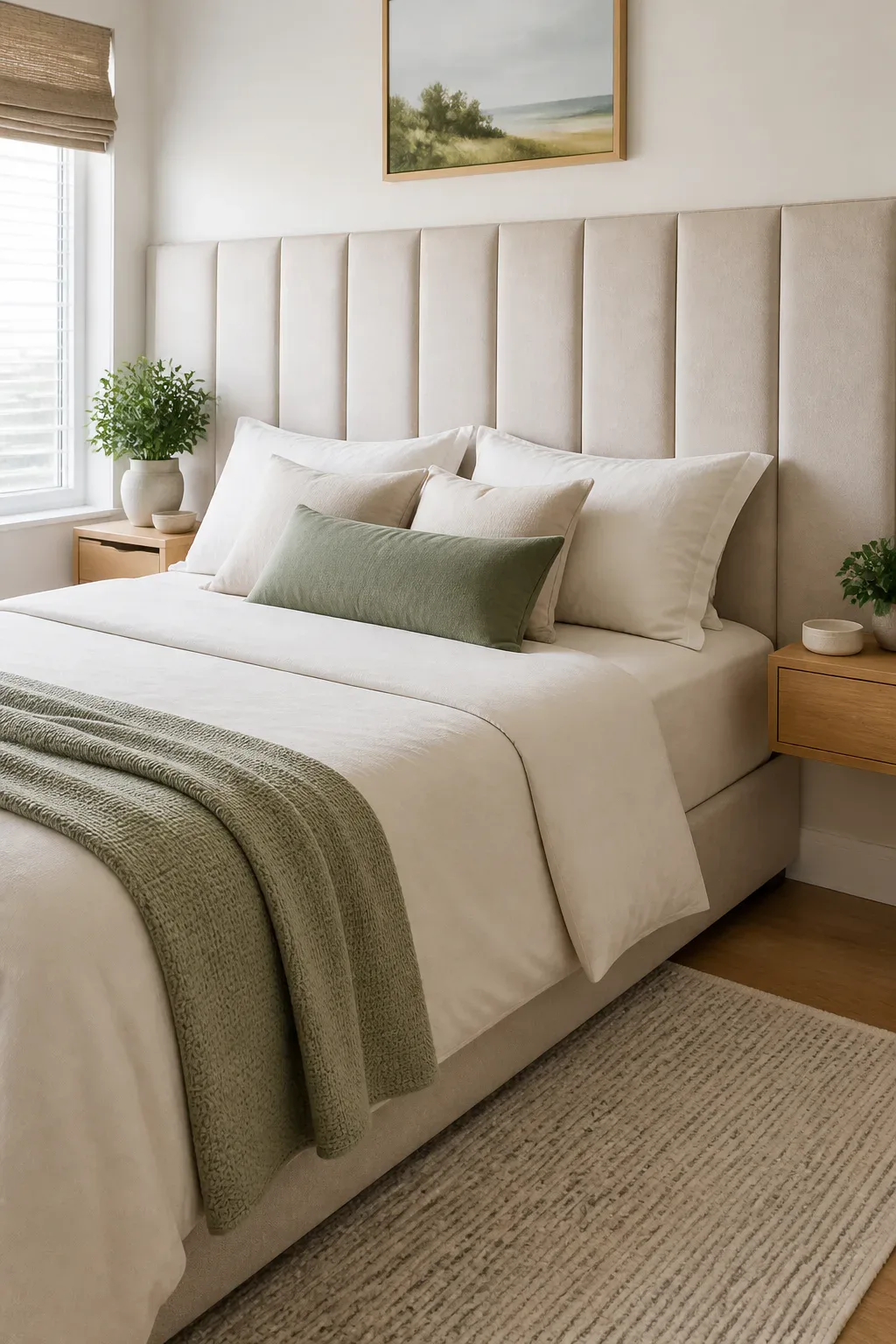
Best for: beds without a headboard
Effort: wall mounting; check the wall can support it
Upholstered or padded panels behind the bed add a soft surface to lean against when reading or relaxing. They also create a clear focal point without the visual weight of a tall, freestanding headboard. In a small room, that can be a useful way to make the bed feel finished while keeping the layout streamlined.
Panels can cover the width of the bed or extend a little beyond it for a more tailored look. Choose a fabric and color that work with your bedding, and consider how the material will handle everyday use. A calm neutral can blend into the room, while a richer shade gives the bed more presence.
Make comfort part of the design
Think about where your shoulders and head rest when you sit up in bed, then position the padding accordingly. Follow the panel maker’s mounting guidance and check that the wall can support the installation. If you want flexibility, removable or modular panels may be easier to adjust than one large piece.
- Choose a durable, easy-to-clean upholstery fabric.
- Use a panel height that supports you comfortably when sitting up.
- Coordinate the panel color with one or two bedding accents for a pulled-together look.
11. Wrap a Corner with Shallow Bookshelves
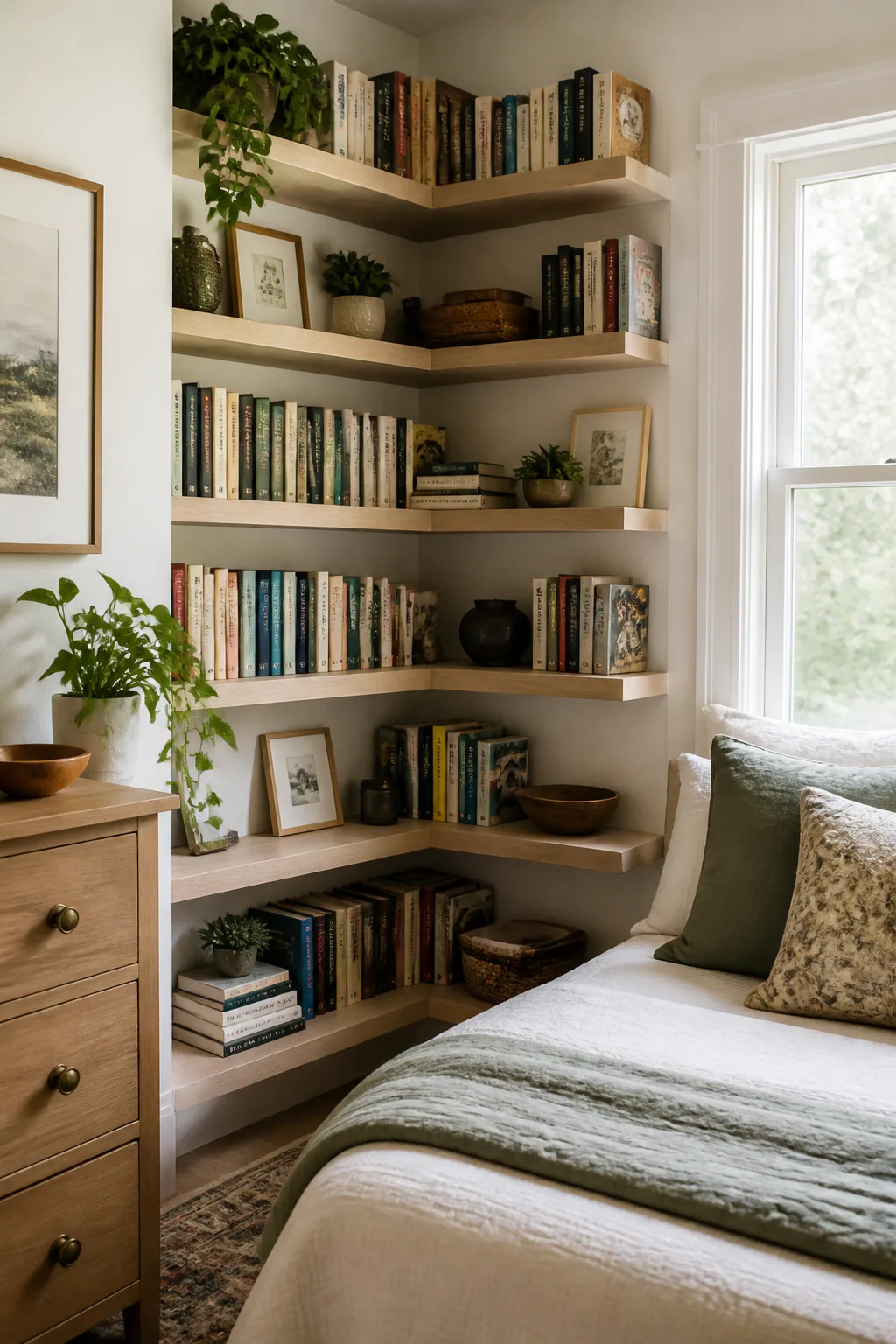
Best for: an empty corner and a growing book collection
Effort: moderate: secure tall units to the wall
Shallow shelves can turn an empty bedroom corner into a compact, lived-in library feature. Using vertical space gives books and personal objects a home without consuming as much floor area as a deep bookcase. The result adds personality and a sense of warmth, particularly in a room where there is little space for extra decor.
Floor-to-ceiling shelving can draw the eye upward, while shelves that wrap around a corner make use of an awkward area. Keep the display edited so the room still feels restful: a mix of books, a few framed pieces, and a small number of meaningful objects is often enough.
Style for a calm, compact room
Check that shelves will not interfere with doors, windows, or the bed, and secure tall units according to their installation instructions. Grouping books by size or tone can make the display feel more cohesive, while leaving a little open space prevents every shelf from looking crowded.
- Choose shallow shelving that suits the room’s available clearance.
- Keep heavier items on lower shelves and secure tall units appropriately.
- Leave some shelves partly open to keep the corner from feeling busy.
12. Use a Daybed for a Bedroom That Doubles as an Office
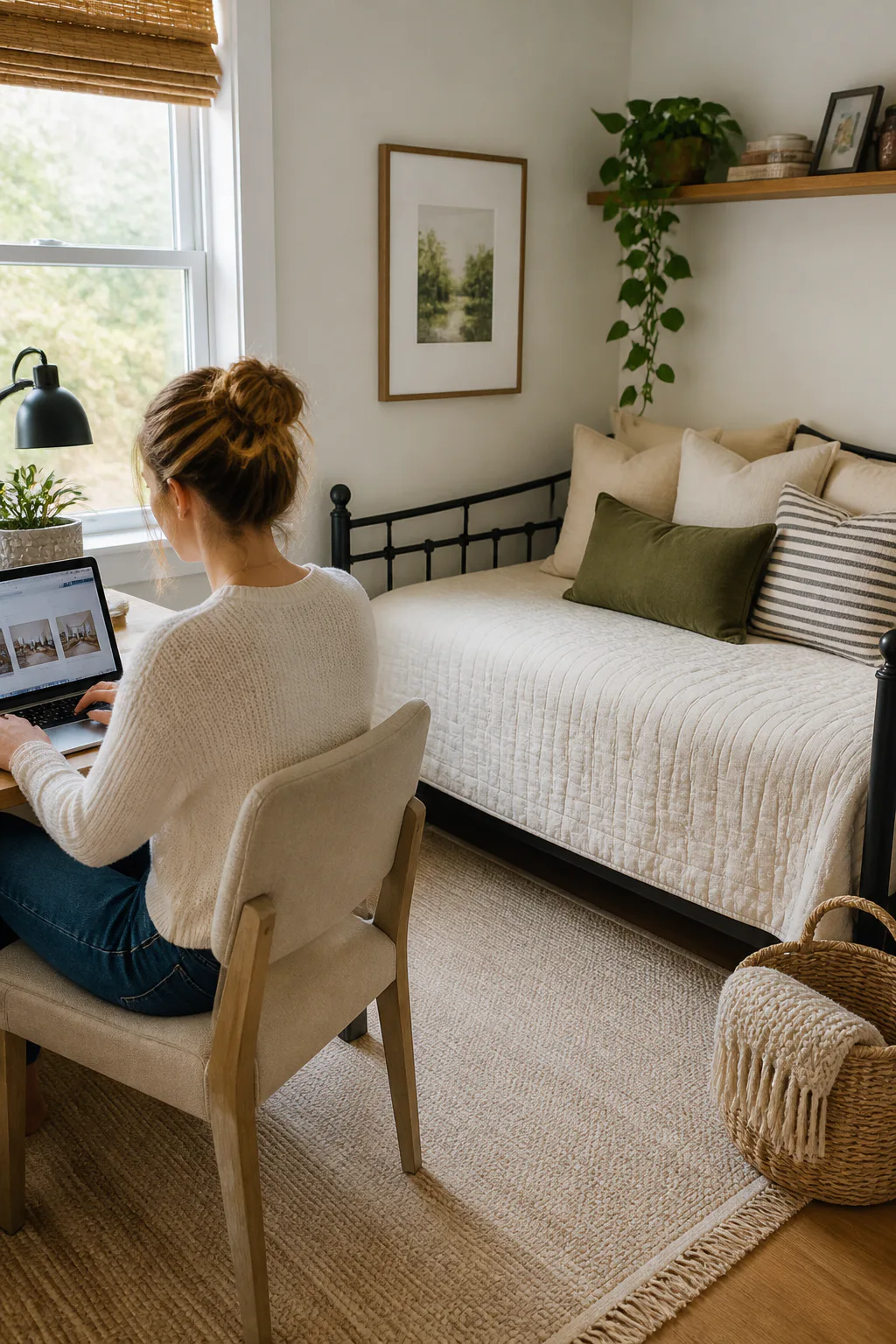
Best for: bedrooms that double as an office or guest room
Effort: a furniture swap
When a bedroom also serves as an office, guest room, or quiet sitting area, a daybed can make the space work throughout the day. It offers a place to sleep while also functioning as seating, so the room does not have to feel arranged around a traditional bed at every hour. This can be a practical solution when a separate sofa would take up too much space.
Choose a streamlined frame that fits the room and allows clear access to storage, a desk, or the door. During the day, pillows along the back can make the bed feel more like a lounge; at night, those cushions can be moved aside to prepare the sleeping surface.
Give each use its own place
Plan where bedding will go when the daybed is being used as seating, and keep the desk or work area visually distinct from the sleeping zone. A small basket or storage drawer can hold extra pillows and blankets, making the transition between uses quicker and keeping surfaces clear.
- Measure the frame carefully, including room for walking and opening drawers.
- Use coordinated cushions to make daytime seating feel intentional.
- Keep work supplies contained so they do not spill onto the sleeping area.
Frequently Asked Questions
How do I make a small bedroom feel cozy?
Layer textures on the bed, use warm, low lighting such as wall sconces or LED strips, add a soft rug underfoot and consider one warm color across the walls, trim and ceiling.
What paint colors make a small bedroom feel cozy?
Warm, muted shades such as olive, warm taupe, muted clay or soft charcoal create a restful backdrop. Test samples in both daylight and lamplight before committing.
How can I add storage to a small bedroom?
Use rolling drawers under the bed, swap bulky nightstands for floating shelves or wall-mounted drawers, and wrap an empty corner with shallow bookshelves secured to the wall.
Can a small bedroom also work as an office?
Yes. A daybed works as seating by day and a bed at night, which leaves room in a compact space for a desk.
Final Thoughts
A cozy small bedroom comes together through thoughtful choices, not a crowded collection of decor. Soft bedding, warm lighting, useful storage, and a layout that respects the room’s clearances can make even a compact space feel comfortable and personal.
Pick the ideas that address your biggest everyday needs first, then add details that make the room feel like yours. Whether you start with a color change, a floating shelf, or a softer rug, a few purposeful updates can turn a small bedroom into a restful retreat.
Making the most of other small spaces? Browse our small living room ideas on a budget and small kitchen decor ideas.