16 Clever Kids Closet Ideas for Easier Organization
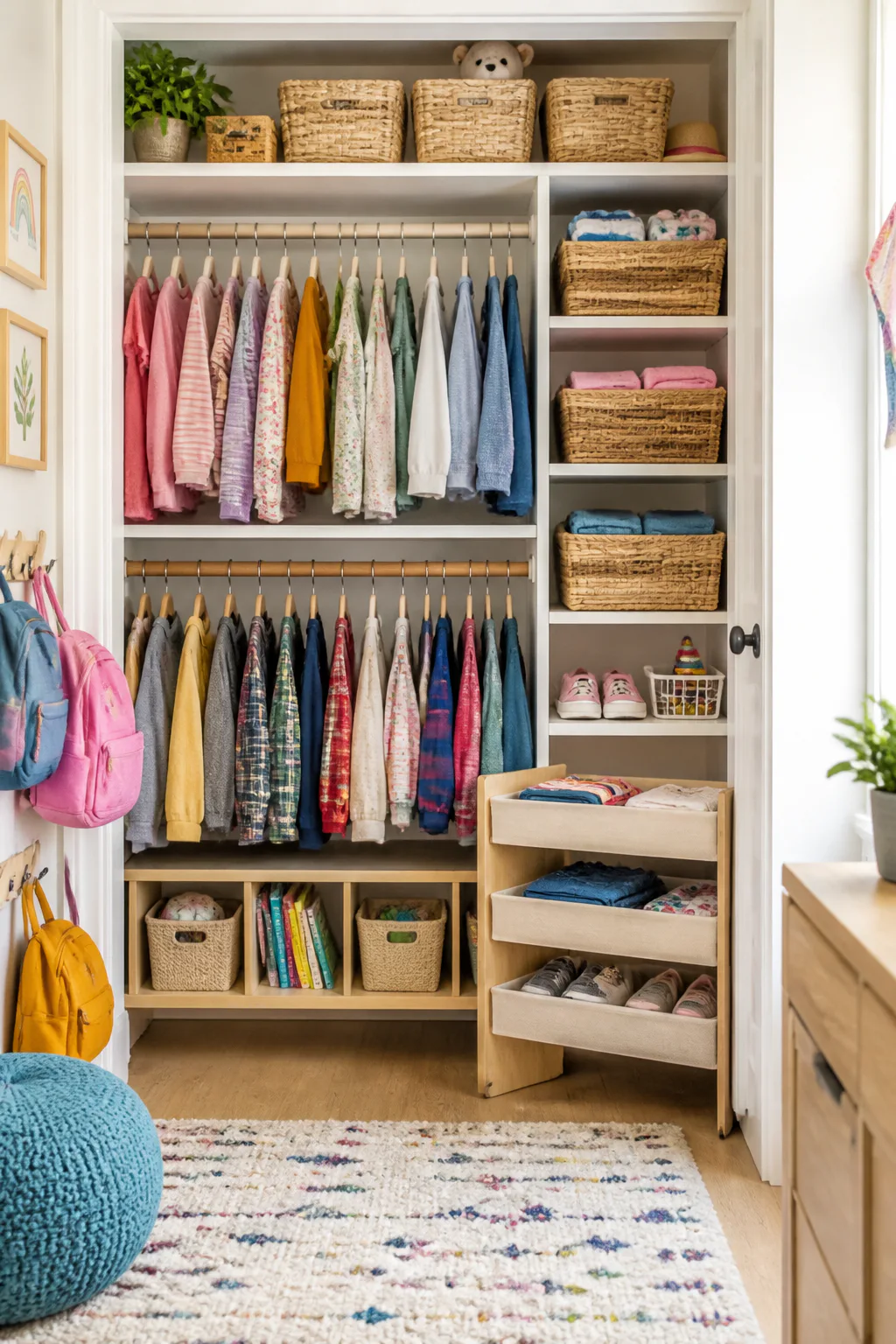
A kid’s closet has to do more than hold clothes: it needs to make everyday routines easier, keep favorite things within reach, and adapt as your child grows. A few thoughtful changes can turn awkward corners and crowded shelves into useful storage without requiring a full closet makeover.
These kids closet ideas cover hanging space, clothing organization, shoes, accessories, lighting, and playful finishing touches. Some work especially well in a small reach-in closet, while others are easy to adapt for a walk-in or shared space.
Choose the solutions that match your child’s age and your family’s routines. Keeping frequently used items at child height—and giving everything a clear home—can make it easier for kids to get dressed and put things away with less help.
1. Double Hanging Rods for a Growing Wardrobe
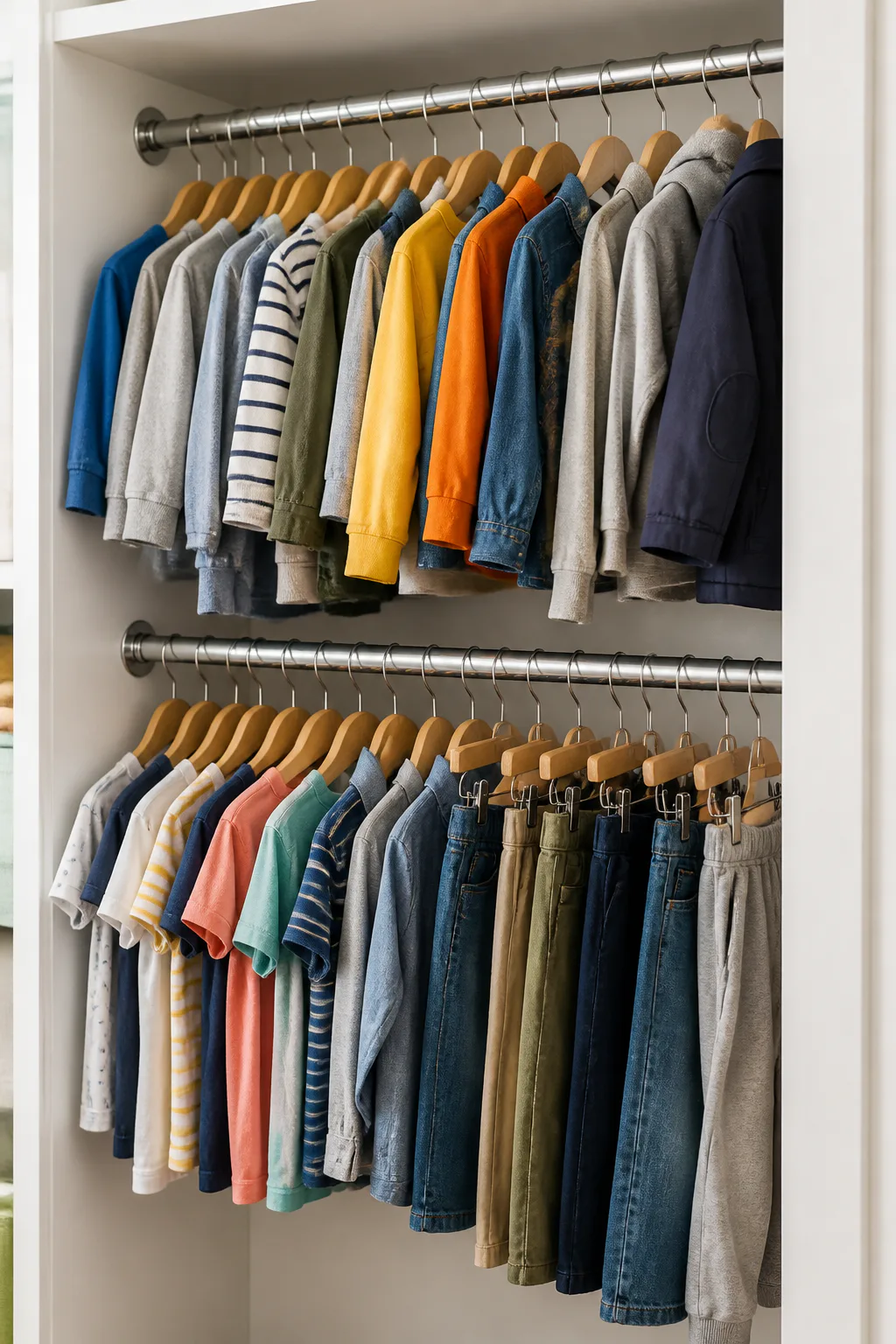
Two hanging rods stacked vertically can make better use of the space in a closet with a high ceiling or a long, open section. Kids’ shirts, jackets, skirts, and many pants are short enough to hang on the lower rod without brushing the floor, leaving room above for another row.
This setup is especially useful when a dresser is already full or when you want school clothes and weekend clothes to be easy to see. Place the lower rod at a height your child can reach, and reserve the upper one for less-used items or clothing they need help accessing.
Plan the two levels
Before installing anything, check the length of the clothes you plan to hang and leave enough space between the rods. Secure the hardware according to its instructions, and use a stud or suitable wall anchors so the rods can handle everyday use.
- Put everyday shirts and pants on the lower rod.
- Use the upper rod for jackets, special outfits, or next-size clothing.
- Keep longer dresses and coats in a separate section.
As your child grows, you can change the arrangement or return to a single rod where longer garments need the space.
2. Adjustable Shelves That Grow with Your Child
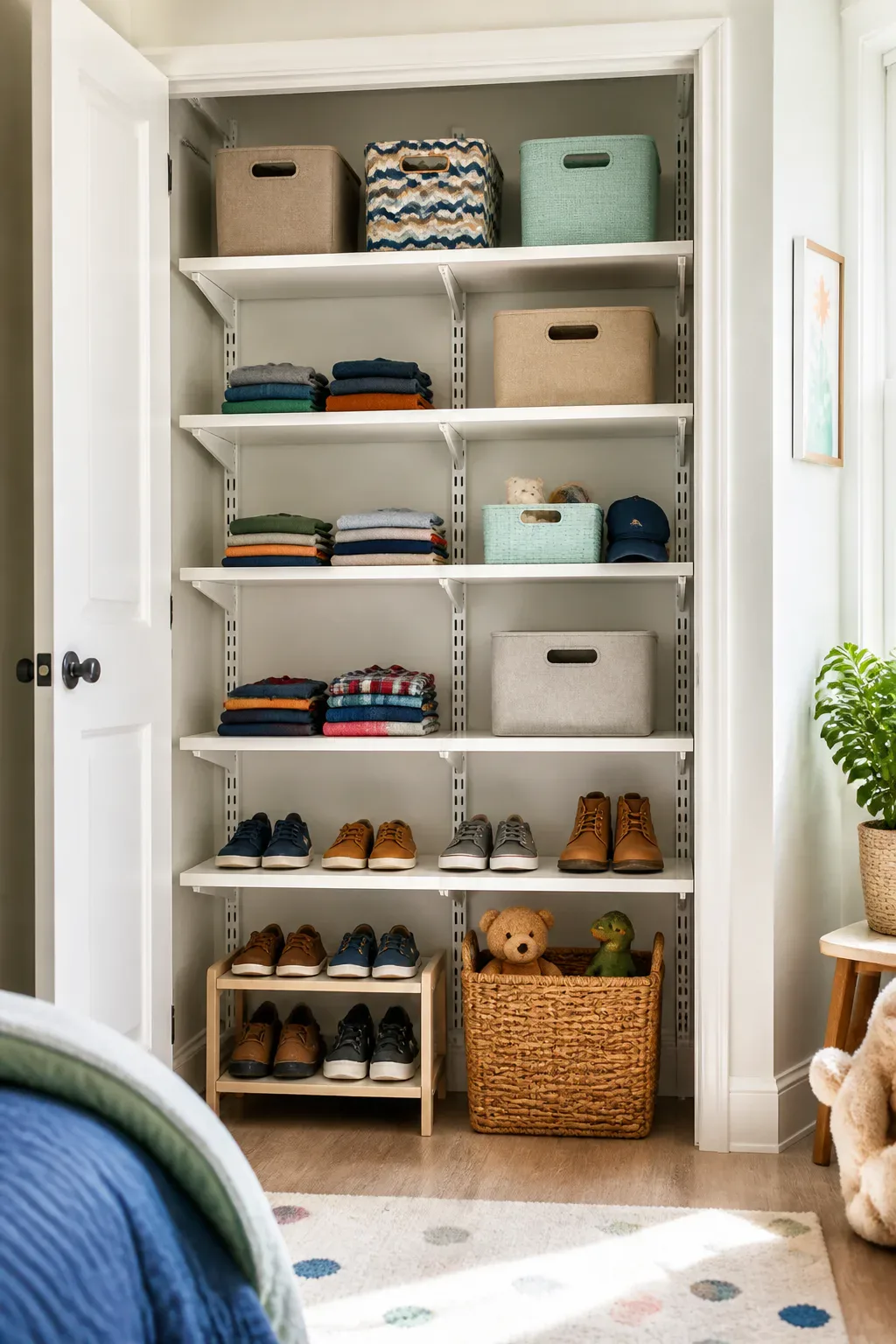
A track-and-bracket system gives you shelves that can move instead of locking you into one layout. That flexibility is handy when folded clothes, shoes, or storage bins change size and quantity over time. A shelf that works for toddler outfits today might later need to make room for taller shoes or larger folded sweaters.
Adjustable shelving can also help a closet do more than one job. Set the lower shelves within reach for current favorites, while keeping seasonal clothes or keepsakes higher up. In a shared closet, movable shelves make it easier to divide the space without permanently assigning every inch.
Set up shelves for changing needs
Start by grouping the things you want to store and measuring your bins before choosing shelf spacing. Make sure the tracks and brackets are appropriate for the shelf material and expected load, and follow the installation directions carefully.
- Leave room for bins to slide in and out easily.
- Use lower shelves for daily clothes and shoes.
- Reserve upper shelves for seasonal or occasional items.
- Revisit the layout when clothing sizes or routines change.
The ability to adjust the setup helps the closet stay useful without a complete redesign.
3. A Low Grab-and-Go Outfit Station
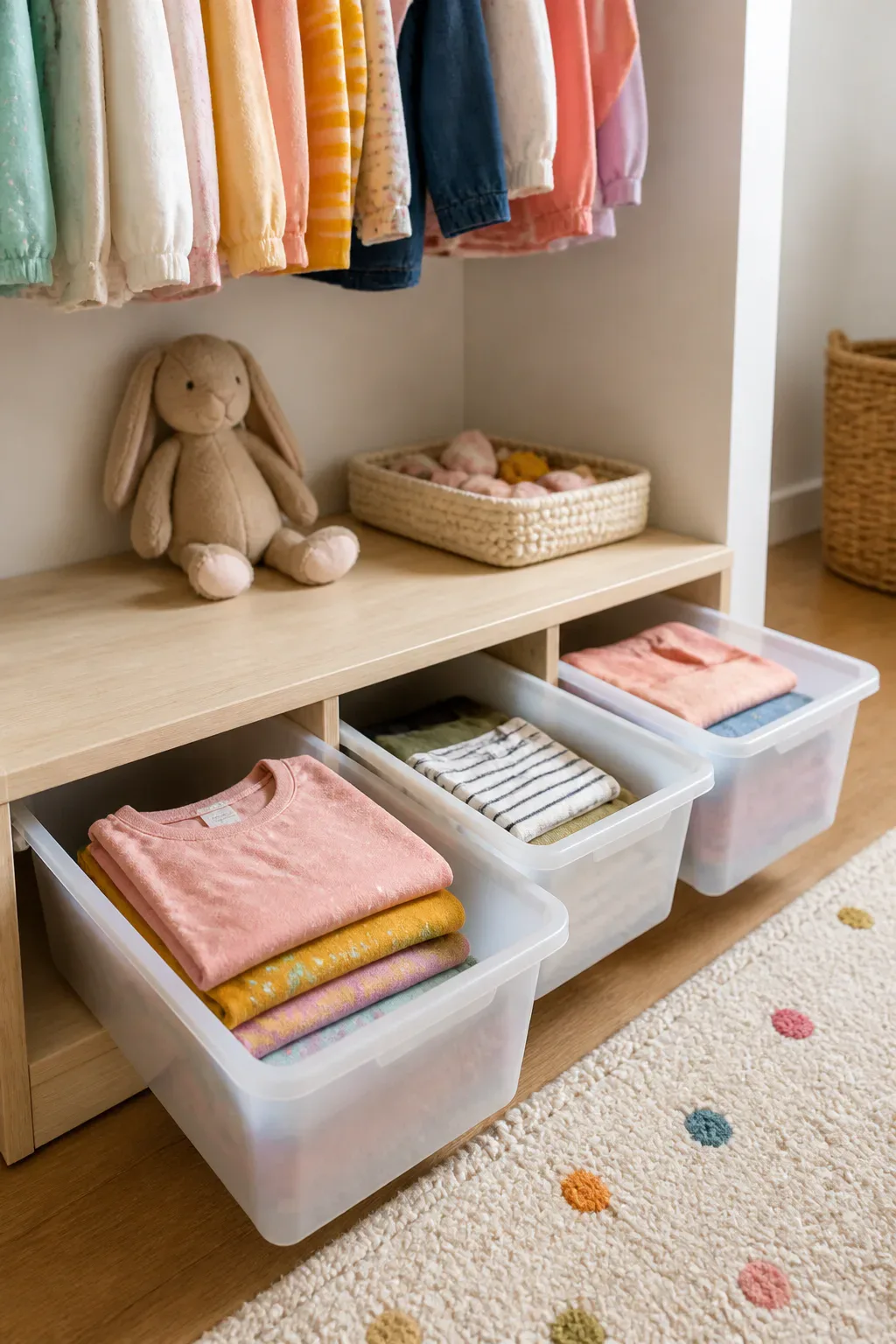
Open pull-out bins on a low shelf can make daily dressing feel more manageable for kids. Instead of searching through a tall drawer or asking an adult to reach a high shelf, a child can see a few useful choices at a glance. The bins work well for pajamas, socks, everyday outfits, or clothes set aside for the next school day.
Place the station near the closet opening, where it is easy to reach and return items. A simple system is often more effective than giving every small item its own complicated category, especially for younger children who are still learning to tidy independently.
Make the choices easy to use
Choose bins that slide smoothly and are light enough for your child to pull out safely. Keep the number of options manageable, and consider using one bin per routine rather than filling each container with a mix of everything.
- Keep pajamas together in one open bin.
- Use a small container for socks or underwear.
- Set out a school outfit the night before.
- Rotate the selection as the weather changes.
A low outfit station turns storage into a practical part of getting ready, not just a place to put clothes away.
4. Pull-Out Baskets for Bulky Clothes

Wire drawers or pull-out baskets give bulky and loose clothing a contained home while keeping it visible. Sweaters, swimwear, sports jerseys, and play clothes can be awkward to stack neatly, so a basket helps prevent them from becoming a pile that tips over whenever someone reaches for one item.
Because the basket slides out, kids can see what is inside without digging through a deep shelf. This approach is useful in reach-in closets where access to the back can be tricky, and it can make good use of the space beneath hanging clothes.
Choose and arrange the baskets
Measure the shelf or closet opening before selecting a system, and check that the baskets can slide without catching on doors or clothing. Group items by how your family uses them, rather than trying to create an overly detailed sorting system.
- Give one basket to swimwear and rash guards.
- Keep sports jerseys or practice clothes together.
- Use a separate basket for sweaters or sweatshirts.
- Leave some room so contents are easy to lift out.
Visible storage makes it simpler to find a specific item and return it to the right place afterward.
5. Picture-Labeled Bins for Easy Sorting
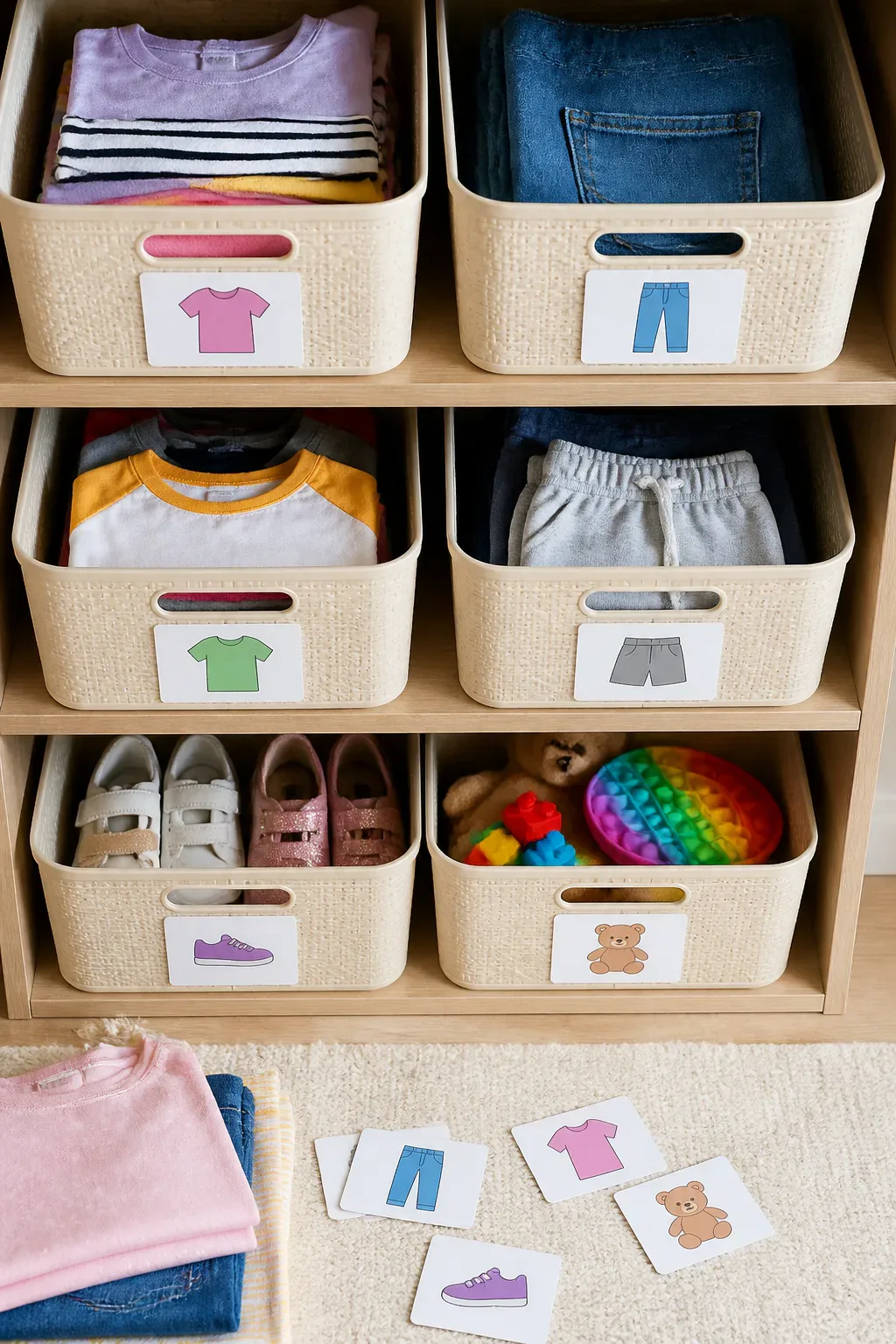
Labels can turn a shelf of similar-looking bins into a system kids understand. Younger children may respond best to simple pictures, while readers might prefer clear words such as “pants,” “tees,” or “toys.” When the category is easy to recognize, children can find what they need and have a better chance of putting it back.
Use labels on bins that hold frequently mixed-up items, not necessarily every container in the closet. This idea works on open shelves, inside cubbies, or in pull-out baskets, and it can be adjusted as a child’s interests and clothing needs change.
Keep labels clear and consistent
Choose labels that can be read or seen from the front of the shelf. If your child is learning to read, pairing a picture with a word can make the system useful now and later. Keep categories broad enough that tidying does not become a frustrating sorting exercise.
- Use a shirt icon or “tops” label for everyday shirts.
- Mark a bin for shoes, toys, or dress-up items.
- Place labels at your child’s eye level.
- Update the categories when the contents change.
A little visual guidance can make an ordinary storage bin feel like an easy-to-follow routine.
6. A Pocket Organizer on the Closet Door
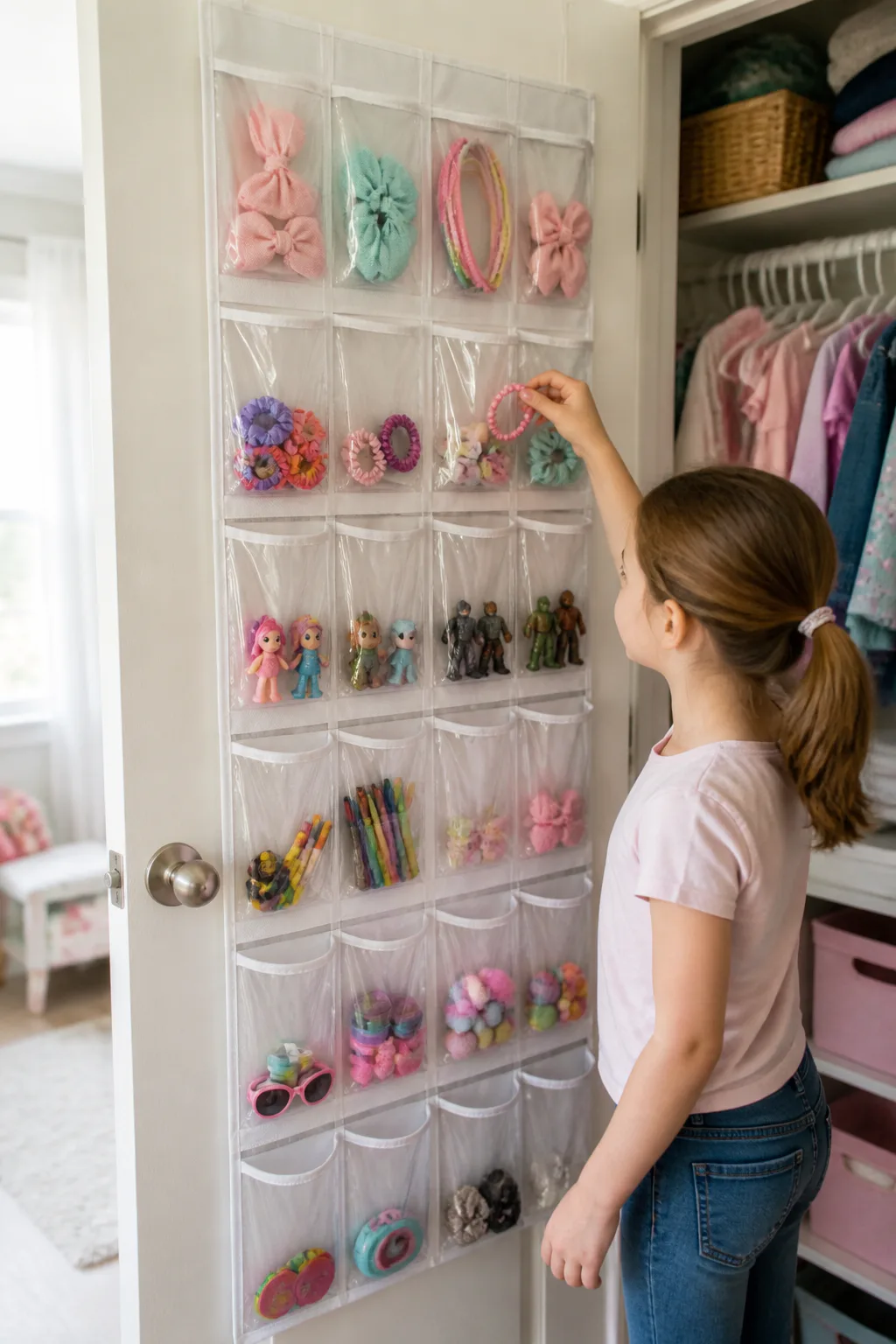
The back of a closet door is often unused space, but a pocket organizer can turn it into handy storage. Clear pockets are useful for small accessories and toys because children can see the contents, while fabric pockets can make the closet look calmer when items are tucked away.
This solution is a good fit for closets with limited shelf space or for families who want school and play items close to the clothes. Use it for lightweight items rather than heavy objects, and check that the organizer does not catch on the door frame or interfere with opening and closing.
Give each pocket a purpose
Choose a layout that suits what your child needs to reach. A few broad categories usually work better than filling every pocket with a different kind of small item, which can make it harder to maintain the system.
- Store hair accessories or small costume pieces together.
- Use pockets for art supplies or action figures.
- Keep school gear or lightweight accessories near the doorway.
- Place the most-used items in the easiest-to-reach pockets.
When the pockets are easy to see and access, small belongings are less likely to disappear into the closet floor.
7. Corner Shelves for Awkward Closet Space
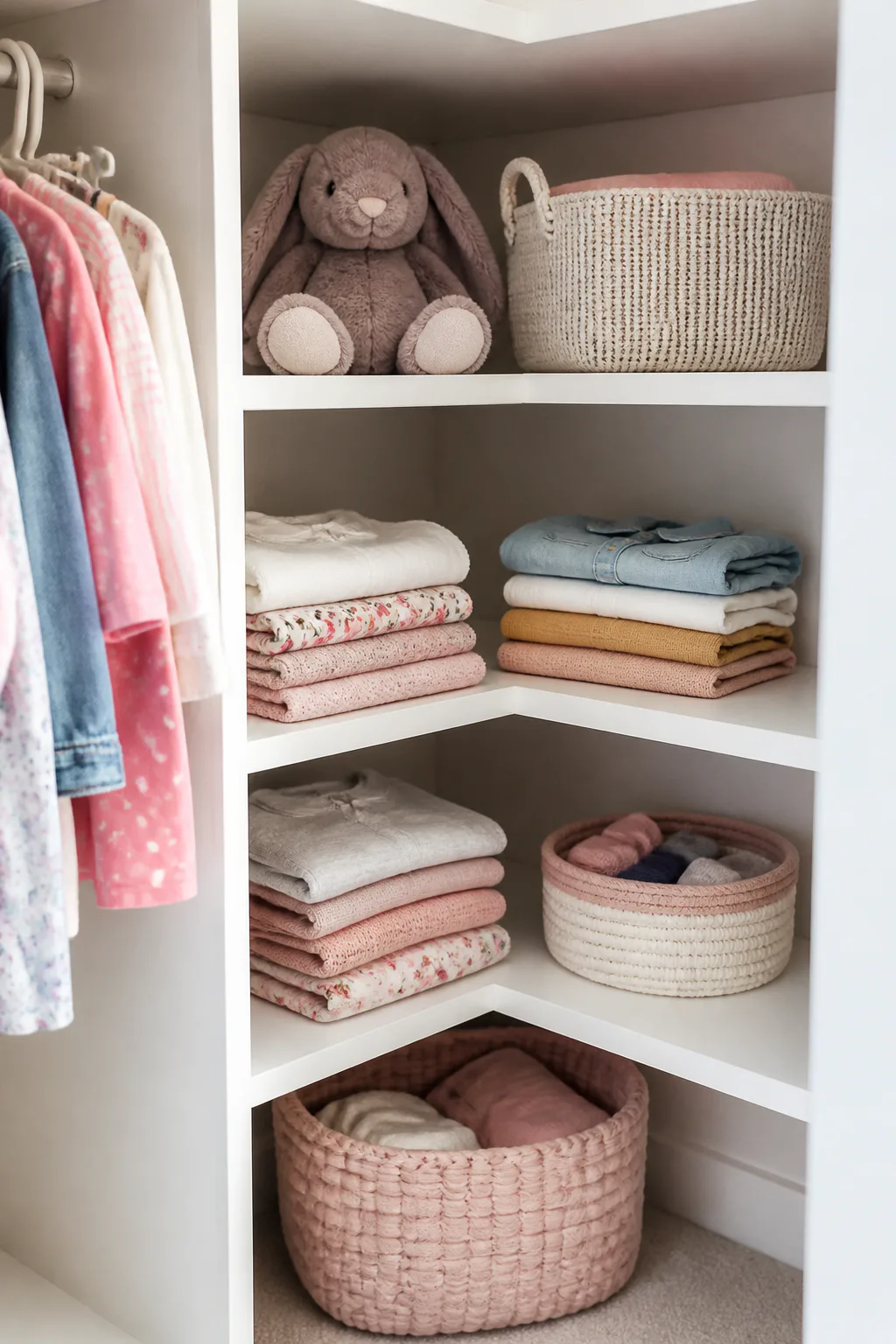
The back corner of a reach-in closet can be hard to use, especially when a standard shelf does not reach comfortably into the space. L-shaped shelves or a corner carousel can make that area more functional for folded clothes, stuffed animals, or items that do not need to be accessed every day.
Keep the most frequently used belongings toward the front or on a rotating shelf that is easy to reach. A corner is a natural spot for bulky toys or seasonal items, but it should not become a hiding place for things your child needs each morning.
Make the corner accessible
Measure the corner and the closet opening before choosing a shelf shape or carousel. Consider how far your child can comfortably reach, and avoid stacking items so high that they are difficult to take down without help.
- Use an L-shaped shelf for folded sweaters or small bins.
- Try a carousel for lightweight items that need regular access.
- Keep seldom-used toys or keepsakes toward the back.
- Leave the front of the shelf clear enough to reach in.
Making the corner useful can free up more visible shelves for everyday clothing and essentials.
8. Bookcase Cubbies Beneath the Hanging Clothes
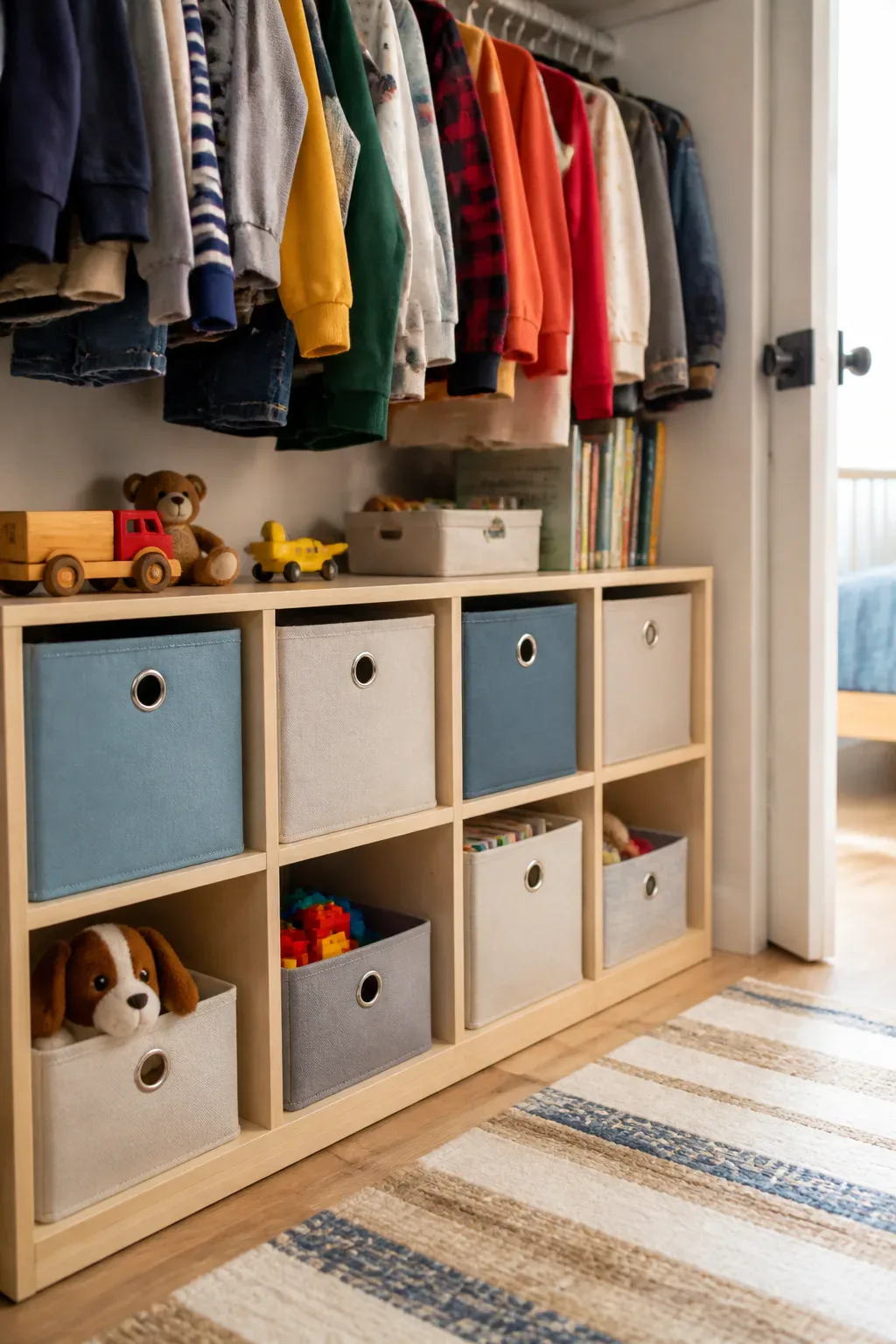
Bookcase-style cubbies can create a tidy landing place for toys and miscellaneous belongings beneath hanging clothes. Fabric cubes soften the look and conceal mixed items, while open wooden cubbies make contents easy to see. Either option can help keep the closet floor clear without using up the hanging space above.
This setup works best when the cubbies fit the width and depth of the closet and leave enough room for the door to open. It can also give a child a clear boundary between clothing storage and play or hobby items, which is helpful when a bedroom has limited storage elsewhere.
Assign each cube a simple job
Think about what tends to collect on the floor, then choose cubbies that suit those belongings. Use lightweight bins for small pieces and keep heavier objects on lower levels so items are easier and safer to retrieve.
- Use a fabric cube for stuffed animals or soft toys.
- Dedicate a cubby to building pieces or craft supplies.
- Keep books or games in a spot your child can reach.
- Label cubes if the contents are not easy to see.
A few well-chosen categories make the cubbies easier to maintain than one catchall pile.
9. A Backpack Hook Wall Inside the Closet

Sturdy hooks on a closet side wall can give backpacks, dance bags, hoodies, and caps a dependable home. Hanging bags keeps them off the floor and makes it easier to find school or activity gear when it is time to leave. It can also reduce clutter on bedroom hooks or furniture.
Place hooks at a height your child can reach, while leaving room for bags to hang without blocking shelves or clothing. If more than one child shares the closet, assigning each person a hook or a distinct area can make the routine clearer.
Install hooks for everyday use
Choose hooks that suit the items they will hold and mount them securely according to the hardware instructions. Check the swing of the closet door and the position of hanging clothes so a loaded backpack does not become an obstacle.
- Give each child a designated hook for a backpack.
- Use another hook for a dance or sports bag.
- Hang a frequently worn hoodie where it is easy to reach.
- Keep lighter caps on a separate hook or peg.
When bags have a consistent landing spot, the closet can support the school-day routine as well as clothing storage.
10. A Vertical Hat and Headband Hanger

A chain or clip hanger uses vertical space to organize hats and costume headbands. Instead of stacking accessories on a shelf where they can slide behind other items, you can hang them in a visible row. This can be especially helpful when a child likes to choose a hat or dress-up accessory as part of getting ready.
Hang the organizer from a closet rod or a suitable hook, and choose a spot that does not crowd everyday clothes. It can also work on the inside of a closet door if the organizer and door have enough clearance.
Keep accessories easy to browse
Use clips that hold items gently and are appropriate for their fabric or shape. Keep the most-used accessories within reach, and avoid overloading the hanger so children can remove one item without pulling down the rest.
- Clip baseball caps along the chain.
- Group costume headbands together for dress-up time.
- Keep delicate accessories on suitable clips or hooks.
- Sort by everyday use, team, or costume category.
Displaying accessories vertically can free a shelf while making favorite pieces easier to find and return.
11. A Shoe Display with Tiered Racks
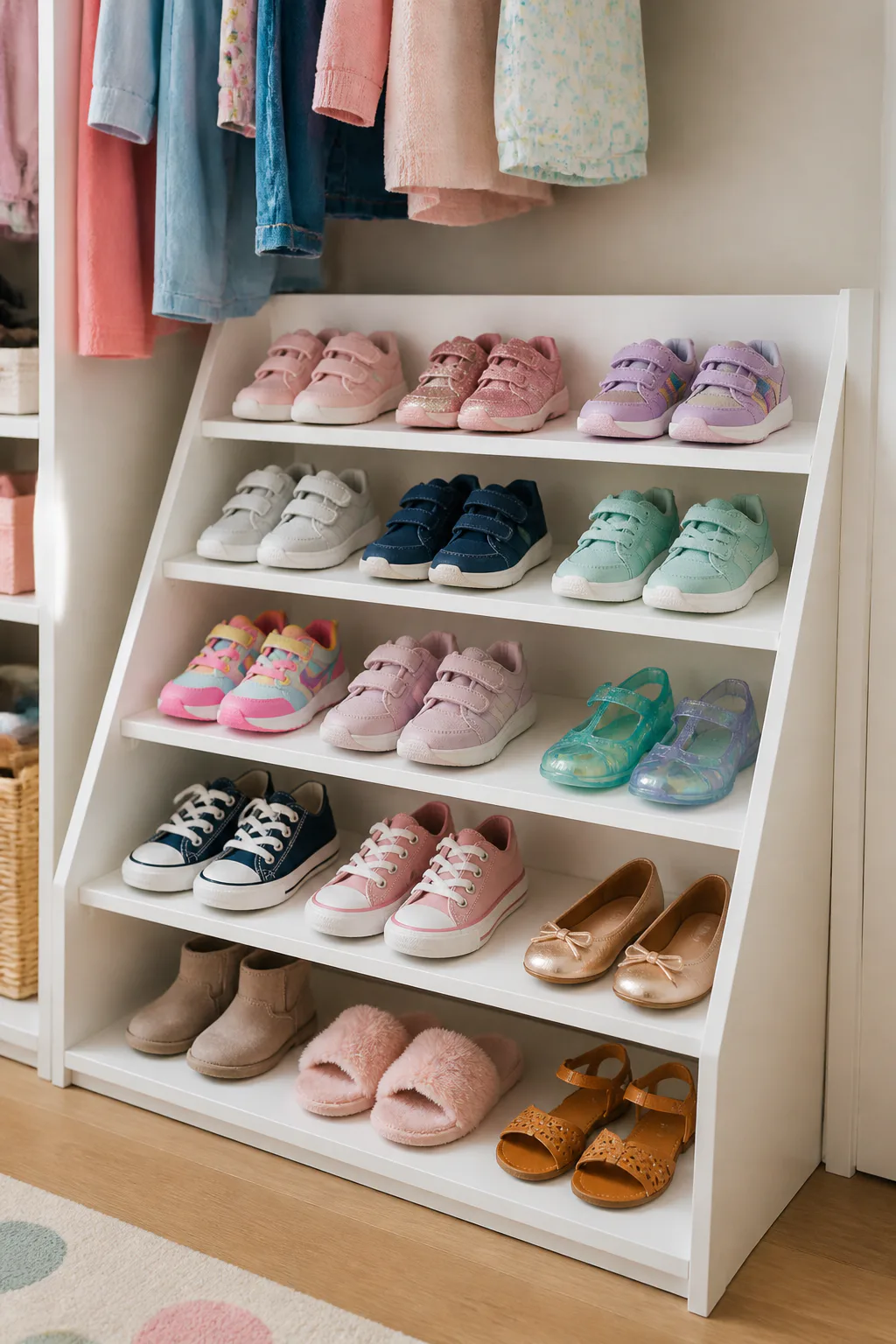
Tiered racks or slanted shelves can make a closet shoe area easier to scan. When pairs are lined up instead of buried in a heap, children can spot the shoes they want and put them back in the right place. A clear display also helps adults see which pairs are being worn regularly.
For a compact closet, a narrow tiered rack can fit beneath hanging clothes or near the doorway. Clear drop-front boxes are another option for shoes that need more protection or for pairs used less often, as long as the child can open and close them comfortably.
Make pairing and putting away simple
Choose a setup that matches the space and the child’s habits. Keep daily shoes on the lowest, easiest-to-reach level, and reserve higher shelves for occasional or out-of-season pairs.
- Place each pair side by side on a tier.
- Keep school and everyday shoes near the front.
- Use clear boxes for special-occasion or seasonal pairs.
- Leave enough room to return shoes without forcing them in.
A consistent display keeps pairs together and makes the closet floor less tempting as a shoe pile.
12. A Dresser Tucked Under a Short Rod

A compact dresser can fit beneath a short hanging section, bringing drawer storage and hanging space together in one part of the closet. This arrangement is useful when the bedroom has limited floor space or when you want everyday clothes gathered in one easy-to-use zone.
Use the rod above for shorter items such as shirts, jackets, or skirts, and reserve drawers for clothing that folds well. The combination can work in a walk-in closet or in a larger reach-in, provided the dresser does not block access to the rest of the closet.
Check the fit before arranging
Measure the available width and height, including the space needed to open drawers fully. Secure furniture as appropriate for the room and keep the top clear enough that it does not become an unstable stack of extra belongings.
- Store shirts, pajamas, or socks in the dresser drawers.
- Hang short tops and jackets on the rod above.
- Keep frequently used drawers within your child’s reach.
- Check that drawers clear nearby doors and bins.
When the pieces fit comfortably, this combo can make a small closet feel more complete without adding a separate storage zone elsewhere.
13. A Patterned Wallpaper Closet Backdrop

Peel-and-stick wallpaper on the back wall can give a closet a playful, finished look without changing the room’s main decor. A pattern adds color behind shelves and hanging clothes, making an everyday storage area feel more personal. It can be a fun way to involve a child in choosing a detail for their room.
Because the closet is a smaller area, a bold print can feel cheerful without taking over the whole bedroom. If the closet is already busy with colorful clothes and bins, a quieter pattern may feel more balanced; if the storage is simple, a brighter backdrop can become the focal point.
Prepare the wall and choose the pattern
Check the wallpaper instructions and make sure the wall surface is suitable before applying it. Plan around shelves and closet hardware, and test the placement so the most visible part of the pattern is not hidden behind stored items.
- Choose a print that complements the bedroom colors.
- Use a small repeat for a subtle backdrop.
- Try a bolder motif behind simple shelves.
- Keep storage in front of the pattern tidy enough to show it.
The result is a small design detail that makes opening the closet feel a little more special.
14. Motion-Sensor Lights for a Dark Closet

A dark closet can make it hard for kids to find clothes on shelves or see what is inside a bin. Battery-powered puck lights or motion-sensor light strips can brighten the space without relying on a nearby outlet. Better visibility can also help children return items to the right place instead of leaving them where they happen to land.
Place lighting where it illuminates the areas that are hardest to see, such as a high shelf or the back of a reach-in closet. Choose a setup that is easy for an adult to install and check, and keep lights and wires positioned safely away from clothing and anything that could snag.
Light the useful spots
Read the product instructions for placement and battery care, and check that the sensor responds when the closet door opens or someone enters. A warm or neutral light can make colors easier to distinguish without making the closet feel harsh.
- Put a light near the back of a deep shelf.
- Use a strip to brighten a row of hanging clothes.
- Test the sensor before settling on the placement.
- Check the batteries periodically as part of closet upkeep.
Thoughtful lighting makes the storage you already have more practical to use.
15. A Matching Row of Slim Velvet Hangers

Replacing mismatched or bulky hangers with slim velvet hangers can make a closet rod look more orderly and leave a little more room between garments. The textured surface helps lightweight clothes stay in place, which can mean fewer shirts slipping onto the floor. Hangers sized for children’s clothing also help small garments sit more neatly.
A matching set creates a calmer visual line, making it easier to see clothing choices instead of focusing on a jumble of hanger shapes. You do not have to change every hanger at once; start with the section your child uses most and see whether the setup works for the clothes they own.
Choose hangers for the clothing
Check that the hanger width suits the garments and that the hooks fit the closet rod. Some items, such as heavier coats or structured clothing, may need a sturdier hanger, so a uniform look does not have to mean using one type for every piece.
- Use child-sized hangers for small shirts and dresses.
- Keep heavier jackets on hangers designed for their weight.
- Group similar clothing together on the rod.
- Leave a little space so clothes are easy to remove.
A consistent row can make the closet simpler to browse and easier for a child to keep tidy.
16. An Outgrown-Clothes Donation Basket

A dedicated basket gives outgrown clothes a place to go as soon as someone notices they no longer fit. Without a landing spot, too-small shirts and pants can drift back into the everyday rotation or collect in a pile on a shelf. A labeled basket makes the decision visible and gives the family a simple way to separate those items from current clothes.
Choose a container that fits on a closet shelf or floor without blocking daily access. A breathable basket or open bin makes it easy to add items, while a clear label helps everyone understand that the contents are no longer part of the regular wardrobe.
Make the basket part of the routine
Encourage your child to mention when something feels too small, then move it directly into the basket rather than back onto a hanger. Check the contents periodically and decide whether items should be donated, passed along, or handled another way.
- Label the container “Outgrown” or “Donate.”
- Keep it separate from current-season clothing.
- Add items as they are noticed, not only during a closet cleanout.
- Sort the basket when it is full or during a seasonal reset.
This small habit helps keep the active wardrobe focused on clothes your child can wear now.
Final Thoughts
A functional kids’ closet does not need to be large or perfectly styled. Simple changes—like putting everyday items within reach, using labels, and making better use of vertical or awkward spaces—can make mornings smoother and tidying less overwhelming.
Start with the biggest frustration in your own closet, whether that is crowded hanging space, scattered shoes, or a floor covered in bags and toys. Add one solution at a time, then adjust the setup as your child grows and their routines change.