16 Clever Kids Closet Ideas for Easy Organization
A kid’s closet works best when the things they use every day are easy to see and reach. A few thoughtful changes can make room for clothes, shoes, toys, and books without asking children to navigate shelves designed for adults.
These ideas cover small reach-in closets as well as larger spaces, with options for making use of doors, closet walls, and the floor. You can try one or two simple storage swaps or combine several ideas to create a more complete setup.
Whether you’re organizing for a toddler, a growing school-age child, or siblings sharing a closet, focus on giving each item a clear home. When storage is visible and manageable, kids have a better chance of choosing outfits and helping with cleanup themselves.
1. Install Two Hanging Rods at Different Heights
Two hanging rods can make better use of a closet’s vertical space. A lower rod puts everyday shirts, dresses, and jackets within a child’s reach, while an upper rod can hold clothes they wear less often or pieces that are waiting for the next season.
This arrangement is especially useful in a closet with a single high rod and a wide open area below it. Instead of leaving that lower space empty, you create a second clothing zone and make the closet easier for a child to use independently.
Plan the two levels
Before installing anything, decide which clothes belong at each height and leave enough space beneath the lower rod for shoes, a hamper, or a small drawer unit. Keep the lower section uncluttered so a child can slide hangers along the rail without help.
- Use the lower rod for clothes worn most often.
- Reserve the upper rod for special-occasion or out-of-season pieces.
- Check that the lower rod is comfortably reachable.
- Keep a step stool out of the daily routine by storing everyday items low.
The result is a simple layout that gives each clothing category a clear place.
2. Add a Low Tension Rod for Costumes
A tension rod offers a flexible way to add hanging space without committing to a permanent installation. Position one low in the closet or along an open side to hold dress-up outfits, school clothes, or lightweight jackets that a child chooses often.
Because the rod can be set at a child-friendly height, it turns a tucked-away closet corner into a small, usable clothing zone. It can also separate special play clothes from the everyday wardrobe, making both easier to find and put away.
Choose a spot that stays useful
Measure the area before selecting a rod and make sure the surfaces can hold it securely. Avoid overloading a tension rod, and check its fit from time to time, particularly if children tend to tug on the clothes while choosing an outfit.
- Keep costumes together so accessories can be stored nearby.
- Use sturdy child-size hangers for easy handling.
- Leave space around the rod so clothes do not snag on shelves.
- Place favorite dress-up pieces at the easiest-to-reach end.
This small addition can make imaginative play easier to start and simpler to tidy up.
3. Turn the Closet Door into Pocket Storage
The inside of a closet door is often unused, even though it can hold plenty of small items. An over-the-door pocket organizer adds storage for socks, hair accessories, dolls, small toys, or other belongings that tend to disappear into drawers.
Clear or open pockets help children see what is inside at a glance. This makes the organizer useful for frequently reached-for items, while keeping them off shelves and away from the bottom of the closet where they can become mixed together.
Give each pocket a purpose
Choose an organizer that fits the door and does not prevent it from closing. Keep heavier items in lower pockets if the organizer’s design allows, and avoid filling every pocket just because it is available. A little breathing room makes things easier to take out and return.
- Dedicate pockets to socks, tights, or underwear.
- Group small accessories together instead of mixing them with toys.
- Use a few pockets for dolls or favorite small playthings.
- Keep fragile or heavy objects out of lightweight pockets.
A door organizer can add a useful storage layer without taking up floor or shelf space.
4. Replace Deep Shelves with Pull-Out Baskets
Deep closet shelves can hide folded clothes and toys at the back, making it hard for a child to see what is available. Pull-out wire baskets or canvas bins bring the contents forward, so little hands can browse without removing everything in front.
This approach works well for shelves that are too deep to use comfortably or for categories that tend to become jumbled, such as pajamas, play clothes, and soft toys. Slide-out storage also makes it easier to return items to their proper zone after use.
Make the contents easy to manage
Check the shelf measurements before choosing baskets, and leave enough clearance for them to slide smoothly. Use a separate container for each category rather than combining unrelated belongings in one large bin.
- Choose baskets that fit the shelf depth and width.
- Sort clothing by type, such as pajamas or playwear.
- Use open-top containers when children need to see contents quickly.
- Avoid packing baskets so tightly that they are difficult to pull out.
With the back of the shelf no longer out of reach, storage becomes easier to see and maintain.
5. Tuck a Small Dresser Beneath the Clothes Rod
A narrow dresser or cube organizer can fit beneath a lower hanging section, turning one part of the closet into a compact clothing station. It combines hanging storage with drawers or cubbies without needing a separate piece of furniture elsewhere in the room.
This layout can be especially helpful in a small bedroom where floor space is limited. Everyday tops, pajamas, or socks can go in the drawers, while a short row of hanging clothes stays visible above them.
Measure before you move furniture in
Check the width and depth of the closet, as well as the available height beneath the clothes rod. Make sure drawers can open fully and that the dresser does not block access to other storage. Keep the top surface clear enough for easy use.
- Store frequently worn clothing in the easiest drawers to reach.
- Use drawer dividers to keep smaller items from mixing.
- Choose a compact unit that leaves room to move clothes along the rod.
- Secure furniture as appropriate for the room and its placement.
A well-fitted dresser can make a closet feel like a small, organized dressing area.
6. Label Bins with Words and Picture Icons
Labels help children understand where belongings belong, especially when several bins look alike. Pairing a simple word with a picture icon makes the system easier for early readers to follow and gives children a visual reminder when it is time to put things away.
Use labels on shelves, drawers, or baskets for categories that are easy to recognize. The goal is not to label every object, but to make common storage zones clear enough that a child can sort items with less adult direction.
Keep labels simple and visible
Choose pictures that clearly match the contents, such as a sock icon for socks or a book for reading materials. Place each label where it can be seen even when the bin is on a shelf, and update it if the storage category changes.
- Combine a short word with an easy-to-understand picture.
- Use consistent labels for similar bins or drawers.
- Place labels on the front, not the top, of containers.
- Ask your child to help choose or recognize the icons.
Clear labels make a closet’s organization easier to learn and easier to keep up.
7. Create a Color-Grouped Clothing Rail
Arranging hanging clothes by color gives a closet a tidy, easy-to-scan look. It can help children spot a favorite shade quickly and make choosing an outfit feel more straightforward, especially when garments are already grouped by type.
You can sort clothing by color alone or combine color with categories such as shirts, sweaters, and dresses. This works best when the rail is not overcrowded, so each piece remains visible and children can move hangers without pulling out a whole section.
Pick a sorting method that makes sense
There is no need to create a complicated color sequence. Choose an order your child can recognize and keep it consistent when clean clothes are put away. If categories matter more for your family’s routine, group by type first and color within each group.
- Separate clothing types before arranging colors.
- Keep the most-used pieces in an easy-to-reach section.
- Use similar hangers where possible for a calmer visual line.
- Leave room between groups so the sections stay distinct.
A simple rail system can bring order to the closet without adding any new furniture.
8. Separate Clothing Sizes with Divider Rings
When a closet holds clothes in several sizes, it is easy for outgrown garments and next-size-up pieces to mix with everyday favorites. Labeled divider rings create clear sections along the rod, making it easier to see which clothes fit now and which are being saved.
This idea can be useful for growing children, shared closets, or families sorting hand-me-downs. The dividers help adults find the right size quickly, while also keeping the active wardrobe from becoming crowded with clothes that are not ready to wear.
Make each section easy to read
Use labels that match the sizing system on the garments, and arrange the sections in a practical order. Check the closet as children grow so that newly outgrown clothes can be moved out rather than left to crowd the current-size section.
- Mark each section with a clear size label.
- Keep currently worn clothing in the easiest-to-reach area.
- Use separate sections for hand-me-downs or future sizes.
- Review the arrangement when you rotate clothes seasonally.
Dividers bring a little structure to a rod that might otherwise become a mixed-size jumble.
9. Mount a Hook for Tomorrow’s Outfit
A single hook can create a useful landing spot for the next day’s clothes. Place it on the closet sidewall or door so an outfit can be chosen ahead of time and kept separate from the rest of the wardrobe.
This small routine may help busy mornings feel less rushed because the shirt, pants, and other pieces are already together. The hook can also hold a school outfit, a special-occasion set, or clothes that need to be worn before they go back into the closet.
Set up a simple outfit station
Choose a hook that is easy for your child to reach and position it where hanging clothes will not obstruct the door. A short valet rod can offer more room if one hook is not enough, but keep the area limited to the next outfit so it does not become another catchall.
- Pick a location that does not interfere with door movement.
- Lay out the full outfit, including socks or a sweater if needed.
- Use the hook for one planned outfit at a time.
- Let your child help choose clothes the night before.
A dedicated outfit spot can make choosing and getting dressed feel more predictable.
10. Fit a Laundry Hamper into the Closet Base
Dirty clothes are more likely to reach the hamper when it is close by and easy to use. An open-top or tilt-out hamper at the base of the closet gives children a clear place to put laundry as soon as they change.
Keeping the hamper inside the closet can also free up bedroom floor space. The best spot is one that does not block access to hanging clothes, drawers, or other items the child uses every day.
Make laundry easy to sort
Choose a hamper that fits the available floor area and is light enough to move when it needs to be emptied. For a child who is learning household routines, a simple open bin may be easier than a lid or a complicated sorting system.
- Place the hamper where a child can reach it comfortably.
- Keep the opening visible and unobstructed.
- Choose a size that fits the closet without blocking other storage.
- Use separate hampers only if your laundry routine benefits from them.
A convenient hamper helps turn cleanup into a simple part of getting changed.
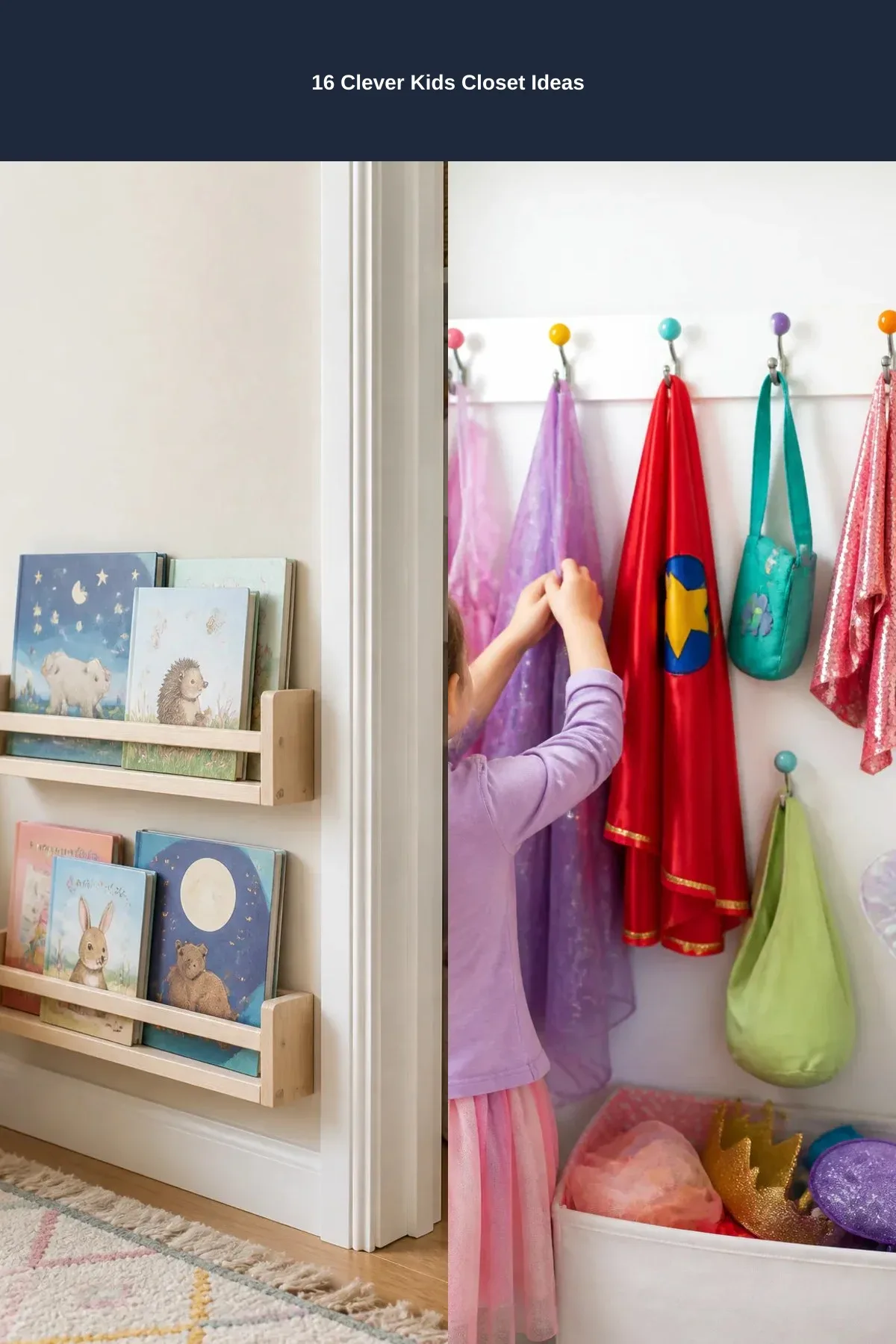
11. Add a Low Book Ledge Beside the Closet

A low book ledge inside the closet or beside its opening can give favorite bedtime stories a home of their own. Keeping a small selection within a child’s reach makes it easy to choose a book without searching through a tall bookcase.
This idea works well when the closet is near the bed or when the bedroom has limited wall space. A slim ledge can create a quiet reading zone without taking up much room, and it keeps books separate from clothes and toys.
Choose and arrange the books
Install the ledge at a height your child can use safely, and make sure it is securely mounted. Display only a manageable number of favorites so the shelf remains easy to browse and the books are not crowded together.
- Place the ledge near the bed if it supports a bedtime routine.
- Face a few covers outward to make choices visible.
- Rotate books occasionally to keep the selection fresh.
- Keep the ledge clear of clothing that could catch on it.
A small book shelf can turn an overlooked wall into a useful, calming part of the room.
12. Build a Dress-Up Hook Wall
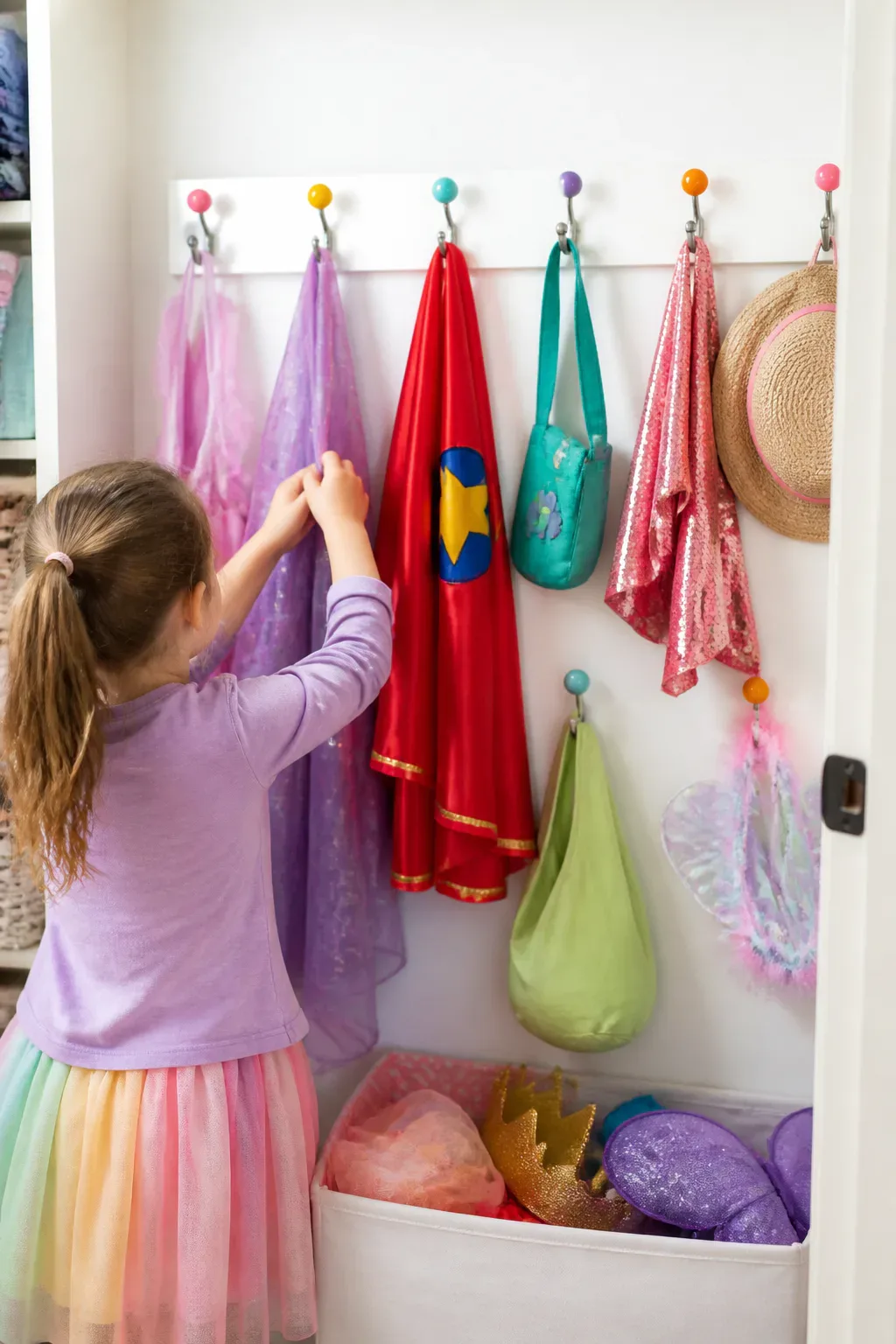
An empty closet wall can become a simple dress-up station with sturdy hooks for costumes, capes, bags, and accessories. Hanging these items keeps them visible and gives play clothes a designated spot instead of letting them collect on the floor or mix into everyday garments.
This setup can also make imaginative play easier to start. When costumes are easy to see and reach, children can choose what they want without digging through a box and can return each piece to its hook when playtime is over.
Arrange hooks for easy access
Mount hooks at a child-friendly height and space them far enough apart for garments to hang without tangling. Use secure hardware suited to the wall, and avoid placing heavy items where they could fall onto a child.
- Group costumes, bags, and accessories by type.
- Place the most-used pieces on the lowest hooks.
- Leave enough space for capes and dress-up clothing.
- Store small accessories in a nearby labeled container.
A hook wall gives dress-up items a visible home while making the closet feel more playful.
13. Create a Shoe Display with Open Cubbies
Shoes often end up in a floor pile when pairs do not have a clear place to go. Low open cubbies give each pair a home and let children see their choices without needing to open a box or move other shoes out of the way.
Clear drop-front shoe boxes are another option when you want to keep pairs protected while still making them visible. Either approach can work at the base of a closet, as long as the storage is low enough for a child to reach independently.
Keep pairs together
Choose cubbies or boxes that suit the shoes your child wears most often, and avoid storing every pair in the same small area. Frequently used shoes should be easiest to access, while special-occasion pairs can be placed farther back or higher up.
- Assign a cubby or box to each pair.
- Keep everyday shoes in the lowest, easiest-to-reach spots.
- Use clear storage when seeing the contents is helpful.
- Leave enough room to return shoes without forcing them in.
A defined shoe zone can make getting ready faster and keep the closet floor clearer.
14. Slide Toy Bins Beneath the Closet Shelves
The open space beneath a bottom closet shelf can be useful for bulky toys, stuffed animals, or building sets. Low-profile bins make it possible to store these items out of the main walking area while keeping them close enough for children to pull out during play.
Rolling bins are especially handy when a container is large or heavy, while simple low-sided bins work for lighter toys. The key is to choose a size that slides beneath the shelf without scraping or blocking access to other closet contents.
Match the bin to the toys
Sort toys by how they are used rather than placing everything in one container. A bin that is too full can be hard to move and makes it difficult to find the toys at the bottom, so leave a little room for children to put things away.
- Measure the clearance below the shelf before choosing bins.
- Use separate containers for different toy categories.
- Keep heavy toys in a bin that is easy to move safely.
- Label each bin with a word or picture when helpful.
Under-shelf bins use otherwise overlooked space and keep toys available without letting them take over the room.
15. Add Labeled Seasonal Bins to the Top Shelf
The highest closet shelf is a practical place for clothes that are not needed right now. Labeled tubs can hold out-of-season items, hand-me-downs, or special-occasion clothing, keeping them together while freeing lower storage for everyday use.
Since children usually cannot reach this shelf comfortably, it is best reserved for belongings an adult can retrieve during a seasonal change or closet reset. Clear containers can show what is inside, while written labels help identify the category without taking each tub down.
Store less-used items safely
Choose containers that fit the shelf and are manageable to lift down. Keep the contents organized by season, size, or child, and avoid placing a heavy tub in a position where it could be difficult to handle.
- Label each bin with its season, size, or contents.
- Store items that are not needed for the current routine.
- Use containers that fit securely on the shelf.
- Keep everyday clothes and supplies at child height instead.
Moving occasional-use clothing up high can make the rest of the closet simpler to navigate.
16. Install Shelving That Adjusts as Kids Grow
Children’s storage needs change as they grow, so adjustable shelving can help a closet keep working over time. A track-style modular system lets shelves and hanging sections move to suit changing clothing sizes, new interests, or a different mix of toys and accessories.
Unlike a fixed layout, adjustable components can be rearranged as a toddler becomes more independent or a school-age child needs room for longer garments. This makes the closet easier to adapt without having to start over every time the family’s storage needs shift.
Start with a flexible layout
Plan for both current use and possible changes, while keeping the items used every day within your child’s reach. Follow the system’s installation guidance and make sure shelves and rails are securely fitted before loading them with belongings.
- Use lower shelves for items your child reaches independently.
- Leave room to adjust hanging space as clothing changes.
- Keep less-used or seasonal storage higher up.
- Review the arrangement as your child’s routines evolve.
A flexible closet can grow along with the person who uses it.
Final Thoughts
A more functional kids’ closet does not have to mean a full renovation. Small changes such as adding a low hook, labeling bins, or moving daily clothes within reach can make the space easier for a child to use and easier for the whole family to maintain.
Start with the biggest source of daily frustration, then choose a storage idea that fits your closet and your child’s routine. As needs change, you can adjust the layout, rotate seasonal items, and keep the most-used belongings easy to see and reach.