13 Stunning Pink Bedroom Ideas for a Soft, Stylish Space
Pink can feel soft and welcoming, richly romantic, or crisp and modern—it all depends on the shade and how you use it. From a full-color backdrop to a few carefully chosen accents, there are plenty of ways to bring pink into a bedroom without making it feel overly sweet.
These ideas explore paint, wallpaper, textiles, furniture, and lighting, with options for both subtle updates and more noticeable changes. Some add pink to the walls or ceiling, while others let bedding, a chair, or a cozy reading nook do the work.
If you’re refreshing a main bedroom, guest room, or a smaller space, look for an idea that suits the room’s natural light and existing finishes. Use the suggestions as a starting point, then adjust the shade, pattern, and scale to create a bedroom that feels personal and comfortable.
1. Wrap the Bedroom in Soft Blush Walls
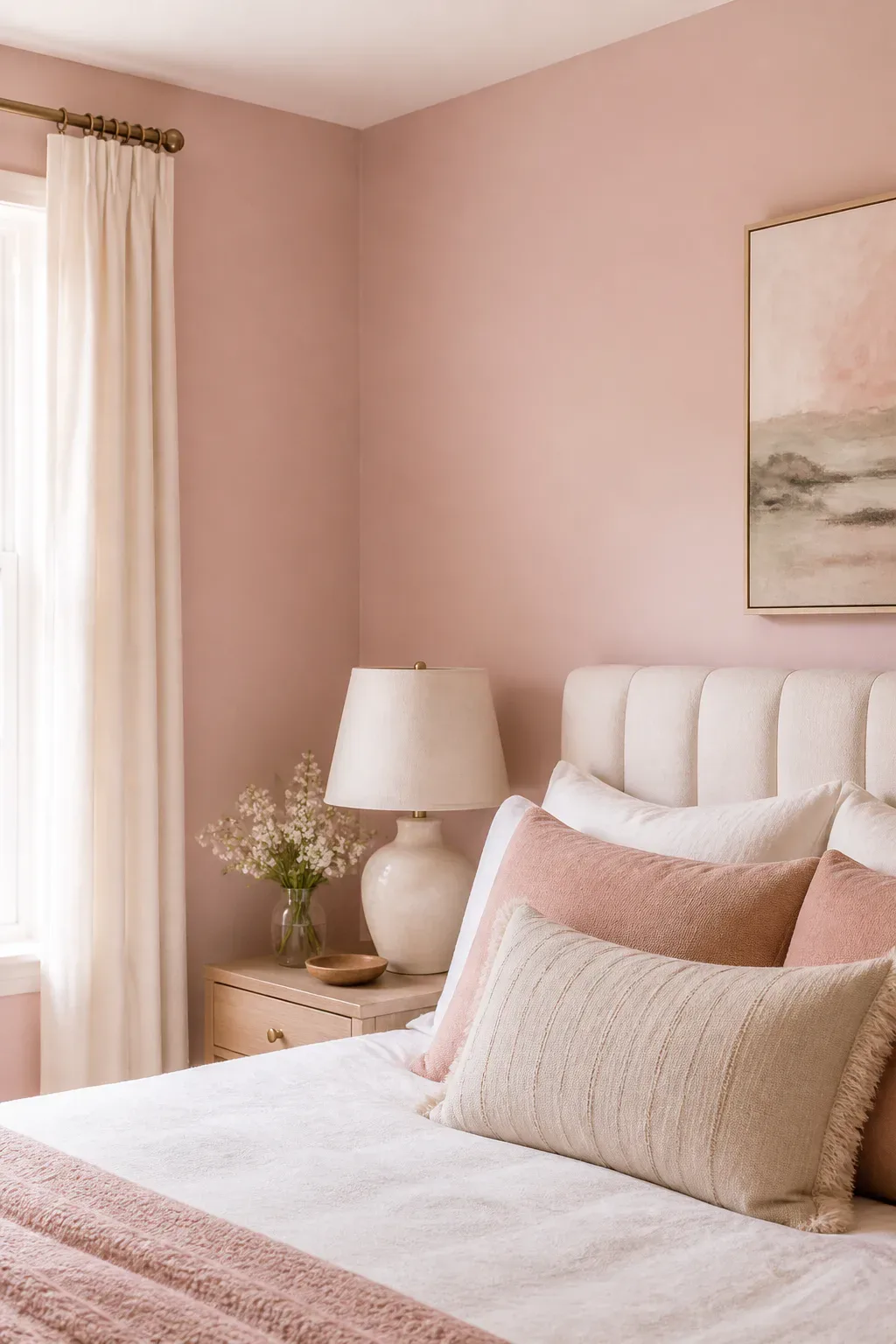
Warm, muted blush paint can make a bedroom feel gently enveloping without the intensity of a brighter pink. Used across all four walls, it replaces stark white with a soft backdrop that feels inviting from morning to evening. The effect works especially well in a room where you want the walls to bring warmth while still letting furniture and artwork stand out.
Keep the overall palette balanced by pairing blush with cream, natural wood, or soft gray. White bedding gives the room a fresh note, while deeper rose or brown accents add contrast. If the bedroom is small, repeat a few light colors in the curtains and larger furnishings so the pink feels cohesive rather than visually busy.
How to pull it off
Test paint samples on more than one wall before committing. Blush can look warmer or cooler as daylight changes, and nearby flooring or fabrics can influence how the color reads.
- Choose a muted, warm pink rather than a highly saturated shade.
- Pair the walls with cream bedding or light-colored linens.
- Bring in wood, woven textures, or a soft neutral rug for balance.
- Repeat one deeper pink accent in a cushion or piece of art.
2. Add Dusty Rose Wainscoting
Dusty rose wainscoting gives the lower half of a bedroom wall color and structure, while a crisp cream upper wall keeps the room feeling open. The combination is a practical way to add pink without covering every surface. It also brings a classic, tailored quality that suits traditional bedrooms, cottage-inspired spaces, and simple rooms that could use more architectural detail.
The division between colors can help the walls feel considered, especially when the trim has clear lines and the two shades have enough contrast to read separately. Keep the rest of the room relaxed with plain bedding or a small-scale pattern. A wood nightstand or neutral upholstered bed can add warmth without competing with the wainscoting.
Design tips
Plan the height of the paneling in relation to the furniture and room proportions. A continuous line behind the bed and around the rest of the room often creates a more settled look than a short, isolated panel.
- Use a dusty, softened rose for a more grounded effect.
- Choose cream or warm white for the upper wall.
- Carry the wainscoting around the room for a unified finish.
- Keep nearby artwork and bedding simple enough to let the wall detail show.
3. Paint the Ceiling Warm Salmon Pink
A warm salmon or soft coral ceiling turns an often-overlooked surface into an unexpected focal point. Because the color sits above the bed and furniture, it adds personality without taking up visual space on the walls. In a bedroom, this overhead color can create a more intimate, cocoon-like feeling, especially when the rest of the palette is calm and cohesive.
Salmon pink pairs naturally with warm white walls, cream bedding, and natural wood. For a more expressive look, repeat a related shade in a cushion or artwork rather than trying to match every accessory exactly. If the room already has a strong wall color or busy wallpaper, a quieter ceiling treatment may help keep the overall scheme from feeling crowded.
Before you paint
Look at the ceiling color at different times of day, since overhead light and daylight can change how warm it appears. A sample is helpful before you commit to painting the whole surface.
- Keep the surrounding walls light for clear contrast.
- Use warm, complementary colors in bedding and wood finishes.
- Consider how the ceiling color will look with existing light fixtures.
- Repeat salmon in one or two small details to connect the palette.
4. Frame the Walls with Pink Panel Molding
Panel molding creates a sense of architectural depth, and painting it in a tonal pink palette makes the detail feel integrated rather than added on. Rectangular or geometric frames can give a flat wall more rhythm, turning the bed wall into a considered backdrop even when the room has few decorative features. This approach suits both classic rooms and more contemporary spaces, depending on the molding shape.
For a subtle effect, use a single soft pink across the wall and molding so the shadows provide most of the contrast. A slightly different tone between the panels and the surrounding surface can make the geometry more noticeable. Keep large furnishings relatively simple so the wall’s lines remain easy to see.
How to plan the panels
Map the design before installing or painting, taking the bed, nightstands, and nearby doors or windows into account. Balanced spacing helps the molding feel intentional and prevents the furniture from obscuring the main shapes.
- Choose simple rectangular frames for a classic look.
- Use geometric layouts when you want a more modern feel.
- Paint the molding and wall in related pink tones for a tonal finish.
- Keep bedding and artwork restrained if the panel pattern is prominent.
5. Pair Mauve Walls with Striped Bedding
Deep mauve walls create a rich, restful foundation for a bedroom, while striped or patterned linen bedding keeps the scheme from feeling flat. The key is to build dimension with variations in tone and texture rather than relying on one solid shade of pink. This tonal approach can feel sophisticated and cozy, making it a good fit for a bedroom where you want color without a high-contrast look.
Try bedding that includes cream, soft rose, or a deeper mauve stripe to link the bed to the walls. Natural linen adds a relaxed texture, while a smooth quilt or folded blanket can introduce a different finish. If the room has limited daylight, balance the darker wall color with light bedding and curtains to keep the bed area from feeling too heavy.
Layer the color thoughtfully
Start with the wall shade, then choose bedding that offers both a light contrast and a related pink tone. The pattern can be bold or subtle; what matters is that it adds movement without overwhelming the room.
- Use cream or pale bedding to brighten the mauve walls.
- Choose stripes or patterns that repeat at least one room color.
- Mix linen with a quilt, throw, or textured cushion.
- Add a warm wood or neutral element to keep the palette grounded.
6. Ground Pink Decor with Olive Green Accents
Olive or sage green brings an earthy counterpoint to pink, making the palette feel more balanced and less sugary. The contrast works through color as well as mood: pink adds softness, while green introduces a grounded, natural note. You can use this pairing in a room with pink walls or keep pink mostly in the bedding and accessories.
Green does not have to appear in large quantities to make a difference. A velvet chair can create a clear focal point, while pillows, a throw, or leafy plants offer smaller touches. In a bedroom with a strong pink feature, use green sparingly; if the pink is pale and neutral, a larger olive accent can give the scheme more depth.
Ways to bring in green
Consider the shade of pink already in the room when choosing green. Dusty rose works well with muted olive, while pale blush can take either soft sage or a deeper, more pronounced green.
- Add olive or sage pillows to a pink bedspread.
- Use a green velvet chair to define a reading or dressing corner.
- Bring in potted plants for a natural variation in color and texture.
- Repeat green in a small piece of art or a bedside accessory.
7. Choose a Patterned Upholstered Headboard
A patterned upholstered headboard gives the bed a distinct focal point and introduces pink through fabric rather than paint. Floral, botanical, or geometric designs can all work, particularly when they combine rose and cream with one or two supporting colors. This is an easy way to make the bed feel more finished while keeping the walls neutral or understated.
The pattern’s scale makes a difference. A larger motif can feel expressive against plain walls, while a smaller print may blend more quietly into a layered room. To avoid visual competition, choose simple bedding that picks up one or two colors from the headboard, then add texture with a quilt or cushions rather than another strong pattern.
Make the headboard the focal point
Think about how much of the fabric will show once the bed is made. The headboard should stand out clearly, so let its colors guide the surrounding linens and keep nearby wall decor from crowding the design.
- Choose rose and cream as a starting point for the fabric palette.
- Use plain bedding when the headboard pattern is bold.
- Repeat one accent color in a cushion or throw.
- Keep nightstands and lamps simple enough to support the focal point.
8. Stripe the Wall Behind the Bed
Wide, soft-pink vertical stripes on the bed wall draw attention toward the ceiling and give the sleeping area a clear visual anchor. Painting or papering just this wall adds pattern without wrapping the entire room in it. The approach can suit a narrow bedroom, where vertical lines help the wall feel taller, or a more neutral room that needs a little color and movement.
Keep the stripes broad and the colors gentle if you want a calm, bedroom-friendly result. Pink paired with warm white or cream feels softer than a high-contrast combination. Since the bed wall will be prominent, choose bedding that relates to the stripe colors but does not repeat the exact pattern too heavily.
Keep the pattern balanced
Decide whether you want a painted finish or wallpaper, then consider the placement of the bed and any wall-mounted lights. Even spacing and clean edges help the stripes look deliberate and tailored.
- Use soft pink with cream or warm white for low-contrast stripes.
- Apply the pattern to the bed wall rather than every wall.
- Choose bedding in solid colors or a smaller, quieter print.
- Align the stripe layout with the bed to create a composed focal area.
9. Create a Gingham Bed-Wall Backdrop
Pink-and-white gingham wallpaper brings a gentle, familiar pattern to the bed wall. Used on one surface and framed with white trim, it can feel charming and tailored rather than overly decorative. The look is especially suited to cottage-inspired bedrooms, but simple furniture and restrained accessories can make it work in a more modern setting too.
Keep the rest of the room from competing with the grid. Solid bedding, a simple headboard, and a limited number of accent colors let the gingham remain the main pattern. If you already have patterned curtains or rugs, check how their scale and colors interact with the wallpaper before committing to the full bed wall.
Style the gingham simply
Let the pattern define the room’s color direction. Pink details elsewhere can connect the wallpaper to the rest of the space, while white trim gives the wall a crisp boundary and a finished look.
- Use gingham on the bed wall for a contained feature.
- Frame the wallpaper neatly with white trim.
- Choose mostly solid bedding in white, cream, or soft pink.
- Keep other large patterns limited so the room feels restful.
10. Pair Floral Wallpaper with Velvet Drapes
Dusty-pink floral wallpaper and floor-to-ceiling velvet drapes make a bedroom feel dramatic and richly layered. The floral pattern brings softness and a vintage note, while plum or rose velvet adds depth and a sense of occasion. This combination works especially well when you want the walls and windows to feel like part of one coordinated design rather than separate features.
To keep the effect from becoming too heavy, use the wallpaper and curtains as the main statement, then simplify the bed and furniture. Cream linens can lighten the composition, and a restrained accent color can connect the curtain tone to the floral print. Consider the room’s natural light and existing finishes when choosing between a deeper plum and a softer rose.
Balance pattern and weight
Because both wallpaper and velvet attract attention, give each enough room to be appreciated. Let the floral print guide the curtain color, but avoid requiring an exact match; a related shade often creates a more relaxed result.
- Choose dusty-pink blooms for a soft, vintage-inspired backdrop.
- Use plum or rose velvet to add contrast and texture.
- Keep bedding relatively plain to calm the pattern mix.
- Repeat one wallpaper or curtain color in a small accessory.
11. Style a Blush Chair with Cherry Accents

A curved blush bouclé chair paired with cherry-red accents creates a playful, modern-glam corner. The chair brings a soft shape and tactile surface, while small red details add a lively contrast to the pale pink upholstery. This combination is useful when you want to introduce pink through furniture rather than making a larger change to the walls or bedding.
Place the chair where it can be used, such as near a window or in an open corner, and keep the surrounding area uncluttered. Cherry accents can come from decorative objects or art, so there is no need to repeat the color everywhere. A neutral rug or light wood side table can help the chair feel connected to the room rather than like an isolated statement piece.
Build a small accent zone
Use the chair as the anchor, then add just enough detail to make the corner feel intentional. A nearby lamp or small table can make it more functional without taking attention from the upholstery.
- Choose a curved blush chair with a soft, textured finish.
- Add cherry red through art, a small object, or a cushion detail.
- Place a side table or lamp within easy reach of the seat.
- Keep larger surrounding surfaces neutral for balance.
12. Build a Pink Window-Seat Reading Nook
A window seat turns an unused stretch beneath the window into a comfortable place to read, rest, or enjoy natural light. A light-pink linen cushion carries the bedroom palette into the nook, while neutral pillows keep the small area from feeling too coordinated. This idea works in a built-in seat or on a bench that fits beneath the window.
Make comfort the priority: the cushion should fit the seat, and the pillows should support the way you plan to use the space. Nearby curtains can echo the pink without matching it exactly. If the window seat is part of a small bedroom, choose a simple palette and avoid overcrowding it with accessories so it remains an inviting place to sit.
Make the nook practical
Think about how the seat will be used and what it needs close by. A small surface for a book or drink can make the corner more useful, while soft textures help distinguish it from the rest of the room.
- Choose a light-pink linen cushion for a relaxed finish.
- Layer in neutral pillows for comfort and contrast.
- Add a nearby table or a basket for reading materials.
- Keep the window area clear enough to enjoy the light.
13. Illuminate Bed-Wall Art with Pink Lighting
Lighting can draw attention to statement art above the bed and add a final layer to a pink bedroom scheme. A subtle neon-pink light creates a more playful, contemporary mood, while a brass picture light offers a quieter, polished way to highlight the artwork. Either option gives the bed wall a focal point after dark without requiring another major change to the room.
Choose the lighting style to suit the art and the rest of the bedroom. A neon detail stands out best against a simple backdrop, while brass can complement warmer pinks, wood, and traditional finishes. Keep the light comfortable for a sleeping space, and make sure it highlights the art rather than overwhelming the bed or the wall around it.
Choose the right glow
Before installing a fixture, consider its scale, placement, and how it will look when the room is in use. A small, carefully positioned light can make the artwork feel intentional while preserving a restful atmosphere.
- Use subtle neon pink for a playful, modern accent.
- Choose a brass picture light for a more classic finish.
- Center the lighting with the artwork for a balanced display.
- Keep nearby decor simple so the art remains the focus.
Final Thoughts
Pink can shape a bedroom in many ways, from soft blush walls and dusty rose paneling to patterned wallpaper, colorful upholstery, and thoughtful lighting. If you are unsure where to begin, start with one feature you genuinely love, then build around it with a few related colors and comfortable textures.
Whether you prefer a calm, neutral room or a more dramatic mix of florals and velvet, the best pink bedroom is one that feels right for your home. Test colors in the room, consider how patterns work together, and make space for practical details that help you enjoy the finished design every day.