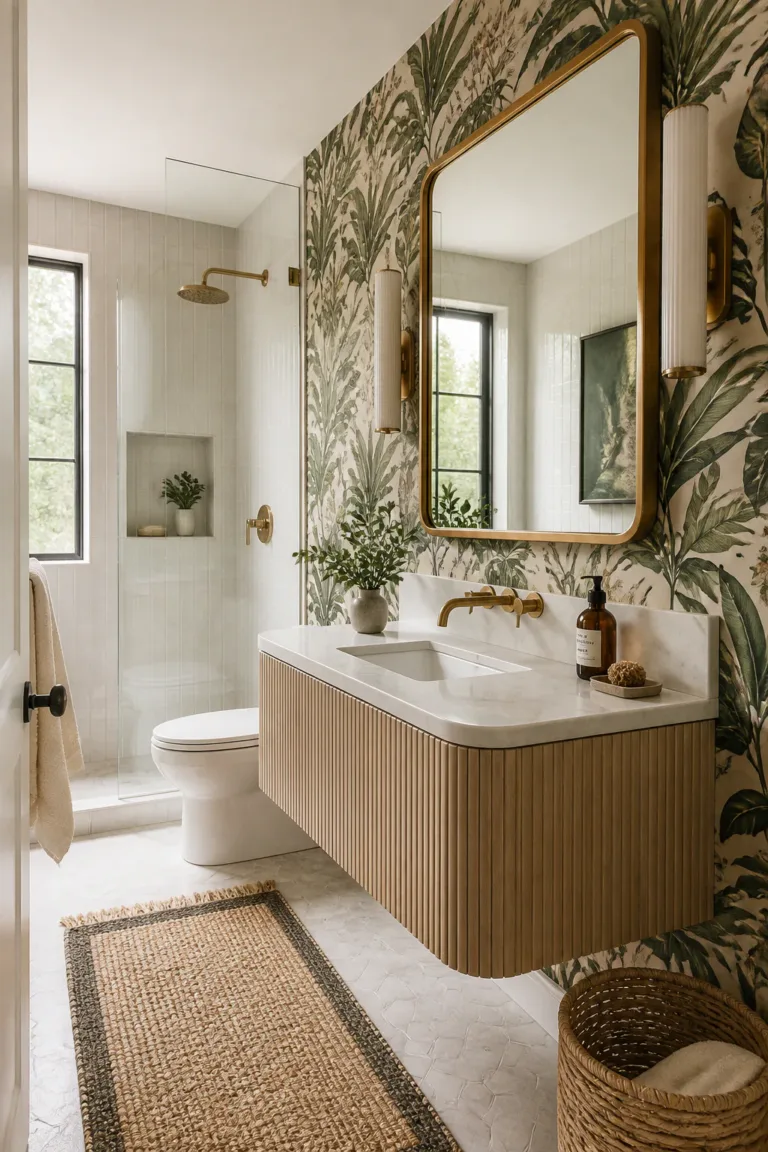
13 Beautiful Neutral Bathroom Ideas for a Calm, Cozy Retreat
Neutral bathrooms can feel calm and inviting without becoming plain. The secret is to layer warm colors, natural materials, gentle contrasts, and varied textures so the room has depth while its palette stays soft.
These ideas range from larger renovation choices, like stone walls and a freestanding tub, to easier finishing touches, like woven storage and warm lighting. You can use one as a focal point or combine a few for a more cohesive look.
Whether you’re refreshing a powder room or planning a full bathroom remodel, consider the room’s natural light, storage needs, and existing finishes before choosing materials. The ideas below will help you create a neutral bathroom that feels practical, personal, and restful.
1. Wrap the Bathroom in Warm Travertine
Beige or cream travertine brings natural variation to a bathroom while keeping the overall look quiet. Its subtle markings and earthy undertones make walls feel richer than a flat painted surface, creating a spa-like backdrop around a vanity, tub, or shower.
Using the stone across more than one surface can make the room feel enveloping, especially when the floor and walls share a similar tone. If full stone coverage isn’t right for your space, use it on a feature wall or inside the shower and let painted walls provide a visual pause.
How to bring out the stone’s warmth
Balance the finish with simple shapes and a few contrasting textures. Before committing, look at samples in your bathroom’s actual lighting, since natural stone can read differently beside daylight and warm bulbs.
- Choose cream or beige tones that work with your existing floor and countertop.
- Pair the stone with wood, linen, or another soft natural material.
- Use a suitable sealer and follow care guidance for the specific stone.
A restrained palette lets the stone’s organic pattern provide the interest.
2. Pair a Floating Oak Vanity with Cream Counters
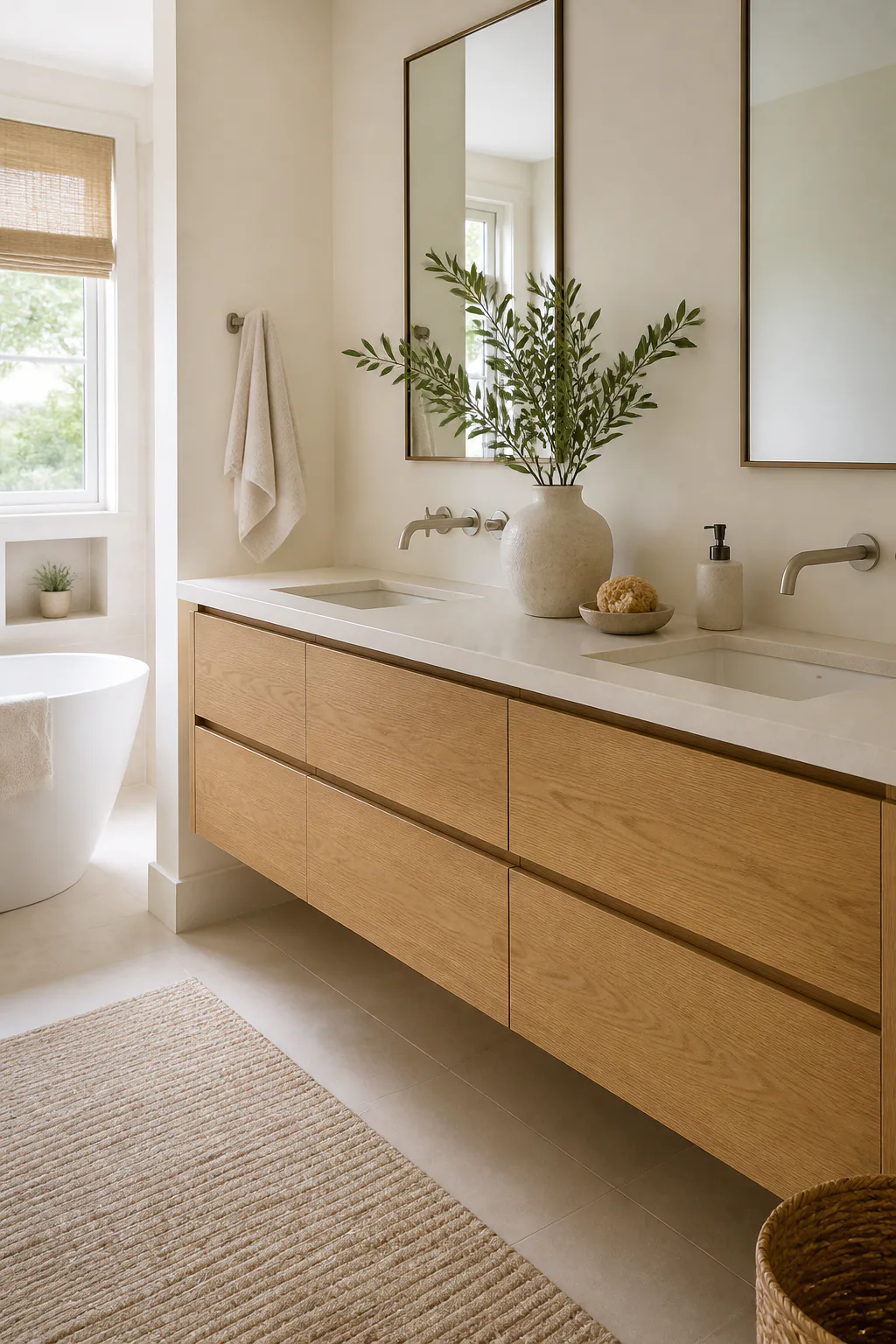
A floating oak vanity gives a neutral bathroom a natural focal point without making the room feel heavy. The visible floor beneath the cabinet helps preserve an open impression, while the wood grain brings warmth to pale walls and tile.
A cream or soft-white countertop keeps the combination light and easy to coordinate. This pairing works especially well against beige, ivory, or warm gray finishes, and can suit both a compact bathroom and a larger primary suite.
Plan the proportions and finish
Think about how the vanity will function as well as how it looks. A wall-mounted cabinet needs appropriate support and careful plumbing planning, and the open space below may mean some storage has to be organized elsewhere.
- Select a wood tone that complements nearby flooring or shelving.
- Choose a countertop with a warm cast if stark white feels too cool.
- Plan drawers around everyday items to keep the counter uncluttered.
- Consider a wall-mounted faucet if it suits the sink and installation.
The mix of oak and cream creates a simple foundation for changing towels and accessories over time.
3. Add Brushed Brass to a Soft Neutral Bathroom
Brushed brass adds a gentle golden note to a bathroom filled with cream, beige, or taupe. Unlike a high-shine finish, its softer surface can feel understated, giving faucets, cabinet pulls, and lighting a little presence without making them dominate the room.
Warm metal works particularly well beside natural wood, stone, and creamy tile. Repeating it in a few places helps the room feel considered, while using it sparingly keeps the palette calm and prevents every fixture from competing for attention.
Use warm metal with intention
Choose the main fixtures first, then decide where a smaller repeat will help tie the room together. Finishes can vary between manufacturers, so compare samples when possible rather than assuming every brass tone will match exactly.
- Try brass on the faucet and cabinet pulls for a coordinated starting point.
- Repeat the finish in a sconce, mirror detail, or towel hook.
- Pair it with warm whites and wood rather than adding many competing metals.
- Check cleaning recommendations to keep the finish looking its best.
A few warm accents can make neutral surfaces feel more welcoming and layered.
4. Create a Cream Zellige Tile Feature Wall

Cream zellige tiles add texture through their handmade-looking surfaces and slight variations in tone. Even when the color is close to the surrounding walls, small differences in sheen and shape catch the light and give the bathroom a more tactile feel.
A feature wall behind the vanity can bring interest to a simple layout, while tile in a shower can make a practical surface feel special. The look is most effective when the rest of the room stays relatively quiet, allowing the tile’s irregularity to be the main pattern.
Keep the surrounding finishes simple
Before installation, review how the tile looks under both daylight and bathroom lighting. Its surface variation is part of the appeal, but grout color and layout will also affect how prominent the finished wall feels.
- Use a cream or alabaster shade that complements nearby stone and paint.
- Choose a grout tone that supports the subtle, varied appearance.
- Consider a vanity wall if you want texture without tiling the whole room.
- Ask your installer about the tile’s care and suitability for wet areas.
The result adds character while keeping the bathroom firmly within a soft neutral palette.
5. Style a Natural Woven Hamper and Linen Display

Woven baskets and soft linens are an approachable way to warm up a neutral bathroom without changing its fixed finishes. Seagrass, rattan, or other woven textures break up smooth tile and cabinetry, while beige towels keep the overall palette cohesive.
This idea works beside a vanity, under open shelving, or in a corner where a laundry hamper is already needed. A tray can corral smaller items on the counter, making everyday essentials feel organized rather than scattered.
Make texture useful, not cluttered
Choose storage pieces that suit the room’s actual routines and available space. In a bathroom, materials may be exposed to humidity and splashes, so place natural fibers where they can stay reasonably dry and easy to clean.
- Use a lidded woven hamper to keep laundry contained.
- Arrange folded beige towels on an open shelf or in a basket.
- Place a seagrass tray on the vanity to group daily necessities.
- Leave some surfaces clear so the added texture does not feel busy.
These simple layers make a bathroom feel lived-in while helping everyday items find a place.
6. Frame a Cream Shower with Matte Black
A matte black shower frame gives definition to a bathroom with soft cream or sand-toned finishes. The contrast outlines the glass and adds a crisp architectural detail without requiring a bold wall color or a busy pattern.
This pairing can work in a walk-in shower or around a glass enclosure, especially when the rest of the room uses warm, uncomplicated materials. A little black elsewhere—such as on a handle or hook—can make the frame feel connected to the design rather than like a one-off accent.
Balance contrast with warmth
Let the neutral finishes remain the larger visual story, using black as a precise outline. Consider how the frame relates to other metals and hardware, and check that the chosen glass and enclosure suit the room’s layout and cleaning needs.
- Pair the frame with cream tile, beige stone, or warm paint.
- Repeat black in a small detail, such as a hook or cabinet pull.
- Keep nearby patterns restrained so the frame remains easy to read.
- Choose shower hardware that coordinates with the overall finish plan.
The result is a neutral bathroom with a little extra structure and contrast.
7. Hang an Oversized Backlit Round Mirror
A large round mirror softens the straight lines of tile, cabinetry, and shower glass. Its curved outline makes a useful focal point above the vanity, while a backlit edge adds a gentle glow that can make the space feel calm in the evening.
The mirror can also help a small bathroom feel less visually crowded by reflecting light and opening up the view. For the most cohesive effect, choose a size that relates to the vanity rather than overwhelming it, and make sure the mirror is positioned comfortably for everyday use.
Choose a mirror that suits the routine
Backlighting creates atmosphere, but it may not provide all the illumination needed for grooming. Think of it as one layer in a lighting plan, and check the mirror’s power requirements and installation details before placing it.
- Center the mirror over the sink or vanity for a balanced arrangement.
- Leave suitable room for faucets, shelving, or a nearby ceiling fixture.
- Use separate task lighting if you need clearer light at the mirror.
- Coordinate the mirror’s edge and shape with the room’s other finishes.
A circular silhouette adds softness while the diffused light supports a restful mood.
8. Install Taupe Tongue-and-Groove Wainscoting
Taupe tongue-and-groove wainscoting gives a bathroom architectural detail without relying on a strong color or decorative tile. Vertical lines add subtle rhythm to the lower walls, and a muted greige or cashmere shade brings warmth beside white fixtures and pale stone.
This treatment can work along a vanity wall or around the room, depending on the layout and the look you want. It is especially useful when a bathroom feels flat but doesn’t need another patterned surface.
Prepare the walls for a bathroom setting
Moisture is an important consideration when adding paneling. Choose materials and finishes appropriate for the location, and plan the height and trim so the detail feels intentional alongside the mirror, sink, and any existing tile.
- Test taupe paint samples beside the room’s fixed finishes.
- Use vertical boards to draw the eye upward in a compact room.
- Keep paneling away from direct water unless the system is suitable.
- Finish the top edge neatly with trim that suits the room’s style.
The added line and texture make neutral walls feel more tailored and complete.
9. Lay a Tonal Neutral Terrazzo Floor
Tonal terrazzo brings a quiet pattern underfoot through chips of cream, beige, and soft gray. It has more visual movement than a plain floor, but a restrained mix of colors keeps the bathroom feeling serene rather than busy.
The floor can become the main patterned surface in a room with simple walls and cabinetry. Because terrazzo draws the eye downward, it can also help ground a floating vanity or a light-colored tub without adding a dark, heavy finish.
Build the palette around the floor
Look at a floor sample beside your intended wall tile, countertop, and paint. The size and contrast of the chips will affect how noticeable the pattern feels, so choose a version that supports the calm mood you want.
- Pick chips in tones already present in the room’s finishes.
- Keep wall patterns simple if the floor has noticeable variation.
- Check slip resistance and maintenance guidance for the product.
- Use a sample to see how the surface reads in the room’s lighting.
A subtle terrazzo floor adds personality while staying easy to pair with neutral decor.
10. Make a Matte White Tub the Room’s Centerpiece
A freestanding matte white tub can anchor a bathroom through its shape rather than color. Its sculptural outline stands out against a quiet backdrop of cream tile, beige walls, or natural stone, creating a focal point that still feels restful.
This idea is best suited to a layout with enough space around the tub for comfortable access and cleaning. In a larger bathroom, it can sit near a window or against a simple feature wall; in a smaller room, check clearances before making it the centerpiece.
Plan the tub as part of the whole room
Consider plumbing, floor support, and how the tub will be used before choosing its position. Keeping nearby surfaces understated helps the matte finish and silhouette remain prominent without adding unnecessary visual clutter.
- Measure the room and access route before selecting a tub shape.
- Choose a backdrop in warm white, beige, or soft stone tones.
- Plan faucet placement around the tub and existing plumbing needs.
- Keep nearby accessories minimal to preserve a calm focal point.
The tub’s simple form can bring a sense of occasion to a neutral bathroom.
11. Add a Muted Sage Vanity to Beige Finishes
A muted sage vanity introduces a natural note into a bathroom of beige, cream, and warm gray. The green is gentle enough to sit comfortably with neutrals, but it gives the cabinetry a distinct identity and keeps the room from feeling one-note.
If you prefer not to change a large fixture, eucalyptus stems or a small green accent can bring a similar connection to nature. A vanity is the more lasting choice, while accessories are easy to adjust as the room evolves.
Keep the green soft and coordinated
Look for a subdued sage that feels at home beside the bathroom’s fixed finishes. Stronger greens can still work, but a muted shade is often easier to combine with warm stone, light wood, and cream counters.
- Compare paint or cabinet samples with the room’s beige finishes.
- Pair sage cabinetry with a pale counter to keep the vanity feeling light.
- Repeat the natural note with a plant or small accessory if desired.
- Use simple hardware so the color remains the main accent.
Sage gives a neutral scheme a fresh, organic touch without changing its calm character.
12. Extend Beige Finishes into a Frameless Shower
A frameless glass shower lets beige tile or another continuous wall finish remain visible through the enclosure. With fewer visual boundaries, the room can feel more open, and the shower becomes part of the overall palette instead of a separate box.
This approach is especially useful when you want the same quiet surface to carry from the main bathroom into the wet area. It can suit a walk-in layout, provided the glass, drainage, and shower placement are planned for practical water control.
Keep sightlines clear and the details sound
Frameless glass looks simple, but careful measurement and installation matter. Consider the direction of water spray, access for cleaning, and how the panel will work with the room’s existing walls and flooring.
- Continue a compatible beige finish from the bathroom into the shower.
- Choose glass placement that allows comfortable entry and use.
- Plan drainage and waterproofing with a qualified professional.
- Keep shower storage unobtrusive to preserve the open view.
The continuous finish helps the bathroom feel calmer and more spacious.
13. Flank the Vanity with Warm Globe Sconces
Warm globe sconces on either side of a vanity mirror add soft light and a gentle sculptural detail. Their rounded forms complement neutral materials, while warm-toned glass can make cream tile, beige paint, and wood feel especially inviting.
Positioning lights around the mirror can create a balanced arrangement and provide useful illumination for the daily routine. If the layout only allows for one side light or overhead fixture, you can still use a globe shape to bring a softer note to the vanity area.
Layer lighting for comfort and function
Choose fixtures with a warm color temperature and consider how their light works with the rest of the room. Electrical placement, mirror size, and the height of the people using the vanity all affect where sconces will feel most comfortable.
- Place a pair on either side of the mirror when the layout allows.
- Choose warm-toned glass to complement beige and cream finishes.
- Use a dimmer if you want softer light for a relaxing evening routine.
- Ask an electrician to confirm safe placement for bathroom fixtures.
Thoughtful lighting brings out the texture and warmth already present in the room.
Final Thoughts
A beautiful neutral bathroom is built from more than a single shade of beige or white. Natural stone, warm wood, woven textures, subtle tile, and carefully chosen lighting can add depth while keeping the room restful and easy to live with.
Start with the finishes that matter most for your space, then layer in one or two details that support them. Whether you choose a textured feature wall, a floating oak vanity, or simply warmer lighting and linens, a few considered choices can make your bathroom feel both welcoming and distinctly yours.