16 Clever Small Bathroom Storage Ideas
A small bathroom can feel crowded long before you run out of things to store. The trick is to make overlooked areas work harder: the wall above the toilet, the space beneath the sink, the back of a door, and narrow gaps between fixtures.
These ideas cover a mix of renter-friendly organizers and more permanent upgrades, so you can choose what suits your space and comfort level. Some keep everyday essentials within reach; others help clear the vanity and tuck away items you use less often.
Before adding anything, measure the available space and think about how the bathroom is used. Leave clear paths around doors and fixtures, and keep anything that needs to dry or stay sanitary in an appropriate spot.
1. Frame the Toilet with Slim Storage Shelves

The space above a toilet is often empty, making it a natural place to add storage without taking up floor area. A narrow freestanding unit can frame the tank, while a slim cabinet provides a more concealed option for toiletries and extra rolls.
This setup works especially well in bathrooms with limited vanity storage. Use the lower shelves for items you reach for often and the upper levels for backup supplies, keeping the area around the toilet neat rather than crowded.
Choose and arrange the shelves
Measure the toilet and available wall height before choosing a unit. Check that its legs or supports sit securely and that the shelves do not interfere with the tank lid or flush handle.
- Use baskets to group small items and prevent visual clutter.
- Keep frequently used essentials on an easy-to-reach shelf.
- Store lightweight backups higher up and heavier items lower down.
A simple arrangement can turn unused vertical space into useful storage while keeping the floor clear for easier cleaning.
2. Slide a Rolling Cart Between Fixtures

A slim rolling cart can make use of a narrow gap between the toilet and vanity, or another spot that is too small for a regular cabinet. Its multiple levels create separate homes for toiletries, cleaning supplies, or spare hand towels without permanently changing the room.
The wheels make the cart practical in a tight bathroom: pull it out when you need something, then slide it back into place. This is particularly useful for renters or anyone who wants flexible storage that can move when the layout changes.
Make the narrow space work
Measure the gap at its narrowest point, allowing enough room for the cart to roll without rubbing against fixtures. Choose a design that can handle the bathroom environment, and avoid overloading it so it remains easy to move.
- Group similar products together on each tier.
- Use the top level for items you reach for daily.
- Reserve lower shelves for backups or heavier bottles.
When the cart is filled thoughtfully, a leftover gap becomes accessible storage instead of a place where dust and stray items collect.
3. Replace the Mirror with a Medicine Cabinet

A mirrored medicine cabinet combines two everyday bathroom features in one: a reflective surface and concealed storage. It can hold the small items that otherwise gather around the sink, helping the vanity feel more open and easier to wipe down.
Recessed cabinets sit partly inside the wall for a streamlined look, while surface-mounted versions project from the wall and may be simpler to install. Either option can work above a vanity, provided the cabinet is sized to suit the sink and leaves enough room to use the mirror comfortably.
Keep daily essentials organized
Check the wall and cabinet dimensions before selecting a style, especially if you are considering a recessed installation. Inside, arrange products by routine so you can find what you need without shifting everything around.
- Place everyday skincare and oral-care items at eye level.
- Use a small container to keep tiny supplies together.
- Store heavier bottles on sturdy lower shelves.
With a little sorting, the cabinet keeps practical necessities close without leaving them on display.
4. Hang a Rack Behind the Bathroom Door

The back of the bathroom door can hold robes, towels, and other lightweight items without using valuable wall space. An over-the-door rack is a straightforward option because it hangs in place rather than requiring a row of wall hooks.
This solution suits bathrooms where the walls are already occupied by a mirror, towel bar, or shower. It can also help keep damp towels from landing on the vanity or over a fixture, as long as the door and rack have enough clearance to open and close easily.
Check the fit and arrange the hooks
Measure the door thickness and check how much space remains between the door and nearby walls or cabinets. Spread items across the hooks so the rack stays balanced and the door does not become difficult to move.
- Use upper hooks for robes or items used less often.
- Hang towels with space between them to encourage drying.
- Avoid placing bulky items where they could catch on the frame.
A well-fitted rack adds useful hanging space while leaving the rest of the room’s walls available.
5. Add a Magnetic Strip Beside the Vanity

A magnetic strip can give small metal grooming tools a dedicated spot close to the vanity. Tweezers, nail tools, and small scissors are easy to misplace in drawers, but a slim strip keeps them visible and within reach without occupying counter space.
Mount the strip on the side of the vanity or on a suitable wall near your daily routine. If you prefer not to attach a magnetic strip, a shallow ledge or small organizer can serve a similar purpose for compact items that tend to wander.
Make a small organizer useful
Choose a location that is convenient but not in the way of the sink or mirror. Follow the mounting instructions for the surface, and keep sharp tools positioned so they are not easy for children to reach.
- Check that each metal tool holds securely before letting go.
- Keep nonmagnetic items in a small cup or ledge nearby.
- Wipe the strip and tools regularly to keep the area clean.
This compact addition can replace a jumble of small items with a tidy, easy-to-scan station.
6. Fit Tiered Drawers Beneath the Sink
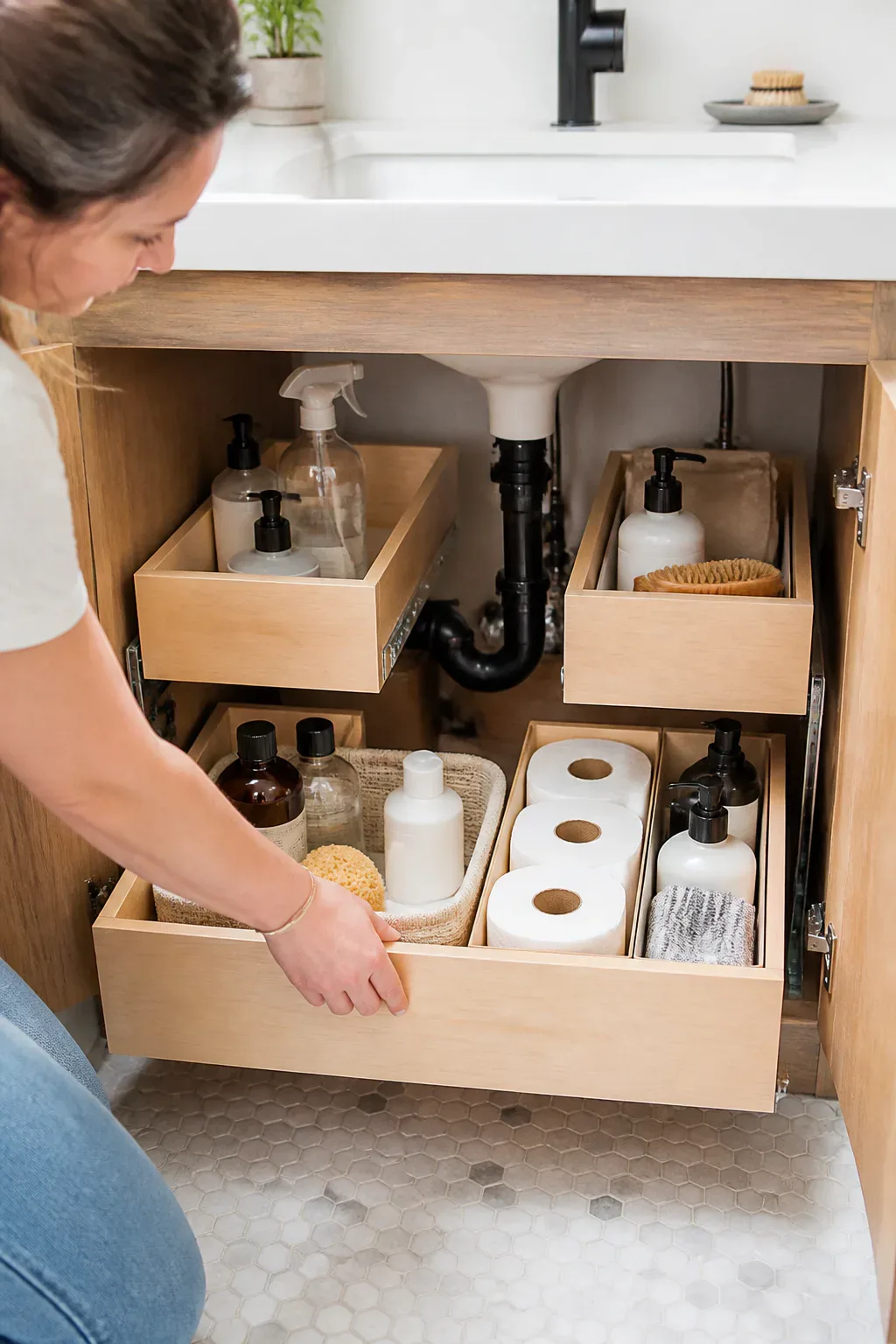
The cabinet under a bathroom sink often has awkward plumbing that makes ordinary shelves difficult to use. Stackable pull-out drawers or U-shaped organizers can work around pipes and turn the remaining space into more orderly storage.
Use the drawers to separate cleaning products, extra toiletries, and personal-care supplies. Pull-out designs are especially helpful because they bring items from the back of the cabinet forward, reducing the need to crouch and rummage through a crowded space.
Plan around the pipes
Measure the cabinet interior, including the area taken up by the drain and supply lines. Arrange the organizer so drawers can open fully, and leave room to reach shutoff valves if they are inside the cabinet.
- Choose a U-shaped shelf when a central pipe blocks a standard drawer.
- Group products by use instead of mixing everything together.
- Keep tall bottles upright and check that shelves can support them.
A few well-placed tiers make the cabinet easier to navigate and help prevent supplies from disappearing at the back.
7. Stagger Floating Shelves Above the Toilet
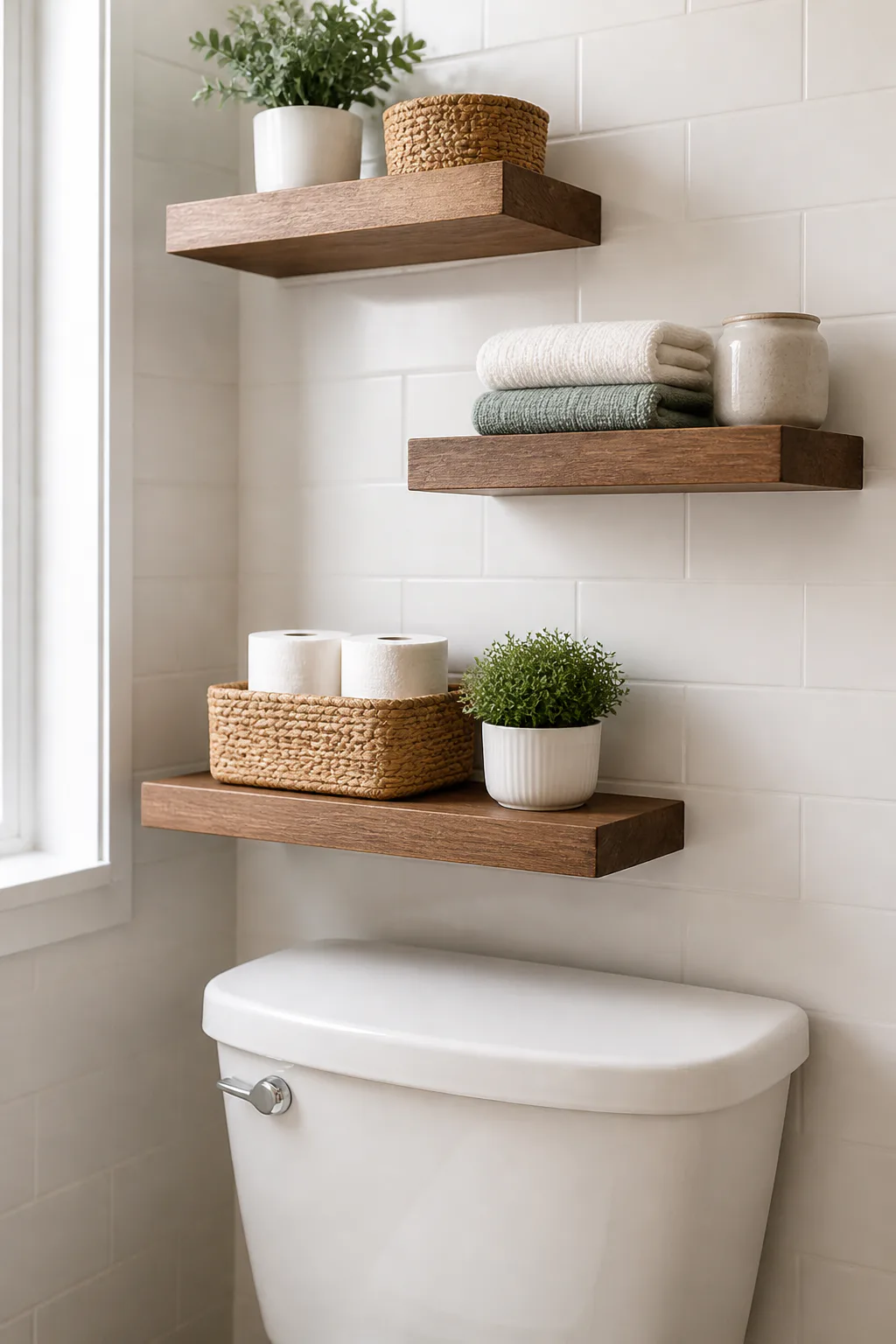
Floating shelves make use of wall space while keeping the floor below open. Above a toilet, two or three compact shelves can hold folded hand towels, extra toilet paper, or a few daily essentials without the bulk of a freestanding shelving unit.
Staggering the shelves can create a lighter, more relaxed arrangement than lining them up in a single rigid column. This approach also lets you work around a wall feature or choose shelf positions that suit the room’s proportions.
Balance storage with clearance
Before mounting shelves, mark their proposed positions and check that they are easy to reach without leaning over the toilet. Use appropriate hardware for the wall and the expected load, especially if you plan to store heavier bottles or folded towels.
- Put lightweight decor or backup rolls on the highest shelf.
- Keep frequently used items on the lowest, easiest-to-reach shelf.
- Use a small tray or basket to corral loose essentials.
Thoughtful spacing makes the shelves both practical and visually connected to the rest of the bathroom.
8. Turn an Empty Corner into a Storage Station
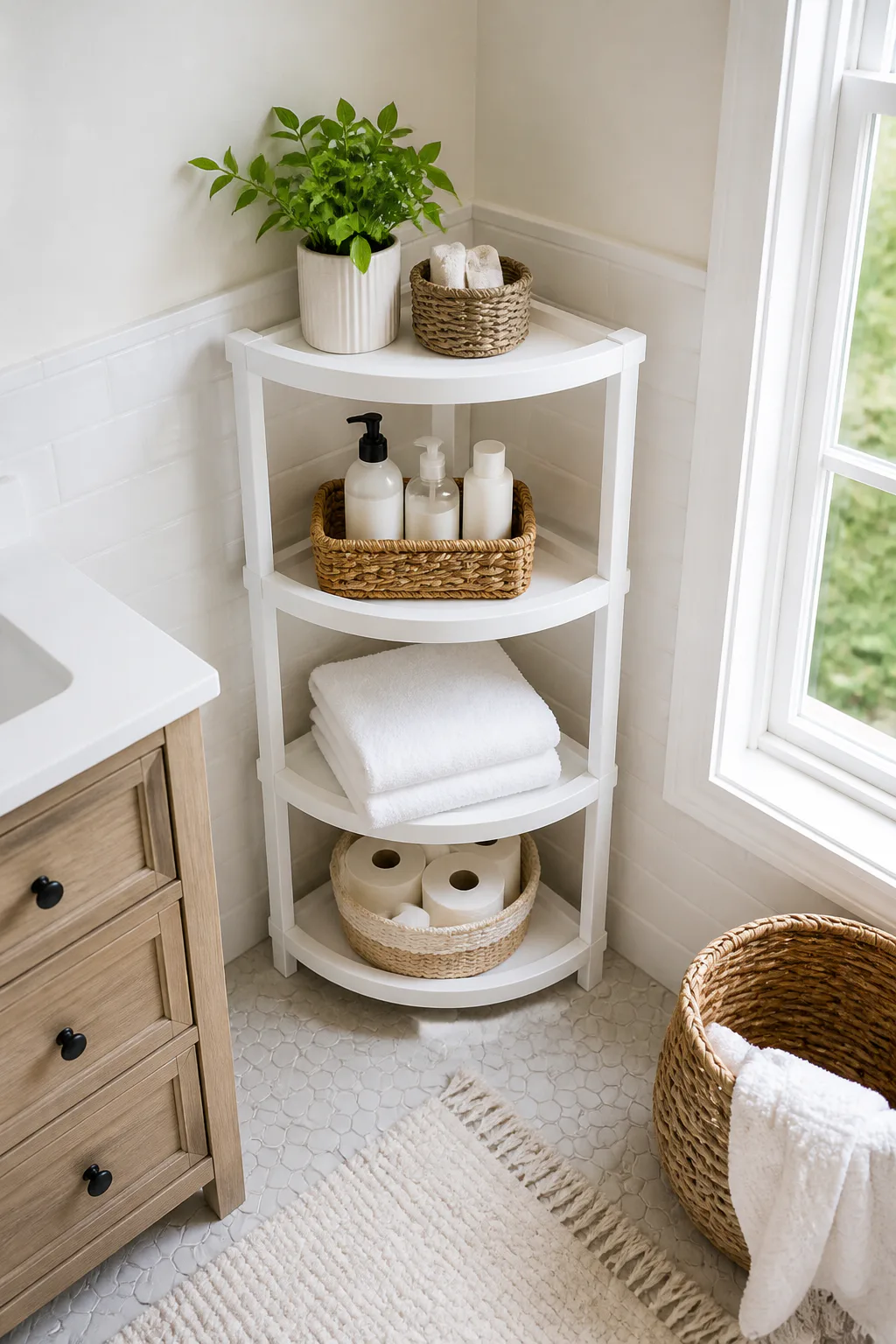
An unused corner can become a useful home for bath products, towels, or everyday supplies. A tension-pole shower caddy fits into a shower corner, while a freestanding corner shelf can serve a dry area near the vanity.
Because the shelves follow the shape of the corner, they can add storage without projecting as far into the room as a standard shelf. Choose the type according to the location: a shower organizer should suit wet conditions, while a dry corner can hold items that should stay away from splashes.
Choose the right corner setup
Consider what the corner is near and how often you need to reach it. Check that a tension pole is installed securely according to its instructions, or that a freestanding unit sits level and does not block a walkway.
- Keep shower products together on water-friendly shelves.
- Place dry towels only in a spot with good ventilation.
- Leave the bottom level open if it makes cleaning easier.
Using a corner deliberately can make an overlooked part of the room contribute to everyday storage.
9. Organize the Inside of Vanity Doors
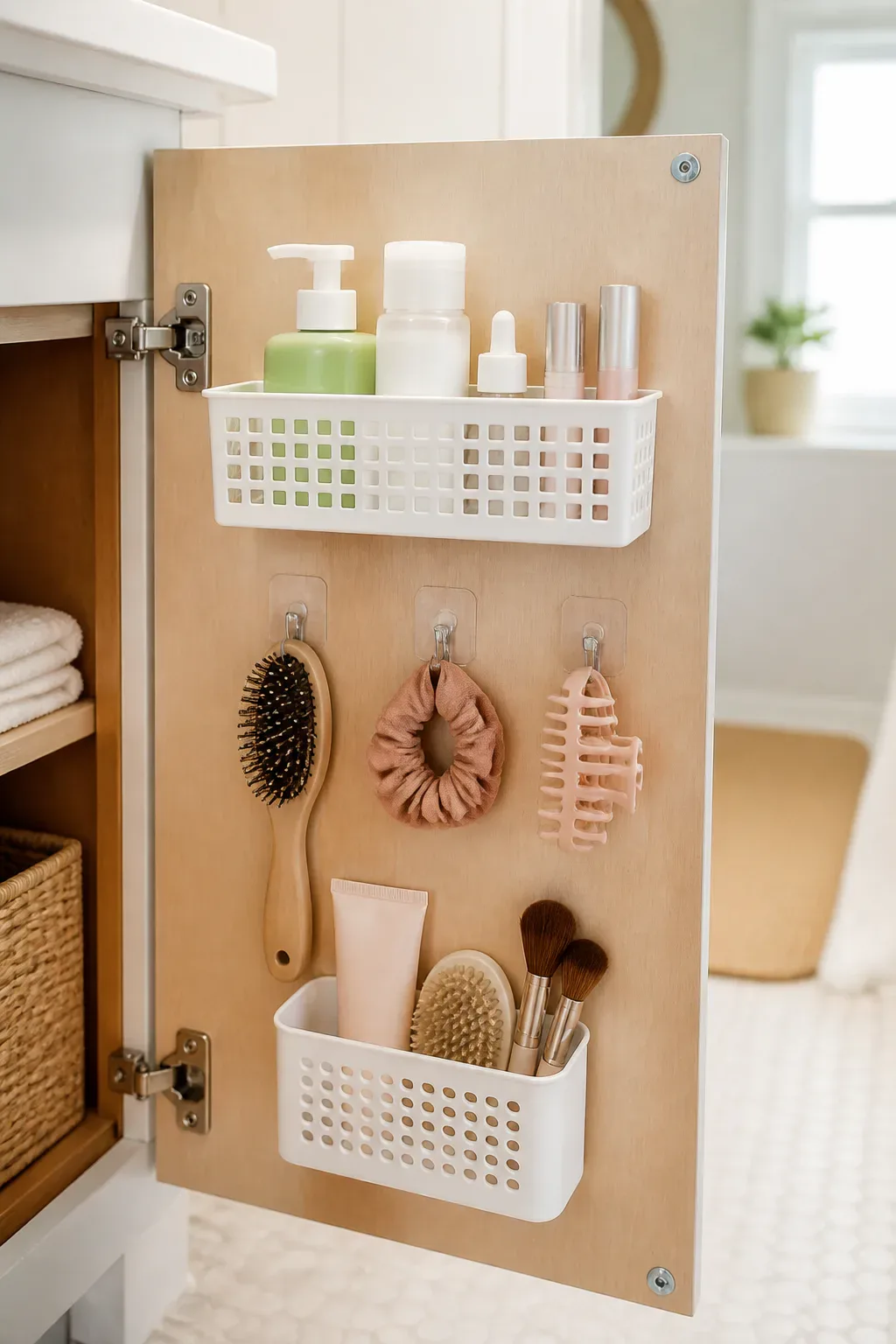
The inside of a vanity door offers storage that stays hidden when the cabinet is closed. Small baskets, clips, or holders can keep brushes, lotions, and other compact supplies off the main shelves, where they might otherwise compete for space.
This idea works best for lightweight items that fit neatly against the door. It is particularly useful in a shared bathroom, where separating personal-care supplies can make it easier for everyone to find their own things.
Make door storage easy to use
First check how much clearance the door has when it closes, then choose organizers that will not bump into the cabinet contents. Make sure the mounting method suits the door material and the weight of the items you plan to store.
- Use a small basket for lotions or grooming accessories.
- Add clips for tools with handles or cords.
- Keep heavier bottles on a stable cabinet shelf instead.
Even a single organized door can free up room inside the cabinet and make the vanity easier to maintain.
10. Install a Towel Bar with a Top Shelf

A combined towel bar and shelf adds two kinds of storage in one vertical footprint. The top can hold folded towels or a small basket, while the lower bar keeps a towel ready to use without taking up another stretch of wall.
This arrangement is useful above a toilet, beside a shower, or on a wall near the vanity, depending on where towels are needed. It can be especially helpful when a bathroom has little room for a separate shelf and towel rail.
Set it at a practical height
Choose a spot where hanging towels can dry without brushing against the sink, toilet, or floor. If the rack is wall-mounted, use suitable fixings for the surface and consider the combined weight of the rack and stored towels.
- Stack only a manageable number of clean towels on top.
- Keep the bar clear enough for towels to hang freely.
- Use a small basket to contain washcloths or extra supplies.
Combining a shelf and bar keeps fresh and in-use towels in one convenient location.
11. Hang Mesh Baskets for Loose Bathroom Items
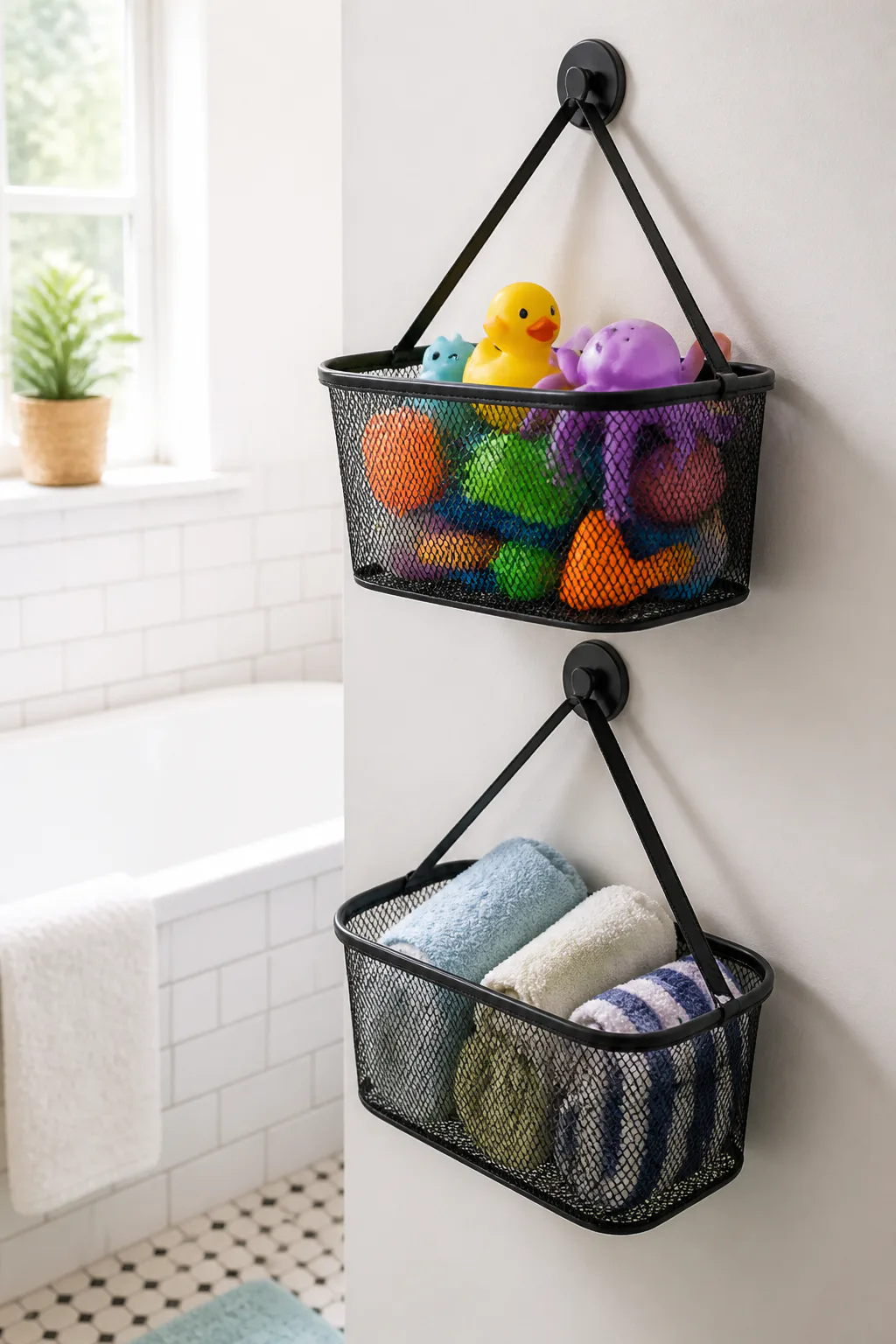
Breathable mesh baskets can gather loose bathroom items without hiding them in a deep cabinet. Hung from wall hooks, they are useful for bath toys, washcloths, or spare toilet paper that needs a simple, accessible home.
The open material allows air to circulate, making mesh a practical choice for items that may be damp after use. A few baskets can also help separate supplies by person or purpose, which is useful in a family bathroom where small items often migrate around the room.
Place baskets where they can dry
Choose a location that does not interfere with movement or door swings. Use hooks suited to the wall surface and avoid filling the baskets so heavily that they sag or pull away from their supports.
- Use one basket for bath toys and another for washcloths.
- Hang wet items where they can drain and air-dry.
- Keep spare paper products away from direct splashes.
Giving loose items a visible home can make post-bath cleanup quicker and keep the floor clearer.
12. Style Glass Canisters on a Vanity Tray

Small bathroom essentials can look more orderly when they are grouped rather than scattered across the counter. Clear glass canisters are handy for cotton balls, swabs, or bath salts because their contents are easy to see and the containers keep small items contained.
Place the jars together on one tray to create a defined area on the vanity. The tray makes the grouping easier to lift for cleaning and helps keep the rest of the counter available for daily routines.
Keep the display practical
Choose containers with lids if you want to protect their contents from splashes or dust. Keep the arrangement modest in size so it does not take over the counter, and choose jars that are easy to open with wet hands.
- Use one jar each for cotton balls and cotton swabs.
- Choose a stable tray that fits the available counter space.
- Refill only the items you use often to avoid overcrowding.
A compact set of canisters can make everyday supplies feel tidy while keeping them close at hand.
13. Build a Recessed Wall Storage Niche

A recessed niche creates storage within the wall rather than adding a shelf that projects into the room. It can be useful near a shower or vanity for toiletries, allowing essentials to sit close by while preserving clear floor and counter space.
This is a more involved option than adding a freestanding organizer because the wall must be suitable for the recess. The location needs careful planning around framing, plumbing, electrical wiring, and the finish of the surrounding wall, particularly in a wet area.
Plan before opening the wall
Confirm what is behind the wall before cutting into it, and use a qualified professional if you are unsure about the structure or utilities. In a shower, the niche needs appropriate waterproofing and a finish that suits the surrounding surface.
- Choose a location that is easy to reach during daily use.
- Size the recess for the bottles or items you plan to store.
- Coordinate its finish with nearby tile or wall materials.
When the wall allows, a carefully planned niche adds storage with a clean, built-in appearance.
14. Stick Soap and Brush Holders to the Wall
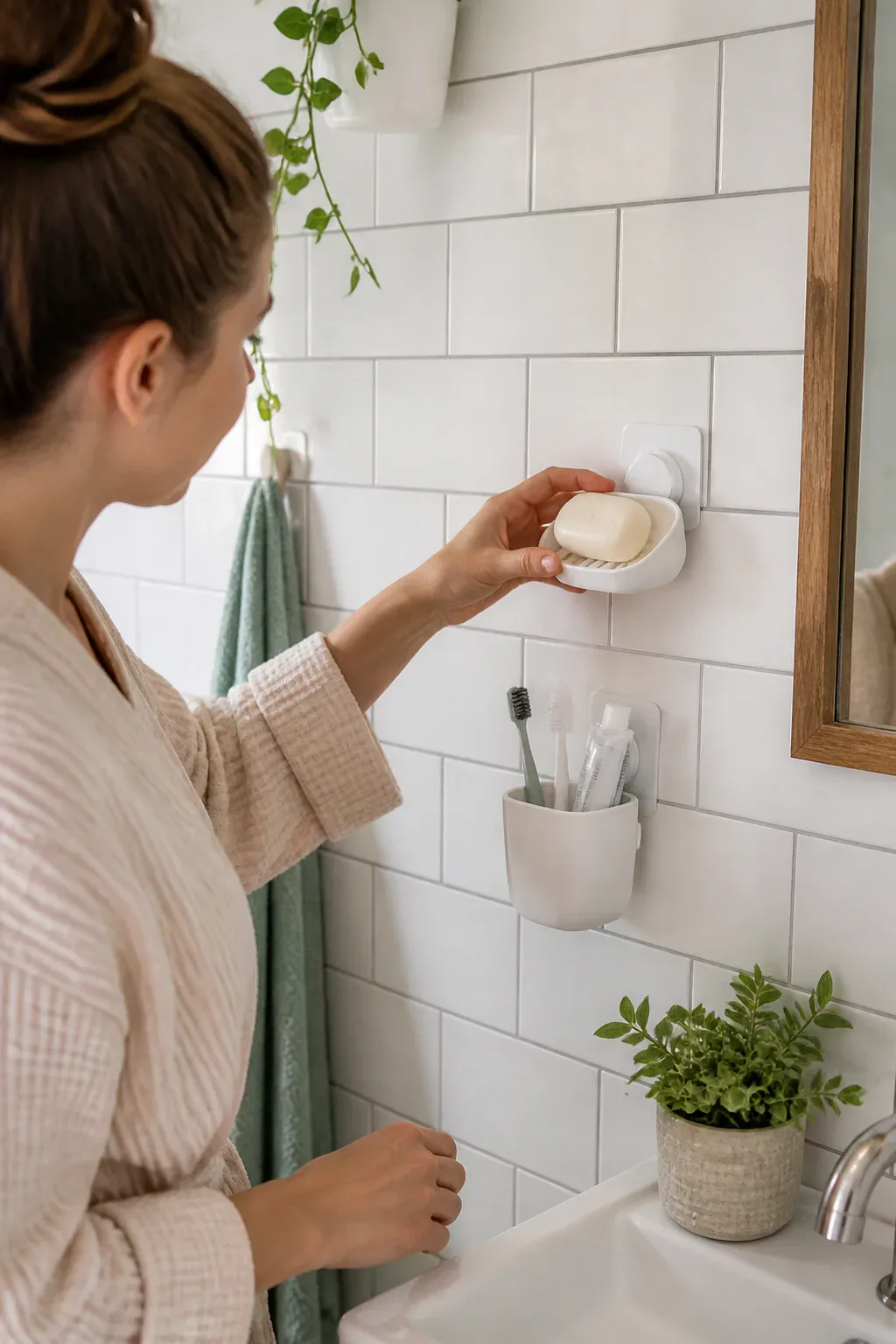
Adhesive or suction-cup holders can move soap and toothbrushes off the counter without requiring a new shelf. Placed on tile, glass, or another suitable surface, they keep small essentials near the sink or shower while freeing up space around the basin.
These holders can be a convenient choice when drilling is not desirable, though their performance depends on the surface and the product’s installation instructions. A secure, clean mounting spot matters, especially for holders that will carry heavier items or be handled frequently.
Mount them for easy access
Clean and dry the surface before installing an adhesive holder, and let it set for the time recommended by its instructions. For suction cups, check that the surface is smooth and periodically confirm the holder remains firmly attached.
- Place toothbrush holders near the sink but away from splashes.
- Choose a draining soap holder for wet areas.
- Do not overload a holder beyond its intended use.
A few small wall-mounted holders can clear the counter without committing to a larger storage project.
15. Add a Turntable Inside a Deep Cabinet
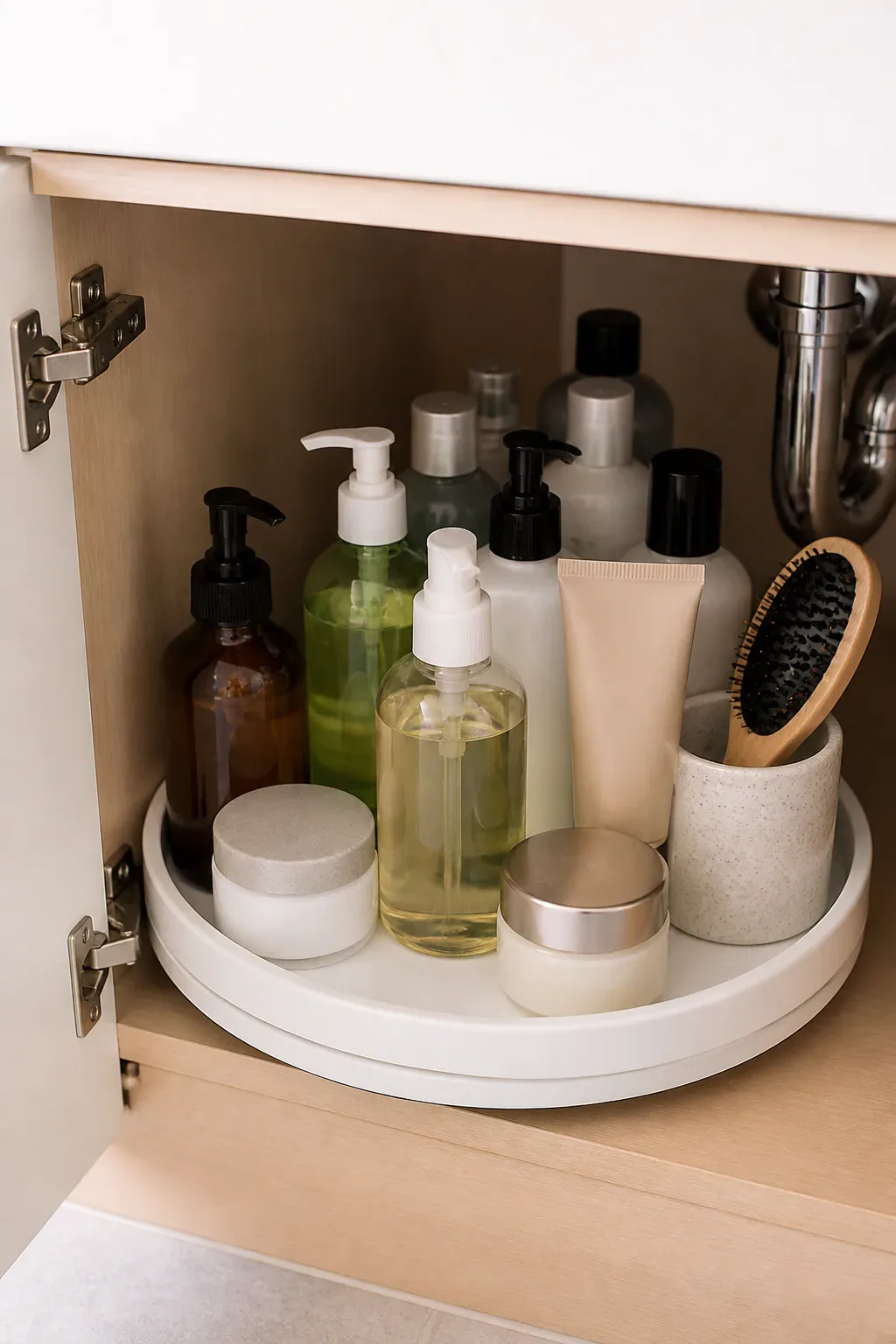
Items stored at the back of a deep bathroom cabinet can be difficult to see and reach. A rotating turntable brings bottles around to the front with a simple spin, helping you use the full depth of the shelf instead of forgetting what is tucked behind other products.
A turntable can work inside a vanity cabinet or on an open shelf, depending on the available space. Tiered versions provide separate levels for shorter and taller items, but the organizer should still fit comfortably without catching on pipes, doors, or adjacent supplies.
Group items for easy access
Measure the shelf and check the height of its contents before choosing a turntable. Arrange products so the organizer rotates smoothly, and keep leaky or unstable containers upright rather than crowded together.
- Group skincare, hair care, or cleaning products by purpose.
- Put frequently used items toward the front edge.
- Leave enough clearance to spin the organizer freely.
With categories kept together, a quick turn makes deep storage more visible and easier to manage.
16. Create a Wall-Mounted Styling Tool Station

Hair dryers and straighteners can take up a surprising amount of cabinet or counter space. A wall-mounted styling tool station gives them a dedicated place, helping keep cords and bulky tools from spreading across the vanity.
Fold-down or pull-out holders can be useful when floor and counter space are limited because they tuck closer to the wall when not in use. Choose a location that suits your routine and keeps the tools away from water, while still allowing you to reach them comfortably.
Store tools with care
Check the holder’s instructions for the types of tools it can accommodate. Let hot tools cool as directed before putting them away unless the holder is specifically designed for warm tools, and keep cords arranged so they do not hang into the sink area.
- Measure the tools and cords before selecting a holder.
- Keep the station away from direct water and splashes.
- Use a nearby cord wrap or hook to prevent tangles.
A dedicated station helps keep styling tools contained and the vanity ready for everyday use.
Final Thoughts
Small bathrooms benefit from storage that uses vertical space, makes awkward gaps useful, and gives everyday items a clear home. Shelves, door racks, drawer organizers, and wall-mounted holders can each help reduce clutter without requiring a major change to the room.
Start with the spot that causes the most frustration, then measure and choose an option that fits your layout and routine. A few thoughtful adjustments can make a compact bathroom feel easier to use, simpler to clean, and more comfortable day to day.