13 Stunning Bathroom Ideas for a Warmer, More Personal Space
A bathroom can feel polished and personal without relying on a full matching suite or a single all-white palette. Thoughtful materials, softer shapes, and layered lighting can make the room feel warmer while still keeping everyday routines practical.
These 13 bathroom ideas range from statement-making surfaces to smaller styling updates. Some are better suited to a renovation, while others can refresh an existing vanity or storage setup with less disruption.
Whether you’re planning a primary bathroom makeover or looking for ways to make a compact space feel more considered, use these ideas as a starting point. Adapt the finishes and details to your room’s layout, ventilation, storage needs, and how much maintenance you’re comfortable with.
1. Pair a Warm Wood Vanity with Stone

A stained oak or walnut vanity brings natural warmth to a bathroom, especially when its grain is allowed to show. Pairing it with a crisp stone countertop creates an appealing balance: the wood feels grounded and inviting, while the stone keeps the overall look clean and contemporary.
This combination works well as the focal point in a primary bathroom, but it can also make a compact vanity feel more intentional. Simple hardware and a restrained backsplash let the materials do the talking rather than competing for attention.
How to pull it off
Choose wood and stone samples together, and view them in the bathroom’s natural and artificial light. A warm wood tone can shift noticeably beside cool gray stone, so compare undertones before settling on a pairing.
- Use a durable, bathroom-appropriate finish on the vanity.
- Choose a countertop with a tone that complements the wood rather than matching it exactly.
- Keep hardware simple if the grain or stone pattern is already prominent.
For a double vanity, repeat the same finishes across both sinks to give the larger installation a cohesive feel.
2. Create a Seamless Shower-and-Tub Wet Room
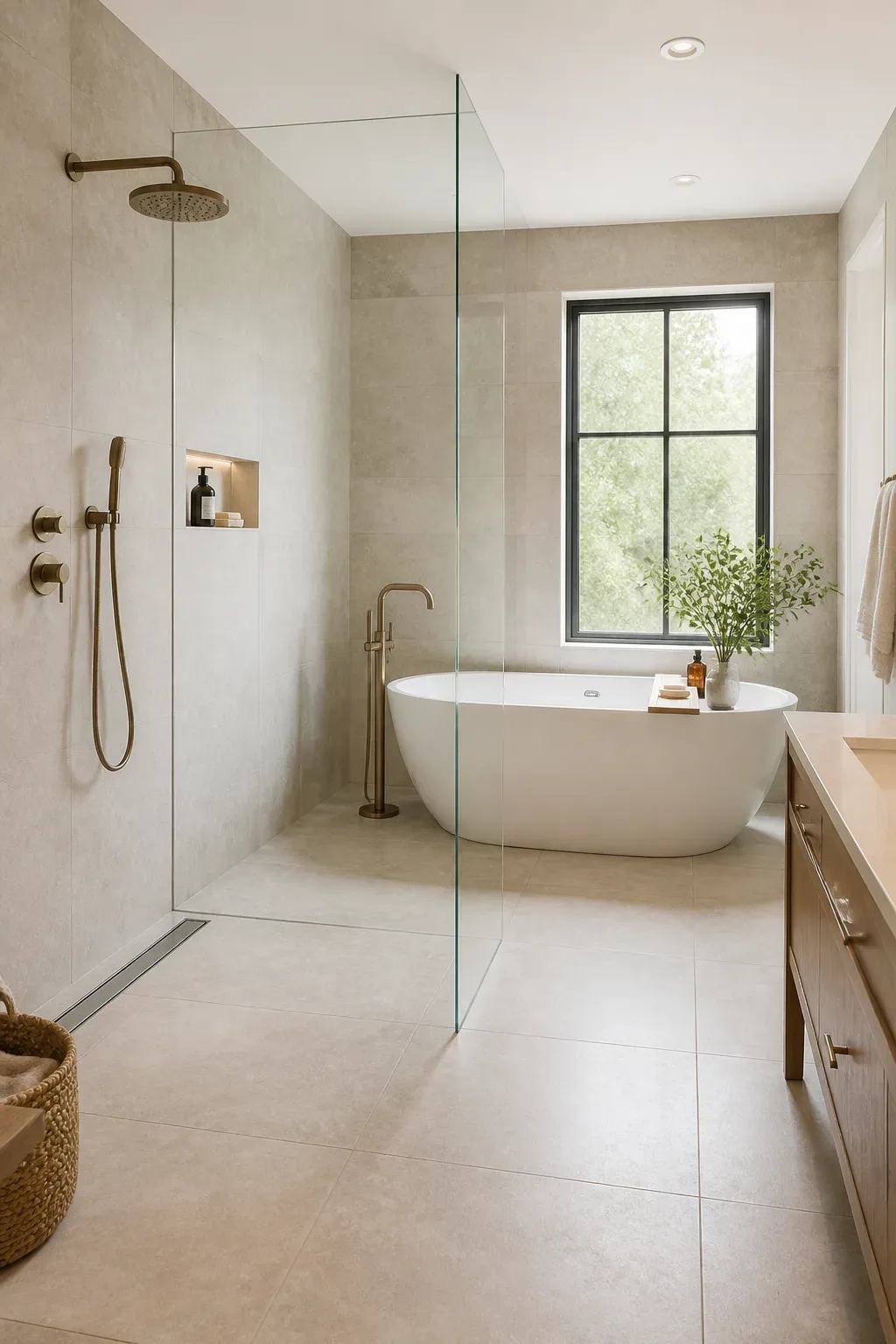
A wet room places the shower and freestanding tub within one shared, water-resistant zone. A single glass screen can keep the space feeling open while still helping to contain splashes, making this layout especially appealing when you want a spa-like atmosphere without dividing the room into separate enclosures.
Large-format floor tile and a linear drain can create a visually continuous surface. The arrangement may suit a spacious bathroom, but it can also help a smaller room feel less segmented when the layout is carefully planned.
Plan the zone carefully
Waterproofing, drainage, and floor slope are essential parts of the design, not details to leave until the end. Work with a qualified professional to confirm that the floor, drain, and surrounding surfaces can handle water throughout the shared area.
- Position the showerhead to limit spray beyond the glass screen.
- Choose slip-conscious flooring suitable for a wet environment.
- Check that the tub remains accessible for cleaning on all sides.
Thoughtful planning makes the open look more comfortable to use every day.
3. Install a Fluted Glass Shower Screen
Reeded or fluted glass gives a shower enclosure texture without closing it off completely. Its ridged surface softens the view through the glass, adding a degree of privacy while allowing light to move between the shower and the rest of the bathroom.
This detail can work as a subtle architectural feature in a neutral room or as a way to add interest when you want to keep the tile and fixtures understated. It pairs especially well with clean-lined hardware and simple wall finishes.
Choose the right placement
Consider how the glass looks from both sides, since its texture becomes part of the room’s overall view. A fixed panel can define an open shower, while a hinged door may make more sense when the layout needs a more contained entry.
- Coordinate the frame or fittings with the shower hardware.
- Ask how the chosen glass should be cleaned and maintained.
- Use lighting that highlights the texture without creating harsh glare.
Fluted glass adds character while preserving the light, airy feel that makes glass screens so useful.
4. Wrap the Bathroom in Smooth Microcement
Microcement creates a continuous, grout-free appearance across surfaces such as walls, floors, and even an integrated sink. Its smooth finish can make a bathroom feel calm and unified, particularly when tile joints would otherwise break up a small room.
The material suits contemporary interiors, but it does not have to feel cold. A warm neutral shade, wood accents, soft towels, and gentle lighting can give the streamlined surface a more relaxed character.
Think about preparation and care
Microcement is a specialist finish, so the substrate, application, and protective sealing all matter. Ask an experienced installer which surfaces are appropriate and what care the finished coating will need, especially in areas that receive frequent water.
- Request samples to compare against your tile, wood, and lighting.
- Use the finish consistently or limit it to one feature zone.
- Follow the installer’s guidance for cleaning and upkeep.
When planned carefully, its uninterrupted look can help the room feel more expansive and visually restful.
5. Paint an Accent Wall in Terracotta and Olive
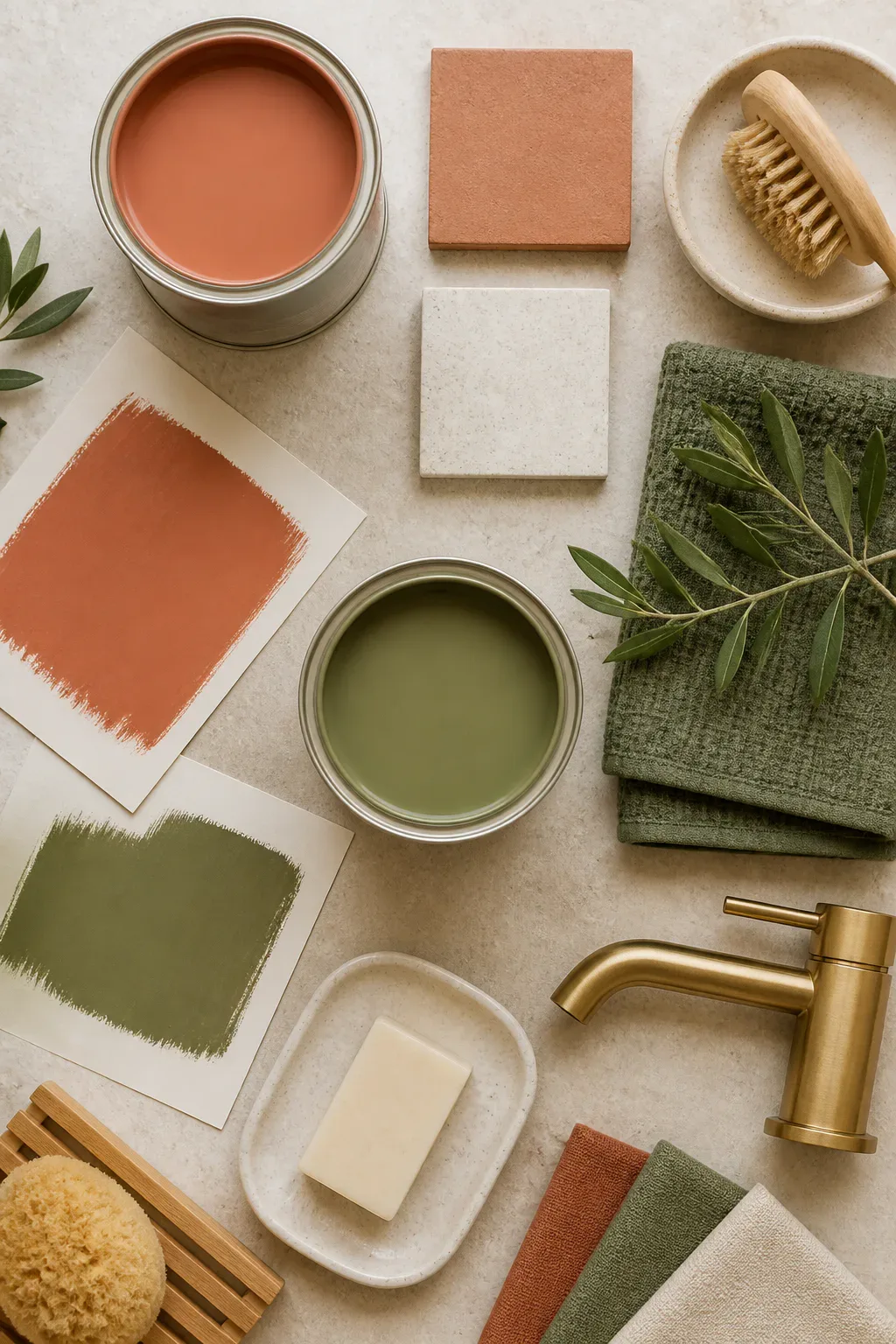
A clay-toned accent wall brings warmth to a bathroom that feels too stark or cool. Terracotta can add a grounded, earthy note behind a vanity or beside a tub, while muted olive details introduce a quieter contrast through towels, accessories, or painted cabinetry.
This palette works in both modern and relaxed interiors. It can make a feature wall feel more expressive without requiring every surface to carry color, which is helpful if you want a noticeable refresh but prefer to keep the main tile and fixtures neutral.
Build a balanced palette
Test paint samples in the room before committing, since daylight and bathroom lighting can shift how earthy colors appear. Keep the surrounding finishes simple so the accent reads as intentional rather than busy.
- Try terracotta on a dry wall outside the shower area.
- Bring in olive through small, easy-to-change accents.
- Repeat a warm neutral in towels or accessories to connect the colors.
The result can feel rich and welcoming without overwhelming the room.
6. Hang an Oversized Organic-Shaped Mirror
An oversized round, pill-shaped, or asymmetrical mirror softens the strong lines of a vanity, tile grid, and cabinetry. Its shape adds a focal point above the sink while reflecting light and making the wall feel less rigid.
This idea is easy to adapt to different styles: a simple round mirror feels understated, while an irregular outline gives a more sculptural effect. In a small bathroom, a generously sized mirror can also visually open up the vanity area without taking up floor space.
Get the scale and position right
Measure the vanity and available wall area before choosing a mirror. It should feel large enough to anchor the sink, but leave room for lights and nearby shelves rather than crowding them.
- Center the mirror over the sink or vanity zone.
- Check that its shape works with nearby sconces and cabinets.
- Choose a bathroom-suitable mirror and mounting method.
A distinctive mirror can make a familiar vanity feel more thoughtfully designed, even when the surrounding finishes stay simple.
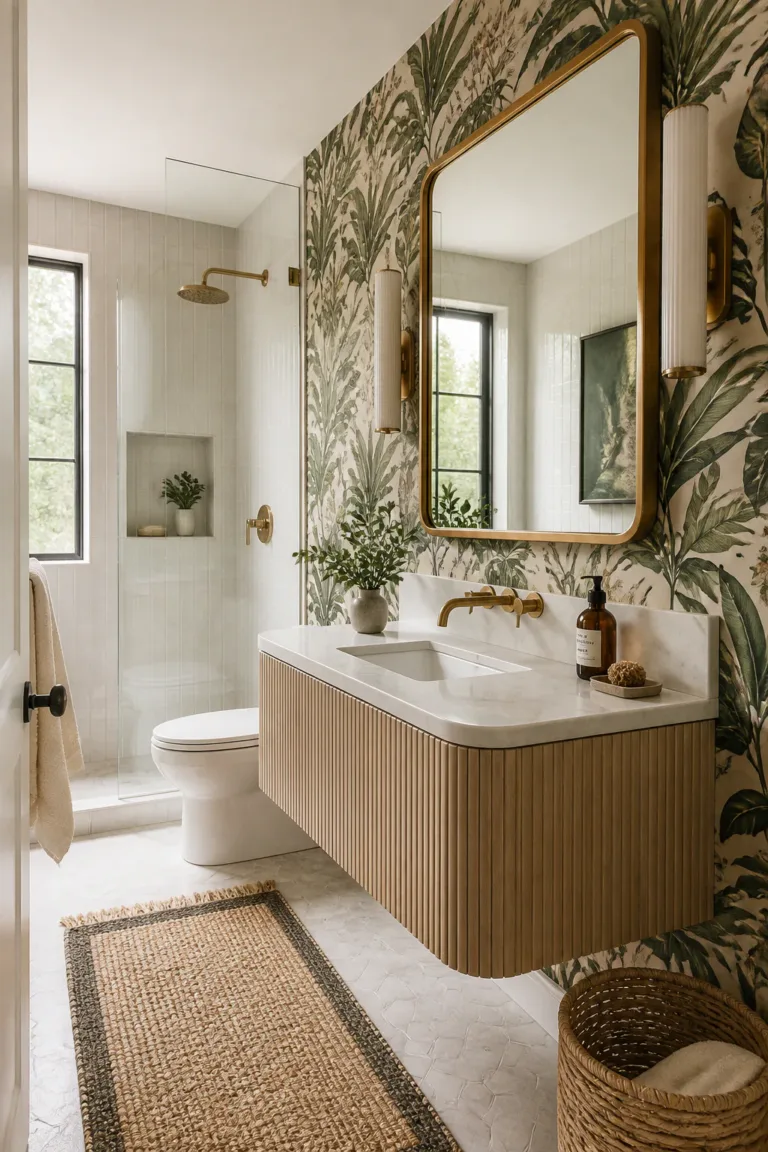
7. Add a Floating Vanity with a Warm Glow
A wall-mounted vanity leaves open floor visible beneath the cabinet, creating a lighter impression than a full-height base. In a compact bathroom, that visual breathing room can help the space feel less crowded while still providing useful storage.
A discreet warm LED strip beneath the vanity adds a gentle glow that emphasizes the floating effect. It can also provide a softer nighttime light than a bright overhead fixture, particularly when the strip is controlled separately from the main lighting.
Make the installation practical
Confirm that the wall can support the vanity and that plumbing can be accommodated before selecting a model. The light strip should be suitable for bathroom use and installed so it is protected from splashes and easy to access if maintenance is needed.
- Choose a vanity depth that leaves comfortable clearance in the room.
- Plan cable access and lighting controls during installation.
- Use warm light to keep the under-vanity glow inviting.
Pairing storage with a subtle light detail gives the vanity both function and presence.
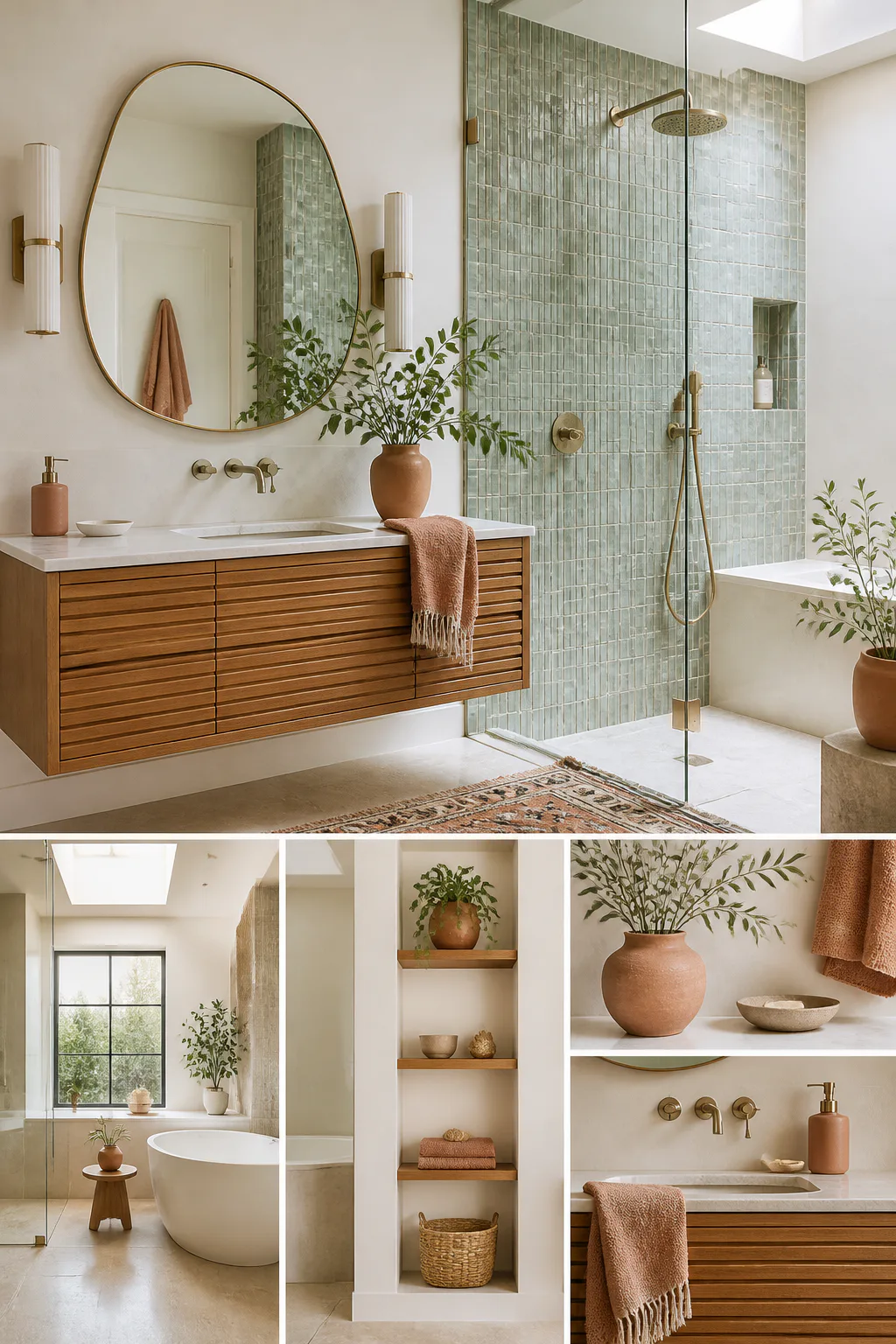
8. Cover the Shower Wall in Handmade Zellige
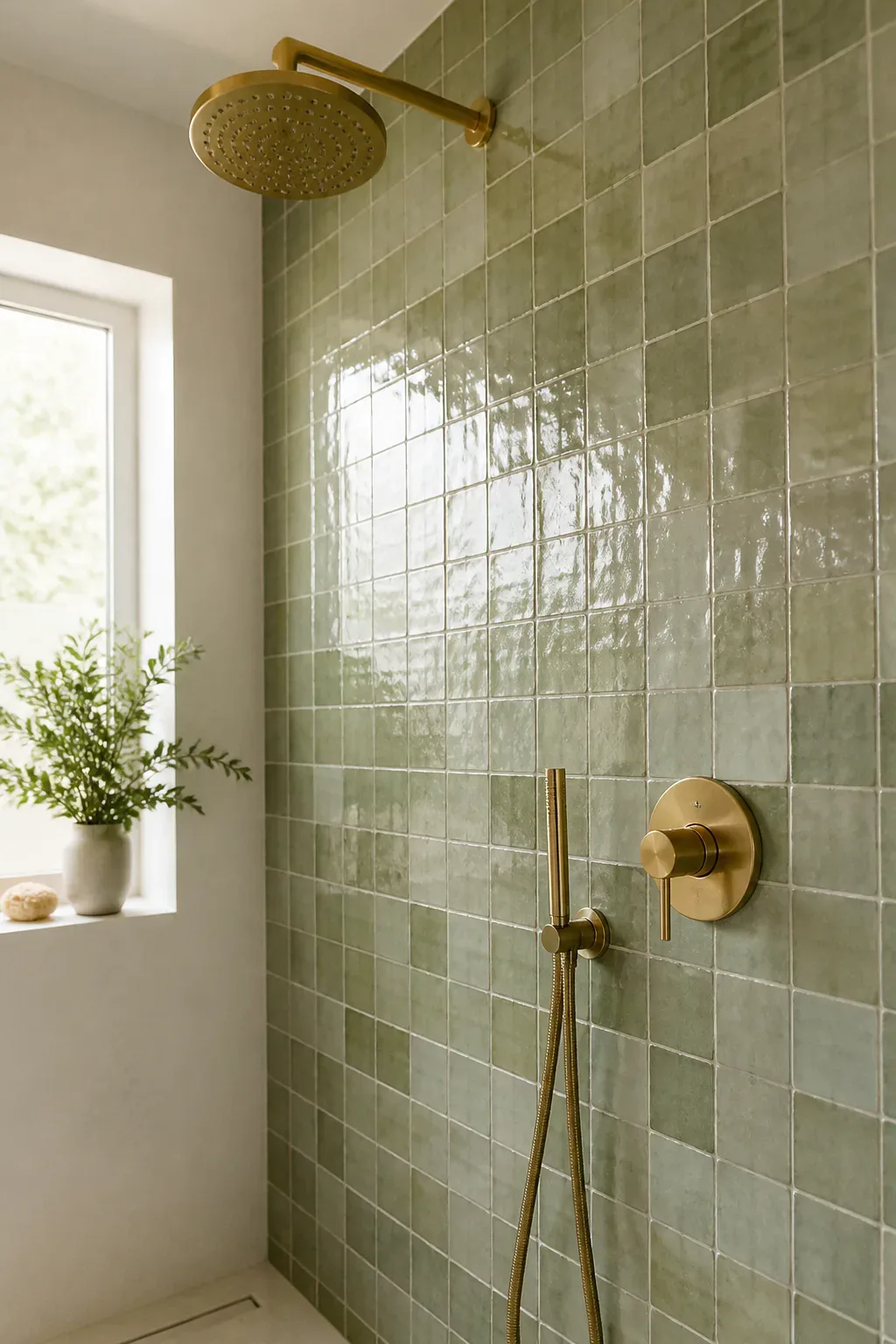
Handmade zellige tiles bring variation, sheen, and a sense of craft to a shower wall. Their slightly irregular surfaces catch light differently from tile to tile, creating a lively feature that feels richer than a perfectly uniform finish.
Use them across a single shower wall or in a defined backsplash area if you want a smaller dose of pattern. Glossy surfaces can brighten the shower, while a restrained color helps the handcrafted texture stand out without competing with the rest of the room.
Make the tile the feature
Because handmade tiles vary in color and shape, review samples or a layout plan before installation. Ask your tile professional about suitable grout, sealing, and installation methods for the specific product and wet area.
- Choose a color that complements nearby stone or cabinetry.
- Keep other wall finishes relatively quiet.
- Plan tile edges and transitions for a finished appearance.
A focused tile feature adds character while letting the rest of the bathroom remain calm and functional.
9. Mix Modern Fixtures with a Vintage Washstand
A vintage washstand can give a bathroom a distinctive focal point, especially when paired with clean-lined contemporary taps. The contrast between an older piece and modern plumbing keeps the room from feeling like a matching showroom and gives a collected, personal quality to the vanity area.
This approach works well when you find a cabinet, table, or washstand with proportions that suit the room. It can be especially effective in a powder room, where a furniture-style vanity makes a strong impression without needing extensive storage.
Adapt the piece for bathroom use
Not every vintage piece is ready for a wet environment. Check its structure, dimensions, and finish, and plan how the plumbing and sink will fit before making modifications. Protect exposed surfaces from moisture and make sure the installation remains stable.
- Measure the sink and faucet together with the furniture.
- Choose modern fixtures that complement the piece’s lines or finish.
- Keep essential storage elsewhere if the washstand has limited space.
The combination feels most successful when the contrast looks considered rather than improvised.
10. Soften the Vanity with a Linen Undersink Curtain
A gathered linen curtain in place of cabinet doors gives the vanity a softer, more relaxed look. The fabric can bring a lived-in quality to a bathroom dominated by tile and hard surfaces, and a subtle stripe or muted print adds personality without requiring a large renovation.
This idea suits open vanity shelves or a simple undersink frame, particularly when you want to conceal plumbing and everyday supplies. It is also a flexible update: changing the fabric can shift the room’s mood more easily than replacing the vanity.
Keep the fabric practical
Bathrooms expose textiles to humidity and splashes, so choose a washable fabric and make sure it can dry fully. Leave enough clearance from the floor and plumbing, and avoid using the curtain to hide items that need frequent access.
- Pick a fabric that can be removed and laundered.
- Use a simple rod or track that allows easy opening.
- Store damp towels away from the enclosed space.
With sensible care, the curtain adds softness while keeping the vanity useful.
11. Make a Carved Stone Basin the Focal Point

A carved travertine, limestone, or marble basin brings natural variation and sculptural shape to the vanity. Its solid, tactile appearance can turn a practical sink into the room’s main design feature, especially when the countertop and surrounding finishes are kept relatively simple.
A vessel basin draws the eye upward, while an integrated or more low-profile form can feel quieter and more seamless. Either way, the stone’s color and veining make each piece feel visually distinct, so it can anchor a restrained palette of wood, plaster, or neutral tile.
Balance beauty with upkeep
Natural stone requires care, and the right maintenance depends on the specific material and finish. Ask the supplier or installer about sealing, cleaning, and sensitivity to common bathroom products before choosing a basin for daily use.
- Check the basin’s height and depth against your faucet.
- Choose a vanity that supports the basin’s weight.
- Keep nearby accessories simple so the stone remains the focus.
A thoughtfully chosen basin can add character without needing extra decoration.
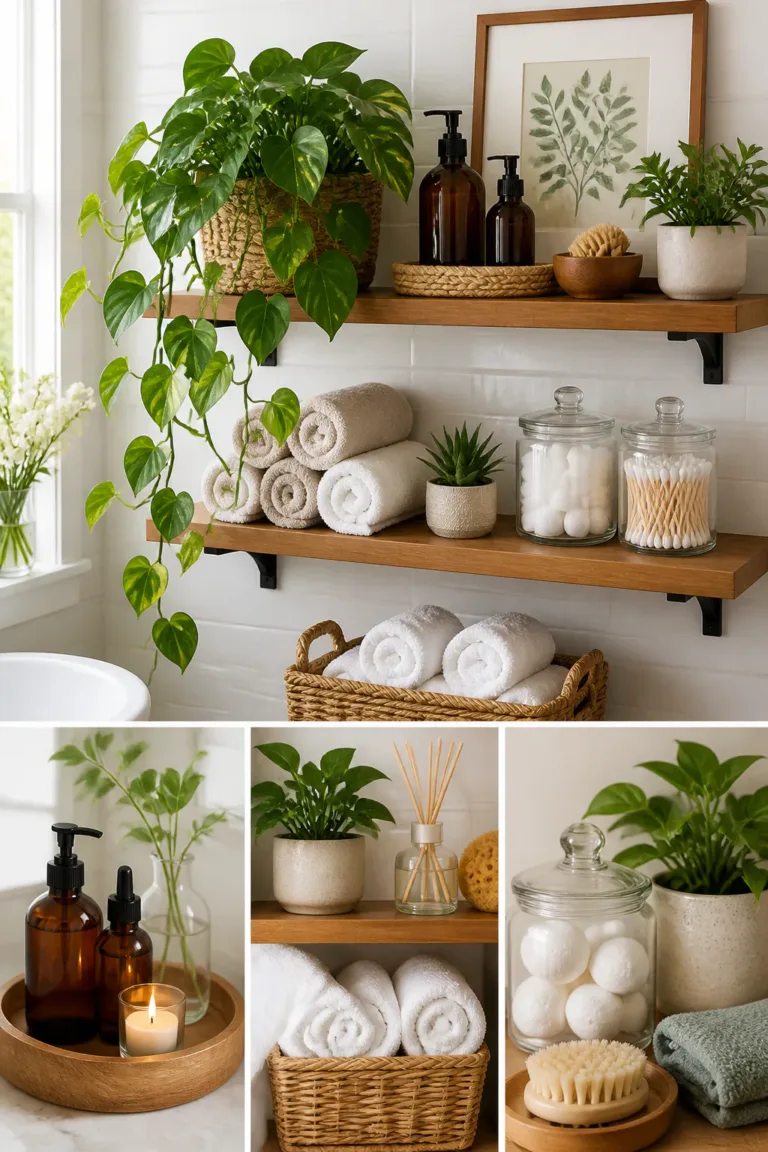
12. Style Floating Shelves with Towels and Ceramics

Slim floating shelves offer open storage without the visual weight of a bulky cabinet. They can make useful items part of the room’s styling, especially when you group rolled towels with a few jars, baskets, or everyday ceramic pieces.
Wood shelves bring warmth to tiled walls and pair naturally with neutral towels or handcrafted accessories. This setup works beside a vanity, above a toilet, or on an available wall, provided the shelves do not interfere with movement or access to plumbing.
Curate, then edit
Open shelving looks best when it holds a manageable mix of useful and decorative items. Keep frequently used products within easy reach and reserve higher shelves for spares or pieces that need less regular access.
- Choose shelf depth based on the items you plan to store.
- Use a small tray or jar to group loose essentials.
- Leave open space so the display does not feel crowded.
Keeping the arrangement simple makes storage feel like a considered part of the design.
13. Frame a Backlit Mirror with Vertical Sconces
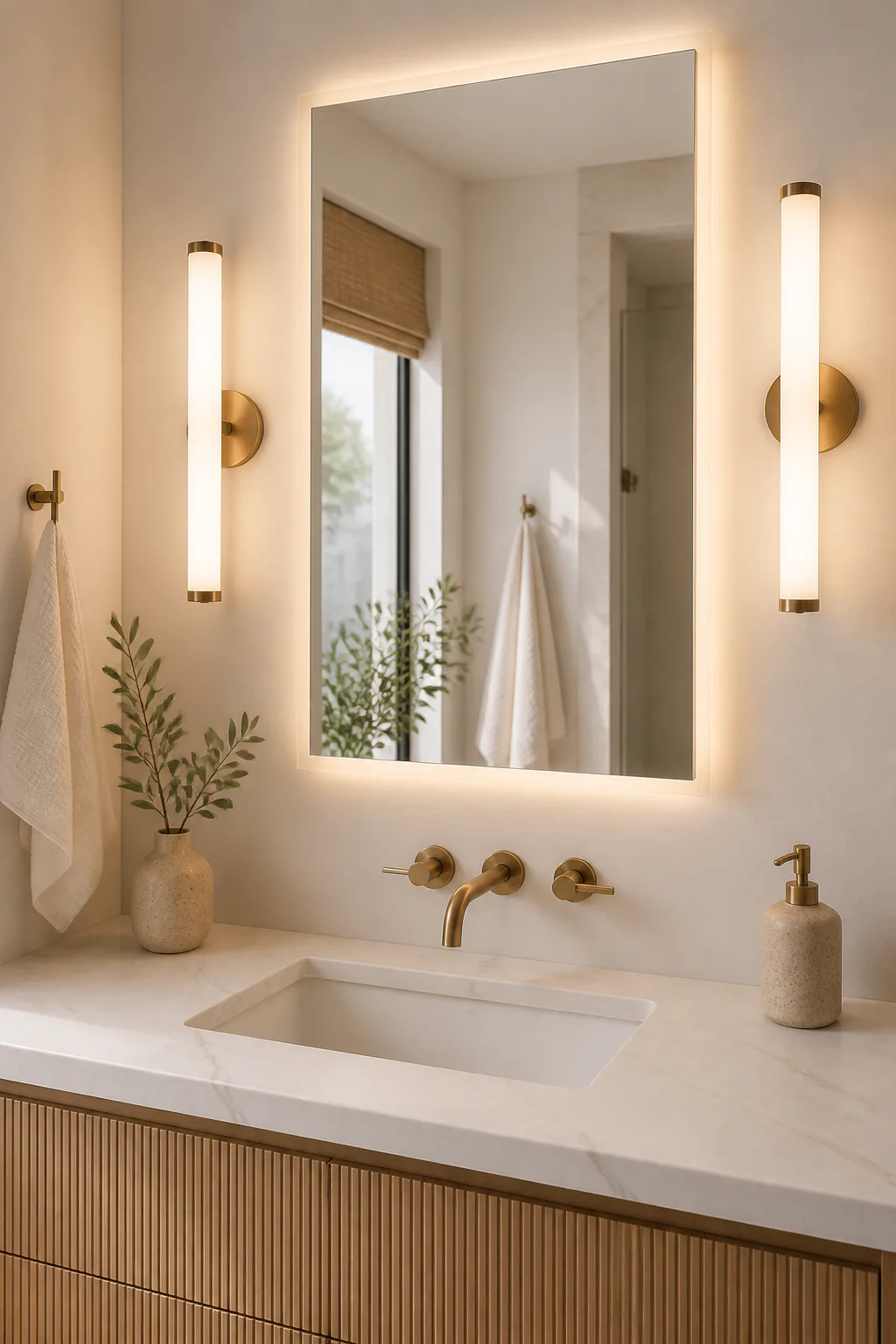
A backlit mirror paired with slim vertical sconces creates layered light around the vanity. The mirror’s glow adds a soft ambient element, while sconces on either side help illuminate the face more evenly than relying on a single overhead fixture.
This combination can make a practical bathroom feel more polished and spa-like, especially when the lighting is coordinated with warm finishes and calm wall colors. It also adds a defined feature to the vanity wall without needing a bold tile pattern or decorative artwork.
Layer light with purpose
Plan the mirror, sconces, and electrical connections together so the fixtures have enough clearance and provide useful illumination. Consider separate controls or dimming where appropriate, allowing the room to shift from task lighting to a softer evening atmosphere.
- Place sconces to frame the mirror without crowding it.
- Select fixtures rated for their bathroom location.
- Use additional general lighting for the rest of the room.
Combining light sources makes the vanity more functional and gives the whole room a warmer, more layered feel.
Final Thoughts
The most inviting bathroom ideas balance practical needs with materials and details that feel personal. Warm wood, textured tile, sculptural mirrors, and layered lighting can each make a difference, whether you’re planning a larger renovation or updating one part of the room.
Start with the change that best fits your layout, maintenance preferences, and budget, then let the other finishes support it. A few well-chosen details can make a bathroom feel calmer, more comfortable, and much more like your own.