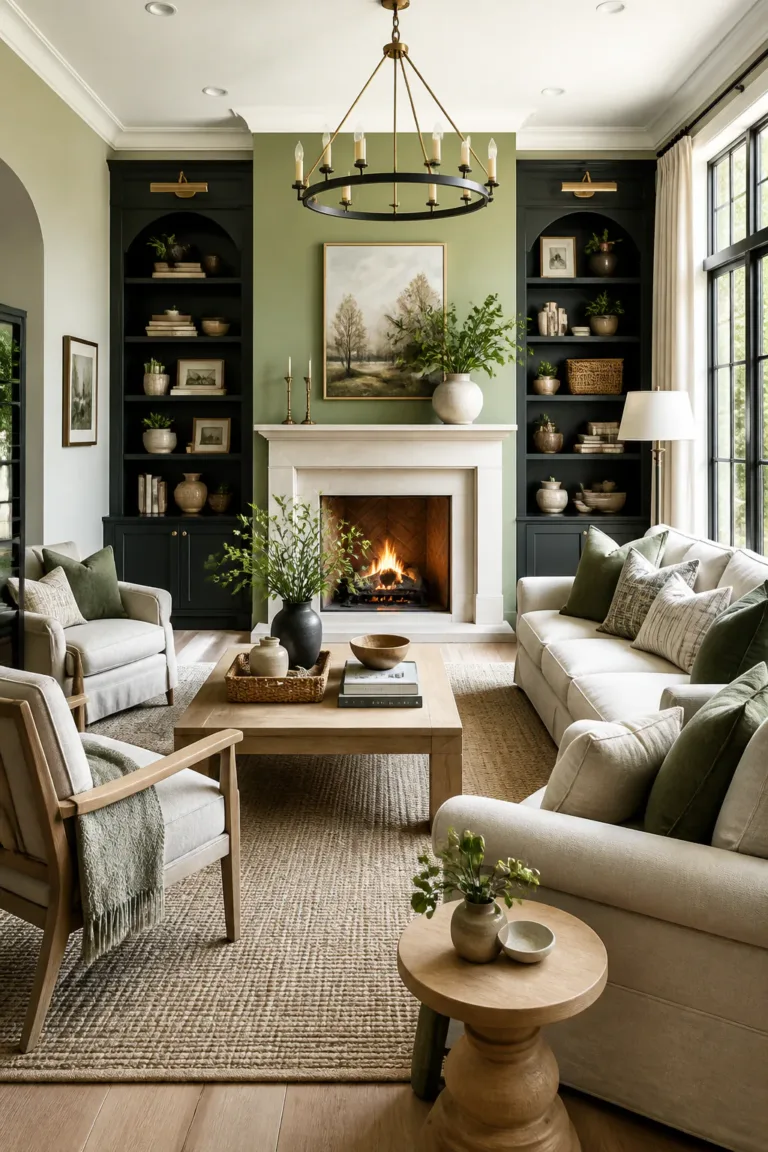
15 Stunning Living Room Decor Ideas for a Warm, Personal Space
A living room feels most inviting when it reflects the people who use it, not just a matching furniture set or a passing trend. Thoughtful color, natural materials, vintage finds, and layered lighting can make the space feel more personal without requiring a complete redesign.
These living room decor ideas range from simple styling updates to more noticeable changes, so you can choose what suits your room and your plans. Try one focal detail, such as a textured wall or sculptural chair, then build around pieces you already own.
Whether you’re refreshing a small apartment living room or making a larger family space feel more collected, the ideas below offer practical ways to add warmth, character, and visual interest. Consider your room’s light, layout, and everyday needs as you decide what to bring in.
1. Color Drench the Room in Warm Earth Tones

Painting the walls, trim, and baseboards the same earthy shade creates a continuous backdrop that feels calm and enveloping. Muddy green, dusty blue, and warm khaki can each add color without making the room feel overly bright or formal. The approach works especially well in a living room with varied furniture, because one unified background helps different shapes and finishes sit comfortably together.
Color drenching can also make architectural details feel intentional rather than visually busy. In a small room, a soft, muted shade can blur transitions between surfaces; in a larger room, a deeper tone can create a cozy conversation area. Test paint in the room at different times of day before committing, since natural and lamp light can shift how a color reads.
How to pull it off
Choose a finish suited to each surface while keeping the color consistent. Bring in contrast through wood, textiles, artwork, and lighting so the room still has depth.
- Sample your chosen color on more than one wall.
- Paint trim and baseboards to match the walls.
- Balance the enveloping color with lighter or natural finishes.
2. Layer Light Oak and Walnut Furniture

A room furnished entirely in one wood tone can feel overly coordinated, while a mix of finishes gives it a more collected character. Pair pale oak with rich walnut and a darker antique piece to create variation in color and visual weight. This approach works well around a sofa, where a coffee table, side table, and cabinet can each contribute a different note without competing for attention.
The key is to make the mix feel deliberate. Repeat a wood tone at least once, or connect contrasting pieces through similar shapes, hardware, or proportions. A light oak table can keep a dark vintage cabinet from dominating, while walnut adds warmth beside pale flooring. Leave some breathing room between larger pieces so the different finishes remain easy to appreciate.
Design tips
Think of the wood tones as a palette rather than a matching set. Pair them with textiles and wall colors that help bridge the differences.
- Choose one wood finish to repeat in two or more places.
- Mix light, medium, and dark tones with intention.
- Use a rug to visually connect furniture with different finishes.
3. Add a Textured Grasscloth Accent Wall

Grasscloth brings a natural woven surface to a living room, adding warmth and subtle texture without relying on a bold pattern. It can give the wall behind a sofa or a media console more presence while keeping the rest of the room quiet. Botanical wallpaper offers a related way to introduce an organic feel, with a more visible motif and a wider range of visual impact.
Because a textured wallcovering draws attention through both pattern and material, it often works best when the surrounding furnishings are relatively simple. Consider how the weave or print will sit beside artwork, shelves, and window treatments. Natural grasscloth can have visible variation across its surface, which is part of its appeal; plan the wall carefully so seams and edges feel considered.
Where it works best
Use the treatment on a focal wall that already anchors the room, rather than scattering it across several competing surfaces. Keep nearby decor edited so the wall can provide the texture.
- Try it behind the sofa or on the main fireplace wall.
- Choose botanical wallpaper when you want a clearer pattern.
- Pair the wallcovering with simple furniture and soft fabrics.
4. Make Room for Curved Sculptural Furniture

Curved furniture softens the strong horizontal and vertical lines that often dominate a living room. A kidney-shaped sectional, rounded accent table, or chair with a fluid silhouette can make a seating area feel more relaxed and expressive. These shapes are especially useful in rooms with boxy architecture, where a few rounded forms add contrast without requiring a dramatic color change.
Consider the room’s circulation before choosing a sculptural piece. A curved sofa can define a conversation zone, while a round stone table can break up the outlines of a rectangular rug and straight-edged seating. The goal is not to make every piece rounded; a mix of silhouettes keeps the room grounded and makes each distinctive shape feel purposeful.
How to balance the shapes
Let one curved piece lead, then support it with simpler furniture and a clear walking path. Check the scale in relation to the room before settling on a larger silhouette.
- Use a curved sofa to soften a wide or open seating area.
- Try a rounded accent table for a smaller-scale update.
- Pair sculptural shapes with a few clean, simple lines.
5. Anchor Neutrals with Jewel-Tone Accents
Deep gemstone colors can bring energy to a neutral living room without changing its overall foundation. Emerald-like greens, sapphire blues, and rich berry tones stand out against cream, beige, or warm gray, especially when introduced through velvet pillows, ceramics, or one statement chair. Because these hues are saturated, even a small amount can help a seating area feel more layered and memorable.
Choose one or two jewel tones and repeat them in different materials to create a connection across the room. A colored cushion might echo a vase on a shelf, while a bold armchair can relate to a smaller accent elsewhere. This keeps the palette cohesive while allowing natural wood, woven textures, and quieter fabrics to remain part of the story.
Ways to introduce color
Start with accessories if you want an easy-to-adjust change. If you already know the color suits the room, a larger upholstered piece can make it the focal point.
- Add velvet pillows in one or two related hues.
- Repeat a color in ceramics, art, or a small throw.
- Use a statement armchair when the neutral room needs a focal point.
6. Style a Vintage Heirloom Corner
A vintage or inherited piece gives a living room the sense that it has been gathered over time. A mid-century find, weathered stool, or antique cabinet can bring character to a corner that might otherwise feel unfinished. The piece does not need to match the rest of the furniture; its distinct history and patina can make the room feel more personal.
Give the item enough space to be noticed, and avoid surrounding it with too many small decorations. A vintage stool can hold a lamp or a small stack of books, while a cabinet can display a few treasured objects. If the finish is worn, decide whether that wear is part of its charm or whether the piece needs gentle care before it becomes part of everyday use.
Make the piece feel at home
Connect the vintage find to the rest of the room through color, material, or placement. A nearby textile or lamp can help it feel integrated without disguising its individuality.
- Choose one piece with a shape or finish that stands out.
- Keep the styling on and around it edited.
- Repeat a nearby color or material elsewhere in the room.
7. Add a Glossy Lacquered Side Table
A lacquered side table introduces a polished surface that reflects light and contrasts with softer materials. It can bring a small flash of color beside a sofa or add a refined touch to a reading corner. The high sheen works particularly well alongside matte upholstery, textured rugs, and natural wood, where the difference in surface finish becomes part of the design.
If a glossy table feels like too much of a commitment, use a lacquered tray or a small accent cabinet instead. These pieces offer similar shine on a smaller scale and can be moved or restyled as needed. Think about how the surface will be used, too: a side table near a seat should be practical as well as decorative, with enough room for everyday essentials.
Styling a reflective finish
Let the sheen be the standout feature, and avoid crowding it with accessories that hide the surface. Pair the table with materials that offer a clear contrast.
- Place a glossy table beside a matte sofa or chair.
- Choose a tray for an easy, smaller-scale update.
- Style with a lamp or a few useful objects, not a crowded stack.
8. Drape Heirloom Textiles Over the Sofa
A tapestry, fringed wool throw, or geometric blanket can make a sofa feel more inviting while adding texture and pattern. Draping a textile over the back or arm is an easy way to bring an heirloom or handmade piece into daily view. It also softens a plain upholstery color and helps connect the sofa to other fabrics in the room.
Look for a textile that suits the scale of the sofa and the mood of the space. A heavier wool throw can bring a cozy feel, while a patterned blanket can add a lively accent to a neutral seat. Arrange it casually but with intention: a neat fold reads more tailored, while a relaxed drape feels lived-in. Make sure the placement still works for people sitting there.
Layering with purpose
Use the textile to echo a color elsewhere in the room, or let it provide the main pattern. A second, simpler cushion can keep the arrangement from feeling overly busy.
- Drape a throw over the sofa arm for easy everyday use.
- Choose a pattern that complements nearby rugs or pillows.
- Keep a treasured textile away from areas where it may be damaged.
9. Build a Fluted Fireplace or Media Wall
Fluted or reeded millwork adds vertical rhythm and shifting shadows to a fireplace surround, media console, or accent wall. Its repeated lines create architectural interest without relying on a large-scale print or a strong color contrast. The detail can make a simple focal point feel more finished and bring texture to a room with otherwise smooth surfaces.
Think about how the millwork relates to the existing architecture and furniture. A fluted fireplace surround can draw attention to the hearth, while a reeded console gives a media area more character. Keep nearby decor restrained enough to let the lines show clearly. If you are making a permanent change, consider how the pattern will align with the wall, built-ins, and other fixed features.
Designing the focal point
Use the detail where it can be seen from the main seating area. A focused application often has more impact than repeating the same treatment on every wall.
- Add reeding to a fireplace surround or media console.
- Choose a finish that complements nearby wood and paint.
- Keep accessories simple around the textured surface.
10. Create a Gallery of Plates and Textiles

A gallery wall can feel more personal when it includes decorative plates, framed textile swatches, or nature photography instead of relying on a single type of print. The mix of materials and subjects gives the display a collected quality, making it a natural focal point above a sofa, console, or reading nook. It can also bring color and pattern into a room without changing the furniture.
Plan the arrangement before hanging anything. A shared color palette, similar frame finish, or repeated subject can help different pieces feel connected. For plates, vary the shapes and patterns while leaving enough space for each one to read clearly. For textiles, choose pieces with visible texture or a story you want to keep in view.
Building a cohesive display
Lay the pieces out on the floor first and adjust their spacing until the overall shape suits the wall. Keep the center of the arrangement in comfortable view from the main seating area.
- Combine plates, framed fabrics, and photographs selectively.
- Repeat a color or frame style to link varied pieces.
- Test the layout before making holes in the wall.
11. Choose Patinated Brass for the Lighting
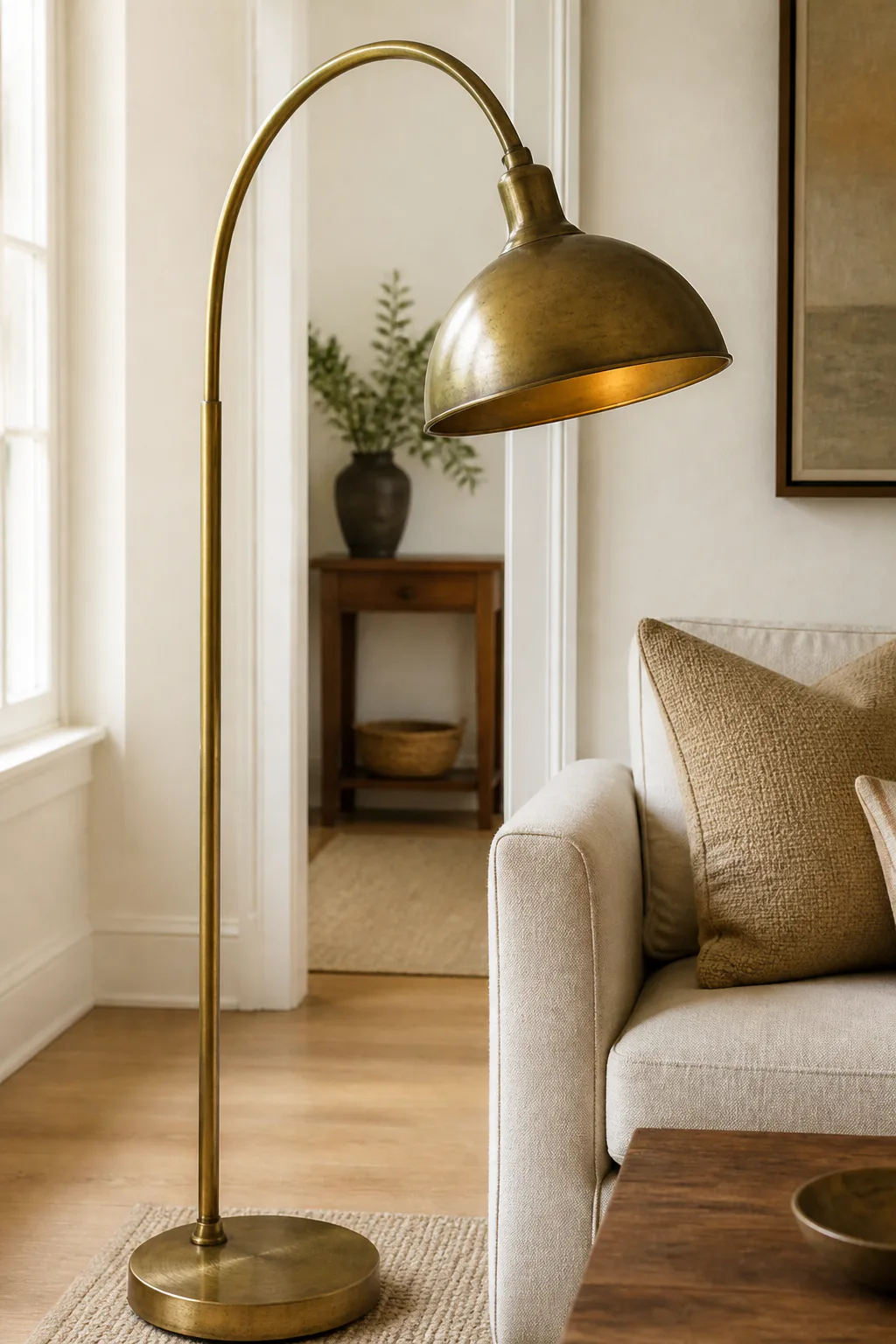
Brass lighting brings a warm metallic note to a living room, and an unlacquered or aged finish can develop character over time. A pendant, floor lamp, or table lamp in patinated brass adds a subtle contrast to painted walls and natural materials. It can feel especially at home beside walnut furniture, warm neutrals, or vintage pieces.
Think about the fixture’s role as well as its finish. A floor lamp can brighten a reading corner, while a pendant helps define the room’s central seating area. Brass does not need to match every handle or accessory; a few considered touches are often enough. If the finish changes with use, treat that evolving appearance as part of the material’s appeal.
Choosing the right light
Match the fixture’s size to the area it serves, and consider how its light will fall at night. A beautiful finish is most effective when the room also feels comfortable to use.
- Use a floor lamp beside a favorite reading chair.
- Try a pendant to anchor a central seating zone.
- Pair aged brass with wood, linen, or other warm materials.
12. Tuck a Whimsical Accent Chair into a Corner
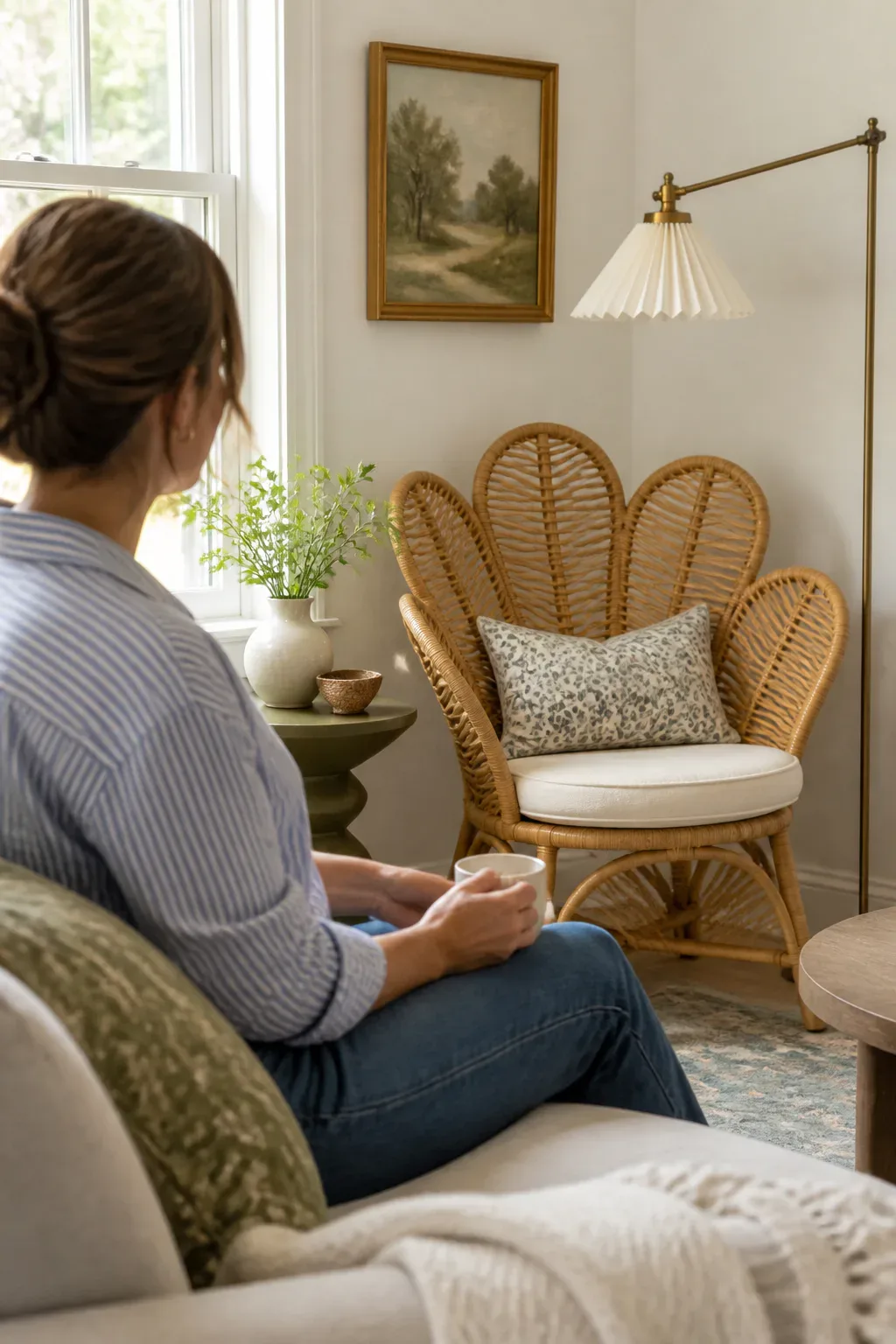
An occasional chair can make an unused corner feel intentional and provide an extra place to sit. A lightweight rattan parlor chair brings an airy, casual quality, while a skirted chair can add a softer, more traditional note. Choosing a silhouette with personality helps the piece feel collected rather than like an afterthought added only to fill empty space.
Before placing the chair, check that it does not interrupt a doorway or the natural route through the room. A small side table or reading lamp can make the spot useful, but the chair should still be easy to move if the room needs to adapt. It can also balance a larger sofa by adding a different texture or shape across the seating area.
Making a corner inviting
Give the chair one supporting detail, such as a cushion or lamp, and leave enough open space around it. The arrangement should feel relaxed, not crowded.
- Choose a chair that is easy to reposition.
- Add a lamp if the corner will be used for reading.
- Use a contrasting texture to link it to the room’s palette.
13. Frame Living Room Art in Vintage Wood
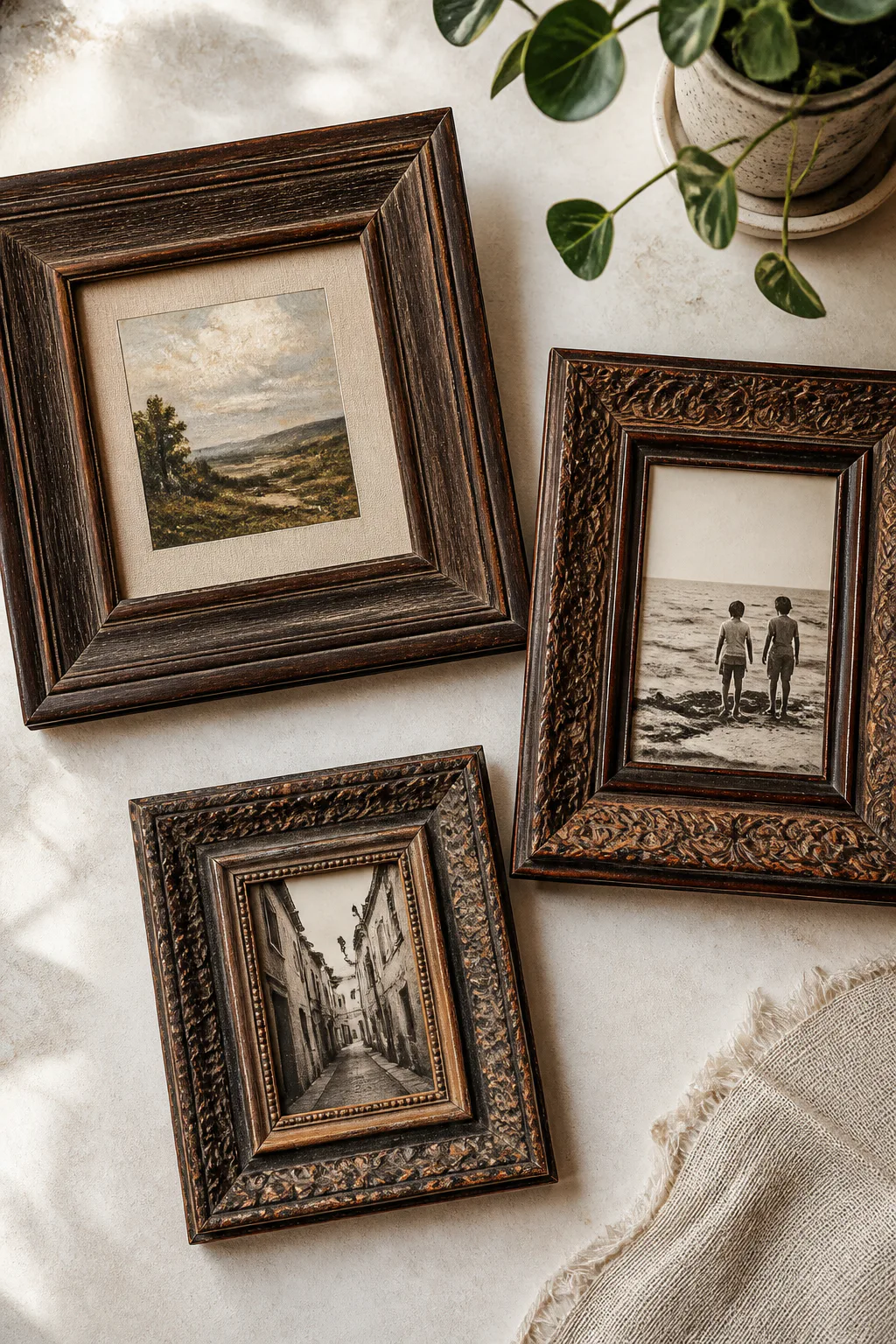
A substantial wooden frame can give artwork or family photographs more presence, even when the image itself is simple. Thick, ornate, or dark frames bring a sense of history and create a clear border against the wall. They work well in a living room where you want personal images to feel intentional rather than like temporary additions.
Mixing frame styles can look inviting when there is a shared thread, such as similar wood tones or a consistent scale. A single ornate frame can stand alone above a console, while several framed photographs can form a more personal gallery. Consider the art and its surroundings together: a dark frame may stand out against a pale wall, while a warm wood finish can echo furniture nearby.
Choosing frames that fit
Let the artwork guide the frame rather than selecting one solely for its decorative detail. Make sure the scale suits the wall and the furniture below it.
- Use a vintage-style frame to highlight a favorite image.
- Repeat wood tones to connect framed art to the room.
- Mix frame shapes while keeping the overall display balanced.
14. Pair a Statement Plant with Handmade Ceramics

A large-leaf plant can bring a living, sculptural presence to a room, especially beside handmade ceramic vessels. The combination pairs natural greenery with the imperfect shapes and tactile surfaces of hand-thrown pottery. Place it near a window, in a quiet corner, or beside a low cabinet where both the plant and the vessels can be appreciated from the seating area.
Let the plant’s size and shape guide the arrangement. A tall, leafy form can balance a low piece of furniture, while a cluster of smaller pots can create a more intimate display. Choose ceramics in finishes that complement the room’s palette, but allow slight differences in glaze or form to show. Be mindful of the plant’s light and care needs before settling on a permanent spot.
Creating a natural focal point
Keep the surrounding area relatively simple so the foliage and handmade details have room to stand out. A woven basket or textured planter can connect the arrangement to other natural materials in the space.
- Choose a plant that suits the light available in the room.
- Pair it with a few ceramics of varied heights or shapes.
- Leave space around the display for an uncluttered look.
15. Layer Woven Shades Beneath Fabric Drapes
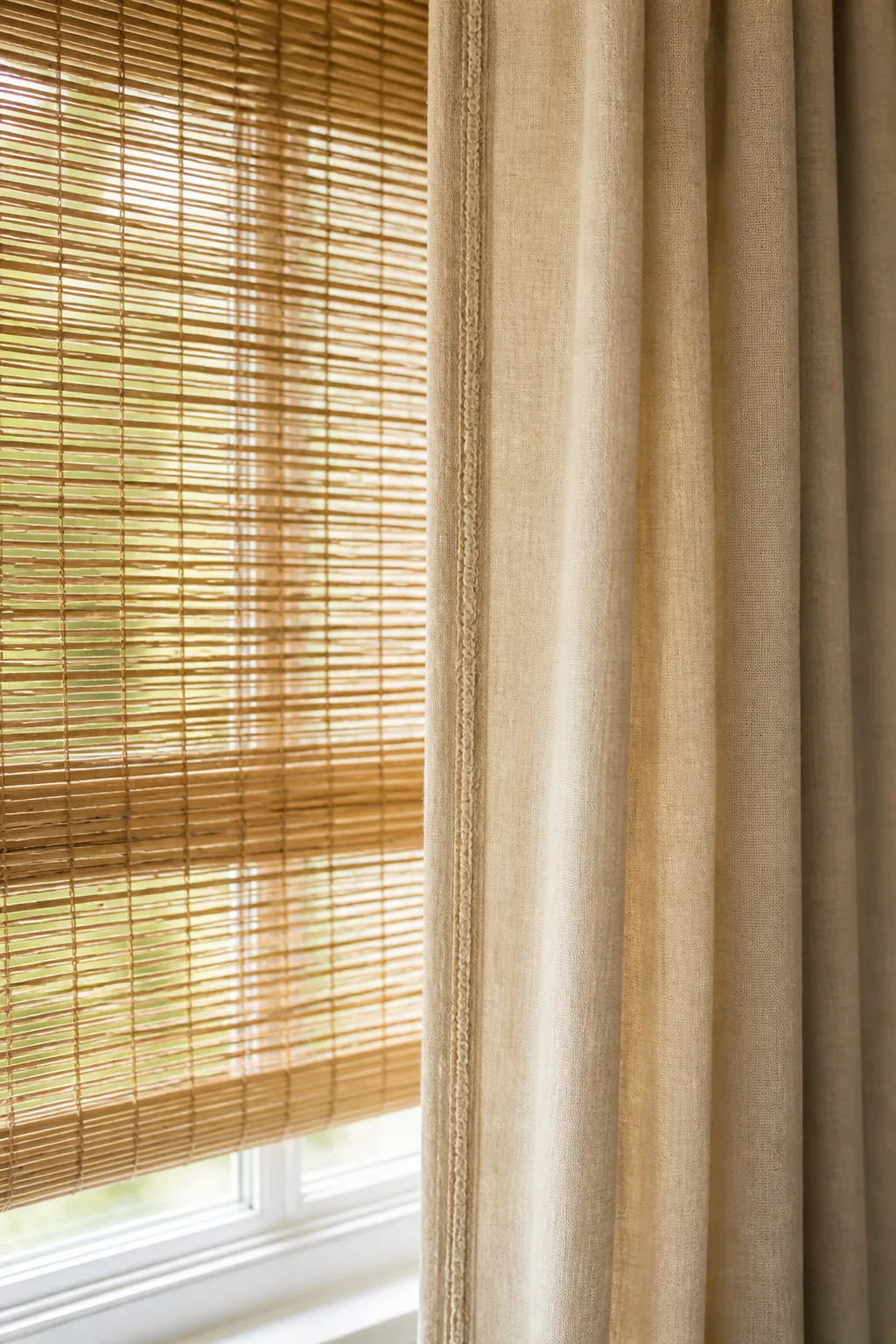
Layered window treatments add softness and texture while giving a living room a more finished appearance. Woven bamboo or chik blinds bring a natural, finely patterned surface, while fabric drapes or relaxed Roman shades add a softer frame. Together, the materials create depth around the window and can complement wood furniture, woven rugs, and other tactile details.
Consider how you use the room and the amount of light you want to manage. Woven shades provide a distinct texture, while fabric layers can make the window feel softer and more tailored. Choose colors that relate to the room without overwhelming it; a neutral woven shade and simple drapes can let the materials do the work. Measure carefully so the layers fit the window neatly.
Putting the layers together
Keep the arrangement practical as well as decorative, making sure each treatment can be opened or adjusted as needed. Consistent tones help the layered look feel calm rather than crowded.
- Pair woven shades with relaxed fabric drapes.
- Choose a palette that complements nearby upholstery and walls.
- Check measurements so the treatments sit cleanly around the window.
Final Thoughts
Personal living room decor comes together through a mix of useful choices and expressive details. Warm paint, varied wood finishes, layered textiles, and vintage accents can each add character, while sculptural furniture, thoughtful lighting, and greenery help the room feel considered and comfortable.
You do not need to try every idea at once. Start with the part of the room that feels unfinished, choose one change that suits your space, and build gradually around the pieces you already love. The best living room is one that feels welcoming to live in and unmistakably yours.