11 Cozy Earthy Living Room Ideas for a Warm, Natural Home
Earthy living rooms feel calm and welcoming because they balance nature-inspired color with materials that show their texture and character. Warm wood, clay, linen, woven fibers, and soft greenery can make a space feel grounded without requiring a complete redesign.
These ideas offer approachable ways to bring that feeling into your home, from styling a coffee table to changing the wall finish or lighting. You can choose one detail to refresh a room or combine several for a more layered look.
This guide is for anyone who wants a cozy living room that feels personal as well as practical. Consider your room’s light, existing furniture, and how you use the space, then adapt the ideas to suit your home.
1. Style a Coffee Table with Terracotta Pottery
Handmade clay bowls and a generously sized terracotta vase bring sun-baked color to the center of a seating area. Their earthy tones work especially well with wood, cream upholstery, and greenery, adding warmth without introducing a busy pattern.
Keep the arrangement relaxed so the pottery feels collected rather than overly formal. A low bowl can hold a few natural objects, while a taller vase gives the tabletop a little height. Leave enough clear space for drinks, books, and everyday use.
How to style the arrangement
Vary the shapes and heights, but keep the palette simple. The irregular finish of handmade pieces adds character, so they do not need to match exactly.
- Pair one larger vase with a shallow bowl or small dish.
- Choose clay shades that complement your rug or cushions.
- Set pottery on a small stack of books for gentle height variation.
- Leave part of the table open for practical use.
This small update can tie a neutral seating area to the warmer colors and tactile materials elsewhere in the room.
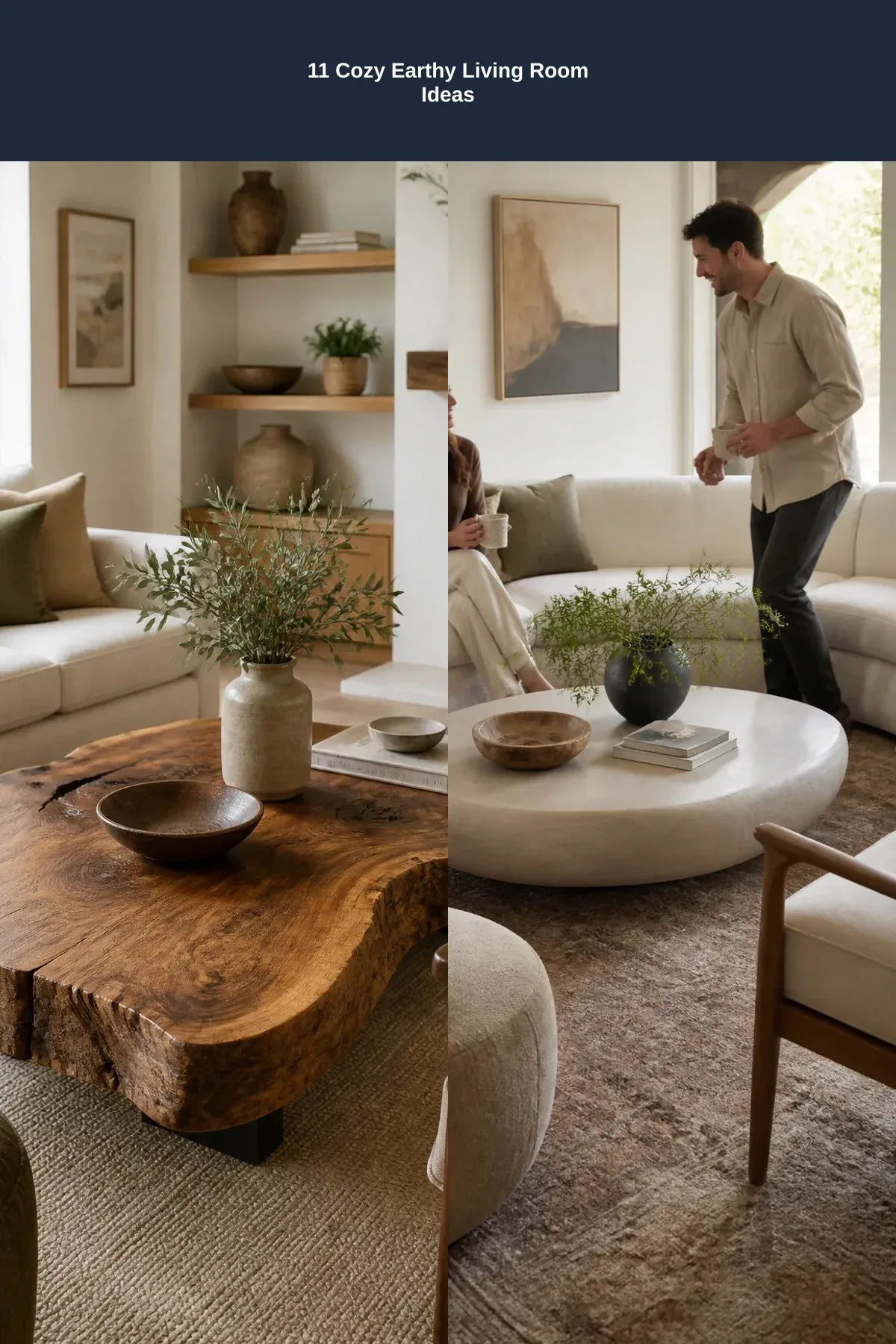
2. Anchor the Room with a Live-Edge Coffee Table

A live-edge coffee table makes natural wood the focal point of a living room. Its grain, knots, and uneven outline bring a sense of age and individuality that a perfectly uniform surface may lack. Reclaimed wood can offer a similar effect, with visible marks that give the piece a lived-in feel.
Because the table has a strong natural presence, it works best when the surrounding furniture leaves it room to stand out. Set it within easy reach of the sofa and chairs, and avoid crowding its surface with too many accessories.
Let the wood lead
Think about how the table’s shape and tone relate to the other finishes in the room. A warm wood surface can balance soft upholstery, while a darker grain can add contrast to a pale rug.
- Look for a size that allows comfortable movement around the seating.
- Keep decorative objects low so the grain remains visible.
- Echo the wood tone with a side table, frame, or shelf.
- Use coasters and follow care guidance suited to the table’s finish.
The table can become a grounding piece that connects organic texture with the room’s everyday function.
3. Layer a Jute Rug Beneath the Seating
A chunky jute rug gives a seating area an immediate sense of warmth and texture. Its natural color is easy to pair with wood, linen, and earthy accents, while the woven surface helps define the lounge zone in an open-plan room.
For a balanced layout, choose a rug that relates to the sofa and chairs rather than looking like a small island beneath the coffee table. Where the room allows, let the front legs of the seating rest on the rug. This helps the pieces feel connected.
Make the rug work for your room
Jute has a distinct texture, so consider how it will feel underfoot and how the living room is used. Layering it with a softer rug can add comfort while keeping the natural-fiber look.
- Measure the seating area before choosing a rug size.
- Use a rug pad to help limit slipping and movement.
- Layer a smaller soft rug on top for extra comfort or color.
- Check care instructions and clean spills promptly.
A natural-fiber rug creates a calm foundation for the furniture and smaller decorative details.
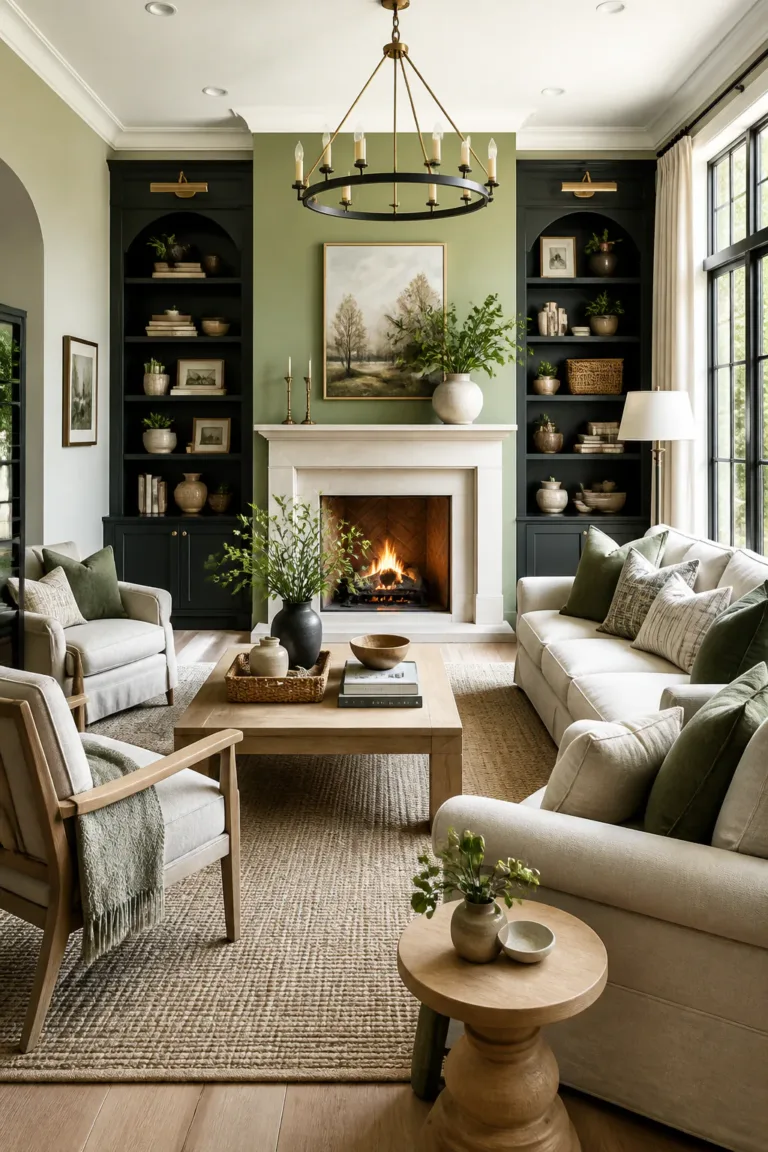
4. Paint an Olive Green Accent Wall
An olive green accent wall brings a muted, nature-inspired color into the living room. It can create a gentle backdrop behind the main seating or fireplace, adding depth while keeping the overall mood quiet and grounded.
Olive works well alongside warm woods, cream fabrics, clay accents, and leafy plants. Since paint can shift in appearance as daylight changes, consider how the wall reads at different times before committing to a shade.
Choose the right wall and finish
A wall behind the sofa can make the seating area feel anchored, while a fireplace wall can emphasize an existing focal point. Keep the remaining surfaces and furnishings simple enough that the green remains a considered accent.
- Test a paint sample in both daylight and evening light.
- Compare olive shades with your flooring and large furniture.
- Repeat the color in small accents for a subtle connection.
- Use a finish suited to the wall’s condition and household needs.
The result is a strong but restful backdrop that adds color without losing the room’s natural character.
5. Create a Bouclé Sofa with Linen Layers
A cream bouclé sofa paired with oatmeal linen cushions creates a soft, tactile place to settle in. The contrast between bouclé’s nubby surface and linen’s relaxed weave gives a neutral seating area dimension without depending on bold colors or prints.
This combination suits rooms that need a cozy anchor, especially when balanced with a textured rug and warm wood. Keep the palette within a family of creams, sands, and gentle browns, or add one muted green or clay-colored cushion for a little variation.
Layer texture with care
Start with the sofa as the largest soft surface, then add cushions in a few complementary textures. A folded throw can make the seating feel more inviting while keeping the look casual.
- Mix cushion sizes without filling every seat with pillows.
- Choose linen tones that sit comfortably beside the bouclé.
- Add a woven or knitted throw for another tactile layer.
- Check fabric care guidance before choosing upholstery.
Soft materials make an earthy palette feel welcoming, not sparse, and give the seating area a comfortable focal point.
6. Build a Conversation Area Around Curved Furniture

Curved furniture brings a softer rhythm to a living room, especially when a rounded sofa is paired with a pebble-shaped coffee table. Organic silhouettes ease the visual effect of straight walls and rectangular furniture, helping the seating area feel relaxed and fluid.
This layout works well when conversation is the priority. Arrange chairs or a sofa so people can face one another, and keep pathways clear around the curves. In a smaller room, a rounded table can soften the layout without requiring a large curved sofa.
Arrange for easy movement
Use the furniture’s curves as a guide, not a reason to crowd the room. Leave enough space to move comfortably and make sure everyone can reach a surface for a drink or book.
- Center the coffee table within reach of the main seats.
- Angle additional chairs toward the sofa to invite conversation.
- Balance rounded forms with simple, clean-lined pieces.
- Keep walkways open around the seating group.
Organic shapes add gentle movement while keeping the room practical for everyday gathering.
7. Finish the Walls with Soft Limewash
A chalky limewash or mineral finish gives walls a softly varied appearance that changes as light moves through the room. Rather than a perfectly flat surface, the finish adds subtle movement and a sense of texture that suits an earthy, collected interior.
This treatment can work across the whole living room or on a single focal wall. Its understated character pairs naturally with linen, wood, pottery, and other materials with visible texture, so the walls can feel special without competing with furnishings.
Plan the finish before painting
Application methods and preparation depend on the product and the condition of your walls, so follow the manufacturer’s directions carefully. Test the look in a small area first; the finished effect can appear different as the light changes.
- Choose a warm, muted shade that suits your existing palette.
- Test a sample where you can observe it throughout the day.
- Check whether your wall needs a particular primer or preparation.
- Use the recommended tools and application technique.
Softly textured walls provide a quiet backdrop for the room’s more tactile and personal details.
8. Fill an Empty Corner with an Indoor Olive Tree
An indoor olive tree can give an empty living room corner height, greenery, and a sculptural outline. Its branches draw the eye upward and add a natural counterpoint to sofas, cabinets, and other solid forms.
If a living tree is not suited to your light or care routine, consider arranging sculptural branches in a large ceramic vessel instead. Either approach brings a vertical element into the room and works especially well beside a window, near a reading chair, or at the end of a sofa.
Give greenery a considered place
Choose the plant or branches with the corner’s light and available space in mind. A substantial pot helps the arrangement feel intentional, while a simple vessel keeps attention on the natural shape.
- Check the light needs of a live tree before choosing its spot.
- Select a pot with enough room and stability for the plant.
- Leave space around the branches so they do not obstruct walkways.
- Use a ceramic vessel that complements nearby colors and materials.
One thoughtfully placed plant can make the room feel more alive without adding visual clutter.
9. Add a Cane-Front Media Cabinet
A media cabinet with woven cane or rattan doors adds natural texture to a wall that can otherwise feel dominated by screens and smooth surfaces. The weave softens the look of the media area and brings a handcrafted detail into the room.
Choose a cabinet that suits the scale of your television and the available wall space. Its woven fronts can pair easily with wood furniture, jute, and linen, but a few simpler pieces nearby help the texture remain noticeable instead of overwhelming the room.
Balance texture and function
Before choosing a cabinet, think through what it needs to store and how your devices will be arranged. Check practical details such as ventilation, cable access, and whether the doors suit the equipment you plan to keep inside.
- Measure the wall and television before selecting a cabinet.
- Check for suitable cable openings and device ventilation.
- Repeat woven texture sparingly elsewhere in the room.
- Style the top with a few simple objects rather than a crowded display.
The cabinet adds warmth to a functional zone while keeping the room’s natural materials connected.
10. Layer Linen-Shaded Lamps Around the Sofa
Linen-shaded floor and table lamps create a softer alternative to relying on bright overhead lighting. Their diffused glow helps the seating area feel comfortable in the evening and gives the room a warm, layered atmosphere.
Place lamps where they support how you use the space: beside a reading chair, near the end of a sofa, or on a side table. A mix of heights helps spread light around the room, while warm amber bulbs complement earthy colors and natural materials.
Build a gentle lighting scheme
Think in layers rather than trying to light every corner from one source. Choose shades and bases that feel at home with the rest of the decor, such as linen, ceramic, or wood.
- Use a floor lamp to bring light beside a sofa or chair.
- Add a table lamp for a lower, more intimate pool of light.
- Choose warm-toned bulbs and check fixture compatibility.
- Consider dimmable options where the lamp and bulb support them.
Thoughtful lamp placement makes the living room feel inviting while keeping useful light close at hand.
11. Style Open Shelves with Collected Natural Objects
Open shelves can become a personal focal point when they hold hand-thrown ceramics, vintage stone finds, and meaningful travel mementos. Natural materials bring varied shapes and textures to the display, while personal objects give it a story that feels more individual than a matching set of decor.
To keep the shelves calm, edit the collection rather than filling every space. Leave a little breathing room between groupings, and mix taller pieces with low bowls or small objects so the display has an easy rhythm.
Arrange a relaxed collection
Start with a few favorite pieces and arrange them by color, material, or memory. You can change the display over time, making the shelves feel lived-in rather than permanently staged.
- Group objects in small clusters instead of lining them up.
- Vary heights, shapes, and textures for visual interest.
- Leave open space so special pieces can stand out.
- Mix useful items with keepsakes that have personal meaning.
A thoughtful shelf display brings character into the room and connects its earthy palette to your own story.
Final Thoughts
Earthy living room style comes together through a mix of natural materials, gentle color, comfortable textures, and personal details. You might begin with one change, such as a jute rug, terracotta pottery, or a lamp beside the sofa, then build from there as you learn what suits your space.
Let the room reflect how you live in it. When organic finishes and thoughtful layers work alongside clear pathways and practical seating, the result can feel both grounded and genuinely welcoming.