15 Stunning Living Room Decorating Ideas for a Cozy, Stylish Space
A living room can feel noticeably different with a few thoughtful changes; you don’t need to remodel the whole space to make it more inviting. Color, furniture shape, lighting, and personal details can each help shift the mood while working with the pieces you already own.
These living room decorating ideas range from a dramatic accent wall to simple styling updates for a coffee table. Some make a strong visual statement, while others add texture, warmth, or a more comfortable place to gather.
Whether you’re decorating a compact apartment, refreshing a family room, or working around an existing sofa, start with the ideas that suit your room and routine. A cohesive look often comes from repeating a few colors and materials rather than trying to use every trend at once.
1. Paint an Accent Wall Deep Emerald
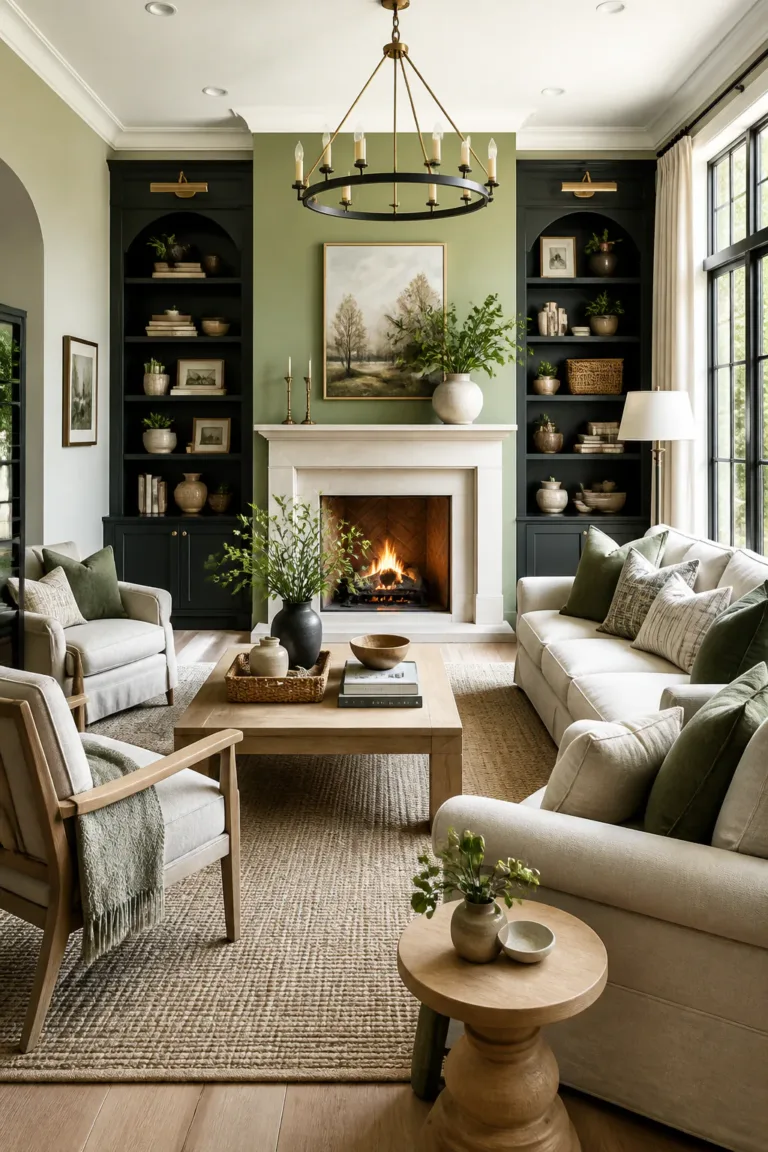
A deep emerald wall behind the main seating area gives a living room a rich focal point without requiring color on every surface. The saturated shade can make a pale sofa or natural wood furniture stand out, while its green undertone feels connected to the outdoors.
This idea works especially well on the wall you see when entering the room or the one behind a sofa. In a smaller space, painting one wall can provide drama while leaving the other walls light, helping the room feel considered rather than enclosed.
How to make the color work
Repeat the green in small, movable accents so the wall feels tied into the rest of the room. Warm neutrals and natural textures keep the strong color welcoming instead of overly formal.
- Test paint samples in morning and evening light before choosing a shade.
- Pair emerald with cream, tan, or warm wood for balance.
- Use brass, black, or wood frames to define art against the wall.
Keep the surrounding decor edited so the wall can remain the room’s main visual anchor.
2. Arrange Curved Furniture Around a Round Table
Curved seating and an organic coffee table soften the geometry of a living room. Rounded silhouettes feel inviting and create a more fluid look than a row of sharp corners, especially in a space where people gather to talk or relax.
A curved sofa can help define a seating zone in an open-plan room, while a pair of rounded chairs can bring the same effect to a smaller layout. A circular or irregularly shaped table echoes those lines and makes it easier to move around the center of the arrangement.
Design tips for a softer layout
Think about the paths people use to enter, sit down, and move through the room before settling on furniture placement. The arrangement should feel relaxed, not crowded by too many rounded pieces.
- Leave comfortable walking space around the coffee table.
- Choose a table with a size that suits the sofa’s seat depth.
- Mix curved forms with a few straight-edged pieces for contrast.
Even one rounded chair or table can introduce a softer rhythm without replacing the main sofa.
3. Layer Cream Bouclé, Linen, and Raw Wood
A cream living room can feel warm and dimensional when its materials have different textures. Bouclé brings a nubby, cozy surface; linen adds a relaxed woven quality; and raw or lightly finished wood gives the palette a natural foundation.
This approach suits rooms where you want a calm backdrop but still want the details to feel inviting. It can work with a neutral sofa, a textured rug, and wood accents, or be built gradually through pillows, throws, and smaller furniture pieces.
Build a tactile neutral palette
Vary both the texture and the scale of the materials so the room does not read as one flat shade. A few subtle differences in cream, ivory, and beige help separate pieces while keeping the overall effect cohesive.
- Combine a nubby cushion with smoother linen upholstery.
- Add a raw-wood stool, side table, or picture frame.
- Use a woven throw or rug to add another layer underfoot.
Choose finishes that are comfortable for your household, especially on frequently used seating.
4. Add Unlacquered Brass Wall Sconces
Unlacquered brass sconces add a warm metallic note beside a sofa or favorite reading chair. Because the finish is not sealed in the same way as lacquered brass, it can develop a distinctive patina with use, giving the fixture a lived-in character.
Wall lighting can also free up space on side tables and create a more layered evening atmosphere than relying on a single overhead fixture. Place sconces where they provide useful light without interrupting artwork or making the seating area feel visually crowded.
Placement and finish ideas
Think about what the light needs to do: illuminate reading, frame a sofa, or add a softer glow. If the sconces require electrical installation, plan their placement and wiring before mounting them.
- Position a pair on either side of a sofa or artwork.
- Choose shades that direct light where you need it.
- Repeat brass in a frame, tray, or small hardware detail.
The warm finish works particularly well with cream upholstery, deep green, and natural wood.
5. Create a Shelf Display of Vintage Finds
A shelf display of vintage books, pottery, and travel prints can make a living room feel personal rather than showroom-perfect. These objects bring different shapes, colors, and histories together, while their arrangement gives a blank wall or bookcase a clear point of interest.
Use a shelf that suits the scale of the room, whether it is a built-in, a floating ledge, or a bookcase near the seating area. A collected display does not need to be expensive or complete all at once; it can grow over time as you find pieces you genuinely enjoy.
Arrange objects with breathing room
Vary the height and orientation of what you display, but leave some open space so each piece can be seen. A few grouped objects usually feel more intentional than filling every shelf from end to end.
- Stack books horizontally and vertically to create varied levels.
- Pair pottery with a small framed print or photograph.
- Repeat one or two colors to bring different finds together.
Keep fragile or valuable objects out of reach if the room is used by young children or pets.
6. Frame Living Room Art with Colorful Mats
A colorful or patterned mat can change the feel of framed art without replacing the print itself. It adds a deliberate border, highlights a color within the artwork, and gives a simple frame a more custom, playful appearance.
This is an easy way to refresh a gallery wall or make a small print stand out above a console. The mat can echo a cushion, rug, or accent wall, though it does not need to match exactly; a related shade can add interest while keeping the room coordinated.
Choose a mat that supports the artwork
Look at the colors and visual weight of the print before selecting a mat. A busy image may benefit from a quieter border, while a minimal illustration can handle a stronger color or subtle pattern.
- Try muted blue, rust, green, or blush for a gentle color accent.
- Use patterned matting with simple artwork and an understated frame.
- Keep mat colors consistent across nearby pieces for cohesion.
When in doubt, test a paper color behind the print before committing to a frame update.
7. Ground the Seating Area with a Walnut Console
A deep-toned walnut console brings visual weight to a room with light walls, pale flooring, or a soft neutral sofa. Its darker surface anchors the space and creates contrast, helping a seating arrangement feel more settled rather than washed out.
Place a console behind a sofa, along a media wall, or on a long open wall where it can provide both storage and display space. The rich wood tone can also connect smaller dark accents, such as picture frames or a coffee table, without making the room feel heavy.
Style the console with balance
Keep the top useful as well as attractive, especially if it sits behind the main seating. A mix of lamps, books, and a few personal objects can give the surface character while leaving room for everyday needs.
- Pair walnut with cream upholstery or a light-colored rug.
- Use a lamp to add practical light at one end of the console.
- Leave some clear surface space instead of filling the entire top.
Repeating walnut elsewhere in a small detail can make the contrast feel intentional.
8. Install an Oversized Sculptural Pendant
An oversized sculptural pendant draws attention upward and gives a living room a strong architectural feature. Its shape can bring interest to a simple ceiling, while the downward light helps establish the seating area as the room’s center.
This idea works best when the fixture has enough visual space around it to be appreciated. In a room with high ceilings, a larger pendant can help connect the upper part of the room to the furniture below; in a lower room, look for a form that makes an impact without hanging too low.
Make statement lighting practical
Consider how the pendant looks from the doorway and from the main seating before deciding on its position. It should complement other light sources rather than being the only option for every activity.
- Center the fixture over the seating zone or coffee table.
- Check that its hanging height leaves clear sightlines.
- Add table or floor lamps for softer light in the evening.
A sculptural fixture can be a focal point even when the rest of the decor stays restrained.
9. Build a Low-Seating Nook with Rattan Accents

A low-seating nook with rattan details creates a relaxed corner for reading, conversation, or a quiet morning coffee. The lower profile makes the arrangement feel informal, while woven surfaces bring natural texture and a light, easygoing quality.
Look for an unused corner near a window or a bright section of the room, then define it with a chair, floor cushion, or low bench. Sunlit textiles in soft colors can keep the area feeling open, while a small side table makes it comfortable enough to use regularly.
Keep the nook comfortable and connected
Repeat one material or color from the rest of the living room so the corner feels like part of the same design. Layering a cushion or throw over woven furniture can soften the look and make the seat more inviting.
- Add a rattan chair, basket, or woven lamp shade.
- Use a soft cushion or throw for extra comfort.
- Place a small table within easy reach of the seat.
A small, purposeful nook can make an overlooked corner feel useful without adding bulky furniture.
10. Add Picture-Frame Molding Behind the Sofa
Picture-frame molding gives a plain wall architectural character and creates a polished backdrop behind a sofa. The applied trim forms simple rectangular panels, adding depth and structure without requiring a full room renovation.
This treatment can suit both traditional and contemporary living rooms, depending on the profile and spacing of the molding. Paint it the same color as the wall for a subtle effect, or use a contrasting shade if you want the panel shapes to stand out more clearly.
Plan the wall before installing
Map out the panels in relation to the sofa, artwork, outlets, and existing trim. Even spacing and thoughtful proportions help the finished wall look intentional rather than like trim added as an afterthought.
- Measure the full wall and mark a layout before cutting material.
- Keep panel spacing consistent across the sofa backdrop.
- Paint the molding and wall together for a seamless look.
For a rental or a quick update, framed art can suggest a similar structured effect without permanent changes.
11. Fill an Empty Corner with a Sculptural Plant
A large plant can bring life to an empty living room corner and soften the hard lines of walls and furniture. A fiddle-leaf fig or olive tree has a sculptural outline, while its greenery adds color that works naturally with wood, cream, and earthy finishes.
Choose a spot where the plant has room to grow and will receive suitable light. A substantial ceramic planter creates a more grounded look, while a woven basket adds a softer, casual texture; either can help the plant feel like a considered part of the decor.
Choose a plant and planter for the space
Consider the room’s light and your willingness to maintain the plant before choosing a variety. A beautiful plant is most effective when it can thrive in its location, rather than being squeezed into a corner that does not suit its needs.
- Check the available natural light at different times of day.
- Choose a planter that balances the plant’s height and shape.
- Leave space around the leaves so the corner does not feel crowded.
A well-placed plant adds height and organic form without needing another piece of furniture.
12. Make a Deep Sectional the Lounge Centerpiece
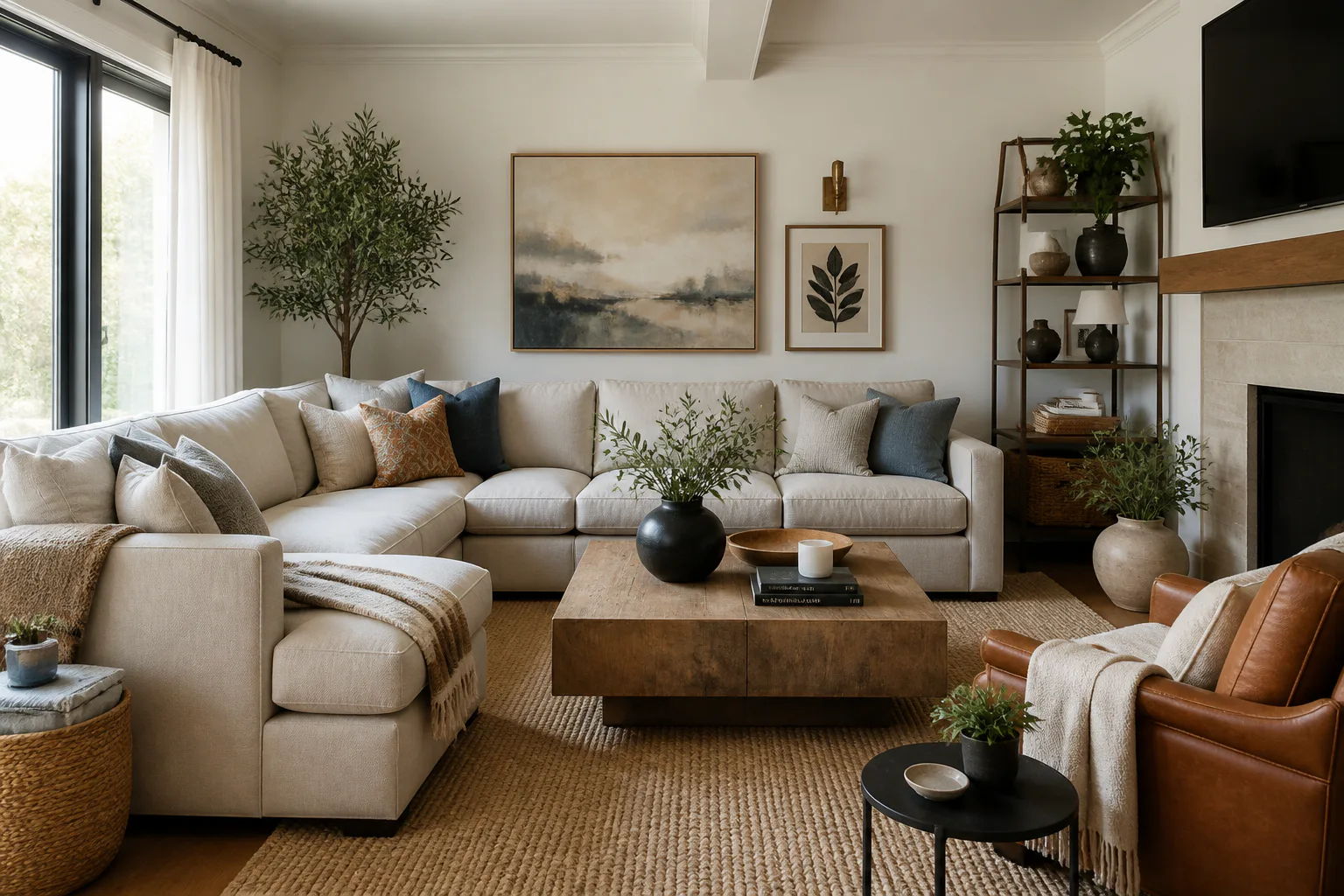
A deep, low-profile sectional can make a living room feel ready for lounging, family time, and relaxed conversation. Its generous seating gives the room a clear center, while a lower silhouette can keep a large piece from feeling too formal or imposing.
Before choosing a sectional, measure the room and consider how people will move around it. A roomy sofa is only comfortable if it leaves usable pathways and does not block doors, windows, or the natural connection between the living room and nearby spaces.
Choose a sectional for everyday use
Think about who uses the room and how the sofa needs to function. A practical upholstery choice and a layout that suits your household can matter as much as the sectional’s appearance.
- Measure the full footprint, including any chaise or corner sections.
- Check that the fabric suits your household’s daily routines.
- Balance the sectional with a rug and table sized for the seating zone.
Keep surrounding pieces lighter or more open so the sectional remains inviting rather than overwhelming.
13. Layer a Vintage Rug over Natural Jute
Layering a smaller vintage rug over a larger natural jute rug adds pattern, texture, and depth to the seating area. The jute acts as a quiet base that helps define the room, while the patterned top rug brings color and a collected feel to the center of the arrangement.
This approach can also help a seating zone feel distinct in an open-plan space. It gives you a way to introduce a vintage pattern without covering the entire floor, and the contrast between the woven base and detailed upper rug makes the layers easy to notice.
Layer rugs with proportion in mind
Choose a base rug large enough to sit under the main furniture, then place the smaller rug where it can anchor the coffee table or central seating. Keep the combination stable and comfortable for everyday foot traffic.
- Let the neutral rug extend beyond the patterned rug on all sides.
- Choose colors in the top rug that relate to the room’s palette.
- Use a suitable rug pad to help prevent slipping.
The mix looks especially cohesive when another natural texture appears elsewhere in the room.
14. Style a Coffee Table with Books and Pottery
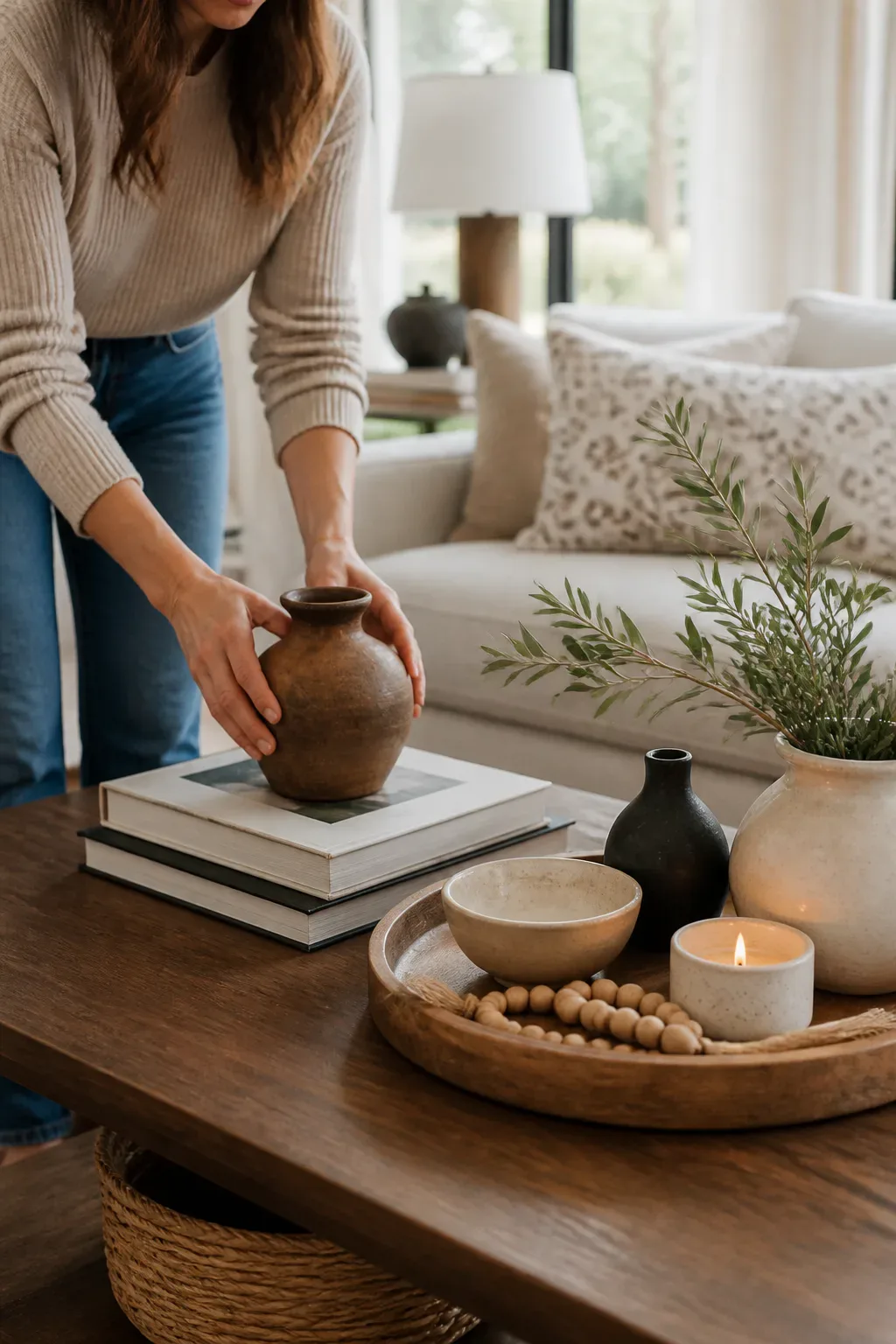
A coffee table feels more composed when its objects are arranged in a few varied layers. Books provide a low, flat base, pottery adds sculptural shape, and a tray or candle introduces a smaller detail that makes the display feel considered.
Keep the arrangement practical as well as attractive. The table still needs room for a drink, a remote, or whatever your household uses it for, so styling a portion of the surface is often more useful than covering it completely.
Create a simple tabletop grouping
Vary the height of the objects and bring together a few materials, such as paper, ceramic, and wood. A small cluster of items can look intentional without requiring a perfectly matched set of accessories.
- Stack one or two books to create a stable low platform.
- Add a tray to group smaller objects and make them easy to move.
- Include a candle or tactile pottery piece for contrast.
Adjust the display whenever you need more clear space; a useful coffee table should remain easy to live with.
15. Pair a Cognac Leather Chair with a Soft Sofa

A cognac leather chair brings warmth and a smooth, durable-looking surface beside a soft fabric sofa. The contrast gives a living room more material variety, while the caramel tone can connect neutral upholstery with wood flooring or other earthy accents.
Place the chair where it can join the conversation rather than leaving it isolated at the edge of the room. Angling it toward the sofa or coffee table helps the seating feel like one arrangement, even when the chair has a different shape or style.
Balance the mix of materials
Let the leather be one warm accent among softer elements, not the only source of color. A throw, cushion, or nearby wood detail can link the chair to the rest of the room without making every surface match.
- Choose a chair scale that works beside the sofa’s height and depth.
- Repeat warm tones in a pillow, basket, or wood finish.
- Use a soft rug to bring the leather and fabric seating together.
The mix feels welcoming and layered, with the leather adding definition to a relaxed seating area.
Final Thoughts
Refreshing a living room does not have to mean changing everything at once. A deep accent wall, a better lighting plan, a layered rug, or a personal shelf display can each make the space feel more intentional while fitting around the furniture you already have.
Start with the change that solves a real need or makes you happiest, then build around it with a few repeated colors and textures. The most inviting living rooms balance visual interest with comfort, leaving room for everyday life as well as thoughtful design.