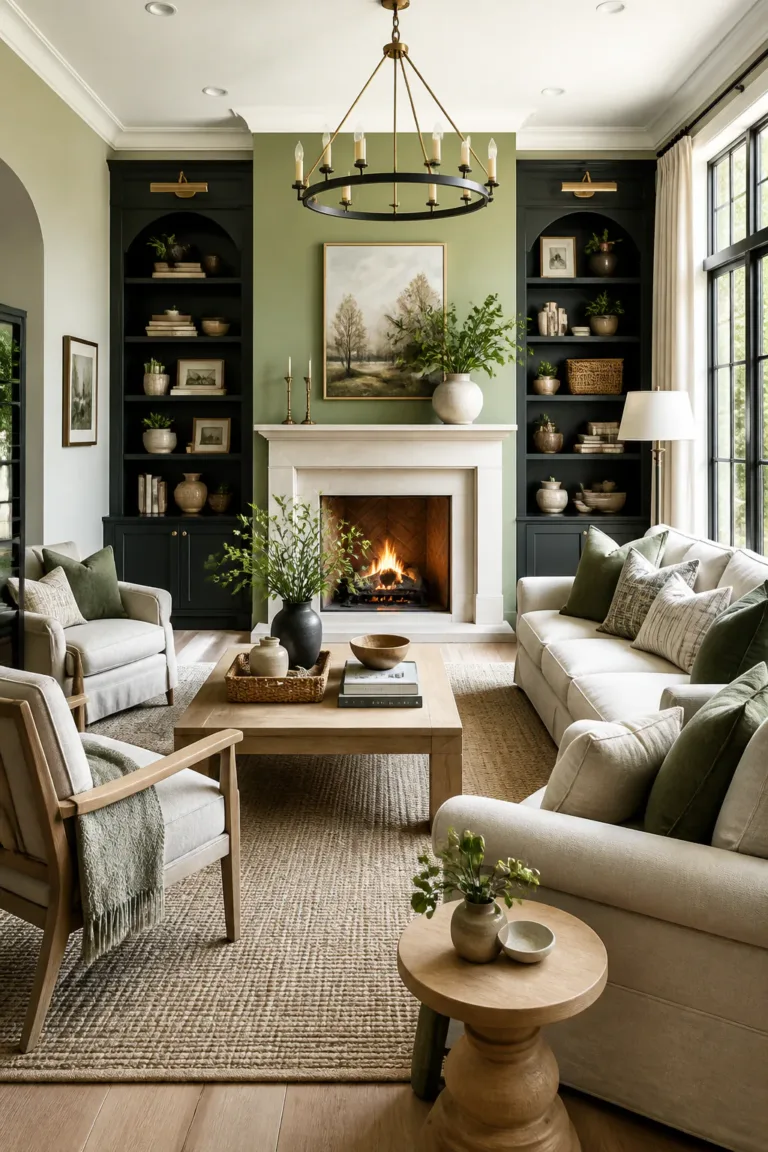
11 Stunning Earthy Living Room Ideas
An earthy living room feels connected to the outdoors without needing to look rustic or overly themed. Warm color, natural materials, soft shapes, and a few personal details can make the space feel grounded while still reflecting your style.
These ideas work in a range of homes, from compact apartments to open-concept rooms. You can try one change at a time, such as adding a textured rug or swapping harsh overhead light for a warm lamp, or combine several elements for a more complete refresh.
As you plan, consider what your room already has: the wall color, flooring, natural light, and furniture you want to keep. The most inviting earthy spaces balance materials and colors rather than matching everything, so let a few well-chosen textures and organic accents do the work.
1. Paint the Walls and Ceiling Warm Clay
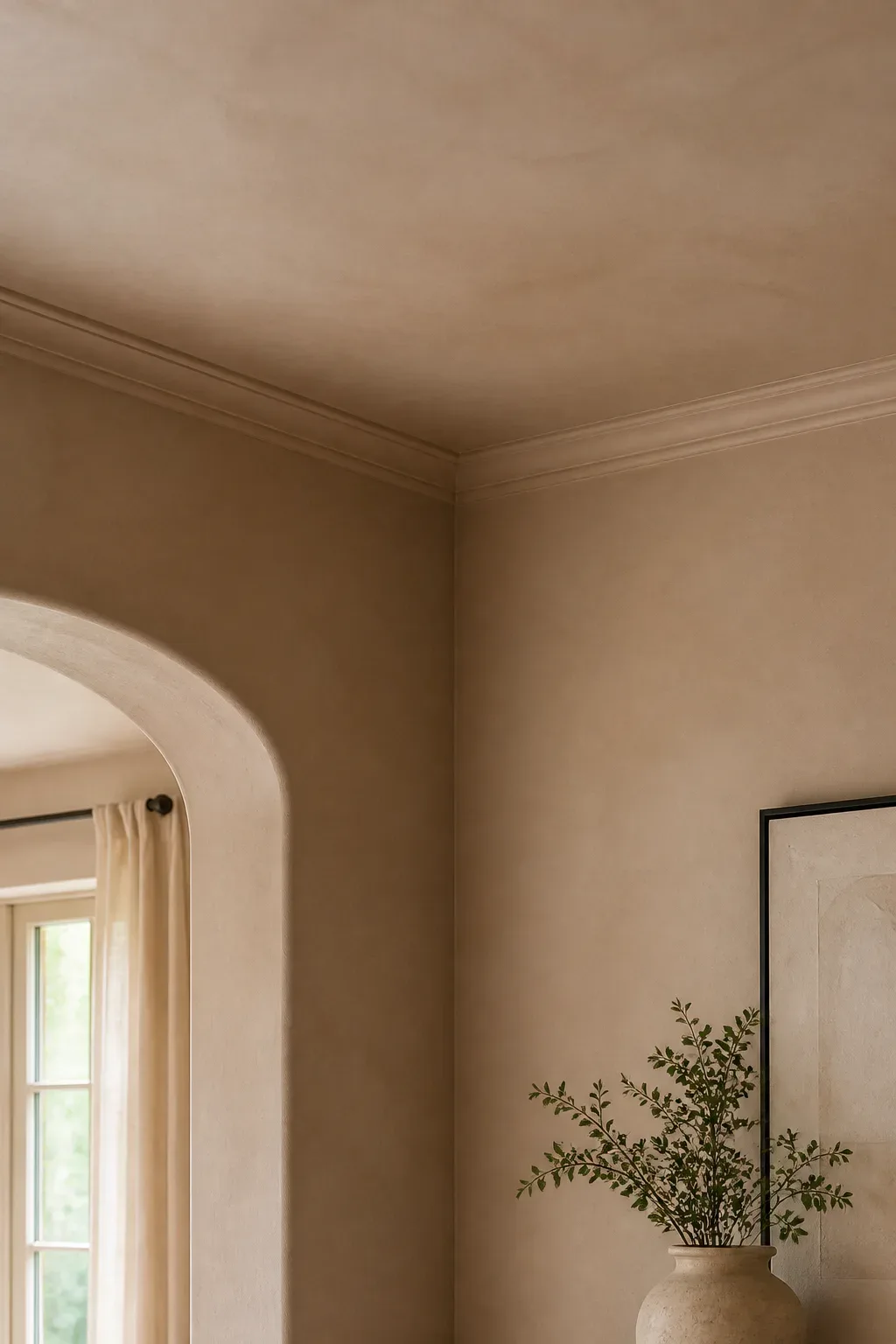
Painting the walls and ceiling the same muted sand, taupe, or clay shade can make a living room feel calm and cocoon-like. With fewer visual breaks above eye level, the room reads as a unified backdrop for furniture, artwork, and natural materials.
This approach can be especially effective in a room with high ceilings or a simple architectural shape, where the continuous color adds intimacy. In a smaller room, a soft, light earthy shade can create warmth without feeling heavy; deeper tones may suit a larger space with generous daylight.
How to choose and use the color
Test a few paint samples on different walls and look at them throughout the day. Natural and artificial light can shift a clay shade from rosy to beige, so judge it alongside your flooring and the finishes you plan to keep.
- Choose a muted tone rather than a highly saturated orange or yellow.
- Use trim in the same shade for a seamless, enveloping effect.
- Balance warm walls with cream textiles, dark wood, or leafy green accents.
Repeat the wall color in small details, such as a ceramic vase or a cushion, to make the palette feel intentional.
2. Anchor the Room with Curved Furniture
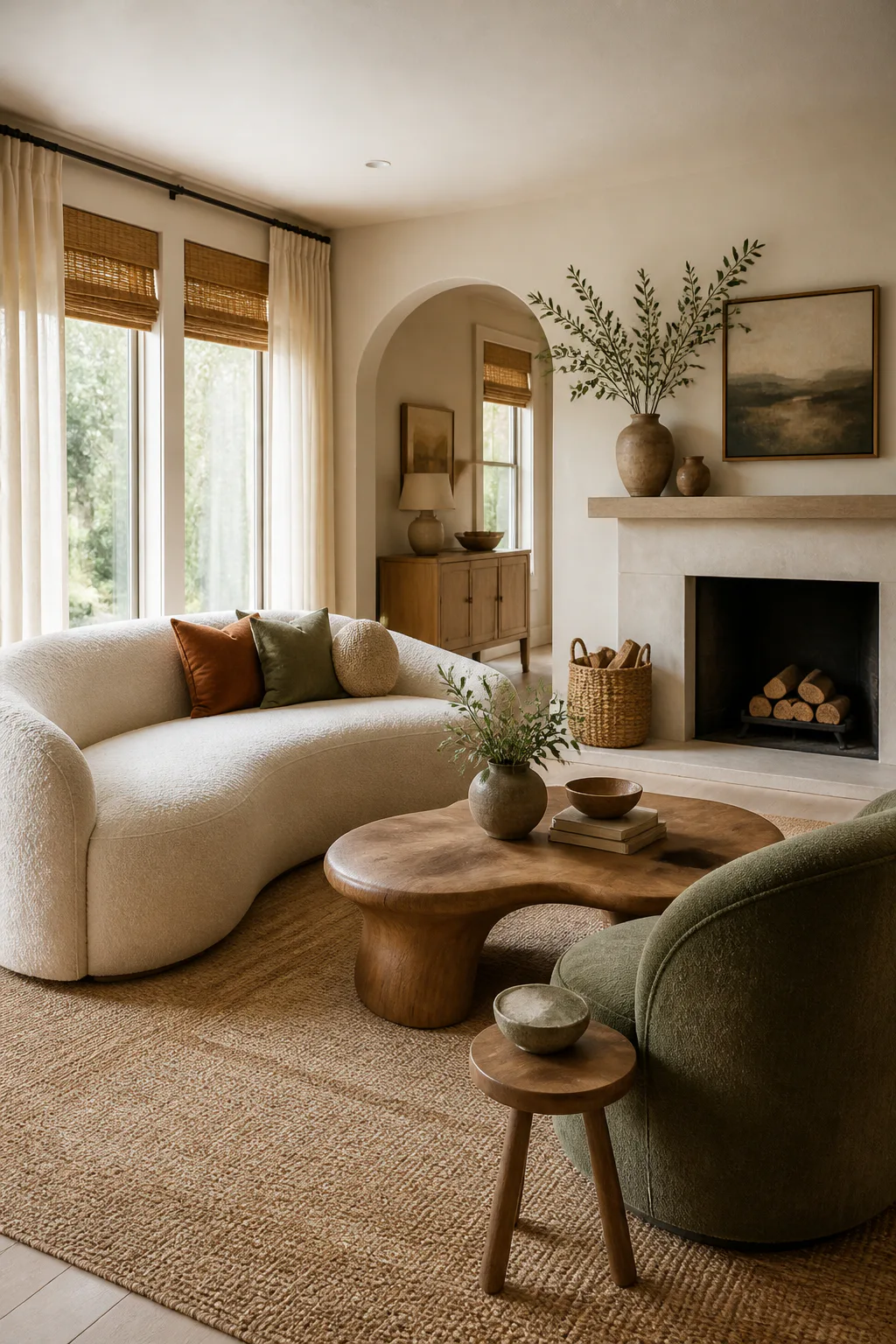
Rounded furniture brings a softer rhythm to a living room than a layout made entirely of straight edges. A curved sofa, a rounded accent chair, or an undulating coffee table can echo the irregular shapes found in nature and make the seating area feel relaxed.
Curves are useful in both open rooms and tighter layouts. A rounded silhouette can soften a boxy space, while a curved sofa can help define a seating zone without using a bulky divider. The goal is not to replace every straight line, but to create contrast and easier visual flow.
Build a balanced seating arrangement
Start with one curved piece as the focal point, then check that the room still feels practical to move through. Leave enough space to reach seating and surfaces comfortably, and consider how the furniture relates to the fireplace, windows, or media area.
- Pair a rounded sofa with a simple, low-profile side table.
- Use a curved chair to soften a sharp corner in the layout.
- Choose an organic-shaped coffee table that suits the sofa’s scale.
Wood, linen, and stone finishes help these forms feel natural rather than overly formal.
3. Center the Seating Area on a Stone Table
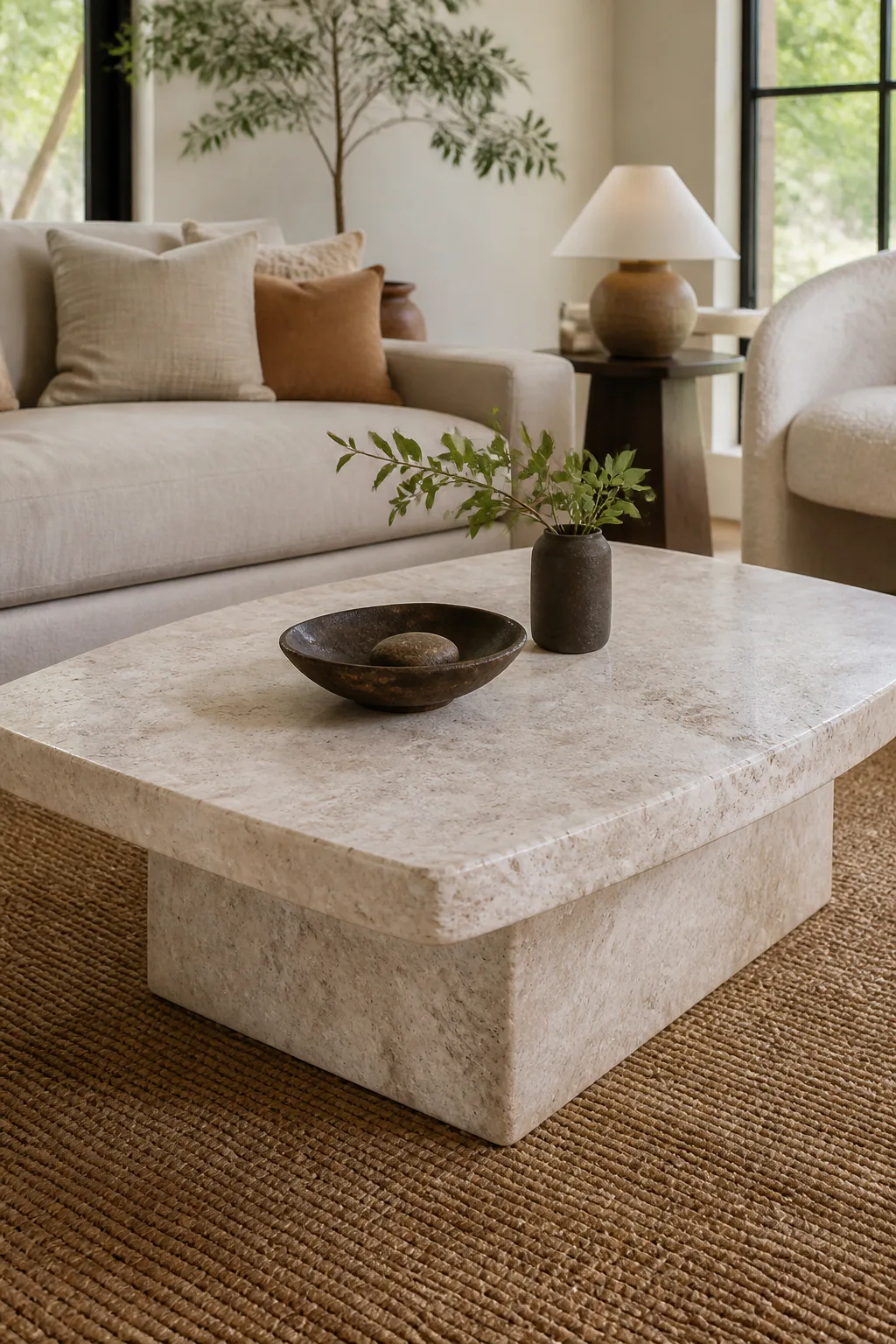
A coffee table in travertine, limestone, or rough-hewn marble gives the seating area a grounded focal point. Stone’s natural veining and variation add visual interest without relying on bright color or elaborate ornament.
Place the table where it is easy to reach from the main seats, and let its material contrast with softer furnishings. A pale stone surface can brighten a room with dark wood, while a more textured or richly veined piece can add depth to a neutral palette.
Make the stone feel at home
Consider the room’s scale and daily use before choosing a shape. Rounded corners can make circulation feel easier, while a long table may work well in front of a generous sofa. Stone can be heavy, so plan its placement before moving it into position.
- Pair stone with linen, wool, or bouclé to balance its cool surface.
- Keep the tabletop styling simple so the natural pattern remains visible.
- Use coasters and follow care guidance suited to the stone’s finish.
A wooden tray or handmade ceramic bowl adds a practical layer without hiding the table’s character.
4. Style the Sofa with Olive and Rust Accents

Olive, terracotta, ochre, and burnt rust bring earthy color into a living room while staying connected to natural landscapes. These shades can warm up a neutral sofa and add depth without requiring a major change to the room’s larger surfaces.
Use them across pillows, throws, nearby ceramics, or artwork, rather than introducing every color in equal amounts. A restrained mix feels more collected: olive can anchor the palette, while rust or ochre adds a smaller, livelier accent.
Layer color with intention
Look at the colors already in your space, including wood tones, rugs, and wall finishes. Choose one or two accent shades to repeat, then vary the texture and pattern so the arrangement feels comfortable instead of coordinated like a matching set.
- Combine a solid olive pillow with a smaller rust or ochre accent.
- Repeat one color in a vase, throw, or framed artwork nearby.
- Mix velvet, woven, and linen covers for added tactile contrast.
If you are unsure, begin with removable accessories; they make it easy to adjust the balance over time.
5. Layer Bouclé, Linen, and Velvet Seating
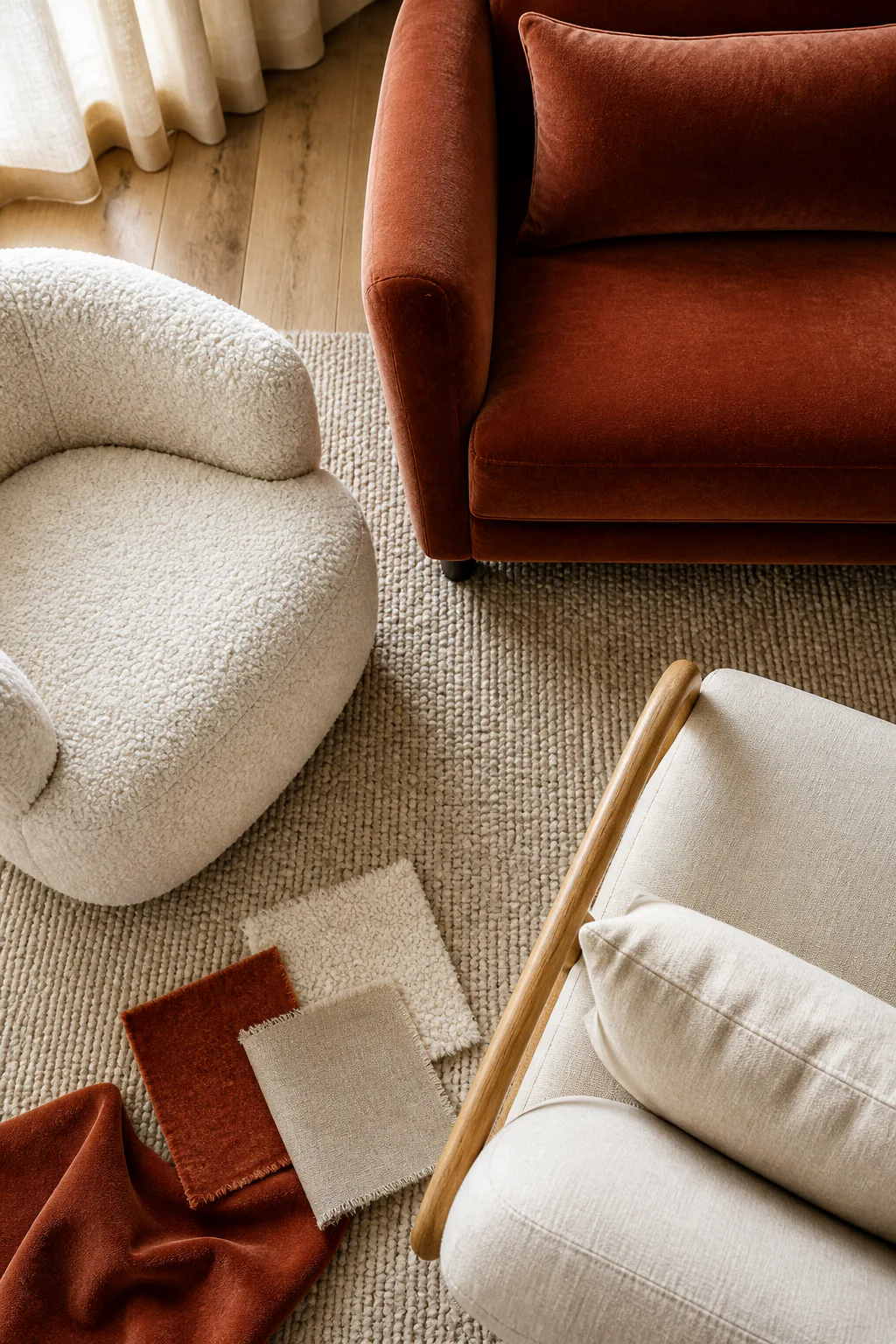
Mixing bouclé, linen, and velvet gives a living room a tactile quality that makes it feel warm and inviting. A velvet sofa can bring richness, a bouclé chair adds a nubby surface, and washed-linen curtains soften the light around the seating area.
These fabrics work especially well when the color palette stays simple. Cream, beige, warm brown, or muted rust can make different textures feel related, while varied surfaces keep a neutral room from looking flat.
Balance texture and everyday comfort
Think about how each piece will be used before settling on upholstery. A soft fabric may suit a chair used for reading, while curtains can provide movement and filter daylight. Keep the room from feeling crowded by letting a few textures take the lead.
- Pair one plush upholstery with a smoother fabric, such as linen.
- Use curtains to add softness without introducing another bulky object.
- Repeat a fabric color in a pillow or throw to connect separate pieces.
Layering works best when the materials complement one another but do not all compete for attention.
6. Add a Live-Edge Wood Media Console
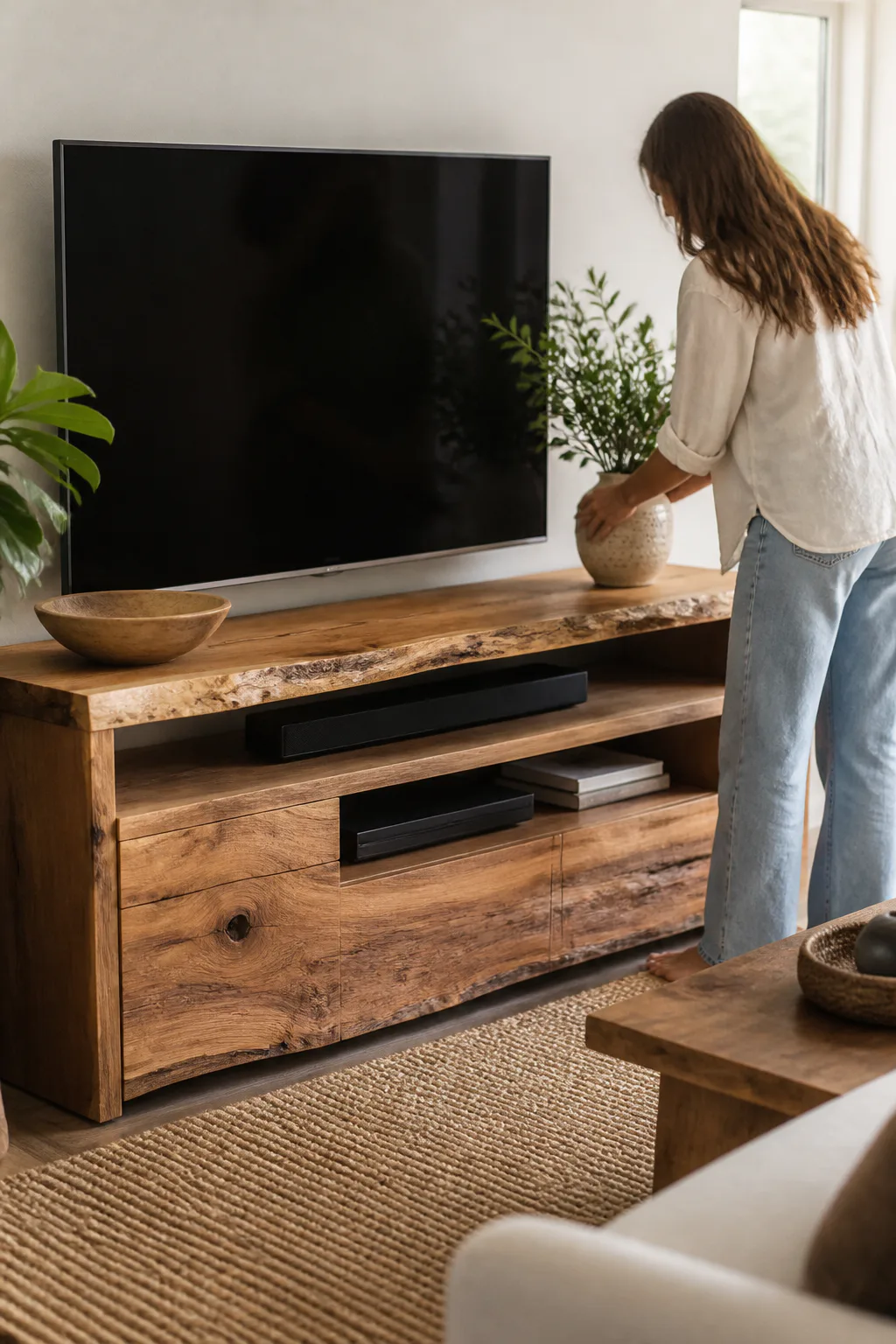
A live-edge or reclaimed wood media console brings natural grain, knots, and other irregular details into the room. Its character can soften the visual presence of a television and give the media area a more grounded, less showroom-like feel.
Choose a piece that fits the width and height of your television and leaves room for any devices you use. In an earthy living room, warm wood can connect the media area to a timber coffee table, woven rug, or other natural finishes without requiring a perfect match.
Style the console without clutter
Let the wood remain the main feature by keeping decorative objects selective. Consider how cables and equipment will be managed, and make sure the console’s surface is still usable for everyday needs rather than becoming a crowded display.
- Pair the timber with simple ceramics or a small leafy plant.
- Mix wood tones thoughtfully instead of trying to match every piece.
- Check that storage and ventilation suit the equipment you own.
The natural imperfections are part of the appeal, so let the grain show rather than covering it with layers of decor.
7. Layer a Vintage Rug over Natural Jute
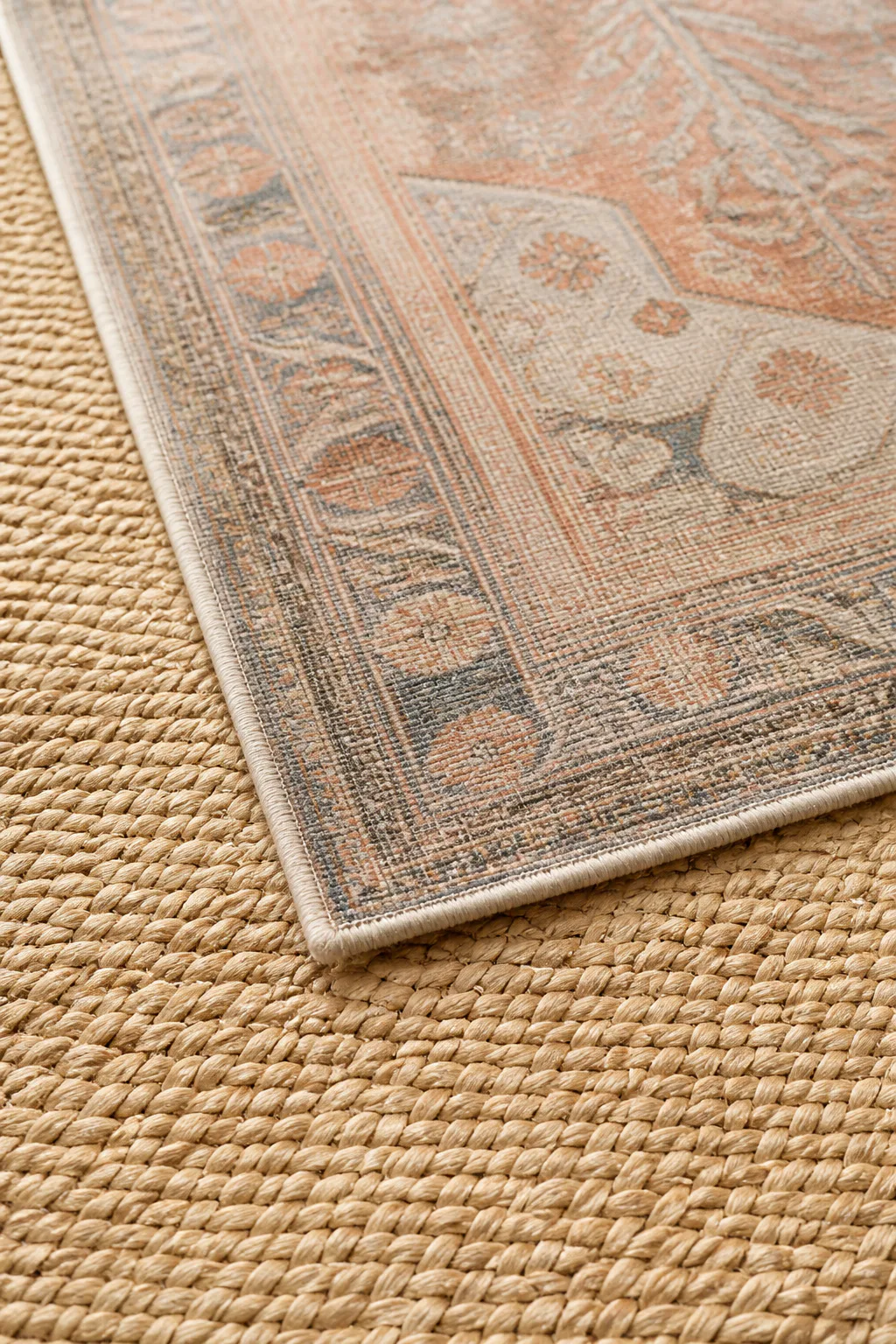
A large jute, sisal, or seagrass rug can define the seating area and introduce an easy, woven texture underfoot. Adding a smaller vintage or distressed rug on top brings pattern and color, creating a layered look that feels collected over time.
This combination can help anchor furniture in an open-plan room, where a rug visually marks the living zone. In a smaller space, a well-sized base rug can make the arrangement feel connected, while the top layer provides a softer, more detailed focal point.
Get the proportions right
Choose a base rug large enough to sit under the main seating pieces, then center the smaller rug where it will be most visible. Keep an eye on edges and transitions so the layers lie flat and do not interrupt the path through the room.
- Use a subtle natural-fiber base to support a more patterned top rug.
- Repeat one color from the vintage rug in pillows or nearby artwork.
- Use a nonslip layer if needed to help the rugs stay in place.
The contrast between rough weave and softened pattern adds depth while keeping the palette grounded.
8. Create a Corner with Statement Indoor Plants

A large-leafed fiddle-leaf fig or tall snake plant can bring a strong architectural shape into an open corner. Greenery adds a lively contrast to clay, wood, woven fibers, and stone, helping an earthy living room feel connected to the outdoors.
A plant can also make an awkward or empty corner feel considered. Use its height to balance a low sofa or media console, or place it near a window where it can be part of the room’s natural light and daily routine.
Choose a spot that suits the plant
Before bringing a plant home, consider the light conditions and the care it needs. Leave enough space for leaves to spread, and choose a pot that works with the scale of the room; a simple ceramic vessel can complement the organic look without distracting from the foliage.
- Use a tall plant to add height beside low furniture.
- Choose a sturdy pot that feels proportionate to the plant.
- Keep walkways clear as the plant grows or its leaves spread.
If a live plant does not suit the spot, a vessel of dried branches can still add a natural vertical accent.
9. Arrange Warm Lamps around the Seating
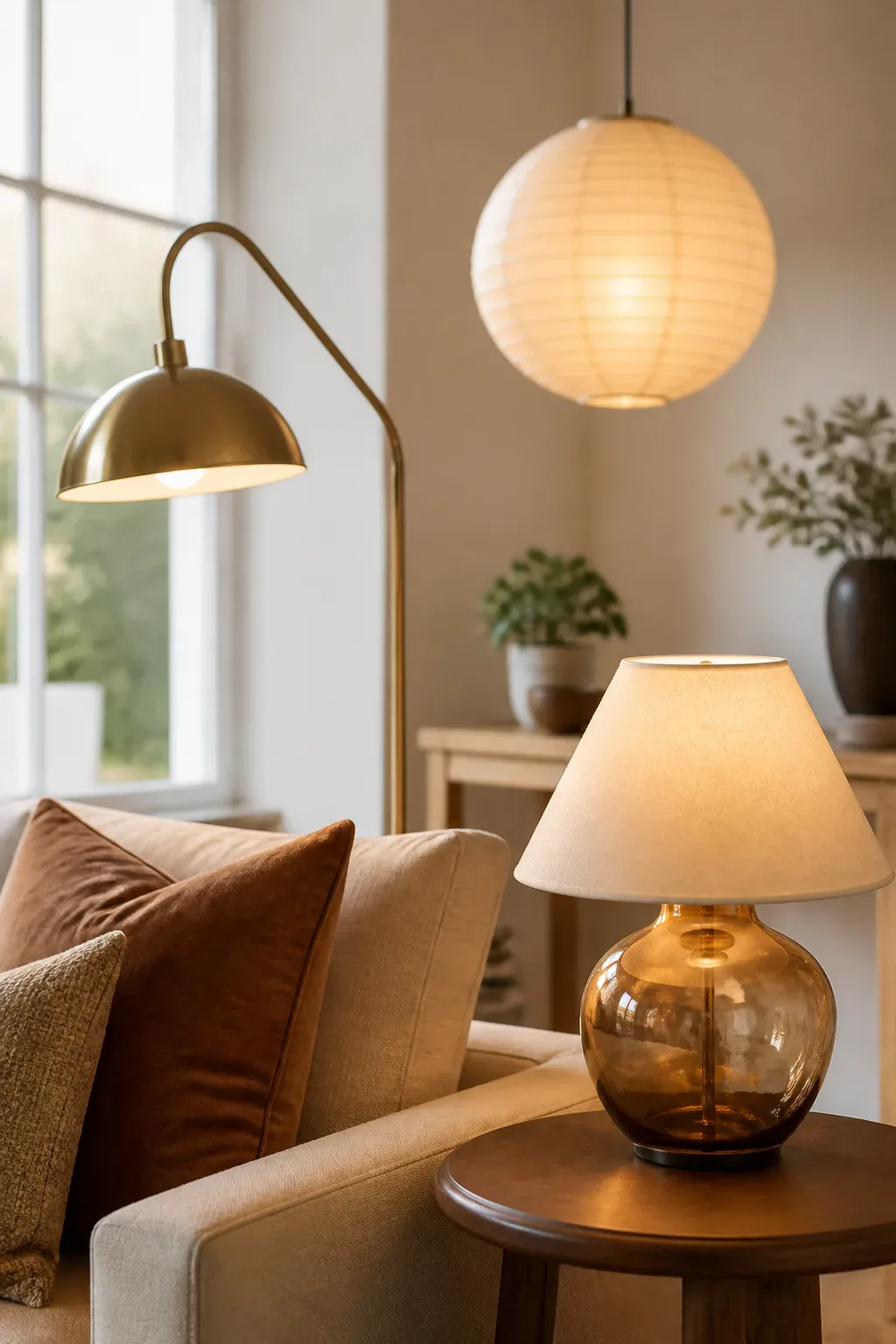
Warm, layered lighting makes a living room feel softer than relying on a single bright overhead fixture. A brass floor lamp, paper pendant, or amber-glass table lamp can create a gentle glow and bring inviting pools of light to the seating area.
Place light where it supports how you use the room: a reading chair needs a useful task light, while a side lamp can make conversation feel more relaxed. Multiple sources also help the room feel balanced after sunset, particularly when corners would otherwise seem dim.
Build a comfortable lighting mix
Use lamps at different heights to create depth, and choose warm-toned bulbs for a cozy atmosphere. If you have overhead lighting, keep it as one option rather than the only source; being able to switch on just a few lamps makes the room more adaptable.
- Place a floor lamp beside a chair or at the end of a sofa.
- Add a table lamp to a console or side table for lower-level light.
- Use a paper shade or amber glass to soften the light’s appearance.
Thoughtful lighting can make natural textures and earthy colors feel especially rich in the evening.
10. Style the Mantel with Handmade Clay Pottery
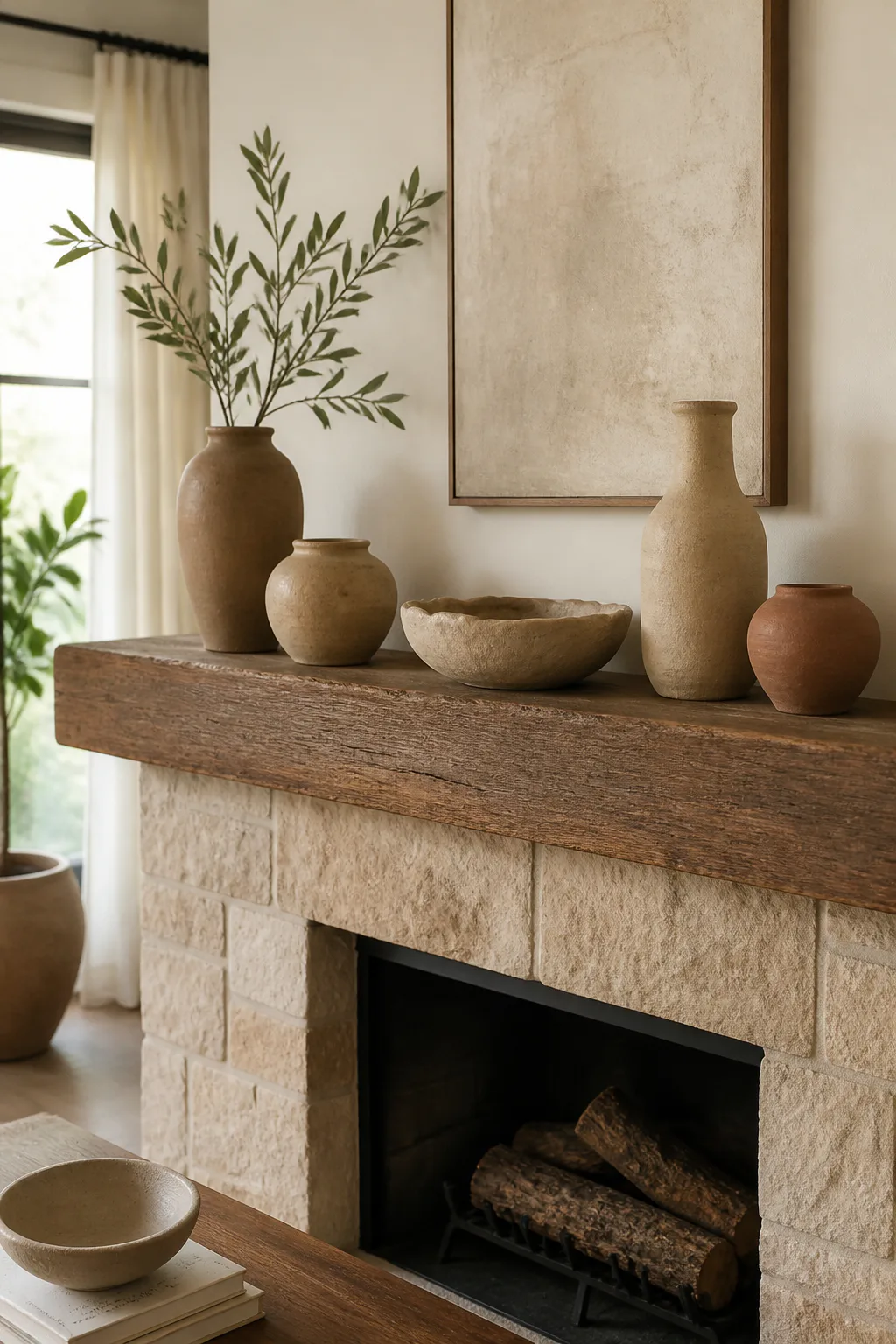
Unglazed pottery, rustic vases, and asymmetrical ceramic bowls bring a handmade quality to a mantel or coffee table. Their subtle variations in shape and finish add interest to an earthy room without making the display feel overly polished.
Clay pieces work well alongside wood, stone, and woven materials because their surfaces share a natural, tactile character. A small group can create a focal point over a fireplace, while a single distinctive vessel can add warmth to a coffee table or shelf.
Arrange a relaxed display
Vary the height and shape of the pieces, but leave some open space around them. This helps each object read clearly and keeps the arrangement from looking crowded. If the mantel is narrow, choose a few compact pieces rather than filling its full length.
- Group pottery in varied heights for a gentle sense of movement.
- Mix a rounded bowl with a taller, narrow vase.
- Repeat a clay tone elsewhere through a pillow or small accessory.
A handmade piece does not need to be perfect; its marks and irregularities are part of its appeal.
11. Create a Display of Personal Natural Finds
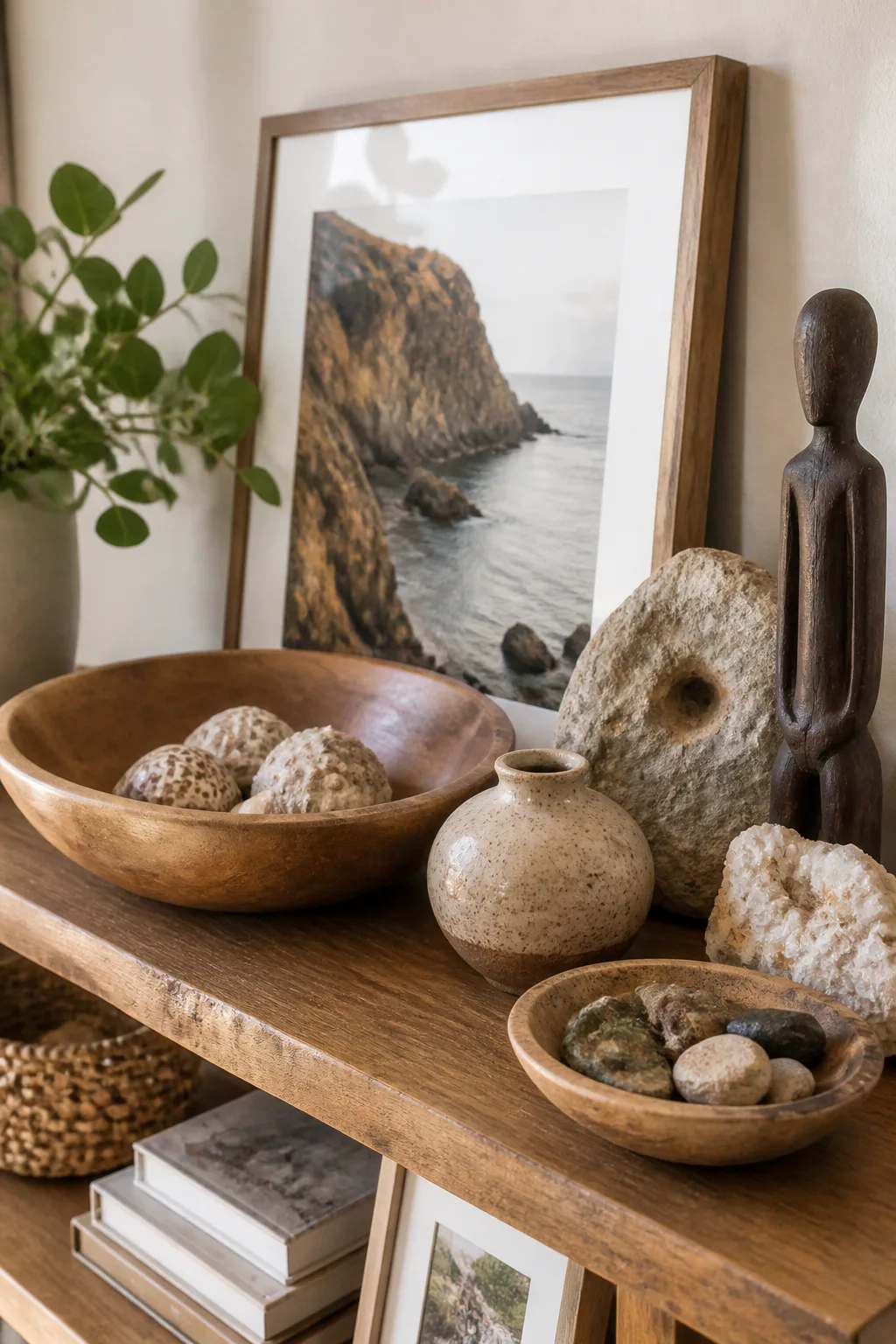
Travel keepsakes, thrifted wooden bowls, and framed nature photography can make shelves or a side table feel personal rather than staged. These objects bring a sense of story to an earthy living room and give the display a character that mass-produced matching accessories may not provide.
Collect pieces that connect to your interests, places you have visited, or materials you naturally gravitate toward. A few meaningful items can sit comfortably beside pottery, books, or greenery, adding individuality without competing with the room’s larger palette.
Curate rather than crowd
Group objects in small arrangements and leave breathing room around them. Vary their scale and height, and consider leaning a framed photograph against a wall to make a shelf feel more relaxed. Edit the display occasionally so favorite pieces stay visible.
- Pair a wooden bowl with a framed image or a small ceramic piece.
- Use a mix of meaningful finds and simple natural materials.
- Rotate keepsakes over time instead of displaying everything at once.
The result should feel like a reflection of your life, not a collection assembled to match a trend.
Final Thoughts
An earthy living room comes together through a considered mix of warm color, natural materials, tactile fabrics, organic shapes, and soft light. You do not need to change everything at once; a clay-toned accent, layered rug, or carefully placed lamp can begin to shift the mood of the room.
Start with what you already own and build around the details that make your home feel comfortable and personal. When textures, colors, and objects feel connected to the way you live, the room can feel both grounded and distinctly your own.