
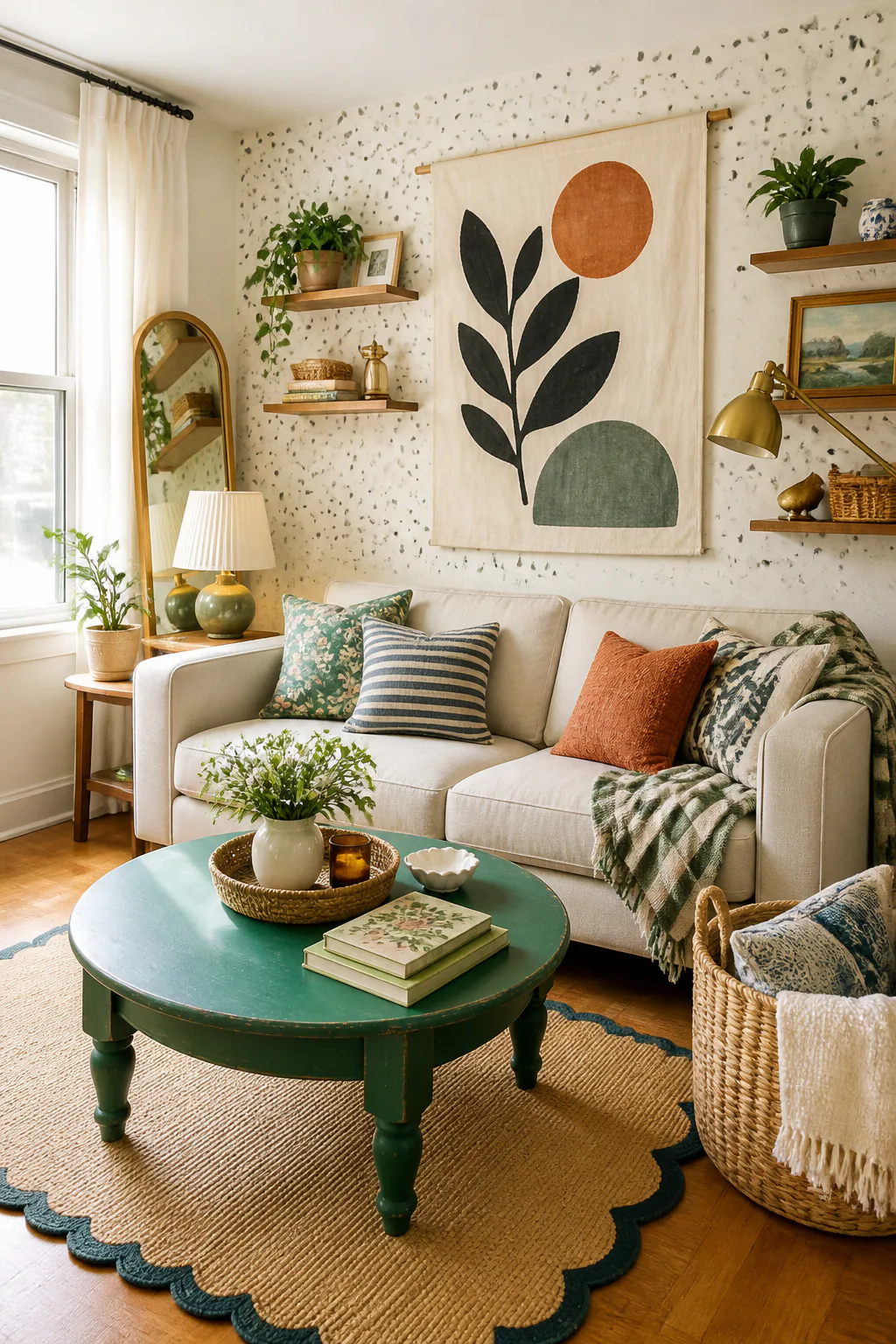
11 Clever Small Living Room Ideas on a Budget
A small living room can feel more inviting and functional without a renovation or a big furniture budget. Thoughtful updates—like refreshing a secondhand table, layering lamps, or using the walls for storage—can change how the whole room looks and works.
These ideas are designed for renters, first-time decorators, and anyone making the most of a compact space. Many rely on thrifted finds, simple DIY projects, or affordable accessories, so you can choose the changes that fit your home and budget.
Start with one update that solves a real need, whether that’s a brighter seating area, less visible clutter, or a stronger focal point. Then build around it, keeping pathways clear and choosing pieces that make the room feel like yours.
Quick Answer
The best small living room ideas on a budget are painting a thrifted coffee table, framing fabric as oversized DIY art, layering floor and table lamps, adding a peel-and-stick accent wall and using floating shelves instead of a bulky bookcase. Finish with low-cost touches: a thrifted mirror beside the window, baskets for blankets, new hardware on a credenza, leggy seating and a rug that defines the seating area.
1. Refresh a Thrifted Coffee Table with Paint
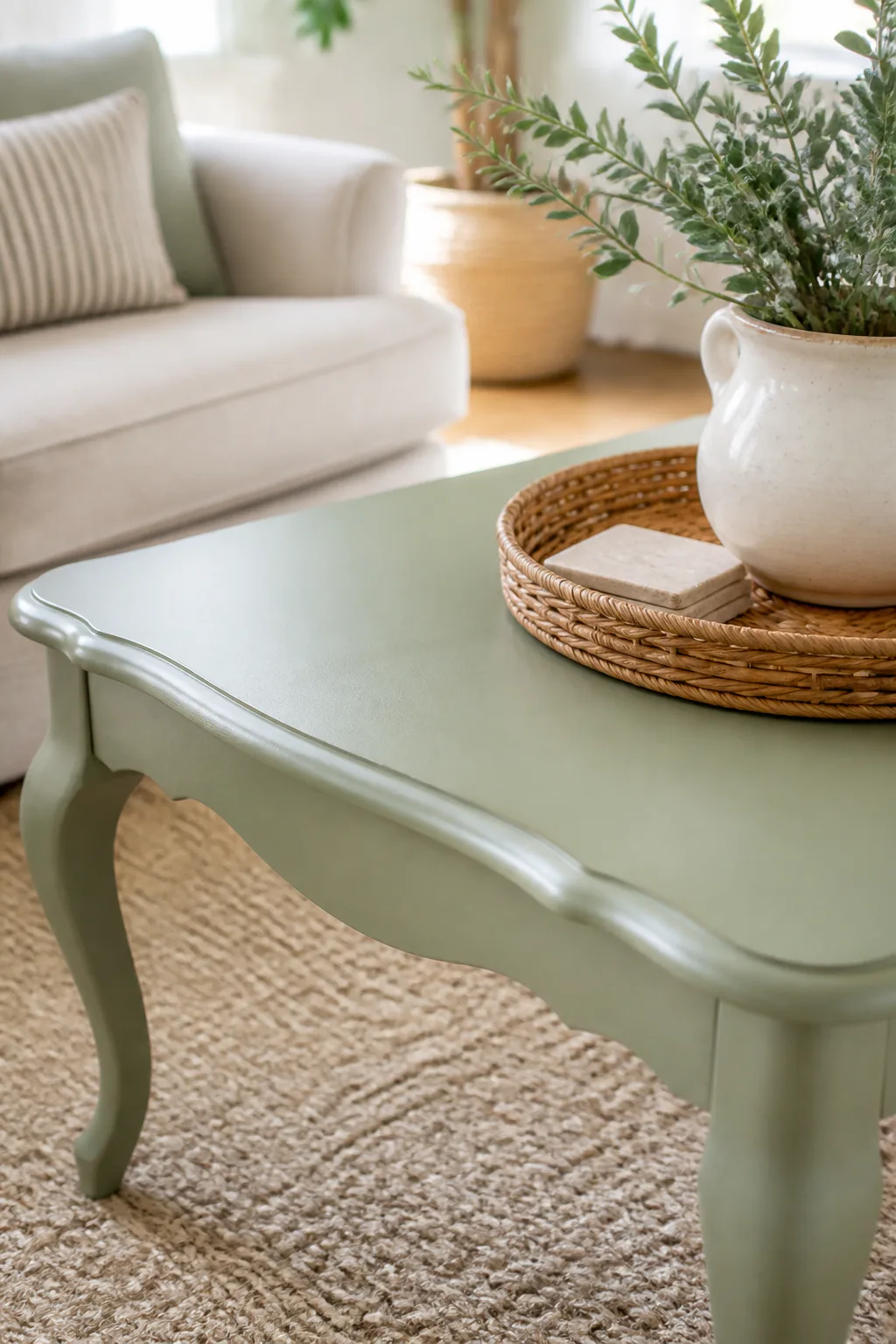
Best for: tight budgets and thrift-store finds
Effort: a weekend paint project
A secondhand coffee table can become a focal point with a simple coat of paint. Look for a shape that fits your seating area and has a sturdy top; scratches or an outdated finish matter less when you plan to refresh it. A small table can be especially useful in a compact room, where an oversized piece may make it harder to move around.
Choose a color that connects with something already in the room, such as a cushion, rug, or artwork. A warm neutral can blend in, while a deeper or brighter shade gives the seating area a little personality without requiring a larger decorating project.
How to pull it off
Clean the table and prepare its surface before painting, following the directions for the paint you choose. Test your color in the room first, since daylight and nearby fabrics can change how it reads.
- Measure the table against your sofa and available walkway.
- Use painter’s tape to protect areas you don’t want coated.
- Keep the tabletop styling simple so the refreshed finish stands out.
A painted thrift find gives the room a personal touch while keeping the budget focused on a useful piece.
2. Create Oversized DIY Art from Fabric

Best for: a blank wall above the sofa
Effort: easy DIY
Large art can give a small living room a clear focal point without the cost of a custom print. An attractive fabric swatch, a meaningful photograph, or a pressed botanical can look polished when placed in a simple frame. Hung above the sofa, an oversized piece helps the seating area feel intentional and can make a blank wall feel more finished.
Choose an image or pattern that suits the mood of the room rather than trying to match every color exactly. A subtle fabric texture can soften a plain space, while a photograph brings a personal element. Consider the colors in your rug and cushions so the art feels connected to the rest of the room.
Design tips
Before framing, lay the material against the wall or sofa to check its scale. In a narrow room, a single large piece may feel calmer than several small frames competing for attention.
- Use a fabric remnant with a pattern that reads well from across the room.
- Choose a frame that complements nearby furniture and finishes.
- Hang the art at a comfortable viewing height above the sofa.
This simple project adds character while keeping the wall arrangement clean and uncluttered.
3. Pair a Floor Lamp with Thrifted Table Lamps

Best for: rooms lit by one harsh overhead light
Effort: easy
Relying on one bright overhead light can make a compact living room feel flat. Lamps at different heights create a softer, more layered effect and help define the places where you read, talk, or unwind. A floor lamp beside the sofa can illuminate a seating corner, while a thrifted table lamp adds a warm glow to a side table or console.
You don’t need a matching set for the arrangement to work. Repeating a finish, shade color, or general style can make different lamps feel cohesive. Placing light around the room also draws attention to more than one spot, helping a small space feel balanced rather than centered on a single harsh light source.
How to layer the lighting
Think about where each lamp will be used before choosing its position. Keep cords tucked safely along walls and avoid placing a lamp where it blocks a walkway or takes up valuable surface space.
- Place a floor lamp near a sofa or reading chair.
- Use a table lamp on a side table, desk, or compact console.
- Choose shades and finishes that relate to other room details.
Layered lighting makes the seating area more comfortable while adding depth with practical pieces.
4. Add a Peel-and-Stick Wallpaper Accent Wall
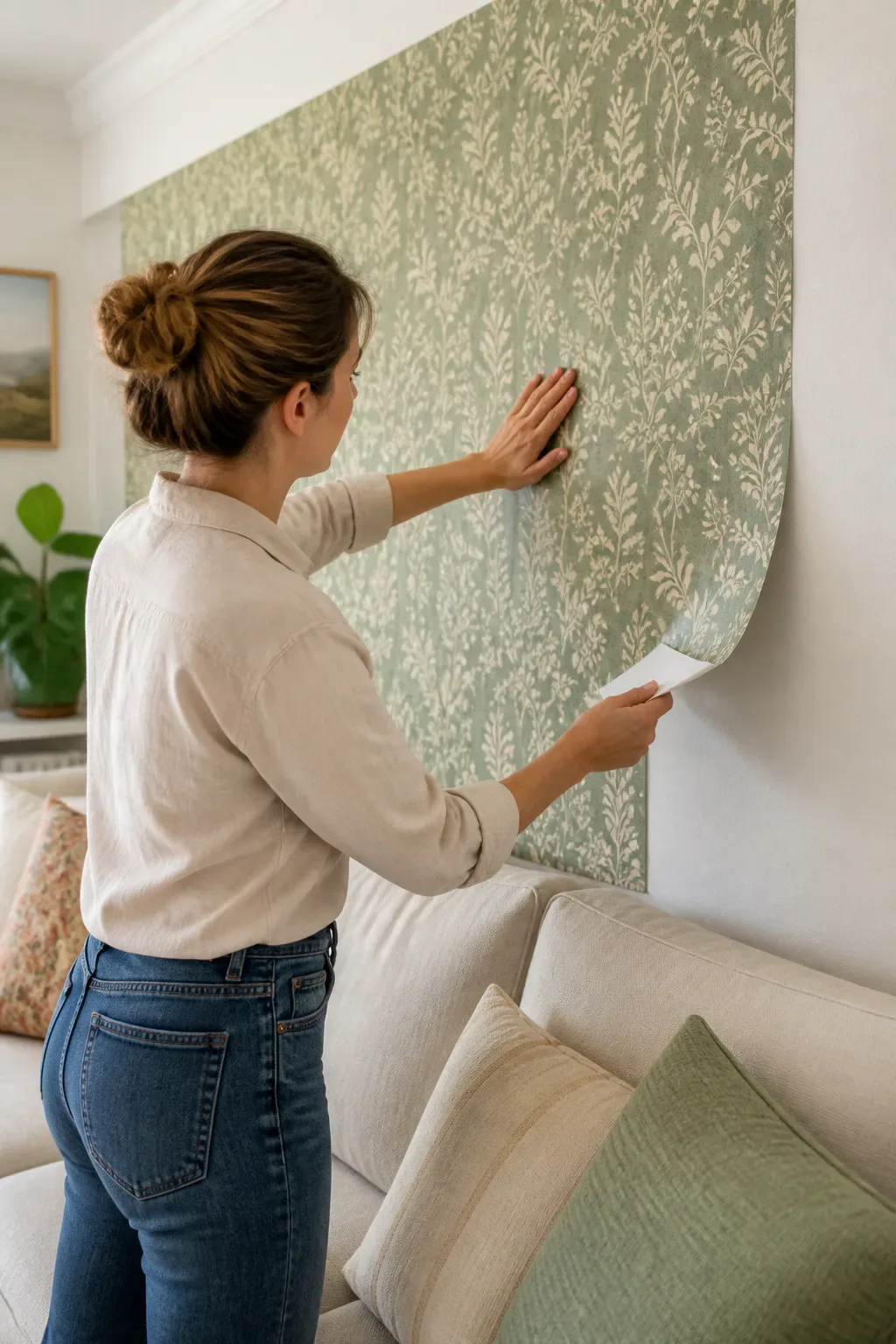
Best for: renters who want pattern (check your lease first)
Effort: easy to moderate
Peel-and-stick wallpaper can bring pattern and color to a living room without committing to a permanent change. It works well on one wall behind a sofa or on another surface that naturally draws the eye. In a compact room, a focused accent wall can provide visual interest without covering every surface in a busy pattern.
Think about how the wallpaper will relate to the furniture and textiles around it. A restrained pattern can add texture while keeping the room calm; a bolder print can make a plain seating zone feel more expressive. If you rent, check the product instructions and your lease before applying it, and test a small area if appropriate for the wall.
Before you apply it
Measure the wall carefully and prepare the surface according to the wallpaper directions. Taking time to plan the placement helps the pattern look orderly, especially around corners, windows, and outlets.
- Choose one wall so the pattern has room to stand out.
- Check that the color works with your sofa, rug, and artwork.
- Follow removal guidance to help protect the wall when taking it down.
A single patterned wall can deliver a noticeable change without asking you to redecorate the whole room.
5. Build a Wall of Floating Shelves

Best for: rooms short on floor space
Effort: wall mounting; check your lease if you rent
Floating shelves use vertical space for books and decor while keeping the floor open. They can be a lighter-feeling alternative to a bulky bookcase, which is especially helpful when a narrow room needs clear pathways. Arrange the shelves above a sofa, along a free wall, or in another spot where their depth won’t interfere with movement.
Open shelving is most useful when it serves both storage and display. A few books, a small plant, and a meaningful object can add personality, but overcrowded shelves may make the room feel busy. Leave some open space so the wall still feels breathable and the pieces you choose are easy to see.
Plan the layout
Check the wall and shelf instructions before installation, and use suitable hardware for the wall type and intended load. If you rent, confirm that drilling is allowed or consider another storage solution that meets your lease.
- Measure the wall and map out shelf spacing before mounting.
- Keep heavier books positioned securely and follow load guidance.
- Mix useful storage with a few lightweight decorative items.
By moving display storage upward, you can gain function without giving up as much floor area.
6. Style a Curated Coffee Table Vignette
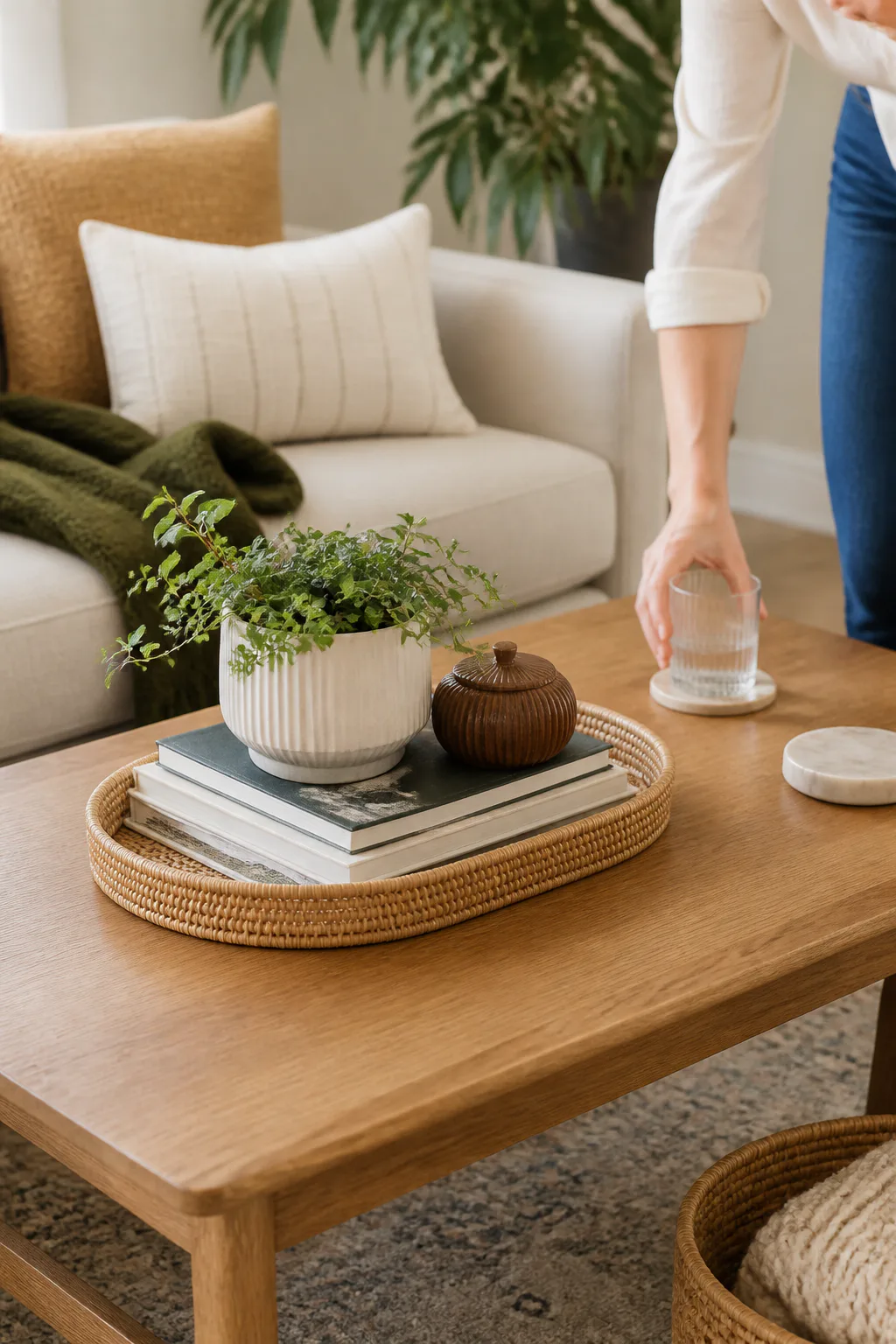
Best for: a quick refresh
Effort: easy, no tools needed
A coffee table can look polished without being covered in accessories. A small, deliberate arrangement gives the eye a place to land while leaving room for drinks, remote controls, or everyday use. This is particularly helpful in a small living room, where a crowded tabletop can make the entire seating area feel less usable.
Build the vignette around a few items with different shapes or textures. A short stack of books, a small plant, and one decorative object make a simple starting point. Keeping the arrangement compact allows the table to remain practical and makes it easy to clear when you need more space.
Keep the arrangement balanced
Try styling the pieces together, then look at the table from the sofa and the main entrance. If the objects block conversation or take up too much of the surface, remove one or choose a smaller item.
- Use a small stack of books as a low base.
- Add a compact plant or another natural element.
- Finish with one object that reflects your style.
A restrained vignette makes an everyday surface feel considered without turning it into clutter.
7. Hang a Thrifted Mirror Beside the Window
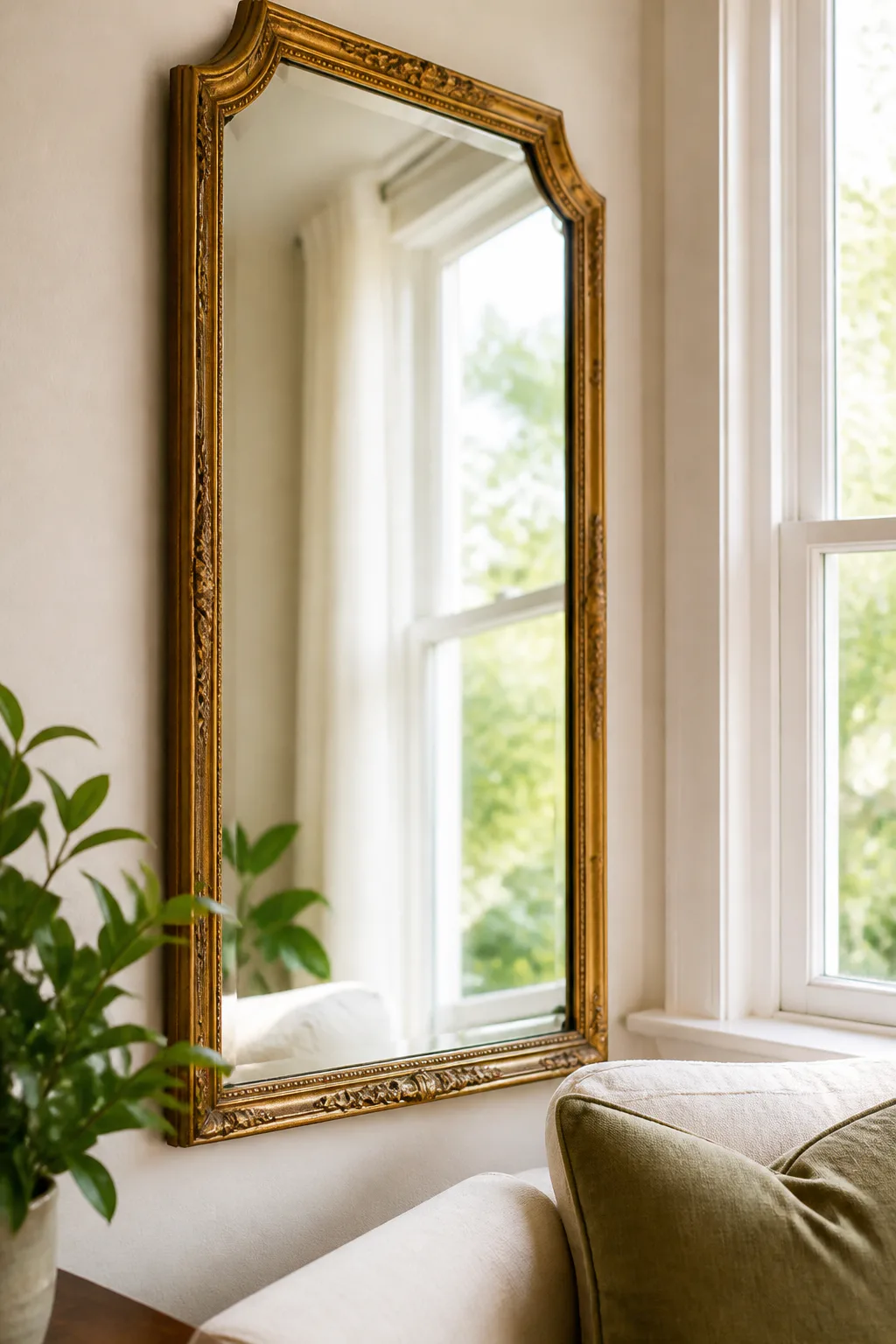
Best for: dim rooms with one main window
Effort: easy: hang it securely
A mirror placed near a window can reflect daylight into a room and make the space feel more open. It can be a practical decorating choice when a compact living room feels dim or has only one main source of natural light. A thrifted frame adds character, while the reflective surface helps brighten the nearby seating area.
Try positioning the mirror beside the main window or on a wall where it can catch and redirect the light. What it reflects matters too: a view of greenery or an uncluttered part of the room can feel pleasant, while a reflection of a crowded corner may draw attention to the mess instead.
Choose the right placement
Before hanging it, move the mirror around the room and check the reflection from different angles. Secure it using hardware that suits its size, weight, and the wall, and make sure it won’t create glare in a frequently used seat.
- Look for a position that reflects natural light into the room.
- Choose a frame that complements nearby furniture or finishes.
- Check the mirror’s reflection from the sofa and entryway.
A well-placed mirror adds both light and depth without taking up floor space.
8. Tuck Blankets into Textured Floor Baskets

Best for: loose throws and cushions
Effort: easy
Loose throws and extra cushions can quickly make a small living room feel cluttered. A floor basket provides an easy place to tuck them away while keeping them close at hand. Set one beside the sofa or a chair, where it can hold blankets without sitting in the middle of a walkway.
Woven or textured baskets also add softness to a room filled with smooth furniture and hard surfaces. They can suit a range of decorating styles, and their natural texture can make an everyday storage solution feel like part of the decor. The key is choosing a size that fits the corner rather than overwhelming it.
Make storage feel intentional
Use the basket for items you reach for regularly, such as a throw or a few cushions. If it is too full, it may be hard to use and can look untidy, so keep the contents manageable.
- Measure the available floor space before choosing a basket.
- Place it beside seating but outside the main walking path.
- Use it for blankets, pillows, or small toys that need a home.
This simple storage idea helps keep soft furnishings accessible while clearing visible clutter.
9. Give a Budget Credenza New Hardware
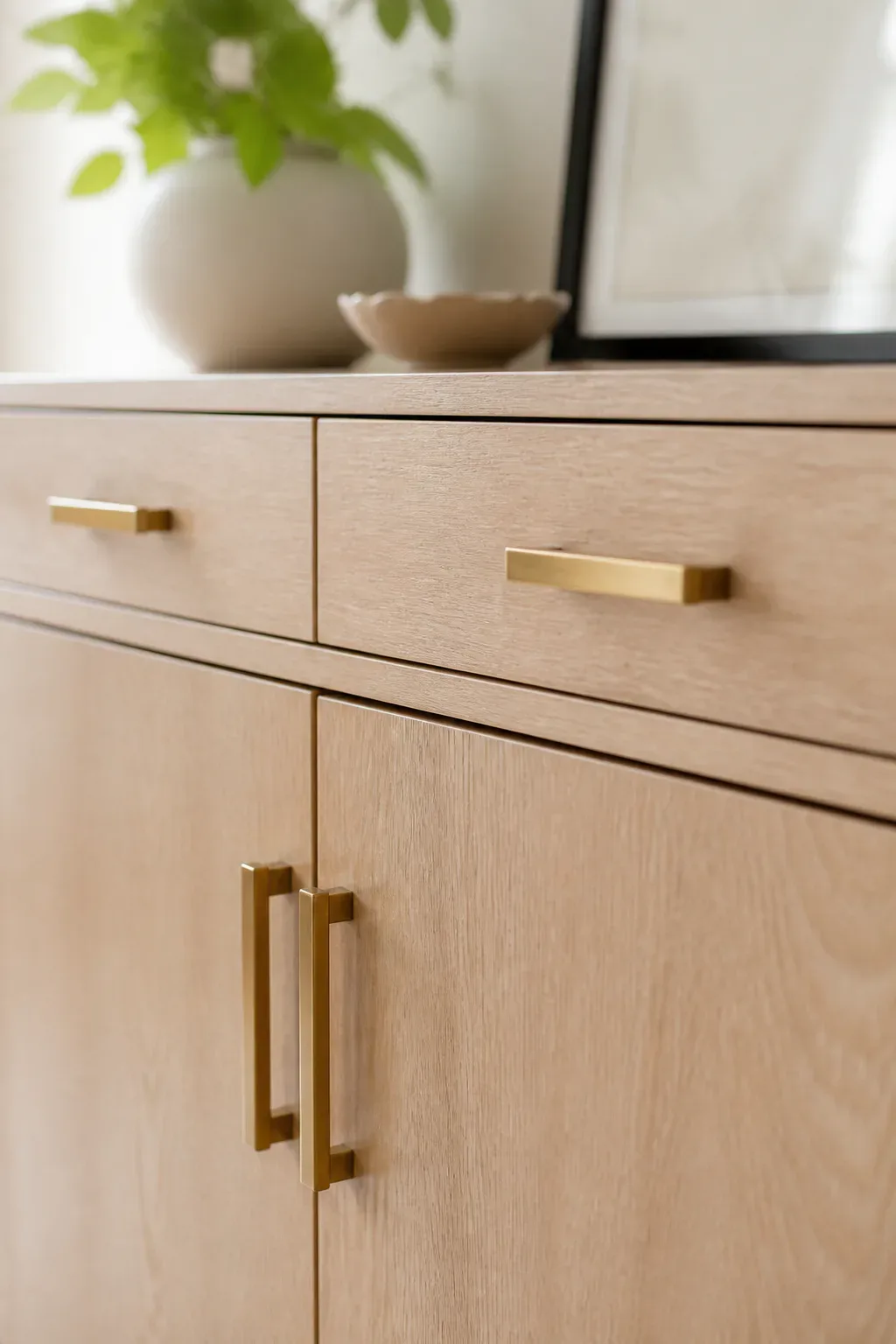
Best for: updating basic furniture you already own
Effort: easy: measure the hole spacing first
Changing the knobs or handles on a budget credenza can make the piece feel more personal. It’s a small update, but hardware is a detail you notice whenever you open a drawer or cabinet. On a storage piece in a compact living room, a new finish can help basic furniture feel more connected to the room’s overall style.
Brass, matte black, or leather pulls each create a different look, so choose an option that works with nearby lamps, frames, or other finishes. Before buying, check how the existing hardware is attached and measure the spacing between holes. A replacement that fits can make the update simpler and avoid unnecessary changes to the furniture.
Choose and install the pulls
Remove one existing knob or handle and use it to compare size and attachment details. Follow the hardware instructions during installation, and keep the old pieces in case you want to restore the original look later.
- Match the new hardware to the furniture’s scale.
- Check hole spacing and attachment style before selecting a replacement.
- Repeat a nearby metal finish for a cohesive look.
Fresh hardware is a low-effort way to update a useful piece without replacing it.
10. Arrange Leggy Seating to Open the Floor

Best for: rooms that feel crowded
Effort: a furniture swap
Furniture with exposed legs lets more floor remain visible beneath the seating. That visual openness can make a small living room feel less crowded than a lineup of heavy pieces that sit close to the floor. A streamlined chair or sofa can be especially useful when you want comfortable seating without making the room feel visually dense.
Shape and placement matter as much as the legs. Choose seating that fits the room’s proportions and leave enough space to move between the sofa, chairs, and entry points. A smaller chair with an open base may provide extra seating more comfortably than an oversized piece that blocks the layout.
Keep the layout light
Before bringing home furniture, measure its full footprint and consider how it will sit beside existing pieces. If replacing a sofa isn’t practical, a lighter-looking chair or side table can still introduce more visible floor around the seating zone.
- Look for exposed legs and a streamlined silhouette.
- Leave clear routes through the room and around the furniture.
- Balance larger seating with visually lighter side pieces.
Open space under and around furniture helps the room feel easier to navigate.
11. Define the Seating Zone with an Affordable Rug

Best for: open-plan spaces that need a defined living area
Effort: easy
A rug can make a small living room’s seating area feel like a distinct, intentional zone. Pattern or texture adds interest underfoot, while the rug visually connects the sofa and chairs. This can be helpful in an open-plan home, where the living area needs definition without a wall or large divider.
Choose a size that relates to the furniture rather than a small mat that floats in the middle of the seating group. A useful placement is to have at least the front legs of the sofa and chairs resting on the rug. This connects the pieces and can make the arrangement feel more unified.
Find a practical fit
Measure the seating area before shopping and mark the possible rug boundaries on the floor. Consider how the pattern and texture will work with existing cushions, curtains, and furniture, and make sure the edges won’t interrupt doorways or walking routes.
- Position the rug beneath the front legs of the main seating.
- Choose a pattern or texture that complements the room.
- Keep the rug clear of doors and important pathways.
A well-sized rug anchors the conversation area while helping the whole room feel more composed.
Frequently Asked Questions
How can I make a small living room look bigger on a budget?
Keep pathways clear, choose seating with exposed legs so more floor stays visible, use the walls for storage with floating shelves, and hang a mirror near a window to reflect daylight.
What is the cheapest way to update a small living room?
Small projects cost the least: paint a thrifted coffee table, swap the hardware on existing furniture, frame a fabric remnant as art or restyle your coffee table with a few things you already own.
Is peel-and-stick wallpaper good for renters?
It can be, because it is designed to be less permanent. Check the product’s removal instructions and your lease before applying it, and test a small area first if appropriate.
What size rug should I use in a small living room?
Choose a rug large enough for at least the front legs of the sofa and chairs to rest on it. A small rug floating in the middle of the seating can make the room feel disconnected.
Final Thoughts
Small living room ideas on a budget work best when they make the room more comfortable as well as more attractive. A thrifted table, layered lighting, or a carefully placed mirror can create a noticeable change without asking you to overhaul every part of the space.
Choose one project that fits your biggest need, then build on it gradually. With a little planning and a few personal touches, even a compact living room can feel open, welcoming, and thoughtfully put together.
Working with other compact rooms too? See our cozy small bedroom ideas and small kitchen decor ideas.



