12 Clever Small Kitchen Decor Ideas to Brighten Your Space
A small kitchen can feel brighter, more organized, and more personal without a major renovation. The key is choosing details that work hard: reflective finishes, useful wall space, thoughtful color, and a few well-edited accents can make a compact room feel considered rather than crowded.
These small kitchen decor ideas suit renters and homeowners alike, with options for different layouts and styles. Some are simple styling updates, while others—like changing cabinet fronts or adding tile—may call for more planning or installation.
As you choose what to try, consider where you need clear prep space, how much natural light the room gets, and which items you reach for every day. A few coordinated changes are often more effective than adding lots of decorations.
Quick Answer
The best small kitchen decor ideas make the room feel brighter and more organized: a reflective backsplash, curated open shelves, glass-front cabinets and vertical tile that draws the eye up. Use wall space for a hanging rail or magnetic knife strip, keep colors soft and monochromatic, and add personality with a mini pendant, a countertop tray, windowsill herbs, a patterned runner and a rolling coffee cart.
1. Install a Reflective Mirror Backsplash
Best for: dim kitchens with little natural light
Effort: an installation project
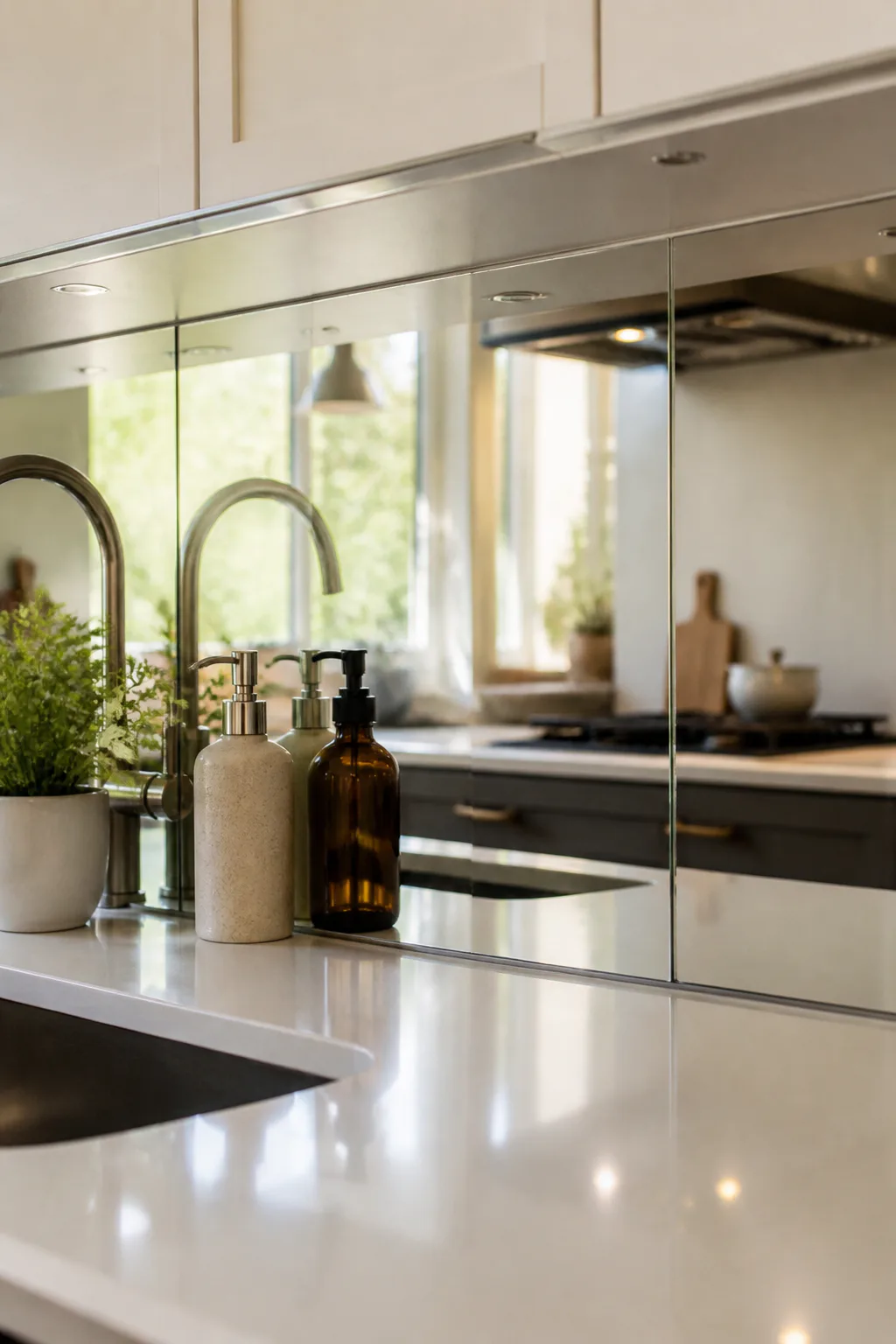
A mirrored or high-gloss glass backsplash can help a compact kitchen feel brighter by reflecting light from a window or nearby fixture. The reflection also adds a sense of depth behind the counter, making a narrow work area feel less visually closed in.
This idea works especially well in kitchens with limited natural light or a short stretch of uninterrupted counter. Choose a finish that suits the rest of the room: mirror glass creates a more noticeable reflection, while glossy glass offers a softer, polished look.
How to make it work
Think about what the backsplash will reflect before choosing its position. A view of a window or attractive pendant can add brightness, while a reflection of busy countertops may make clutter more noticeable. Keep the surrounding surfaces simple so the reflective finish can do its job.
- Use a sample to check how the finish looks in morning and evening light.
- Choose a backsplash material designed for kitchen use and easy cleaning.
- Keep frequently splashed areas accessible for wiping down.
A reflective backsplash can bring a subtle sense of openness without taking up any valuable counter or storage space.
2. Style Open Shelves with Curated Essentials
Best for: showing off the dishes you use every day
Effort: easy styling with what you already own
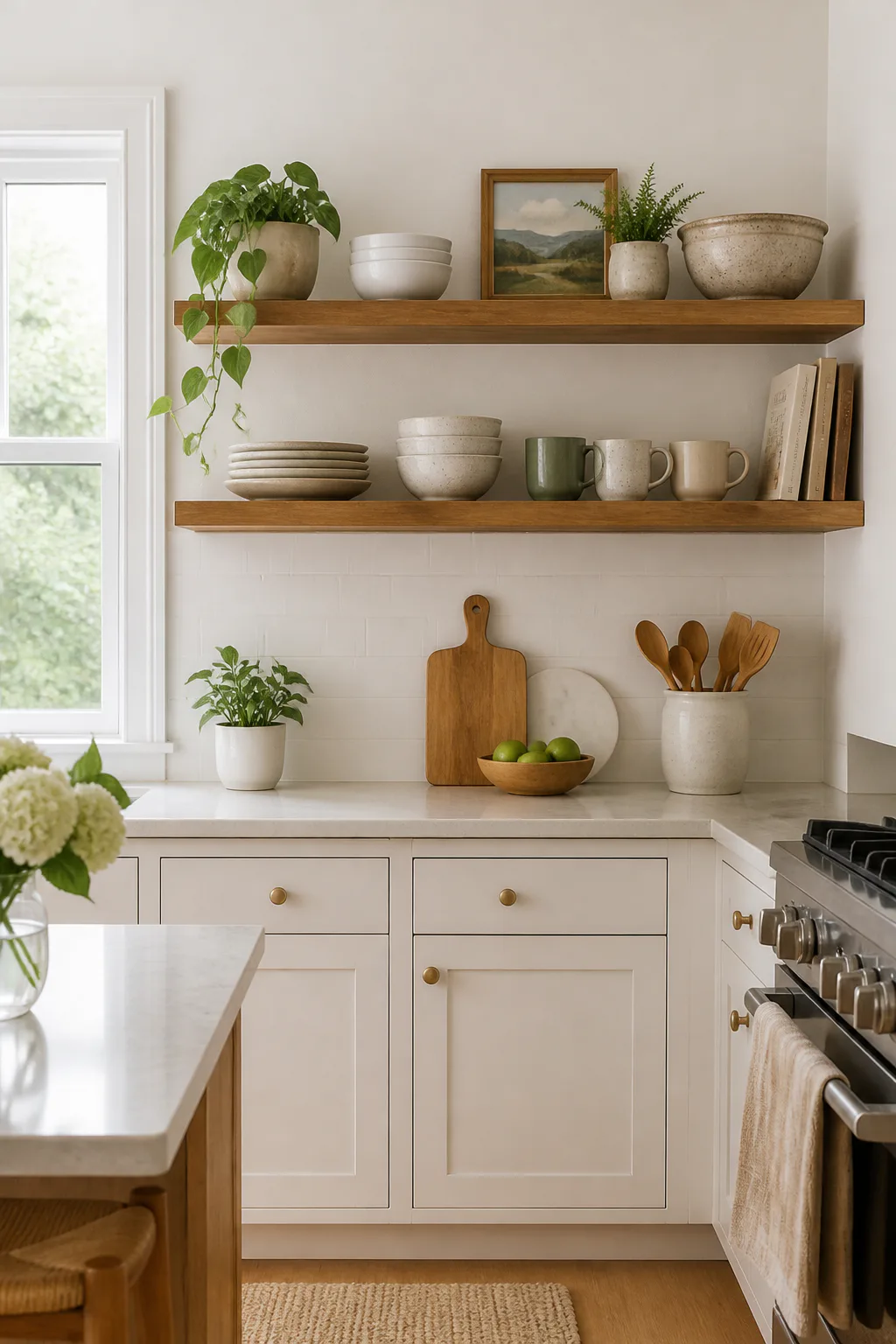
Open shelves can make a small kitchen feel less enclosed than a full wall of upper cabinets. They also turn everyday pieces into part of the decor, so a stack of plates or favorite mugs can add color and personality while staying close at hand.
The secret is editing. Shelves packed with mismatched objects can look busier than closed storage, so display a small, useful collection and keep less attractive or rarely used items elsewhere. This approach works nicely on one short wall or in place of just a few upper cabinets.
What to display
Repeat a color or material to give the arrangement a calm, intentional feel. Leave some open space between groups of dishes, and place heavier pieces on lower shelves where they are easier to reach.
- Group everyday bowls and plates in tidy, easy-to-grab stacks.
- Add a few mugs, a small framed print, or one or two cookbooks.
- Use matching baskets elsewhere for pantry items you do not want on display.
- Check that shelves are securely mounted and suitable for their intended load.
Even a single styled shelf can lighten the room while keeping frequently used essentials within reach.
3. Add Glass-Front Cabinet Doors

Best for: a long run of solid cabinets that feels heavy
Effort: a bigger job that needs planning or installation
Glass-front cabinet doors offer a middle ground between open shelving and fully closed storage. Your dishes remain protected behind a door, but the transparent or textured fronts break up a solid run of cabinetry and make the kitchen feel airier.
They can be especially effective on upper cabinets, where a wall of opaque doors may feel visually heavy. Clear glass gives a more open view, while reeded glass softens the contents and adds texture. Either option works best when the shelves behind it are reasonably organized.
Keep the contents calm
Choose what you want visible before converting every cabinet. A few glass doors can create a focal point without asking you to keep all your storage display-ready. Group similar dishes together, and avoid overfilling shelves so the glass does not emphasize clutter.
- Use glass fronts for coordinated dishes, glasses, or serving pieces.
- Reserve solid doors for pantry goods, appliances, and mixed storage.
- Consider reeded glass if you prefer a softer view of cabinet contents.
- Keep fragile items on stable shelves and within comfortable reach.
A limited run of glass doors adds lightness while preserving the practical benefits of closed cabinets.
4. Draw the Eye Up with Vertical Backsplash Tile
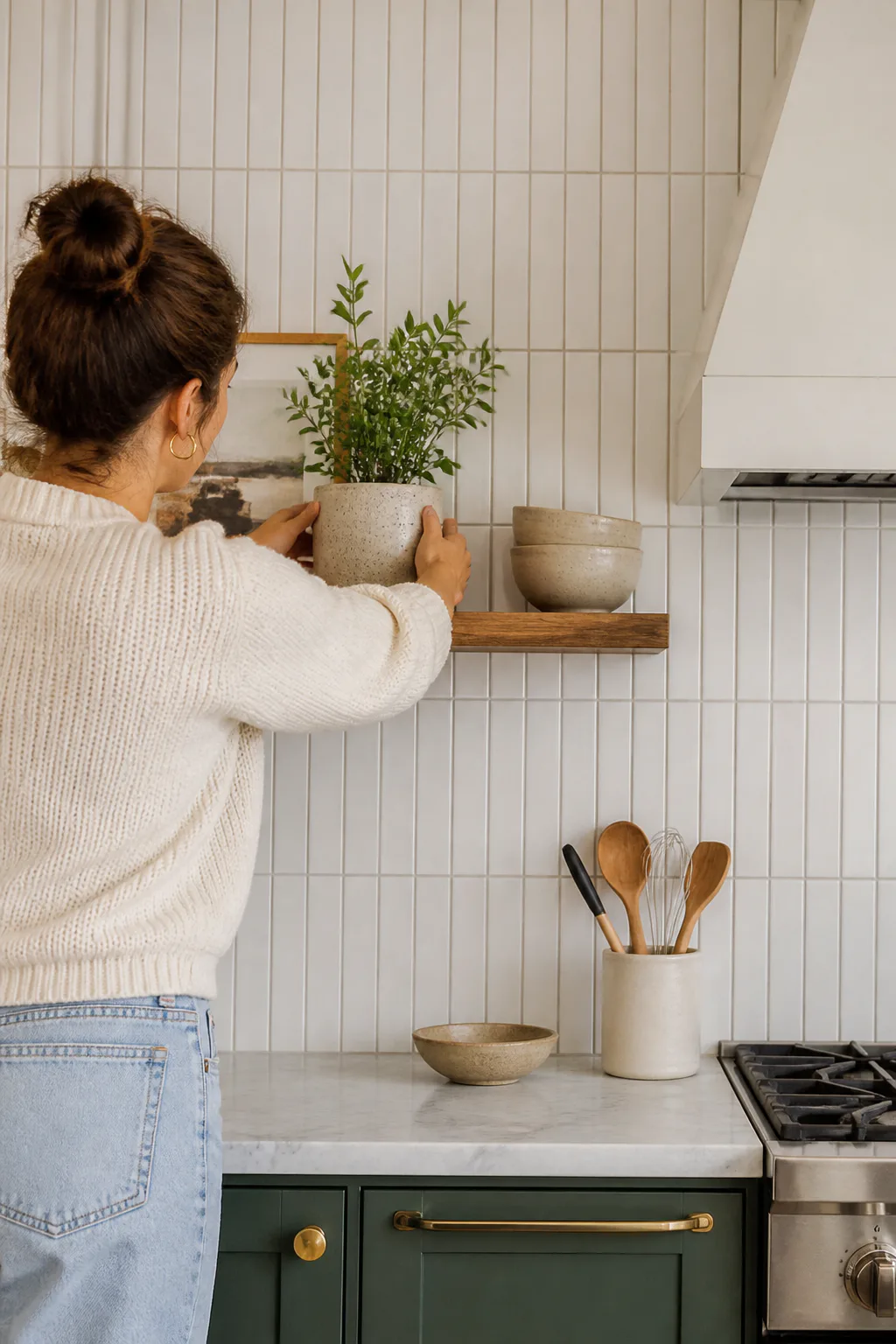
Best for: low ceilings and short walls
Effort: a tiling project
Vertical backsplash tile gives the eye an upward path, which can make a low or compact kitchen feel taller. Instead of the familiar horizontal brick pattern, consider vertically stacked tile or subway tile turned on its end for a cleaner, more elongated effect.
This treatment can bring visual interest to a small area without relying on a large pattern or strong color. It works behind a range, along a narrow counter, or across the full backsplash, depending on how much of a feature you want to create.
Choose a layout that suits the room
Tile scale and grout contrast affect the overall impression. A simple, light tile with subtle grout keeps the surface calm, while a darker grout makes the arrangement more graphic. Before committing, compare a sample against your cabinets and countertop.
- Use vertical stacking to emphasize height and create a streamlined look.
- Choose a light, low-contrast palette for a quieter backdrop.
- Use a stronger grout contrast if you want the tile pattern to stand out.
- Plan edges and outlets so the finished layout looks deliberate.
Vertical tile can make a small kitchen feel more tailored while adding texture exactly where it is useful.
5. Mount a Hanging Rail Above the Counter
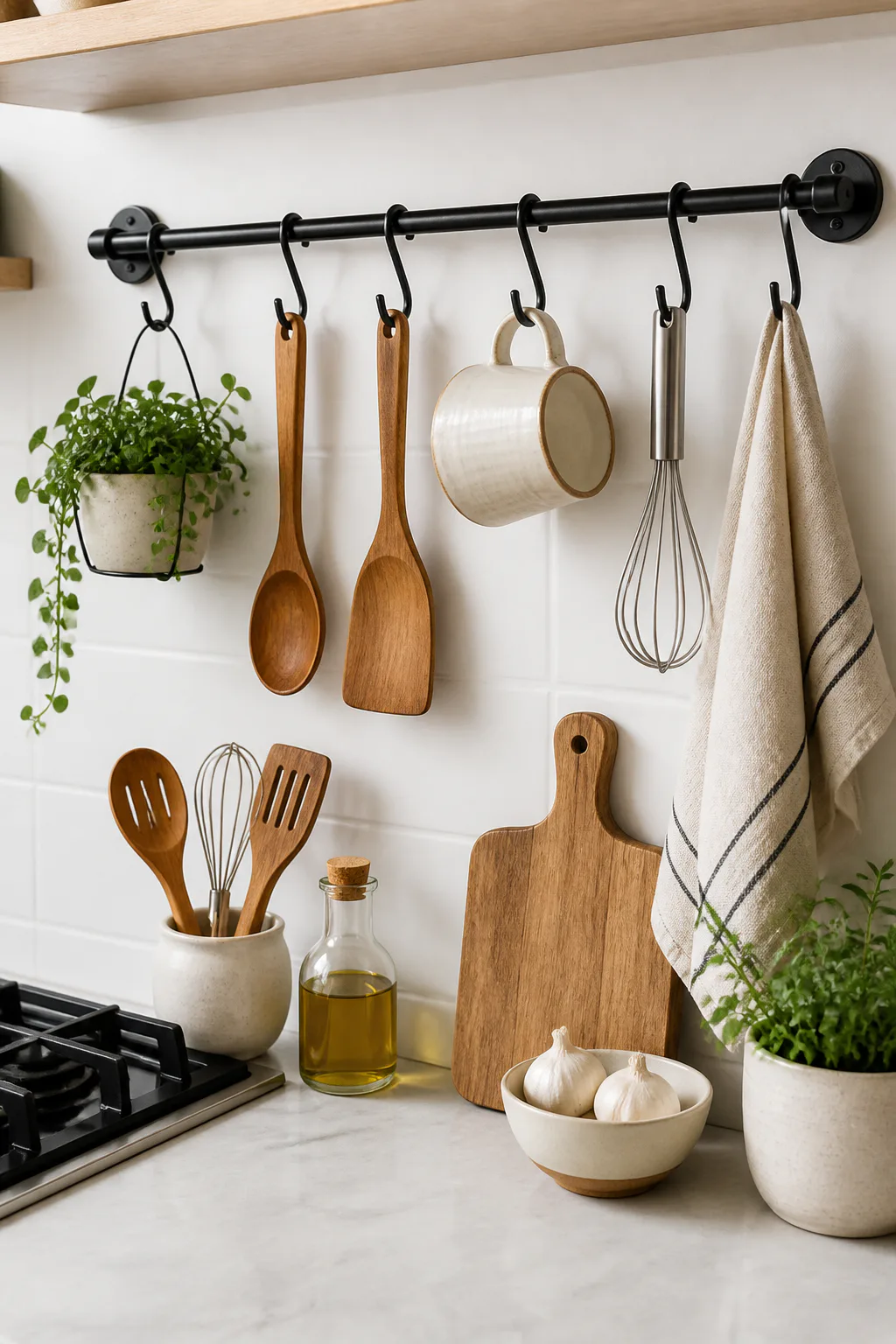
Best for: crowded countertops
Effort: simple wall mounting
A wall-mounted rail turns unused backsplash space into practical storage and a decorative display. Hang utensils, mugs, or a small planter from hooks, and you can free up a drawer or counter while keeping everyday items close to the work area.
Rails suit many styles: a simple black or stainless finish feels modern, while brass or wood details can add warmth. Place one where it will not interfere with cooking, cabinet doors, or the main prep zone. A short rail can be useful even if you do not have room for a larger wall system.
Keep the display useful
Choose items that are light enough to hang securely and that you actually reach for. A carefully edited rail looks more composed than one filled with every spare utensil. Leave space between pieces so they are easy to remove and return.
- Hang a few frequently used cooking tools near the stove or prep counter.
- Add matching hooks for mugs if they will not crowd the work area.
- Use a small pot hook for an herb only where light and watering are practical.
- Fasten the rail according to the wall and hardware requirements.
With a little restraint, a hanging rail adds both function and a lived-in touch to a compact kitchen.
6. Create a Soft Monochromatic Kitchen
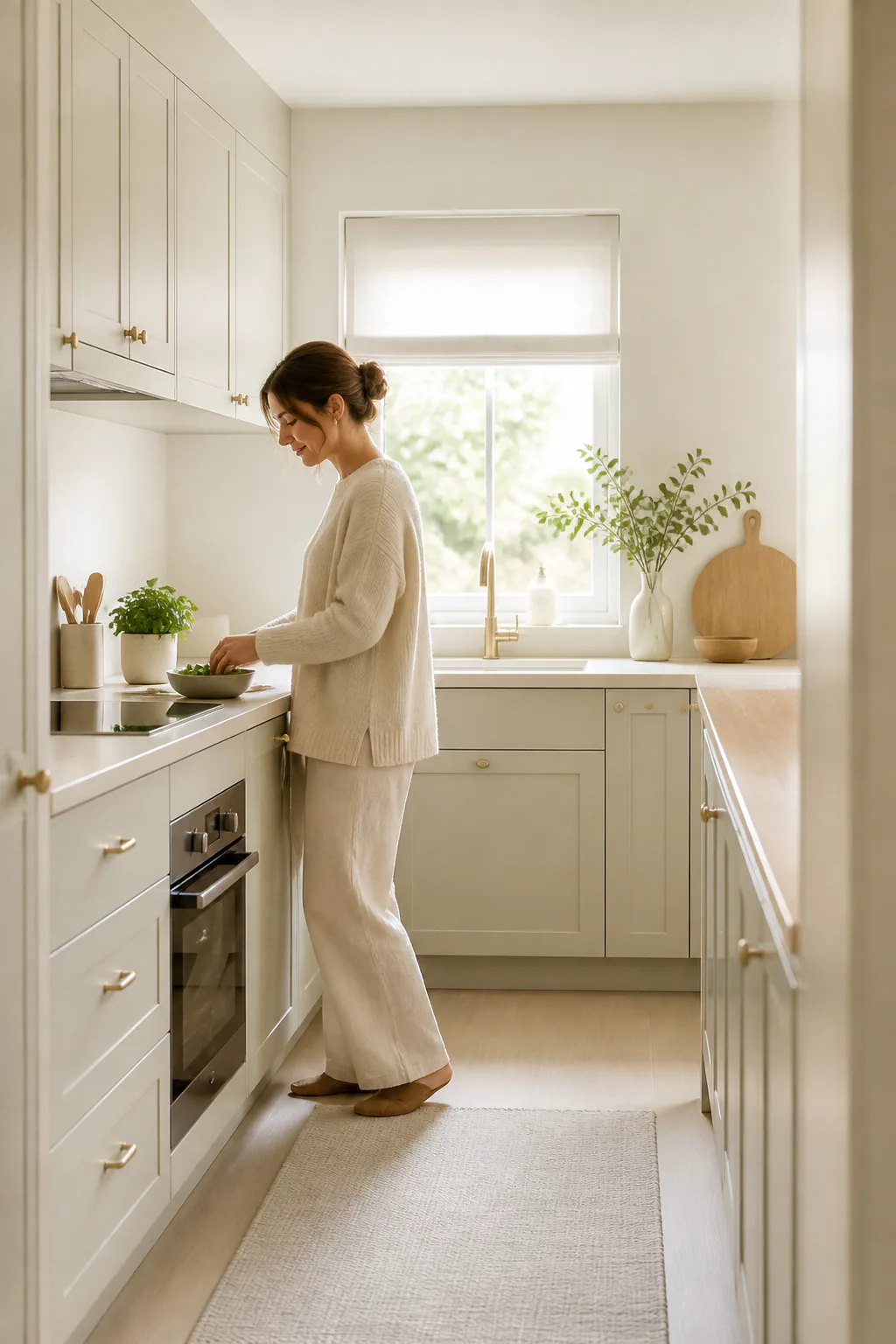
Best for: kitchens that feel busy or choppy
Effort: easy to moderate: paint and accessories
Using one coordinated pale shade across walls and cabinets can help a small kitchen feel visually unified. When strong color boundaries are reduced, the eye moves around the room more easily instead of stopping at every change in finish.
Warm cream, soft white, and pale sage are gentle options that can suit different styles. A monochromatic palette does not have to mean everything is identical: subtle shifts in sheen, wood accents, textiles, or hardware can add depth without making the room feel choppy.
Build in gentle variation
Test paint samples in the kitchen itself, since daylight, counters, and flooring all affect how a color reads. If repainting cabinets is not practical, use a coordinated shade on the walls and repeat it through a few accessories or textiles.
- Pair pale cabinets and walls with a slightly warmer or cooler accent.
- Add natural wood through shelves, a cutting board, or small accessories.
- Use hardware to introduce a modest contrast without breaking the palette.
- Check samples beside fixed finishes before choosing a final shade.
A soft, connected palette helps the kitchen feel settled and gives small decorative details room to stand out.
7. Hang a Sculptural Mini Pendant
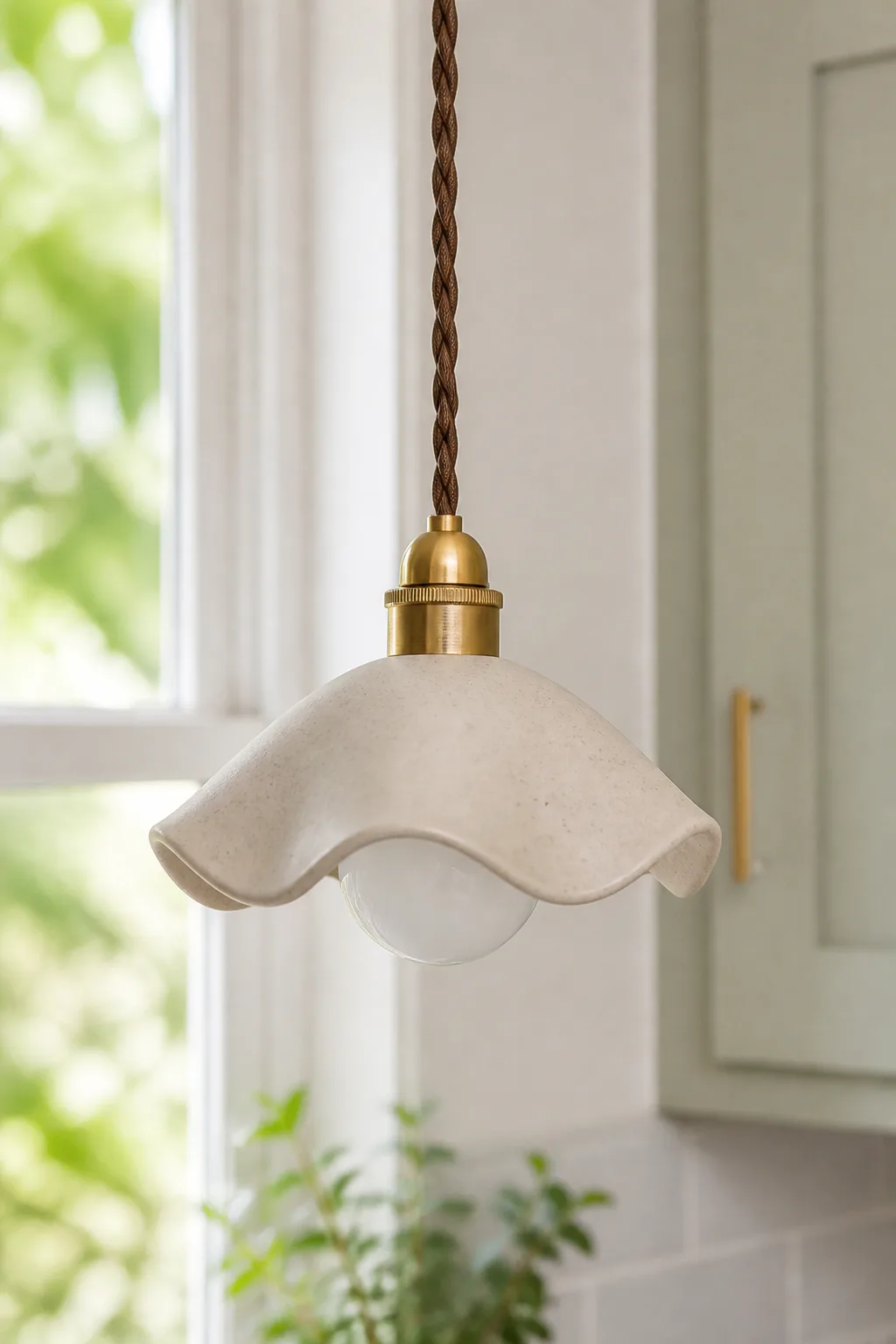
Best for: adding one stand-out focal point
Effort: a lighting installation
A compact pendant can give a small kitchen a clear focal point without overwhelming it. Hang one above the sink, a small table, or the center of the room to draw attention upward and add a layer of personality to an otherwise practical space.
Look for a shape that feels distinctive but is scaled to the room. A sculptural dome, simple globe, or small shade can add character while keeping sightlines open. The fixture should complement the cabinets and finishes rather than compete with every other detail.
Balance style and everyday use
Think about where the light needs to land as well as how the pendant looks. A fixture over the sink or a work surface should provide useful illumination, and its placement should not block cabinet access or make the room feel crowded.
- Choose a compact silhouette that suits the ceiling height and layout.
- Coordinate its finish with existing hardware or other lighting.
- Use an appropriate bulb and installation for the fixture’s location.
- Consider a dimmer where compatible lighting controls are available.
A well-chosen mini pendant adds a focal point while keeping the overall kitchen light and comfortable.
8. Style a Decorative Countertop Tray

Best for: corralling countertop clutter
Effort: easy, no tools needed
A small tray gives everyday countertop items a defined place, turning a loose collection into a neat vignette. Soap, a scrub brush, or a bottle of cooking oil can look more intentional when grouped together rather than scattered across a limited work surface.
This idea is easy to adjust as your needs change, which makes it useful in kitchens where permanent decor would get in the way. Set the tray near the sink for cleaning essentials or in a quiet corner for a few frequently used bottles, leaving the main prep zone clear.
Make the grouping practical
Choose a tray that is easy to lift and wipe beneath. Keep only the items you use regularly, and avoid placing it beside a hot cooking area or where it blocks access to outlets, taps, or drawers.
- Pick a compact tray in wood, ceramic, or another easy-care material.
- Group a few related items rather than mixing unrelated objects.
- Use a small dish or dispenser to contain drips near the sink.
- Leave enough open counter for the tasks you do most often.
A tray creates a polished moment while making everyday countertop clutter easier to manage.
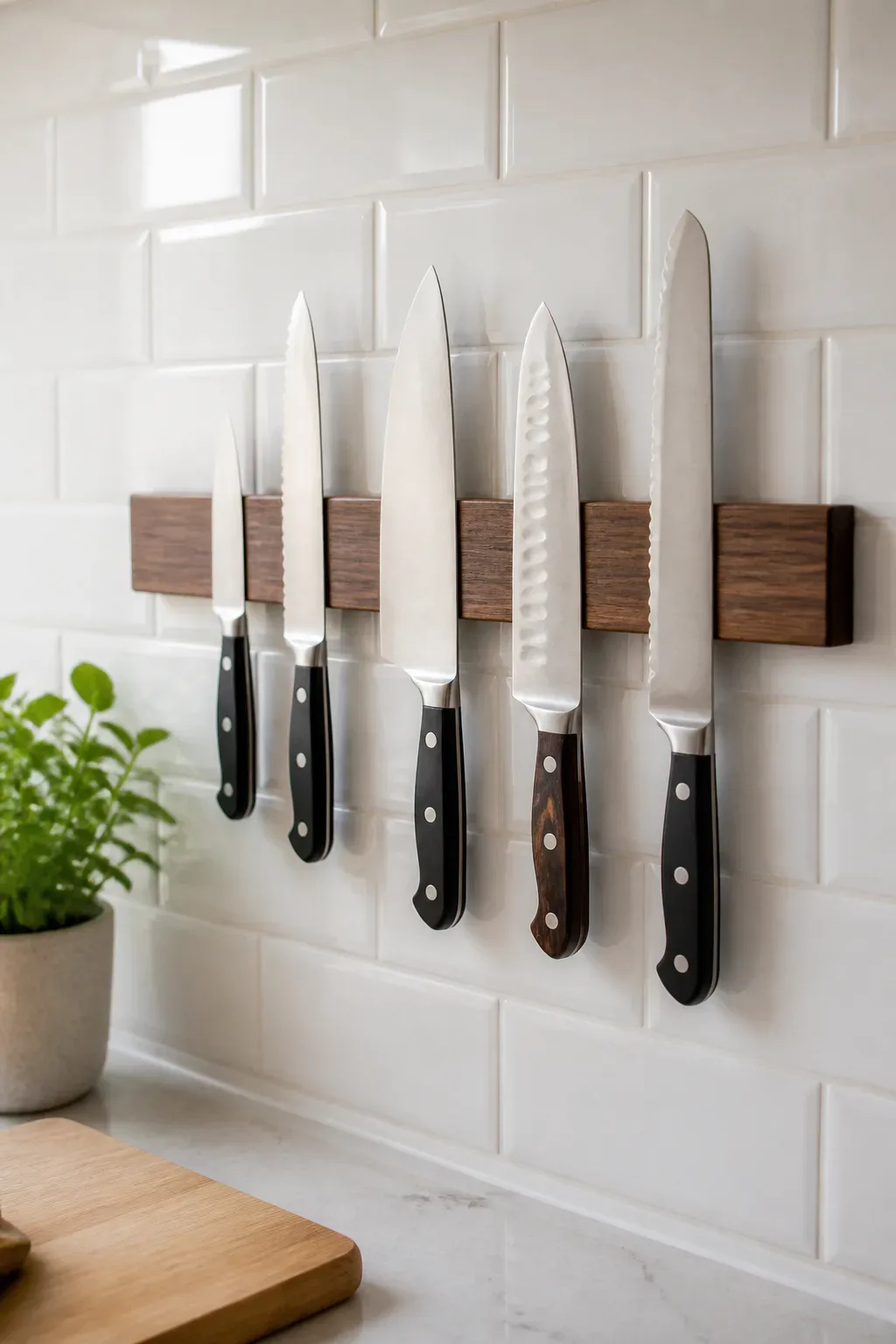
9. Display Knives on a Magnetic Wall Strip
Best for: freeing up drawer and counter space
Effort: simple wall mounting
A magnetic knife strip can free up drawer space and replace a bulky countertop knife block with a slim wall-mounted solution. Because the knives are displayed on the backsplash, the strip can also become a functional design detail, especially in a kitchen with limited storage.
Wood adds warmth and can soften a modern kitchen, while metal creates a more streamlined look. Place the strip where it is convenient for food preparation but out of the way of busy traffic, and consider the reach and safety of everyone who uses the kitchen.
Mount and use it thoughtfully
Follow the mounting instructions for the wall type and strip you choose. Keep blades clean and dry before returning them, and arrange knives so you can lift each one without knocking against another. If a wall location is not safe or accessible, use a different storage method.
- Choose a spot near the prep area but away from casual reach.
- Secure the strip with appropriate hardware for the wall surface.
- Leave enough room to remove each knife safely by its handle.
- Store only knives that are suitable for the strip and its capacity.
When safely placed, a magnetic strip makes a practical tool part of the kitchen’s pared-back decor.
10. Bring in Window Herbs and Small Greenery

Best for: sunny windowsills
Effort: easy
Plants add a fresh, natural accent that can soften the hard surfaces common in kitchens. A few herb pots on a sunny windowsill bring color and a useful cooking ingredient into the room, while a small plant on top of the fridge can brighten an otherwise overlooked spot.
Keep the scale modest so greenery does not crowd a narrow sill or counter. Consider the light, watering needs, and warmth near the stove before choosing a location. A simple group of similar pots can feel tidy, while one trailing plant creates a relaxed touch.
Choose a spot that supports the plant
Herbs need suitable light and regular care, so observe the window through the day before placing pots there. Use containers that catch excess water, and keep leaves clear of cooking splashes, hot surfaces, and areas where they could interfere with food preparation.
- Try small pots of herbs such as basil or rosemary where light is adequate.
- Use a tray or saucer to protect the sill from water.
- Choose a compact plant for a shelf or the top of the fridge.
- Keep greenery away from heat and leave prep surfaces uncluttered.
A little greenery brings color and life to the kitchen without asking for much space.
11. Layer a Patterned Runner in a Galley Kitchen

Best for: narrow galley kitchens
Effort: easy
A runner can bring warmth and color to a narrow galley kitchen while emphasizing the length of the room. Its pattern adds a softer layer underfoot, helping a practical passage feel more welcoming without taking up any wall or counter space.
Look for a washable flatweave or another low-profile rug that fits the walkway without bunching at doors or appliances. A subtle geometric, vintage-inspired, or small-scale pattern can add character; choose colors that relate to your cabinets, flooring, or textiles so the rug feels connected to the room.
Make it comfortable and secure
Measure the clear floor area before choosing a runner, and make sure it will not block appliance doors or create a trip hazard. A nonslip rug pad can help keep it in place, and a washable option is practical in a space where spills are part of everyday cooking.
- Choose a length that fits the usable walkway rather than wall to wall.
- Pick a low-profile weave that is easy to clean and move.
- Use a suitable nonslip pad if the runner shifts on the floor.
- Repeat one or two rug colors in nearby accessories for a cohesive look.
A thoughtfully sized runner adds softness and personality while respecting the kitchen’s narrow footprint.
12. Add a Rolling Cart Coffee Station

Best for: kitchens short on counter space
Effort: easy, no installation
A narrow rolling cart can create a dedicated coffee station when counters and cabinets are already spoken for. Its tiers provide room for a coffee maker, mugs, and a few supplies, while its wheels let you move it when you need more floor or prep space.
Choose a cart that fits the available gap without narrowing the main walkway. Wood can warm up a simple kitchen, while metal has a lighter, more utilitarian feel. A compact model can also serve as extra prep space, but keep its surface clear enough to use when needed.
Organize each level
Give each tier a purpose so the cart does not become a catch-all. Place heavier items on the bottom, keep daily essentials easy to reach, and consider how close the cart is to an outlet if you plan to use an appliance on it.
- Measure the cart against door swings, appliance access, and walking space.
- Store mugs and supplies together in a small basket or tray.
- Keep heavier items on lower shelves for stability.
- Lock the wheels if the cart includes brakes and will stay in one place.
A mobile coffee station adds function and a personal touch without permanently claiming valuable counter space.
Frequently Asked Questions
How can I make a small kitchen look bigger?
Reflective and see-through surfaces help most: a mirror or glossy backsplash, glass-front cabinet doors and a soft, monochromatic color palette. Vertical backsplash tile also draws the eye upward so the room feels taller.
How do I decorate a small kitchen without making it cluttered?
Edit open shelves down to a few everyday pieces, group countertop items on one tray, and move tools onto a hanging rail or magnetic strip so the counters stay clear.
What decor works best in a galley kitchen?
A patterned runner adds warmth and definition to a narrow galley kitchen. Pair it with light, coordinated colors and storage that uses the walls rather than the floor.
Which small kitchen updates need installation?
Glass-front cabinet doors, tile, a mirror backsplash and a pendant light usually need more planning or installation. A tray, runner, windowsill herbs and a rolling cart are simple styling updates you can do in an afternoon.
Final Thoughts
Small kitchen decor works best when it brings together beauty and everyday function. Reflective surfaces, coordinated color, vertical storage, and carefully chosen accents can help the room feel brighter and more open, while practical additions like a rail, tray, runner, or rolling cart make daily routines easier.
You do not need to try every idea at once. Start with the part of the kitchen that feels most crowded or unfinished, then choose one change that suits your layout, lighting, and habits. A few thoughtful details can make even a compact kitchen feel more welcoming and distinctly yours.
Looking for more small-space inspiration? See our small living room ideas on a budget and cozy small bedroom ideas.