13 Clever Coffee Bar Ideas for Any Kitchen
A dedicated coffee station can make busy mornings feel more organized without requiring a kitchen remodel. The best setup depends on the space you have, the equipment you use, and whether you want your coffee supplies on display or tucked out of sight.
These 13 coffee bar ideas range from mobile carts and repurposed furniture to compact wall ledges and hidden nooks. Each one pairs a distinct look with practical ways to store mugs, beans, tea, and everyday accessories.
Whether you’re working with a generous counter, an unused corner, or a narrow stretch of wall, use these ideas to find a station that fits your routine. A few thoughtful choices about storage, lighting, and power can make even a small coffee bar feel intentional.
1. Set Up a Rolling Coffee Bar Cart
A rolling cart gives you a coffee station that can move with your routine. Park it near an outlet for morning brewing, then wheel it out of the way when you need extra floor or counter space. This flexibility is especially useful in smaller kitchens, open-plan rooms, or rental homes where a permanent built-in isn’t practical.
Choose a cart with enough room for your brewer, mugs, and a few daily essentials, while keeping heavier equipment on the lower shelf for stability. Locking wheels help prevent the cart from shifting when you’re filling a cup or operating a machine.
How to organize it
Give each shelf a purpose so supplies stay easy to find and the cart doesn’t become a catchall.
- Keep the brewer and most-used items on the top shelf.
- Use baskets or jars below for filters, beans, and sweeteners.
- Leave space around appliances for safe, comfortable use.
A tray can corral small items and make the whole setup look polished. If you move the cart often, check that cords can reach the outlet without becoming a tripping hazard.
2. Repurpose a Vintage Dresser as a Coffee Bar

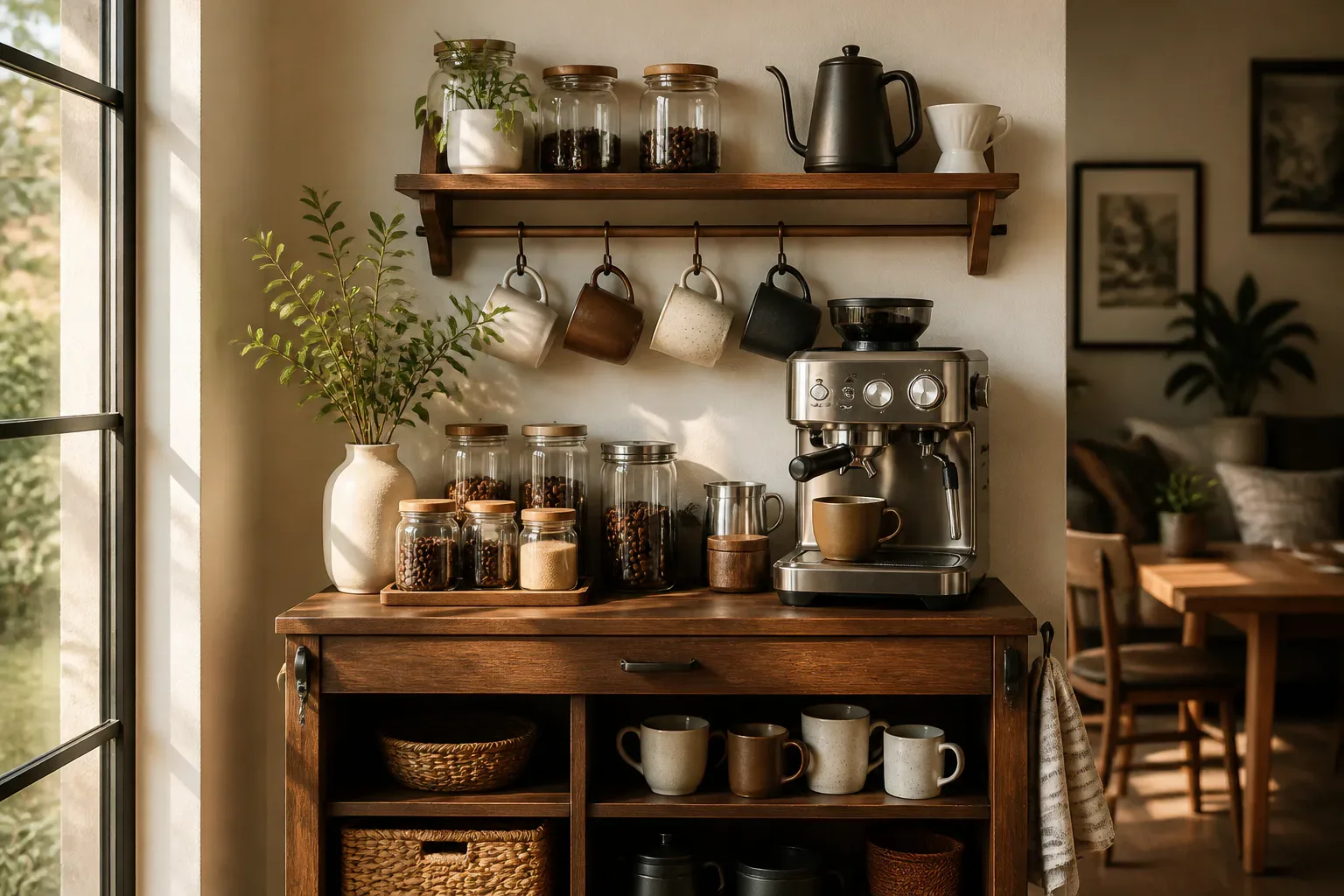
A thrifted dresser or washstand can give a coffee bar character while providing useful storage. Its broad top works as a serving surface for a brewer and mugs, while the drawers keep supplies close without leaving every package on display. This idea fits naturally in a dining room, breakfast area, or kitchen with an empty wall.
Before bringing a piece home, consider its height and depth in relation to your coffee equipment. A dresser that is too tall may make pouring awkward, while a shallow top may not leave enough room for both a machine and cup prep.
Make the furniture work for you
Small updates can help an older piece function as a station without erasing its original charm. Protect the top from drips and heat, and make sure the furniture feels stable when drawers are opened.
- Use drawer dividers for pods, tea bags, filters, and stirrers.
- Reserve one drawer for extra mugs or serving pieces.
- Place a washable tray beneath the brewer to catch splashes.
Keep the top edited: a machine, a canister or two, and a small decorative accent are usually enough to let the dresser remain the focal point.
3. Pair Floating Shelves with a Narrow Console
A floating shelf above a slim console makes good use of vertical space without crowding a walkway. The console gives you a practical surface for a coffee machine, while the wall shelf can hold mugs, jars, or a small framed print. Try the combination in a breakfast nook, along a kitchen wall, or in a compact dining area.
Think through the placement before drilling. The shelf should be easy to reach but high enough to leave room for the brewer and for lifting mugs. Choose a depth that suits the items you plan to store, and secure the shelf into appropriate wall supports.
Balance storage and breathing room
Use the shelf for lightweight, frequently used pieces rather than stacking it with bulky supplies. Matching materials or colors across the shelf and console can help the two separate elements read as one coffee station.
- Keep daily mugs on the shelf and backup supplies elsewhere.
- Leave clear counter space beside the machine for pouring.
- Add a small basket on the console for filters or tea bags.
This layered setup is especially helpful when a full cabinet would feel too heavy or take up too much floor space.
4. Create a Monochrome Coffee Bar Counter
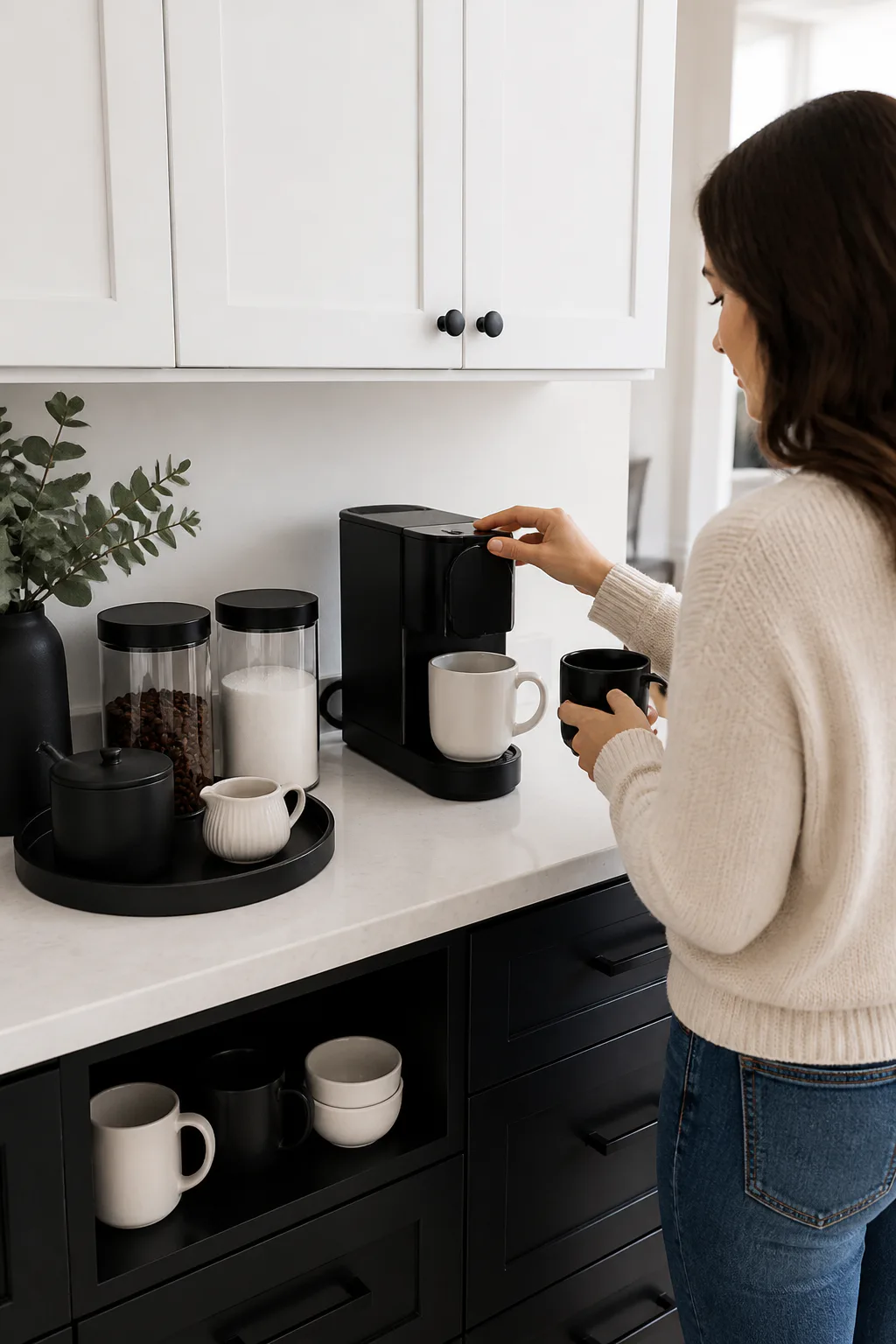
A coordinated palette can make a coffee station feel calm and tidy, even when it sits in the middle of a busy kitchen. Choose matte black, crisp white, or warm cream as the main color, then carry it through canisters, trays, and small accessories. The look works on an existing counter or a dedicated console.
Monochrome doesn’t have to mean every item is identical. Varying finishes—such as glossy ceramic beside matte containers or clear glass against a pale backdrop—adds subtle texture while keeping the overall effect cohesive.
Keep the counter visually clear
Conceal cords where possible and group loose items so the station is easier to wipe down. Airtight glass canisters make beans and sugar easy to see, while consistent labels or lids help reduce visual clutter.
- Choose one main color and one restrained accent.
- Use matching containers for everyday dry ingredients.
- Store backup supplies in a drawer or nearby cabinet.
A simple palette also makes it easier to update the station seasonally: swap a small plant or towel without needing to replace the core pieces.
5. Build a Rustic Coffee Bar Hutch
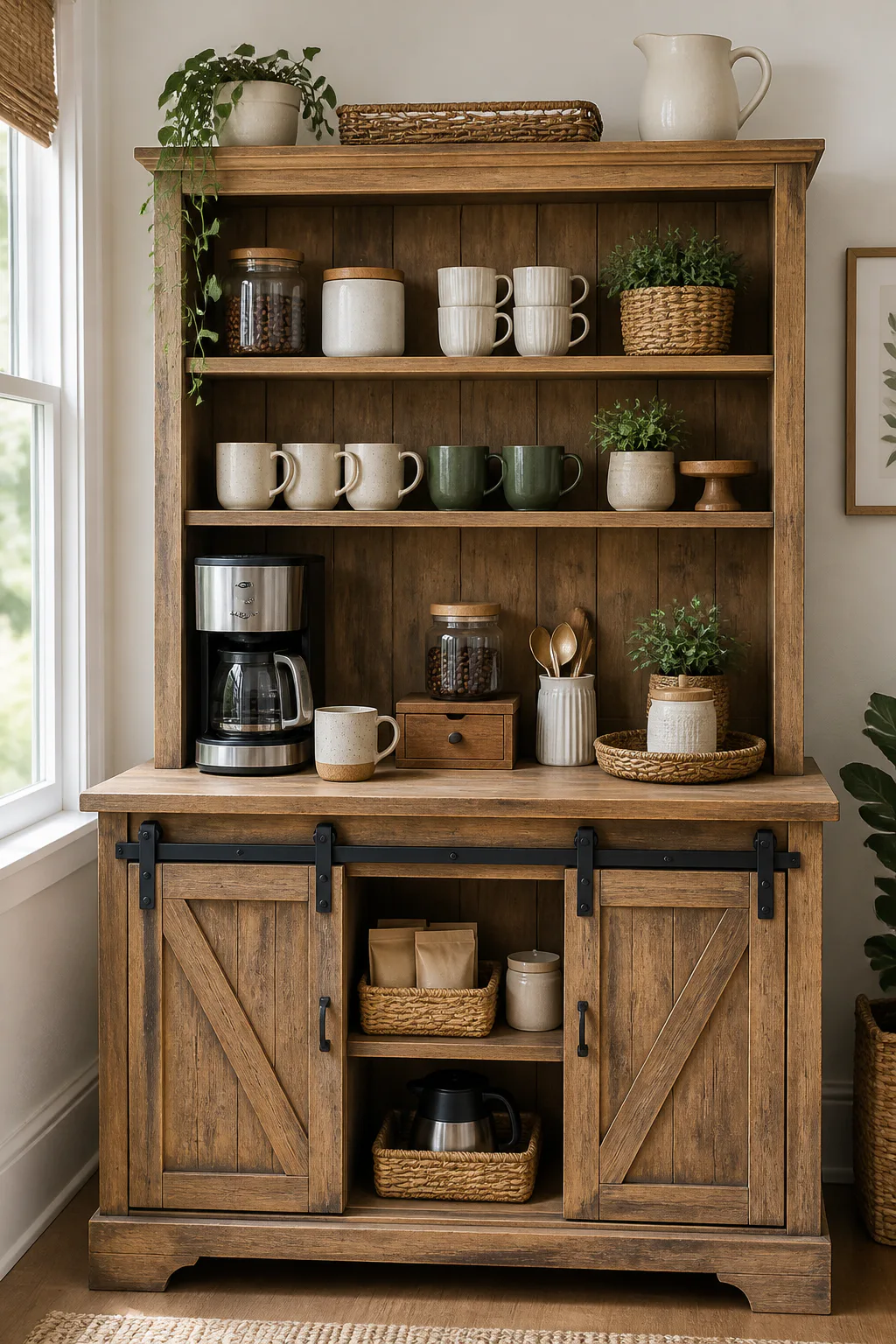
A hutch brings display space and concealed storage together in one piece. Set the brewer and a few favorite mugs on the counter, then use upper shelves for items you want within reach. A cabinet with sliding barn-style doors can hide extra appliances, tea supplies, or less attractive packaging when the station isn’t in use.
This idea suits a kitchen, dining room, or breakfast area where a freestanding piece can anchor the coffee zone. Check the hutch’s depth and height against your equipment, and make sure shelves can support the items you plan to store.
Style the open and closed areas
Think of the visible shelves as a small display, not overflow storage. A limited mix of mugs, jars, and one decorative detail will look considered, while doors make it easy to keep backup supplies out of sight.
- Place heavier appliances on the most stable, accessible surface.
- Group mugs by type or color on an open shelf.
- Use the enclosed section for refills and occasional-use items.
The hutch’s warm wood and practical doors can make a coffee station feel like a piece of furniture rather than another stretch of kitchen counter.
6. Fit an L-Shaped Coffee Station into a Corner
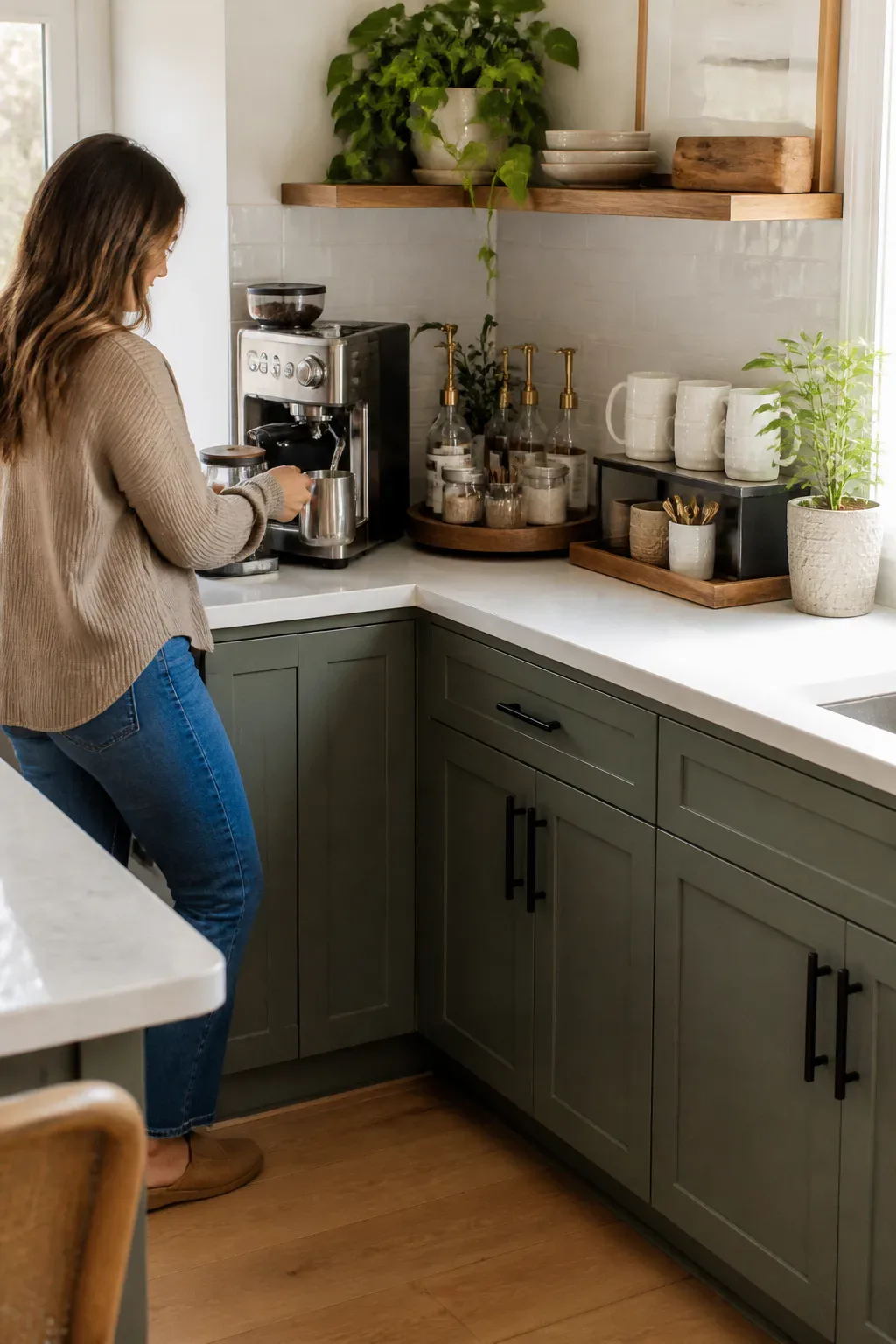
An underused kitchen corner can become a compact coffee zone with an L-shaped arrangement. Use the adjoining counter runs to separate brewing from serving, or place the machine on one side and cups on the other. Because the setup follows the corner, it can make use of space that might otherwise collect rarely used appliances.
Pay attention to the hard-to-reach angle where the counters meet. A lazy Susan can bring small add-ins forward with a turn, making syrups, sweeteners, and stirrers easier to access without crowding the main work area.
Make the corner easy to use
Keep the brewer where you can comfortably fill and clean it, and avoid blocking nearby cabinets or essential prep space. A few clear zones will make the station feel organized rather than wedged into the kitchen.
- Put the machine on the counter section closest to a suitable outlet.
- Use a turntable for small bottles and everyday extras.
- Keep mugs and spoons on the more accessible side.
Using a tray or shared color palette can visually connect both sides of the corner while keeping each task area distinct.
7. Build a Coffee Nook Under the Stairs
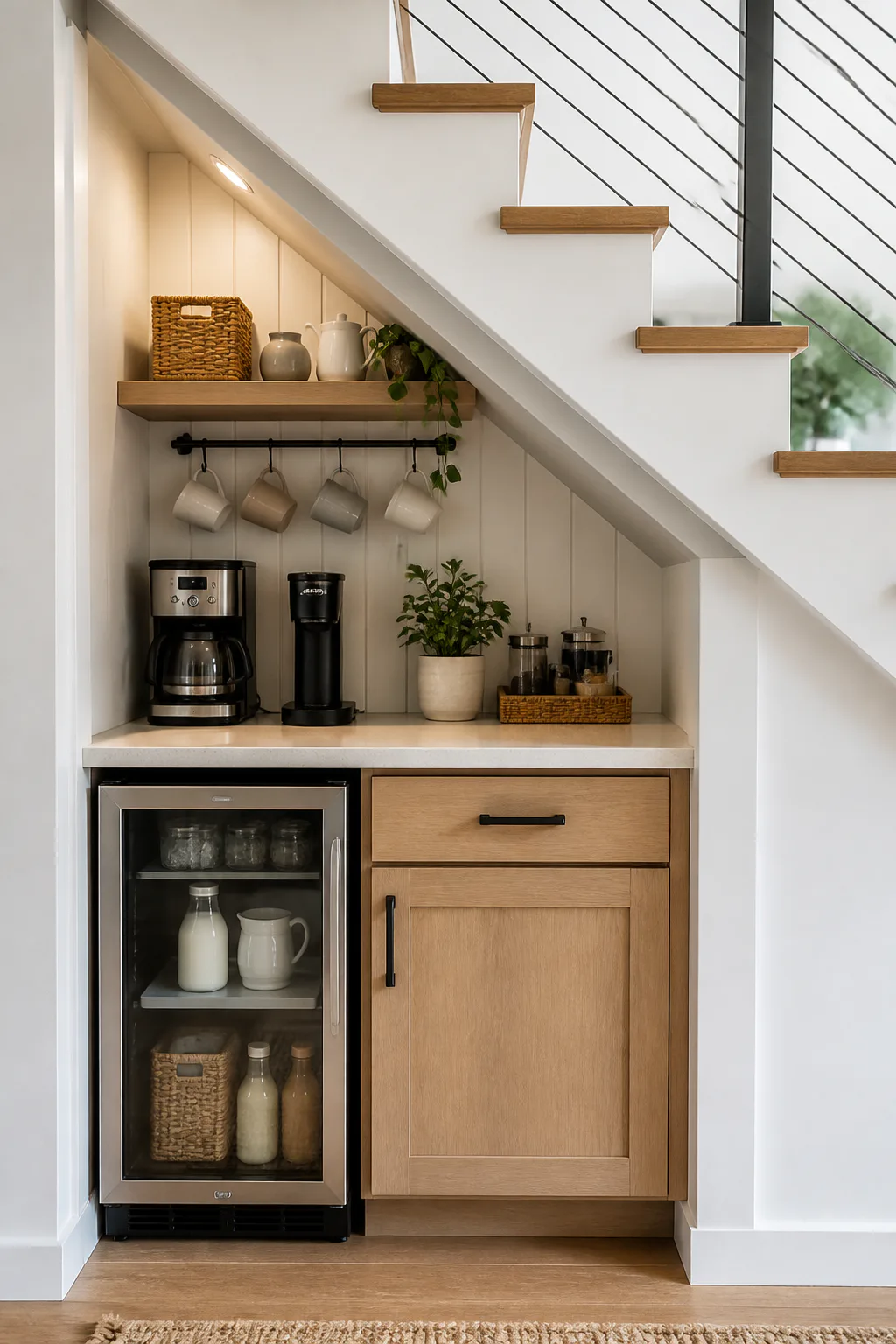
The space beneath an open or partially open staircase can become a tucked-away coffee nook instead of an overlooked pass-through. A compact counter gives you a place to brew, while a small fridge can keep creamers close if the layout allows. This idea works best when the nook is easy to reach from the kitchen or dining area.
Because under-stair spaces vary in height, plan around the slope before choosing appliances or shelves. Keep the tallest equipment beneath the highest part of the stairs, and make sure the brewing surface has enough clearance for filling a reservoir and lifting a cup.
Plan for light and storage
Recessed or under-shelf lighting can brighten a spot that might otherwise feel dim. Cup hooks make use of the vertical surface, while a short shelf can hold a few daily supplies without making the nook feel crowded.
- Measure the usable height and depth before arranging the station.
- Add lighting that makes the work surface comfortable to use.
- Keep hooks and shelves clear of the walkway.
When the nook is designed around its unusual shape, it can feel like a purposeful little destination rather than leftover space.
8. Install Industrial Pipe and Wood Shelving
Black pipe brackets paired with dark reclaimed-style wood create a coffee station with an industrial, café-inspired feel. The shelves add vertical storage above a counter or console, making this approach useful when you want to display mugs and jars but don’t have room for a large hutch.
Let the materials do most of the decorating. Dark wood brings warmth, while the black hardware gives the arrangement definition; simple ceramics and glass containers keep the shelves from looking too busy. This look can work in a kitchen, dining area, or a coffee nook against a plain wall.
Build a practical display
Plan shelf spacing around what you’ll actually store, and use suitable fixings for your wall and the weight of the objects. Keep frequently used pieces on the easiest-to-reach shelf so the display remains functional.
- Use lower shelves for everyday mugs and coffee jars.
- Reserve upper shelves for lighter or occasional-use items.
- Leave open space around the brewer for comfortable use.
A small plant or framed print can soften the strong materials without distracting from the station’s clean, sturdy lines.
9. Create a Combined Tea and Coffee Station
A shared tea and coffee station keeps hot drinks in one convenient place without making tea drinkers search through coffee supplies. Divide the counter into two clear zones: one for the brewer, beans, and mugs, and another for a kettle, tea stand, and honey jars. This arrangement works well on a kitchen counter, sideboard, or generous console.
The two sides don’t need equal space. Give more room to whichever drinks you make most often, while keeping the other side stocked with its essentials. A tray or small tiered stand can help keep tea bags and add-ins organized without taking over the surface.
Keep both routines easy
Place items close to the appliance they belong with, and leave a clear area for filling cups and preparing drinks. If the station serves several people, make common supplies visible and easy to reach.
- Set coffee equipment and beans together in one zone.
- Group tea bags or loose-leaf tea beside the kettle.
- Keep honey, sweeteners, and spoons in a shared spot.
Matching containers or a coordinated tray can make the two distinct routines feel like one cohesive station.
10. Add a Pegboard Coffee Bar Backsplash
A pegboard backsplash turns the wall behind a coffee station into adjustable storage. Hang mugs, small baskets, and lightweight accessories where you can reach them, then rearrange the layout as your needs change. It’s a useful option above a counter or console when cabinet space is limited and you want supplies close at hand.
Painted wood or metal pegboard can complement the rest of the room, while a contrasting color can make the station stand out. Before installing it, consider the weight of the items you plan to hang and use suitable mounting hardware for the wall.
Arrange it around your routine
Put the most-used pieces at a comfortable height and avoid placing items where they could interfere with a machine or its cord. A little open wall space helps the board feel organized instead of packed.
- Hang everyday mugs on sturdy hooks.
- Use a small basket for filters, spoons, or tea bags.
- Add a miniature plant where it won’t obstruct the work area.
Because the hooks can move, the pegboard can evolve as you change equipment or decide to use the station for other supplies.
11. Install a Café-Style Floating Coffee Bar Ledge

A narrow floating ledge can create a compact café-style spot along a hallway or dining room wall. Add a couple of high stools beneath it, and the ledge becomes a place to sip coffee as well as a small surface for serving. It’s a clever fit when a full table would obstruct a walkway or take up valuable floor space.
Keep the ledge’s purpose in mind: it can be a perch for a cup and a light breakfast, but it may not suit a bulky brewer or extensive storage. If you want it to serve as the actual prep station, make sure there’s enough depth and access to a suitable outlet.
Make the perch comfortable
Choose stools that tuck neatly beneath the ledge, and position them so people can sit without blocking doors or circulation. Secure the ledge properly and leave enough room for knees beneath it.
- Use the surface for cups, a small tray, or light serving items.
- Keep nearby storage for beans and brewing equipment.
- Check the wall location for comfortable seating and safe access.
A simple ledge, a pair of stools, and warm lighting can suggest a neighborhood café without needing a dedicated breakfast room.
12. Hide a Coffee Station Inside an Armoire
A tall wardrobe or linen armoire can conceal a complete coffee setup behind closed doors. Inside, a shelf or work surface can hold the brewer, mugs, and everyday supplies, while upper or lower storage keeps refills organized. When the station isn’t in use, closing the doors makes the room feel calm and uncluttered.
This approach can work in a dining room or another area where a visible appliance station would feel out of place. Measure the interior carefully, accounting for the machine’s height, door clearance, and the space needed to open reservoirs or lift cups.
Think through power and airflow
Plan for a safe, convenient power source before setting up appliances inside the cabinet. Avoid pinching cords in the doors, and allow the equipment to be used as directed, with enough space around it for practical operation.
- Keep the brewer on a sturdy, easy-to-clean shelf.
- Use baskets or small containers for coffee and accessories.
- Check that doors can close without hitting equipment or cords.
A pull of the doors can shift the room from coffee station to ordinary storage, making this a particularly discreet solution.
13. Style a Coffee Bar with Greenery and Neon
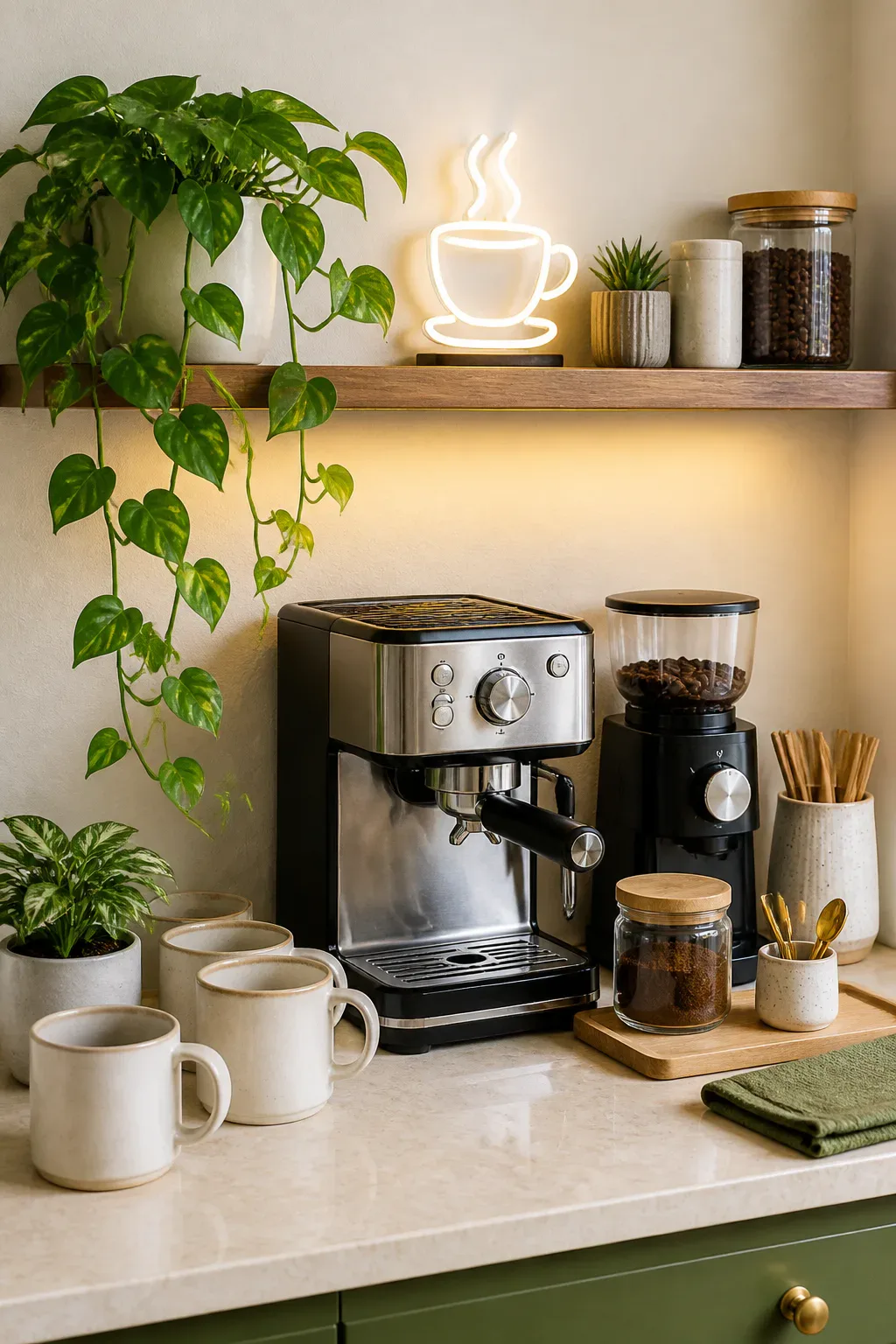
Greenery and a small neon-style sign can turn a practical coffee setup into a cheerful focal point. A trailing plant adds softness against shelves or a backsplash, while warm under-shelf lighting makes the counter feel inviting in the early morning or evening. This decorative approach can enhance nearly any station, from a console to a compact corner.
Keep the brewer and supplies easy to reach, then use a few accents to establish the mood. A playful sign can bring personality, but leaving some clear wall and counter space helps the display feel deliberate rather than crowded.
Add personality without sacrificing function
Choose a plant suited to the light and conditions in the spot, or use a convincing faux option where natural light is limited. Position lighting so it brightens the work surface without shining directly into your eyes.
- Place a trailing plant where leaves won’t touch hot equipment.
- Use warm accent lighting beneath a shelf or cabinet.
- Choose a small sign that complements the room’s colors.
These finishing touches work best when they support the station’s style rather than compete with the everyday tools that make it useful.
Final Thoughts
A coffee bar can be as simple as a cart that rolls beside an outlet or as integrated as a hidden armoire station. Start with the space you already have, then decide which supplies should stay visible, what needs to be stored, and how you want the setup to fit into your daily routine.
Choose one idea that solves a real need—more storage, a better use for an empty corner, or a place to share tea and coffee—and build from there. With a practical layout and a few personal details, even a small station can make your home feel more welcoming at coffee time.