11 Stunning Outdoor Patio Ideas for a Cozy Backyard
A well-planned patio can feel like another room in your home, whether you have a generous backyard or a small paved spot outside the door. The right mix of seating, planting, lighting, and practical details makes it easier to relax outside and enjoy everyday meals or get-togethers.
These outdoor patio ideas cover a range of styles, from warm earthy finishes to layered greenery and cozy firelight. You can borrow one idea as a simple refresh or combine a few to shape a more complete outdoor retreat.
If you’re planning a patio from scratch, start with how you want to use it and how much room you have to work with. Renters and DIY decorators can adapt many of these ideas with movable furniture and containers, while homeowners can consider built-in features and lasting surface changes.
1. Create an Outdoor Living Room
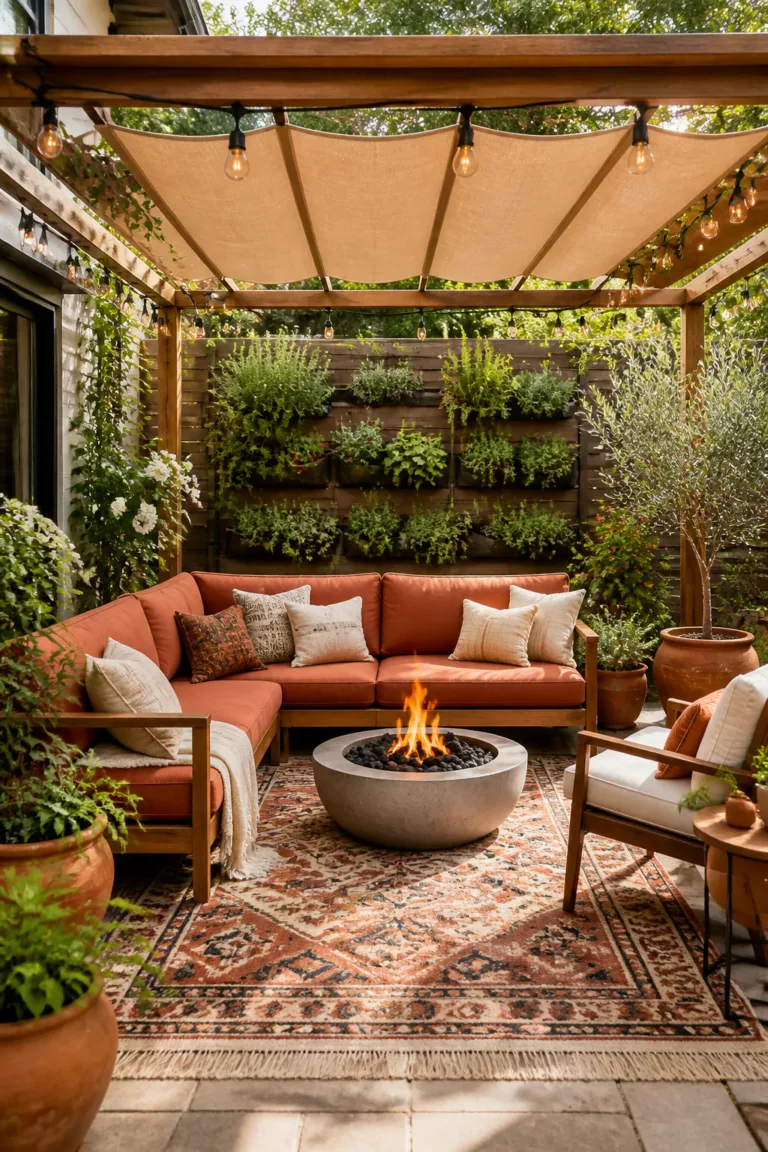
Bring the comfort of an indoor lounge outside by arranging weather-resistant seating around a shared focal point. A sectional works well for a larger patio, while a pair of deep chairs can create the same welcoming conversation area in a compact space. An outdoor rug helps define the arrangement and adds softness underfoot.
Keep the layout centered on how people will use it: chatting, reading, or setting down a drink. A low coffee table makes the seating feel connected, but leave enough room to walk around it and pull seats closer when guests arrive.
How to pull it off
Choose outdoor fabrics and finishes suited to your climate, and plan a place to store cushions during rough weather. Layering a few colors and textures can make the arrangement feel considered without crowding the patio.
- Measure the seating area before buying a sectional or rug.
- Use pillows to introduce color and a comfortable mix of textures.
- Choose a coffee table with a surface that is easy to wipe clean.
The result is a relaxed gathering spot that feels like a natural extension of your home.
2. Design a Terracotta-Toned Patio
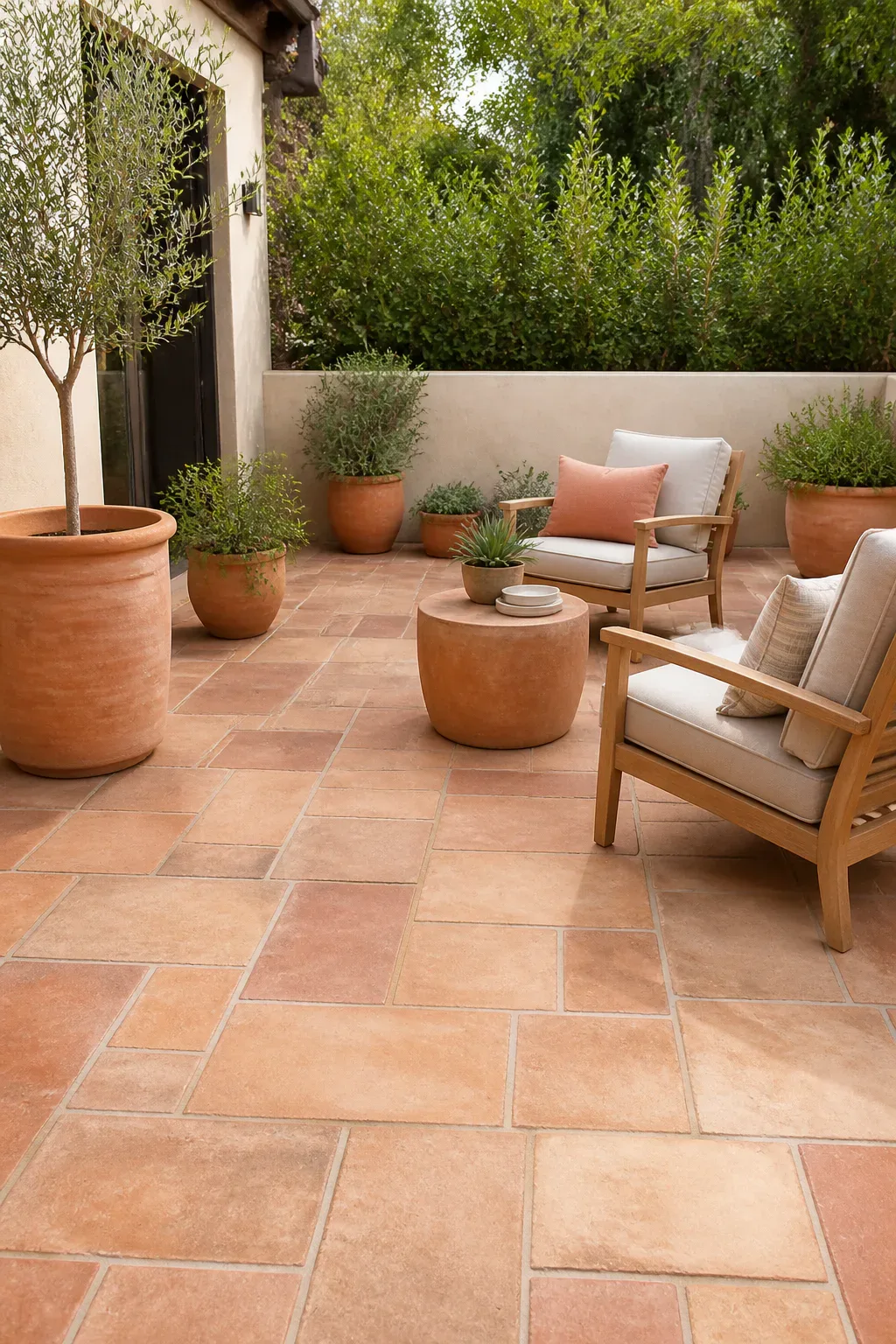
Terracotta, warm beige, and weathered-clay tones bring an earthy quality to a patio. They pair naturally with stone, wood, and greenery, making them a useful alternative to a scheme built entirely around cool gray. You can use these colors across furnishings, pots, cushions, or hardscape finishes.
A warm palette can make a large paved area feel more inviting, and it can help a small patio feel cohesive rather than busy. The key is to vary the shades and materials so the space has depth. A clay-colored planter beside beige cushions, for example, adds contrast without introducing a competing color story.
Ways to build the palette
Start with one prominent element, such as the paving or a set of planters, then repeat its tone in smaller details. This lets the patio feel coordinated while leaving room for plants and natural materials to provide contrast.
- Pair terracotta accents with warm beige or pebble-toned textiles.
- Mix smooth finishes with weathered or textured surfaces.
- Use green foliage to keep the earthy colors feeling fresh.
A few repeated tones can tie furniture and landscaping together into a calm, grounded setting.
3. Frame the Patio with Layered Planting
Plants soften the hard lines of a patio and make the space feel connected to the garden. Instead of placing a single row of identical pots along the edge, combine plants of different heights and shapes. Ornamental grasses, shrubs, and flowering perennials can create a lush border that changes through the seasons.
Layered planting works especially well where paving meets a lawn, fence, or garden bed. Taller plants can give a little privacy, while lower flowers and grasses soften the boundary near the seating area. Choose plants with the amount of sun, shade, and water your patio edge can provide.
Build a balanced border
Arrange plants so the tallest forms sit toward the back of a bed or near a wall, with shorter varieties closer to the patio. Repeating a few plant types helps the border look intentional rather than crowded.
- Use ornamental grasses for movement and fine texture.
- Add flowering perennials for seasonal color near seating.
- Include shrubs where you want structure or added screening.
This living frame can make even a simple paved patio feel softer and more inviting.
4. Create Separate Lounge and Dining Zones
A larger patio can serve more than one purpose without feeling like a collection of unrelated furniture. Divide the space into clear areas, such as a dining zone near the house and a lounge area farther out. Furniture placement alone can signal the change in use, even when there is no wall or formal divider.
Subtle shifts in level or paving can also help distinguish one area from another. Keep the route between zones open so people can move easily with plates, drinks, or chairs. In a smaller patio, flexible furniture can let one area serve as both a dining spot and a place to relax.
Plan the layout around movement
Sketch the patio before arranging furniture and mark the paths people are likely to take. Give each activity enough space to feel comfortable, while keeping the overall arrangement visually connected through repeated materials or colors.
- Place dining furniture where serving meals is convenient.
- Use a rug or grouped chairs to define the lounge area.
- Keep a clear walking route between the house and each zone.
Distinct areas make a patio more versatile while preserving an open, welcoming feel.
5. Add Built-In Perimeter Seating
Low seat walls along the edge of a patio offer a permanent place to sit and can help define the space. Stone or wood seating works especially well where the patio borders a garden bed, since the structure can create a clear edge between planting and paving. It also frees up the center of the patio for a table or movable chairs.
Built-in seating can be useful when you often host guests or want to reduce the amount of furniture that needs to be stored. Before committing to a layout, consider where people will face and whether the seating will feel comfortable beside nearby paths, doors, or planting.
Make the seating comfortable
Think about the seat wall as part of the patio’s overall design, not just an extra ledge. A finished surface that feels comfortable to sit on, plus cushions that can be brought indoors, can make the feature more inviting.
- Run seating along an edge that won’t interrupt a main walkway.
- Use the wall to separate paving from a flower bed.
- Add outdoor cushions for extra comfort when the patio is in use.
With thoughtful placement, perimeter seating combines useful function with a tidy, integrated look.
6. Center the Patio Around a Fire Feature
A fire pit or fire table can give a patio a natural focal point and encourage people to gather after the sun goes down. Place seating around the feature so everyone can share the warmth and conversation, or tuck it into a corner if the patio is compact. The arrangement can make a simple outdoor space feel especially inviting on cool evenings.
Choose a fire feature that suits the way you plan to use the patio and the space available. Consider how it relates to nearby furniture, planting, and the home, and follow local requirements and the manufacturer’s safety guidance for placement and use.
Arrange a comfortable gathering spot
Leave enough room to move between seats and around the fire feature. Keep combustible furnishings and other materials at the recommended distance, and make sure the layout does not block a doorway or the main path across the patio.
- Set seating at a comfortable distance from the fire feature.
- Choose a shape and scale that suit the patio footprint.
- Keep safety instructions and local rules in mind during planning.
A well-placed fire feature can make the patio feel like a destination for relaxed evening gatherings.
7. Combine Pavers with Gravel Borders
Mixing pavers with gravel or flagstone creates visual texture without adding lots of decorative objects. Large-format concrete pavers can establish a clean, orderly surface, while a gravel border softens the edges and adds contrast. Natural flagstone offers another way to bring variation to a patio while keeping the overall design grounded.
This combination can suit both modern and more naturalistic settings. A consistent color relationship between the materials helps the surface feel intentional, while changes in size and texture give the eye something to notice. Think about how the edges meet and how the surface will be used before settling on a pattern.
Keep the material mix cohesive
Choose one surface to be the main feature and let the others play a supporting role. A simple layout is often easier to maintain and helps different finishes feel connected rather than visually busy.
- Use large pavers as the main walking and furniture surface.
- Add gravel along selected edges for a contrasting border.
- Consider flagstone where you want a more natural surface variation.
Combining a few complementary finishes gives the patio depth while keeping the design clear.
8. Install a Vertical Garden on the Patio
When floor space is limited, a fence or exterior wall can provide room for greenery. Mounted planters, climbing vines, or a modular herb and flower wall turn a plain vertical surface into a living feature. This approach can bring color and texture to a compact patio without taking up space needed for chairs or a table.
A vertical garden can also help soften a privacy fence or make an outdoor dining area feel more enclosed. Match the planting method to the wall and the plants you want to grow, and consider how you will reach them for watering and maintenance. A well-placed green wall should be attractive and practical to care for.
Choose a setup that fits your space
Use a trellis for climbing plants or mounted containers when you want to arrange flowers and herbs at different heights. Keep the system secure and make sure it can handle the weight of the planters and growing plants.
- Grow herbs near the area where you prepare or serve food.
- Use climbing vines to add greenery along a fence or wall.
- Check that containers can drain and be watered easily.
Vertical planting makes a small patio feel greener without sacrificing valuable floor area.
9. Drape String Lights Over the Patio
Warm string lights can make a patio feel inviting after dark and provide a softer alternative to a single bright floodlight. Hung overhead, they create a gentle canopy above a seating or dining area. Their glow helps define the patio as an outdoor room and makes it easier to continue a gathering into the evening.
For a more layered effect, combine overhead lights with low-level illumination along a path or beneath a bench. Different light sources can help people see where they are walking while keeping the overall mood relaxed. Plan where lights will hang and how they will be powered before installing them.
Layer the lighting thoughtfully
Keep the arrangement simple and avoid directing bright light into seating areas or neighboring windows. Use fixtures and connections intended for outdoor conditions, and follow installation guidance for the products you choose.
- Hang string lights over a lounge or dining zone.
- Add low pathway lights to make routes easier to see.
- Consider concealed lighting under benches or steps.
Several gentle light sources can make the patio both more functional and more atmospheric.
10. Build a Shaded Al Fresco Dining Nook
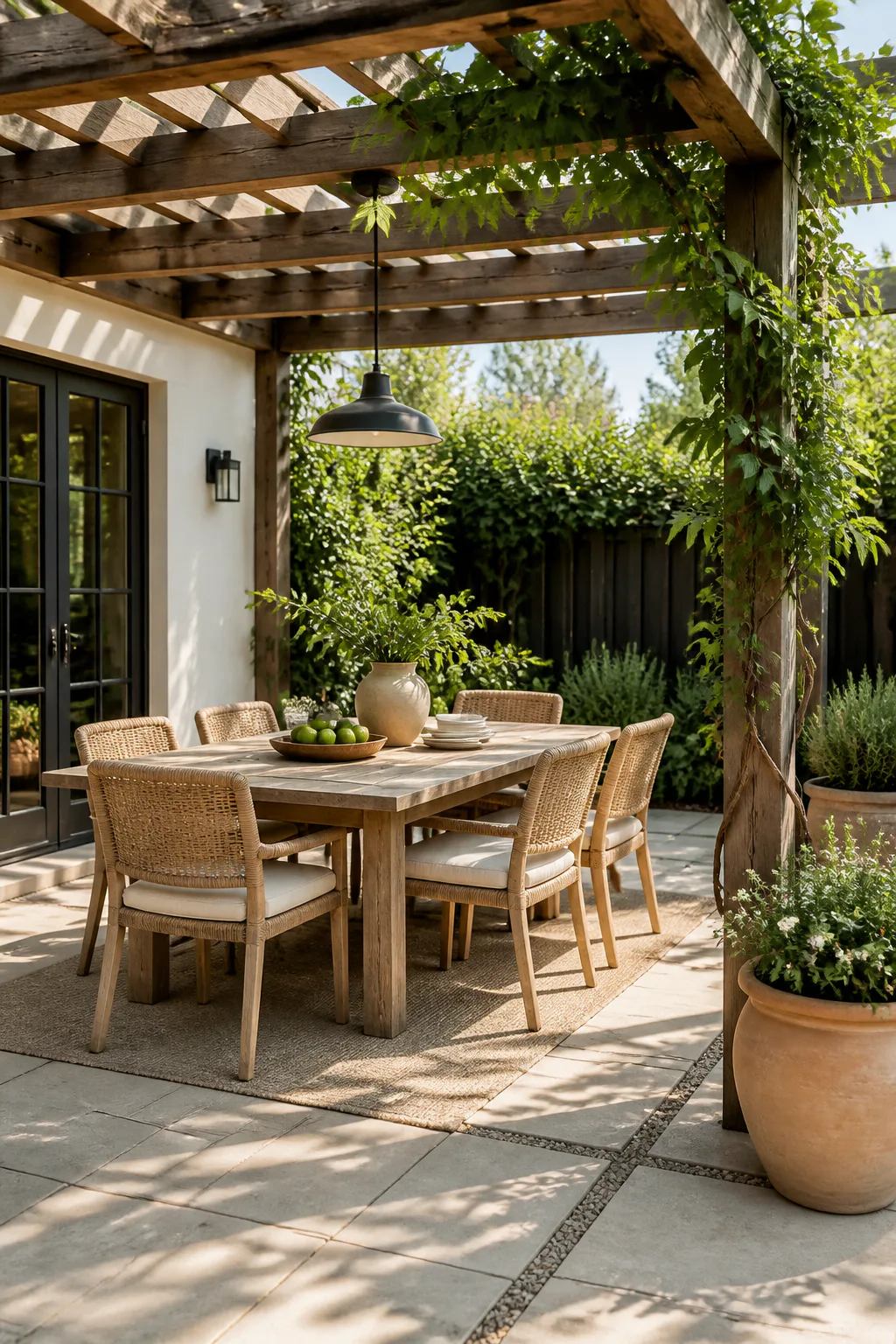
A dedicated dining nook makes it easier to enjoy meals outside, especially when the patio has a comfortable place to sit and enough shade. Set an outdoor table beneath a pergola, cantilever umbrella, or retractable awning to create a clear destination for breakfast, lunch, or dinner. The shade can also make the area more pleasant during bright parts of the day.
Choose a table size that suits the available space and the number of people who usually eat outdoors. Leave room to pull chairs back and walk around the table. If the nook sits near the kitchen or an exterior door, carrying food and dishes outside may feel easier.
Make meals outdoors more comfortable
Think about how the shade will fall at different times of day and whether the covering can be adjusted when conditions change. Durable, easy-to-clean furnishings are useful for a dining area that sees regular use.
- Choose a table that leaves comfortable clearance for chairs.
- Select a pergola, umbrella, or awning to suit the patio layout.
- Keep a clear path between the dining area and the house.
A shaded nook gives outdoor meals a defined, welcoming place in the overall patio plan.
11. Add a Bubbling Patio Water Feature
A compact fountain or reflecting pool can bring a calm visual focal point to a patio. The gentle sound of moving water adds another sensory layer and may help soften nearby background noise. A smaller, self-contained feature can work in a modest outdoor space, while a reflecting pool can suit a more open, minimalist layout.
Place the water feature where it can be enjoyed from a seat without becoming an obstacle in the main walking route. Its shape and finish should relate to the patio’s existing materials, and nearby plants can help it blend into the garden. Consider access to power or water if the feature requires it.
Choose a practical placement
Check the care requirements before deciding on a style, since water features may need occasional cleaning and maintenance. A location that is easy to reach makes those small tasks simpler and keeps the feature looking its best.
- Use a compact fountain when floor space is limited.
- Place the feature where its sound can be enjoyed from seating.
- Keep maintenance and access needs in mind as you plan.
With a thoughtful location, water adds a peaceful finishing touch to the patio.
Final Thoughts
The most inviting patios balance comfort, function, and a sense of personal style. Start with the way you want to spend time outdoors, then choose the seating, surfaces, plants, or lighting that support those activities.
You do not need to tackle every idea at once. A few thoughtful changes—such as defining a lounge area, adding layered planting, or creating a shaded dining spot—can make your patio feel more welcoming and useful throughout the seasons.