11 Stunning Outdoor Patio Ideas for Every Space
A patio can feel like a natural extension of your home, whether it’s a generous backyard terrace or a small outdoor nook. The right mix of color, comfortable seating, greenery, lighting, and practical details can make it more inviting without making it feel crowded.
These 11 outdoor patio ideas cover a range of styles and layouts, from warm terracotta accents to space-saving furniture and discreet outdoor tech. Each one can be adapted to the size of your patio and the way you like to spend time outside.
Start with the changes that solve your biggest everyday needs: more shade, a cozier place to sit, extra privacy, or a better setup for meals. Then add the finishing touches that help your patio feel connected, comfortable, and distinctly yours.
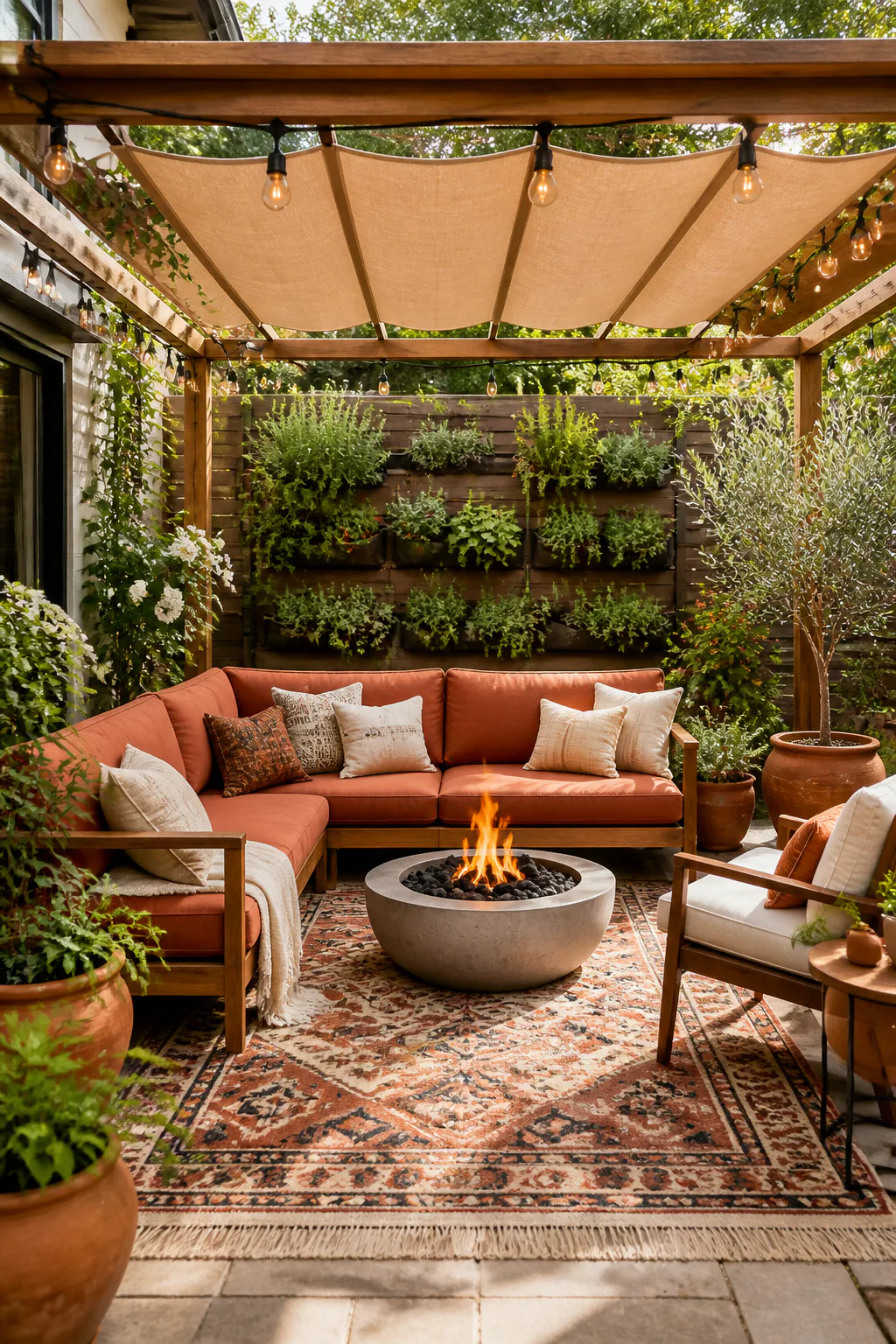
1. Create a Terracotta Patio with Warm Timber Accents

Terracotta, raw timber, and deep green make a grounded palette that feels warm without needing lots of decoration. Use clay-toned cushions, pots, or outdoor accessories to introduce color, then bring in timber through a bench, dining table, or small side table. The combination works well in a sunny courtyard, beside a neutral-colored home, or anywhere you want a relaxed, natural look.
To keep the palette balanced, think in layers rather than making every surface terracotta. A few earthy accents can stand out against timber and greenery, while a calm base helps the patio feel restful. Deep green foliage also adds contrast and makes the warmer tones feel at home among the plants.
How to pull it off
Choose a main material first, such as a wooden dining set or clay-colored paving, and repeat its tones in smaller details. If your patio already has gray or concrete surfaces, you can warm them up with pots, cushions, and a textured outdoor rug instead of replacing the floor.
- Pair terracotta accessories with natural or weathered timber.
- Add leafy plants for a deep green counterpoint.
- Use a few repeated colors rather than many competing shades.
2. Ground a Lounge Area with a Patterned Outdoor Rug

An outdoor rug gives a seating area a clear center, much like one would in a living room. It can help a sofa and chairs feel like a unified lounge instead of separate pieces scattered across the patio. A pattern also adds visual interest to plain paving or decking, especially when the rest of the furniture is simple.
Layering makes the arrangement feel more comfortable and considered. Textured pillows and cushions invite people to linger, while a rug brings color and softness underfoot. This idea suits a patio with enough room for a defined seating group, but a smaller rug can also mark out a compact conversation corner.
Choose outdoor-friendly layers
Look for a rug designed for outdoor use and consider how its pattern will work with the cushions. Keep one element visually quiet if the other is bold: a patterned rug can pair well with mostly solid pillows, while a plain rug leaves room for more expressive textiles.
- Size the rug to sit beneath the front legs of the main seating.
- Choose cushions made for outdoor conditions or quick drying.
- Repeat one rug color in a pillow, planter, or nearby accessory.
3. Build a Compact Lounge Around a Storage Bench
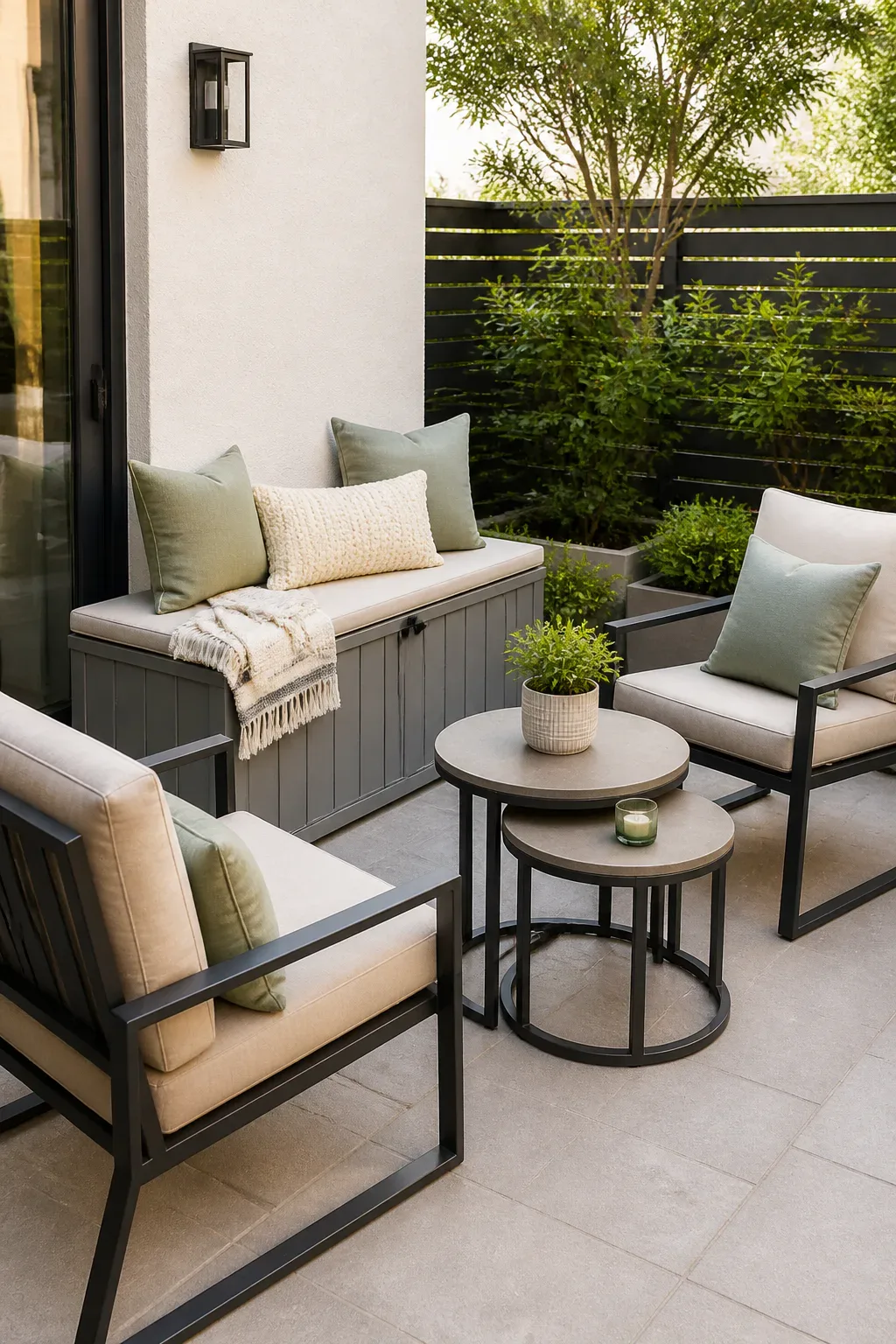
A small patio can still have a comfortable lounge area if the furniture leaves room to move. A slim-profile bench, compact chairs, and a nesting table provide useful surfaces without filling every available corner. A storage bench is especially helpful because it can offer seating while keeping cushions or other patio essentials close at hand.
Arrange the main seats to face each other or angle toward a shared focal point, such as a garden view. Keep the center open enough to walk through, and let flexible pieces do double duty. Nesting tables can spread out when you need extra space and tuck together again when the patio is quiet.
Keep the layout light
Before choosing furniture, measure the patio and note the route from the door to the rest of the yard. Select pieces with narrower frames or open bases so the floor remains visible, and make sure the storage bench lid can open without blocking a walkway.
- Use a storage bench for seating and outdoor essentials.
- Choose a nesting table instead of a bulky coffee table.
- Leave a clear path between the door and seating area.
4. Create a Vertical Herb Garden on the Patio Fence
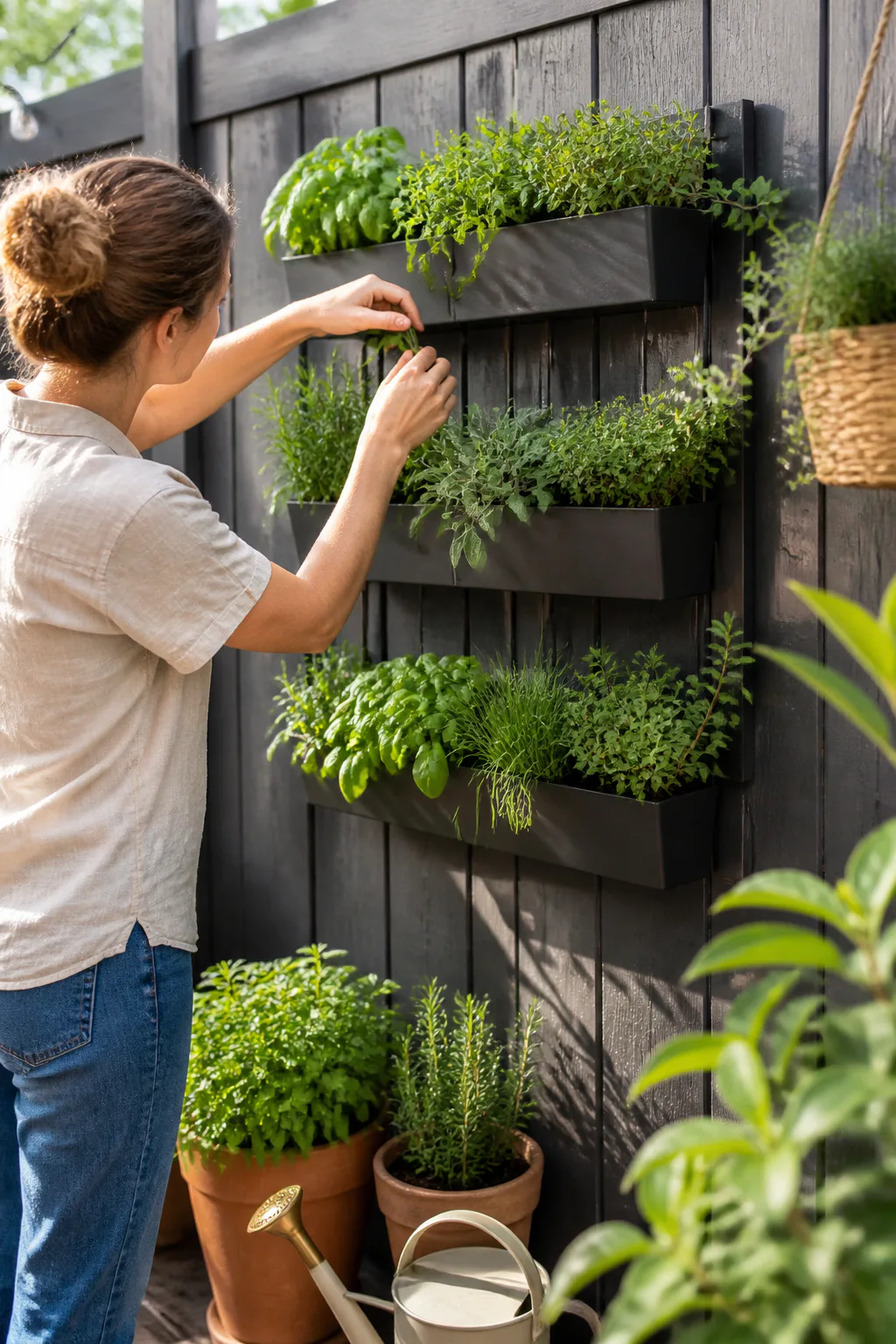
When floor space is limited, a fence or wall can become a productive garden surface. Mounted planter boxes, a trellis, or a purpose-made vertical planter bring greenery closer to eye level without taking up valuable room for seating. Herbs can make the display useful as well as attractive, especially near an outdoor dining spot or kitchen door.
A vertical garden can also soften a plain fence and add a sense of enclosure. Choose plants according to the light and exposure on that part of the patio, and leave enough space between containers for watering and growth. A small, well-maintained arrangement is often easier to enjoy than a crowded wall of plants.
Plan for easy care
Check that the fence or wall can support the weight of the planters, particularly after watering. Position herbs you use often where you can reach them comfortably, and consider how runoff will affect the patio surface or nearby furniture.
- Use mounted boxes or a trellis to keep the floor clear.
- Group herbs with similar light and watering needs.
- Place frequently used plants within easy reach of the door.
5. Hang String Lights Over a Cozy Patio Seating Area

String lights can make a patio feel inviting after sunset and give a seating area a gentle sense of definition. Hang them overhead to draw attention to the lounge, dining table, or a favorite corner. Their warm glow works especially well alongside natural textures, soft cushions, and greenery.
For a layered evening setup, combine overhead lights with lower sources such as lanterns or path markers. The mix helps illuminate the patio at different heights and makes the space feel more welcoming than a single bright fixture. Keep the lighting focused on the areas where people sit or walk, rather than trying to light every edge equally.
Build a comfortable glow
Plan where the lights will attach before hanging them, and use outdoor-rated products and suitable supports. Avoid placing cords where they create a trip hazard or interfere with doors. A few carefully positioned lights can make a small patio feel intimate without overwhelming it.
- Hang string lights over the seating or dining area.
- Add low lanterns near chairs or along a path.
- Keep cords clear of doorways and walking routes.
6. Center the Patio Around a Compact Fire Pit

A compact fire feature can give an outdoor lounge a natural focal point and make it more appealing on cooler evenings. A gas fire pit, stone fire table, or modern concrete bowl can anchor a seating arrangement while adding a warm, welcoming atmosphere. Choose a style that suits the patio’s scale so the feature supports the layout rather than taking it over.
Arrange chairs with enough room for people to gather comfortably, and keep the fire feature visually connected to the rest of the patio. A fire table can combine a shared surface with the focal point, while a bowl may feel more sculptural. The best choice depends on how you plan to use the space and what fits safely within it.
Make safety part of the layout
Follow the feature’s instructions and local requirements for placement, clearances, and operation. Keep it away from overhanging branches and combustible materials, and leave a clear route around the seating. Think through fuel, storage, and supervision before making it the center of your patio.
- Choose a fire feature scaled to the seating area.
- Leave comfortable clearance around the unit and chairs.
- Keep the route through the patio open and unobstructed.
7. Add a Pergola with a Retractable Canopy
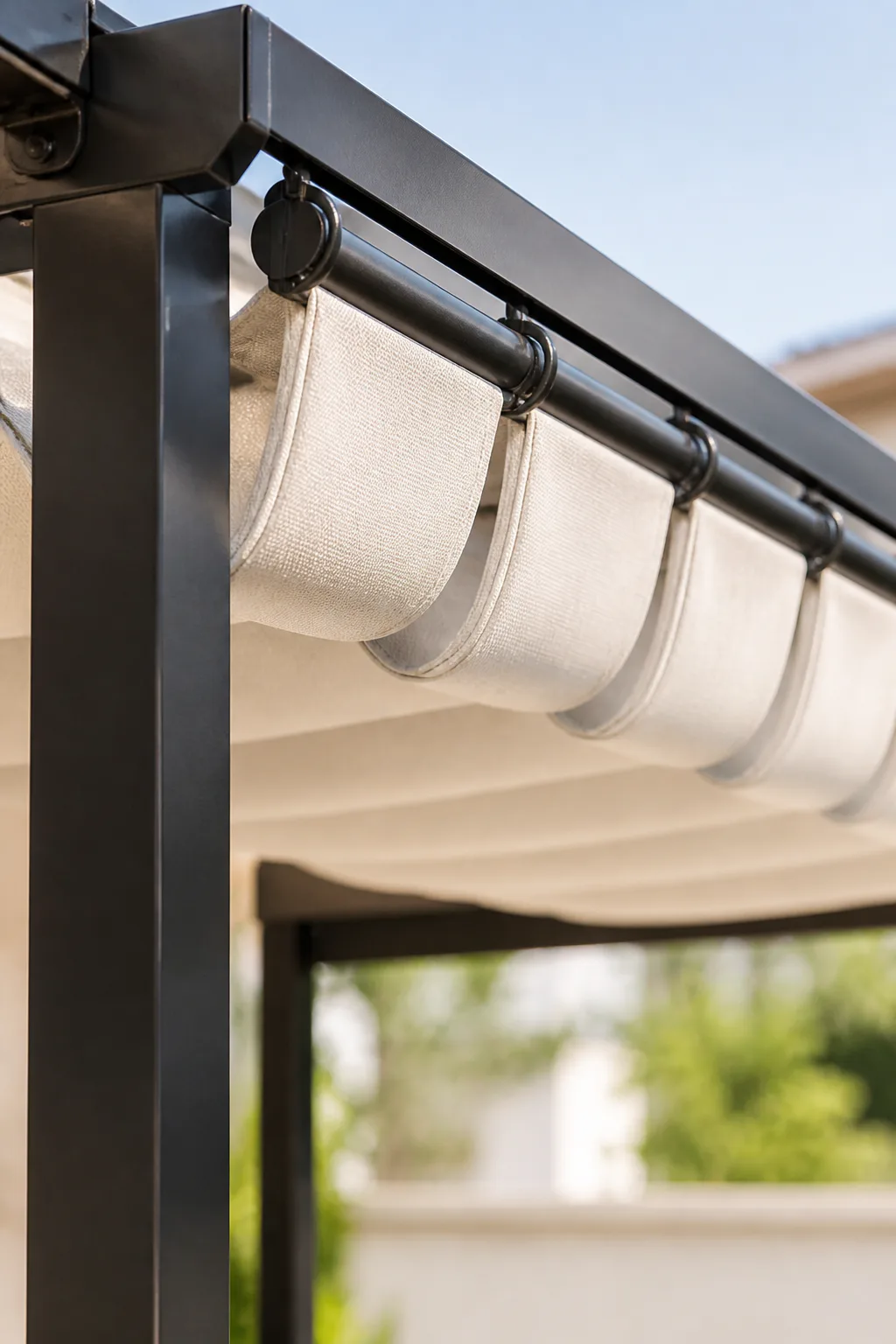
A pergola can give a patio a stronger sense of structure by framing the area overhead. Add a retractable canopy when you want the option of shade without making the space feel permanently covered. This combination works well over a dining table or lounge set, where sun protection can make the area more comfortable during bright parts of the day.
The overhead frame also helps define the patio as an outdoor room. It can visually connect furniture beneath it and provide a place to arrange lighting or climbing greenery, depending on the design. A retractable canopy keeps the setup flexible, letting you open the space to the sky when shade is not needed.
Choose placement with care
Consider how sunlight moves across the patio and where shade would be most useful. Check that the structure suits the scale of the home and leaves doors, windows, and walking routes unobstructed. For a smaller area, a simple, open design can provide definition without feeling heavy.
- Position the canopy over the area used most during sunny hours.
- Coordinate the frame with the home’s existing finishes.
- Keep the structure open enough to preserve an airy feel.
8. Define Dining and Lounge Zones with Planters
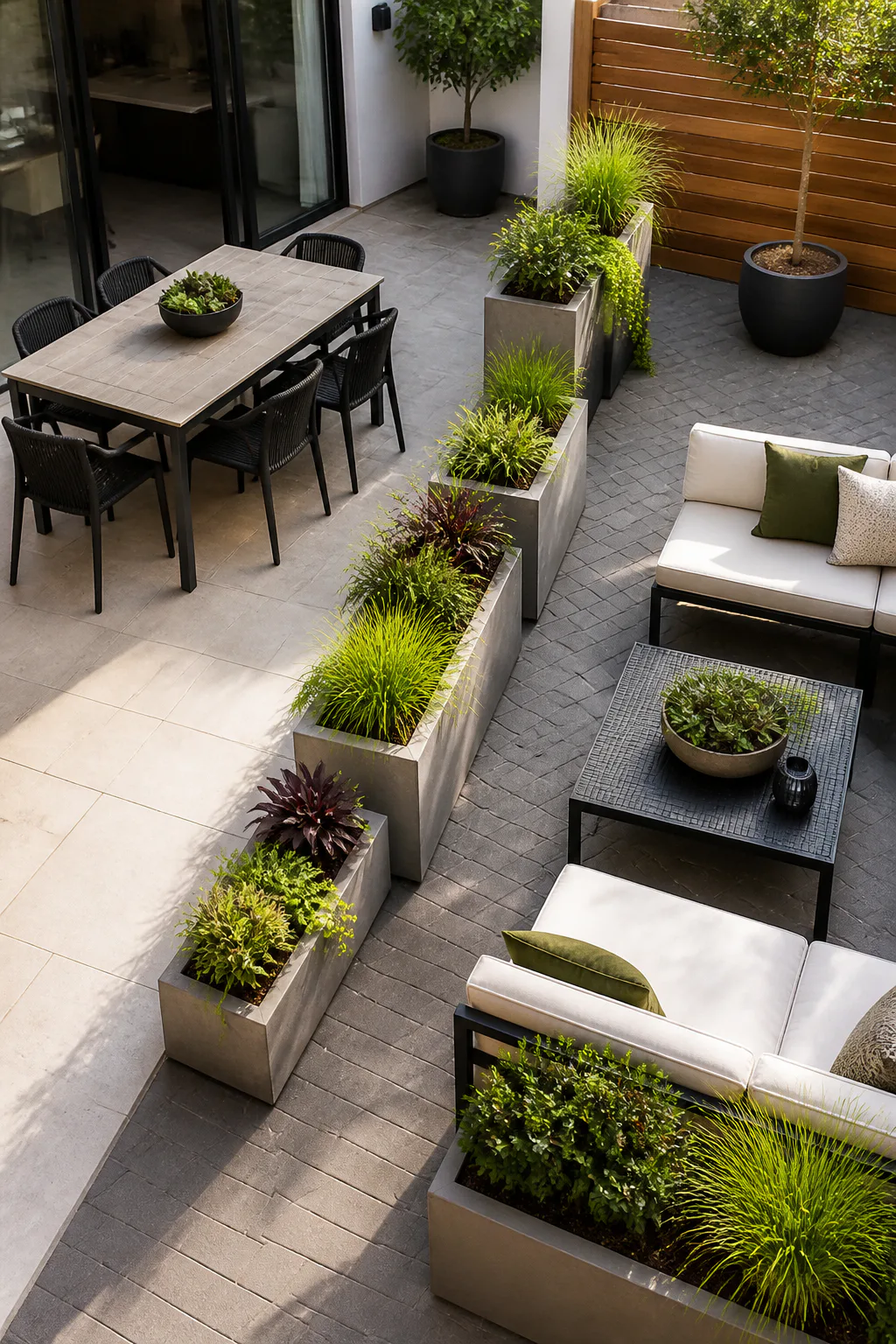
When a patio needs to serve more than one purpose, distinct zones can make it feel organized without adding walls. Use staggered planters to mark the edge between a dining nook and a conversation area, or change the direction of paving to signal a shift in use. These subtle boundaries help each part of the patio feel intentional.
Planters are especially useful because they divide space while bringing greenery into the layout. Choose a few different heights for a relaxed screen, but avoid blocking views or narrowing the route between zones. The dining area should stay convenient to the house, while the lounge can occupy a quieter corner if the patio shape allows.
Make each zone easy to use
Start by deciding where people will eat, sit, and walk. Arrange furniture first, then use planters or paving direction to reinforce the layout rather than forcing it. Leave enough room to pull out dining chairs and move comfortably between the two areas.
- Use staggered planters to suggest a soft boundary.
- Place dining furniture near the most convenient entrance.
- Keep clear walking space between the two zones.
9. Extend Indoor Flooring onto the Patio Threshold
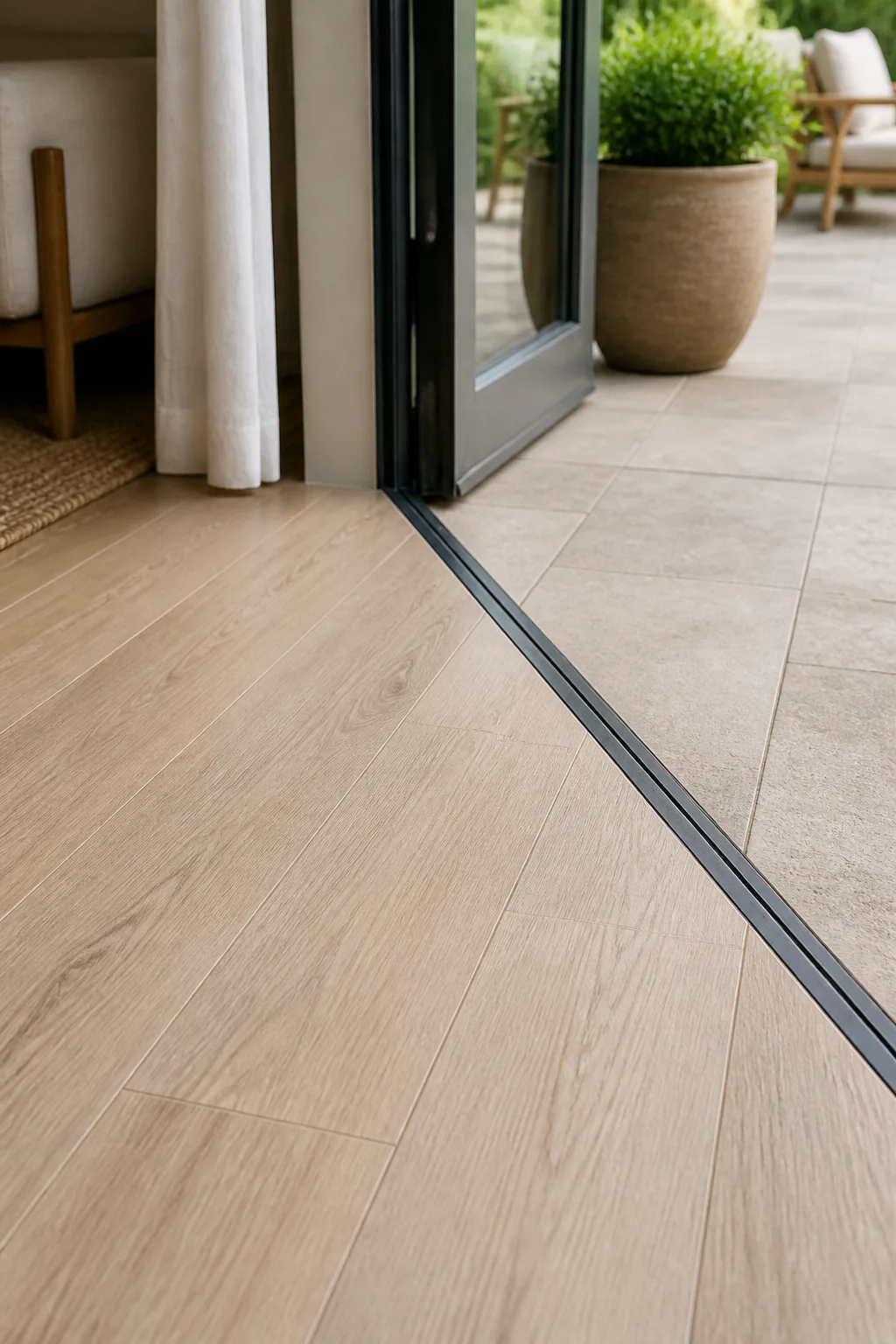
Coordinating the floor tone inside with the patio surface can make the transition between home and outdoors feel more continuous. The effect is especially helpful in compact homes, where a strong visual break at the doorway can make each area feel smaller. Matching tones or related colors can help the patio read as an extension of the room beyond it.
The surfaces do not need to be identical to feel connected. A warm interior floor might pair with outdoor paving in a similar earthy shade, while a cooler interior palette can flow into a complementary neutral patio. Repeating nearby colors in cushions or planters can strengthen the link without making the two spaces look exactly alike.
Connect the threshold thoughtfully
Consider the transition from inside to outside as both a visual and practical detail. Choose outdoor materials suitable for the exposure and keep the doorway clear of clutter. A coordinated surface, paired with a simple view of patio seating or plants, can make the threshold feel welcoming.
- Match the general tone of the interior floor, not necessarily its material.
- Repeat one or two indoor colors in outdoor accessories.
- Keep the doorway and route onto the patio easy to navigate.
10. Line the Patio with Tall Potted Privacy Plants

Tall container plants can soften the edge of a patio and create a more private feeling without building a solid screen. Bamboo, ornamental grasses, or ficus can add height and greenery along a boundary, making the outdoor area feel more sheltered from nearby views. This approach suits patios where a natural backdrop feels more welcoming than a hard partition.
Containers make the arrangement flexible: you can adjust their spacing, move them to suit the layout, or group them where privacy matters most. Keep the planting proportionate to the patio so the pots do not crowd seating or block access. A mix of heights can look relaxed while still providing a useful screen.
Choose plants for the setting
Consider the available light, exposure, and care each plant needs before choosing varieties. Use sturdy containers that suit the size of the plants, and make sure they can be watered without damaging nearby surfaces. Leave gaps where you want a view or a clear route through the patio.
- Place the tallest containers along the most exposed edge.
- Vary plant heights to avoid a rigid, wall-like effect.
- Keep pots clear of doors, paths, and seating space.
11. Hide Patio Speakers and Charging Outlets in Planters
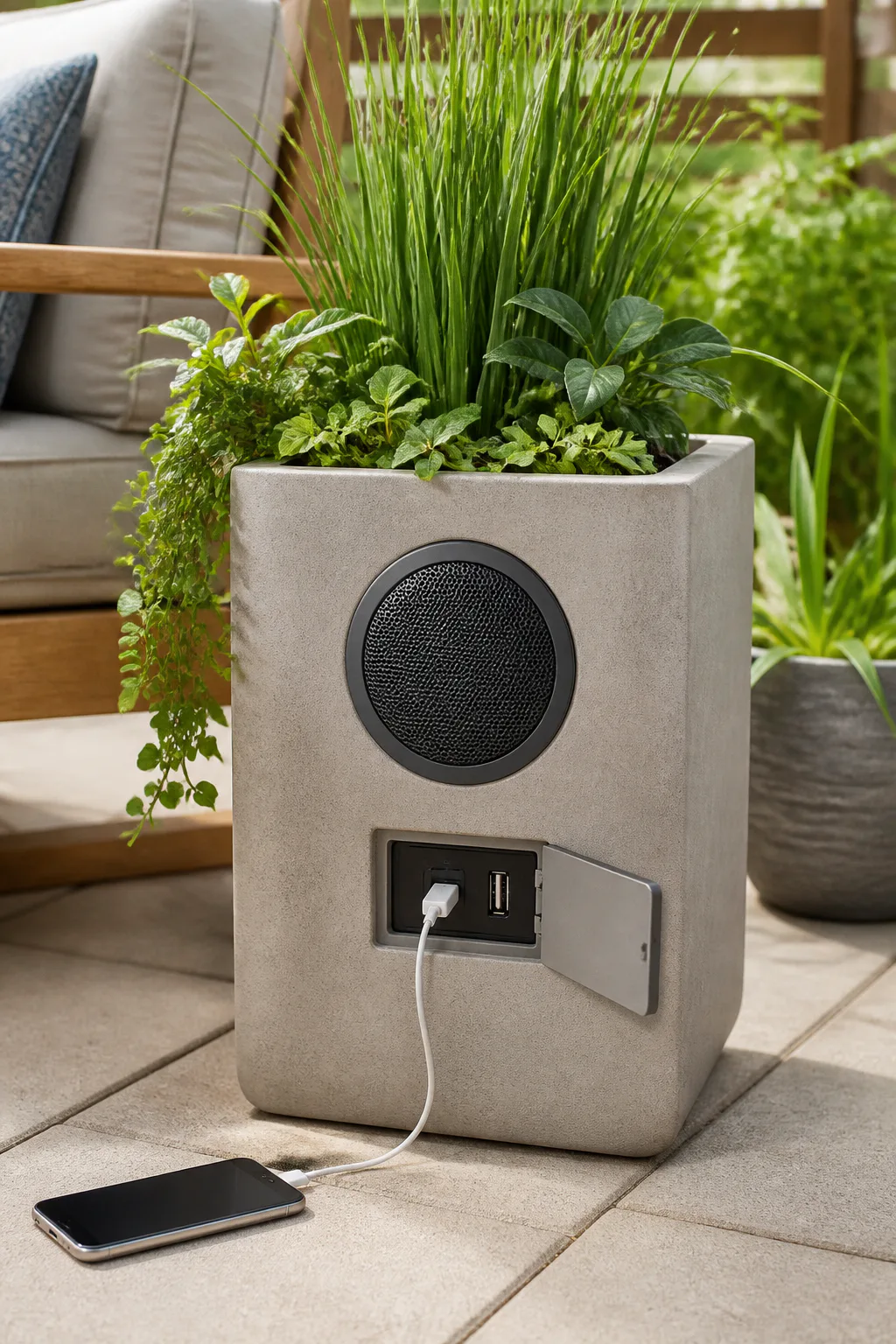
Outdoor audio and charging can make a patio more convenient, but visible cords and devices may interrupt an otherwise calm design. Weatherproof speakers and suitable outdoor charging outlets can be integrated into side tables or planned around planter groupings, keeping useful features close without making them the focus. The result is a space that feels ready for music or a device recharge while staying visually tidy.
Think about how you use the patio before choosing locations. Speakers may work best near the lounge or dining zone, while charging access should be convenient without crossing a walkway. Planters can help soften the setup, but they should not block access to equipment or expose electrical components to water.
Keep convenience and safety together
Use equipment rated for outdoor conditions and have permanent electrical work handled appropriately. Keep connections protected from rain and watering, and follow the product instructions for placement. A little planning helps the technology blend into the patio instead of creating clutter or hazards.
- Place speakers near the area where people gather.
- Keep charging access reachable but away from walking routes.
- Protect outdoor electrical equipment from water and weather.
Final Thoughts
A welcoming patio comes together through choices that suit your space and the way you use it. Warm colors, layered seating, vertical greenery, thoughtful lighting, and clear zones can each make a difference, whether you are refreshing a small terrace or shaping a larger outdoor room.
Start with one practical improvement, then build around it as you learn what the patio needs. A few well-chosen details can make the space feel comfortable, personal, and ready for everyday meals, quiet evenings, or time with friends.