13 Clever Small Bathroom Storage Ideas to Maximize Every Inch
A small bathroom can feel crowded when everyday essentials have nowhere to go, but the answer is not always a larger vanity or a full renovation. The most useful small bathroom storage ideas make better use of overlooked spaces, including the wall above the toilet, the back of the door, and the narrow gaps beside fixtures.
Some of these solutions are simple additions, while others work best during a remodel. Think about what you reach for every day, what can be stored out of sight, and which areas need to stay clear for comfortable movement.
Whether you are organizing a compact powder room, a shared family bath, or a rental, these ideas can help you make a practical plan. Choose the options that suit your layout and storage needs, then adapt the details to fit your room.
1. Build Recessed Niches into the Shower Wall
A recessed shower niche gives shampoo, conditioner, and soap a dedicated home without taking up space inside the shower. Because the shelves sit within the wall rather than projecting into the bathing area, they can keep a compact shower feeling less cluttered than a hanging caddy.
Plan the niche around the products you actually use and the height of the people using the shower. A single long niche can be convenient for several bottles, while smaller compartments help separate personal items in a shared bathroom. Position it where it is easy to reach but does not interfere with plumbing or shower fixtures.
Plan the niche before tiling
This is usually a remodel or new-build feature, since it requires opening the wall. Have the layout checked for pipes, wiring, and wall framing, and make sure the niche is properly waterproofed as part of the shower installation.
- Measure your tallest bottles before settling on niche height.
- Choose a shelf finish that coordinates with the shower tile.
- Keep frequently used products within comfortable reach.
A well-placed niche makes the shower easier to use while keeping its floor and corners clear.
2. Add Shelving Above the Toilet
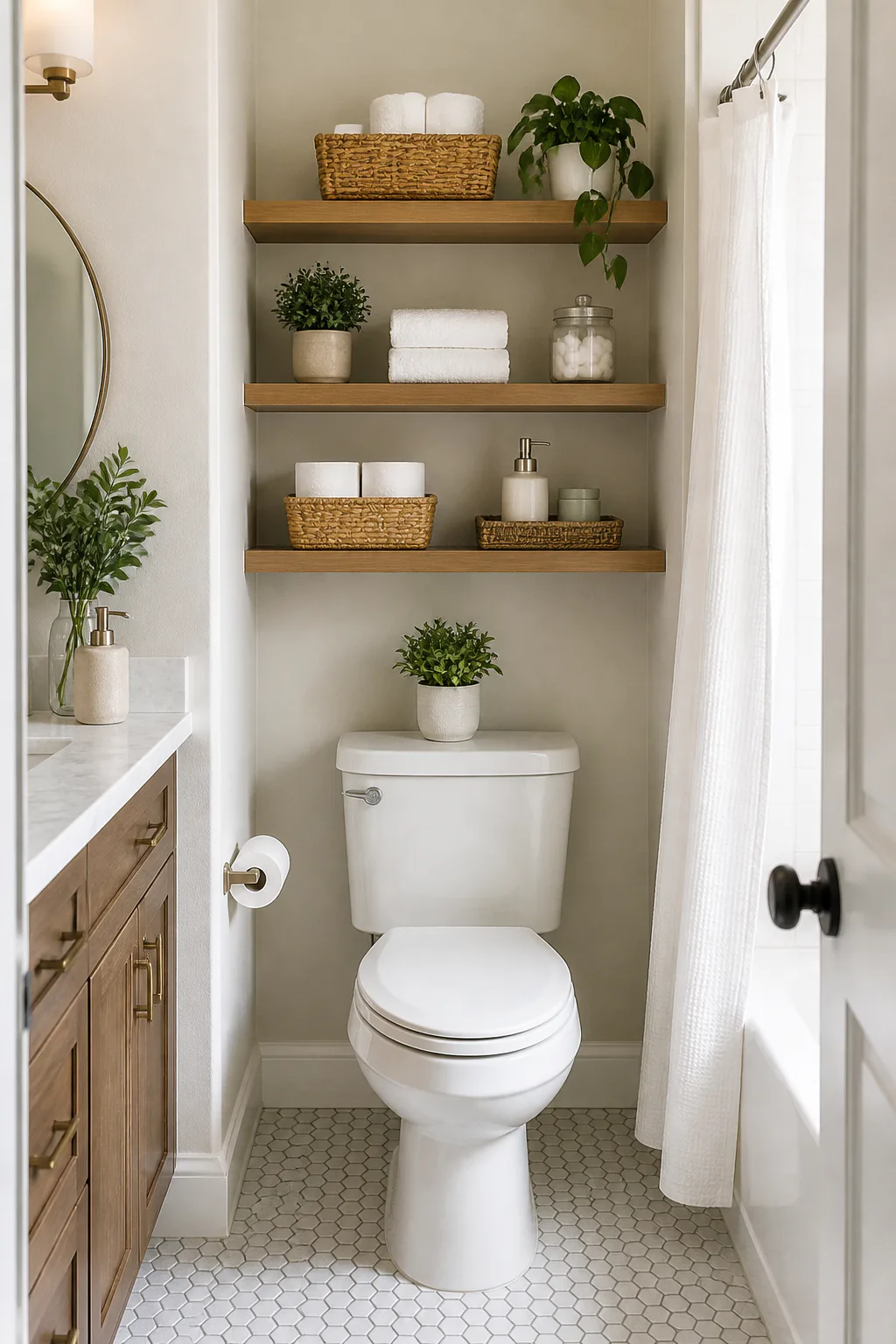
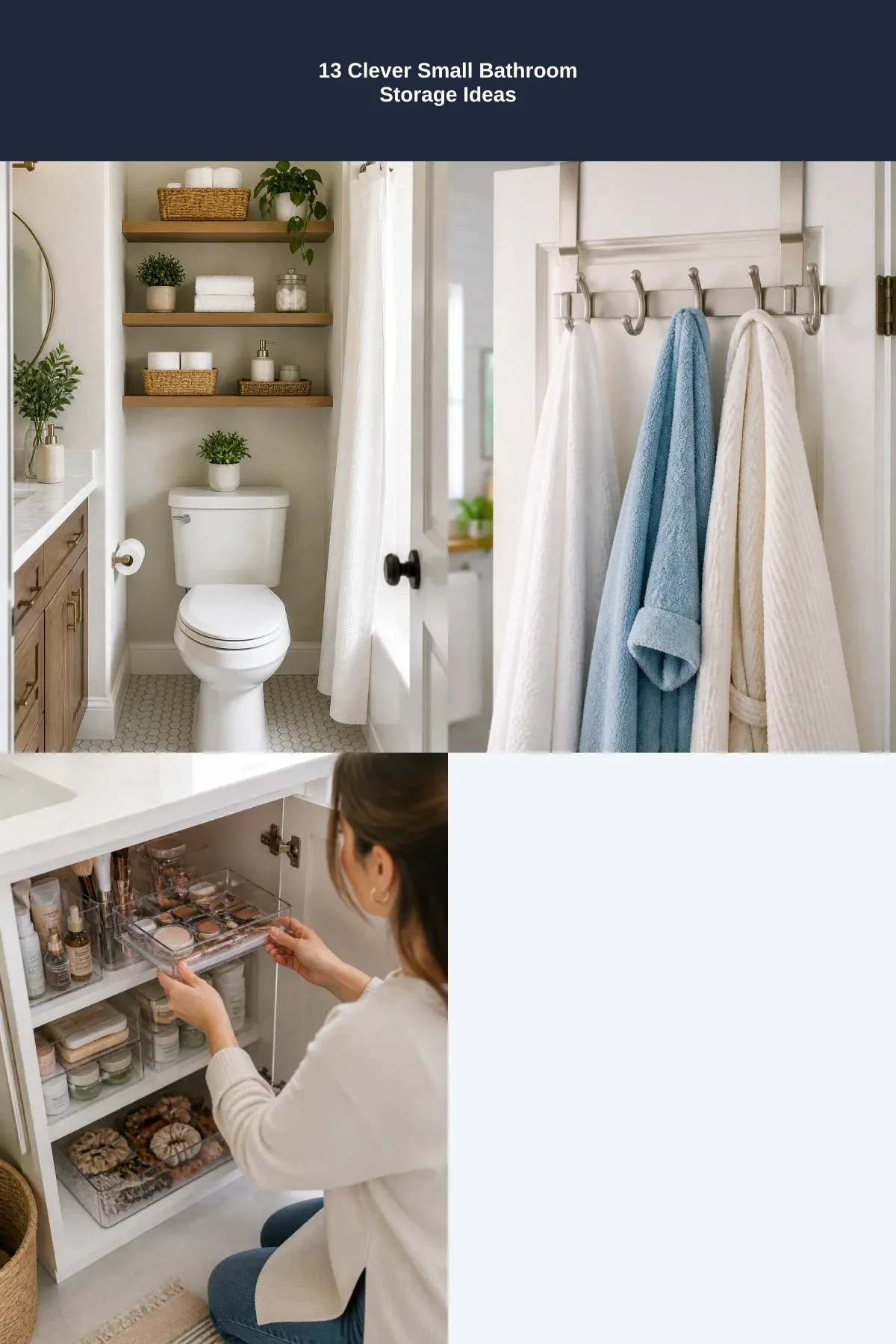
The wall above a toilet is often unused, even though it can hold useful storage without taking up floor space. A freestanding over-toilet rack or a set of wall-mounted shelves can provide room for spare toilet paper, hand towels, and a few everyday items.
Choose a design that fits the toilet’s footprint and leaves enough clearance for the lid and tank. In a narrow bathroom, open shelves can feel lighter than a bulky cabinet, while a rack with baskets or closed compartments can help conceal less decorative supplies. Keep the arrangement tidy so it does not make a small room feel busy.
Keep the setup stable and accessible
Measure the available wall height and width before buying or installing anything. If you choose a wall-mounted option, use appropriate anchors for the wall and avoid placing items where they could easily fall into the toilet or block access to controls.
- Store extra paper and towels on the lower shelves.
- Use a small basket to group loose toiletries.
- Leave some open space so the shelf does not look crowded.
This vertical storage can make a frequently overlooked area work harder without adding another cabinet to the floor.
3. Fit a Slim Tower Beside the Sink
A narrow gap beside the sink can be just right for a slim, multi-tier tower. It gives daily essentials a home near where you use them, while drawing storage upward instead of spreading bottles and accessories across the counter.
Before choosing a tower, measure the gap at its narrowest point and check that drawers, doors, and bathroom traffic will not be blocked. A compact unit with open shelves is handy for items you reach for often; a design with small drawers or baskets can hide visual clutter. Keep the countertop itself clear for handwashing and grooming.
Make a small footprint useful
Think about the tower’s position in relation to the sink and mirror. Products used every morning can go on the most accessible shelf, while backups or occasional-use items can sit higher or lower. Choose a material and finish that suit the bathroom’s moisture and cleaning needs.
- Measure around pipes, trim, and nearby cabinet doors.
- Group products by routine, such as skincare or hair care.
- Use a tray on an open shelf to keep small items together.
A slim tower is a practical option when there is just enough room for storage, but not enough for another full-size cabinet.
4. Install a Recessed Mirrored Medicine Cabinet
A recessed medicine cabinet combines two useful bathroom features: a mirror and concealed storage. Set into the wall, it can offer a less bulky alternative to a cabinet that projects over the sink, making it especially appealing in a tight powder room or small shared bath.
Use the interior for toothbrushes, skincare, medicines, or other small items you prefer to keep close at hand. A mirrored door also keeps the storage visually discreet. Depending on the bathroom layout, a cabinet with adjustable shelves can accommodate items of different heights and make it easier to adapt the interior over time.
Check the wall before choosing a cabinet
Recessing a cabinet requires enough clear space inside the wall. Before cutting into drywall, check for studs, plumbing, electrical wiring, and other obstructions, and consider professional help if the wall conditions are uncertain.
- Measure the sink and mirror area before selecting a size.
- Check that the door can open without hitting a light or wall.
- Reserve easy-to-reach shelves for everyday essentials.
When the fit is right, a recessed cabinet adds storage while keeping the sink area streamlined.
5. Mount a Magnetic Strip for Grooming Tools
A magnetic strip can keep small metal grooming tools organized without using valuable counter or drawer space. Tweezers, nail clippers, and certain hair accessories can be easy to misplace, so giving them a dedicated spot makes daily routines more orderly.
Mount the strip inside a vanity door to keep tools out of sight, or place it on an accessible wall if you prefer to see what is available. The best location is close to where you get ready but away from splash zones and places where the strip could be bumped. Check that the items you want to store are magnetic before arranging them.
Choose a spot that suits your routine
Follow the product’s mounting instructions and use a surface that can support it securely. If you are renting or do not want to drill, look for a suitable removable mounting option and confirm that it is appropriate for the surface and the weight of the tools.
- Group only small tools that attach securely to the strip.
- Keep sharp items out of reach of young children.
- Wipe the strip occasionally to prevent dust and residue buildup.
This small organizer is most useful when it solves a specific problem, such as a drawer full of loose grooming tools.
6. Add Pull-Out Organizers Beside the Sink
Narrow pull-out organizers can make awkward spaces beside sink plumbing useful. Instead of stacking bottles where they are hard to reach, a slide-out compartment brings skincare, cleaning supplies, or hair products forward when needed and tucks them away afterward.
These organizers work best when the vanity has a narrow gap beside the plumbing or an underused section of cabinet. Measure carefully, since pipes, the sink basin, and existing drawers can limit the available space. Some pull-outs are designed for bottles or baskets, while others offer a more open structure for items that vary in size.
Measure around the plumbing
Check the full path of the organizer, not just the space it occupies when closed. It needs room to slide out without catching on pipes, cabinet hardware, or stored items. If adding one during a renovation, plan the cabinet interior around the sink and the storage you want.
- Use the pull-out for products you reach for regularly.
- Keep bottles upright and group similar items together.
- Leave enough clearance for the organizer to move smoothly.
A well-fitted pull-out makes hidden cabinet space easier to use without adding anything to the countertop.
7. Hang a Multi-Hook Rack Behind the Door
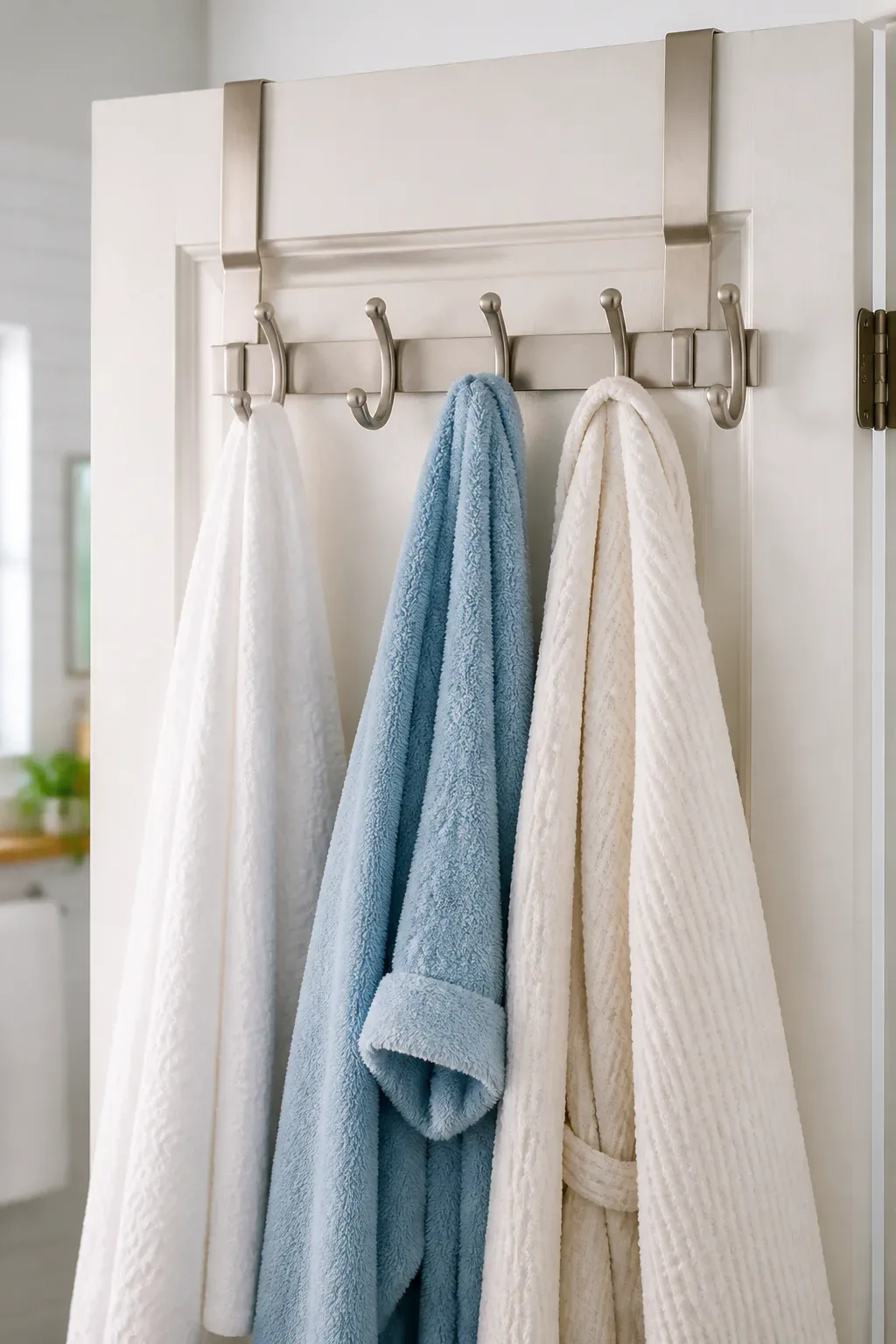
The back of the bathroom door can hold robes, towels, or clothing without taking up wall space beside the sink or shower. A slim multi-hook rack makes use of this overlooked surface and can be especially helpful when there is little room for a separate towel stand.
Consider how the door swings and whether a hanging rack will clear the wall, trim, and nearby fixtures. A rack that fits securely and sits close to the door is less likely to interfere with movement. If you have heavier towels or robes, choose hardware designed to handle the load rather than relying on a light-duty hook.
Keep hanging items easy to reach
Place the rack where towels can hang freely and dry, rather than bunching up against a wall or cabinet. In a shared bathroom, assign hooks by person or use separate hooks for towels and robes to make the storage easier to maintain.
- Check the door’s thickness before buying an over-door rack.
- Use wall-mounted hooks if the door style does not suit a hanger.
- Leave space between towels so they are easier to grab.
This is a simple way to add hanging storage while keeping the main walls available for other needs.
8. Stack Floating Shelves in a Bathroom Corner
A bathroom corner can be an easy place to overlook, but a few small floating shelves can turn it into useful vertical storage. They can hold folded washcloths, jars, or a limited selection of toiletries without occupying the floor or extending far into the room.
Corner shelves are most effective when their depth suits the space. Shallow shelves help preserve walking room, while slightly deeper ones can hold folded towels or baskets. Keep the arrangement edited: a few useful items look calmer than a collection of mismatched bottles, particularly in a compact bathroom.
Arrange shelves for everyday use
Measure the corner and consider what will sit beneath it before installing anything. Choose a position that does not interfere with a shower door, mirror, or towel bar, and use appropriate fixings for the wall and the items the shelves will hold.
- Place frequently used items on the lowest, easiest-to-reach shelf.
- Use small containers to corral loose accessories.
- Keep decorative pieces minimal so storage remains practical.
With a thoughtful layout, an unused corner can provide storage without making the room feel more crowded.
9. Style Baskets Beneath an Open Vanity
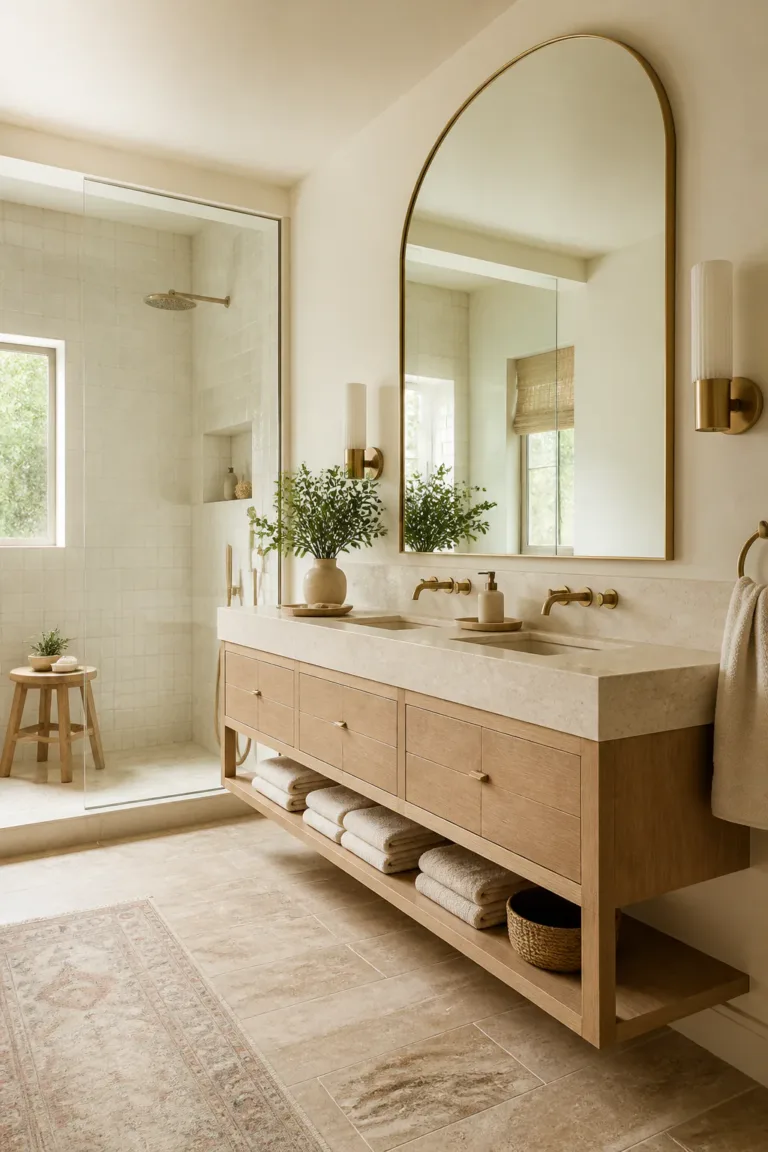
An open-shelf vanity provides accessible storage beneath the sink, but loose supplies can quickly make it look untidy. Baskets add structure to that space, helping you store hand towels, spare toilet paper, or everyday bath items in a way that feels considered.
Measure the shelf before choosing baskets so they fit without blocking pipes or crowding the floor. Woven textures can soften a bathroom’s look, while washable or easy-to-clean materials may be more practical for frequently handled items. Matching baskets create a more unified appearance, but the main goal is to make contents easy to find and put away.
Give each basket a clear purpose
Sort items by use rather than filling containers with a mix of unrelated supplies. Keep the things you need most often in the easiest-to-reach basket, and avoid packing baskets so tightly that towels or paper are difficult to remove.
- Use one basket for hand towels and another for spare paper.
- Leave space around plumbing for access and airflow.
- Choose containers that slide out easily for cleaning.
Baskets make open storage feel calmer while keeping useful supplies close at hand.
10. Lean a Ladder Towel Rack Against the Wall
A leaning ladder towel rack gives you several places to hang towels while using a narrow strip of floor and wall. It can be a helpful alternative when you want more hanging space but do not want to install multiple permanent towel bars.
Place the ladder where it will not block a doorway or narrow walking path, and check that it sits securely against the wall. Its rungs can separate towels so they are easier to access, but towels need enough room to hang without dragging or bunching. A simple finish can blend into the bathroom, while a contrasting material can make the rack a decorative feature.
Make sure the rack suits the room
Consider the floor surface and how often people move around the ladder. A stable design and careful placement matter, especially in a busy family bathroom. Keep the number of towels proportional to the rack so it remains useful rather than becoming another crowded surface.
- Measure the available wall height and floor depth.
- Hang damp towels with space between them.
- Keep the ladder clear of doors and frequently used drawers.
This flexible storage piece can add hanging room without committing to a fixed wall installation.
11. Design a Deep Drawer into the Vanity
A deep vanity drawer can hold bulkier bathroom supplies that do not fit neatly into shallow compartments. It is useful for spare towels, extra toiletries, or larger containers, and it can make the lower part of a vanity more accessible than a cabinet where items are stacked behind one another.
Because sink plumbing takes up space, a full-width drawer may need a cutout or a carefully planned position beneath the pipes. The most usable design depends on the vanity layout and how its drawers open. If you are replacing or remodeling a vanity, consider how the drawer will work alongside the sink, plumbing, and other storage.
Plan around the sink and plumbing
Decide what the drawer needs to hold before finalizing its depth and layout. Store heavier or less frequently used supplies lower down, and use smaller containers to keep items from shifting as the drawer opens and closes.
- Measure around pipes and the sink basin before planning the drawer.
- Use dividers or bins to separate different types of supplies.
- Keep everyday items near the front for quick access.
A thoughtfully designed deep drawer can turn underused vanity space into organized, easy-to-reach storage.
12. Organize the Vanity with Stackable Clear Dividers
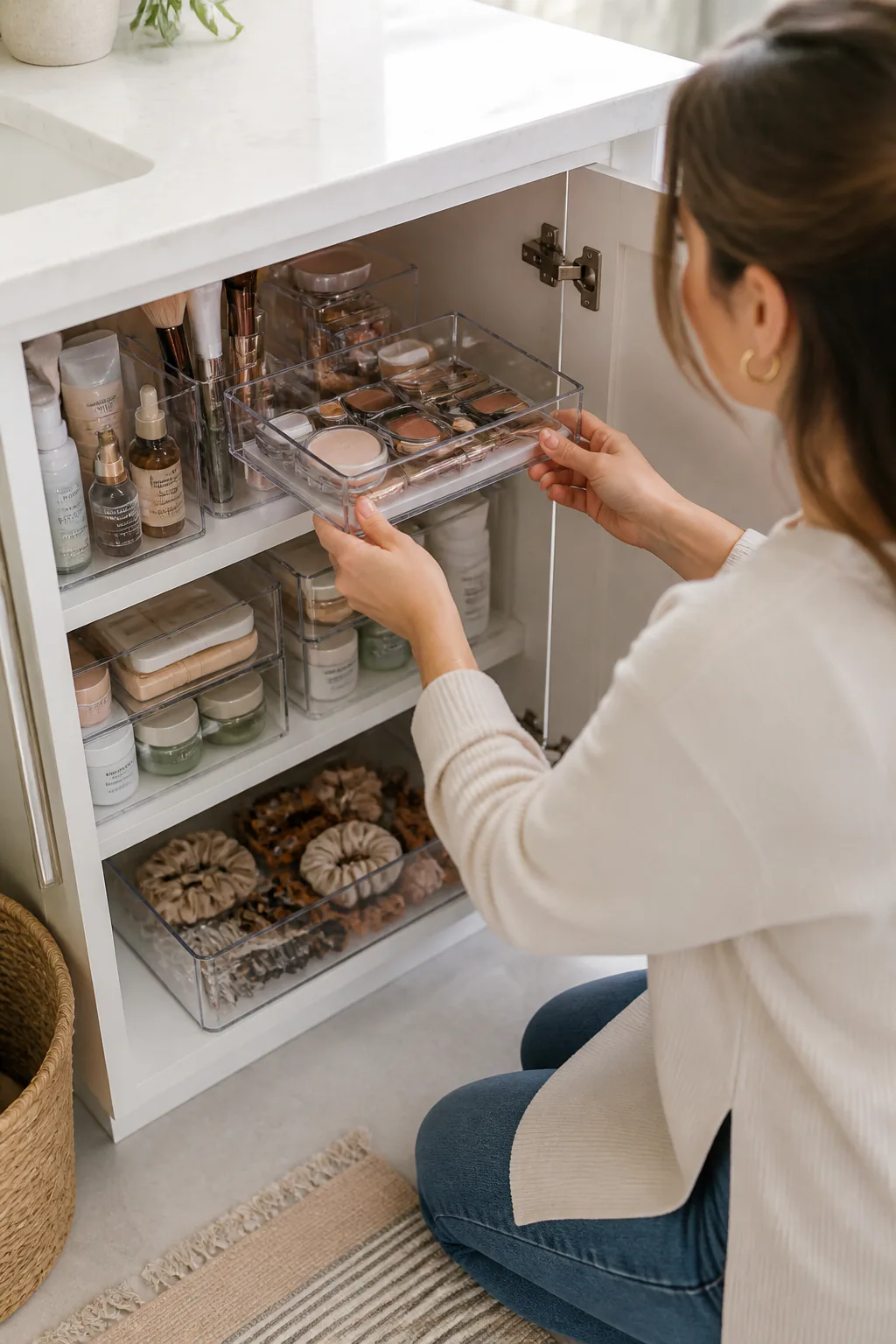
Stackable clear dividers help turn a crowded vanity drawer or cabinet into smaller, defined storage zones. They are useful for makeup, hair accessories, skincare, and other small items that tend to become difficult to find when mixed together.
Clear trays make it easy to see what is inside, while stackable shapes can use vertical space in a cabinet or deep drawer. The best setup is based on the items you own, not on filling every available inch with organizers. Start by removing expired or unused products, then group what remains by routine or category.
Build a system you can maintain
Measure the drawer or cabinet interior before choosing trays, and leave room for them to slide or lift out. Modular pieces are helpful when your storage needs change, since you can rearrange the layout rather than committing to one fixed configuration.
- Keep small daily-use items in the most accessible tray.
- Separate makeup, hair accessories, and skincare.
- Choose trays that are easy to remove and clean.
A simple divider system makes it easier to put things back where they belong after each use.
13. Add a Tension-Rod Organizer Under the Sink
The cabinet beneath a sink often has vertical space that goes unused, especially when bottles and supplies are crowded along the base. A tension rod can create a place to hang lightweight caddies or hooks, helping separate items and make the cabinet easier to navigate.
Check the cabinet’s width and surfaces before installing a rod, and make sure it can sit securely without pressing on pipes or interfering with the cabinet door. You can hang suitable caddies for small supplies or use hooks for items designed to hang. Keep the cabinet base available for taller bottles or larger containers that cannot fit overhead.
Use the rod without blocking access
Arrange the hanging storage so you can still reach plumbing shutoffs and remove items from the cabinet. Do not overload the rod; its stability depends on the fit and the surfaces supporting it, as well as the weight of what it holds.
- Measure the interior width before choosing a tension rod.
- Keep hanging caddies light and easy to lift off.
- Leave room to reach pipes and stored items below.
This adjustable approach can make under-sink storage more organized without changing the vanity itself.
Final Thoughts
Small bathrooms benefit from storage that uses overlooked spaces without making the room harder to move through. Recessed niches, shelves above the toilet, door hooks, and slim organizers each solve a different kind of storage problem, so the best choices depend on your layout and daily routine.
Start with one area that feels especially cluttered, measure before adding furniture or organizers, and choose a system that is easy to keep tidy. A few well-planned changes can make everyday essentials easier to find while helping your bathroom feel more open and functional.