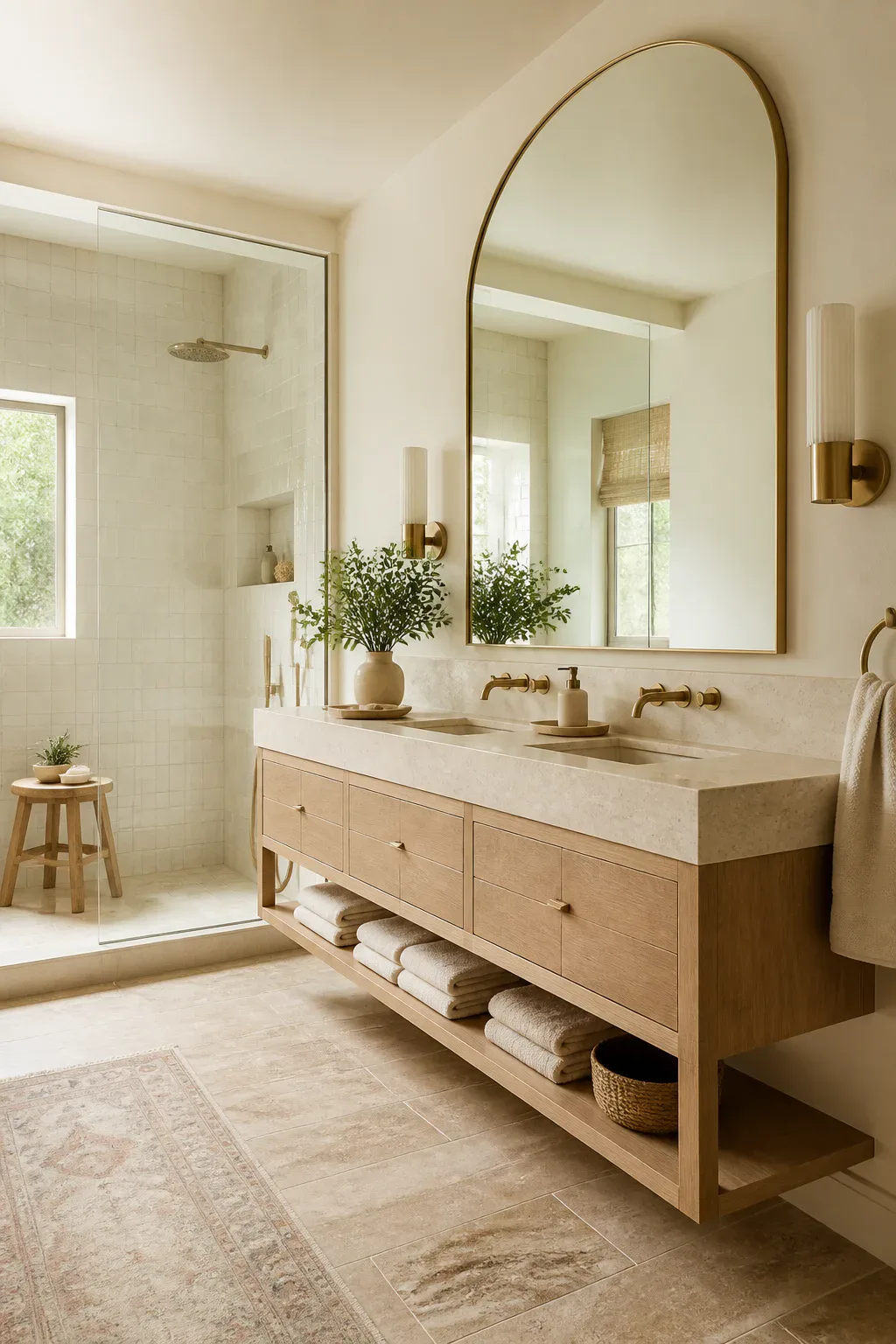
13 Stunning Neutral Bathroom Ideas for a Calm, Warm Space
A neutral bathroom can feel calm and characterful when its colors are supported by natural materials, varied textures, and thoughtful lighting. Rather than relying on plain white surfaces, combine warm stone, wood, soft metallics, and tactile details to create a room that feels inviting and easy to live with.
These ideas work across a range of spaces, from compact powder rooms to larger primary bathrooms. You can borrow one detail for a small refresh or layer several for a more complete redesign; the key is to balance finishes so the room feels cohesive rather than overly matched.
If you’re planning a bathroom update, start with the elements you use every day, such as the vanity, shower, and lighting. The suggestions below include practical ways to bring in warmth and texture while keeping the overall palette understated.
1. Wrap the Bathroom in Warm Travertine

Beige or sand-toned travertine brings natural variation to a bathroom without introducing a bold color. Its soft veining and tonal shifts give walls more depth than a flat painted surface, while the earthy palette helps the room feel restful and grounded.
Use the stone on a shower wall, around a tub, or across several bathroom walls for a more enveloping effect. In a small room, a limited application can provide a focal point without making the space feel visually busy. Pair it with simple white fixtures and restrained hardware so the stone remains the star.
How to pull it off
Before choosing a stone, consider how its color and finish will look beside your flooring, countertop, and bathroom lighting. Natural stone needs appropriate sealing and care, so ask your installer about maintenance and select a finish suited to wet areas.
- Choose beige or sand tones with undertones that complement the rest of the room.
- Use a honed finish for a softer, less reflective appearance.
- Repeat the stone in a small detail, such as a niche, to connect separate areas.
Travertine works especially well with oak, warm whites, and brushed brass, creating a layered neutral scheme rather than a single flat color.
2. Install a Floating Natural Oak Vanity
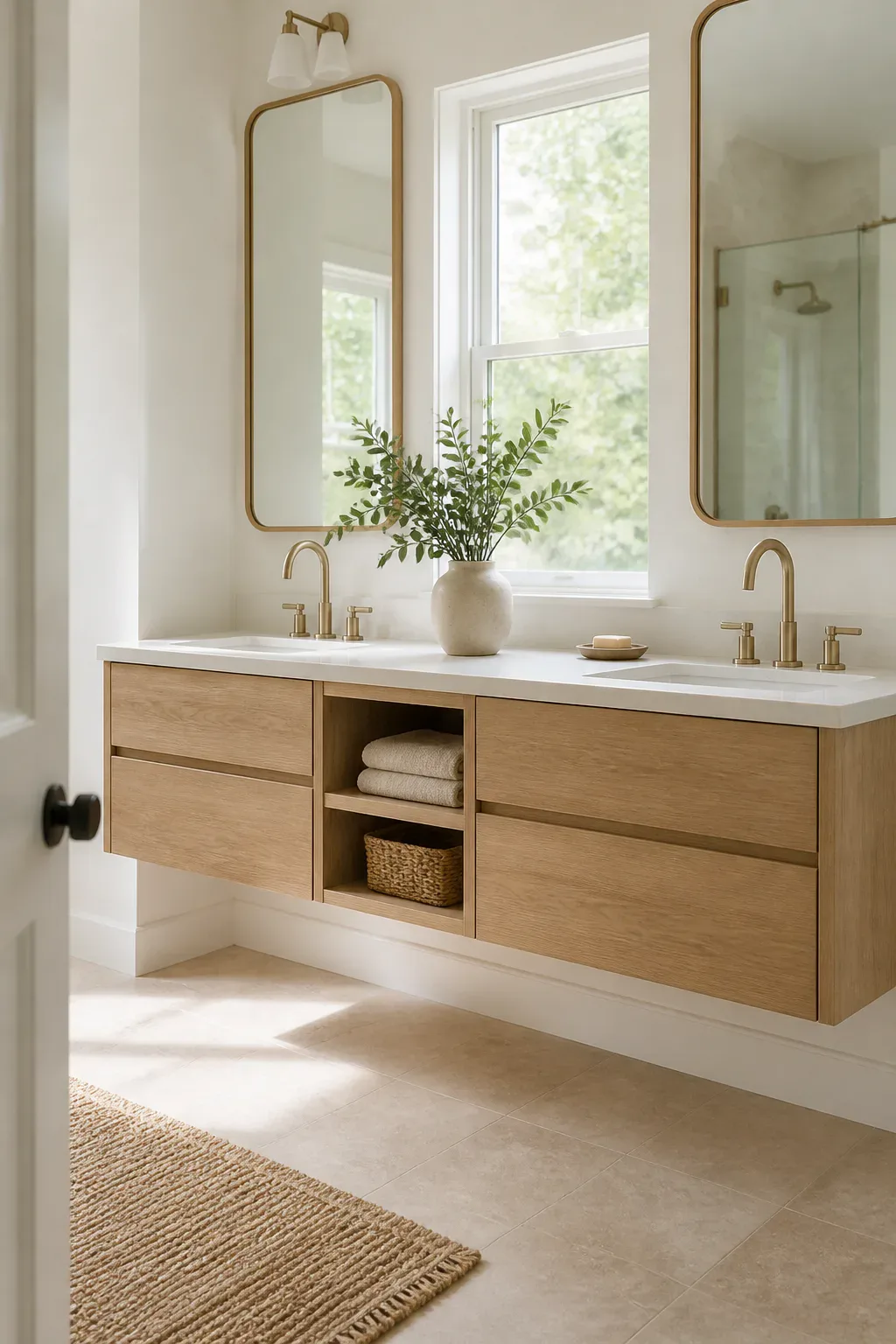
A floating vanity in light or medium oak adds warmth while keeping the floor visible beneath it. That open strip of floor can help a bathroom feel airier, particularly when the room is narrow or the cabinetry would otherwise dominate the view.
Oak’s natural grain also brings texture to a simple palette. Pairing it with a clean white countertop creates a crisp contrast that feels relaxed rather than stark, and the combination can suit both modern and organic-inspired interiors.
Design tips
Think about storage before settling on a floating design. Drawers can keep everyday items organized, while a small open shelf may be useful for neatly folded towels or a basket. Make sure the vanity is installed at a comfortable height and that the wall can support it securely.
- Choose a wood tone that relates to other finishes in the room.
- Use a simple countertop edge to keep the overall look uncluttered.
- Add drawer organizers to make the most of enclosed storage.
- Keep the floor beneath the vanity clear for an especially airy effect.
A natural oak vanity can be the room’s main warm element, letting white tile and pale walls feel welcoming instead of plain.
3. Add Brushed Brass Bathroom Fixtures

Brushed brass or champagne-gold fixtures introduce a gentle warmth that can soften an otherwise cool collection of tile, glass, and porcelain. Their muted finish has a quieter presence than polished metal, making them an easy way to add character without disrupting a neutral scheme.
Use the finish on faucets, shower hardware, or cabinet pulls. Repeating it in a few places helps the bathroom feel considered, while limiting it to one or two details can keep the look subtle. Brass pairs naturally with cream tile, oak, beige stone, and warm white paint.
Things to consider
Metal finishes can vary from one manufacturer to another, so compare samples if you’re coordinating fixtures with lighting or hardware. Brushed surfaces may show less glare than polished ones, but all bathroom fittings benefit from regular cleaning according to their care instructions.
- Repeat the same finish on the faucet and shower hardware for continuity.
- Coordinate cabinet pulls or towel hooks without matching every metal detail.
- Balance warm brass with white or pale stone to keep the room feeling light.
- Check that the finish suits the undertones of nearby tile and wood.
Used thoughtfully, brass acts like a warm accent that ties together the bathroom’s natural materials.
4. Tile the Shower in Cream Zellige
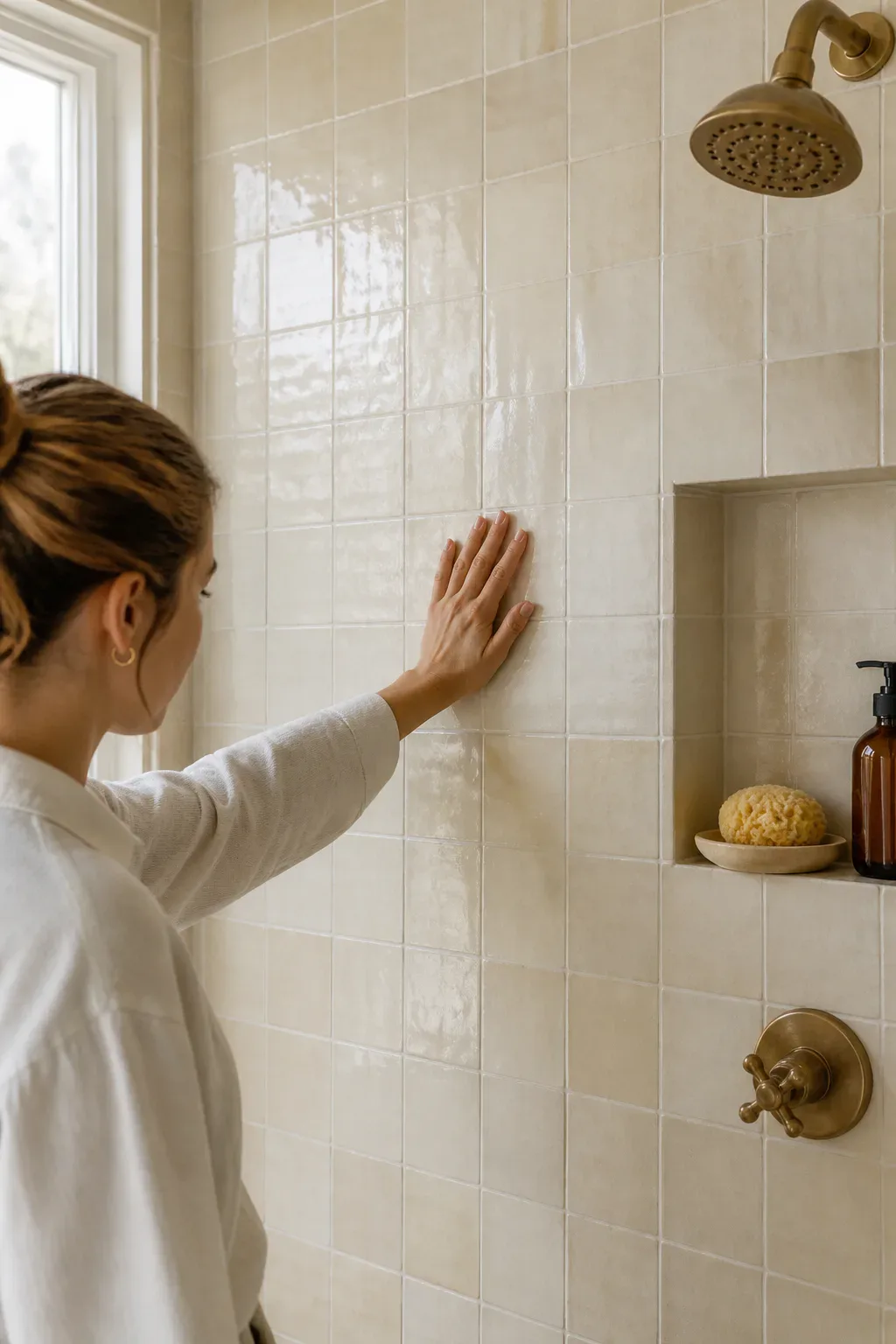
Glossy handmade cream tiles bring subtle variation to a shower wall or vanity backsplash. Small differences in glaze and surface catch the light in changing ways, giving a neutral bathroom a sense of movement without relying on a strong pattern.
Cream zellige-style tile can soften the clean geometry of a modern bathroom and look especially inviting next to warm stone or wood. It is also a useful choice when you want a feature surface that feels special but still blends with the rest of the room.
How to use it well
Handmade tiles may have irregular edges and varied surfaces, so plan the layout with an experienced installer. Ask to see a sample in your bathroom’s lighting, and check that the tile and grout are suitable for the intended wet area.
- Use the tile on one shower wall to create a focused feature.
- Carry it behind the vanity for a small, light-catching accent.
- Select a grout color that complements the tile rather than sharply outlining it.
- Pair glossy tile with quieter matte finishes elsewhere for balance.
The slight imperfections are part of the appeal: they make a pale surface feel crafted rather than sterile.
5. Hang an Oversized Arched Bathroom Mirror

An oversized arched mirror softens the straight lines created by tile, cabinetry, and countertops. Its curved top adds an architectural detail while reflecting light, which can help a bathroom feel more open and visually connected.
A frameless design keeps the effect simple, while a slim rim in a warm metal can echo other fixtures. In a powder room, an arched mirror can become the main focal point; above a wider vanity, consider whether one large mirror or a pair of smaller shapes will suit the layout better.
Placement and proportion
Choose a mirror that works with the vanity width and leaves enough room for lighting and faucets. Hang it at a practical height for the people using the bathroom, and check that the reflection shows something pleasant, such as a window or a calm wall rather than visual clutter.
- Use a tall arch to emphasize vertical space in a compact room.
- Choose a slim frame when you want to connect the mirror to brass hardware.
- Keep the silhouette simple if the tile already has strong texture.
The rounded outline adds softness without requiring another color or decorative pattern.
6. Enclose the Shower with Fluted Glass
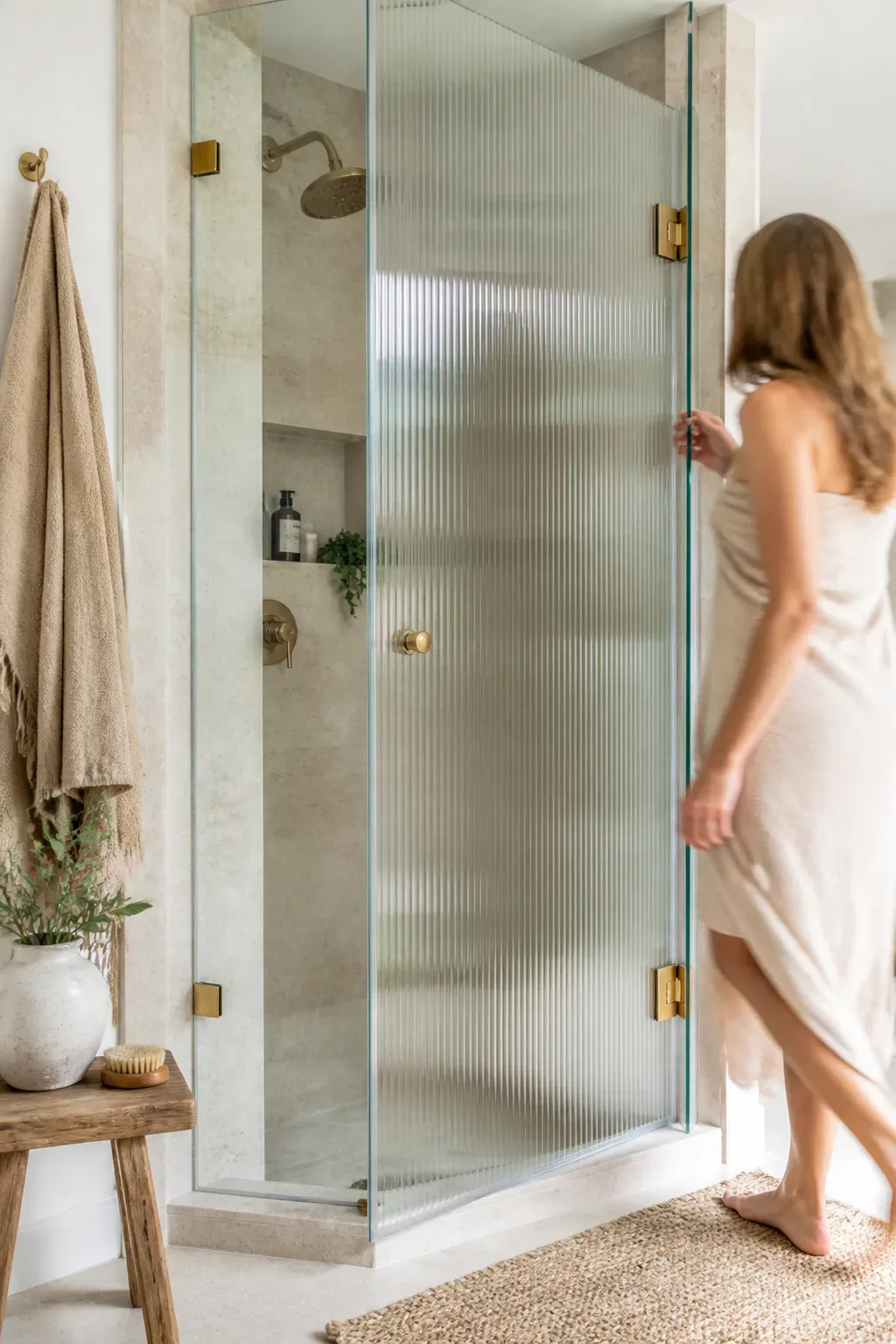
Reeded or fluted glass gives a shower enclosure a distinctive texture while allowing light to pass through. The vertical lines soften the appearance of a glass panel and offer more visual privacy than clear glass, which can be helpful in shared bathrooms.
This finish suits a neutral room because it adds interest without introducing a new color. It can complement smooth stone, simple tile, and warm metal hardware, and it works as a feature even when the rest of the shower is kept understated.
What to plan for
Fluted glass changes how shapes appear through the enclosure, so consider its placement and how much privacy you need. Discuss the glass type, framing, door swing, and cleaning access with your installer before choosing a design.
- Use reeded glass on a door or fixed panel to add texture at eye level.
- Keep surrounding tile simple so the glass pattern can stand out.
- Choose hardware that echoes the faucet or shower finish.
- Check that the enclosure layout leaves a comfortable entry into the shower.
The result feels lighter than a solid partition yet more visually layered than a plain clear panel.
7. Ground the Room with Warm Terrazzo Flooring
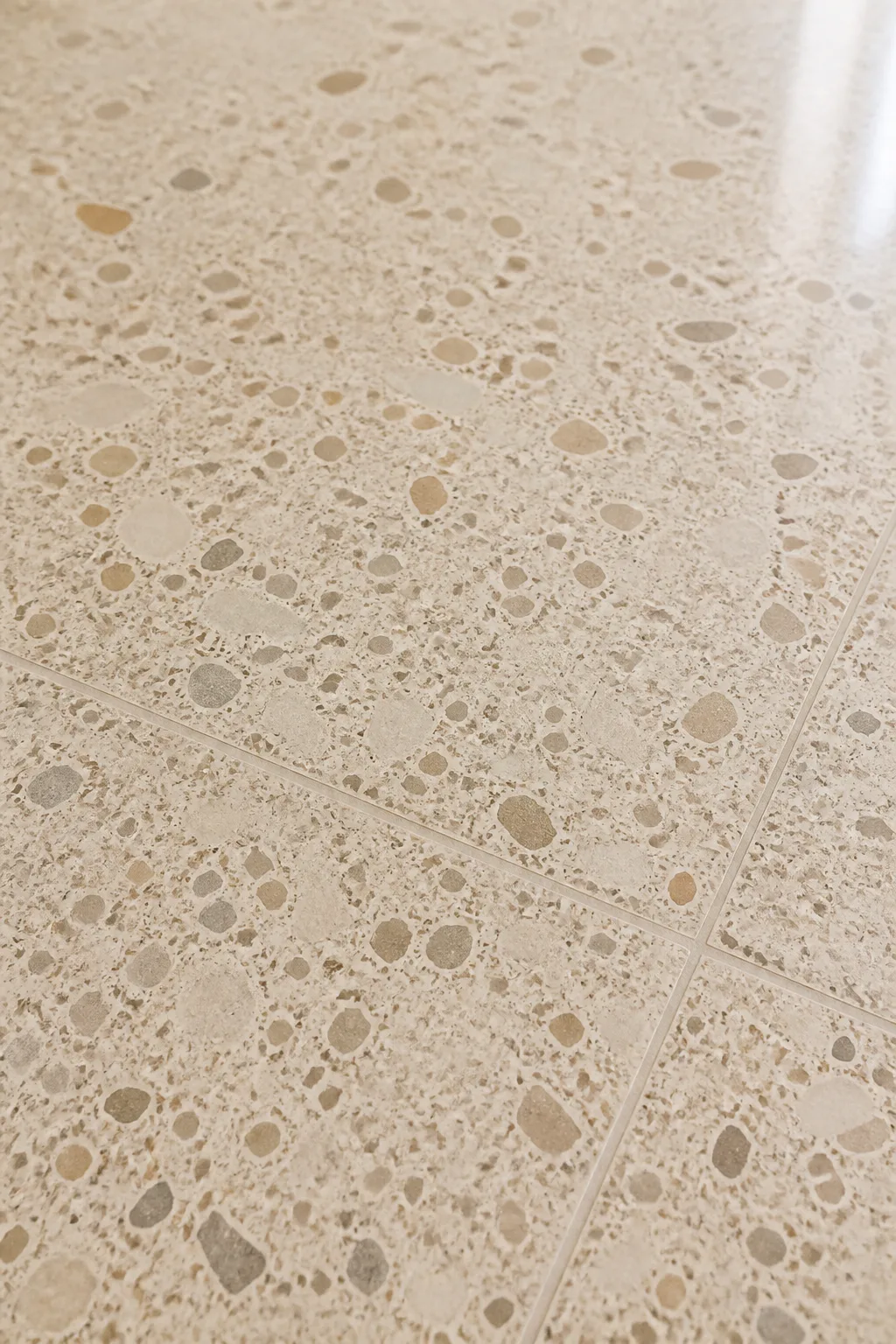
Warm terrazzo flooring gives the bathroom a durable-looking foundation with gentle variation. Cream, taupe, or warm-gray tones can pick up colors from nearby stone and cabinetry, helping different finishes feel connected rather than scattered.
Large-format tiles create a calmer visual field by reducing the number of grout lines. Terrazzo can also bring pattern to the floor while allowing walls and fixtures to remain simple, making it a useful choice when you want interest underfoot without a busy overall design.
Choosing a balanced finish
Look at samples alongside your wall tile, vanity, and countertop, since the small flecks can contain colors that influence the whole palette. In a wet bathroom, confirm that the selected tile and finish are appropriate for the floor and discuss slip resistance with your installer.
- Select a warm base color that works with the room’s wood and metal tones.
- Choose a restrained aggregate pattern for a quieter, more timeless feel.
- Use larger tiles where the layout allows for a more continuous look.
- Coordinate grout thoughtfully so the floor reads as one surface.
Terrazzo can anchor a light bathroom while keeping the overall mood soft and relaxed.
8. Create a Soft Limewash Accent Wall
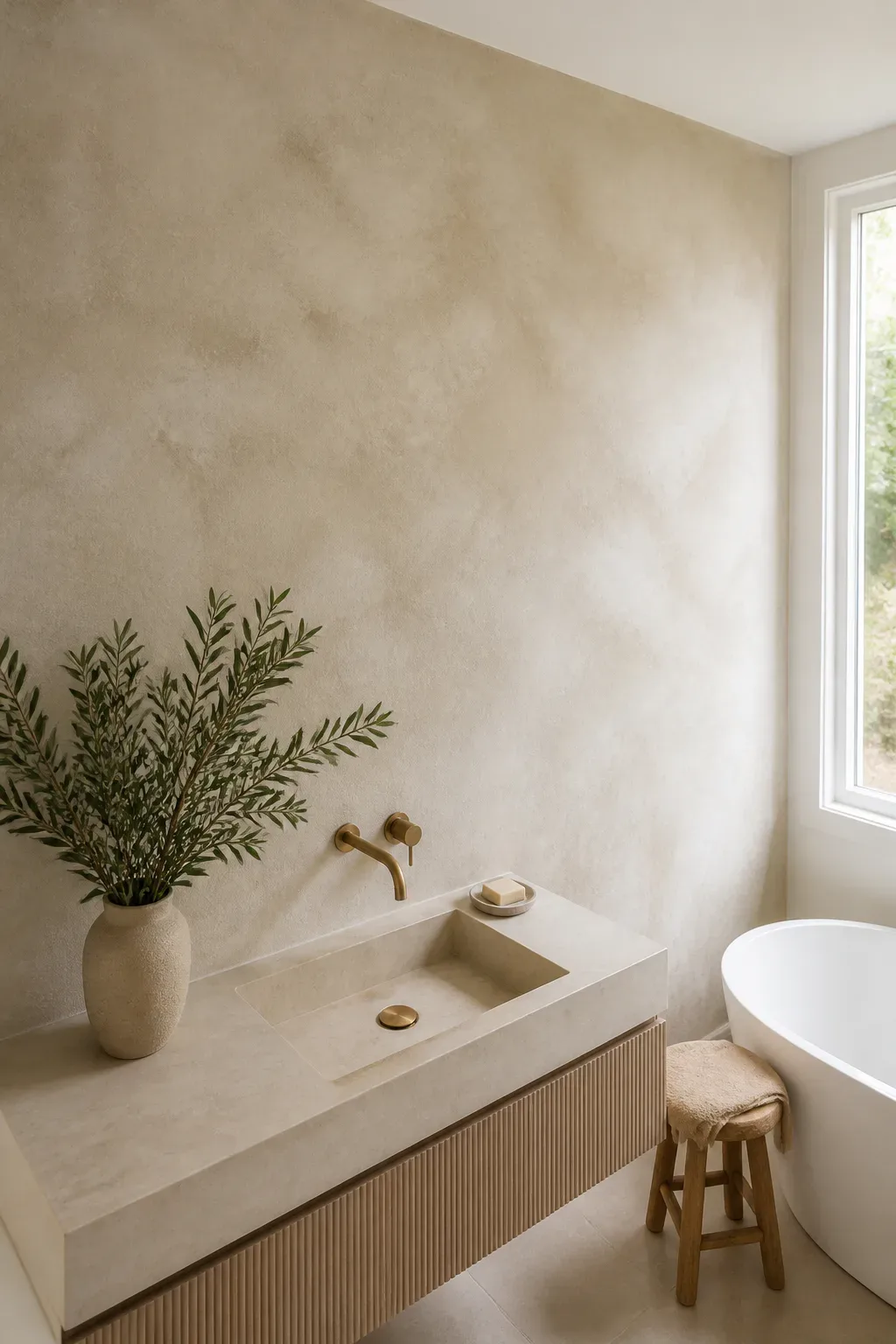
A limewash or plaster-effect accent wall adds a velvety, softly shifting surface to a neutral bathroom. Warm ecru and greige tones can make a room feel more layered than plain paint, especially when natural or ambient light moves across the finish.
Use the treatment on a wall away from direct splashing, such as behind a vanity or beside a freestanding tub. It creates a focal point without the strong contrast of a saturated color, and it works well with simple tile, pale stone, and natural wood.
How to plan the finish
Bathrooms need materials that can handle moisture, so choose a product or finish intended for the setting and follow its application and sealing guidance. If you like the look of limewash but the wall is exposed to frequent water, ask a professional about a suitable alternative or protective system.
- Test a sample on the wall to see how the texture changes in different light.
- Choose a warm undertone that relates to the flooring and countertop.
- Keep nearby finishes simple so the wall remains a gentle focal point.
This softly textured surface can make even a restrained bathroom palette feel personal and welcoming.
9. Feature a Freestanding Oval Soaking Tub
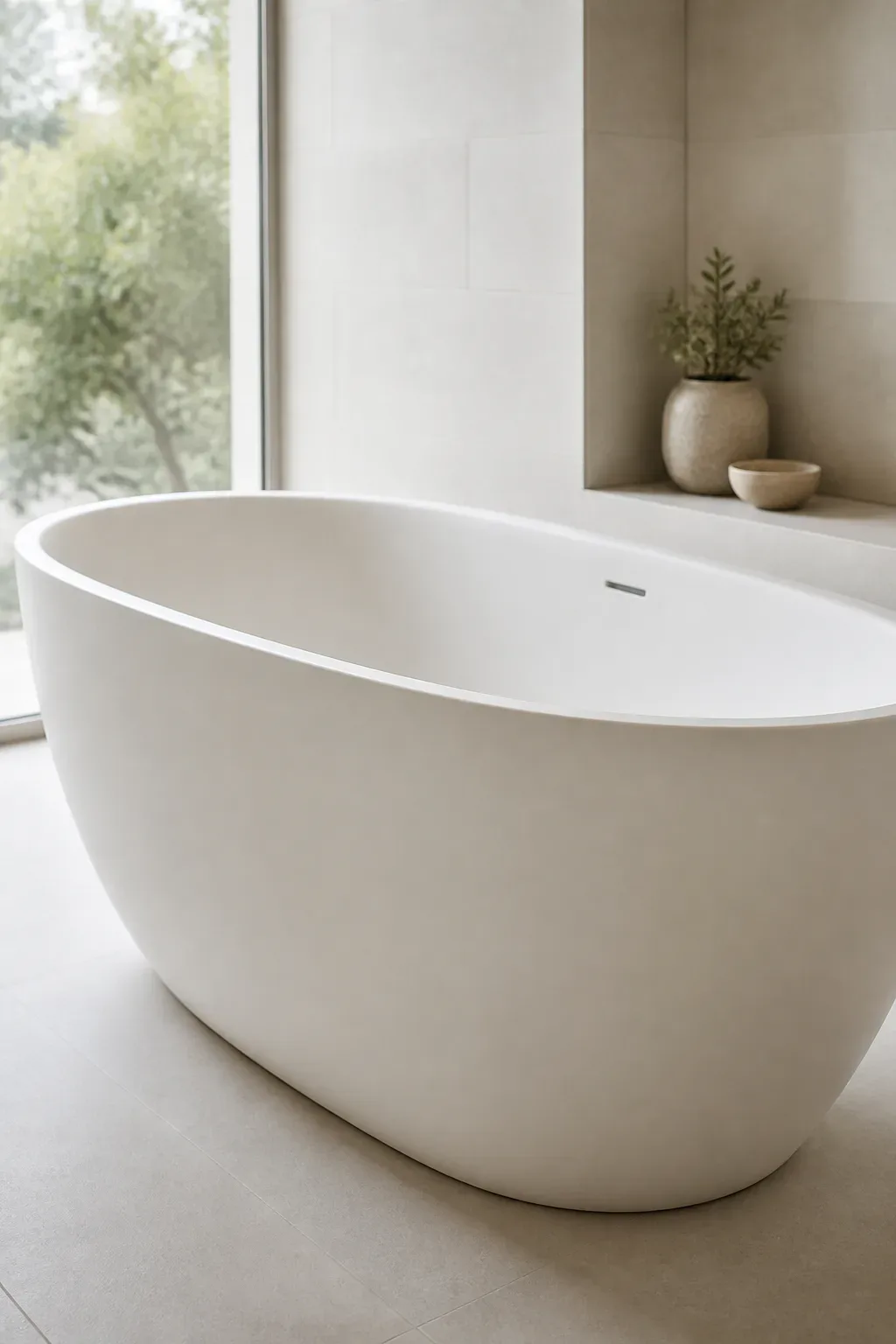
A matte-white freestanding oval tub brings a sculptural shape to a bathroom. Its smooth curves contrast with straight tile lines and cabinetry, making the tub a natural focal point without adding a new color to the room.
This idea works best when there is enough space to move around and clean the area comfortably. Against a neutral backdrop of stone, tile, or soft paint, the tub feels spa-like and simple. In a larger bathroom, it can anchor the layout; in a smaller room, check clearances before making it the centerpiece.
Make the tub feel integrated
Consider the tub’s placement alongside plumbing, windows, and storage rather than treating it as a standalone object. A nearby ledge or niche can hold everyday bath items, while coordinated faucets help the tub connect to the rest of the room.
- Choose an oval profile that suits the scale of the bathroom.
- Leave practical access around the tub for cleaning and use.
- Set it against a calm wall finish that highlights its silhouette.
- Repeat the room’s metal finish in the tub fittings.
A freestanding tub can make a neutral bathroom feel purposeful, even when the surrounding finishes are understated.
10. Style the Bathroom with Woven Natural Fibers

Rattan, jute, and woven textures bring a relaxed, tactile quality to a bathroom. A basket beside the vanity or a set of oatmeal waffle-weave towels can soften hard surfaces such as tile, glass, and stone without making the palette feel crowded.
These details are especially useful in a room that already has neutral fixtures but still feels a little bare. Keep the materials practical: bathrooms can be humid, so choose pieces that can dry out and avoid placing delicate fibers where they will stay wet.
Easy ways to layer texture
Start with a few purposeful accents rather than filling every open surface. A laundry basket, a small storage basket, and folded towels can provide enough contrast while helping the room stay organized.
- Use a woven basket for spare toilet paper or rolled hand towels.
- Choose oatmeal or natural-colored towels to warm up white tile.
- Keep jute and rattan away from regular splashes and standing water.
- Repeat one woven material elsewhere for a cohesive, collected look.
Natural fibers add the soft finishing layer that helps a neutral bathroom feel lived-in rather than showroom-perfect.
11. Frame the Mirror with Warm Sconces

Lighting around a mirror has a practical role and a strong effect on mood. Warm vertical backlighting paired with frosted-glass globe sconces can create a softer glow than a single overhead fixture, while adding shape and gentle highlights to the vanity area.
This combination fits both contemporary and classic bathrooms, depending on the sconce design and metal finish. It can also help define the vanity as its own zone, making the mirror wall feel intentional rather than like a collection of separate pieces.
Plan for useful, comfortable light
Think about how the lighting will work for everyday tasks as well as evening relaxation. Place sconces where they provide balanced illumination at the mirror, and ask an electrician to confirm the appropriate fixture ratings and installation for a bathroom.
- Choose frosted glass for a diffused, gentle appearance.
- Coordinate sconce hardware with the faucet or cabinet pulls.
- Use backlighting as an accent alongside suitable task lighting.
- Check that the mirror, sconces, and faucet have room to work together.
Thoughtful lighting makes pale finishes feel warmer and gives the bathroom a more calming atmosphere.
12. Bring Greenery into the Neutral Bathroom
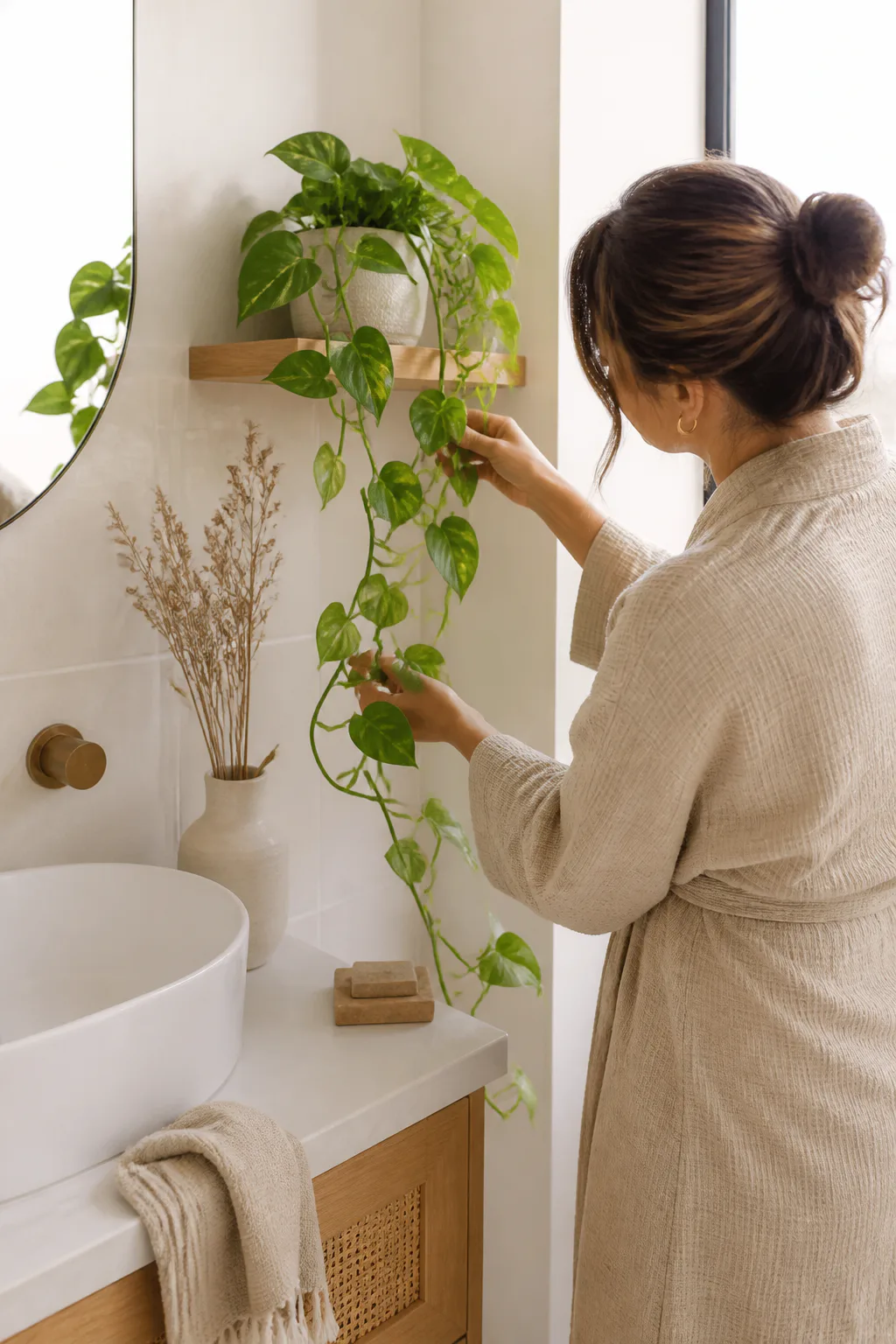
Plants and botanicals add an organic accent to a room filled with hard, neutral surfaces. A trailing pothos, a suitable potted tree, or a simple vase of dried botanicals can bring in natural shape and color without changing the bathroom’s overall palette.
Choose greenery according to the room’s light and humidity rather than appearance alone. A bright bathroom may support more options, while a dim space might be better suited to a low-light plant or dried stems. Place greenery where it will not obstruct counters or crowd a small shower area.
Keep the arrangement practical
Think about watering, drainage, and airflow before setting a plant on a vanity or shelf. A protective saucer can help prevent water marks, and a woven or ceramic planter can connect the greenery to the room’s other natural materials.
- Try a trailing plant on a shelf where its leaves can hang freely.
- Use dried botanicals when the room does not provide suitable growing conditions.
- Choose a planter that complements the tile, wood, or countertop.
- Keep leaves clear of wet surfaces and everyday work areas.
A small touch of greenery brings life to the neutral palette while keeping the room calm and uncluttered.
13. Paint the Vanity Muted Sage

A muted sage or warm mushroom-gray vanity introduces a restrained hint of color while preserving the bathroom’s quiet feel. These softened shades sit comfortably beside cream, white, oak, and stone, offering an alternative to an all-white cabinet without making the room feel bold.
This idea works particularly well when the walls and flooring are already neutral. The vanity becomes a gentle focal point, and its color can be repeated in a small accessory or plant pot if you want the scheme to feel connected without adding more painted surfaces.
Choose a shade that suits the room
Test paint samples beside the countertop and tile, since daylight and bathroom lighting can change how green or gray a color appears. Use a finish appropriate for cabinetry and moisture, and prepare the vanity surface carefully so the updated color wears well.
- Pick a dusty sage for a subtle natural note.
- Choose warm mushroom gray if you prefer a more understated neutral.
- Pair the cabinet with simple hardware in brass or another warm finish.
- Keep surrounding surfaces light to let the vanity stand out gently.
A softly colored vanity adds personality while staying within the soothing spirit of a neutral bathroom.
Final Thoughts
Neutral bathrooms feel most inviting when their finishes bring a range of textures and warm undertones. Travertine, oak, handmade tile, woven accents, and softened lighting can add depth while keeping the room calm and cohesive.
You don’t need to use every idea at once. Start with one change that suits your bathroom’s layout and daily needs, then build around it with complementary materials. A few thoughtful details can turn a simple neutral palette into a comfortable, personal retreat.