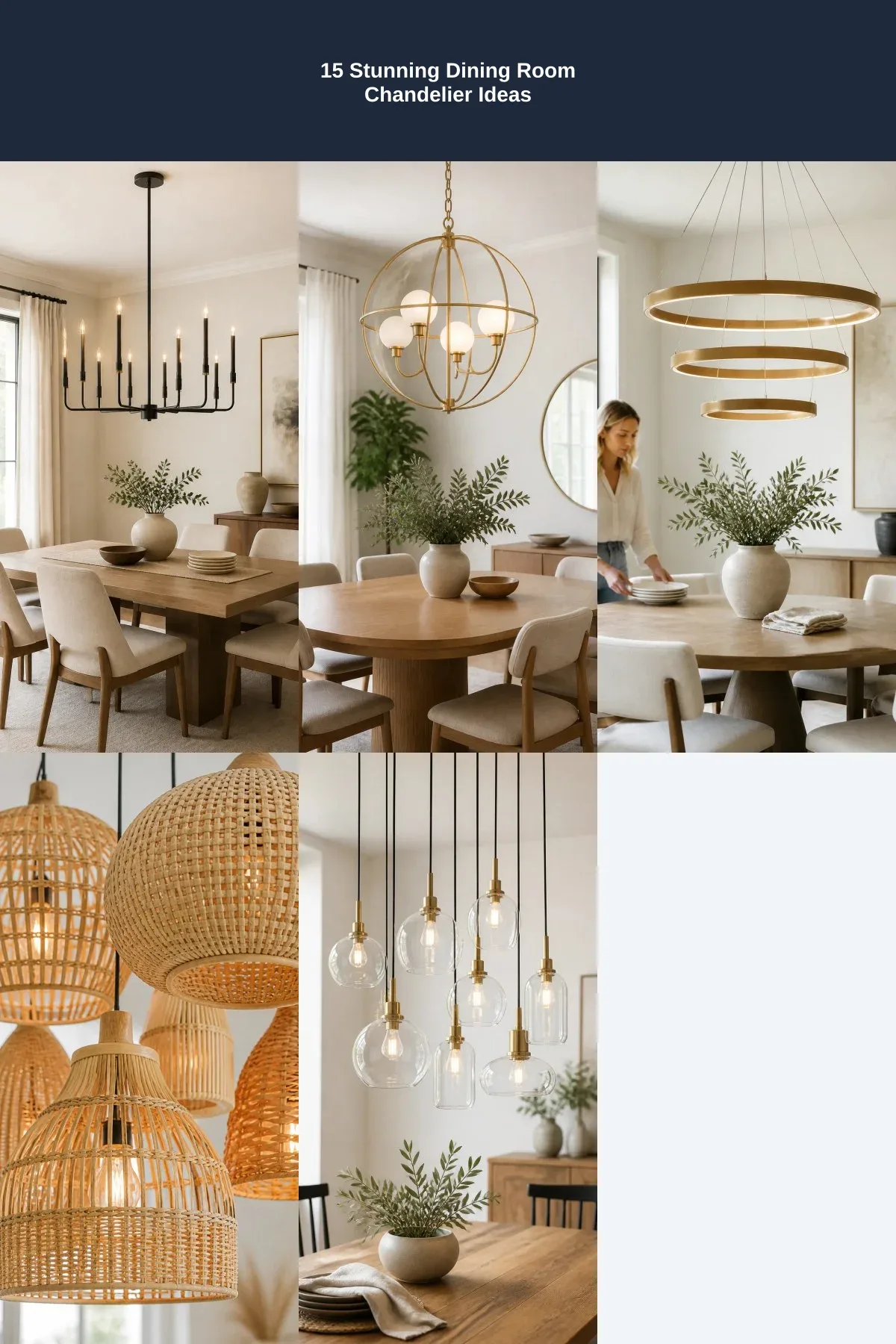
15 Stunning Dining Room Chandelier Ideas for Every Style
The right dining room chandelier does more than illuminate a meal. It gives the table a visual anchor, helps set the mood, and can tie together details like wood finishes, metal accents, and upholstery. The best choice balances its presence with the room’s proportions and the way you use the space.
These 15 dining room chandelier ideas range from clean-lined LED designs to textured woven pendants and dramatic crystal rings. Each style offers a different way to shape the atmosphere, whether you want a relaxed everyday setting or a more polished backdrop for entertaining.
As you browse, consider your table’s shape and length, ceiling height, and existing decor. A fixture should feel connected to the table without making conversation awkward or overwhelming the room; thoughtful placement and dimmable lighting can help even a statement chandelier feel comfortable.
1. Hang a Linear LED Chandelier Over a Long Table
A linear LED chandelier follows the length of a rectangular dining table, creating an even pool of light that feels intentional rather than scattered. Its clean shape suits contemporary and minimalist rooms, and the slim profile can keep the view across the table open.
Choose a simple bar for a quiet look or a multi-tiered fixture for more visual presence. A linear chandelier can also help define the dining area in an open-plan room, drawing attention to the table without adding a bulky divider.
How to make it work
Center the fixture along the table’s length, then check that it feels balanced from the main approach to the room. Diffused LED light and a dimmer make the chandelier practical for everyday meals as well as longer dinners.
- Match the fixture’s orientation to the table’s long axis.
- Choose a finish that repeats nearby hardware or furniture details.
- Use a dimmer to adjust the light for different occasions.
The result is a streamlined focal point that provides useful light without competing with the rest of the room.
2. Add Slim Candle Arms in Black or Brass
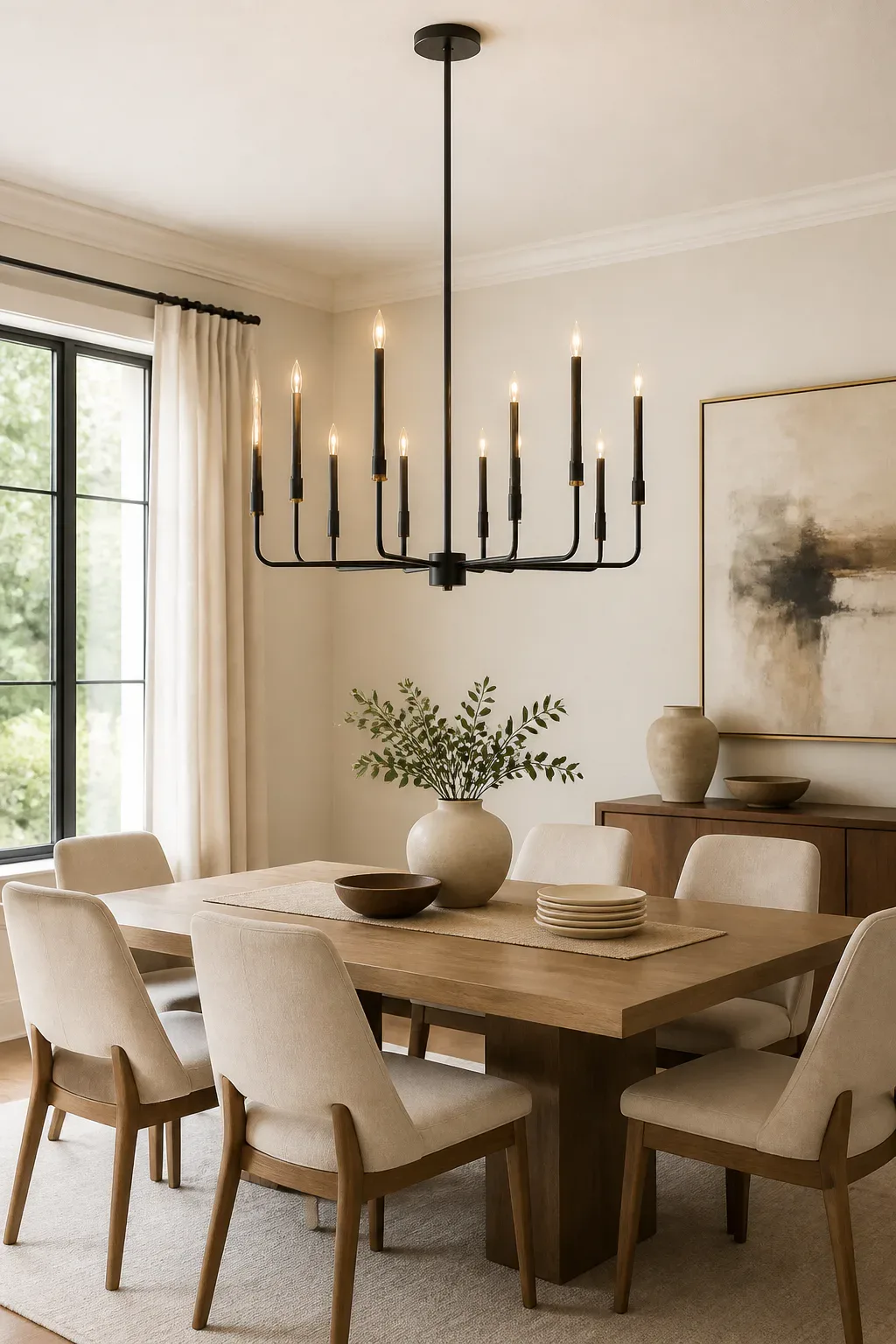
A modern candle chandelier brings the familiar outline of taper candles into a fresh dining room. Slim vertical arms create an airy silhouette, while black gives the fixture a crisp graphic edge and brass adds a warmer, softer glow.
Unlike a traditional candelabra, this style can feel at home in both contemporary and transitional spaces. Its open construction lets the room’s wall color and decor remain visible, making it a good option when you want a statement fixture that does not look heavy.
Design tips
Look for energy-efficient bulbs with a warm color tone to preserve the candlelit feeling. The fixture should be scaled to the table: too small, and its arms may disappear; too large, and it can crowd the dining area visually.
- Choose black for contrast against light walls or ceilings.
- Use brass to echo warm wood, cabinet pulls, or picture frames.
- Consider bulb shape and brightness before settling on a fixture.
A slim candle design adds graceful height while keeping the overall mood relaxed and welcoming.
3. Center a Globe Chandelier Over the Dining Table
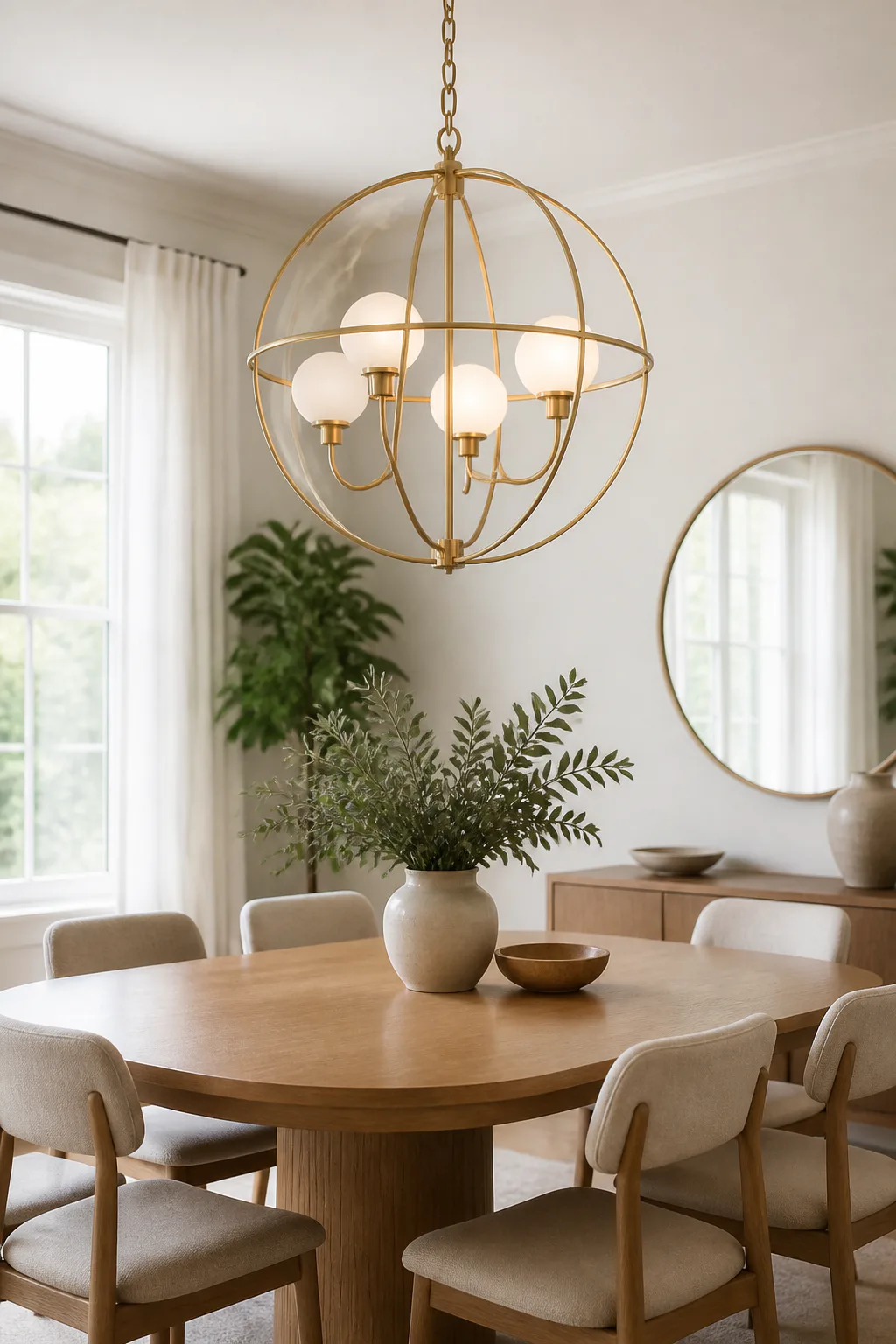
A globe chandelier pairs a rounded frame with glowing inner globes for a soft, balanced focal point. Its simple geometry feels modern, but the curved shapes take the edge off a room filled with straight lines and rectangular furniture.
This style works especially well in Scandinavian-inspired spaces, where natural materials and understated forms do much of the decorating. A single globe fixture can suit a compact table, while a larger composition can hold its own above a generous dining surface.
How to pull it off
Think about how the globe arrangement will relate to the table and nearby sightlines. Opal or otherwise diffused shades create gentler light, while clear globes reveal more of the bulbs and add a brighter, more decorative effect.
- Repeat rounded shapes in a mirror, vase, or table accessories.
- Choose a frame finish that connects with existing metal accents.
- Check that the fixture does not obstruct views across the table.
A well-proportioned globe chandelier brings an easy sense of symmetry to the dining room.
4. Install a Carved Alabaster Disc Chandelier
An alabaster disc or bowl chandelier brings natural stone into the dining room in a sculptural, understated way. Its softly varied surface adds depth even when the rest of the palette is simple, and the stone’s appearance can make the fixture feel like an architectural detail.
When illuminated, the material helps create a warm, diffused glow rather than a sharp beam. This makes an alabaster fixture appealing in a dining room where you want the light to feel calm and flattering, particularly alongside wood, linen, or other tactile finishes.
What to consider
Keep the surrounding decor relatively edited so the stone can stand out. Since the fixture may have a solid, substantial appearance, check its scale against the table and ceiling before choosing a broad disc or bowl shape.
- Pair alabaster with warm wood for an organic, cohesive palette.
- Use a dimmer to shift from everyday brightness to dinner ambience.
- Let the fixture’s natural texture be the room’s main statement.
This choice adds visual weight without relying on ornate ornament or strong color.
5. Suspend Crystal Rings for a Cascading Glow
Cascading crystal rings give a dining room the sparkle of a traditional crystal chandelier with a more contemporary outline. Circular halos create a sense of movement, while faceted pieces catch and redirect light around the ceiling and walls.
This design suits a room that needs a little glamour or a strong focal point above a simple table. Against restrained furniture and finishes, the layered rings can do the decorating; in a more formal dining room, they can build on existing polished details.
Balance the sparkle
Think about the effect at different times of day. The fixture will have a more dramatic presence when lit, so surrounding surfaces and accessories can stay relatively quiet to prevent visual competition.
- Repeat a crystal or metallic detail elsewhere for cohesion.
- Keep the tabletop simple when the fixture is especially ornate.
- Check the overall drop so the rings feel in proportion to the room.
The layered glow creates a celebratory atmosphere without requiring a traditionally shaped chandelier.
6. Stack Sculptural Rings Above the Dining Table
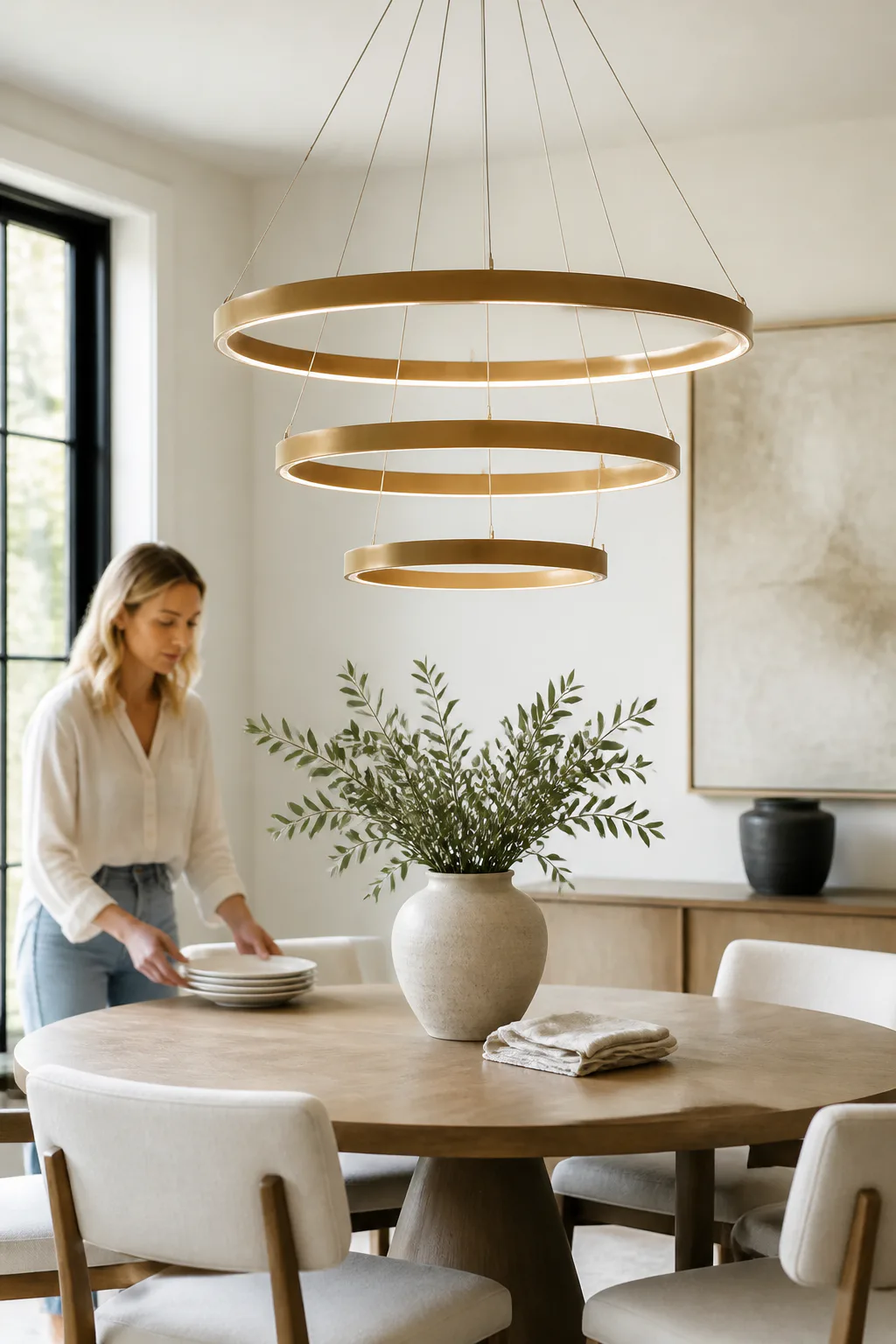
Concentric chandelier rings can look like a floating sculpture suspended over the table. Stacked tiers create dimension while preserving an open, airy outline, making this style a striking alternative to a solid shade or broad fixture.
Black ash offers a graphic, modern profile, while brushed gold brings warmth and a more luminous finish. Either option can anchor a dining area, especially when the surrounding decor is simple enough to let the ring shapes read clearly.
Make the shape feel intentional
Consider the fixture from several viewpoints, including the entrance to the room and the seats at the table. The rings should feel centered over the dining surface, with enough space around them to keep the composition from seeming crowded.
- Choose black for contrast in a light, neutral room.
- Use brushed gold to connect with warm-toned decor.
- Balance the sculptural form with a straightforward table setting.
Repeated circular lines add a strong focal point while keeping the dining space visually open.
7. Bring in a Woven Pendant Cluster
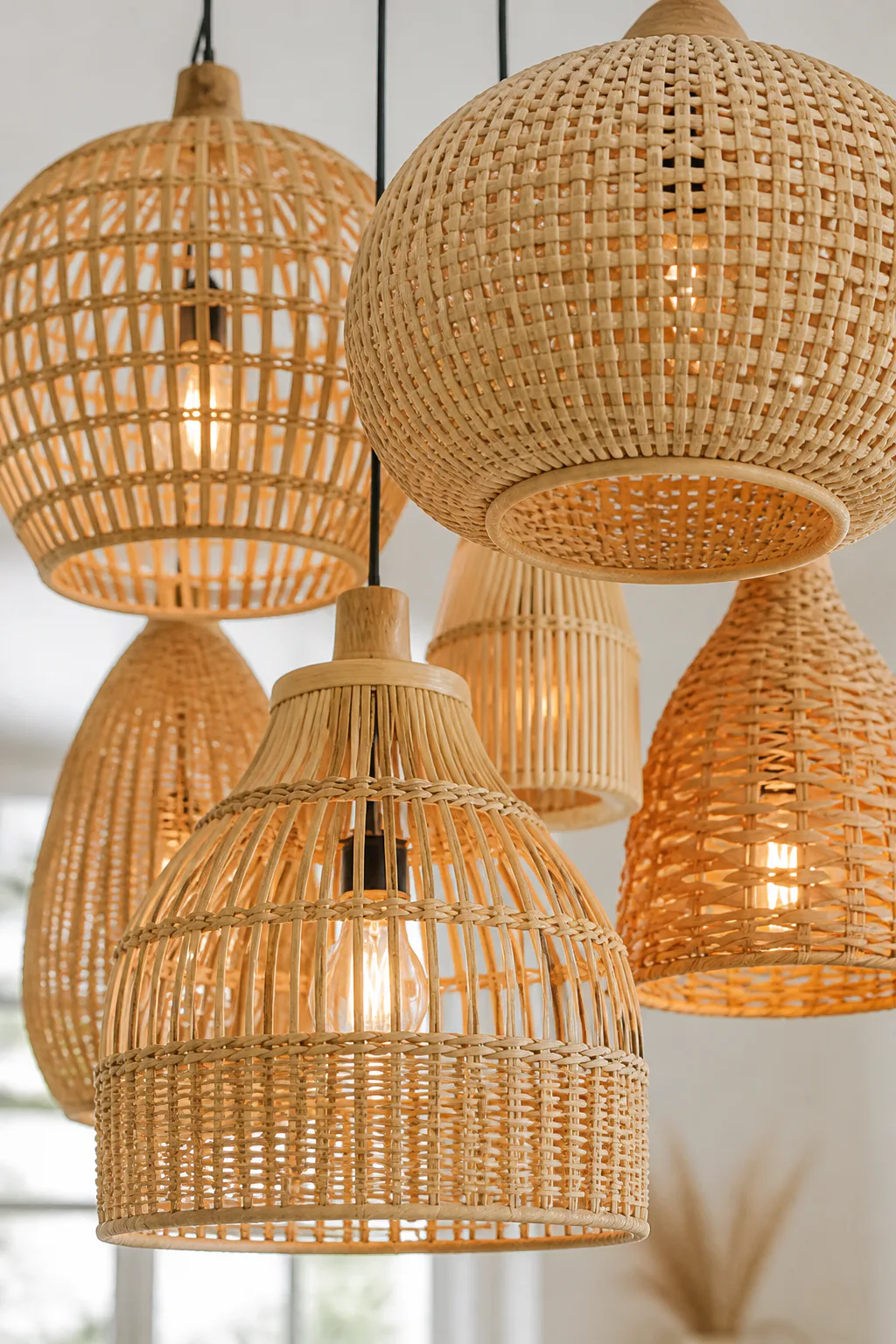
A cluster of rattan, bamboo, or bleached-wood pendants brings natural texture above the dining table. The woven surfaces soften a room of smooth finishes and can make a formal dining area feel more relaxed and lived-in.
Several pendants grouped together create more visual interest than a single shade, while their varied forms can add a casual, collected quality. This approach fits comfortably in coastal, bohemian, or nature-inspired rooms, but it can also warm up a more modern interior.
Layer in natural texture
Woven shades have a strong material presence, so give them room to breathe. Their open weave may create patterned shadows, which can add atmosphere in the evening; choose bulbs and shade density with the desired effect in mind.
- Repeat the natural material in a basket, chair, or serving piece.
- Keep the cluster aligned with the table rather than the room alone.
- Mix pendant shapes carefully to maintain a cohesive grouping.
The result is a warm, textured centerpiece that makes everyday dining feel a little more relaxed.
8. Hang Matching Chandeliers in a Dramatic Pair
Two matching chandeliers can create a striking, symmetrical arrangement above an elongated dining table. Beaded details add texture and a hint of glamour, while chrome accents feel crisp and reflective in a more contemporary room.
A pair can distribute light across a long surface more evenly than one central fixture, while also giving the dining area a sense of scale. This approach works best when the table and ceiling have enough room to accommodate two distinct forms without making the overhead view feel crowded.
Plan the pairing
Think of the fixtures as one composition. Their size, spacing, and alignment should relate to the table, and matching models keep the look orderly even when the chandeliers have intricate details.
- Center both fixtures along the table’s long axis.
- Choose a pair with enough visual weight for the room.
- Keep nearby decor balanced rather than adding competing focal points.
A matched pair makes a memorable statement while bringing structure to a generous dining space.
9. Make a Sputnik Chandelier the Room’s Focal Point
A Sputnik chandelier sends metallic rods outward from a central hub, often ending in exposed bulbs or globes. The radiating shape brings mid-century character and a burst of energy to the dining room, especially above a simple round or rectangular table.
Because the fixture spreads in several directions, it can feel lively and graphic from across the room. It suits interiors that mix vintage references with modern furnishings, and it can add personality to a neutral dining area without relying on color.
Keep the look balanced
Give the chandelier enough visual space to stand out. A crowded ceiling or a highly decorative table setting may compete with its radiating form, so simpler surrounding shapes help the fixture feel like a deliberate centerpiece.
- Echo the metal finish in a frame, cabinet pull, or chair detail.
- Choose bulb shapes that complement the fixture’s starburst outline.
- Use a dimmer if the exposed bulbs feel too bright during dinner.
This design offers a playful focal point with a distinctly architectural silhouette.
10. Mix Black Steel with Warm Oak Accents
A chandelier that combines black steel with warm oak or champagne brass offers a refined take on farmhouse style. The dark metal supplies definition, while the wood or softer metallic detail keeps the fixture from feeling stark or overly industrial.
This pairing works well in dining rooms with natural wood tables, neutral walls, and clean-lined furnishings. It can bridge rustic and contemporary elements, helping a room feel grounded without leaning on heavy, distressed finishes.
Connect the materials
Look for a fixture whose proportions feel simple and purposeful. Repeating at least one of its finishes elsewhere in the room helps the chandelier belong, while too many competing materials can make the palette feel unsettled.
- Echo oak in the table, sideboard, or chair details.
- Repeat black in a frame or lighting hardware for continuity.
- Use champagne brass as a subtle warm accent rather than a new theme.
The mix brings farmhouse warmth into a dining room with a cleaner, more current profile.
11. Set a Romantic Mood with an Old-World Candelabra
An old-world candelabra chandelier brings heritage character and a romantic mood to the dining room. Antiqued bronze or iron frames have an aged presence, while simulated wax sleeves can suggest traditional candles without requiring an open flame.
This style is a natural fit for rooms with vintage furniture, rich wood, or a more formal table setting. It can also create an appealing contrast in a simpler space, where the ornate outline becomes the main decorative feature.
Build a welcoming atmosphere
Consider the fixture’s visual weight and the room’s ceiling height, since an elaborate candelabra can draw the eye quickly. Warm-toned bulbs and a dimmer help preserve a gentle glow rather than making the chandelier feel overly bright.
- Pair the finish with wood or other traditional materials.
- Keep the surrounding decor restrained if the fixture is ornate.
- Choose bulbs that support a warm, comfortable evening setting.
Its candle-inspired form brings a sense of occasion to both special meals and everyday dinners.
12. Display a Geometric Brass Chandelier as Art
A geometric brass chandelier can function as both lighting and sculpture. Intersecting triangles, hexagons, or free-form cages create an open framework that catches the eye while allowing the room to remain visible through the design.
Brass adds warmth and polish, making the fixture a natural companion for neutral walls, wood furniture, or carefully chosen metallic accents. In a pared-back dining room, its shape can provide the visual interest that artwork or an elaborate centerpiece might otherwise supply.
Let the geometry stand out
Pay attention to how the fixture’s lines relate to the table and room architecture. A strong geometric form looks most intentional when surrounding decor supports it without repeating too many competing patterns.
- Echo brass in a frame, vase, or cabinet hardware.
- Choose one dominant geometric shape for a cohesive impression.
- Keep table accessories simple beneath an intricate fixture.
This approach turns overhead lighting into a defining design feature rather than a finishing touch.
13. Group Glass Pendants at Staggered Heights
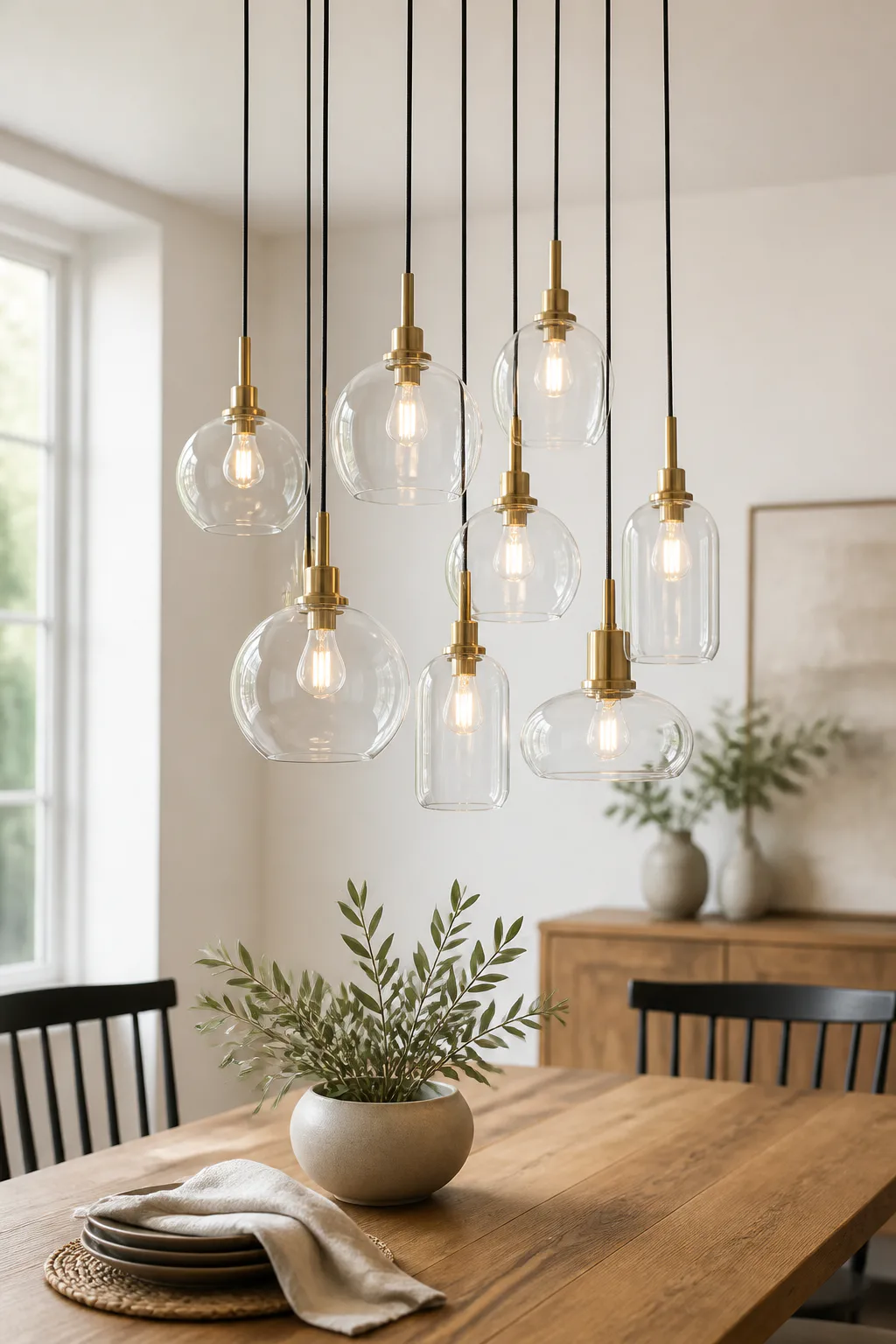
A cluster of glass pendants can replace a single centered fixture with a more layered composition. Hanging the drops at staggered heights adds movement, while the glass keeps the arrangement from feeling as visually heavy as a solid shade.
This idea works over a dining table when you want a focal point with a lighter, more individual character. Clear glass feels crisp and lets the bulbs remain part of the design; softer or lightly colored glass can make the cluster feel gentler.
Arrange the cluster
Keep the grouping visually connected to the table, even if the pendants hang at different levels. Varying heights should feel deliberate, with enough space between shades to let each form read clearly from across the room.
- Repeat the glass finish or shape to unite the arrangement.
- Use the table’s center as a guide for positioning the group.
- Check sightlines from seated positions before finalizing heights.
The layered arrangement adds dimension while preserving an airy feeling above the dining area.
14. Cast an Intimate Glow with Tinted Glass
Smoked or amber gradient glass gives a dining chandelier a cozy, evening-ready character. The tint softens the light’s appearance and adds color above the table, creating a more intimate mood than a clear shade or an exposed bulb alone.
Large tinted shades can also introduce a subtle focal point in a room with a restrained palette. Smoked glass tends to feel moody and contemporary, while amber tones bring a warmer look that pairs naturally with wood and other earthy finishes.
Choose the right atmosphere
Consider how the glass will look when the fixture is switched off as well as when it is illuminated. Bulb brightness and shade tint work together, so aim for a comfortable balance that supports dining without making the table feel dim.
- Pair amber glass with warm wood and soft neutral textiles.
- Use smoked glass to complement darker or more modern finishes.
- Add a dimmer for flexible light during meals and entertaining.
Tinted glass makes the chandelier feel like part of the room’s atmosphere, not just its lighting plan.
15. Pair Concrete Shades with Warm Edison Bulbs
Concrete or blackened steel shades bring raw, industrial texture to the dining room. Paired with exposed Edison-style filaments, they create a purposeful contrast between rugged materials and warm-looking light.
This combination suits loft-inspired spaces, but it can also bring an urban edge to a room with simpler furniture. Concrete adds a weighty, tactile presence, while metal offers a cleaner profile; either material can work as a single statement shade or in a small grouping.
Soften the industrial edge
Balance the fixture with materials that feel warmer or more comfortable, such as wood, upholstered chairs, or woven accents. The goal is to make the chandelier feel connected to the room rather than like a piece of workshop lighting.
- Use a wood table or sideboard to temper the raw finish.
- Choose warm-toned bulbs for a more inviting dining atmosphere.
- Keep the fixture’s scale in proportion to the table and ceiling.
The contrast gives the dining area character while keeping its lighting functional and welcoming.
Final Thoughts
A dining room chandelier can shape the entire feel of a space, whether you choose sculptural rings, natural woven shades, softly glowing alabaster, or a dramatic candelabra. Start with the mood and materials you want, then consider how the fixture’s form will relate to your table and the rest of the room.
Before settling on a style, check the scale, sightlines, and light quality in your dining area. A fixture that feels balanced and comfortable will serve everyday meals as well as special gatherings, making the dining room feel considered and inviting.