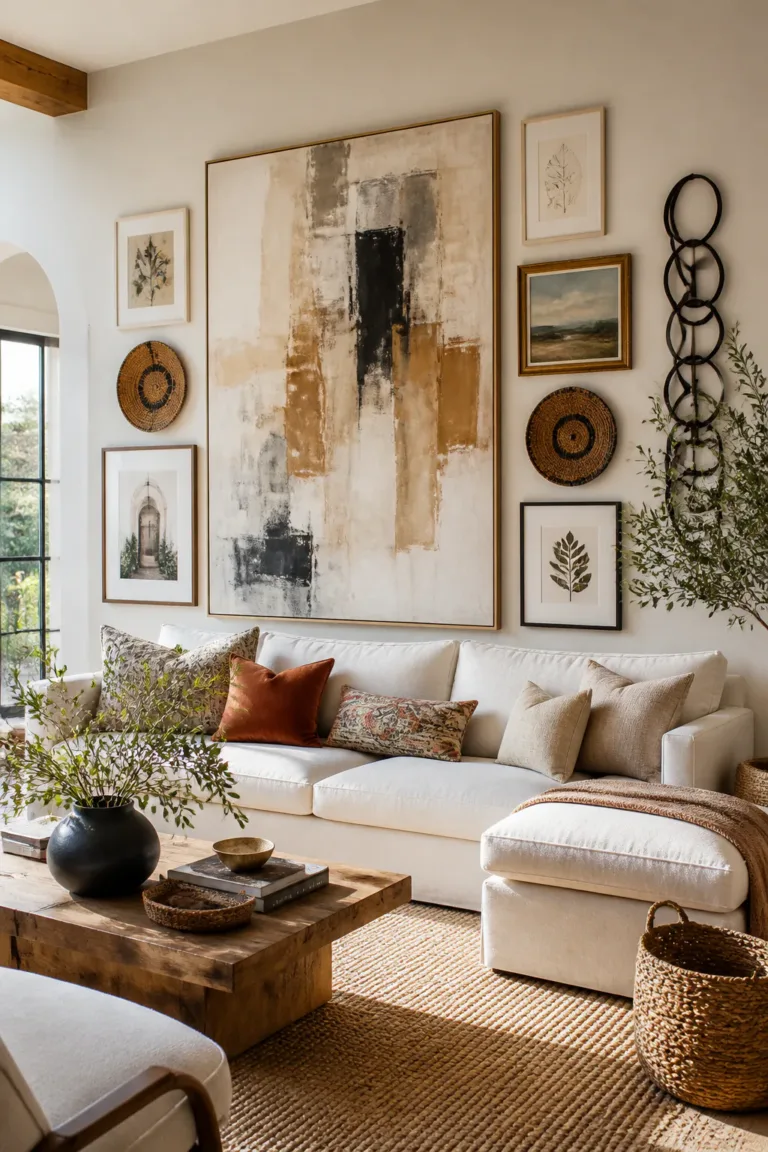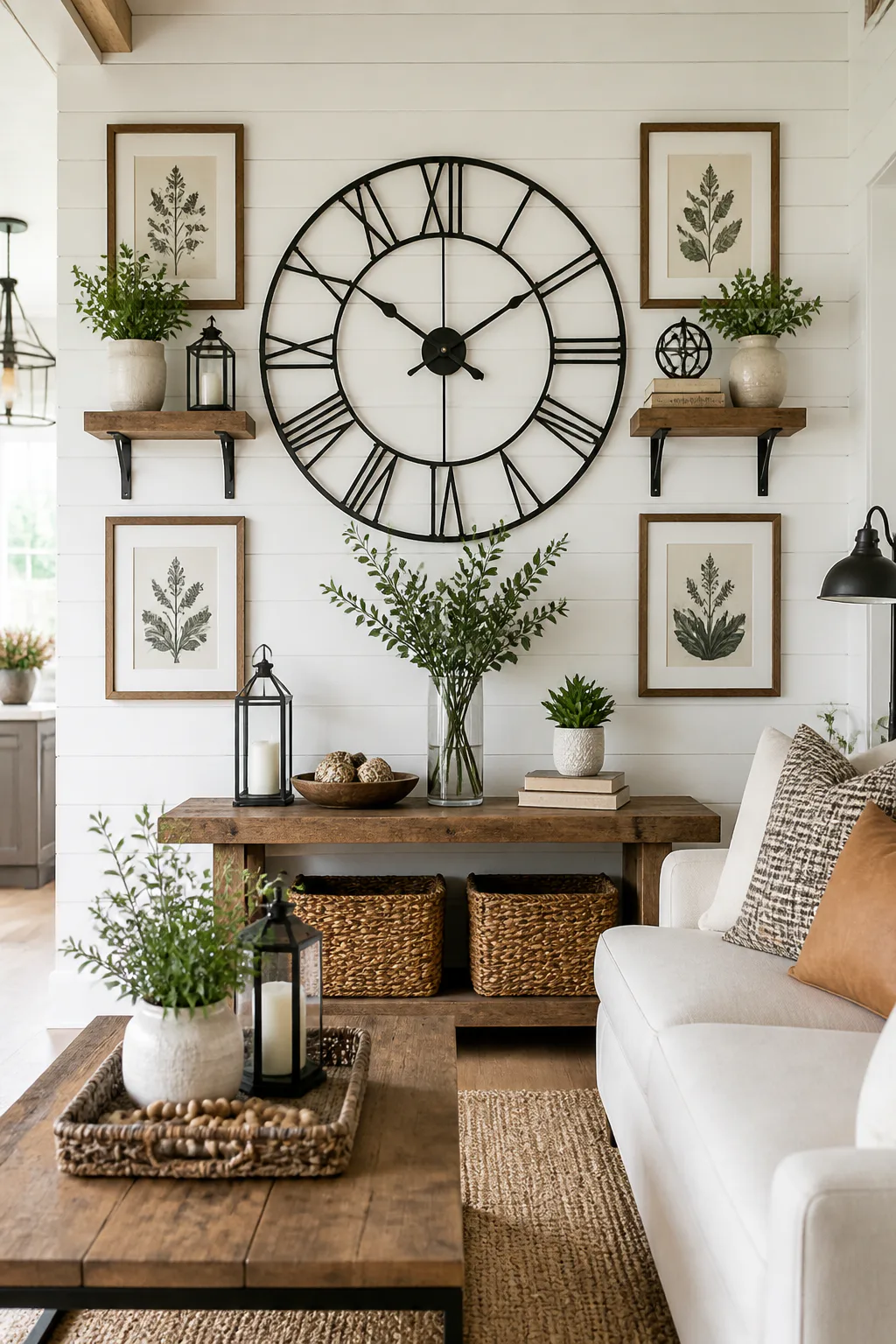
11 Stunning Modern Farmhouse Wall Decor Ideas
Modern farmhouse wall decor brings together the warmth of weathered materials and the simplicity of clean, comfortable spaces. Think natural wood, soft neutrals, black metal accents, and a little greenery rather than a room filled with rustic details.
These ideas work in living rooms, bedrooms, entryways, dining areas, and hallways. Some add texture or architectural character, while others create a focal point, bring in light, or make a blank wall more useful.
Choose one idea that suits your room’s scale and existing palette, or combine a few with a light touch. The tips below will help you balance rustic finishes with uncluttered styling so your walls feel welcoming, not busy.
1. Hang Distressed Wood Panels with Metal Scrollwork
Multi-panel wood plaques with carved details or metal scrollwork bring the look of an architectural fragment to a plain wall. A whitewashed, gray, or softly weathered finish adds texture and age, while the open metal detail keeps the piece from feeling too heavy or overly rustic.
This kind of decor works especially well above a console, sofa, or bed, where a single substantial piece can anchor the furniture below it. In a smaller room, choose a lighter finish and a narrower design so the panels add character without crowding the wall.
How to make it work
Let the panel’s texture do most of the decorating. Give it breathing room, and repeat one finish elsewhere in the room—such as a wood tone or dark metal accent—to make the display feel intentional.
- Center the panels over the furniture they relate to.
- Choose distressed finishes that complement, rather than exactly match, nearby wood.
- Keep surrounding accessories simple so carved details remain easy to see.
The result is a focal point that feels collected and timeworn while still fitting a clean, modern farmhouse palette.
2. Center an Oversized Black Metal Clock
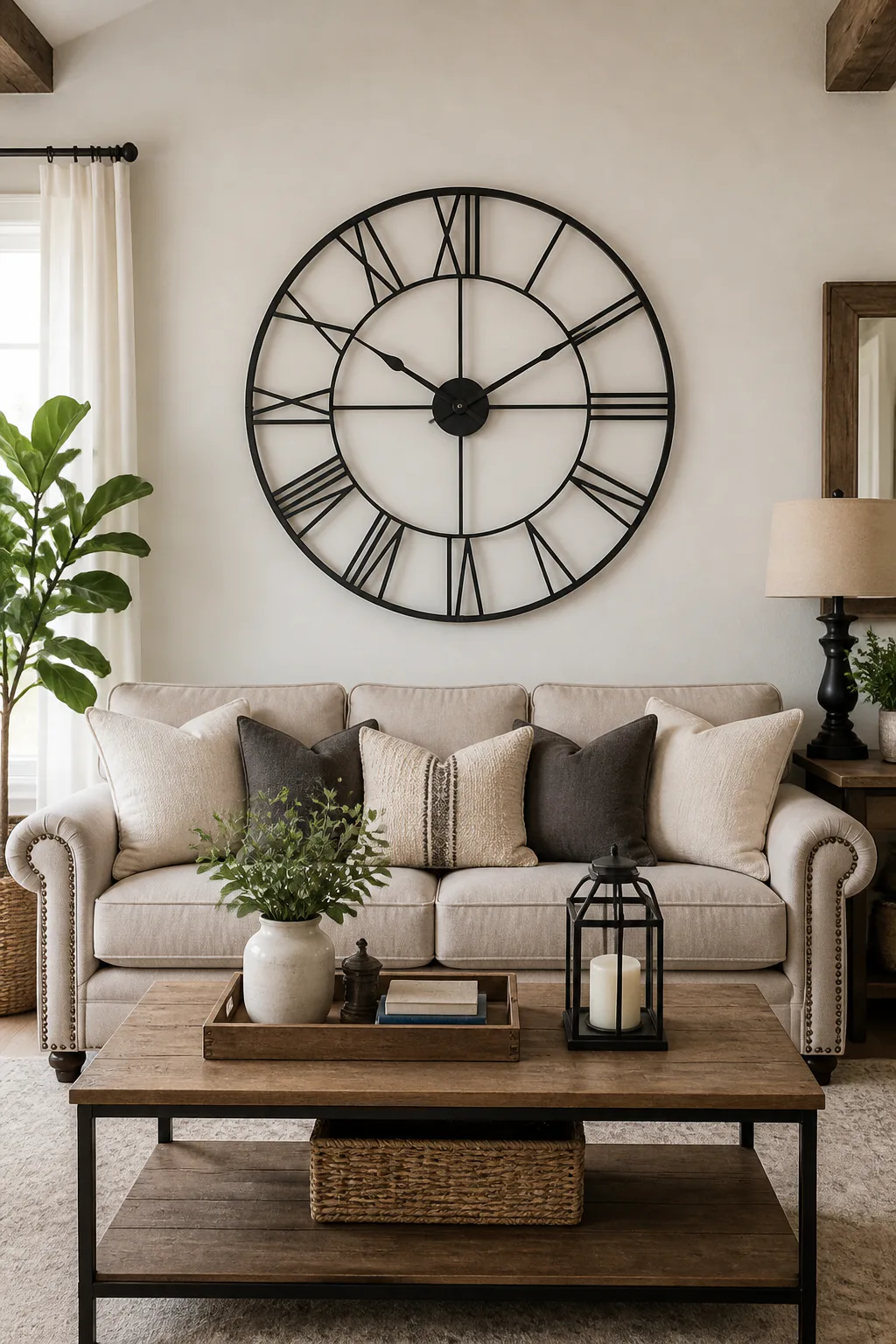
A large skeleton-style clock makes an immediate statement above a sofa, bed, or fireplace. Its open design gives the wall a strong focal point without covering it completely, and black metal provides a crisp contrast against white, cream, or warm greige paint.
The mix of industrial metal and farmhouse warmth is what makes this piece versatile. A clock with Roman numerals or a lightly distressed finish can feel vintage-inspired, while a simpler design suits a more pared-back room. Scale matters: the clock should feel connected to the furniture below, not lost on a large wall or squeezed into a narrow space.
Placement and styling tips
Before hanging it, mark the intended position and check the clock from the main seating or viewing area. Treat it as the central feature rather than adding several competing pieces around it.
- Center it above a mantel, headboard, or sofa.
- Repeat black in a lamp, frame, or hardware for a cohesive look.
- Leave clear space around the clock face and hands.
- Check that the clock can be read comfortably from across the room.
With a restrained backdrop, its simple outline brings structure and a little industrial character to the room.
3. Create a Framed Botanical Print Arrangement

Botanical prints bring an easy, nature-inspired softness to farmhouse walls. Ferns, eucalyptus, wildflowers, and seed-packet illustrations all work well, especially when their colors stay muted and the artwork has plenty of open space.
Arrange a few prints above a console, along a bedroom wall, or in a dining nook to create a gentle focal point without relying on a large, heavy object. Natural oak frames add warmth, while slim black frames create a sharper outline. Repeating one frame style helps a collection feel unified, even when the plants or illustrations differ.
Build a balanced display
Lay the arrangement out on the floor first, keeping the gaps between frames consistent. A loose grid feels orderly; a more varied arrangement can feel relaxed, as long as the overall shape sits comfortably within the wall space.
- Choose artwork with a shared color palette or illustration style.
- Use matching frames for a calm, cohesive display.
- Mix print sizes while keeping the arrangement visually balanced.
- Hang the group where it relates to nearby furniture.
These prints add a fresh, airy note that complements wood, linen, and other natural textures.
4. Style Reclaimed Wood Shelves with Iron Brackets

Reclaimed or weathered timber shelves add both texture and practical display space to a blank wall. Pairing the wood with black or galvanized iron brackets creates a simple contrast that feels at home in a living room, kitchen, office, or hallway.
Unlike a single artwork, shelves can evolve as your needs change. A few ceramics, small plants, books, and framed family photos bring personality, but leaving some open space keeps the arrangement from becoming cluttered. One or two shelves are often enough to make a wall feel finished without turning it into a storage zone.
Style shelves with intention
Start with the larger objects, then add smaller pieces to vary height and shape. Keep the objects light enough for the shelves and brackets, and follow appropriate installation guidance for the wall type.
- Combine a trailing plant with upright books or framed photos.
- Vary object heights, but repeat a few colors or materials.
- Leave open areas so the wood grain remains visible.
- Use secure mounting and suitable anchors for the wall.
The mix of useful storage and relaxed styling makes these shelves an easy way to bring farmhouse character into everyday spaces.
5. Add a Welcoming Metal Sign Above the Entryway

A dimensional metal or wood sign can give an entryway an inviting focal point before guests even step farther into the home. Words such as “Gather” or “Home” work naturally above a console, near a dining area, or on a wall that connects shared spaces.
Matte black lettering stands out against light paint or shiplap, while dark-stained wood brings a softer, warmer effect. Because a sign already carries visual and verbal emphasis, it usually looks best when the surrounding wall is kept simple. Pair it with a small arrangement of greenery or a few useful entryway items rather than a crowded collection of decor.
Choose the right scale
Consider the width of the furniture or wall beneath the sign. A piece that is too small can look disconnected, while an oversized design may overwhelm a narrow entry. Hang it securely and at a height that feels natural as people enter.
- Select a word and style that suit your home’s tone.
- Repeat the sign’s metal or wood finish elsewhere in the room.
- Keep nearby accessories low-key to let the lettering stand out.
A well-placed sign adds warmth without needing a full gallery wall.
6. Cover One Wall in Painted Shiplap
Painted shiplap gives a room farmhouse character through texture and clean horizontal or vertical lines. A soft white keeps the space bright, while warm greige adds a little depth without competing with furniture or artwork. Used on one wall, the planking creates an architectural focal point that can make a simple room feel more considered.
Try it behind a bed, around a fireplace, or on the wall that anchors a living area. Horizontal boards can emphasize width, while vertical boards draw the eye upward. Since shiplap has a strong pattern of its own, it can stand on its own or provide a calm backdrop for a carefully chosen mirror or framed piece.
Plan the accent wall
Decide whether the boards should be a feature or a backdrop before adding other decor. Keep the paint finish and board spacing consistent, and plan around outlets, trim, and existing architectural details.
- Choose a wall that naturally draws attention in the room.
- Use a shade that complements nearby flooring and furnishings.
- Consider horizontal or vertical lines based on the room’s proportions.
- Limit additional wall decor if the planking is already visually prominent.
The result is a lasting layer of farmhouse texture that doesn’t depend on a collection of accessories.
7. Frame Vintage Grain Sacks as Wall Art

Vintage grain-sack fabric, an antique quilt, or a linen hanging brings a softer, more tactile note to a farmhouse interior. The woven texture and muted earth tones add warmth to plain drywall, balancing the harder surfaces of metal signs, mirrors, or wood furniture.
Framing fabric gives it a crisp, finished appearance and makes it easier to coordinate with other artwork. A simple wood frame can emphasize the natural quality of the material, while a narrow dark frame gives it a more defined edge. A textile hanging on a wooden dowel feels looser and more casual, making it a good fit for a bedroom or relaxed reading corner.
Display textiles thoughtfully
Choose a piece with colors that already appear in the room, even if only in small accents. Protect delicate or older fabric from excess sunlight, and use a display method that supports its weight without pulling or stretching it.
- Pair muted stripes or linen tones with neutral walls.
- Use a simple frame or dowel so the textile remains the focus.
- Hang it where furniture helps define the display.
- Balance its soft texture with a few clean-lined pieces nearby.
Textile art adds a lived-in quality without making the room feel visually busy.
8. Flank a Gallery Wall with Industrial Sconces
Black metal or gooseneck sconces can frame a central mirror or artwork and add useful ambient light at the same time. This layered approach works particularly well in a hallway, stairwell, or living room where a single picture might feel undersized on its own.
The arrangement can be symmetrical, with one sconce on each side, or more relaxed if the wall has an irregular shape. A few coordinated frames around the central piece add depth, while the sconces give the display a clear visual boundary. Keep the artwork and lighting finishes connected so the feature feels composed rather than like separate elements placed together.
Bring light and art together
Plan the full arrangement before mounting anything, and consider where light will fall in the evening. If the sconces need wiring, account for that work before finalizing their placement; plug-in options may offer more flexibility where suitable.
- Use a mirror or one larger artwork as the central anchor.
- Repeat black metal in frames or nearby hardware.
- Keep spacing balanced between the centerpiece and sconces.
- Choose lighting that suits the room’s use and existing light sources.
This combination turns a pass-through wall into a feature that feels both decorative and functional.
9. Fill Galvanized Wall Pockets with Greenery
Wall-mounted metal pockets or wooden shadow boxes bring greenery up to eye level, adding a lively note to neutral walls. Galvanized finishes suit an industrial farmhouse look, while wood-fronted boxes can feel softer and more rustic. Try them in an entryway, kitchen, or on a shiplap accent wall where plants can contrast with the pale background.
Eucalyptus, lavender, and trailing plants each create a different effect. Fresh greenery adds natural variation, while well-chosen faux stems can be a practical option in a spot with limited light or little time for plant care. Keep the arrangement loose enough to show the shape of the container rather than packing the pocket full.
Choose greenery for the location
Consider the light, airflow, and maintenance the display will need. If using live plants, select varieties suited to the conditions and protect the wall from moisture with an appropriate container or liner.
- Use trailing stems for a softer, cascading silhouette.
- Combine greenery with subtle flowers or dried stems.
- Repeat the metal or wood finish elsewhere in the room.
- Secure pockets firmly and avoid overloading them.
These small vertical gardens bring color and texture without taking up floor or tabletop space.
10. Lean into a Large Arched Windowpane Mirror
An arched mirror with grid panes recalls a vintage barn or church window while offering the practical benefit of reflecting light. Its tall shape draws the eye upward, making it a natural focal point for an entryway, living room, or bedroom. A distressed wood or metal frame reinforces the farmhouse feel without requiring a collection of smaller decorations.
Placed across from a window, a mirror can help bounce daylight around the room. It can also visually open up a tighter space, especially when the frame is not too dark or bulky for the wall. Before choosing a location, check what the mirror will reflect: an appealing view or a tidy area makes the reflection feel like part of the design.
Find the best position
Lean the mirror where it can be safely supported, or hang it according to its weight and the wall’s construction. A console or low bench beneath it can ground the tall shape, but leave enough room for the arched top to stand out.
- Place it where it can reflect natural light or an attractive view.
- Choose a frame finish that complements nearby wood or metal.
- Check the mirror’s proportions against the wall and furniture.
- Use secure mounting or a stable support to prevent tipping.
The window-like outline adds vintage character while keeping the room bright and open.
11. Arrange Framed Farmhouse Patent Prints
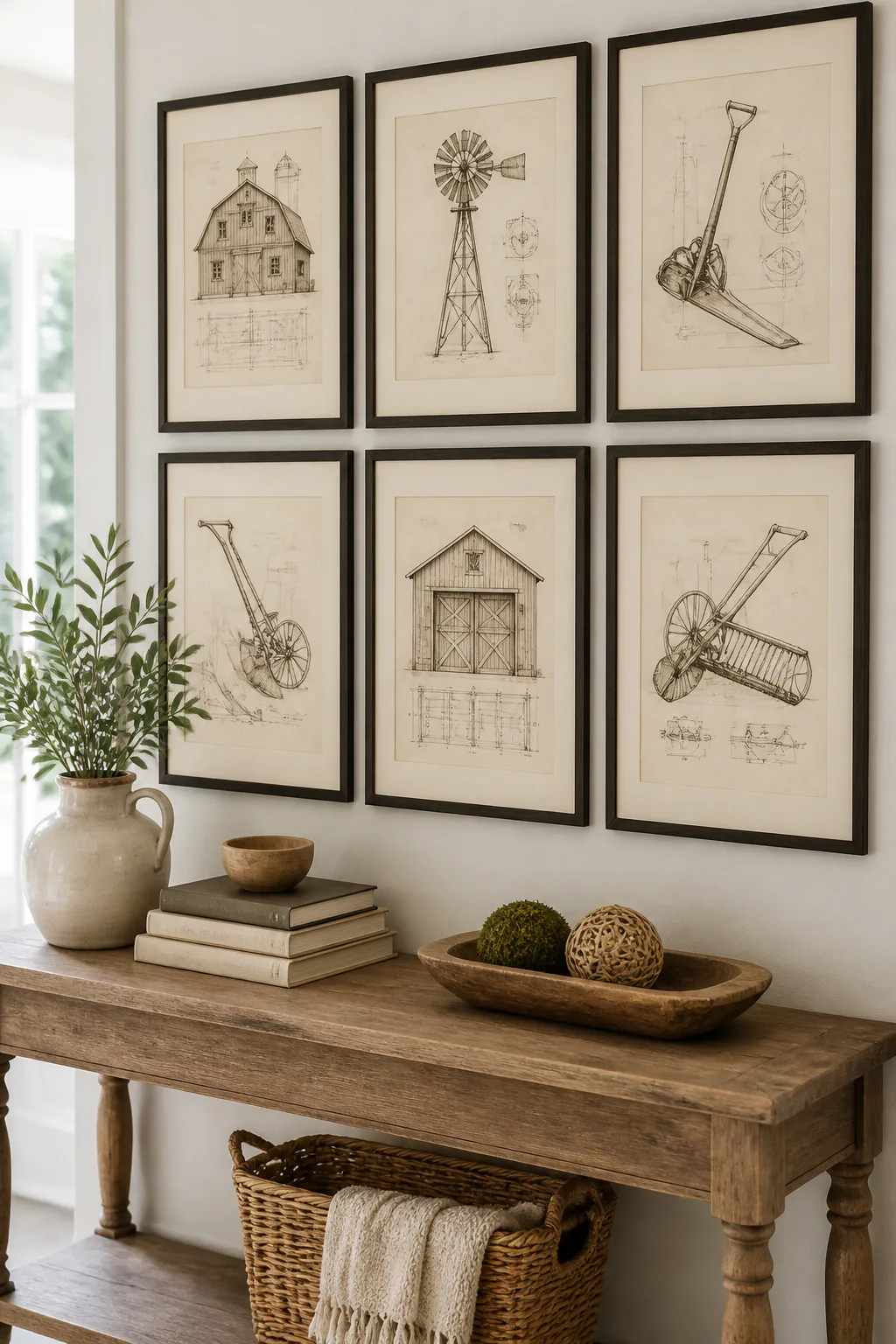
Sepia or black-and-white prints of barns, windmills, and classic farm tools bring a quieter kind of farmhouse character to the wall. Their architectural or mechanical subject matter feels connected to rural history, while the restrained palette keeps the display polished and easy to pair with modern furnishings.
Hang one larger print over a desk or console, or group several pieces into a gallery arrangement along a hallway. Wide matting and simple frames give the illustrations room to breathe and help them feel more like a considered collection than a themed collage. Black frames create definition; natural wood offers a warmer, softer edge.
Make the gallery feel cohesive
Choose prints with a shared visual treatment, such as similar linework, tones, or frame finishes. Arrange them in a measured grid for a formal look, or vary the sizes while keeping the outer edges balanced for a more relaxed display.
- Mix related subjects such as farm buildings and tools.
- Use consistent frames or matting to connect the pieces.
- Leave even, comfortable spacing between the artwork.
- Center the group over furniture or along the wall’s natural path.
The finished display nods to farmhouse history with a clean, gallery-inspired feel.
Final Thoughts
Modern farmhouse wall decor feels most successful when rustic texture, neutral color, and clean lines are kept in balance. A weathered wood feature can soften a room, while black metal, botanical prints, and mirrors add contrast or light without making the space feel crowded.
Start with the wall that needs the most attention, then choose a piece or arrangement that suits its scale and the room’s everyday use. You can always add more over time; a few thoughtful details often create a warmer, more personal home than a wall filled all at once.