14 Stunning Front Door Entryway Ideas
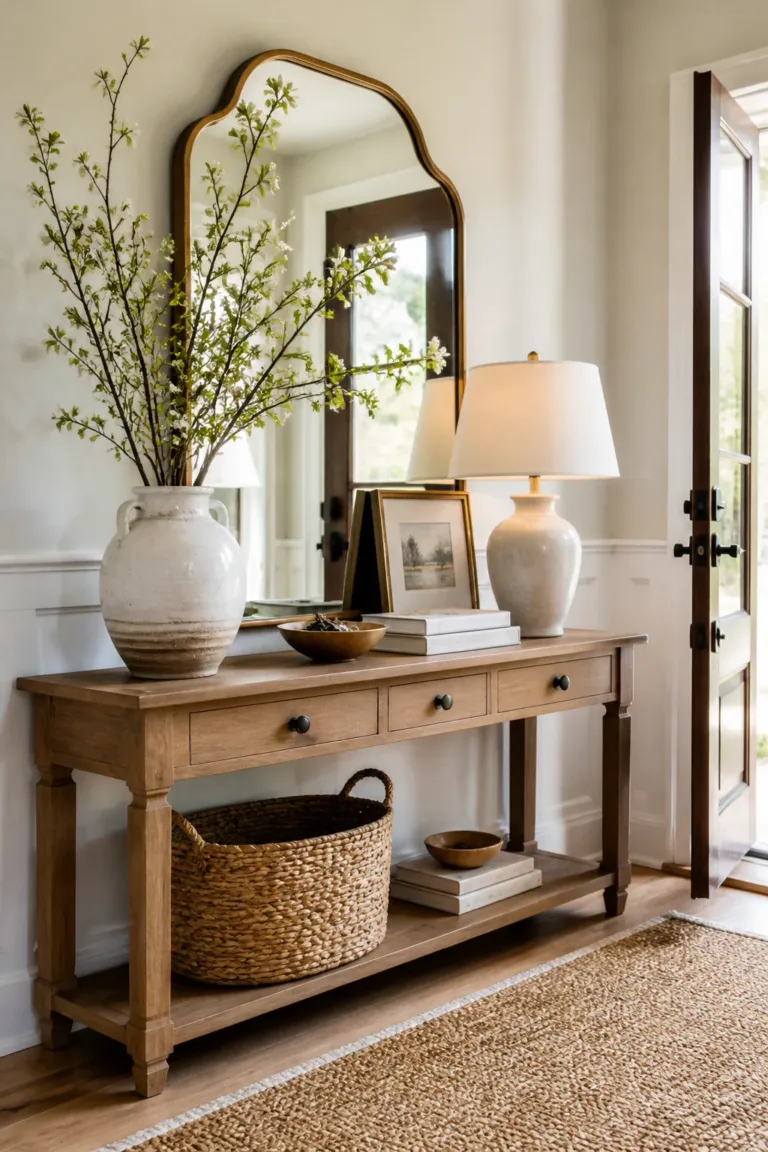
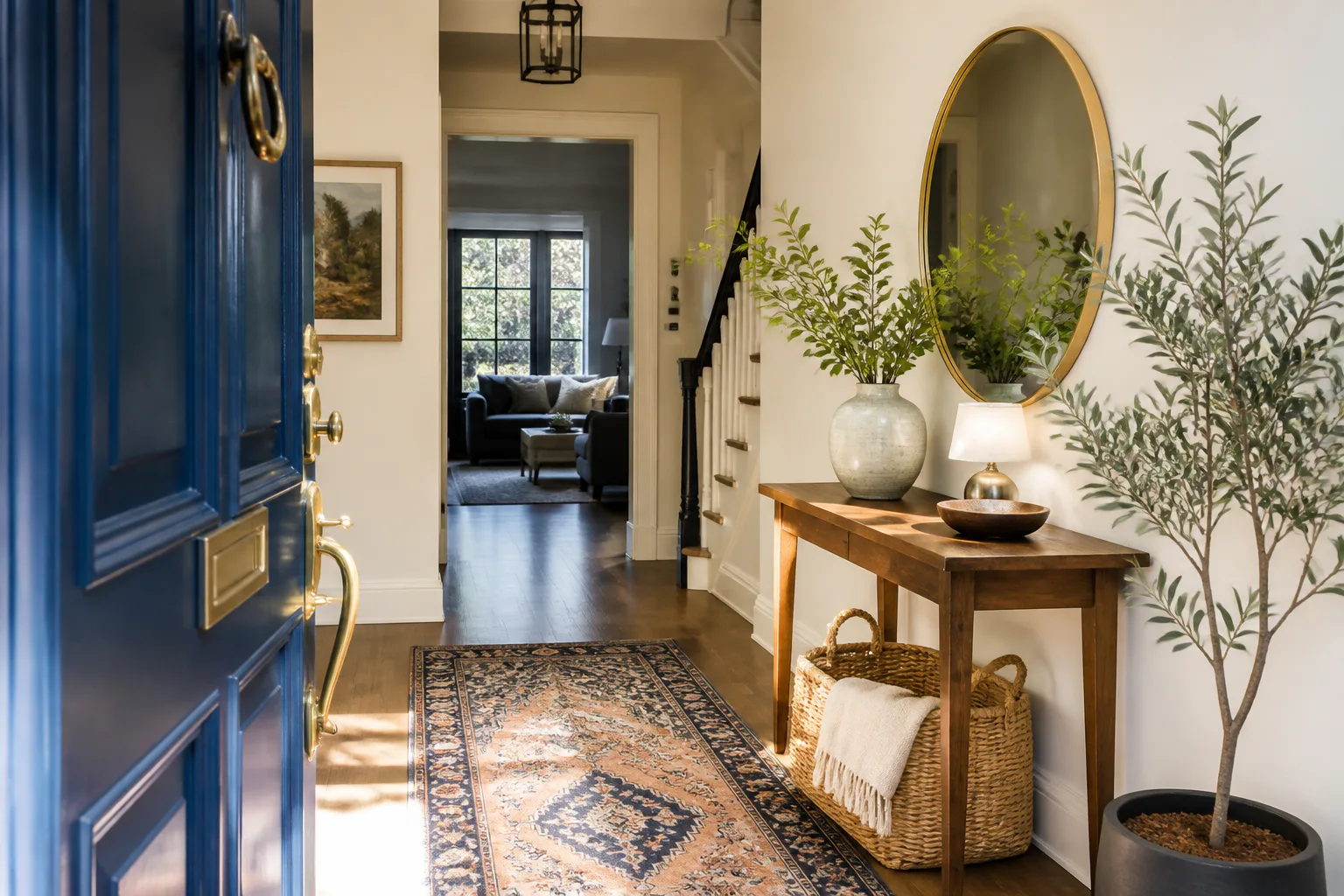
The entryway sets the tone for your home, but it also has to handle everyday arrivals: keys, coats, shoes, bags, and the occasional bouquet. A thoughtful arrangement can make even a narrow foyer feel welcoming while giving daily essentials a place to land.
These front door entryway ideas range from simple styling updates to built-in storage and curb-appeal projects. Whether your entrance is a compact apartment foyer, a busy family drop zone, or a spacious hall, focus on the solutions that suit its size and the way you use it.
Use the ideas as starting points rather than strict formulas. A mirror, a useful bench, or a well-chosen color can make a noticeable difference, and layering a few practical details with personal touches helps the space feel like part of your home.
1. Brighten the Foyer with a Mirrored Credenza
A mirrored credenza can help a small or dim foyer feel more open by reflecting light and nearby colors. Its closed storage is useful for keeping gloves, pet supplies, or other small essentials out of sight, while the reflective finish brings a little polish to the entrance.
Give the surface personality with a colorful lamp and bright wall art. The lamp adds a warm glow after dark, and the artwork keeps the mirror from making the arrangement feel too formal or overly reflective. This combination works especially well on a short wall opposite a window or near a front door that does not get much natural light.
How to style the credenza
Keep the display edited so the reflective surface can do its work. Choose a lamp with a shade that suits the scale of the furniture, then leave enough clear space for anything you need to set down when you come home.
- Hang colorful art above or beside the credenza.
- Use a shallow dish for keys and other small essentials.
- Choose a lamp that adds color without crowding the top.
A mirror, useful storage, and a lively accent make a practical first impression.
2. Add Natural Wood Shelves and a Corner Hall Tree

Natural wood shelves bring warmth to an entry, while a slender corner hall tree makes use of space that might otherwise go unused. Together, they offer a compact place to display a few favorite objects and hang everyday outerwear without requiring a full mudroom.
Beachy blue and white accents create a relaxed palette that suits a coastal-inspired home, but the mix can work in many settings. Try blue in a small cushion, bowl, or framed print, and let white walls or trim keep the corner feeling bright. This arrangement is especially helpful beside the front door or in a narrow foyer where a deep cabinet would block the path.
Make the corner work
Keep the hall tree slim and reserve its hooks for frequently used items. Floating shelves can hold decor higher up, leaving the floor and walking route clear.
- Choose natural wood tones that complement nearby flooring.
- Use one shelf for a small plant or a simple decorative object.
- Keep blue-and-white accents consistent rather than scattered.
- Leave room beneath the hooks for shoes or a small basket.
The result feels light and welcoming while still giving coats and accessories a home.
3. Create a Gallery Wall Above a Slim Console
A gallery wall turns a blank foyer wall into a personal focal point, and a slim console below it adds a useful landing surface. This pairing works well when you want to display art or family photographs but do not have room for a large piece of furniture.
Arrange framed prints in a loose grid or a more collected grouping, keeping the overall shape in proportion to the console. A narrow table helps maintain a comfortable passage, while an accent chair nearby can make the entry feel more considered and provide a spot to pause or put on shoes. In a small foyer, the chair may fit best at the end of the console rather than directly in front of it.
Build a balanced display
Lay out the frames before hanging them so you can adjust spacing and balance. A shared frame finish or color palette can make varied artwork feel connected without making every piece look identical.
- Center the art grouping over the console.
- Mix print sizes while keeping a clear visual rhythm.
- Style the tabletop with a tray or a small lamp.
- Choose an accent chair that does not narrow the walkway.
A well-planned arrangement brings character to the foyer without sacrificing everyday function.
4. Install Floating Shelves with Hidden Coat Hooks

Floating shelves paired with discreet coat hooks create a compact drop zone for an entry that has little room for furniture. The shelves provide a place for a small plant or a few useful items, while hooks keep jackets and bags off the floor without making the wall feel like a utility area.
A shallow tray on the lower shelf or a nearby ledge can collect keys and mail, helping those small essentials stay easy to find. This simple setup suits apartments, narrow hallways, and secondary entrances where a full hall tree might feel too bulky. Keep the display restrained so the shelves remain useful rather than becoming another spot for clutter to gather.
Keep storage simple
Place hooks at a convenient height and leave enough space between them for coats to hang comfortably. If you are installing shelves above the hooks, make sure they do not interfere with reaching or removing outerwear.
- Use hooks that blend into the wall or shelf finish.
- Set out a small tray for keys, mail, or sunglasses.
- Add one compact plant to soften the practical arrangement.
- Keep only regularly used items in this drop zone.
With a few thoughtfully placed pieces, even a small wall can support a smoother daily routine.
5. Anchor a Grand Foyer with a Double-Door Credenza
A spacious foyer can handle a substantial piece of furniture, and a double-door credenza gives the room a clear visual anchor. Choose a wood style for warmth or a stone-topped design for a more polished look, then let its scale suit the wall rather than overpowering the entrance.
Oversized abstract art above the credenza fills the vertical space and gives the arrangement a confident focal point. This combination is useful in a large hall where smaller accessories might look scattered or lost. The credenza also provides concealed storage, which helps a grand entry feel composed even when it has to accommodate everyday items.
Proportion the statement
Leave breathing room around the furniture and artwork so visitors can move comfortably through the foyer. A few carefully selected objects on the surface will feel more intentional than a row of small decorations.
- Choose a credenza with a width suited to the wall.
- Hang abstract art large enough to balance the furniture below.
- Use the cabinets to tuck away less attractive essentials.
- Style the top with a lamp, bowl, or restrained floral accent.
The generous scale makes the entrance feel finished while keeping storage close at hand.
6. Build a Family Mudroom Hall Tree
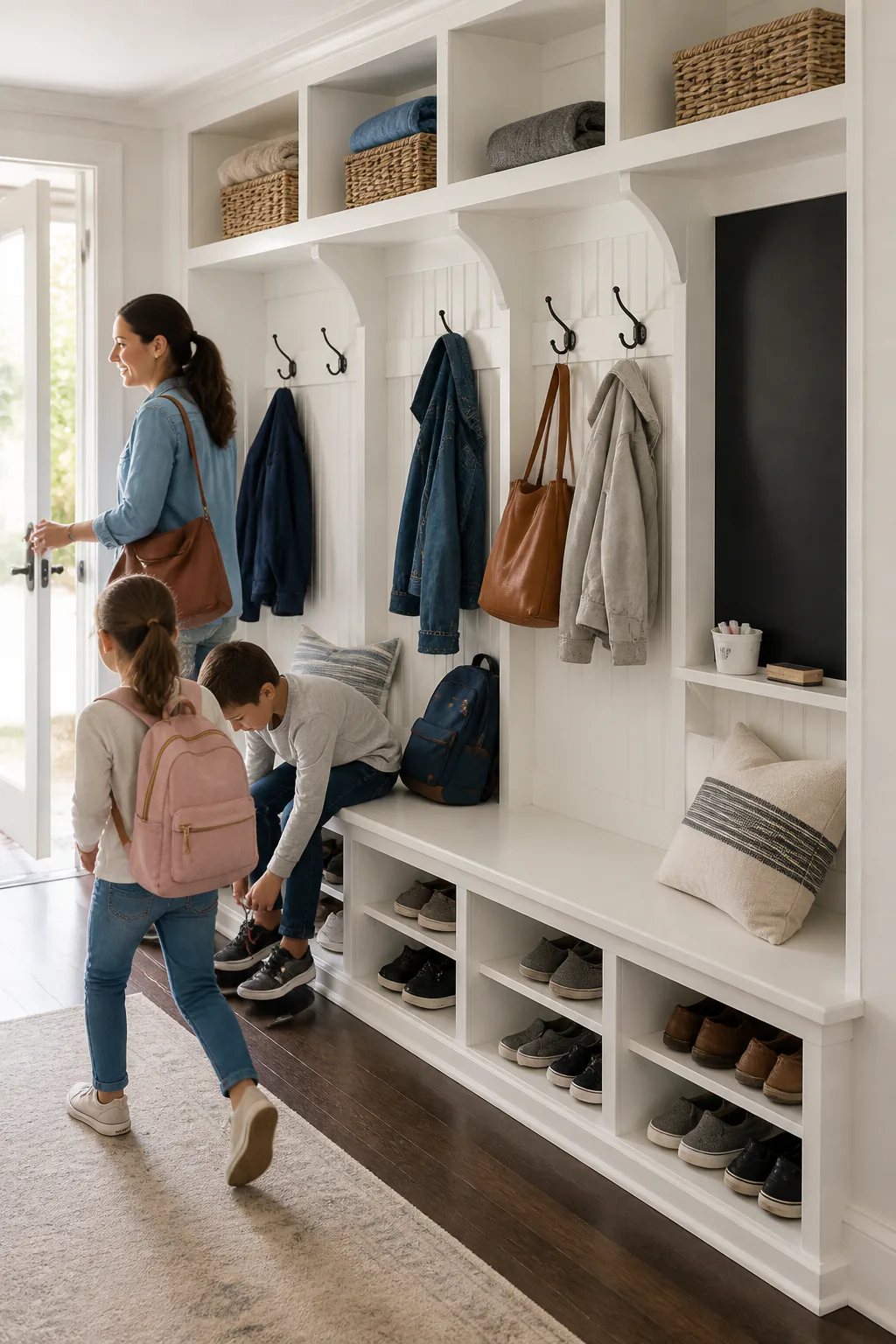
A built-in hall tree can turn a busy entrance into an organized family drop zone. Combining shoe cubbies, double coat hooks, and overhead storage gives everyone a place for the items they use most, making it easier to keep coats and shoes from spreading into the hallway.
An integrated chalkboard adds a handy place for reminders, short messages, or a simple family checklist. This setup works especially well near a side or back entrance that sees daily traffic, but it can also serve a front foyer if the wall is wide enough. A built-in look helps the storage feel like part of the home rather than a collection of separate pieces.
Plan for daily routines
Think through who will use each section before deciding how to divide the storage. Keep frequently reached items at an accessible height and use the upper area for belongings that are not needed every day.
- Give each family member a hook or clearly defined space.
- Use lower cubbies for shoes and small bags.
- Reserve overhead storage for less-used items.
- Keep chalk and an eraser near the board for quick notes.
A well-planned hall tree supports tidy habits by making the right place for things easy to find.
7. Style a Cozy Entry with a Rug and Reading Chair
A plush textured rug can make an entry feel softer and more inviting, especially when paired with a small chair. Add a round mirror and a warm pendant, and the foyer begins to feel like a comfortable room rather than simply a passage between the door and the rest of the house.
This layered look suits a wider entrance where a chair can sit without blocking the route through the door. The mirror adds light and gives the arrangement a useful finishing touch, while a pendant creates a welcoming glow in the evening. Choose a rug that feels comfortable underfoot but is also practical for the amount of foot traffic the entry receives.
Layer comfort with function
Keep the chair compact and position it where someone can sit without interrupting the flow of the space. The rug should help define the entry area and sit securely underfoot.
- Select a durable rug with a texture that suits the room.
- Hang the round mirror where it is convenient to use.
- Choose a pendant that gives the foyer a warm, even glow.
- Add a small cushion if the chair needs extra comfort.
These simple layers create a welcoming pause at the front door.
8. Style a Marble Console with Fresh Florals
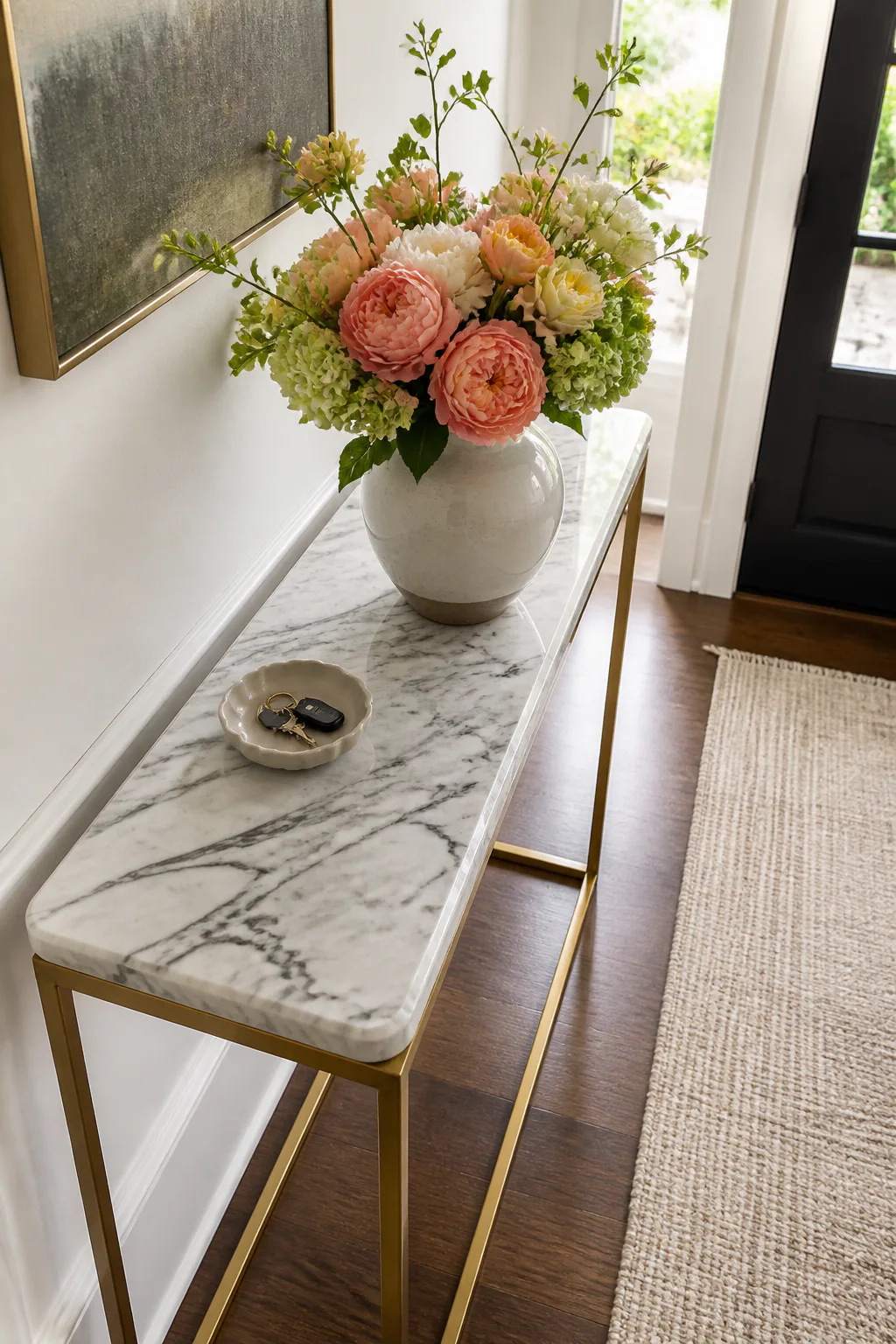
A marble-topped console brings a refined surface to the entry, while fresh florals add color and a sense of welcome. The natural variation in marble gives the table visual interest, and a vivid arrangement in a ceramic vase can make the foyer feel lively without requiring a large display.
This idea works well in a foyer with enough room for a console and clear space to pass by it. The flowers can be the main accent, so the rest of the tabletop does not need much decoration. If fresh stems are not practical every week, use the arrangement as inspiration for occasional seasonal color rather than making the entire entry depend on it.
Keep the tabletop welcoming
Choose a vase that feels stable on the surface and is scaled to the console. Let the flowers sit at a height that does not obstruct sightlines or make it awkward to set down keys and mail.
- Pick blooms with colors that complement the room.
- Use a ceramic vase to add a contrasting texture.
- Leave one section of the console clear for everyday items.
- Keep other accessories minimal so the flowers stand out.
A focused floral display makes a memorable first impression with little extra styling.
9. Create a Built-In Bench in a Foyer Alcove
A built-in bench makes an awkward foyer alcove useful, creating a convenient spot to sit while putting on or taking off shoes. Because the seat fits the architecture, it can make a nook feel intentional rather than leaving an empty recess that is difficult to furnish.
Finish the area with wallpaper or trailing greenery to give the bench a distinct sense of place. Wallpaper can bring pattern to a small area, while greenery adds a softer touch above or beside the seat. This idea is most practical when the alcove does not interrupt the main walkway and there is room nearby for shoes or a small basket.
Make the nook feel complete
Consider how the bench will be used before choosing its finish and cushions. A simple seat is easy to maintain, while a cushion can add comfort and connect the nook to colors elsewhere in the entry.
- Measure the alcove carefully before planning the bench.
- Add a cushion or pillow that suits the room’s palette.
- Use wallpaper to make the recess feel like a feature.
- Keep trailing greenery clear of the seating area.
The built-in seat adds a useful pause and makes the most of a tucked-away corner.
10. Paint Entryway Wainscoting in a Dark Contrast

Painting lower wainscoting or board-and-batten in a deep color creates a striking contrast with a crisp white upper wall. The two-tone treatment gives the entry definition and makes an architectural detail feel more prominent, even when the room has little space for furniture or decor.
A moody lower section can add depth to a narrow hallway, while the lighter upper wall helps the overall space stay bright. This approach works with simple paneling as well as more traditional wainscoting, making it adaptable to different home styles. Echoing the darker shade in a frame, runner, or small accessory can help the color feel connected to the rest of the room.
Choose and balance the contrast
Test the paint colors in the entry’s actual light before committing, since the shade can look different at various times of day. Keep the division between the two colors clean so the paneling reads as an intentional feature.
- Pair the dark lower wall with a light upper wall.
- Choose a deep tone that works with the flooring and trim.
- Repeat the darker color in one or two small accents.
- Keep nearby decor simple to let the wall treatment lead.
This painted detail brings character without taking up any floor space.
11. Draw the Eye Upstairs with a Graphic Stair Runner

A graphic or striped stair runner can turn a staircase into a feature and draw the eye naturally toward the upper level. In an entry with stairs, the pattern adds movement and helps connect the front door area to the rest of the home.
A tiered console nearby can echo the staircase’s vertical line and make use of the wall or floor space beside it. This pairing works in a foyer where the stairs are visible from the entrance and there is enough room to keep the console clear of the route. Choose a runner pattern that has presence but still feels comfortable alongside existing flooring and decor.
Connect the pattern to the foyer
Consider the runner and console together so neither feels like a separate design decision. A repeated color or related shape can make the staircase and entry display feel cohesive without matching them exactly.
- Use stripes or geometric shapes to emphasize direction.
- Choose a runner palette that works with nearby finishes.
- Keep the console’s styling simple beside a bold pattern.
- Leave clear access to the stairs and front door.
The combination makes the stairway part of the entry’s overall design.
12. Layer a Patterned Rug over an Animal Hide
Layering a patterned rug over an animal hide adds texture and softness to hardwood or tile. The contrast between the larger rug and the hide creates a relaxed, collected look, while the layers help define the entry as a distinct area within an open floor plan.
This idea works best when the rugs have enough visual relationship to feel intentional. A patterned rug can provide the main color story, while a hide adds an organic shape that breaks up straight lines around a doorway or console. Keep the overall combination in scale with the entrance so the floor does not feel crowded or difficult to walk across.
Layer rugs with care
Think about how people move through the space before settling on the placement. The edges should sit securely, and the layered arrangement should not create an awkward step as guests enter.
- Let one rug provide the main pattern or color.
- Use the hide as a smaller accent rather than a second focal point.
- Choose tones that complement the floor and nearby furnishings.
- Keep the path from the door clear and comfortable.
Careful layering makes a hard-surfaced entrance feel warmer and more personal.
13. Frame the Entry with Arched Woodwork

Arched woodwork gives a doorway a softer outline and adds architectural character to an entry. An arched casing can frame the transition into the home, while wood panels introduce warmth and a sense of craftsmanship. These features have a strong presence, so even a simple foyer can feel more distinctive.
This approach suits a home where the entrance could benefit from a clear architectural detail rather than more decorative objects. A warm wood finish can complement a range of materials, while the curved shape adds a gentle contrast to straight walls and rectangular doors. If a full architectural change is not practical, focus on a single arch or wood element that highlights the doorway.
Let the architecture lead
Choose a finish and profile that relate to nearby trim, doors, or flooring. Keeping other entry decor restrained allows the woodwork to remain the main feature instead of competing with a busy collection of accessories.
- Use an arch to emphasize the transition into the home.
- Choose wood tones that coordinate with existing finishes.
- Consider wood panels for added warmth around the entry.
- Keep nearby wall decor simple and well spaced.
A thoughtful architectural detail can make the front entrance feel inviting before anyone steps inside.
14. Pair a Black Front Door with Oversized Planters
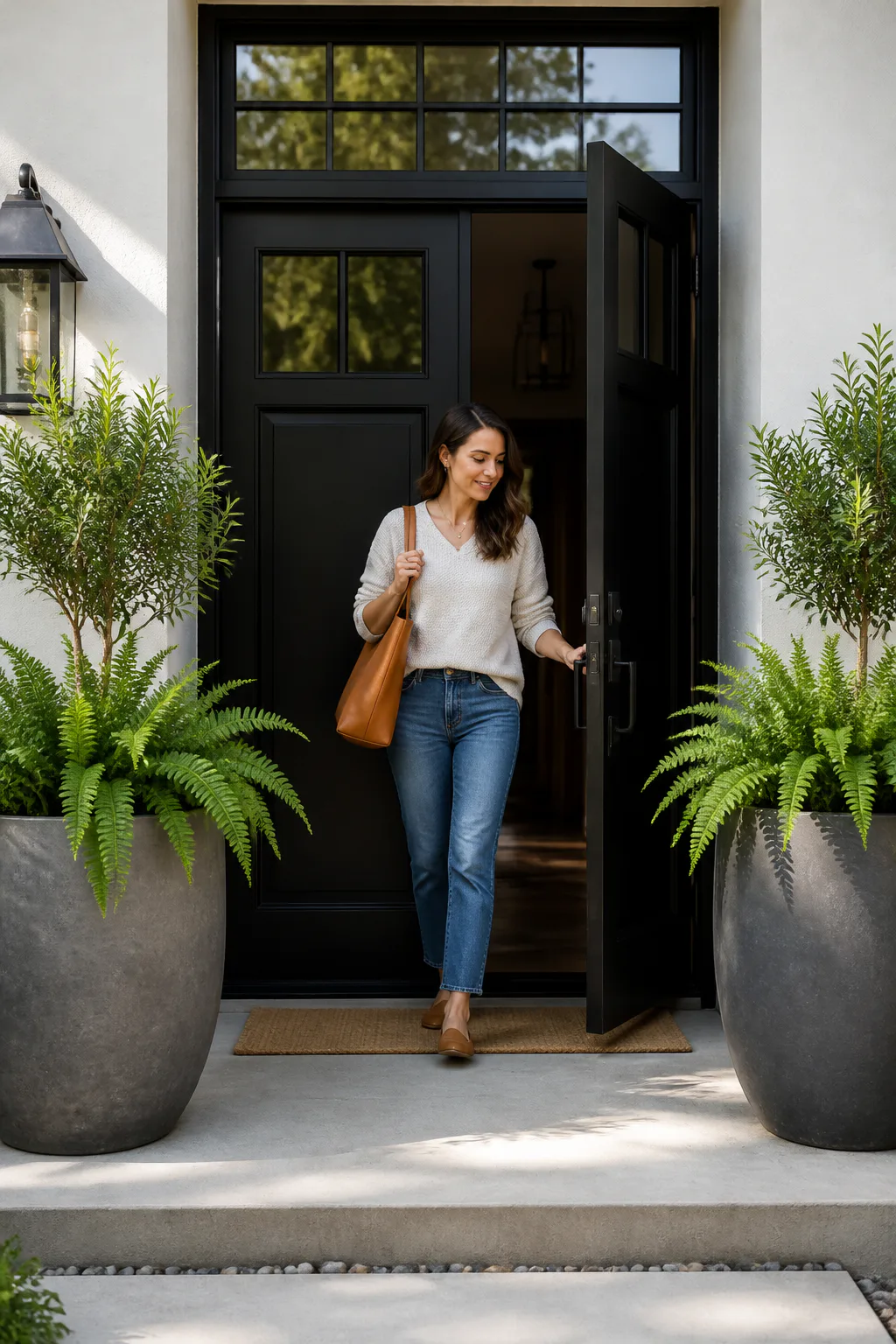
A matte black front door creates a crisp, grounded focal point, while oversized planters on either side make the entrance feel balanced and welcoming. For a more colorful option, a rich red door can bring similar impact while giving the exterior a warmer note.
Large concrete planters offer a clean, substantial shape that suits a modern exterior, and greenery softens their appearance. Ferns create a lush, relaxed look, while boxwoods provide a tidier, more structured outline. This arrangement works best when the planters frame the doorway without narrowing the approach or making it difficult to open the door comfortably.
Balance color and greenery
Choose a door color that works with the home’s exterior materials, then select plants suited to the conditions at the entrance. Matching planters can create a symmetrical frame, while slightly varied greenery keeps the display from feeling too formal.
- Use matte black for a sleek, defined look or red for a vivid accent.
- Choose planters with enough scale to frame the doorway.
- Fill them with ferns or boxwoods for a lush exterior touch.
- Keep the steps and door swing clear of containers.
With a strong door color and generous greenery, the entry feels polished from the curb.
Final Thoughts
A welcoming entryway balances the way a space looks with the way you move through it. Mirrors, consoles, rugs, and color can add personality, while shelves, hooks, benches, and built-ins help keep everyday items organized.
Start with the needs of your own entrance, then choose one idea that fits its scale and your style. Even a small change, such as a brighter focal point or a more useful drop zone, can make coming home feel a little more effortless.