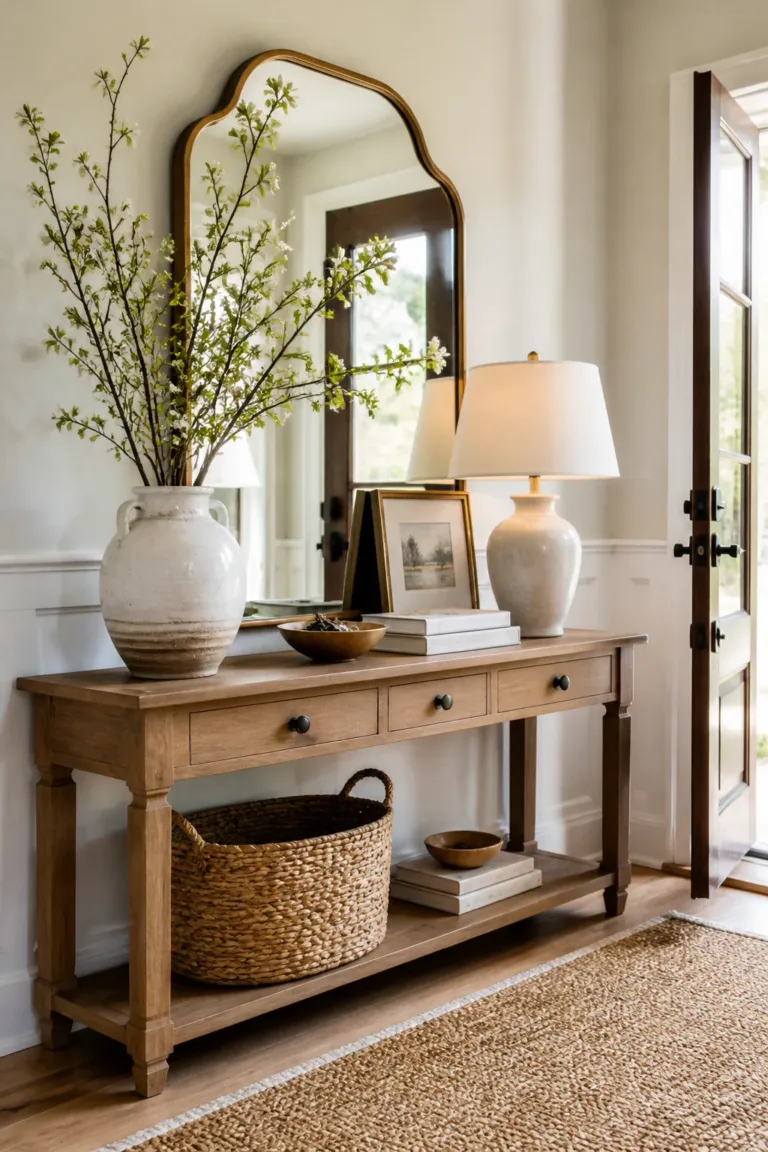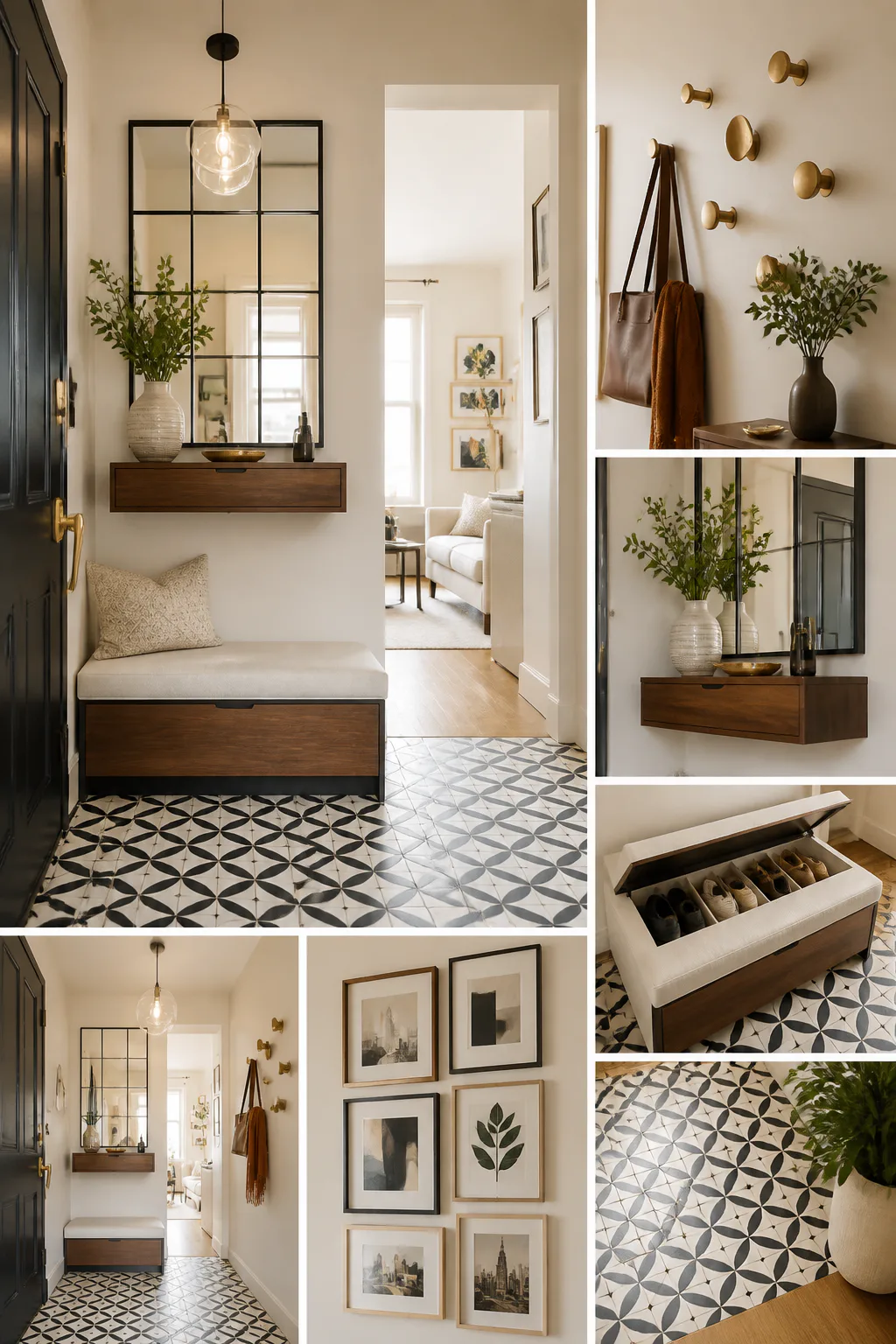
13 Stunning Apartment Entryway Ideas
An apartment entryway does not need a separate room to work well. A few thoughtful choices can create a landing zone for shoes, coats, keys, and mail—even when the front door opens straight into a living space or a narrow hallway.
The best setup depends on what you have to work with. Wall-mounted pieces help preserve floor space, while a bench or slim storage cabinet can make a wider nook more useful. A mirror, color, or patterned floor treatment can also help a small entry feel intentional.
These apartment entryway ideas are designed for renters and homeowners alike, with options for different layouts and everyday needs. Choose one or two that solve your biggest clutter problem, then build around them to make coming and going feel easier.
1. Create a Sculptural Wall of Statement Hooks

Decorative wall hooks bring coats, bags, and dog leashes off the floor without requiring a coat rack or bulky closet. Arranged in a thoughtful pattern, they can also act as wall decor when they are not holding anything, making this a practical choice for an entry that feels bare as well as cluttered.
Use a vertical arrangement in a narrow hallway to take advantage of wall height, or place a short row near the door in a compact foyer. Keep the hooks easy to reach, and leave enough room around them for coats to hang without blocking the doorway or a nearby light switch.
How to pull it off
Choose hooks with a shape and finish that suit the rest of your home, then plan their placement around what you actually carry. A balanced mix of heights can make the arrangement useful for different items and household members.
- Use sturdier hooks for heavier coats and bags.
- Keep one hook low enough for a child or everyday tote.
- Check the wall and use appropriate anchors before mounting.
When the hooks have a clear purpose, they make a small entry feel more organized without taking up precious floor space.
2. Install a Slim Floating Entryway Console
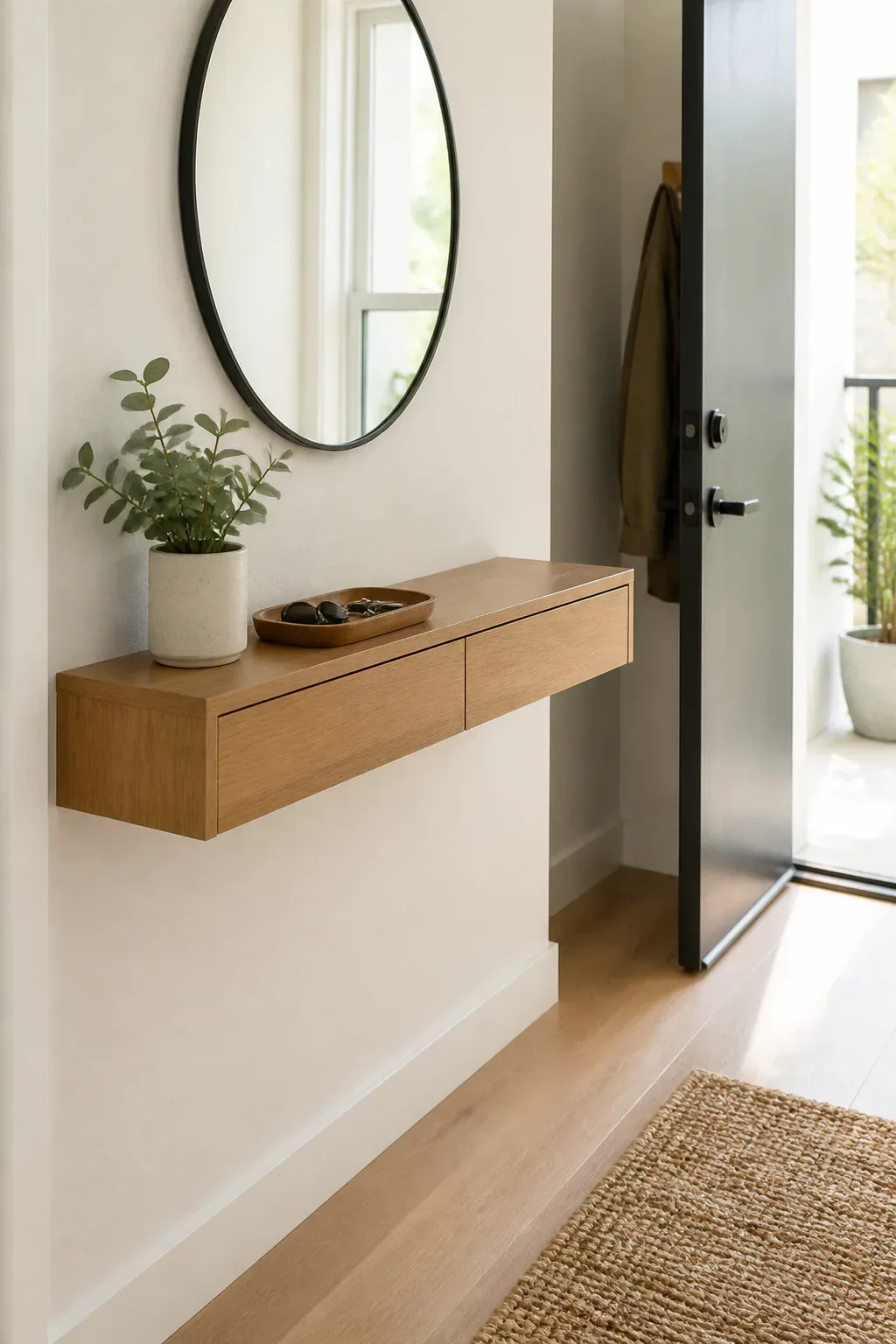
A shallow floating console gives keys, mail, and other small essentials a home while leaving the floor open beneath it. That open area can make a tight entry feel less crowded, and it is easier to sweep or vacuum than a nook filled with furniture legs.
Mount the surface on a wall near the door, but keep it clear of the door swing and the main walking path. A small tray can corral loose items, while a mirror or a simple piece of art above the console helps the setup read as a considered entry rather than a shelf added as an afterthought.
Design tips
Measure the wall and the space you need to pass through before choosing a console. The goal is a useful landing spot that does not catch hips, bags, or the door as you move through the apartment.
- Look for a shallow profile suited to a narrow hall.
- Use a tray or bowl to keep keys from spreading across the surface.
- Mount it securely, especially if you expect to place heavier items on it.
Because the console is off the floor, it can provide everyday function without making a small entry feel weighed down.
3. Brighten a Dark Hallway with a Gridded Mirror

A tall or gridded mirror can make a dim entryway feel brighter by reflecting the light already available. Its repeated panes add visual structure, while the reflection gives a narrow hall or small foyer a greater sense of depth.
Place the mirror where it can reflect a window, a light source, or an open part of the room—not a blank wall if you can avoid it. Near the front door, it also offers a handy last look before heading out. In a very tight entry, hanging it on the wall can deliver that benefit without taking up floor space.
Placement and styling
Consider the full view the mirror will capture before you hang it. A reflection of a tidy console, a favorite artwork, or a bright part of the apartment can make the entrance feel more welcoming.
- Choose a tall shape to emphasize vertical space.
- Position it to catch natural or lamp light when possible.
- Secure the mirror properly and keep it clear of the door swing.
Paired with a small landing spot or wall hooks, a mirror can make a functional entry feel more open and complete.
4. Keep Sightlines Open with a Glass Console
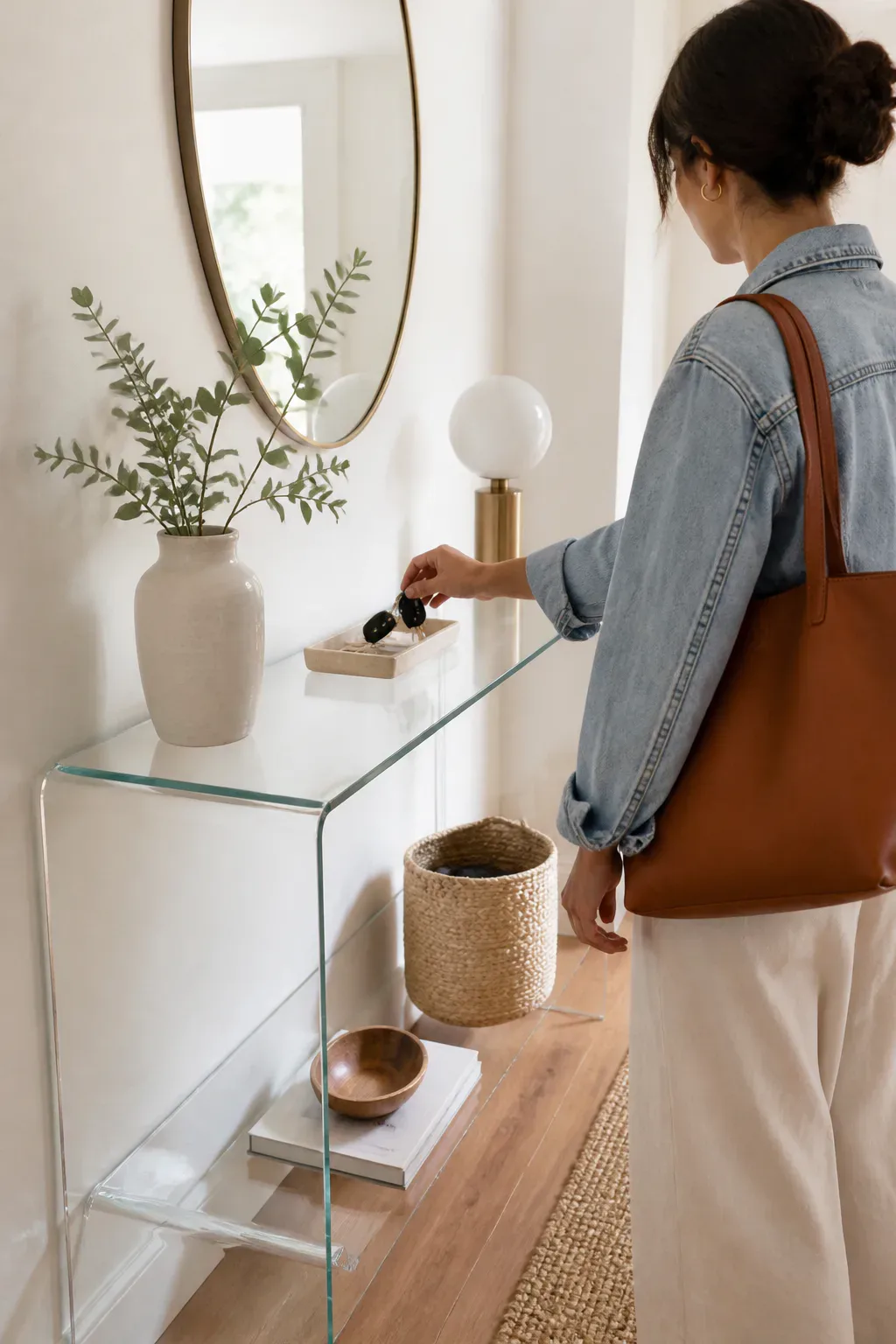
A clear acrylic or glass console offers a surface for everyday essentials without visually filling the entry. Because you can see through it, the furniture feels less imposing than a solid cabinet, which can be especially helpful in a small foyer or the end of a narrow hallway.
Use it for a small tray, a lamp, or a few decorative pieces, and let the open appearance do some of the work. A glass table can also suit an entry that already has strong colors or patterns, since it adds function without introducing another solid block of visual weight.
Keep it practical
Clear furniture still needs a little editing to stay effective. A few purposeful objects will look considered; a crowded surface can make even a visually light table feel messy.
- Measure the walkway so the console does not obstruct traffic.
- Use a tray to group keys and small items in one place.
- Wipe the surface regularly to keep fingerprints and dust from showing.
If you want a landing spot but do not want the entry to feel furnished, a transparent console can be a useful middle ground.
5. Build a Shoe Bench with Hidden Storage
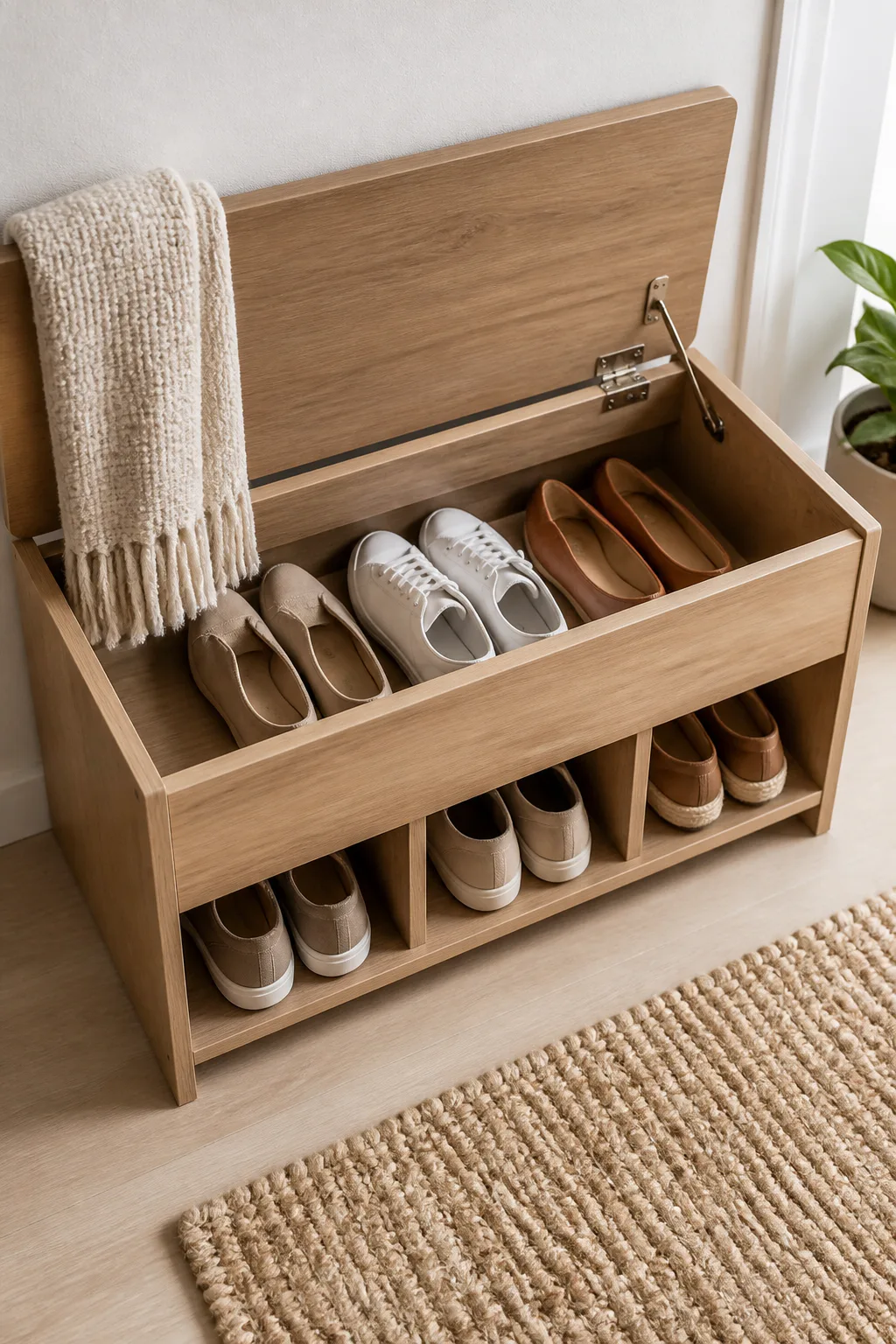
A narrow bench solves two common entryway problems at once: it gives you a place to sit while putting on shoes and offers a spot to store them afterward. Lift-top storage can hide everyday pairs, while open cubbies make frequently worn shoes easy to grab.
Place the bench against a wall where it will not block the front door or narrow the main route through the apartment. In a small foyer, choose a compact design with a simple shape; in a wider nook, a cushion and a few baskets can make the seat feel more inviting without creating clutter.
Choose a setup that suits your routine
Think about whether you prefer shoes to be out of sight or easy to see. A closed compartment looks tidier, while open storage can be more convenient when several pairs are used every day.
- Measure the bench depth against the available walkway.
- Use a washable cushion if the seat will get regular use.
- Reserve the easiest-to-reach space for everyday shoes.
A bench can turn a pass-through area into a comfortable, hardworking part of the home.
6. Create a Faux Foyer with Patterned Flooring

In an open-plan apartment, a patterned runner or small area of removable accent tile can visually mark where the entry begins. This “faux foyer” helps separate the door from the living area without adding a wall or changing the overall layout.
Choose a pattern that connects with colors elsewhere in the room, or use a more noticeable design to give the entrance its own identity. A runner is an easy way to define the zone, while removable floor tiles can create a more distinct effect when the existing floor feels plain.
Define the zone
Keep the floor treatment sized to the area you want to mark. It should welcome you inside while leaving doors clear and providing a stable, easy-to-walk-on surface.
- Choose a runner that fits the entry route without bunching.
- Use a non-slip pad where appropriate to keep a rug in place.
- Check that removable tiles suit the existing floor and lease rules.
Once the floor establishes the entry zone, a hook or small tray can reinforce the boundary with useful function.
7. Turn the Back of the Door into Shoe Storage

The back of the front door is often overlooked space that can hold shoes, small bags, or other grab-and-go items. An over-the-door organizer uses this hidden surface without taking up room along the walls, making it particularly helpful in a studio or a narrow entry with little furniture space.
Pockets are convenient for flats, slippers, and other compact pairs, while slim racks or baskets can accommodate a different mix of daily essentials. Before choosing an organizer, check how the door opens and whether the added depth will interfere with the frame, nearby furniture, or the path into the apartment.
Make the most of the door
Keep the organizer’s contents light and easy to access. A door that is overloaded or difficult to close can turn a space-saving idea into a daily annoyance.
- Measure the door and nearby clearance before buying or installing.
- Store frequently worn shoes in the easiest-to-reach pockets.
- Use a few compartments for bags or accessories rather than filling every space.
This approach is especially useful when floor storage is not an option, as long as the door can still move freely.
8. Draw the Eye Up with a Vertical Gallery Wall
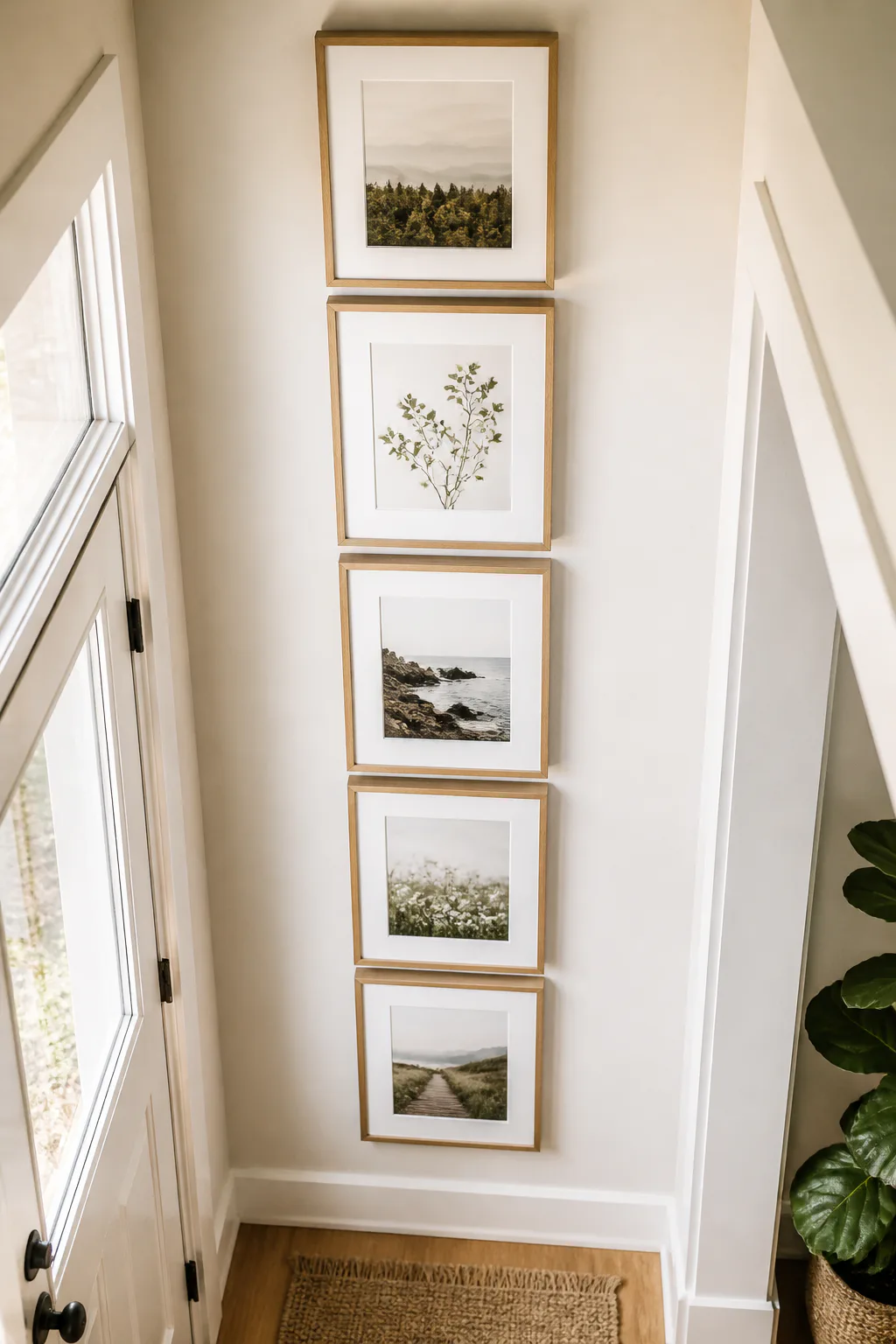
A column of framed prints can give a small entry personality while drawing attention toward the ceiling. This vertical arrangement works well in a narrow hall, where there may not be enough width for a broad gallery wall, and it can make an empty strip beside the door feel deliberately styled.
Choose artwork that shares a color, subject, or frame finish so the grouping feels connected. A consistent layout can be calm and orderly, while a more varied mix can feel collected over time. Keep the arrangement clear of hooks, switches, and door trim so the pieces remain easy to see.
Plan the arrangement
Before hanging anything, lay the frames out on the floor or use paper templates on the wall. This gives you a chance to adjust the spacing and shape without committing to a row of extra holes.
- Stack frames in a tall column to emphasize the entry’s height.
- Repeat a frame color or artwork tone for visual cohesion.
- Use secure hanging hardware suited to the frame and wall.
The result adds a personal welcome without requiring a large piece of furniture or a wide wall.
9. Mount a Mail and Key Station by the Door

A dedicated mail and key station keeps the small essentials of daily life from drifting onto the kitchen counter. A wall file can catch letters, a key box can keep keys together, and a small tray can hold items you reach for as you leave.
Put the station close to the door so it is easy to use on the way in and out. In a narrow entry, mounting these pieces on the wall helps preserve floor space; near a console, they can provide a more organized alternative to letting everything land in one pile.
Keep the station simple
Choose only the components that match your routine. A system that is quick to use is more likely to stay tidy than one with too many compartments or steps.
- Use a wall file for incoming mail that needs attention.
- Place a tray or key box where you naturally reach for it.
- Sort or remove mail regularly so the station does not become a paper stack.
With a clear home for small essentials, the entry can stay calmer even during a busy week.
10. Separate a Studio Entry with a Ceiling-Track Curtain

A curtain or linen panel can create a visual boundary between a studio’s front door and its living area. Unlike a permanent wall, a curtain keeps the space flexible, and it can be drawn aside when you want the apartment to feel open or closed when you want the entrance to feel more distinct.
A ceiling track is useful when there is no obvious wall or doorway to define the entry. Choose a fabric that complements the room and hangs neatly without pooling where people walk. A light panel can soften the transition, while a more substantial curtain can provide a stronger sense of separation.
Plan the partition
Map out the curtain’s path before installing the track. Make sure it will not interfere with the front door, a closet, or the route between the entry and the rest of the apartment.
- Use a track length that gives the panel room to open fully.
- Choose a washable fabric suited to a high-traffic area.
- Check lease rules before making changes to the ceiling.
A curtain makes a studio feel more thoughtfully zoned while allowing the layout to remain adaptable.
11. Add a Slim Picture Ledge for Entryway Essentials

A shallow picture ledge adds a small landing surface without projecting as far into the room as a standard shelf or table. It can hold a piece of mail, a small plant, or a candle, giving a blank wall a useful focal point while keeping the walkway clear.
Place the ledge where it is easy to reach but not likely to catch a passing bag or shoulder. It can stand on its own in a very compact entry or sit above a bench or shoe area, where a narrow surface provides a little styling without competing with the furniture below.
Style it with care
Because the ledge is small, a few items are usually enough. Keep the display low and stable, especially if the ledge is near a door that opens quickly or a busy route through the apartment.
- Check the ledge depth against the available clearance.
- Use it for lightweight objects rather than heavy storage.
- Leave room for mail or another item you regularly set down.
This simple addition can bring function and personality to a wall without making the entry feel crowded.
12. Color-Drench a Tiny Entryway

Painting the walls, trim, and ceiling in one color can make a tiny entry feel like an intentional room rather than an awkward leftover space. A warm or bold shade creates a defined arrival moment, while a continuous color treatment can soften the visual breaks that make a small area feel busy.
This idea works especially well in a compact foyer or a short hall that has little room for furniture. The color becomes the main design feature, so you can keep the furnishings simple and let a mirror, hooks, or a small bench provide the practical details.
Choose and apply the color
Consider how the shade looks in the entry’s natural and artificial light, since a hallway can feel different from the rest of the apartment. If you rent, check what paint changes are permitted before starting.
- Test the color in the space at different times of day.
- Carry it across the trim and ceiling for a wrapped effect.
- Balance a strong color with simple accessories and clear surfaces.
A unified color can give a small entry its own character without taking up any floor area.
13. Fit a Narrow Dresser into a Wider Entryway Nook

If your entry has more width, a narrow vintage dresser or tall armoire can offer deeper storage than a wall hook or shallow shelf. Drawers are useful for scarves, gloves, and other accessories, while a taller cabinet can keep seasonal items out of sight until they are needed.
Choose a piece that fits the nook without blocking the door or narrowing the route into the apartment. A dresser top can also serve as a landing surface for keys or a small lamp, but keeping it relatively clear helps the furniture feel purposeful rather than like another place for clutter to collect.
Make storage work for the space
Before bringing in a substantial piece, measure both the available floor area and the route needed to get it through the door. Then assign each drawer or shelf a clear job so the extra storage supports your routine.
- Look for a slim profile suited to the width of the entry.
- Store seasonal accessories in deeper or less accessible drawers.
- Keep everyday items in the top drawer or on the dresser surface.
In a wider nook, one well-chosen storage piece can make the entry feel settled and keep small essentials close at hand.
Final Thoughts
A useful apartment entryway is less about having a separate foyer and more about giving everyday items a clear place to go. Wall hooks, a mail station, or a shoe bench can solve practical clutter, while a mirror, gallery wall, or patterned floor treatment helps define the area visually.
Start with the layout and the items that cause the most frustration, then choose an idea that fits the space you have. Even one thoughtful change can make the trip in and out feel smoother and help your apartment’s entrance feel like a welcoming part of home.