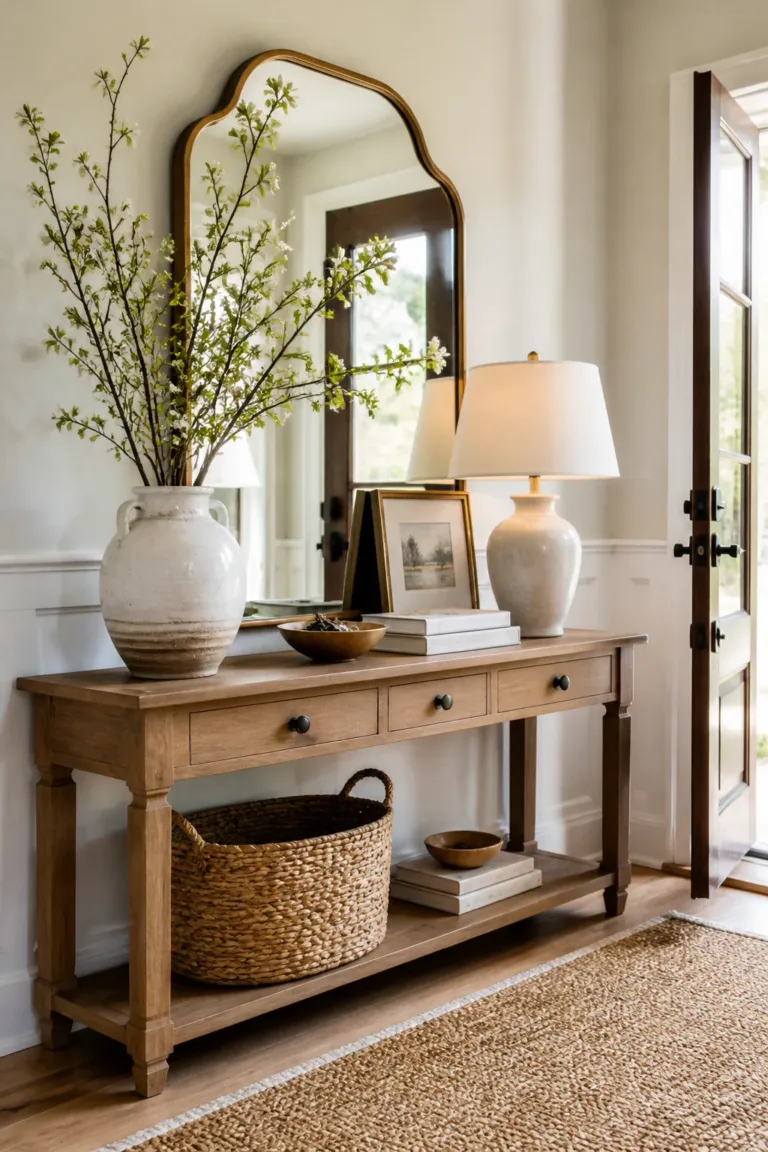
16 Stunning Apartment Entryway Ideas for Small Spaces
A small apartment entryway has to do more than welcome you home. It may also be the place where you take off shoes, drop your keys, hang a coat, and make a first impression—all within just a few feet of space.
The best apartment entryway ideas balance everyday function with a look that feels connected to the rest of your home. A slim piece of furniture, thoughtful wall storage, and a few warm details can make even a narrow hall or living-room entrance feel intentional.
Whether you rent or own, these ideas offer practical ways to work with the layout you have. Choose the ones that suit your routines, available wall space, and lease rules, then build your entryway gradually so it stays useful rather than cluttered.
1. Style a Slim Console Table
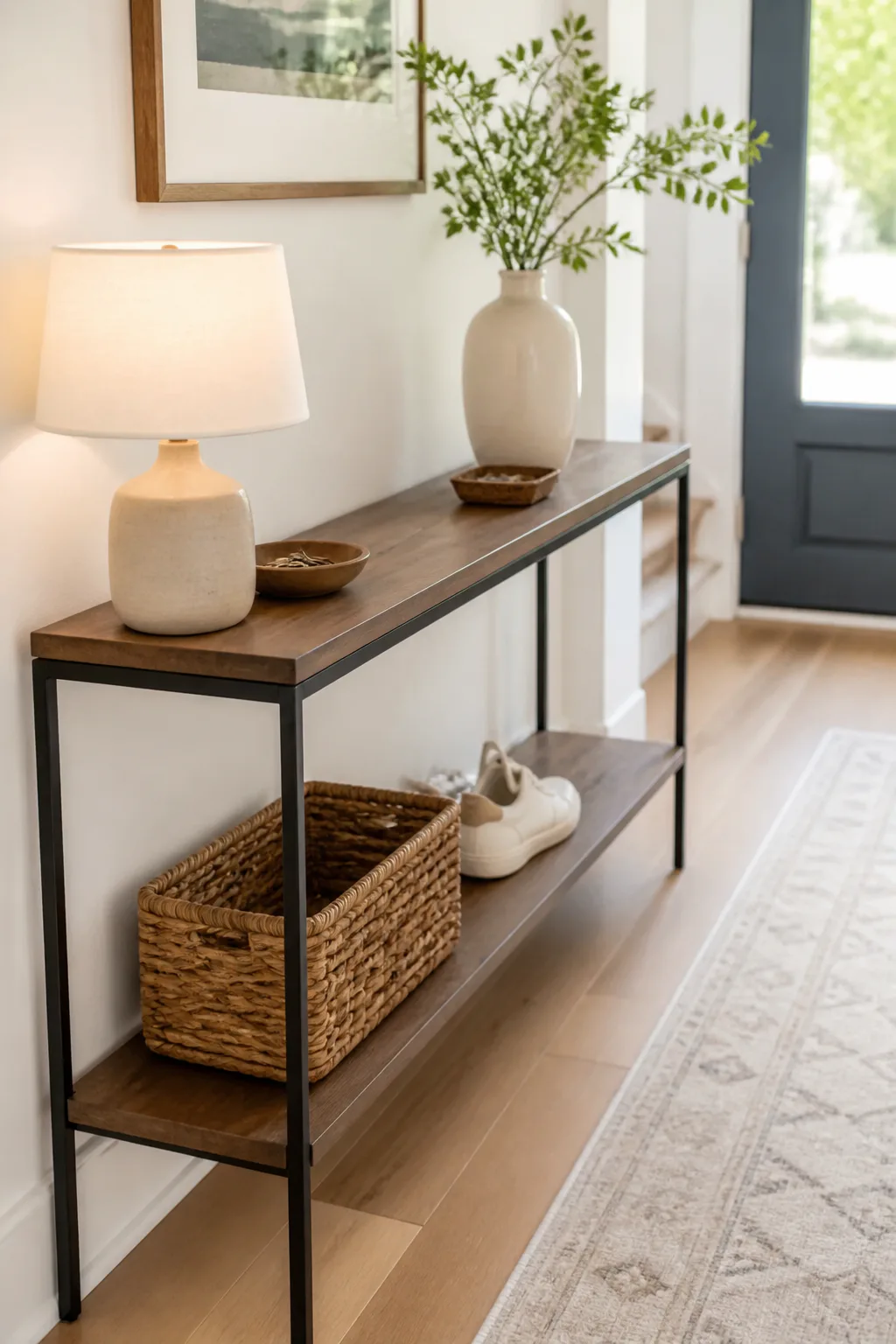
A slim console table gives an entryway a useful landing spot without taking over a narrow hall. Look for a shallow design that leaves enough room to walk comfortably, especially if your front door opens into a tight passage or shared living area.
The tabletop can hold a small dish for keys, a lamp, or a piece of art, while a lower shelf offers room for a basket or a few frequently worn shoes. Keeping the surface edited makes the entry feel composed instead of becoming a catchall for everything that comes through the door.
How to make it work
Measure the available depth and door swing before choosing a table. A slim profile is more important than extra drawers if people need to pass through the space easily.
- Leave a clear path between the table and the opposite wall.
- Use one tray to group small everyday items.
- Keep bulky bags and seasonal gear elsewhere.
A console works especially well when paired with a mirror or artwork above it, creating a small but purposeful entryway moment.
2. Lean an Arched Mirror by the Door
A tall arched mirror can make a compact foyer feel brighter and more open. Its reflective surface bounces available light around the entrance, while the curved top softens the straight lines of a hallway, door, and nearby furniture.
Leaning a floor mirror against the wall can be a renter-friendly alternative to drilling, provided it is positioned securely and does not obstruct the doorway. It is also practical for a last look before heading out, especially when the entry opens directly into a living room without a separate hall.
Placement and styling
Choose a spot where the mirror reflects light or a pleasant view, rather than a pile of shoes or a busy storage area. Check the door swing and walking path before settling on its position.
- Angle the mirror toward a window or brighter part of the room.
- Keep the frame simple if the entryway is already visually busy.
- Secure the mirror against tipping, particularly in homes with children or pets.
Even one mirror can add function and a sense of depth without requiring additional floor furniture.
3. Install a Wall-Mounted Peg Rail
A wall-mounted peg rail uses vertical space to store coats, hats, tote bags, and leashes without taking up floor area. It is a practical choice for a narrow apartment entry where a freestanding coat rack or bulky wardrobe would make the route through the door feel crowded.
The simple row of pegs can also bring a decorative touch. A wood rail suits a relaxed, natural look, while a painted version can blend into the wall or add a small accent of color. Keep in mind that frequently used items look best when there is room between them, rather than being packed tightly together.
Make the rail useful every day
Place it at a height that works for the people in your home, and consider what needs to hang there in each season. If you rent, check whether drilling is allowed and whether the wall can support the weight of coats and bags.
- Reserve a few pegs for daily-use items.
- Use a lower peg for a child’s jacket or a dog leash.
- Pair the rail with a mat or basket for shoes below.
A well-planned peg rail keeps essentials easy to grab while preserving a clear floor.
4. Add a Floating Shelf with a Hidden Drawer
A floating shelf with a hidden drawer creates a compact landing place while leaving the floor open. It is a smart option when even a slim console feels too large, or when the entryway is simply a section of wall beside the front door.
The shelf can hold a small dish, a piece of framed art, or a compact lamp, while the drawer tucks away keys, mail, and other small items that might otherwise create visual clutter. Because the storage is off the floor, the area below can remain clear for easy cleaning or a small shoe mat.
Keep the setup simple
Choose a shelf sized for the wall and the items you actually use. Installation matters: follow the product instructions and confirm the wall and mounting method can safely support the shelf and its contents.
- Use the drawer for small items that need a regular home.
- Keep the top surface to a few useful or decorative pieces.
- Check the door swing and nearby light switches before mounting.
This streamlined solution makes a tiny entrance feel organized without adding furniture to the walkway.
5. Create a Shoe Bench by the Entrance
A shoe bench adds a comfortable place to sit while putting on or taking off footwear. In an apartment where the entrance is the main transition between outside and home, that small convenience can make the daily routine feel calmer and help keep shoes from spreading across the floor.
Choose a bench with lift-up storage or open cubbies beneath the seat to make use of the space it occupies. A cushioned top can add comfort, while a simple wood or metal frame may feel lighter in a compact foyer. Make sure the bench does not interfere with the door or reduce the clear path through the room.
Choose storage for your routine
Think about how many pairs you want to keep near the door. A bench is most effective when it stores everyday footwear, while less-used shoes can live elsewhere.
- Use cubbies for shoes you wear often.
- Add a small cushion if the seat is firm.
- Keep the top clear enough to sit down comfortably.
With a mat nearby, a bench can make the entrance more useful while giving shoes a defined place to land.
6. Fit a Vertical Shoe Cabinet into the Foyer
A slim, vertical shoe cabinet stores footwear close to the wall, making it useful in a foyer where a deep shoe rack would block the way. Tip-out compartments can keep pairs out of sight and create a tidier appearance than an open row of shoes.
Before choosing a cabinet, measure the available wall width, depth, and height, then check that drawers or compartments can open without hitting the door or nearby furniture. Capacity depends on the cabinet design and shoe sizes, so think of it as a home for the pairs you use most rather than a place for every shoe you own.
Get the fit right
Keep the cabinet stable and follow installation guidance, including any recommended wall anchoring. In a rental, check what mounting is permitted and plan for a repairable solution if needed.
- Measure the cabinet depth against the narrowest part of the walkway.
- Sort shoes by season before deciding how much storage you need.
- Leave a small mat nearby for wet or dirty footwear.
When closed, a vertical cabinet can make a busy entrance feel much more streamlined.
7. Define the Entry with a Textured Runner
A runner rug can visually mark the entry zone, particularly when the front door opens straight into a larger room. Its texture softens hard flooring, adds warmth underfoot, and helps the entrance feel like a distinct part of the home without adding a physical divider.
Choose a durable, washable style that suits the amount of foot traffic and the conditions at your door. A low-profile rug is often easier to walk over and less likely to catch under a door. Pattern and texture can also disguise everyday dust between cleanings, while a lighter, quieter design may help a small hallway feel more open.
Choose and place the runner carefully
Measure the area before buying, leaving enough exposed floor around the rug so it does not look squeezed into the space. A nonslip backing or rug pad helps keep it in place.
- Check that the door clears the rug when it opens.
- Pick a washable material if shoes bring in dirt or moisture.
- Use color or pattern to connect the entry to nearby decor.
A runner adds comfort while quietly guiding the eye toward the rest of the home.
8. Paint a Color-Blocked Entryway Accent
A painted arch, half-wall, or simple color block can visually anchor an entryway without taking up any floor space. It is especially effective when the front door opens directly into a living area, because the color creates a clear sense of arrival and helps distinguish the entrance from the rest of the room.
Choose a shade that works with the home’s existing palette and decide what the paint should frame. A color block behind a console or a painted shape around a few hooks can make practical pieces feel more intentional. In a small foyer, a contained accent can add personality without making every wall feel busy.
Plan the shape and finish
Use painter’s tape to test the outline before committing, and consider how the shape will look from different angles. If you rent, confirm that painting is permitted or explore removable alternatives that suit your walls.
- Frame one focal area rather than painting every surface.
- Repeat the accent shade in a small accessory for cohesion.
- Keep edges crisp with careful measuring and masking.
A modest patch of color can give a plain threshold a clear, personal point of view.
9. Mount a Key Tray Beside the Door
A dedicated key tray gives everyday essentials a predictable home near the door. It can be a small metal wall tray or a decorative bowl mounted to the wall, making it useful when a console table would be too wide or when counter space is not available.
Keeping keys in one consistent place reduces the last-minute search before leaving. The same spot can hold a few other small items, such as a transit card or a spare key, but it works best when it is not asked to store everything that comes through the door.
Set up a simple drop zone
Place the tray at a comfortable height and close enough to the entrance that putting keys away becomes automatic. Use suitable mounting hardware for the wall, or choose a removable option if your lease limits drilling.
- Keep the tray within easy reach when entering.
- Limit its contents to small daily essentials.
- Choose a finish that complements nearby hardware or decor.
This tiny addition can make an entry feel more orderly without demanding a full storage setup.
10. Set a Cordless Lamp on the Console
A cordless lamp brings a warm pool of light to the entry without requiring a nearby outlet. A rechargeable or battery-operated design can be especially useful in older apartments or narrow halls where the best spot for a table is not close to a plug.
Alongside an overhead fixture, a small lamp can make the entrance feel more welcoming in the evening. It also adds height and a soft decorative detail to a console, as long as the surface still has room for keys and other essentials. Choose a lamp that feels proportionate to the table and does not crowd the walkway.
Make the light practical
Consider how you will recharge or replace the power source and whether the lamp’s controls are easy to reach. Keep it away from the edge of the table, where bags or sleeves might knock it over.
- Pick a compact shape for a shallow console.
- Use a warm light tone for a welcoming evening glow.
- Keep the cord-free surface tidy and uncluttered.
A small lamp can make a basic entryway feel considered even when the overhead light is off.
11. Hang an Over-the-Door Hook Rack
An over-the-door hook rack uses the back of the front door for jackets, umbrellas, or bags when wall space is limited. It can be a helpful solution in a studio apartment or a narrow hall where a peg rail and coat stand would take up valuable room.
Because the rack moves with the door, it keeps hanging items close to the entrance and out of the main walkway. Before adding one, check that the door can still close properly and that the rack will not scrape the frame or interfere with the lock. A lighter load also helps the door remain easy to open and shut.
Use the door without overloading it
Choose a rack designed to fit your door thickness and follow the instructions for positioning it. Use only the number of hooks you need so the back of the door does not become a crowded storage wall.
- Reserve hooks for coats and umbrellas used often.
- Check clearance at the top and along the door frame.
- Remove heavy bags if the door feels difficult to operate.
It is a straightforward way to gain hanging space without changing the walls.
12. Tuck Woven Baskets Under the Console
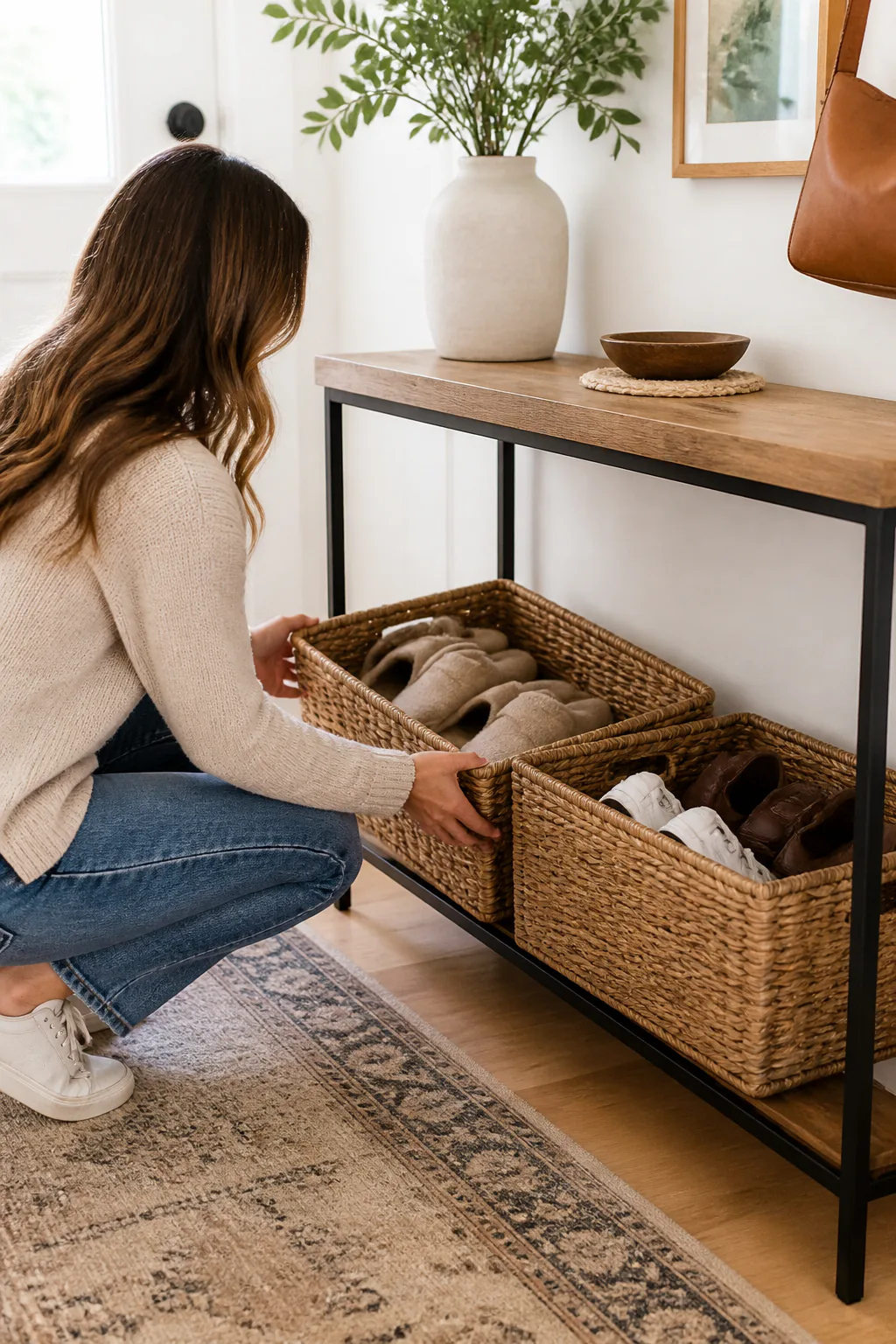
Woven baskets make the open space beneath a console table useful while adding natural texture to the entryway. They can corral slippers, a few pairs of shoes, or umbrellas, keeping loose items from collecting in a heap beside the door.
Choose baskets that slide in and out easily and fit beneath the table without blocking the walkway. A pair of matching baskets can create a tidy look, while one larger basket may be better for bulky items. If wet umbrellas are part of the routine, use a separate container that can handle moisture rather than leaving damp items in a woven basket.
Give each basket a purpose
Storage is easier to maintain when everyone knows what belongs where. Keep the contents limited to the items used most often, and make sure the baskets are light enough to move for cleaning.
- Use one basket for slippers and another for everyday shoes.
- Check the height and width before buying.
- Keep wet gear separate until it has dried.
These simple containers soften the look of practical storage while keeping the floor more orderly.
13. Swap in a Characterful Ceiling Fixture
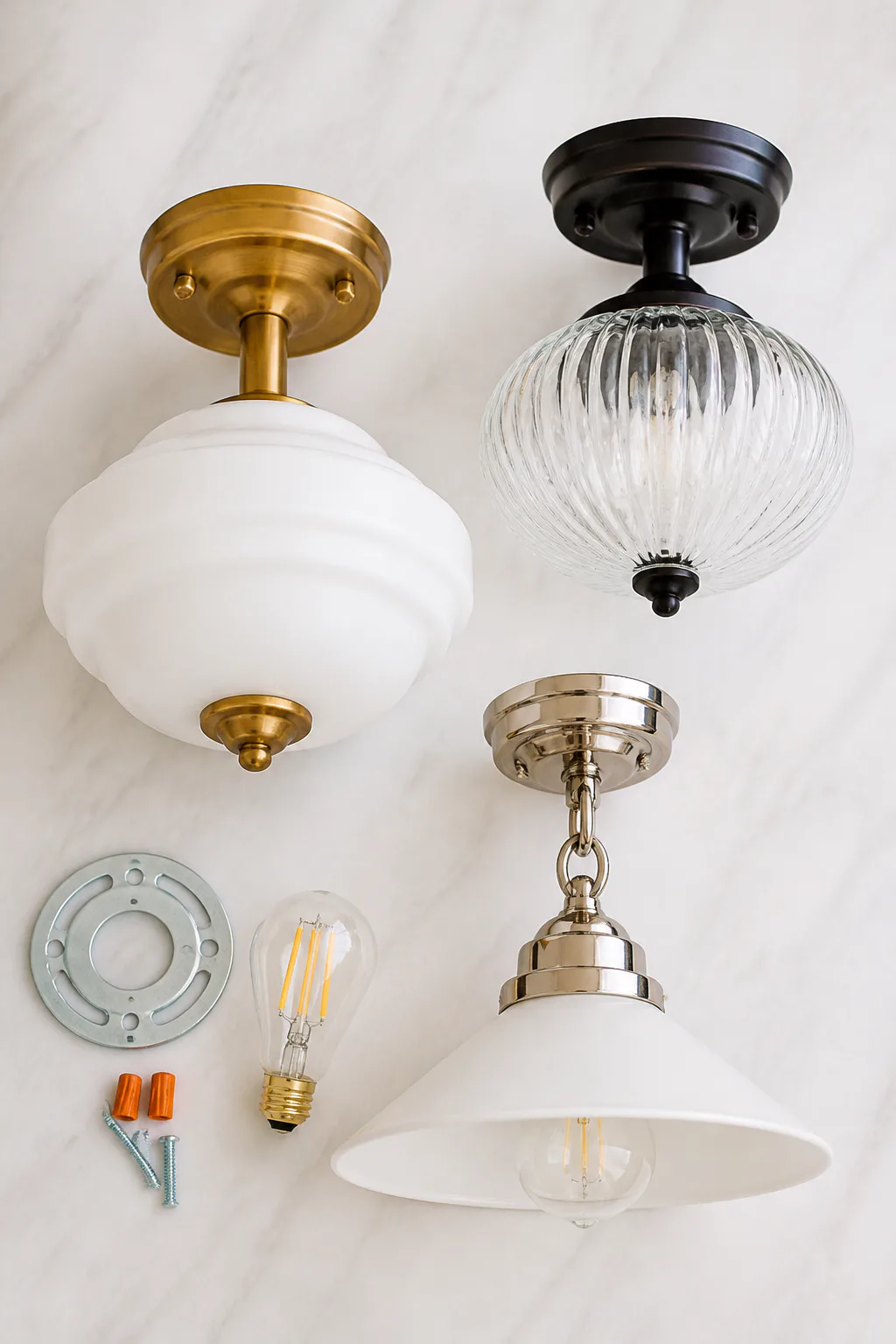
A small semi-flush fixture or mini pendant can give an apartment entryway a more distinctive look. Since the ceiling light is often one of the first details you notice when coming inside, a thoughtful choice can add character without using any wall or floor space.
Scale is important in a compact foyer: the fixture should feel noticeable without hanging too low or crowding the door’s path. A shade or silhouette that relates to the home’s other finishes can make the entry feel connected to the surrounding rooms, rather than like a separate design experiment.
Check the details before changing it
In a rental, review the lease and ask the property manager before replacing a fixture. If a swap is permitted, use a qualified professional when the work is beyond your experience, and keep the original fixture and parts for restoring the space later.
- Choose a size suited to the ceiling height and entry width.
- Consider a semi-flush design where headroom is limited.
- Confirm installation rules before purchasing a replacement.
A suitable fixture brings personality overhead while keeping the entry floor clear.
14. Build a Small Entryway Gallery Wall
A compact gallery wall gives a plain entryway a personal focal point. A few small art prints or photographs can make the area feel welcoming without requiring a large piece of furniture, and the display works well above a console or on an open section of wall beside the door.
Keeping the grouping small helps it feel intentional in a tight space. You might use coordinated frames for a calm, orderly look or mix a few frame styles for a more collected feel. Consider how the arrangement looks from the doorway and from inside the home, since an entry is viewed from several angles.
Arrange before you hang
Lay the frames on the floor or trace their outlines on paper to test the spacing. Aim for a layout that relates to nearby furniture instead of floating too high or too far to one side.
- Start with a few pieces at eye level.
- Repeat one color or frame finish to tie the grouping together.
- Use renter-appropriate hanging methods when needed.
A small collection of meaningful images can make the threshold feel distinctly yours.
15. Display Art on Clear Acrylic Ledges
Clear acrylic ledges provide a light-looking way to display framed art, photographs, or a small amount of mail. Their transparent appearance keeps the wall from feeling visually heavy, which can be useful in a compact foyer where dark shelves might make the area feel crowded.
The ledges allow you to change the display without rehanging every frame, so the entry can evolve with your tastes. They are also practical above a narrow console, where a shallow shelf can add display space without projecting far into the room. Keep the arrangement restrained so the transparent ledge does not become an unnoticed clutter shelf.
Style the ledges with restraint
Check the ledge’s depth and mounting requirements before installation, particularly if it will hold framed pieces. Arrange items with a little breathing room and avoid placing anything where it could be bumped by the door or passing bags.
- Lean a few frames of varied heights together.
- Use one ledge for art and another for a small mail sort.
- Keep heavy or fragile objects off a ledge not designed for them.
The transparent finish lets the display add personality while keeping the wall feeling open.
16. Brighten a Corner with a Faux Olive Tree
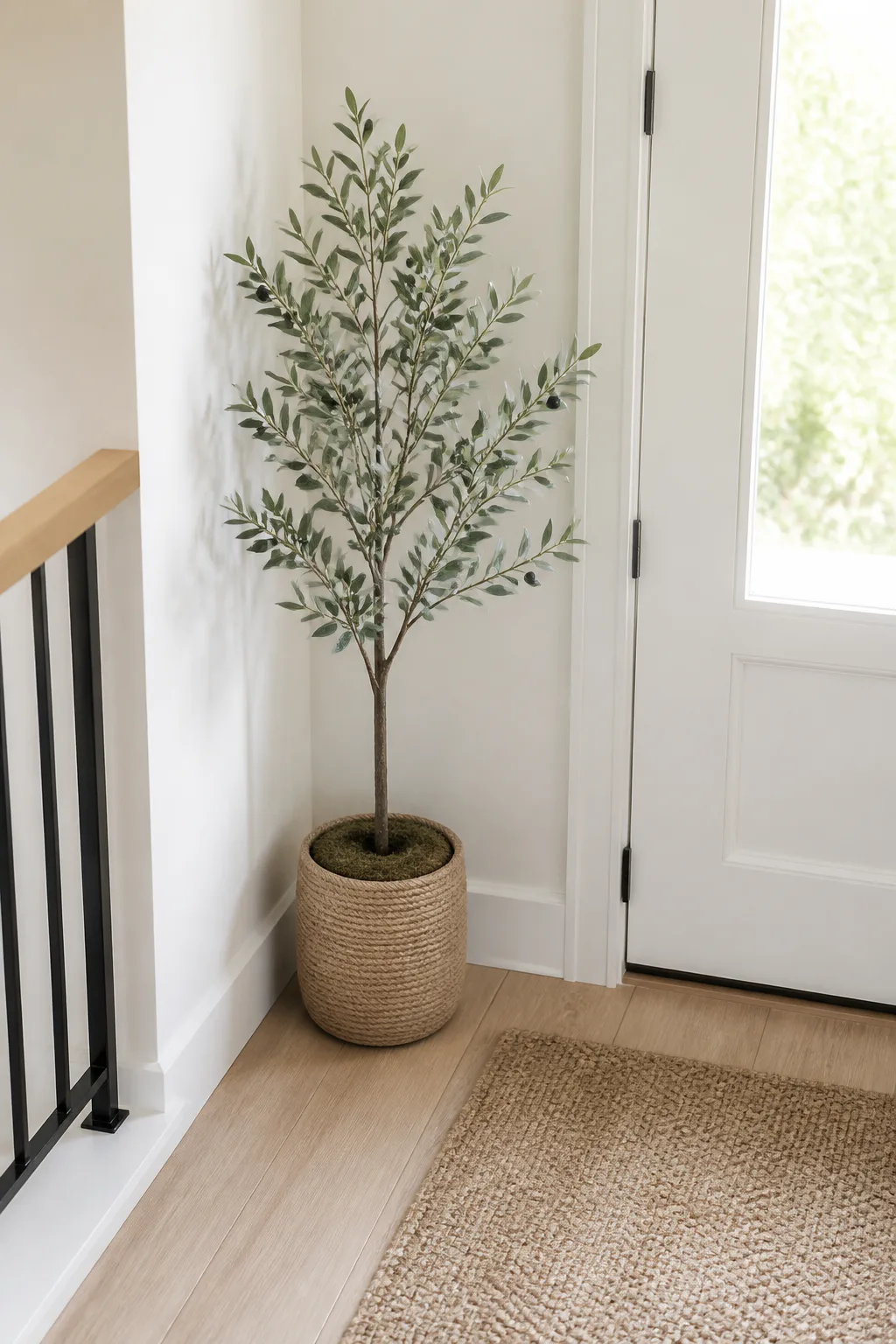
A faux olive tree or another small artificial plant can bring organic texture to an entryway corner that feels bare. It adds a soft, natural shape near the hard lines of doors and walls without needing sunlight or regular watering, making it a practical option for dim apartment entrances.
Choose a size that suits the available floor area. A taller plant can fill an empty corner, while a smaller faux plant may work better beside a bench or console. A simple pot or woven planter can help it blend with the rest of the decor, but leave enough space for the door to open and people to pass comfortably.
Make the greenery feel at home
Use a sturdy planter and position the plant where its branches will not catch on coats or bags. Dust it occasionally so it remains fresh-looking, and avoid overcrowding the corner with extra decor.
- Measure the corner before choosing the plant height and width.
- Pick a planter that complements nearby materials and colors.
- Keep the entry path and door swing completely clear.
A touch of greenery softens the threshold and makes even a simple apartment entrance feel more inviting.
Final Thoughts
A welcoming apartment entryway does not need a large footprint or a full makeover. A slim console, wall-mounted storage, a useful shoe solution, or a runner can make the everyday transition in and out of your home feel more organized.
Start with the practical need that bothers you most, then add details such as a mirror, warm lighting, art, or greenery to make the space feel personal. Measure carefully, keep the walkway clear, and check your lease before making permanent changes. The most successful entryway is one that looks good and works for the way you live.