15 Stunning Apartment Entryway Ideas
A small apartment entryway has to do a lot with very little space. It may be a narrow hall, a corner beside the front door, or simply the spot where your living room begins, so the best solutions make everyday arrivals easier without making the room feel crowded.
These apartment entryway ideas pair practical storage with details that help define the space. You’ll find options for keys, shoes, coats, mail, lighting, and decor, including renter-friendly ways to add function without drilling into every wall.
Use the ideas that fit your layout rather than trying to include them all. Measure the walkway and door swing first, then choose a few pieces that make coming and going feel more organized and welcoming.
1. Mount a Floating Console for Everyday Essentials
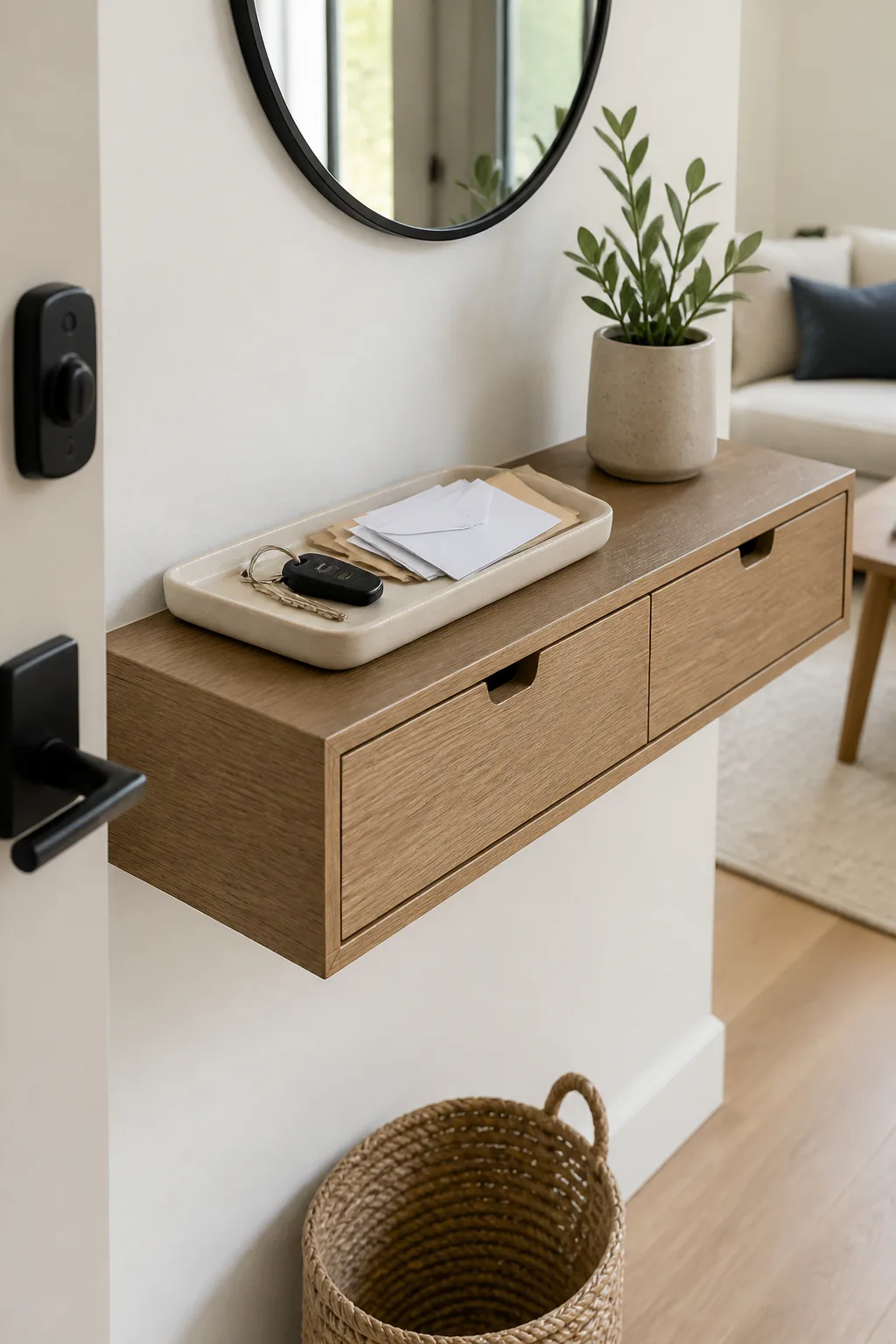
A floating console gives keys, mail, and other daily essentials a home without taking up floor space. Because it has no legs, the floor stays visible beneath it, which can make a compact entry feel less crowded and leaves room for a small basket or a quick sweep.
This idea works especially well beside a front door that opens into a living room or a narrow hallway where a traditional table would obstruct the path. Choose a shelf with enough depth for a small tray, but not so much that it catches passing bags or narrows the walkway.
How to make it useful
Mount the console at a comfortable height and secure it according to the wall type and installation instructions. A little planning helps keep the surface functional instead of turning it into a landing place for everything you bring home.
- Keep keys and mail in a small tray or divided organizer.
- Choose a finish that relates to nearby furniture or trim.
- Leave open space underneath to preserve an airy look.
A single floating shelf can be enough to establish an entry zone while keeping the surrounding room feeling open.
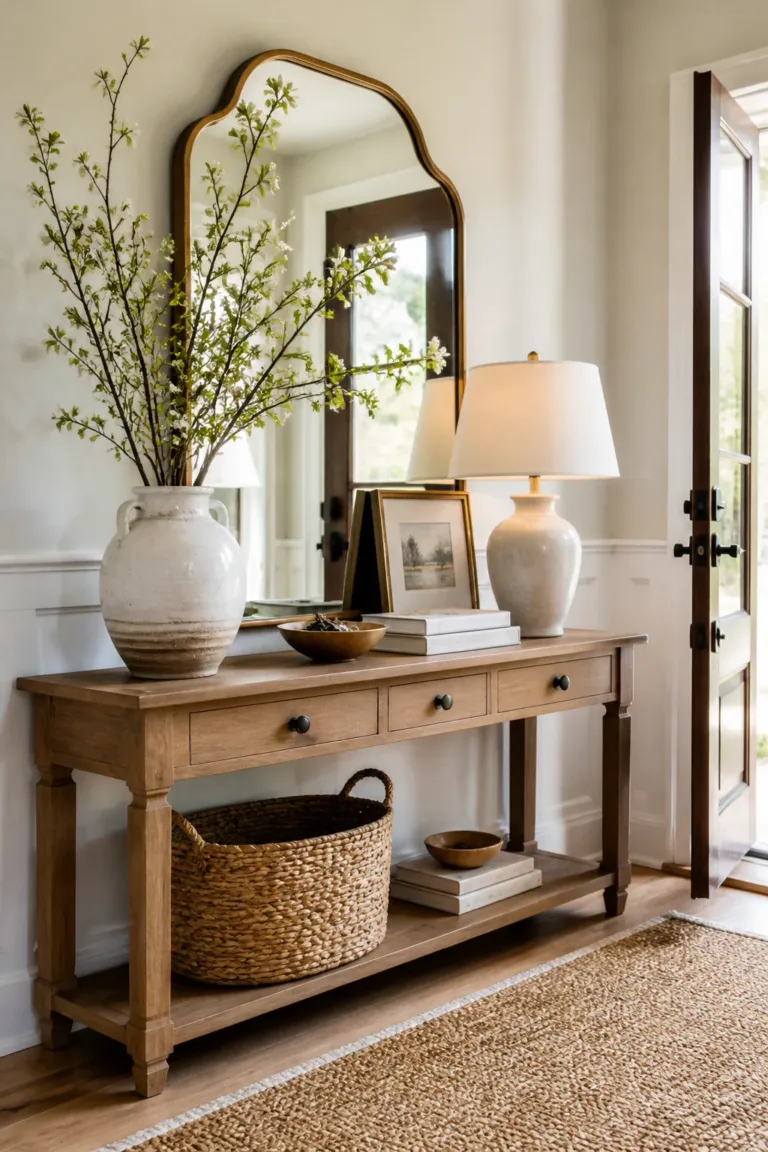
2. Fit an Ultra-Narrow Console in a Tight Hallway

When a hallway is too tight for standard furniture, a shallow console can still provide a useful place to set down keys or a wallet. Its slim profile hugs the wall, so you get a landing spot without turning the route from the door into an obstacle course.
Look for a table with a stable base and a top that suits the items you actually use. In a particularly narrow passage, even a modest amount of extra depth can make a difference, so measure the clear walking space with doors open and people moving through.
Choosing the right fit
Keep the styling light and purposeful. A narrow table can look polished with just a compact lamp, a small dish, or one decorative object, while too many accessories may make the surface feel cramped.
- Measure the hallway and door swing before choosing a table.
- Consider a lower shelf for a basket if the walkway allows it.
- Use a wall mirror above the console to add function without using tabletop space.
The right slim console makes a tight hallway work harder without asking it to hold more than it can comfortably manage.
3. Add a Slim Bench with Hidden Shoe Storage
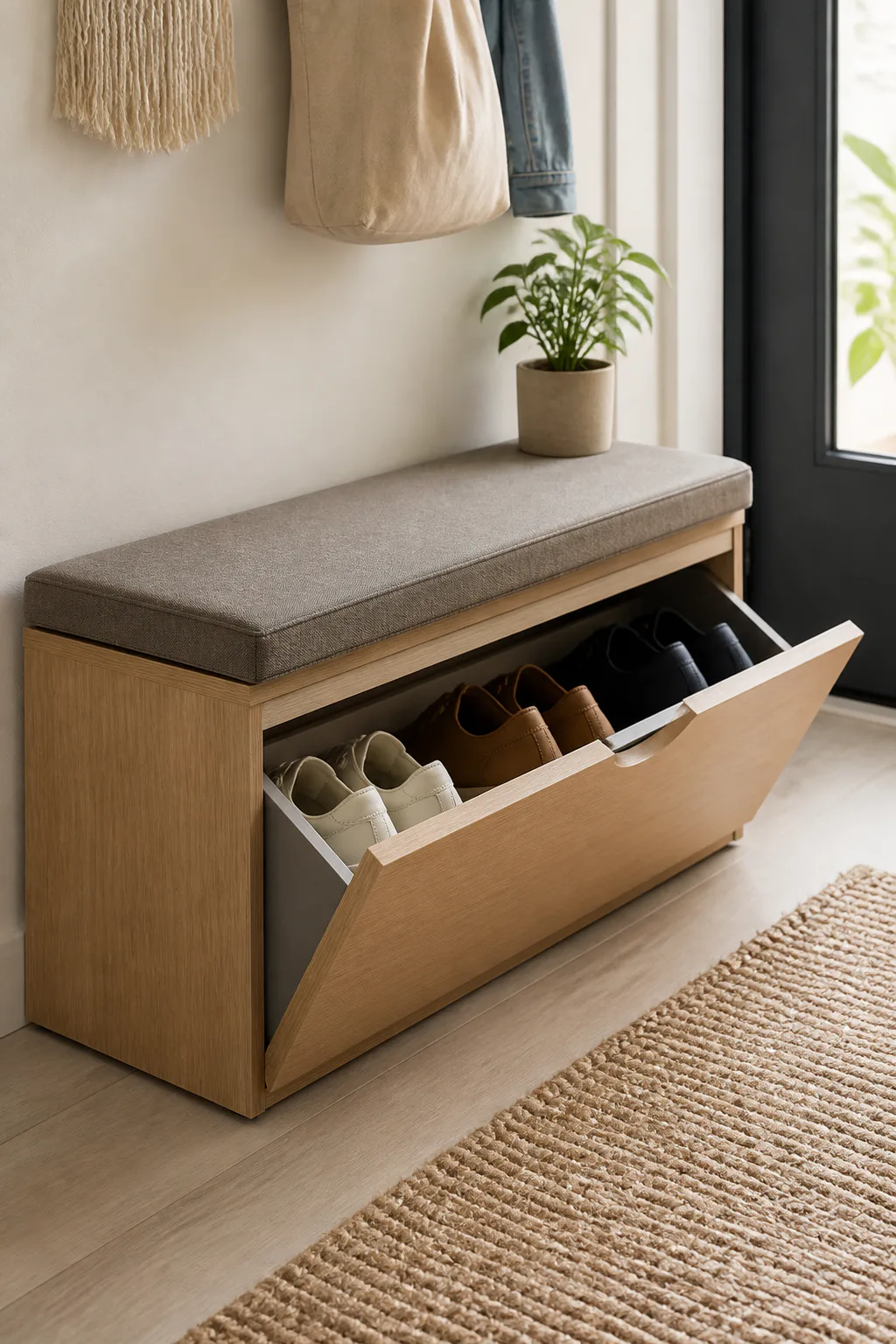
A compact bench can make the entry more comfortable by giving you a place to sit while putting on or taking off shoes. A flip-drawer style adds a second benefit: footwear can be tucked away, reducing the visual clutter that tends to gather near the front door.
This option is useful in apartments where there is no closet close to the entrance or where shoes need to stay near the door. Choose a bench that fits the available wall space and leaves enough room to open its storage without blocking the doorway or main route.
Make the bench work for daily routines
Think about what you’ll store before choosing the style. A compact hidden compartment is handy for everyday pairs, while wet or muddy shoes may need a separate washable mat so the bench stays clean inside.
- Check the seat height for comfortable shoe changes.
- Store frequently worn pairs where they are easy to reach.
- Add a small cushion if you want a softer place to sit.
A slim storage bench combines a practical pause point with a tidier-looking floor.
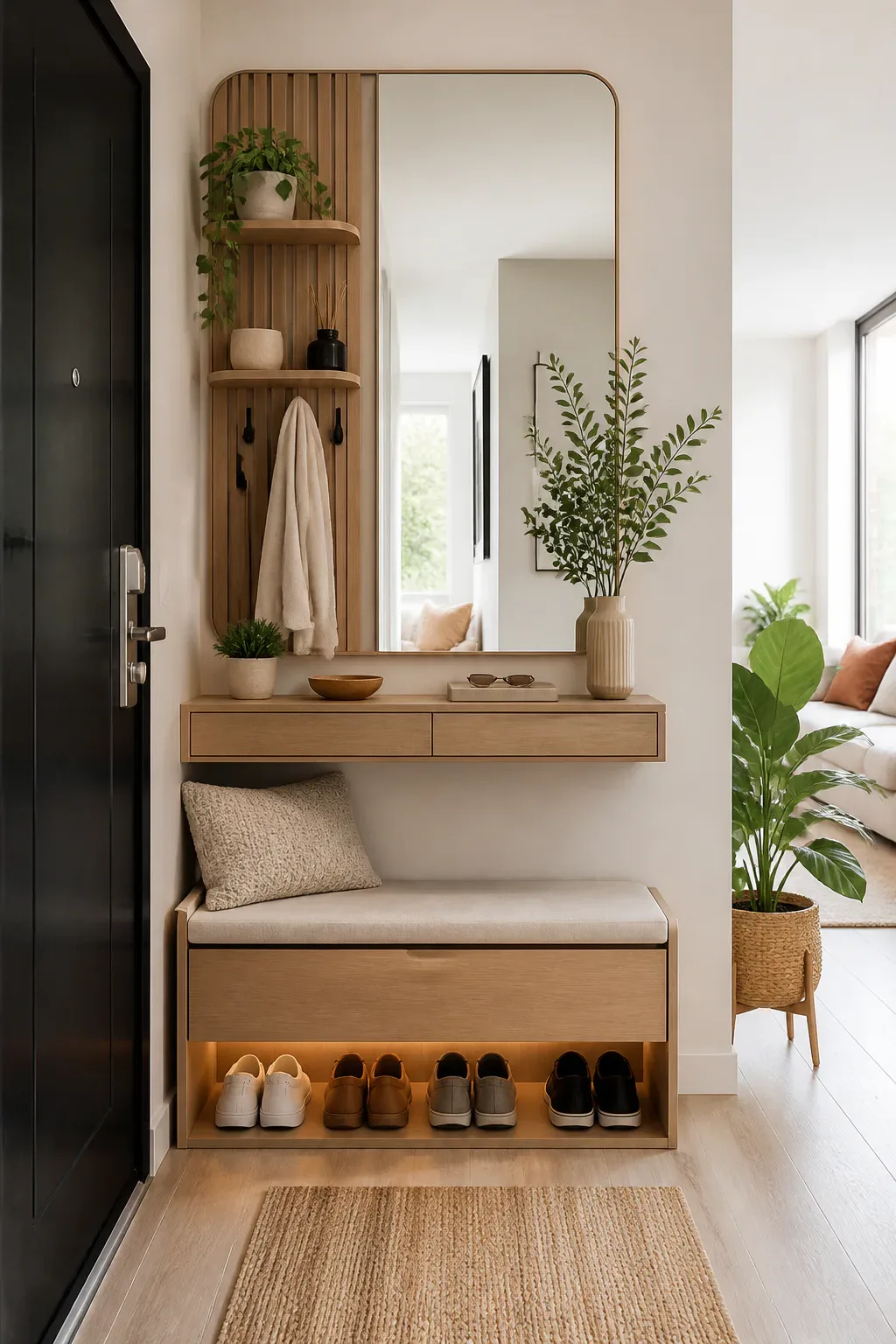
4. Hang a Mirror with Built-In Hooks and Shelves
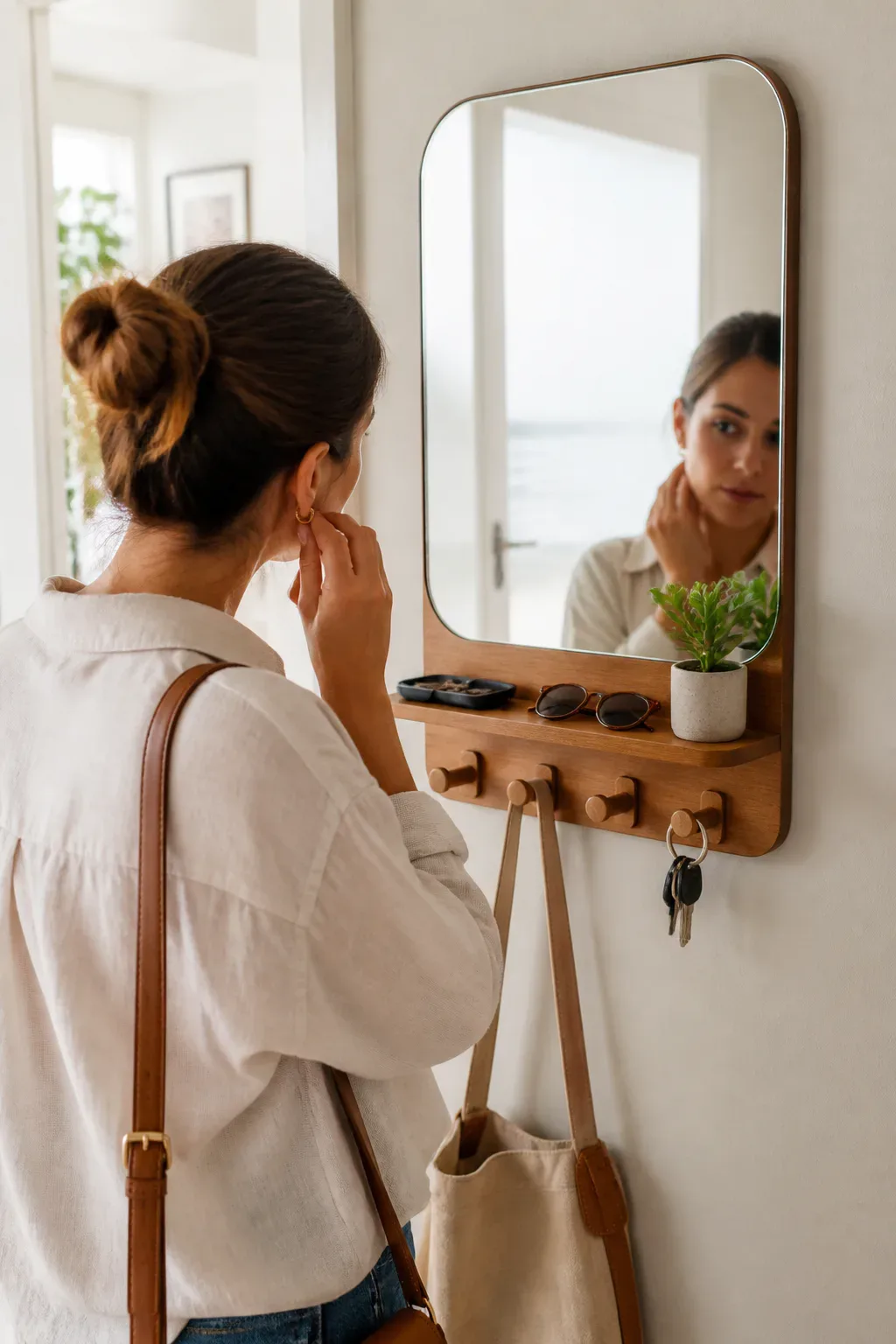
A mirror with integrated hooks or small shelves combines several entryway jobs in one compact piece. It gives you a place to check your outfit, hang a light bag, or set down sunglasses without needing separate furniture for every task.
This multipurpose option suits a small wall beside the door, especially when there is little room for a console. It can also help organize the items you reach for on the way out, as long as the hooks and shelves are sized for everyday essentials rather than heavy coats or overloaded bags.
Keep the setup simple
Before mounting the mirror, decide which items belong there and how often you use them. Keeping the hooks lightly loaded makes the arrangement easier to navigate and lets the mirror remain a useful visual feature.
- Use hooks for a daily bag, keys, or a light scarf.
- Reserve shelves for small items such as sunglasses or a wallet.
- Place the mirror where it is easy to use without blocking the door.
With storage built into the mirror, a single wall feature can make a compact entry feel organized and intentional.
5. Install a Continuous Peg Rail for Coats and Bags
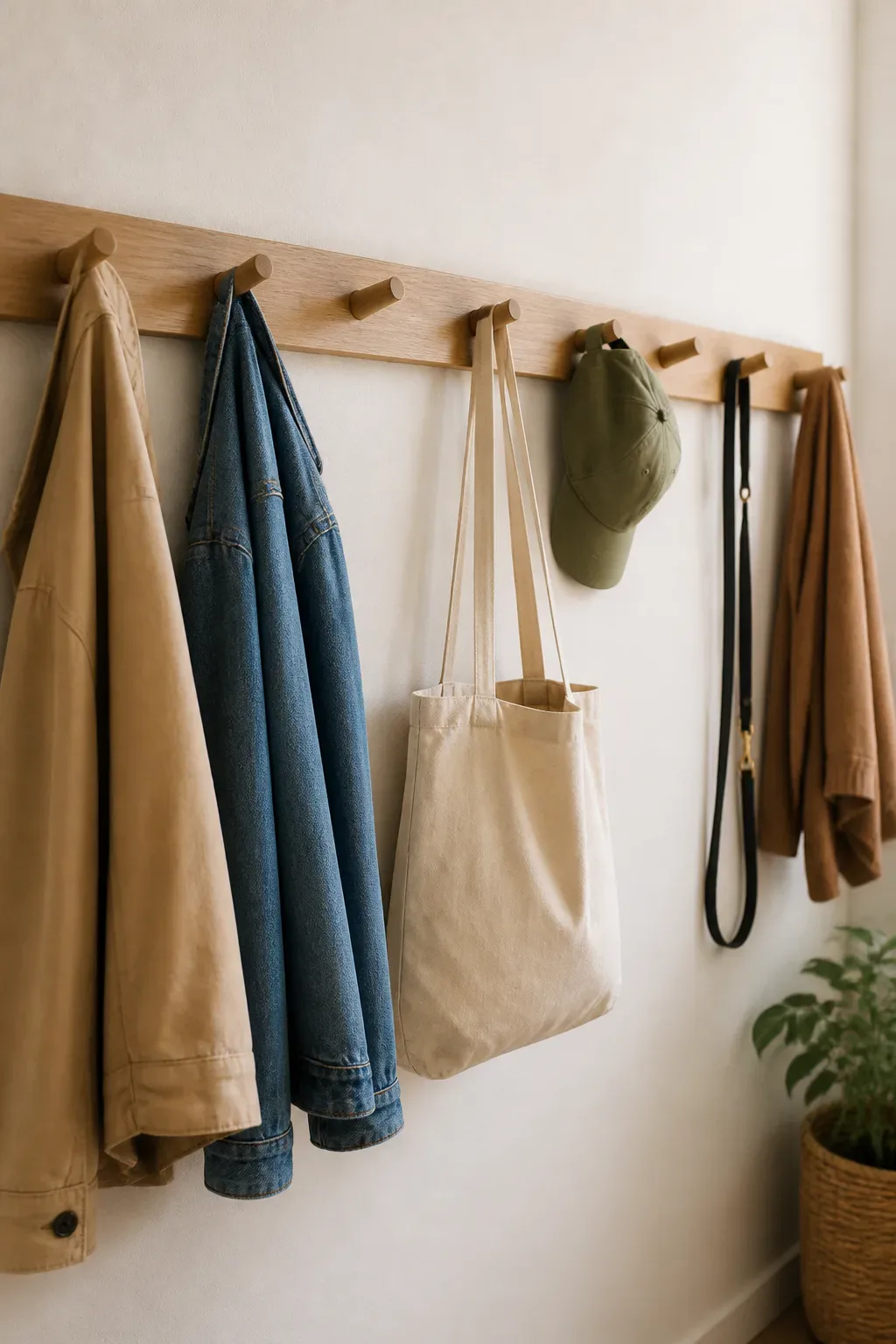
A shaker-style peg rail provides flexible hanging space along the wall, making it a practical alternative to a bulky coat stand. A continuous rail can hold coats, hats, reusable bags, or leashes while keeping those items visible and easy to grab.
It works in a narrow hallway or in an open-plan home where you want to mark the entrance without adding furniture. A longer rail can spread items out instead of stacking them in one crowded spot, but it should be mounted where hanging coats won’t interfere with a door or walkway.
Arrange pegs for real life
Set the rail at a height that suits the people using it. If children need to hang their own jackets, lower pegs can make the system more independent; a higher row can keep occasional items out of the way.
- Leave gaps between frequently used coats and bags.
- Use a dedicated peg for a dog leash or tote.
- Pair the rail with a shoe mat or bench below if space allows.
A simple rail can turn an otherwise empty wall into useful, adaptable storage.
6. Place a Magnetic Key Strip Beside the Door
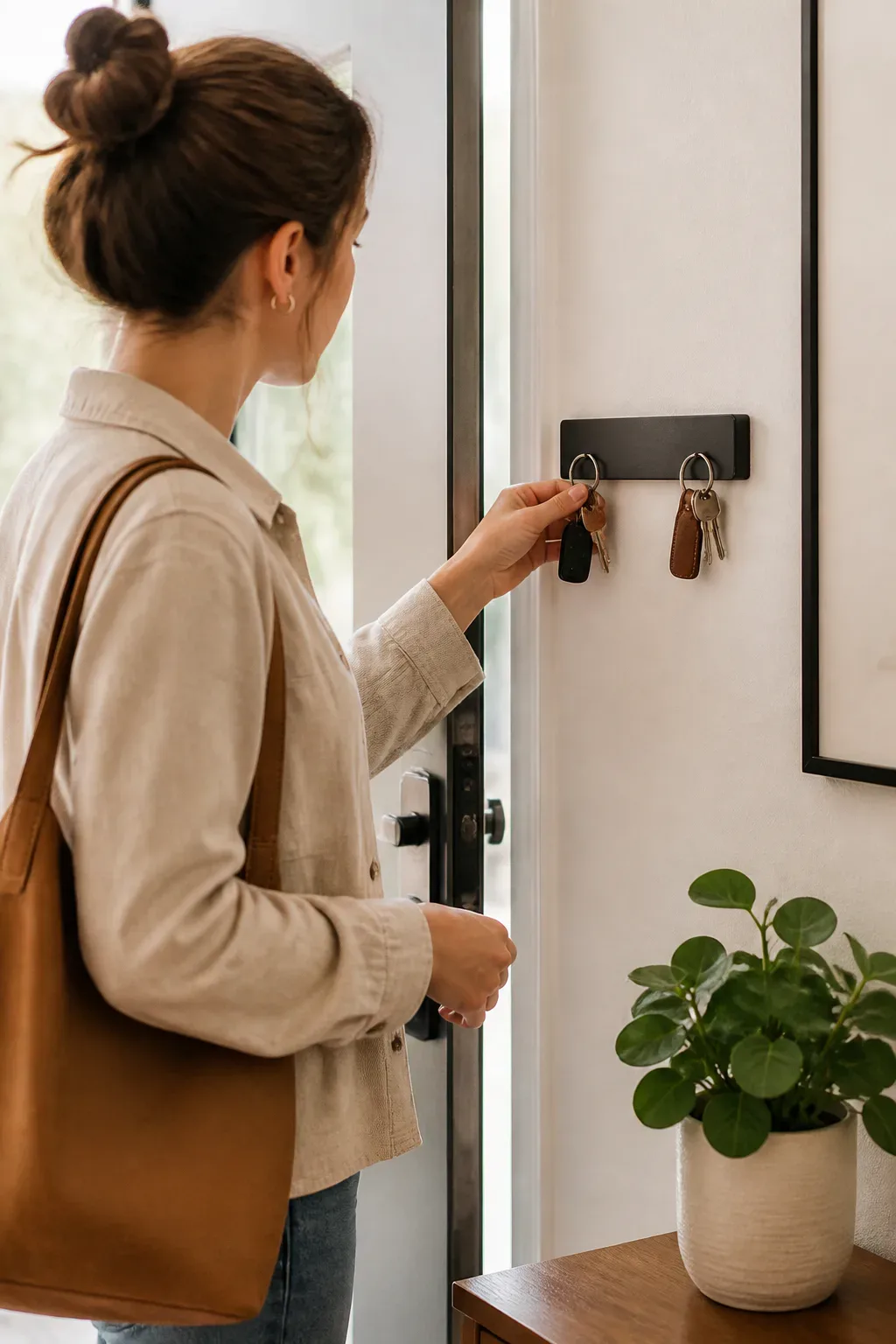
A magnetic key strip gives keys a dedicated landing spot close to the door, so they are easier to find when it is time to leave. Its small footprint makes it a helpful choice when there is no room for a console, tray, or larger wall organizer.
Install it beside the door or, if the layout permits, just behind the open door where it stays discreet. Keep the strip within easy reach, but check that the door and its handle won’t knock against it. A simple placement decision can make the habit of putting keys away feel automatic.
Set up a reliable key station
Use the strip for keys that are suitable for magnetic storage, and avoid crowding it with unrelated objects. If several people share the apartment, assign a clear spot for each key set so the system stays easy to use.
- Choose a location you pass when entering and leaving.
- Check door clearance before attaching the strip.
- Keep spare keys stored securely rather than on open display.
This small detail can bring order to the daily routine without claiming valuable floor or counter space.
7. Create a No-Drill Entry with Over-the-Door Hooks
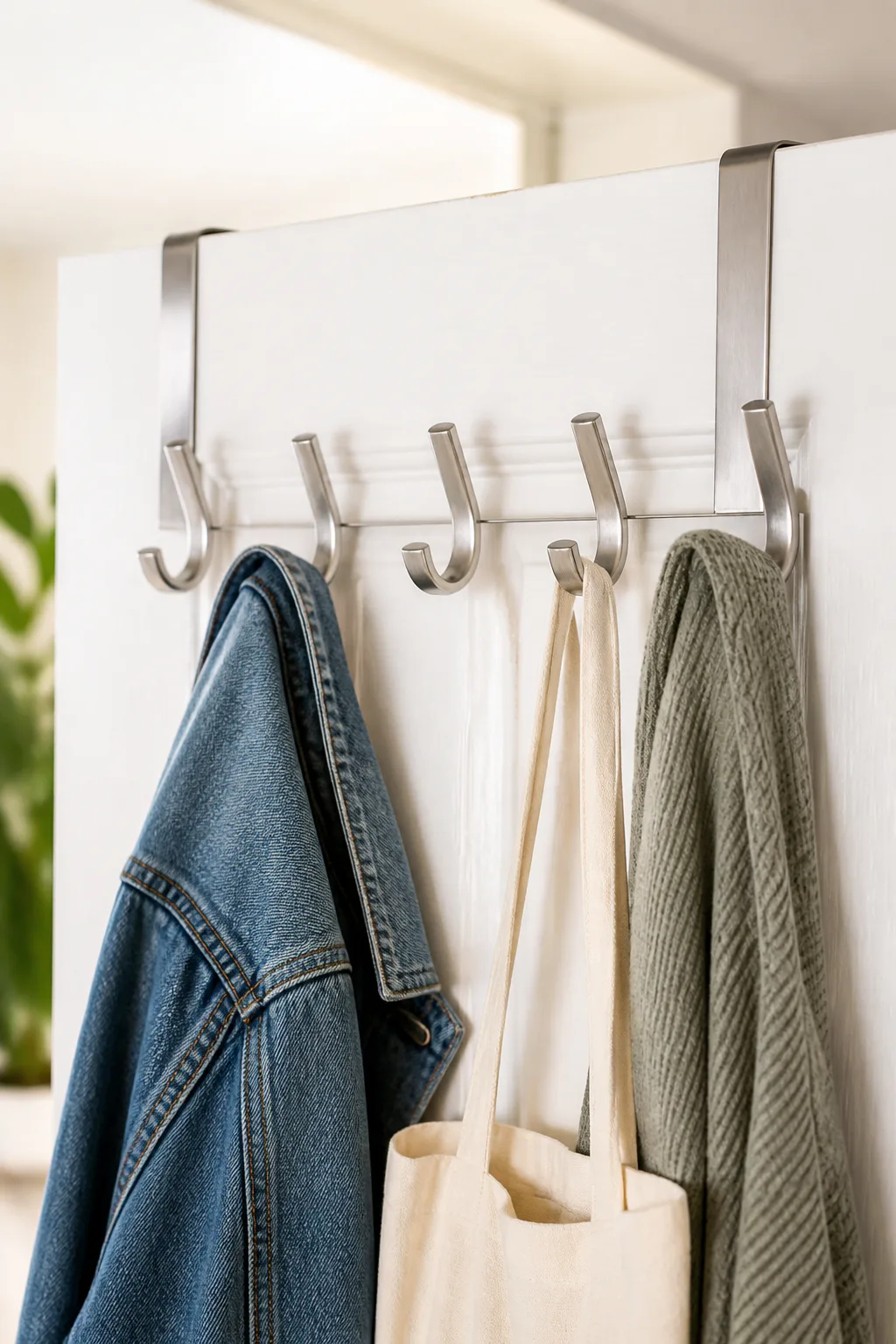
Over-the-door hooks offer a simple way to hang coats and bags without making holes in rental walls. They use the top edge of a door, making them useful when the entry has limited wall space or when your lease makes drilling inconvenient.
Before choosing a set, check that it suits the door thickness and leaves the door able to close smoothly. A hook rack can be visible from the living area, so select a finish that feels at home with the rest of the room rather than treating it as a purely temporary fix.
Use the door without overloading it
These hooks are best for items you reach for often, but too much weight can make the door awkward to open and close. Follow the product’s guidance and keep bulky coats or packed bags elsewhere if the door starts to feel strained.
- Confirm there is enough clearance above the door.
- Hang lighter items such as jackets, scarves, or totes.
- Keep hooks away from spots where they could snag clothing or bags.
For renters and small spaces, this is an easy way to add hanging storage with minimal commitment.
8. Mount a Slim Mail Sorter by the Front Door

A narrow wall-mounted mail sorter gives letters a predictable place to land instead of letting them spread across the kitchen counter or console. Depending on its design, it can also hold a wallet, sunglasses, or other small items you want to remember before leaving.
Choose a pocket or organizer that suits the amount of paper you usually bring home. A compact version is ideal for a small entry, while a divided style can separate incoming mail from items that need attention. Keeping the organizer near the door makes it easier to deal with mail as part of your arrival routine.
Keep paper from piling up
Use the sorter as a short-term holding place, not long-term storage. A regular clear-out helps the wall feature stay useful and prevents old flyers or unopened letters from taking over the entry.
- Choose a slim profile that won’t project into the walkway.
- Separate mail that needs action from items to recycle.
- Store small essentials only if the pockets can hold them securely.
A tidy wall pocket keeps everyday paper close at hand without needing another piece of furniture.
9. Brighten a Dark Hall with a Statement Mirror

A large round or arched mirror can make a dark apartment hallway feel brighter by reflecting available light. It also gives you a convenient place for a final outfit check before heading out, adding everyday function to an otherwise decorative wall.
Hang it where it can reflect a window, a lamp, or another light source rather than a blank corner. In a narrow hall, a mirror can contribute to a more open feeling, but its frame and size should still suit the scale of the wall and leave comfortable clearance around nearby doors.
Choose a shape that suits the space
A round mirror can soften a hallway filled with straight lines, while an arched shape adds a graceful vertical accent. Keep the surrounding wall relatively uncluttered so the mirror has room to stand out and reflect light effectively.
- Position the mirror to catch the brightest view available.
- Check that it is mounted securely and at a useful height.
- Coordinate its frame with nearby hardware or furniture.
One well-placed mirror can make a small entry feel more welcoming without adding visual bulk.
10. Define an Open-Plan Entry with a Patterned Rug

When the front door opens directly into a living area, a patterned rug can mark out an entry zone without building a divider. It gives the eye a clear transition from the doorway to the rest of the room and can bring color or texture into an otherwise undefined corner.
Choose a durable runner for a longer passage or an accent mat for a compact landing area. The rug should fit the space without catching the door, and it should stay securely in place as people come and go. A pattern can also help disguise the everyday traces of a busy entrance.
Make the rug practical and cohesive
Think about the colors and patterns already in the room so the entry feels connected rather than separate. A rug can set the zone apart while still echoing a shade, texture, or motif elsewhere in your home.
- Measure the area and check the door’s full swing.
- Use a rug pad to help keep the rug from shifting.
- Pick a material that is manageable to clean regularly.
A thoughtfully sized rug creates a visual welcome mat and helps an open-plan room feel more organized.
11. Paint an Arch Behind the Coat Hooks
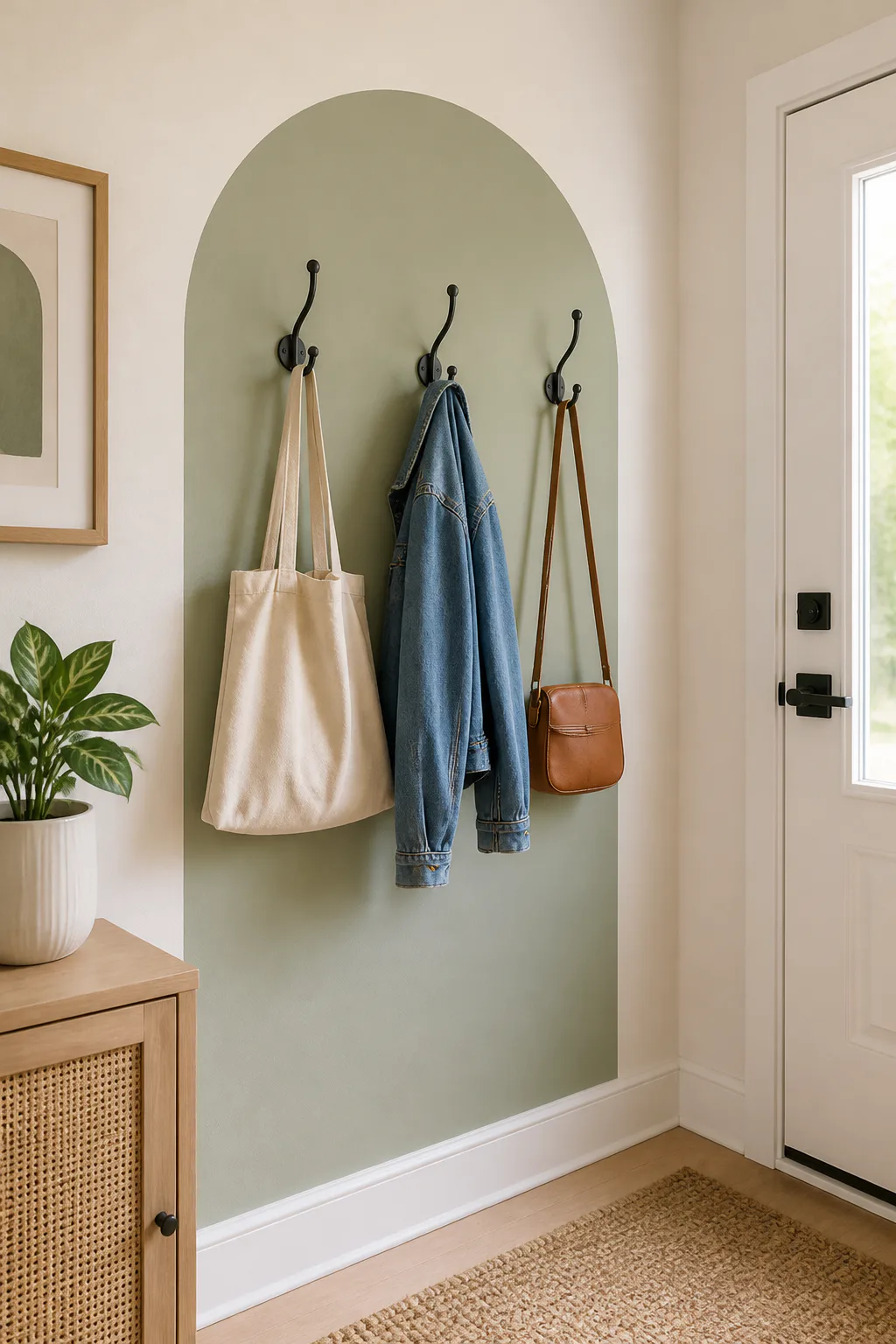
A painted arch or geometric block can make an entry feel like its own zone without taking up any floor space. Placed behind coat hooks, it gives a functional wall feature a deliberate backdrop and helps distinguish the front door area from the living space.
This approach is especially useful when an apartment has no separate foyer or when furniture cannot fit near the entrance. The color can be subtle and close to the existing palette or more contrasting if you want the entry to become a focal point.
Plan the shape before painting
Use painter’s tape or a light pencil guide to work out the edges and scale before applying paint. Consider the position of hooks, switches, and trim so the painted shape frames the area cleanly rather than cutting awkwardly across architectural details.
- Choose a shape that fits the wall and nearby furniture.
- Keep hooks within the painted area for a coordinated look.
- Test the color in the entry’s actual lighting.
A small painted feature can make a rental-friendly entry feel considered and personal.
12. Frame the Entry with Removable Wallpaper
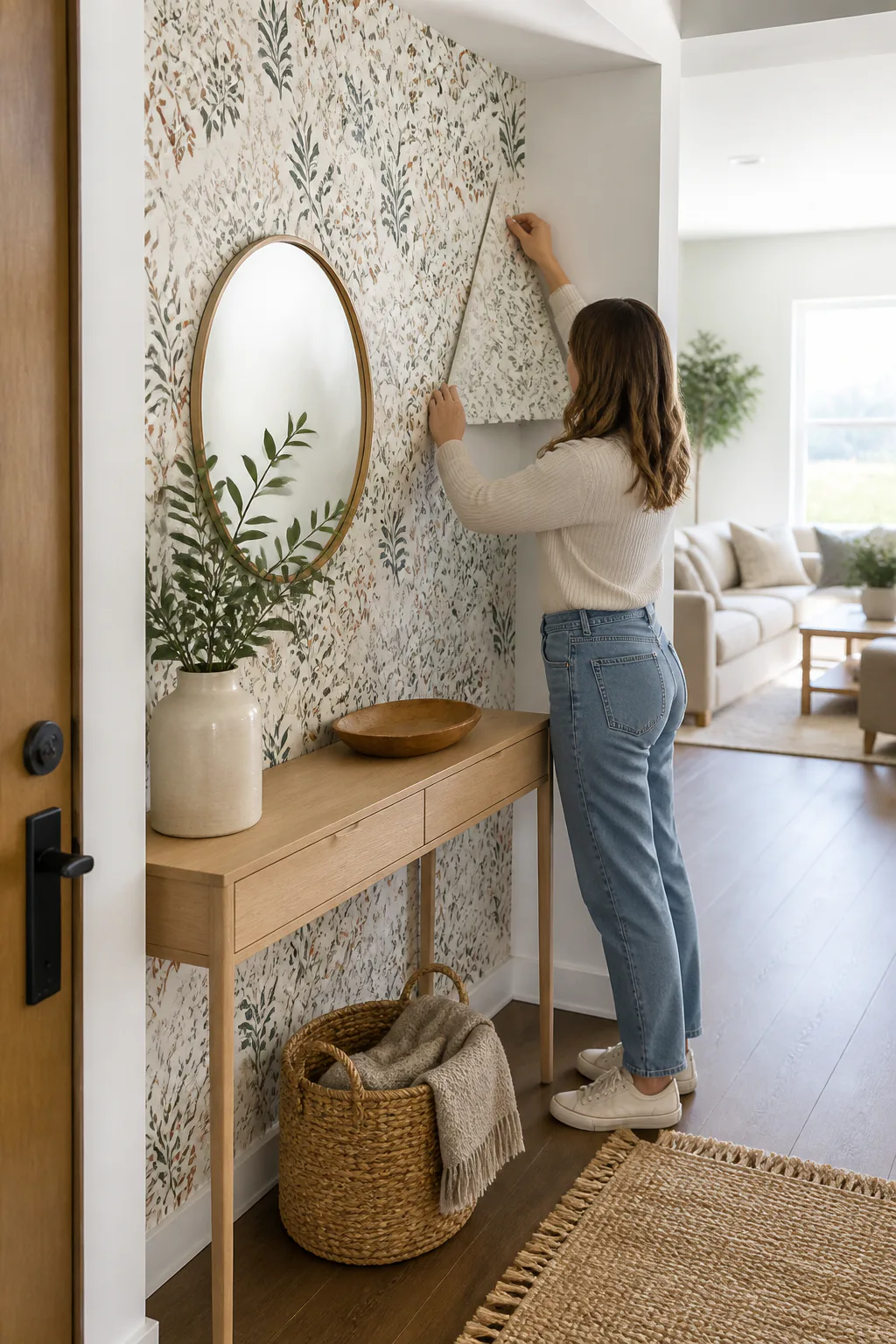
Peel-and-stick wallpaper can give a small entryway its own distinct look, especially when the front door opens directly into a larger room. A pattern behind a console or coat hooks creates a visual frame that signals, “This is where the day begins and ends,” without adding a physical divider.
Because the area is often compact, you can use pattern to add personality without covering every wall in the apartment. Choose a print that works with the nearby furniture and colors, and check the product’s instructions and your lease before applying it.
Apply it with a clear plan
Start with a clean, suitable surface and follow the manufacturer’s guidance for application and removal. Carefully align the pattern, particularly around corners or outlets, so the finished wall looks intentional rather than rushed.
- Use a limited area to keep the pattern from overwhelming the room.
- Coordinate the print with a rug, art, or nearby textiles.
- Check that the wall finish is appropriate for removable wallpaper.
Wallpaper can give the entry a strong sense of identity while leaving the rest of the home visually connected.
13. Style a Console with a Small Catch-All Tray

A small tray turns a console into a more organized landing spot for loose change, lip balm, earbuds, and other pocket-sized essentials. Instead of letting little items scatter across the surface, the tray gives them a contained place that is easy to check before you leave.
Ceramic, marble, or another easy-to-clean material can add a decorative touch while staying practical. The tray works on a floating shelf or narrow table, and it does not need to be large; a compact size encourages you to keep only the things that genuinely belong at the entrance.
Style for easy everyday use
Leave enough open surface around the tray for mail or a bag, and avoid filling it with items that should be stored elsewhere. A clear routine—drop essentials in when you come home, then collect them on your way out—helps the console stay calm.
- Choose a tray with a shallow edge to contain small objects.
- Keep daily items together and move occasional clutter elsewhere.
- Match the material or color to the console for a pulled-together look.
This small accessory can make an entry surface feel both more polished and more useful.
14. Add a Cordless Lamp to the Entry Console

A cordless lamp can bring a warm glow to the entry without needing an outlet right beside the console. It offers a softer welcome than overhead lighting and can make coming home feel calmer, particularly in an apartment where the entrance is part of the main living space.
A rechargeable touch lamp is convenient when you want quick, simple control and a flexible placement. Choose a size that leaves room for other essentials, and consider how the lamp will be recharged so it remains a practical feature rather than another item that needs constant attention.
Make a little light go a long way
Place the lamp where it illuminates the console without narrowing the path or sitting in the way of a door. Keep the surrounding decor minimal so the light becomes a welcoming detail, not one more thing competing for attention.
- Check the lamp’s charging method and plan a routine for recharging.
- Choose a compact footprint for a shallow console.
- Pair it with a small tray or one simple decorative accent.
A gentle pool of light can help even a small entry feel thoughtful and inviting.
15. Bring Greenery to the Door with a Wall Planter

A wall planter or high shelf with greenery adds a fresh, lively touch to the entrance without using valuable floor space. A trailing plant can soften hard edges and bring color to a bare wall, while faux greenery offers a similar visual lift if natural light or plant care is a concern.
Place greenery where it will not brush against people or bags as they pass through. A high shelf can keep the plant clear of the entry routine, but it should still be easy to reach when watering or dusting is needed. Consider the light available before selecting a real plant.
Choose a low-fuss arrangement
Keep the planter proportionate to the wall and the rest of your decor. One small arrangement often feels more intentional than several crowded pots, especially in a narrow entrance where every surface is already working hard.
- Match a real plant to the light conditions in the entry.
- Use a secure mount and a planter that suits the wall.
- Consider faux greenery if upkeep or lighting is a challenge.
A touch of green softens the doorway and makes the transition into your home feel welcoming.
Final Thoughts
A functional apartment entryway does not need a separate room or a lot of furniture. A slim console, a few well-placed hooks, a defined rug, or even a small key strip can make a noticeable difference when each choice suits the space you have.
Start with the routine that feels most frustrating—finding keys, storing shoes, or managing mail—and solve that first. Then add a mirror, a little color, or a warm light to make the entrance feel like a welcoming part of your home.