15 Clever Shoe Storage Ideas for a Tidier Home
When shoes collect near the front door, fill the closet floor, or disappear beneath a pile of other belongings, getting dressed can become more complicated than it needs to be. The right storage solution makes pairs easier to find while helping your home feel calmer and more organized.
These shoe storage ideas cover a range of spaces, from narrow hallways and crowded closets to bedrooms and awkward corners. Some keep footwear tucked away; others make favorite pairs part of the room’s decor.
Whether you rent, enjoy simple DIY projects, or just want a better place for everyday shoes, start by considering how many pairs you need to store and which ones you reach for most. Then choose an idea that fits your space, your routine, and the types of shoes you own.
1. Hide Shoes in a Slim Flip-Down Entryway Cabinet
A slim flip-down cabinet is a practical choice for a narrow hallway where a deep shoe rack would obstruct the walkway. Its compartments tilt open, letting shoes sit at an angle rather than taking up the full depth of a conventional shelf.
Because the front closes over the footwear, this style helps an entryway look tidier without requiring a separate closet. It works especially well near the front door for pairs worn regularly, though the compartment dimensions may not suit every shoe size or shape.
Make the most of a narrow cabinet
Measure the available wall space and check the cabinet’s depth, height, and compartment layout before choosing a spot. Anchor a tall unit securely as directed, and avoid overfilling each section so the tilt-out fronts open and close smoothly.
- Reserve the easiest-to-reach compartment for daily shoes.
- Check the fit for bulky sneakers and larger sizes.
- Keep wet footwear elsewhere until it has dried.
A simple tray beside the cabinet can catch drips and keep the floor clear.
2. Create a Sneaker Display with Clear Drop-Front Boxes
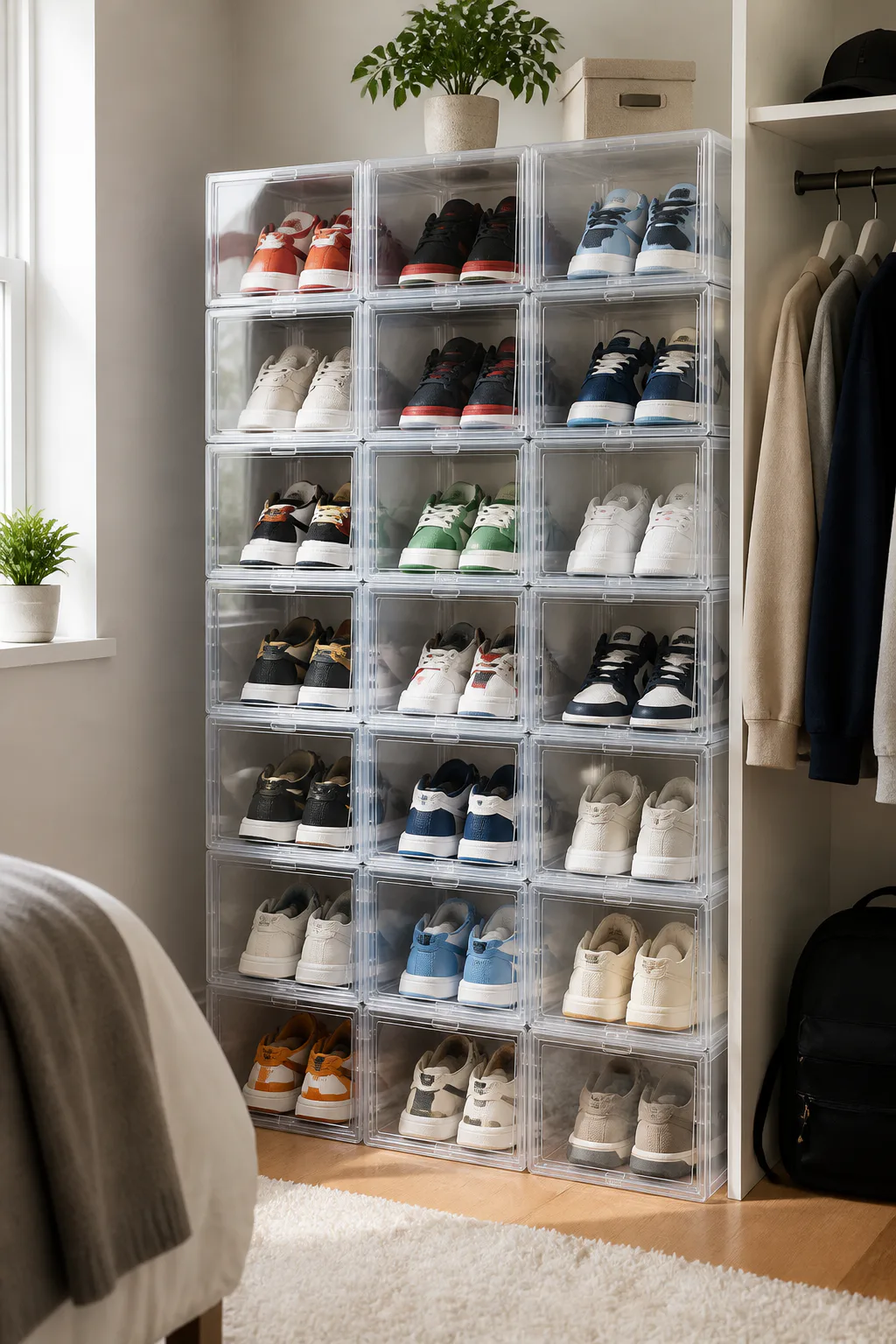
Clear drop-front boxes keep sneakers visible while giving each pair a defined place. Instead of digging through a stack of shoeboxes, you can scan the display and spot the pair you want, making this option especially useful for a collection that gets regular wear.
Stackable boxes can turn a closet shelf or bedroom corner into a compact display. The transparent sides show the shoes, while the front opening makes access easier than lifting boxes from the top of a tall stack. A neat arrangement can feel intentional rather than cluttered.
Build a stable, easy-to-use display
Choose boxes sized for your footwear and follow the product’s stacking guidance. Place heavier pairs lower down, and leave enough room to open each front without bumping nearby furniture or blocking a closet door.
- Group sneakers by color, activity, or how often you wear them.
- Wipe shoes dry before putting them away.
- Keep frequently worn pairs at eye or waist level.
The result is storage that protects pairs from everyday dust while keeping your favorites in view.
3. Double Closet Shelf Capacity with Shoe Stackers

Shoe stackers use vertical space on a closet shelf by raising one shoe above its partner. This simple adjustment can create room for more pairs without adding another piece of furniture or changing the closet layout.
They are most useful on shelves that have unused clearance above the shoes. Stackers can work for many everyday styles, but check that the shelf height accommodates the combined shoe and holder, especially if the closet has fixed shelves with limited spacing.
Arrange pairs for quick access
Set stackers in a single row or group them by the shoes you wear for work, errands, or special occasions. If the shelf is deep, keep pairs toward the front and avoid stacking so tightly that you have to move several shoes to retrieve one.
- Use sturdy stackers suited to the shoe’s shape and weight.
- Keep delicate or easily marked footwear in a separate spot.
- Leave a little room to lift shoes out comfortably.
This is a small change that can make a crowded closet shelf much easier to use.
4. Store Everyday Shoes Behind the Door
The space behind a bedroom or closet door often goes unused, making it a handy place for a clear pocket organizer. Its pouches can hold flats, sandals, slippers, or children’s shoes without taking up floor or shelf space.
Transparent pockets make it easier to see what is stored, which is useful when several family members share a closet. Since this approach works best for lightweight footwear, it is less suitable for heavy boots or bulky shoes that may pull on the organizer.
Keep the door working smoothly
Before hanging an organizer, check the door’s clearance and make sure it can still open fully. Arrange pairs so the pockets do not become overloaded, and place the shoes used most often at a comfortable height.
- Measure the door and handle area before selecting an organizer.
- Use lower pockets for children’s shoes they can reach themselves.
- Choose clear pockets when visibility matters most.
- Remove dirt or grit before storing shoes in fabric pouches.
It’s a straightforward way to give small shoes a home without adding another rack.
5. Slide Seasonal Shoes into Under-Bed Drawers
Low-profile bins make the space beneath a bed useful for shoes that are out of season or worn only occasionally. Rolling versions are easy to pull forward, while covered designs help keep stored footwear away from dust.
This option suits bedrooms with enough clearance under the bed frame and is particularly helpful when closet shelves are already full. It can hold sandals in winter or heavier shoes during warmer months, keeping the footwear you need now closer at hand.
Store pairs so they stay easy to find
Measure the height and width beneath the bed before choosing a bin, accounting for legs, rails, and any nearby furniture. Sort shoes by season or type, and avoid packing them so tightly that pairs become difficult to retrieve.
- Use a clear lid or label the bin by season.
- Store shoes clean and completely dry.
- Place the current season’s bin toward the easiest access point.
With a little sorting, under-bed storage can free up prime closet space.
6. Build Shoe Cubbies into the Staircase
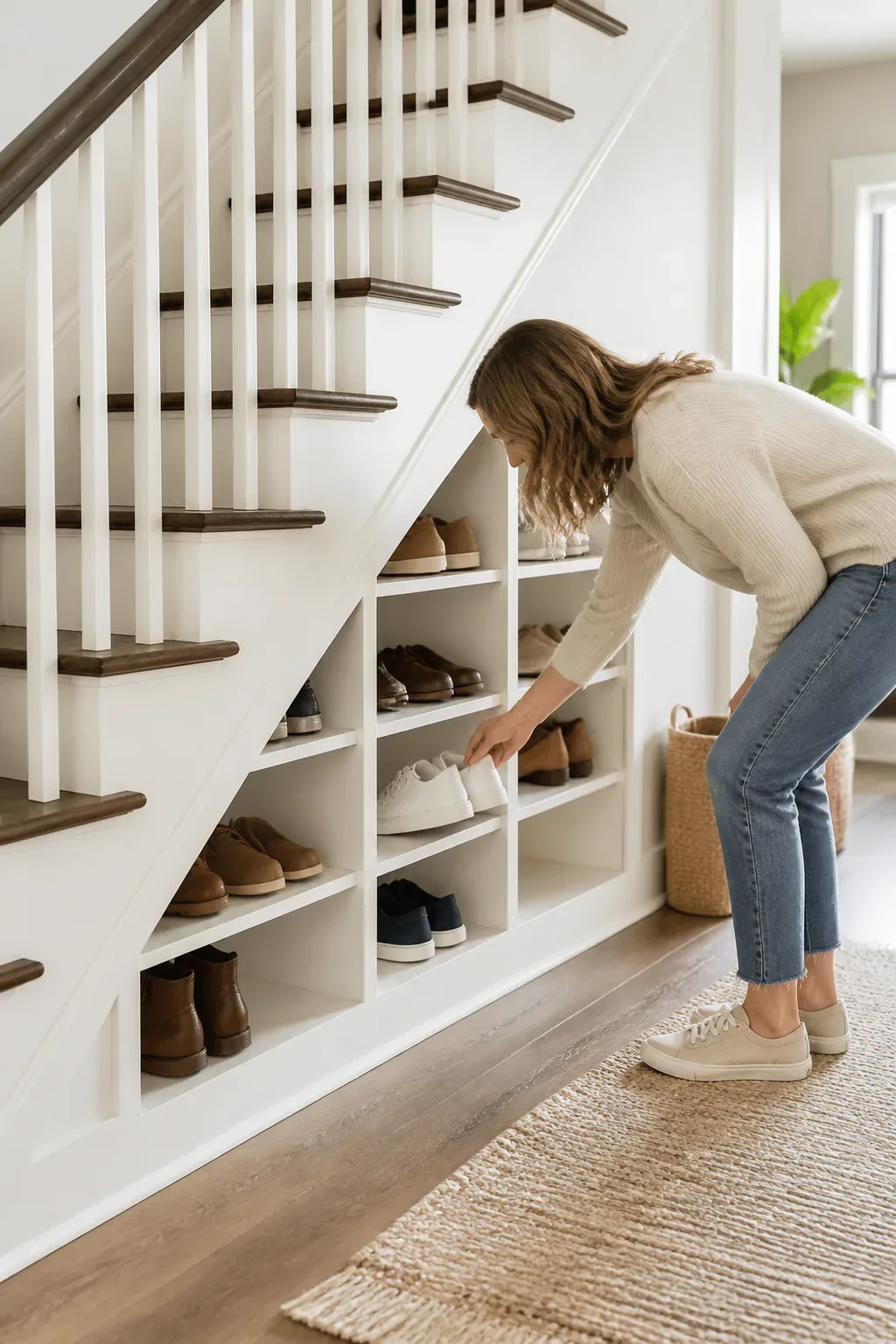
Open space within a staircase can sometimes be adapted for built-in shoe cubbies or pull-out drawers. This makes use of an area that might otherwise go unused and keeps footwear close to a common entry or landing.
Open cubbies offer quick access, while drawers conceal shoes for a more streamlined look. The best arrangement depends on the staircase structure and the available depth, so this idea is most appropriate when the space can be assessed and modified safely.
Plan around the staircase
Because stairs are structural, do not cut into or alter them without understanding how the change may affect their strength. Consider consulting a qualified professional for a built-in project, and plan the openings around the shoes and access needs of your household.
- Measure each opening individually if stair dimensions vary.
- Choose open cubbies for grab-and-go pairs.
- Consider drawers if you want shoes out of sight.
- Keep stair treads and walking paths completely clear.
When planned carefully, this built-in solution can connect entryway storage with the architecture of the home.
7. Add Hanging Shoe Shelves to a Closet Rod

A hanging canvas organizer turns unused vertical space below a closet rod into a column of shoe compartments. It can be a helpful choice when there is no room for a floor rack but the closet has spare hanging space.
The fabric shelves suit lightweight everyday footwear and can keep pairs separated rather than piled together. Since the organizer hangs from the rod, consider how much clothing space you are willing to give up and whether the rod can support the added load.
Set up the shelves for your routine
Hang the organizer where its lower compartments remain accessible and do not drag on the floor. Place lighter shoes in the upper sections if that makes them easier to reach, and check the organizer periodically for sagging or overfilled cubbies.
- Use the compartments for flats, sandals, or light sneakers.
- Keep heavier shoes on a separate, sturdier surface.
- Sort pairs by season or frequency of use.
A hanging organizer can make a closet feel more orderly without requiring tools or a permanent installation.
8. Display Colorful Shoes on Floating Wall Shelves
Floating shelves or slim ledges can turn colorful sneakers and favorite heels into a display while keeping them off the floor. In a mudroom or bedroom, a row of neatly arranged shoes can add personality and make frequently worn pairs easy to grab.
This idea works best when the wall is suitable for mounting shelves and the shoes are clean enough to display. Ledges can be arranged in a straight line or staggered layout, but they should not obstruct doors, switches, or the natural path through the room.
Style a practical shoe display
Choose shelves deep enough to support the shoes securely, and use appropriate hardware for the wall type and expected load. Keep the arrangement simple, with a little breathing room between pairs so the display feels considered rather than crowded.
- Group shoes by color for a coordinated look.
- Place everyday pairs on the most accessible ledges.
- Check that heels and soles sit securely on the shelf.
- Leave room below for cleaning or passing through.
The display can be both decorative and useful when you limit it to pairs you genuinely enjoy seeing.
9. Keep Tall Boots Upright on Inverted Boot Racks
Inverted boot racks hold tall boots upside down on pegs, supporting their shafts instead of letting them fold over on a closet floor. This can help keep the boot shape neater and make a collection of riding or rain boots easier to organize.
A freestanding rack can sit in a closet or mudroom, while a wall-mounted version may save floor space. Think about where boots will drip or dry, and avoid putting damp footwear directly into a tight storage area.
Choose a spot that suits the boots
Check that the pegs fit inside the boot openings without stretching the material, and leave enough room around the rack to remove each pair easily. Keep the rack away from busy walkways where boots could be bumped or knocked over.
- Wipe away mud and let wet boots dry before storage.
- Use pegs that support the shafts without forcing them wider.
- Arrange pairs by height to make the rack easier to scan.
Upright storage helps boots keep their place and can free up valuable closet floor space.
10. Lean a Ladder Rack for Lightweight Shoes

A leaning ladder rack offers a casual way to store lightweight shoes on the rungs. Flats, some heels, and light sneakers can be draped or positioned there, keeping them visible without taking up the footprint of a wide shoe cabinet.
This look can suit a bedroom or dressing area where you want storage to feel decorative. It is not the right choice for heavy boots or a household that needs enclosed storage, and the ladder must be stable so shoes do not shift as people move around it.
Keep the ladder secure and organized
Place the rack on a level surface and position it where it will not become an obstacle. Follow any assembly or leaning guidance, and avoid loading the rungs beyond what the ladder is designed to hold.
- Use lower rungs for pairs you wear frequently.
- Keep shoes balanced rather than crowded together.
- Choose lightweight footwear that sits securely.
- Leave enough clearance to walk past the rack safely.
Used thoughtfully, a ladder makes a small shoe collection part of the room’s relaxed decor.
11. Pair an Entryway Bench with Hidden Shoe Storage

An entryway bench with lower cubbies or a lift-up seat can combine a place to sit with storage for everyday shoes. It is a useful arrangement for putting on footwear near the door while keeping pairs contained instead of scattered across the floor.
Open cubbies make it easy to see and grab shoes, while a lidded compartment creates a tidier appearance. Choose the format based on how quickly your household needs access and whether you prefer shoes on display or out of sight.
Make the bench work for daily use
Measure the area carefully so the bench does not crowd the doorway, and consider how much room is needed to sit down comfortably. Keep the storage focused on frequently worn pairs to prevent the compartments from becoming a catchall.
- Assign a cubby or section to each household member.
- Use a small tray for wet or muddy shoes nearby.
- Choose a seat height that feels comfortable for putting shoes on.
- Keep the bench top clear enough to use as a seat.
This multifunctional piece can make leaving the house feel more organized from the first step.
12. Install Pull-Out Baskets in a Deep Closet
Deep closet shelves can hide shoes at the back, making pairs hard to reach and easy to forget. Pull-out wire baskets bring the contents forward, turning a deep closet tower into accessible storage for sneakers, athletic shoes, or other bulky footwear.
The open mesh lets you see what is inside, and sliding baskets can make better use of a closet’s depth than fixed stacks. This setup requires enough space for the baskets to extend, so check for nearby doors, hanging clothes, and other obstacles.
Plan the pull-out layout
Measure the closet interior and compare it with the basket hardware before installation. Arrange the baskets at heights that work for your routine, and make sure the closet structure and chosen fittings can support the intended use.
- Keep heavy pairs in lower baskets when practical.
- Group athletic shoes separately from dress shoes.
- Leave space to pull each basket out fully.
- Clean shoes before storing them in open mesh.
With thoughtful placement, a deep closet can become easier to scan and use every day.
13. Make a Closet Heel Rail with Tension Rods

Tension rods placed near the closet floor can create a simple rail for heels. The heel catches on the rod while the front of the shoe rests below, turning an overlooked section of closet into organized storage for selected pairs.
This idea works best for shoes with a heel shape that can sit securely on the rail. It is not suited to every style, and the rods need a firm, stable fit between the closet walls to prevent shoes from slipping or the setup from shifting.
Adjust the rails to fit your shoes
Test the rod placement with one pair before arranging the rest. Set the height and spacing so shoes hang evenly, and follow the tension rod’s instructions to keep it secure without damaging closet surfaces.
- Choose rods with a length suited to the closet opening.
- Check that each shoe rests securely before adding more.
- Keep flats and boots in a different storage area.
- Recheck the tension if the rods begin to move.
A pair of simple rails can make heels visible without taking over a shelf.
14. Turn a Slim Bookshelf into a Shoe Display
A shallow bookshelf can become a practical shoe display in a foyer, mudroom, or bedroom. Its shelves provide a clear home for pairs, and the open design makes it easy to see what is available before heading out.
Repurposing a bookcase can be especially useful if you already have one that is no longer needed for books. Spacing matters: flats and low sneakers need less vertical clearance than high-tops or heels, so adjustable shelves offer flexibility when available.
Arrange shelves around shoe height
Measure the tallest shoes you plan to store, then adjust or assign shelf space accordingly. Secure a tall bookcase as appropriate for your home, and avoid overloading shelves or placing the unit where it narrows a passageway.
- Put everyday pairs on the easiest shelves to reach.
- Group shoes by type to make pairs simpler to find.
- Leave extra height for boots or high-top sneakers.
- Use a mat beneath the unit to protect the floor.
The result can feel like a useful piece of furniture rather than a dedicated shoe rack.
15. Fit Awkward Corners with Modular Shoe Cubes
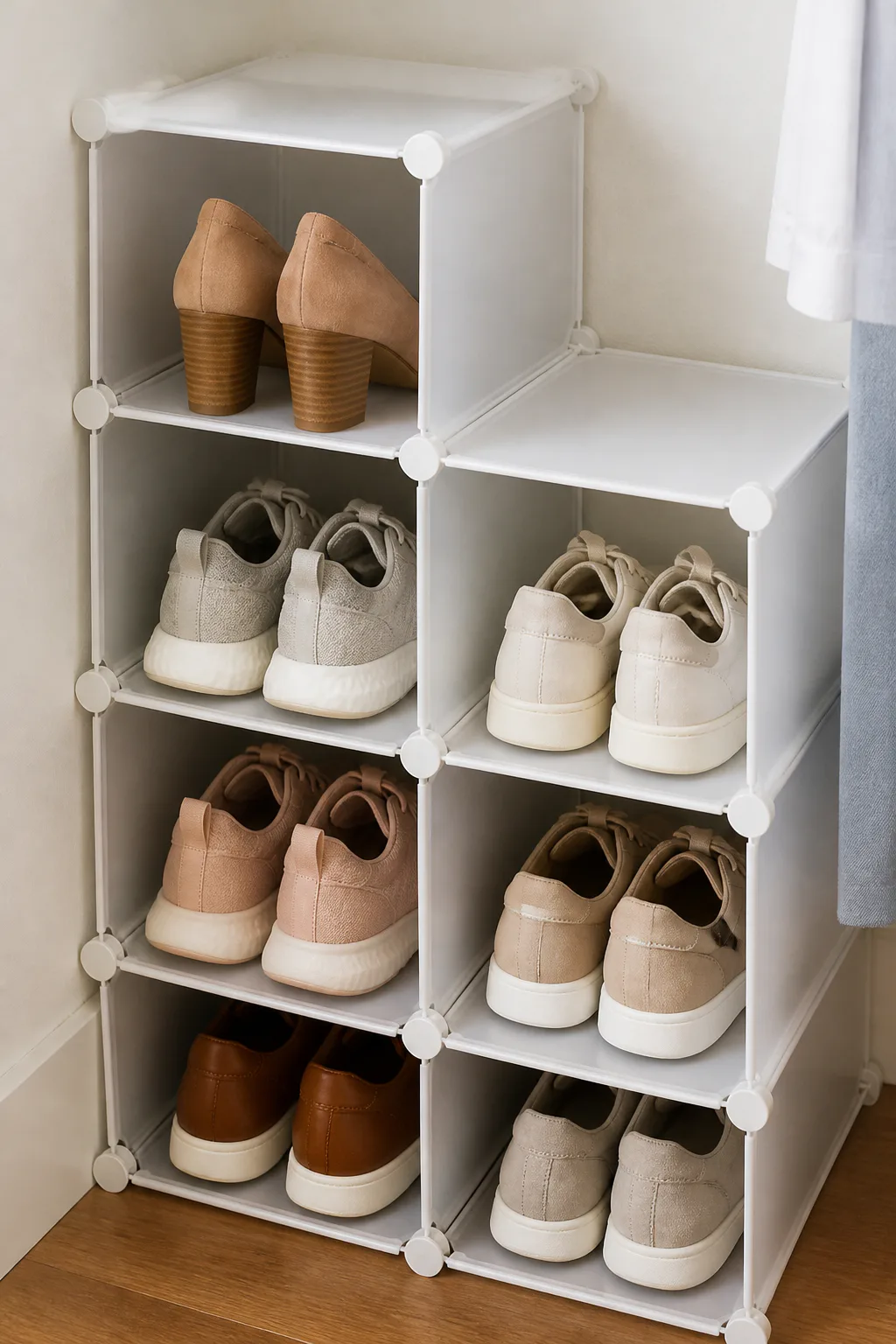
Modular cubes can be connected into different shapes to make use of a closet corner or an awkward stretch of wall. Their grid layout creates separate compartments, helping keep pairs together while adapting to the space you actually have.
Depending on the system, cubes can be arranged in a square, a staggered column, or an L-shape. This flexibility can be handy when a standard rack does not fit, but the finished configuration should remain stable and accessible rather than filling the room simply because more pieces are available.
Build a layout that fits your space
Measure the corner and map out the shape before connecting the cubes. Check the unit’s assembly guidance, use any recommended connectors, and keep the overall height manageable for the people who will use it.
- Use larger compartments for sneakers or bulky shoes.
- Place frequently worn pairs in the easiest-to-reach cubes.
- Leave an opening or gap if the corner is hard to access.
- Reassess the layout as your storage needs change.
Modular storage is a flexible way to turn an odd corner into a useful shoe zone.
Final Thoughts
The best shoe storage idea is the one that fits both your space and your habits. A slim cabinet or bench can tidy an entryway, while closet stackers, hanging shelves, and pull-out baskets can make existing storage work harder.
Start with the shoes you wear most, measure before choosing a solution, and keep the pairs you reach for regularly easy to access. Even a small change—like adding a shelf, organizing a closet corner, or clearing space beneath the bed—can make your home feel more orderly.