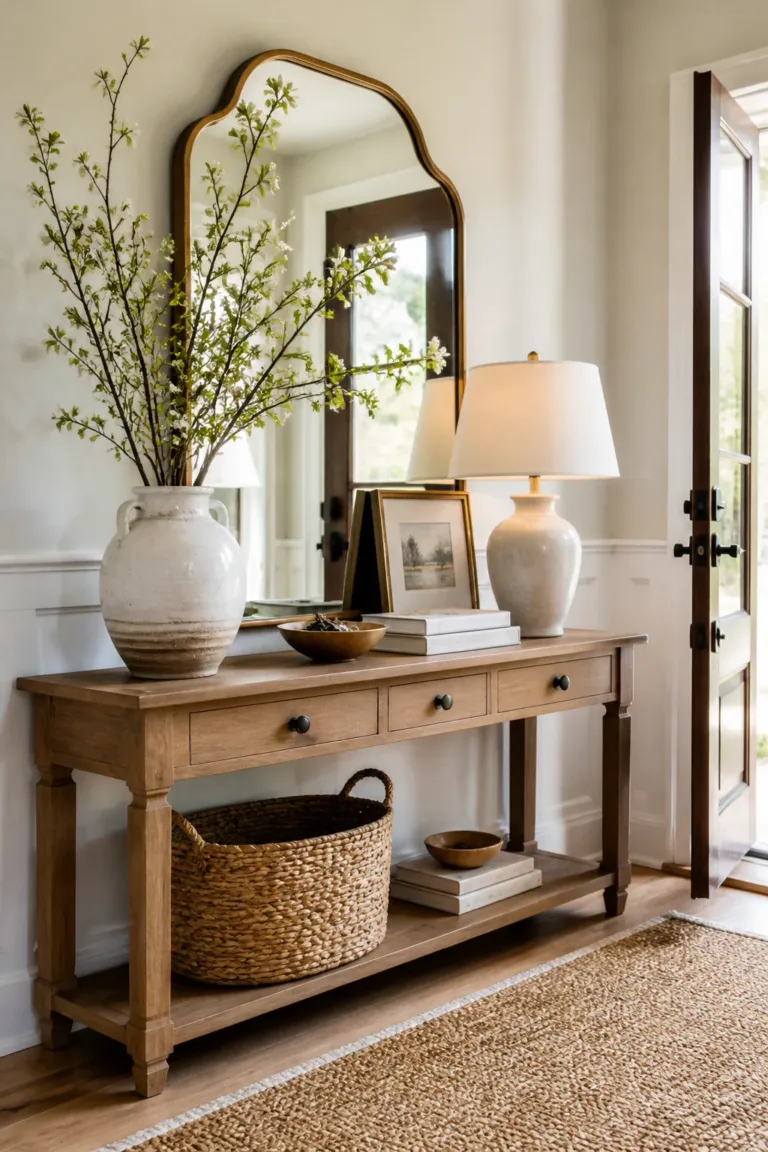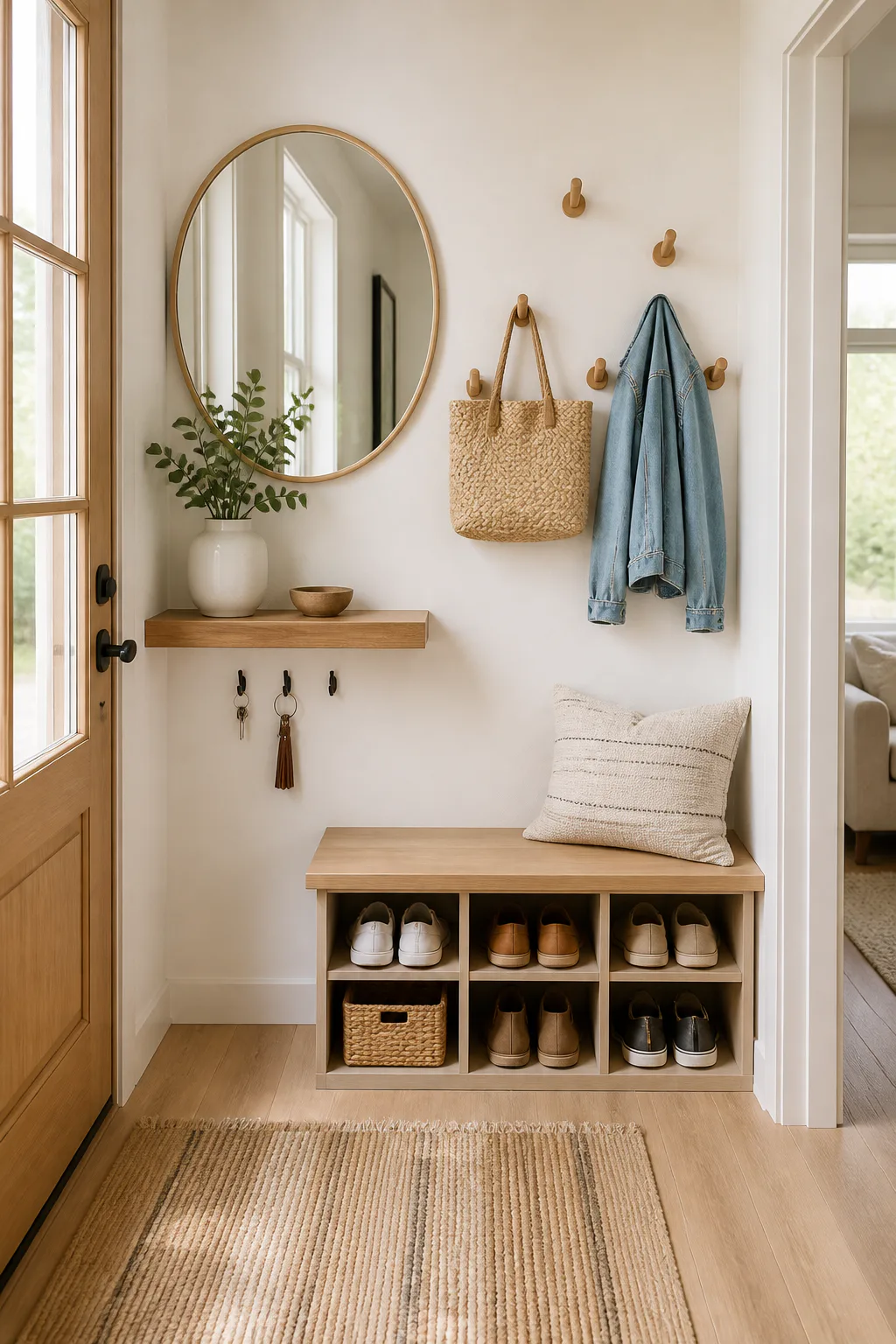
12 Stunning Small Entryway Ideas for a Tidy, Welcoming Home
A small entryway has to do a lot with very little room. It’s where you set down keys, take off shoes, and grab a coat on the way out, but bulky furniture can quickly make the area feel crowded.
The most useful small entryway ideas make the walls work harder and give everyday items a clear place to land. A few thoughtful choices can help keep the floor open while making the first few feet of your home feel more welcoming.
Whether you’re working with a narrow hallway, a tiny foyer, or a corner that opens directly into the living room, these ideas offer practical ways to organize and define the space. Choose the pieces that fit your routine, then leave enough breathing room for an easy path through the door.
Quick Answer
The best small entryway ideas use the walls instead of the floor: a floating ledge, staggered hooks, a magnetic key organizer and a slim wall-mounted shoe cabinet keep essentials tidy without crowding the space. Add an oversized mirror and a cordless lamp to make it feel brighter, and a bench with shoe cubbies, a boot tray or a flatweave runner to handle shoes and traffic.
1. Add a Floating Ledge for Everyday Essentials

Best for: A quick drop spot for keys and mail
Effort: An afternoon project
A shallow floating ledge gives keys, sunglasses, and other daily essentials a home without the footprint of a full console table. Mounted directly to the wall, it leaves the floor clear, which is especially helpful in a narrow hallway or a small foyer where every inch matters.
Choose a ledge that’s deep enough for the items you actually use but not so deep that it interrupts the walkway. Wood brings warmth to a plain wall, while a painted or streamlined ledge can blend into the background. Keep the surface edited so it stays useful rather than turning into a catchall.
How to style and organize it
Think of the ledge as a landing spot for a small, predictable set of belongings. A little structure helps prevent mail, accessories, and loose change from spreading across the surface.
- Measure the wall and door clearance before choosing a ledge depth.
- Use a small bowl or tray to gather keys and coins.
- Keep one end clear for items you need to grab on your way out.
A ledge can also anchor a mirror or a simple piece of art above it, creating a finished look without adding more furniture.
2. Hide Shoes in a Slim Wall Cabinet

Best for: Hiding shoes in a narrow hall
Effort: An installation project
Shoes often take over a small entryway because they collect right where people come in and out. A slim wall cabinet keeps footwear behind closed doors, giving the space a tidier appearance without adding a deep piece of furniture to the floor.
Look for a cabinet designed to sit close to the wall, and check its depth, door style, and capacity against the shoes your household wears most. Pull-out or tilting compartments can make a narrow profile more practical, though the cabinet still needs enough clearance to open comfortably.
Make the cabinet work for your routine
Choose a spot near the door that doesn’t block the natural walking path. If several people use the entry, give each person a predictable shelf or compartment so shoes don’t end up scattered nearby.
- Measure the available wall and door swing before installing.
- Store everyday pairs in the easiest-to-reach compartments.
- Keep bulky boots elsewhere if they don’t fit the cabinet neatly.
- Pair the cabinet with a small mat for shoes that are still damp.
With the footwear tucked away, the entry feels calmer and the floor is easier to sweep or vacuum.
3. Create a Bench with Built-In Shoe Cubbies
Best for: Sitting down to put on shoes
Effort: A weekend project
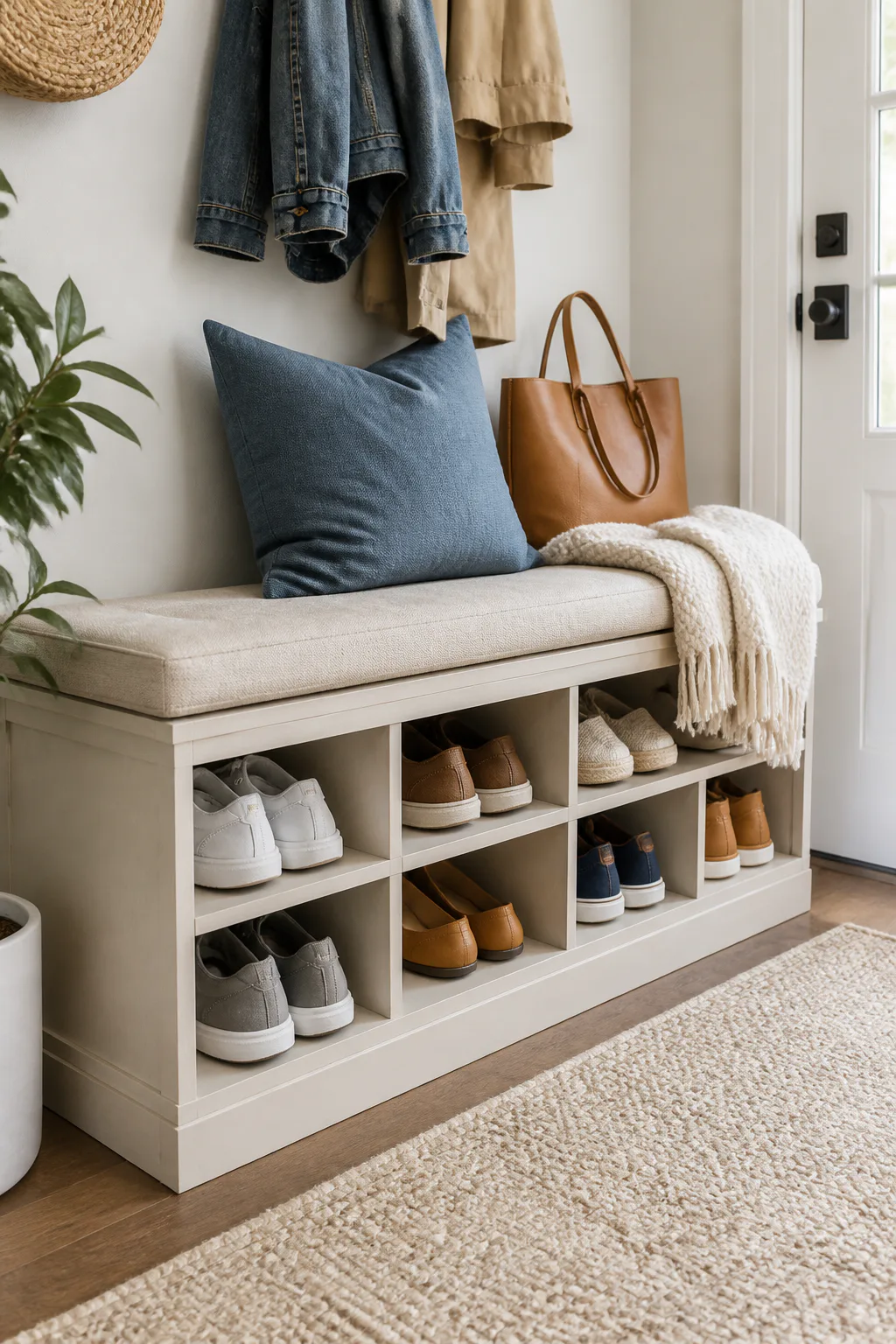
A compact bench with lower shelves or cubbies combines a useful seat with everyday shoe storage. It gives you a comfortable place to sit while putting on or taking off footwear, and it helps keep pairs grouped instead of scattered across the entry floor.
This idea works well along a wider hallway wall or in a small foyer where there’s room to sit without narrowing the route through the door. Choose a bench that fits the available width and leaves comfortable clearance around nearby doors. An open design can feel lighter than a solid storage piece in a tight space.
Choose a setup that stays easy to use
The best bench is sized for daily habits, not every shoe the household owns. Keep the most frequently worn pairs in reach, and use baskets or dividers if open cubbies tend to look cluttered.
- Measure the wall and walkway before settling on a bench size.
- Leave room for knees and feet when someone is seated.
- Use one cubby per person or shoe category to simplify tidying.
- Add a washable cushion if you want a softer seat.
A small bench can make the entry feel more welcoming while giving a practical purpose to an otherwise empty wall.
4. Tuck a Storage Ottoman Beneath a Console
Best for: Hidden storage in tight spaces
Effort: Under an hour
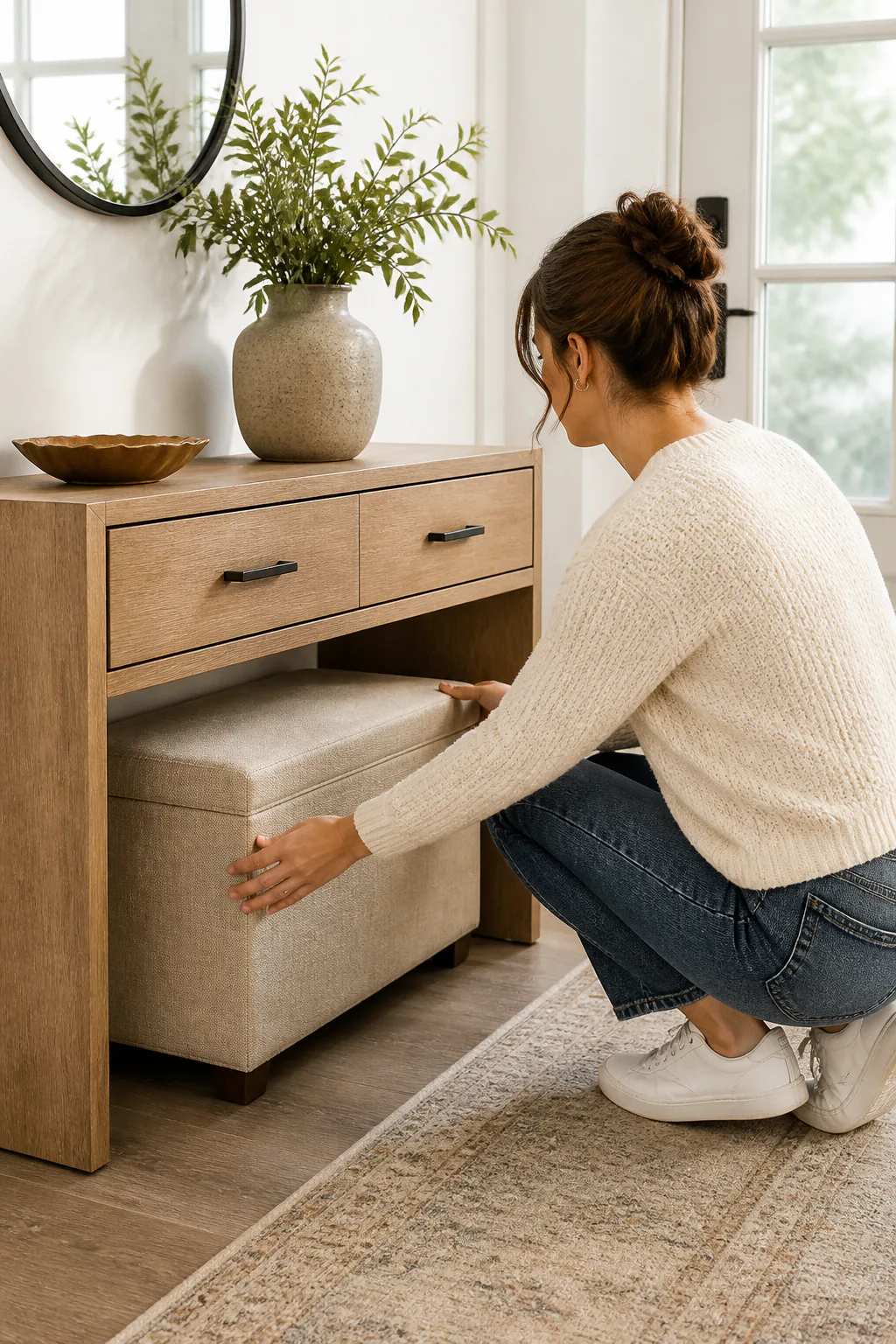
A small stool or storage ottoman can add a seat to an entryway without permanently claiming much floor space. When it’s tucked beneath a console or into an open corner, it stays out of the way until someone needs to sit down to change shoes.
A storage ottoman has an extra advantage: its interior can hold scarves, gloves, or dog leashes that are useful near the door but don’t need to remain visible. Choose a compact shape that slides easily into its spot, and consider upholstery that can handle regular use.
Keep it convenient, not crowded
Check that the ottoman can be pulled out without blocking the door or making the hallway hard to pass through. If your space is especially tight, a lightweight stool may be easier to move than a larger, lidded piece.
- Match the ottoman’s height to the console or seat area.
- Store only entry-related items inside to avoid a catchall pile.
- Choose a cover that’s easy to clean or maintain.
- Leave enough clearance to pull it out comfortably.
It’s a flexible way to add a little seating and hidden storage while keeping the entry’s main footprint small.
5. Mount a Staggered Row of Wall Hooks

Best for: Coats and bags for the whole family
Effort: Under an hour
Wall hooks make use of vertical space for coats, tote bags, and dog leashes, keeping those items off chairs and away from the floor. A staggered arrangement can fit several hooks into a compact area while making it easier to separate bulky coats from smaller accessories.
Install the hooks where they’re easy to reach but don’t interfere with the door, light switches, or nearby furniture. In a narrow hallway, a short hook rail can be more orderly than several widely spaced hooks. Choose a sturdy style and fasten it securely, especially if it will hold heavy bags or winter coats.
Plan for what you hang
Think about the people who use the entry and the items they need to grab every day. Placing a lower hook within a child’s reach, for example, can make it easier to put away a backpack or jacket independently.
- Check wall construction and use appropriate mounting hardware.
- Space hooks to prevent coats and bags from overlapping too much.
- Reserve a convenient hook for a frequently used leash or bag.
- Keep a few hooks open so the wall doesn’t become overloaded.
Keeping the floor clear helps the entry feel more open and makes daily cleanup simpler.
6. Install a Magnetic Mail and Key Organizer
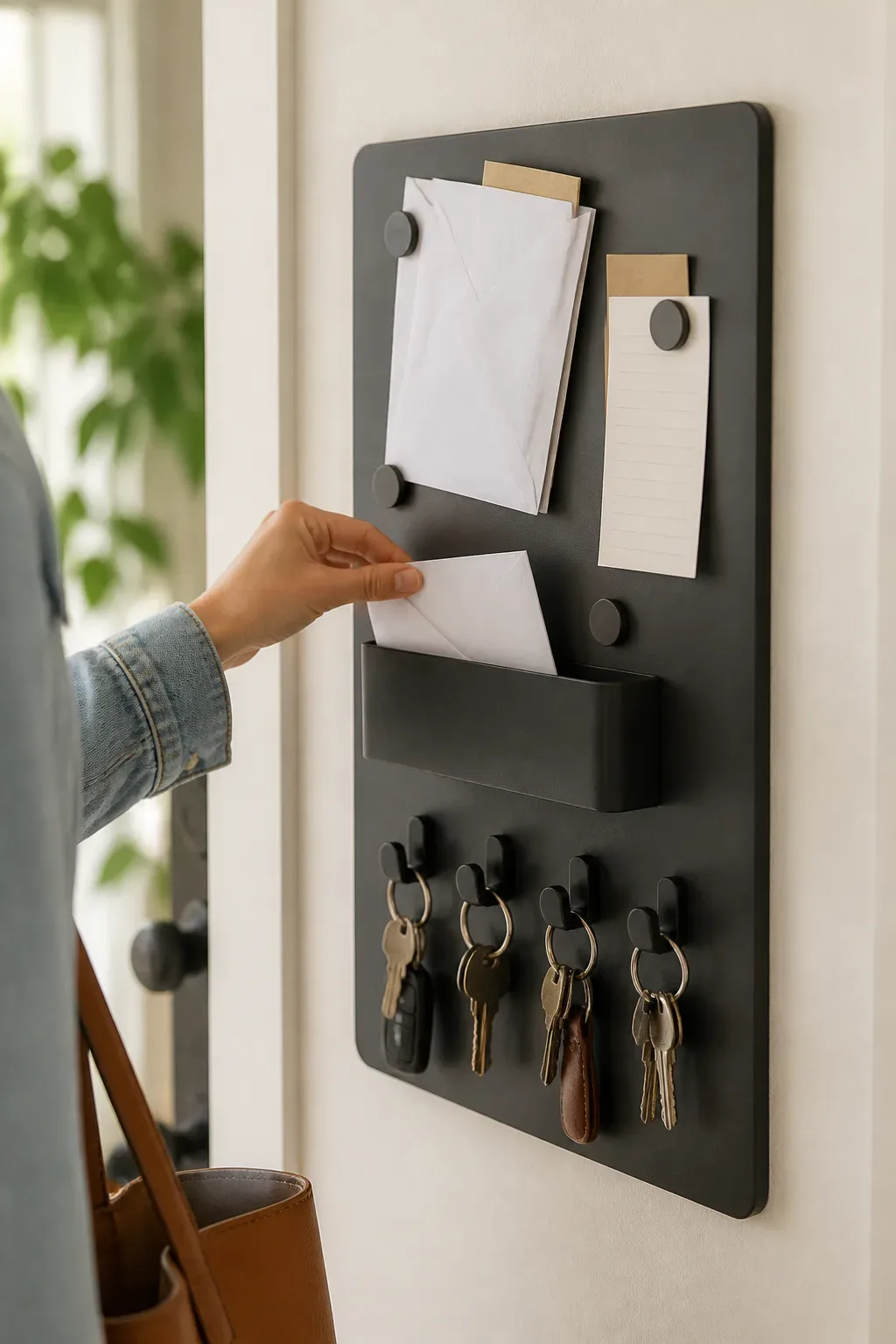
Best for: Never losing keys again
Effort: Under an hour
A magnetic wall organizer can create a compact control panel for the small things that are easy to misplace. Keys, incoming mail, and important notes stay visible and gathered in one spot, rather than spreading across a console or kitchen counter.
Place it near the door at a comfortable height, ideally where you naturally pause when coming home. A simple organizer can suit a narrow wall or the side of a cabinet, while a larger layout may work if several people need their own place for keys and reminders.
Give each item a clear place
Use the organizer for things you need to see or grab often, rather than treating it as long-term paper storage. A quick routine for sorting mail can keep the display useful and prevent reminders from getting buried.
- Choose a location that’s easy to reach on your way in and out.
- Assign a hook or magnetic spot to each set of keys.
- Keep only current mail and notes in view.
- Check that magnets or clips can hold the papers you plan to display.
Because the organizer sits on the wall, it can add function without taking up valuable surface or floor space.
7. Hang an Oversized Mirror to Open the Space
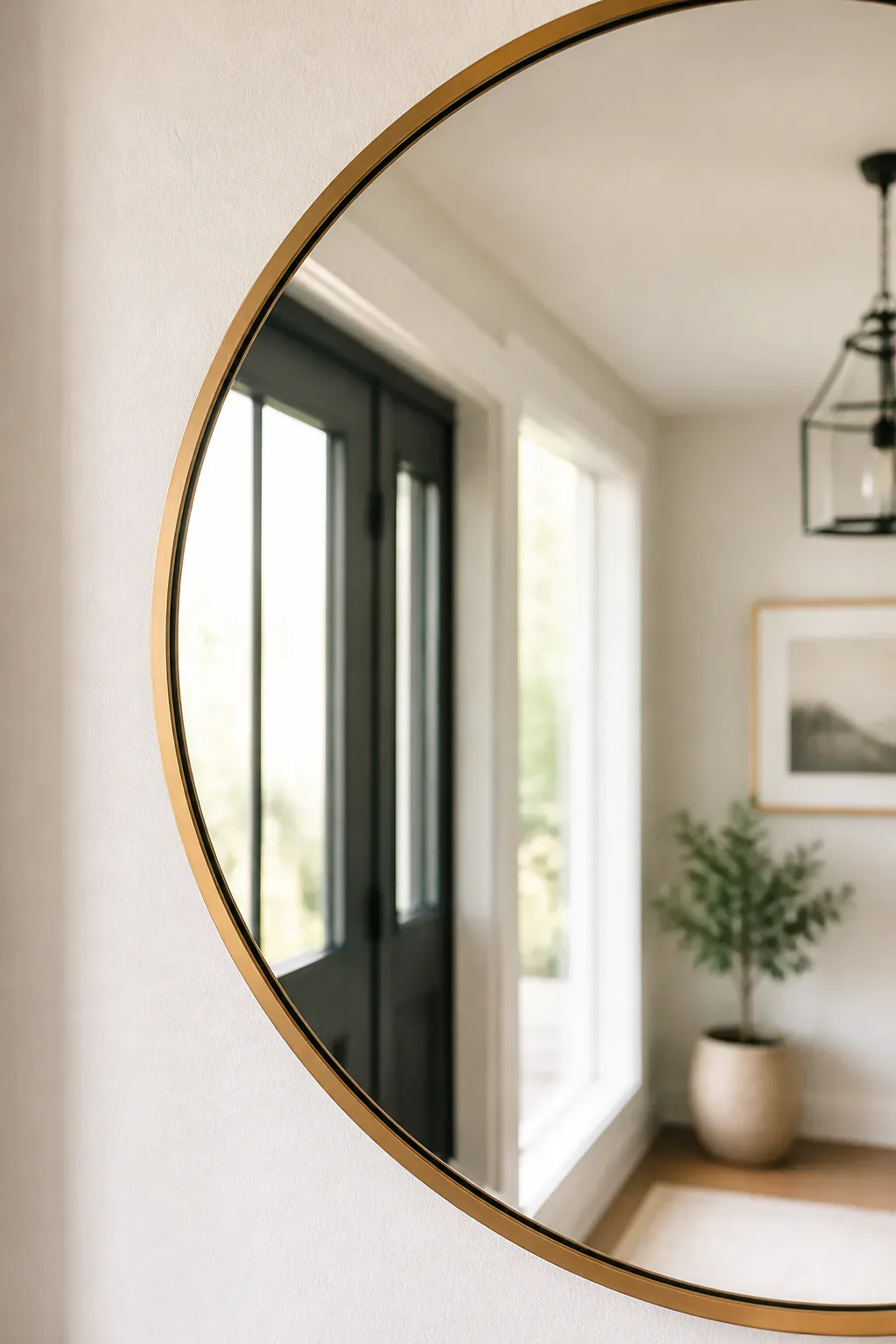
Best for: Making a dark entry feel bigger
Effort: An afternoon project
An oversized mirror can make a compact entry feel brighter and more spacious by reflecting light and giving the eye a longer view. A round mirror softens a collection of straight lines, while an arched shape can add a subtle architectural detail above a ledge or bench.
For the strongest effect, place the mirror opposite a window, a glass door, or another light source when the layout allows. In a windowless hallway, it can still reflect the room and make the entrance feel less closed in. Check what the mirror will reflect before hanging it so the view feels intentional.
Choose the right placement
A mirror is most useful when it’s easy to glance into before leaving, but it shouldn’t obstruct the entry or compete with nearby hooks. Secure it properly and consider the wall surface, mirror weight, and mounting hardware before installation.
- Measure the wall and nearby furniture before choosing a size.
- Position it to catch available natural or lamp light.
- Leave room below for a ledge, bench, or other useful element.
- Check the reflection from the doorway and main approach.
As both a practical last-look mirror and a visual lightener, it can help a small entry feel more open without adding clutter.
8. Mount a Mailbox as a Slim Paper Drop Zone
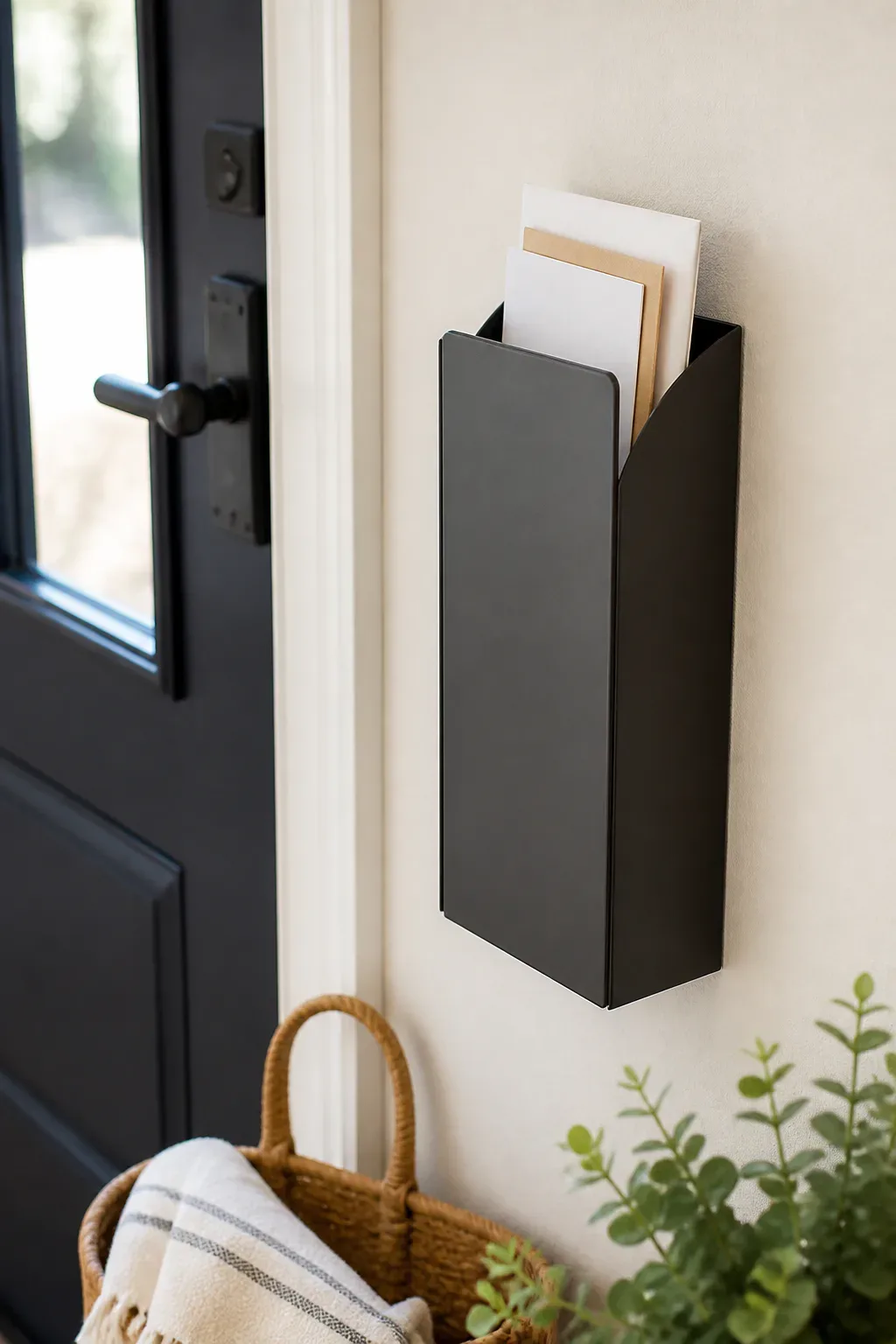
Best for: Stopping mail from piling up
Effort: Under an hour
A wall-mounted mailbox gives incoming letters a contained place to land without using a tabletop. Its narrow, vertical profile can work beside the door or on a small section of hallway wall, where a basket or mail stack might make the entry feel crowded.
Choose a style that suits the room, from a simple modern metal box to a more decorative vintage-inspired design. The opening should be easy to use, and the box should be large enough for the kinds of papers you receive. A mailbox is best for short-term sorting, not for holding mail indefinitely.
Build a simple paper routine
Mount it somewhere you’ll notice when you come in, but keep it clear of doors and other wall-mounted pieces. Emptying it regularly helps prevent the drop zone from becoming a hidden pile of bills and flyers.
- Pick a spot that’s convenient to reach from the doorway.
- Check that envelopes fit through the opening comfortably.
- Use it for incoming papers rather than general household storage.
- Sort or remove the mail on a regular schedule.
The result is a tidy place for paper that doesn’t ask your small entryway to give up more floor space.
9. Define the Entry with a Flatweave Runner

Best for: Defining a doorway with no foyer
Effort: Under an hour
In an open layout, a flatweave rug or narrow runner can visually mark where the entry begins and the rest of the room takes over. It adds color and texture without requiring a divider, making it a simple way to give a doorway area its own sense of purpose.
Because the rug sits in a high-traffic spot, choose a durable style that’s easy to shake out or clean. A low-profile weave is generally easier to walk over and less likely to catch on a door. Measure the area carefully so the runner defines the entry without making the path feel pinched.
Find a size and placement that fit
Set the rug where people naturally step inside, leaving a clear route around it. If the door swings inward, check that the rug’s thickness doesn’t interfere with opening and closing it.
- Measure the entry area and door clearance before buying.
- Choose a washable or easy-to-maintain material when possible.
- Use a non-slip pad if the rug shifts on the floor.
- Select a pattern or color that connects with nearby rooms.
A well-placed runner makes the entry feel intentional while helping protect the floor from everyday foot traffic.
10. Style a Felt-Lined Bowl for Keys

Best for: A tidy, stylish key spot
Effort: Under five minutes
A small catchall bowl on a ledge gives keys and coins a clear landing place at the end of the day. A felt lining softens the sound of metal being dropped in, while the bowl’s shape keeps small essentials from wandering across the surface.
Choose a size that fits the ledge without crowding other useful items, and select a material that suits the rest of the entry. Ceramic can add color or a handmade feel, while marble brings a smooth, weighty accent. Keep the bowl close to the door so putting things away becomes a natural habit.
Make the catchall easy to maintain
A bowl works best when it has a clear purpose. If it becomes a resting place for receipts, loose buttons, and unrelated items, it can turn a tidy ledge into a cluttered one.
- Pick a bowl wide enough for your everyday keys and coins.
- Use a removable felt insert if you want to clean it easily.
- Set it on a stable surface where it won’t be bumped.
- Empty it periodically to remove items that don’t belong there.
This small detail adds a softer finish to the entry while making daily essentials easier to find.
11. Add a Cordless Accent Lamp to a Mini Shelf

Best for: Soft light without wiring
Effort: Under five minutes
A rechargeable cordless lamp can bring a warm pool of light to an entryway where there isn’t a convenient outlet. Set on a mini shelf, it offers a welcoming glow without a cord crossing the wall or taking up floor space with a lamp base.
Look for a compact lamp that sits securely on the shelf and gives enough light for the mood you want. A soft accent glow can make a dark hallway feel more inviting, while a brighter setting may help when you’re looking for keys or checking the mirror before heading out.
Keep the lighting practical
Place the lamp where it won’t be knocked by bags or interfere with the door. Since cordless lights need recharging, choose a design that’s simple to lift and recharge as part of your regular routine.
- Check the shelf’s depth and weight capacity first.
- Keep the lamp away from the edge of the ledge.
- Choose a light level that suits the entry’s existing lighting.
- Set a reminder to recharge it before it runs low.
A small lamp can make a functional drop zone feel more finished, especially in an entry that gets little natural light.
12. Set a Boot Tray Beneath the Entry Setup

Best for: Wet or muddy boots
Effort: Under five minutes
A low-profile tray catches wet shoes, snowy boots, and stray umbrellas before moisture reaches the rest of the floor. Tucked beneath a bench or near the door, it keeps messy footwear contained while giving frequently worn pairs a defined place to dry.
Copper and woven styles can add texture, while a simpler tray may be easier to wipe down after rainy weather. Consider the size of the shoes you need to hold and leave enough room to step around it. A tray should help manage the entry, not become an obstacle in the main walking path.
Make room for wet-weather gear
Position the tray close enough to the door that it’s easy to use right away. If umbrellas are part of the routine, keep them nearby without letting water drip across the floor; a separate upright holder may suit a larger entry.
- Choose a tray that fits the space and your everyday footwear.
- Use a washable liner or wipe the tray regularly.
- Keep the area around the tray clear for safe footing.
- Let wet shoes dry before putting them back in closed storage.
This finishing touch supports the rest of your organization by giving damp, dirty items their own contained spot.
Frequently Asked Questions
How do I organize a small entryway with no closet?
Use the walls: hooks for coats and bags, a floating ledge for keys and mail, and a slim wall cabinet or bench with cubbies for shoes.
What furniture works best in a small entryway?
Choose wall-mounted pieces or a narrow console with a storage ottoman tucked underneath so the walkway stays clear.
How can I make a small entryway look bigger?
Hang an oversized mirror, add a warm lamp and keep the floor clear except for a slim runner.
What are renter-friendly entryway ideas?
Adhesive or command hooks, a cordless lamp, a felt-lined key bowl, a boot tray and a flatweave runner need no drilling.
Final Thoughts
A well-organized small entryway doesn’t need a lot of furniture. Floating ledges, wall hooks, mirrors, and slim storage can make use of vertical space, while a bench or ottoman adds function when there’s room for one.
Start with the everyday problem that bothers you most, whether it’s shoes piling up, keys going missing, or wet boots leaving marks on the floor. Add one solution, see how it works with your routine, and build from there. A few thoughtful changes can make the entrance feel both more practical and more welcoming.