
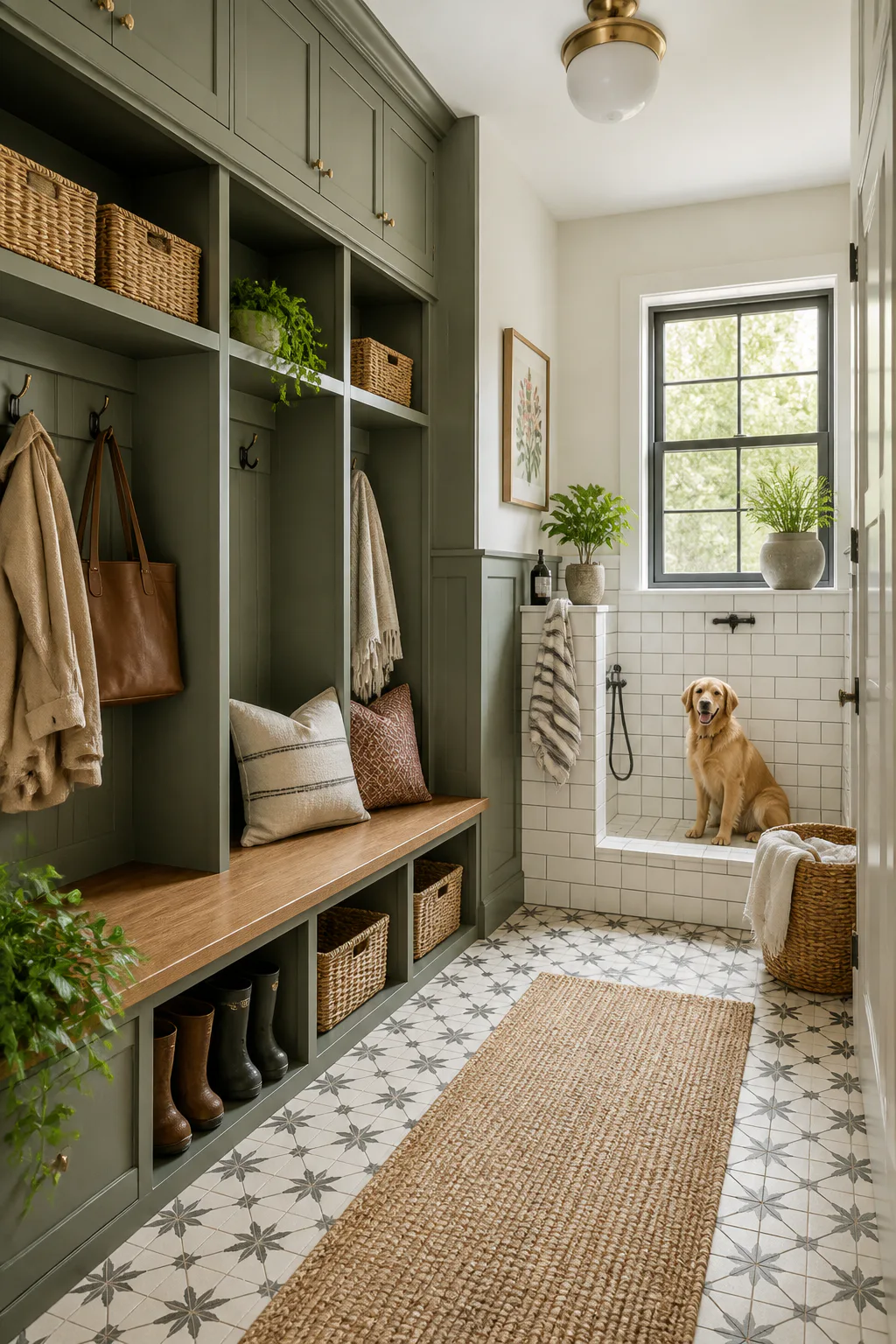
15 Stunning Mudroom Ideas for a More Organized Entry
A well-planned mudroom makes the daily rush in and out of the house feel a little more organized. It gives shoes, coats, bags, and muddy gear a place to land instead of letting them spread through the entryway.
You don’t need a large dedicated room to make it work. The ideas below include full built-ins, hallway and garage drop zones, and compact options that can suit a small home or rental.
As you choose a design, think about who uses the space, what needs to be stored, and how much cleaning the entry gets. Durable surfaces and easy-to-reach storage can help your mudroom look inviting while standing up to everyday use.
1. Build Floor-to-Ceiling Family Lockers

Give every family member a dedicated locker to make the daily drop-off routine easier to manage. A useful setup might include a lower shoe drawer, hooks for coats and bags, an open cubby for frequently used items, and an upper cabinet for seasonal gear.
Floor-to-ceiling storage makes use of vertical wall space, which is especially valuable in a narrow mudroom. It also creates a unified, built-in look that can help an active entry feel more orderly, even when everyone is coming and going at once.
Plan each locker around its user
Before building, consider what each person actually needs to store and how easily they can reach it. Keep everyday hooks and cubbies accessible, and reserve higher cabinets for things used less often.
- Assign one locker to each family member.
- Include hooks at comfortable heights for both adults and children.
- Use pull-out drawers or trays to keep shoes contained.
- Label cubbies if shared storage tends to get mixed up.
A coordinated locker wall can be both a practical storage system and the main architectural feature of the room.
2. Create a Hallway Mudroom Bench

A wide hallway can do more than connect rooms. With a low bench, wall hooks, and shallow overhead cabinets, an underused stretch of wall can become a compact landing spot for shoes, coats, and everyday bags.
This approach is useful when there is no separate mudroom but you want to keep clutter near the entrance. The bench gives people a place to sit while putting on shoes, while overhead cabinets provide storage without taking up much floor area.
Keep the passage comfortable
Measure the hallway carefully before adding furniture or cabinetry. The bench and storage should leave enough clear space for people to pass without brushing against bags or bumping into open cabinet doors.
- Choose a bench with a slim profile for a narrower corridor.
- Mount hooks where coats can hang without obstructing the walkway.
- Use shallow cabinets for hats, gloves, and other small items.
- Add a basket beneath the bench for shoes or reusable bags.
A few carefully chosen pieces can turn a transitional hallway into a useful mini mudroom without making it feel crowded.
3. Install a Slate or Concrete Entry Floor

Flooring near an exterior door needs to handle wet boots, muddy paws, and frequent cleaning. Slate and sealed concrete are practical choices for a hard-working entry because they provide durable surfaces that are easier to wipe down than carpet.
Slate brings natural variation in color and texture, while concrete offers a simple, streamlined look. Either can set a grounded tone for the mudroom and pair well with painted cabinetry, wood accents, or open storage.
Choose a finish that suits everyday use
Consider how the floor will feel underfoot and how it will look with the rest of the house. A textured surface can offer useful grip, while the right sealer helps make cleanup more manageable; follow the product guidance for installation and ongoing care.
- Use a boot tray near the door to collect dripping water.
- Pick a finish that complements nearby flooring and trim.
- Ask an installer about sealing and maintenance needs.
- Place a washable mat where people remove shoes.
A resilient floor creates a dependable foundation for the rest of the mudroom design.
4. Make a Statement with Patterned Floor Tile

Patterned tile can turn the floor into a focal point the moment you enter. High-contrast encaustic-style or geometric ceramic tile brings energy to a small space and can help disguise everyday marks between cleanings.
Because a mudroom often has limited wall space for decoration, the floor is a natural place to introduce color and pattern. It can make simple cabinetry and hooks feel more distinctive without adding visual clutter to the walls.
Balance the pattern with quieter finishes
Let the tile lead the palette, then keep surrounding elements relatively calm. A strong geometric floor often works well with plain cabinetry, simple hooks, and a restrained wall color so the entry feels considered rather than busy.
- Bring home samples to compare with your lighting and paint.
- Choose a pattern scale that suits the size of the entry.
- Check that the tile is appropriate for a frequently used floor.
- Use a mat near the door without covering the main design.
Thoughtful patterned tile adds personality while still serving a hardworking part of the home.
5. Add a Pet Washing Station by the Door
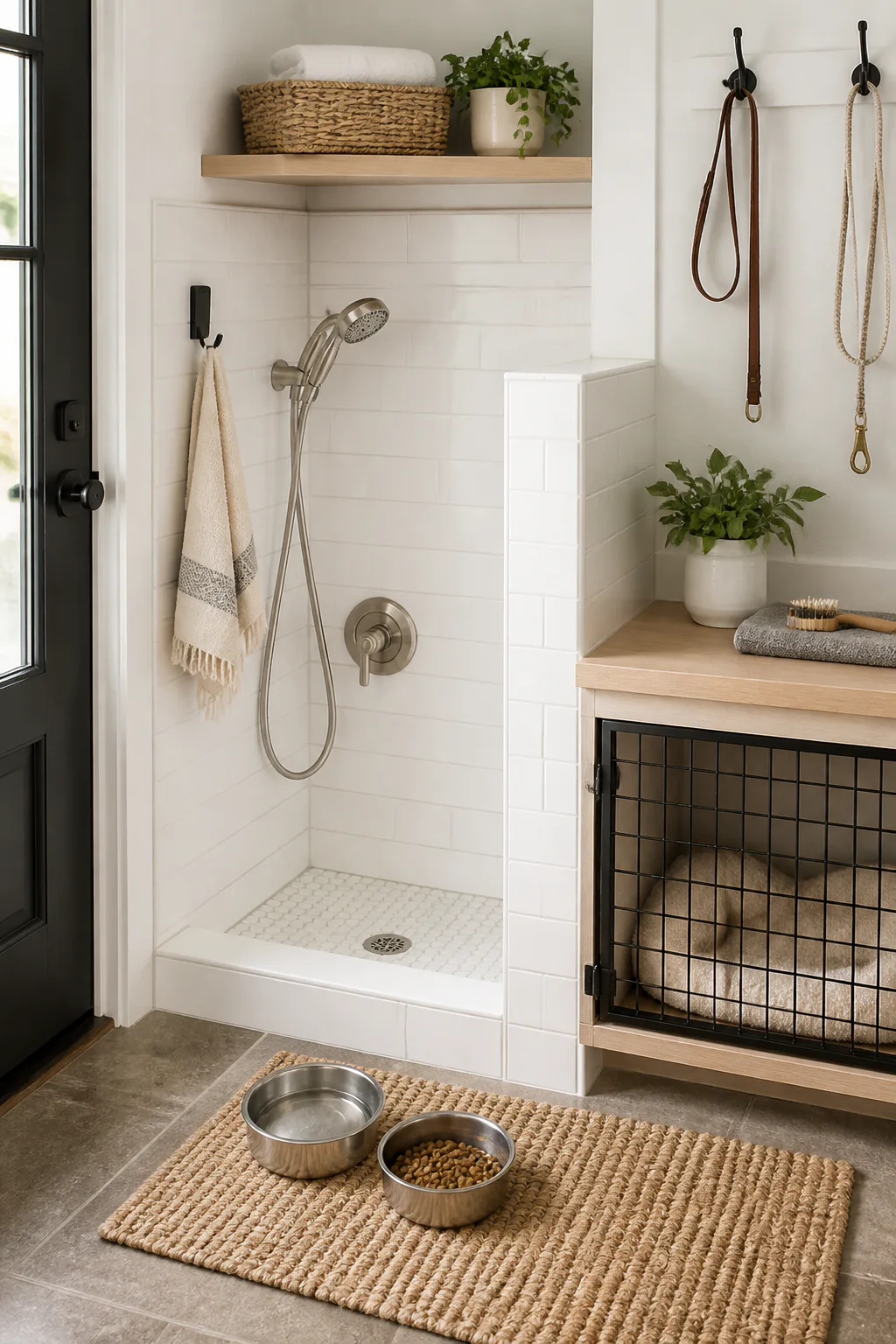
A pet washing station can make muddy-paw cleanup easier by keeping rinsing close to the entrance. Depending on the available space, it might be a tiled rinse shower or a simple foot-washing basin placed near the door and within reach of towels.
Pairing the washing spot with an under-bench dog crate can create a compact pet zone. It helps keep cleanup supplies and pet gear in one area instead of spreading bowls, leads, and towels throughout the entry.
Make the routine easy to manage
Plan the station around the size of your pet and the plumbing and drainage options in the room. A washable wall surface and a place to hang towels can help keep the surrounding area tidy after rinsing.
- Keep pet towels and cleaning supplies within easy reach.
- Choose a non-slip surface suitable for wet paws.
- Allow enough room to guide your pet in and out safely.
- Use the space beneath a bench for a crate if it fits your pet.
A dedicated wash area is especially handy for homes where outdoor adventures often end with muddy paws at the door.
6. Install a Dutch Door at the Entry

A Dutch door is divided horizontally so the top and bottom sections can open separately. At an entry, that split design can bring in light and fresh air while the closed lower half helps keep pets or small children contained indoors.
It can also give a mudroom a welcoming, traditional detail. Since the door is a visible part of the entrance, its color and hardware can tie into nearby cabinetry or provide a simple accent against a more neutral room.
Consider how the doorway is used
Think through the door’s location, swing, and day-to-day traffic before choosing one. A split door may be useful for ventilation or keeping an eye on the outdoors, but it still needs to work with the entry’s layout and your household’s routines.
- Check that the door swing won’t interfere with the bench or storage.
- Choose secure latches for both sections.
- Coordinate the finish with nearby trim or built-ins.
- Ask a professional about installation and weather sealing.
When it suits the home, a Dutch door combines a practical entry function with a distinctive architectural touch.
7. Combine the Mudroom and Laundry

Putting laundry appliances in the mudroom can make it easier to deal with dirty clothes as soon as they come inside. Muddy layers, damp outdoor gear, and sports uniforms can move directly from the entry area to the wash instead of traveling through the house.
A stacked washer and dryer can help preserve floor space, leaving room for a bench or storage. The combined room can also keep laundry supplies close to the place where shoes, coats, and bags are already being sorted.
Separate clean routines from messy arrivals
Plan how people will move through the room when appliances are in use. Keep the path to the door clear, and make sure there is enough space to load and unload laundry without blocking the bench or access to hooks.
- Stack appliances where their doors can open comfortably.
- Store detergent and other supplies safely and neatly.
- Add hooks or a rail for items that need to air-dry.
- Use a washable mat in the area where wet gear is handled.
A combined layout can make two everyday chores feel like parts of one efficient routine.
8. Top the Mudroom Bench with Warm Wood

A natural wood bench top can soften the look of painted mudroom cabinetry. Oak or walnut adds warmth and visible grain, helping built-ins feel less utilitarian while providing a comfortable place to sit and change shoes.
Matching floating shelves can carry the same finish upward and create a visual connection between the bench and wall storage. This combination works well in both traditional and modern mudrooms, depending on the cabinet color and the lines of the shelves.
Pair materials with care
Since the bench will see regular use, choose a finish that suits your household and is appropriate for the surface. Keep wet boots on a tray or shelf below rather than directly on the wood, and follow care instructions to protect the finish.
- Compare wood samples with the cabinet color and nearby floors.
- Choose a bench depth that allows comfortable seating.
- Use shelves for baskets or items you reach for often.
- Keep the wood tone consistent across related accents.
Warm wood details bring a welcoming feel to storage that is designed to work hard.
9. Hide Coats in Slide-Out Closets

Tall, pull-out wardrobes can tuck coats and backpacks out of sight in a pantry-style footprint. Instead of leaving bulky outerwear on open hooks, you can slide a narrow closet out when needed and push it back into place afterward.
This approach suits a mudroom where a clean, uncluttered look matters or where open storage would make a small entry feel busy. It can also make use of a tight gap beside other cabinetry, provided there is enough space for the unit to extend.
Check the clearances before planning
Think about what will hang inside and how far the wardrobe needs to pull out. The closet should be easy to use without blocking a doorway, bench, or walking route when it is open.
- Measure coats and bags to confirm the storage depth.
- Leave room for the unit to slide out fully.
- Use hooks or rails suited to the items you store.
- Reserve a nearby open hook for frequently used gear.
Hidden storage is most effective when it remains simple to reach during busy arrivals and departures.
10. Protect Walls with Shiplap or Wainscoting

Shiplap or wainscoting adds texture and architectural detail while helping protect high-traffic walls from everyday scuffs. In a mudroom, the lower part of the wall is especially likely to meet bags, shoes, and damp gear, so a durable finish can be a useful design choice.
These treatments can suit many styles, from clean-lined panels to more traditional profiles. Paint them to match the walls for a subtle effect, or use a contrasting color to create a clear visual boundary around the room.
Choose a wall treatment for the space
Consider how much wear the entry gets and how the wall detail will meet hooks, benches, and door trim. A smooth, wipeable painted finish can simplify cleanup, while the panel style can add interest without needing extra decor.
- Use the paneling where coats and bags are most likely to brush.
- Coordinate the height with the bench or hook layout.
- Select paint that is suitable for a high-use interior area.
- Keep the profile simple if the room already has bold patterns.
Wall protection can be part of the room’s character rather than an afterthought.
11. Color-Drench the Mudroom in Deep Green

Painting the walls, ceiling, and built-ins in one saturated shade creates a cohesive, enveloping look. Deep green is a natural option for a mudroom, while navy or charcoal can bring a similarly rich effect to a compact entry.
Color-drenching can make shelves and cabinetry feel integrated instead of visually separate. It also gives a practical room a confident mood, especially when the rest of the home uses lighter colors and the entry becomes a memorable transition.
Test the color in the actual light
Dark shades can look different throughout the day, so sample the color on more than one surface before committing. Consider how the entry’s lighting, floor, and wood accents will interact with the paint.
- Try samples on walls and a cabinet surface.
- Use lighting that makes the space comfortable to enter.
- Repeat the color on trim or shelving for a unified effect.
- Balance the deep shade with a lighter floor or natural wood.
A single rich palette can make a functional drop zone feel intentionally designed.
12. Build a Drop Zone by the Garage Door

If your home lacks a dedicated mudroom, the space just inside the garage door can become a hardworking drop zone. A sturdy locker system there gives coats, shoes, and backpacks a landing place before they travel into the rest of the house.
This location is especially practical for households that use the garage as their everyday entrance. You can keep frequently used items close to the door and create a clear transition from outdoor gear to the cleaner living areas.
Make the setup durable and straightforward
Start with the items that usually pile up by the garage entrance, then plan storage around them. Keep the walking path open and choose materials and finishes that suit a high-traffic area.
- Add hooks for coats, bags, and frequently used accessories.
- Include a bench or a clear spot to change shoes.
- Use baskets or drawers for small items and loose gear.
- Keep seasonal equipment in higher or less accessible storage.
A simple garage-side arrangement can provide the function of a mudroom without requiring a separate room.
13. Mount a Full-Length Entry Mirror

A full-length mirror is a useful addition to an entry where people want one last look before heading out. A slim wall-mounted mirror can fit beside a bench or door, while a door-mounted version can make use of a surface that might otherwise go unused.
Mirrors can also reflect light and make a compact entry feel brighter. Their vertical shape works well alongside tall storage, and a simple frame can blend in or add a small decorative accent.
Place it where it helps most
Choose a position that lets someone step back enough to use the mirror without standing in the main path. Check what it will reflect, too: a view of a window or a tidy part of the room can make the area feel more open.
- Measure the wall or door before selecting a mirror.
- Use secure mounting appropriate for the surface.
- Keep the mirror clear of frequently swinging doors.
- Pair it with nearby hooks or a small shelf for essentials.
A mirror adds everyday convenience while helping a small mudroom make the most of its light.
14. Fit Woven Baskets into Cubbies
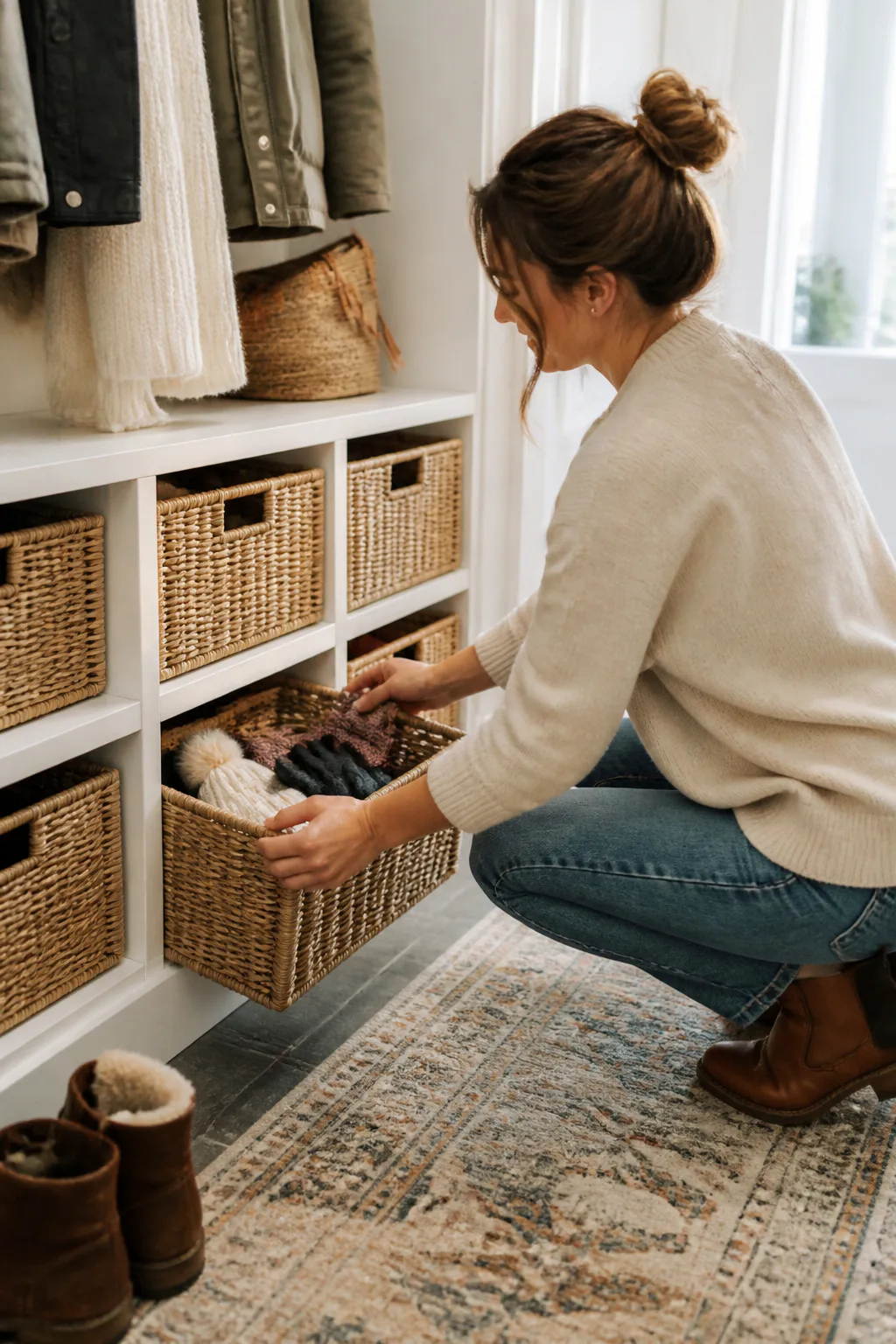
Woven baskets give small mudroom items a home without making open cubbies look cluttered. Gloves, hats, scarves, and other accessories can be gathered in one bin, then slid out when someone needs them.
Rattan and other textured materials bring a natural, relaxed element to built-in storage. The baskets can soften painted cabinetry and help a family keep small necessities organized without assigning every item its own drawer.
Match the basket to the cubby
Measure the opening before choosing bins so they slide in and out easily. Think about how the baskets will be used: handles can make them easier to pull forward, while separate bins can help keep each person’s accessories distinct.
- Use one basket for each family member or type of item.
- Choose a size that leaves room to grip and remove it.
- Label bins if several look alike.
- Keep damp or dirty gear in a washable container instead.
Well-fitted baskets add texture while keeping the little things that collect near the door under control.
15. Use a Compact Freestanding Hall Tree
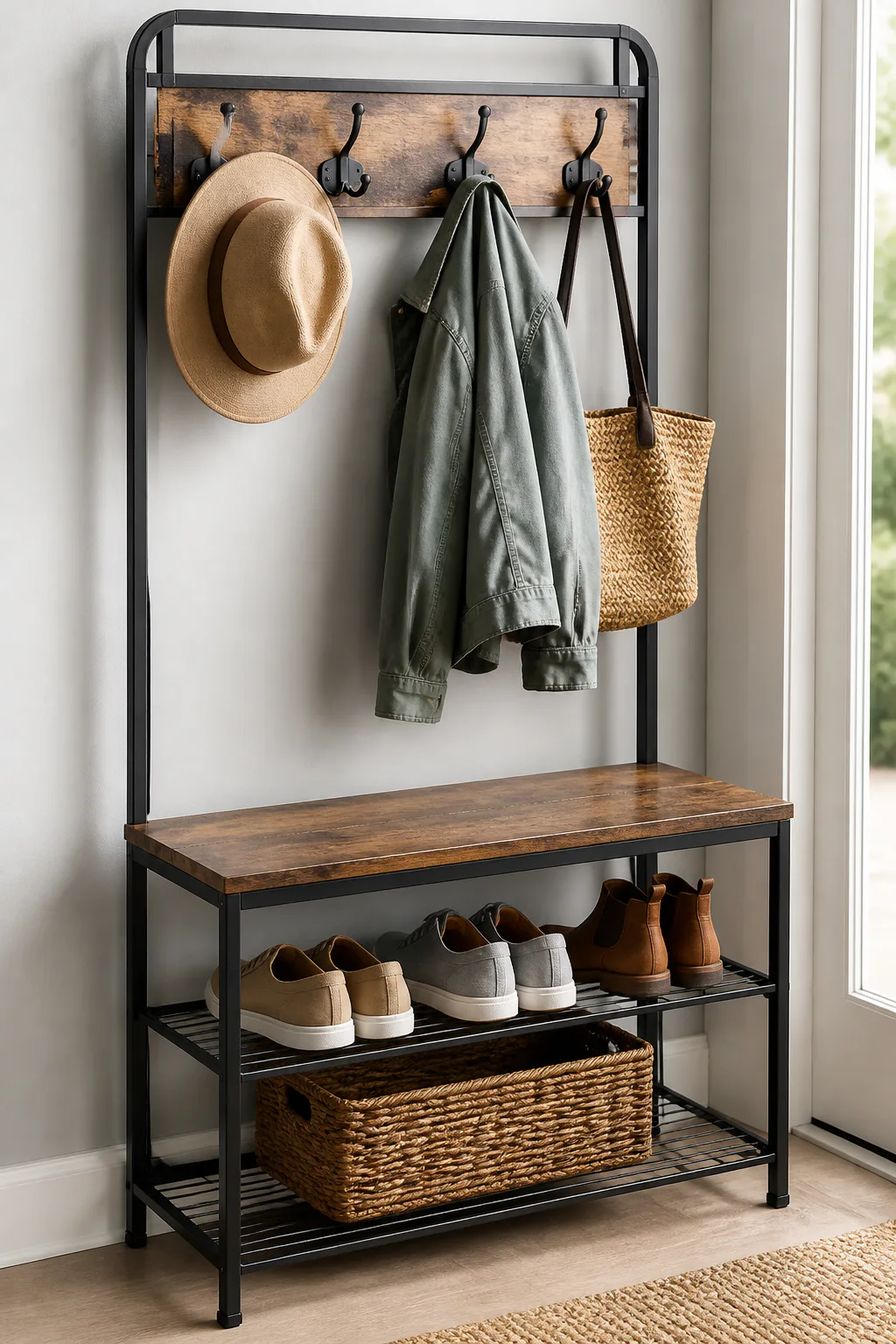
A freestanding hall tree combines a bench, shoe rack, and hooks in one piece. It is a flexible solution for a small entry, a rental, or a home where permanent built-ins are not practical.
Metal-and-wood designs can bring a mix of sturdy structure and warmth without requiring a full renovation. Because the unit stands on its own, it can often be repositioned if your layout or storage needs change.
Choose a size that suits the entry
Measure the available wall and floor space, including the area needed to open doors and walk through comfortably. A compact hall tree should make everyday routines easier, not create a new obstacle by the entrance.
- Check the unit’s width, depth, and overall height.
- Look for enough hooks for the coats you use daily.
- Use the lower rack for shoes or a small basket.
- Keep heavier items arranged securely on the unit.
A small, movable hall tree can bring the essentials together while keeping the setup renter-friendly.
Final Thoughts
The best mudroom is one that fits the way your household actually arrives home. Built-in lockers, durable floors, and pet-friendly washing areas can support busy routines, while a hallway bench, baskets, or freestanding hall tree can make a smaller entry more functional.
Start by identifying what most often ends up near the door, then choose storage and finishes to address those needs. Even a few thoughtful changes can create a more welcoming place to take off shoes, hang a coat, and get ready to head out again.



