
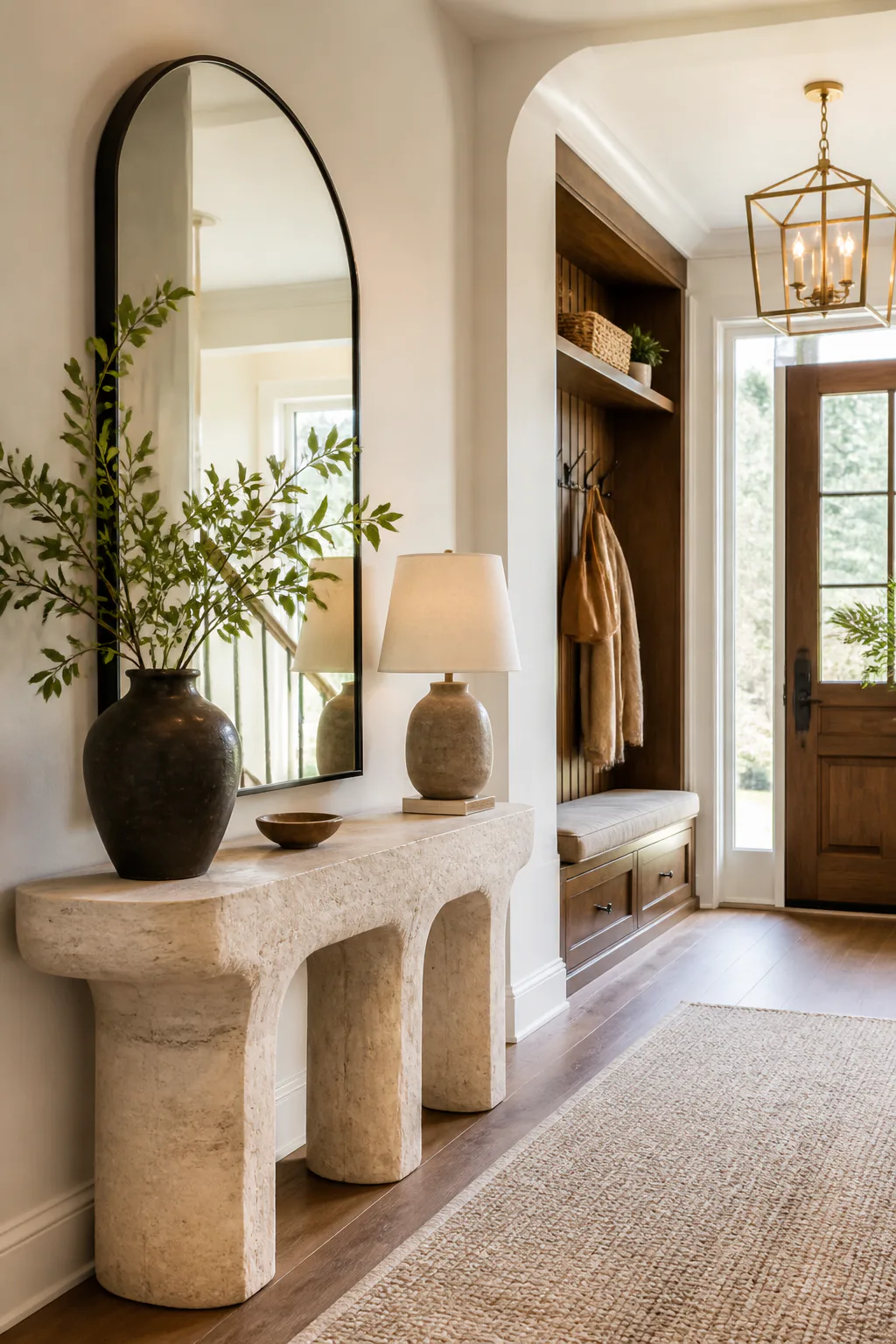
12 Clever Entryway Ideas for a Stylish, Organized Welcome
The entryway sets the tone for your home, but it also has to handle the everyday shuffle of shoes, keys, bags, and coats. The best entryway ideas balance a polished first impression with practical choices that make coming and going easier.
Whether you have a generous foyer or just a few feet of hallway, small changes can make the space feel more intentional. Mirrors, lighting, a slim surface, and thoughtful storage can add character without crowding the path to the door.
Use these ideas as a starting point and adapt them to your layout, natural light, and daily routines. You don’t need to try all twelve: one strong focal point and a couple of useful details can make an entry feel pulled together.
1. Hang an Arched Statement Mirror
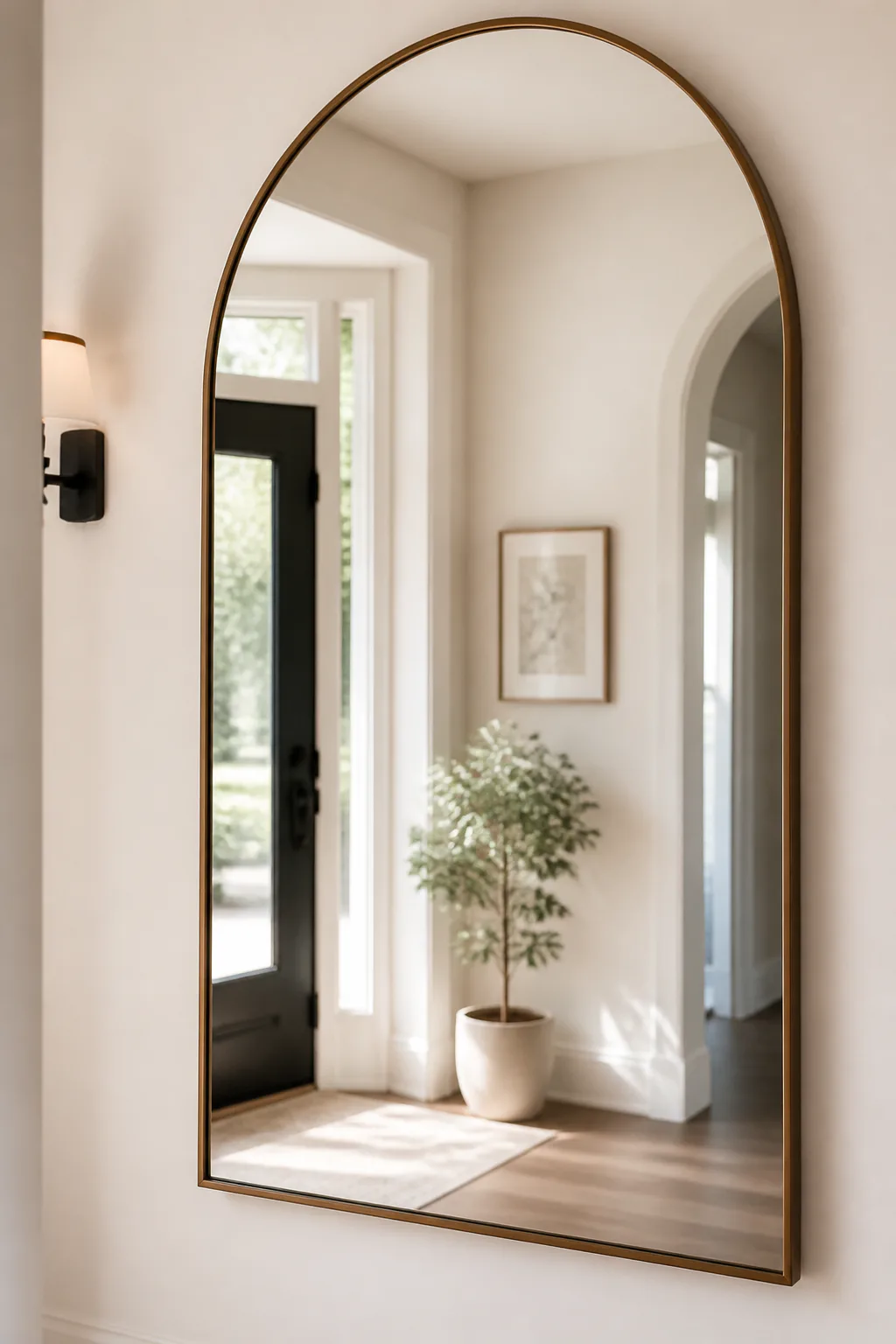
An arched mirror brings a soft curve to an entryway filled with straight door frames, floorboards, and furniture edges. Its shape feels like a finishing detail, even when the rest of the room is simple, and it gives you a handy place to check your appearance before heading out.
Mirrors also reflect light, which can help a narrow hall or shaded foyer feel brighter. Hang one above a console, or let it stand on its own on a blank wall so the entry doesn’t feel crowded with furniture.
Choose a shape and position that suit the space
Look for a frame that relates to finishes elsewhere in your home, such as warm wood, dark metal, or a light neutral tone. Before hanging it, consider what it will reflect: a window or attractive view adds brightness, while a cluttered corner may be better kept out of sight.
- Center the mirror above a console or ledge.
- Use a taller shape to emphasize vertical space.
- Keep enough clear wall around the frame.
A well-placed mirror can serve as the entry’s main focal point, so keep nearby accessories edited and let its curved outline stand out.
2. Anchor the Hall with a Stone Console
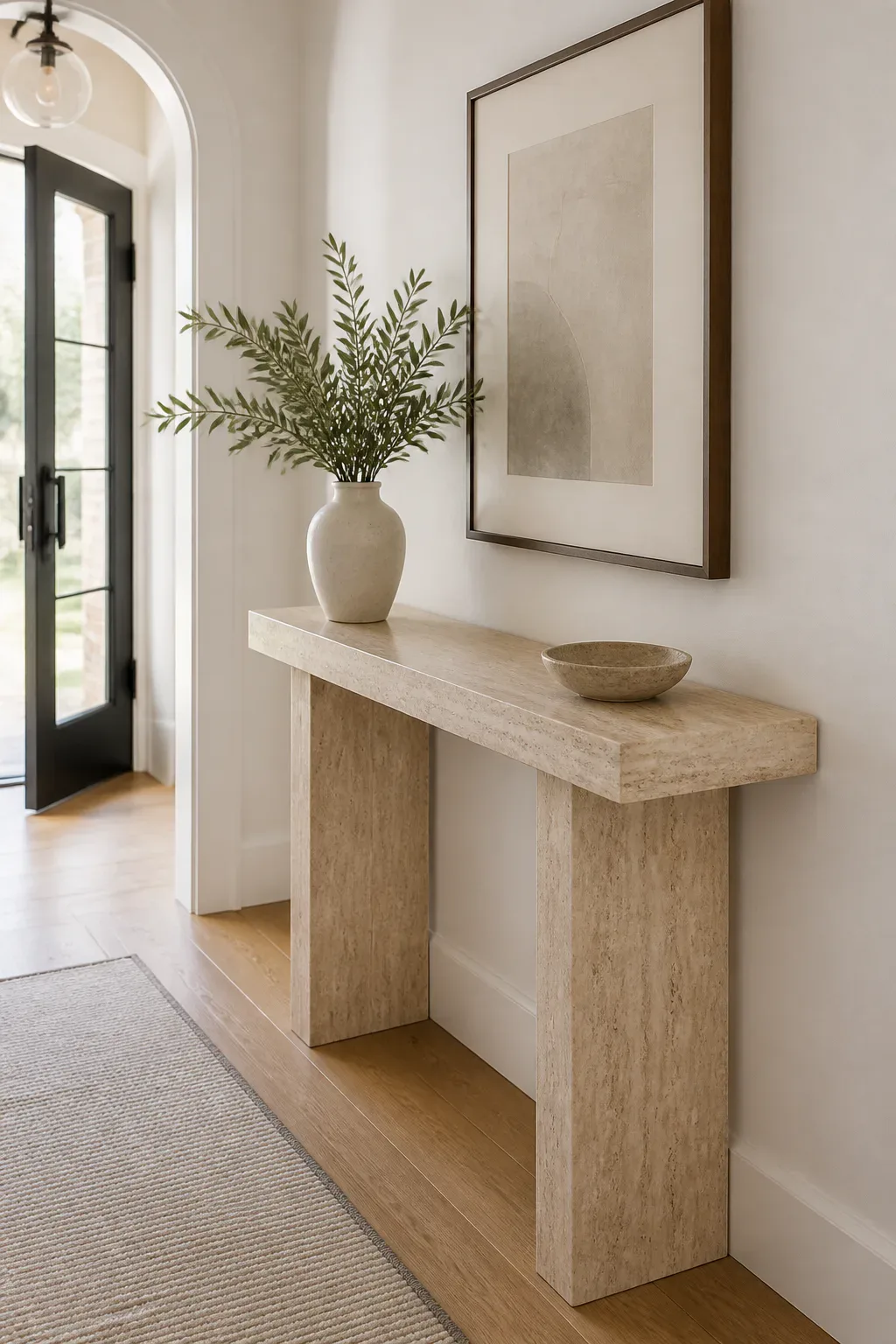
A slim stone console gives an entryway a grounded, architectural focal point. Travertine and marble each bring natural variation, so the surface can add texture and visual interest even when the walls and floor are understated.
Stone has presence, but a narrow profile helps it work in a hallway without taking over the walking path. In a foyer, it can define a landing spot near the door; in a tight apartment entry, a shallow console offers a useful surface without needing a large piece of furniture.
Balance the weight of the stone
Let the console be the main material statement, then pair it with a restrained mirror or artwork. Check that doors can open freely and that the piece leaves comfortable clearance for people passing through with bags or coats.
- Choose a slim depth for a narrow hall.
- Repeat the stone’s warm or cool undertone nearby.
- Use a tray to protect the surface from keys.
A few carefully chosen objects keep the console useful while allowing its natural pattern to remain visible.
3. Create a Warm, Color-Drenched Entryway

Color-drenching means carrying a related shade across several surfaces or details, rather than limiting color to one small accent. In an entryway, warm tones such as oat, buttercream, taupe, and sage can create a welcoming mood from the moment you open the door.
A tonal palette can also make a small space feel considered rather than busy. The look works on walls and trim, or more lightly through a painted wall paired with a rug, artwork, and accessories in neighboring shades.
Build depth with close, not identical, tones
Choose a main color that feels comfortable in your home’s natural light, then layer in lighter or deeper variations. A matte wall, woven runner, and wood furniture give the palette texture, so the room doesn’t rely on color alone to feel complete.
- Test paint in both daylight and evening light.
- Use cream or wood to soften a deeper shade.
- Repeat one accent color in two or three details.
Keep the palette connected to adjoining rooms so the entry feels like a natural transition into the rest of your home.
4. Style a Console with a Curated Vignette
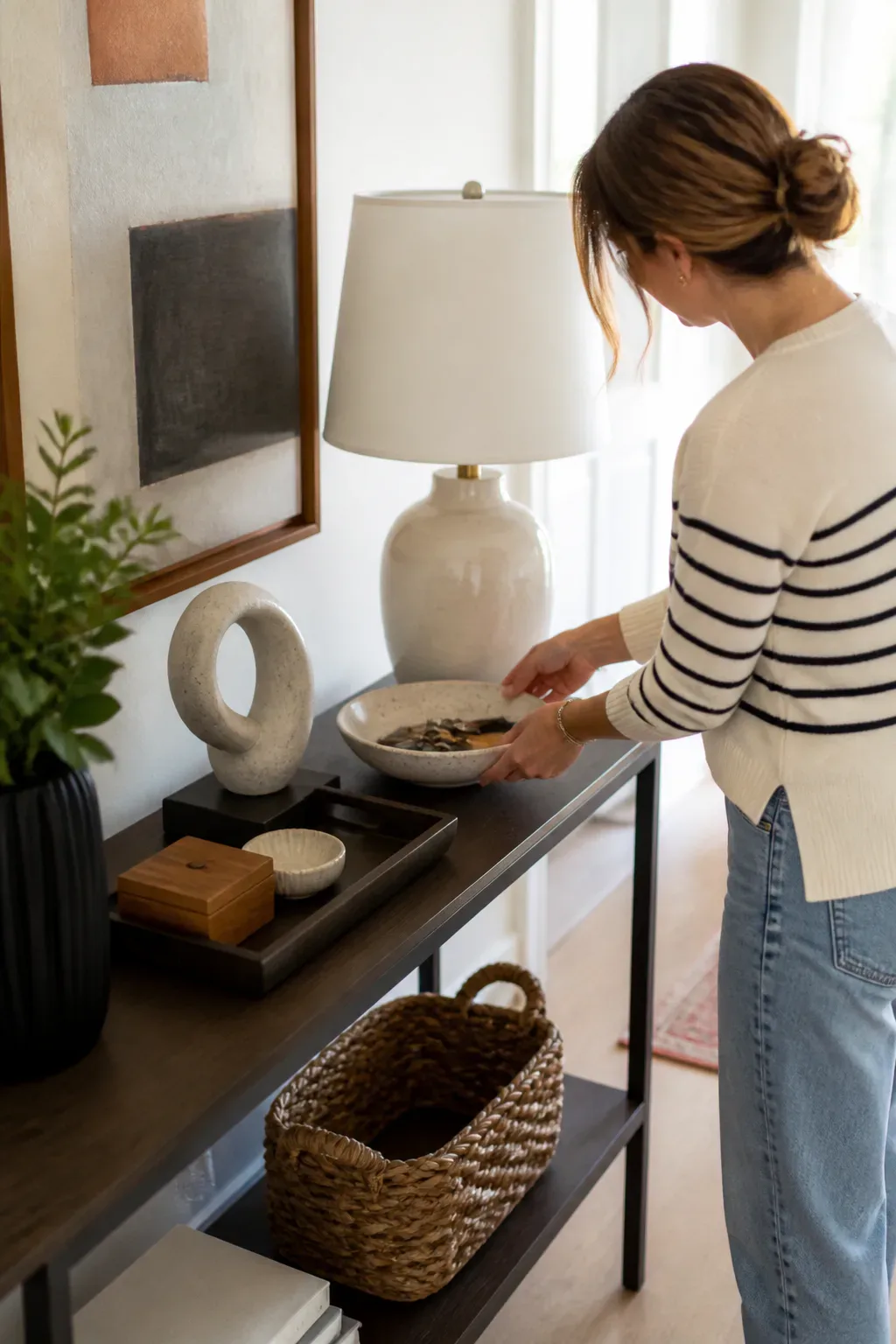
A console vignette can make a practical landing spot look intentional. A lamp, catch-all bowl, sculptural object, and tray each bring a different shape or function, creating a display that feels layered without requiring a lot of decor.
The arrangement is especially useful when the entry is visible from the living room or front door. Keeping the objects grouped on the console also makes it easier to leave the rest of the surface open for daily essentials.
Mix heights and leave room to use the surface
Start with the tallest item, such as a lamp, and balance it with a lower tray or bowl. Add one sculptural piece for personality, but avoid filling every gap; a little open space makes the arrangement feel relaxed and keeps keys from competing with decor.
- Use a bowl for keys or other pocket items.
- Place a lamp where its cord can be managed.
- Vary heights rather than lining up objects evenly.
Let the vignette reflect how you use the entry, and adjust it when everyday routines change.
5. Replace a Console with a Floating Ledge

In a narrow hallway or small apartment entry, a floating ledge can provide a landing surface without the footprint of a console table. Because it attaches to the wall, the floor stays more open, which can make a tight passage feel easier to move through.
Pair the ledge with an oversized mirror to create a useful focal point above it. This combination gives you a place for a small tray or a few essentials while drawing the eye upward and reflecting light around the hall.
Plan the ledge around what you need to set down
Choose a depth that accommodates everyday items but doesn’t intrude into the route through the space. Mount the shelf securely and consider the wall behind it: a mirror, a simple piece of art, or a painted accent can help the small arrangement feel complete.
- Measure the walking path before choosing a shelf.
- Keep the ledge clear of bulky storage baskets.
- Use a tray to group keys and small items.
This pared-back setup works best when you have another spot elsewhere for shoes, coats, or larger bags.
6. Add a Walnut Console for Natural Warmth
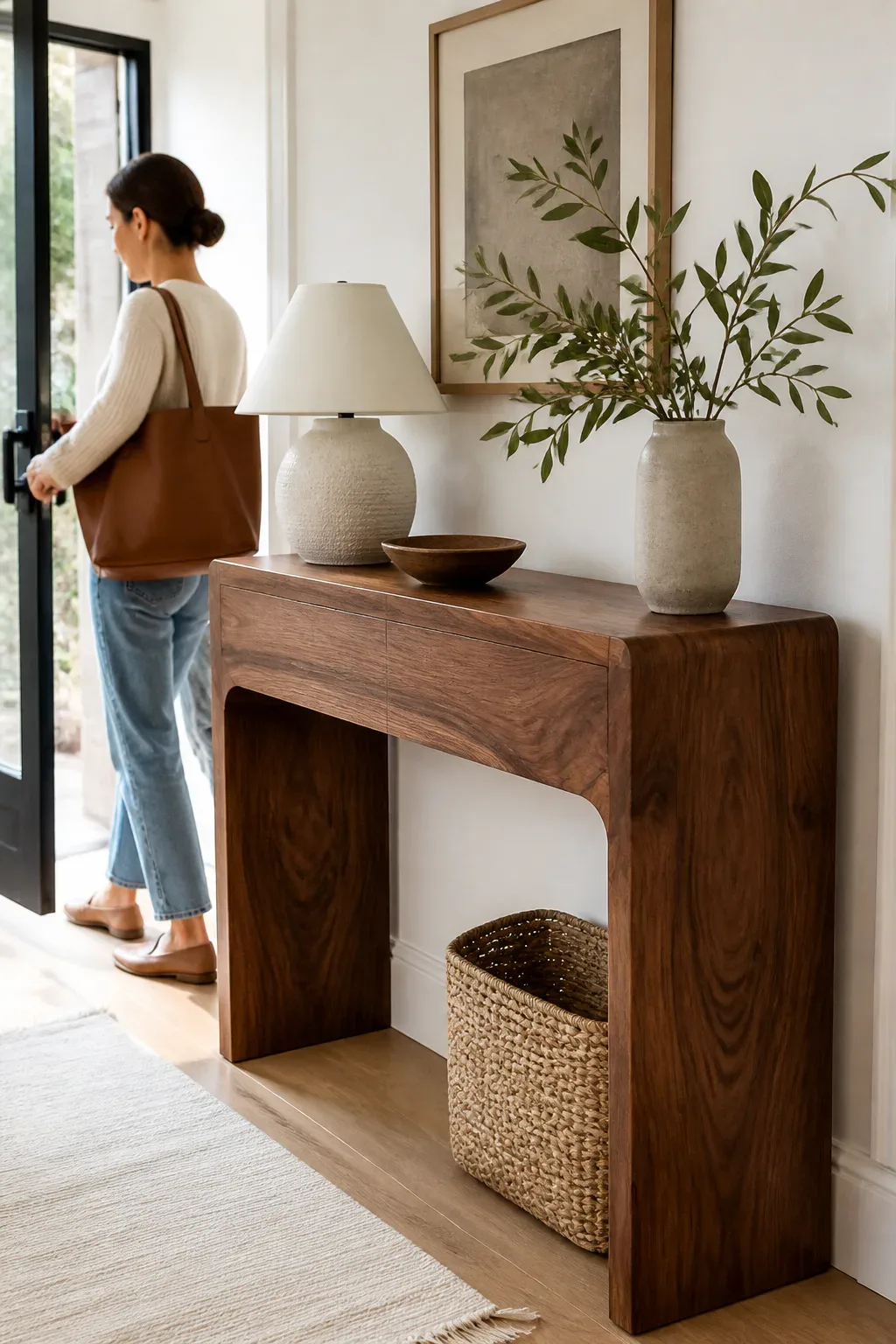
Walnut or burl wood brings visible grain and a warm, organic quality to an entryway. Against a plain wall, a wood console adds depth without relying on bold color, while a sculptural grain pattern can make a simple piece feel like a feature.
This idea suits both modern and more collected interiors. In a compact hall, choose a streamlined silhouette so the wood adds character without making the space feel heavy; in a larger foyer, a more substantial console can help define the entry area.
Let the grain be part of the palette
Pair rich wood with finishes that complement rather than compete with it. Soft neutrals, natural fibers, and a restrained metal accent can keep the look balanced, while a mirror above the console helps break up a broad expanse of wood.
- Repeat a wood tone elsewhere for continuity.
- Choose simple accessories that won’t hide the grain.
- Mix in a lighter runner or wall color for contrast.
A walnut console can provide warmth even when the rest of the entry is minimal, so let its material do some of the decorating.
7. Layer a Textured Runner Along the Hall

A runner softens the hard surface of tile or hardwood and makes a long entry hall feel more welcoming. Wool and patterned designs add texture underfoot, while a considered pattern can help disguise the everyday scuffs that collect near a busy door.
The right runner can also visually connect the entry to rooms beyond it. Choose a color or motif that relates to the surrounding decor, then use the rug to add contrast if the walls and flooring are mostly neutral.
Match the runner to traffic and layout
Measure the clear floor area before buying or placing a runner, leaving some visible flooring around the edges. A secure rug pad helps keep it in place, especially in a passage where people walk quickly or turn near the door.
- Check that doors can swing over the rug.
- Choose a pattern that suits your cleaning routine.
- Leave a clear path around nearby furniture.
Think of the runner as both a comfort layer and a visual guide that leads guests into your home.
8. Build a Concealed Entryway Drop Zone
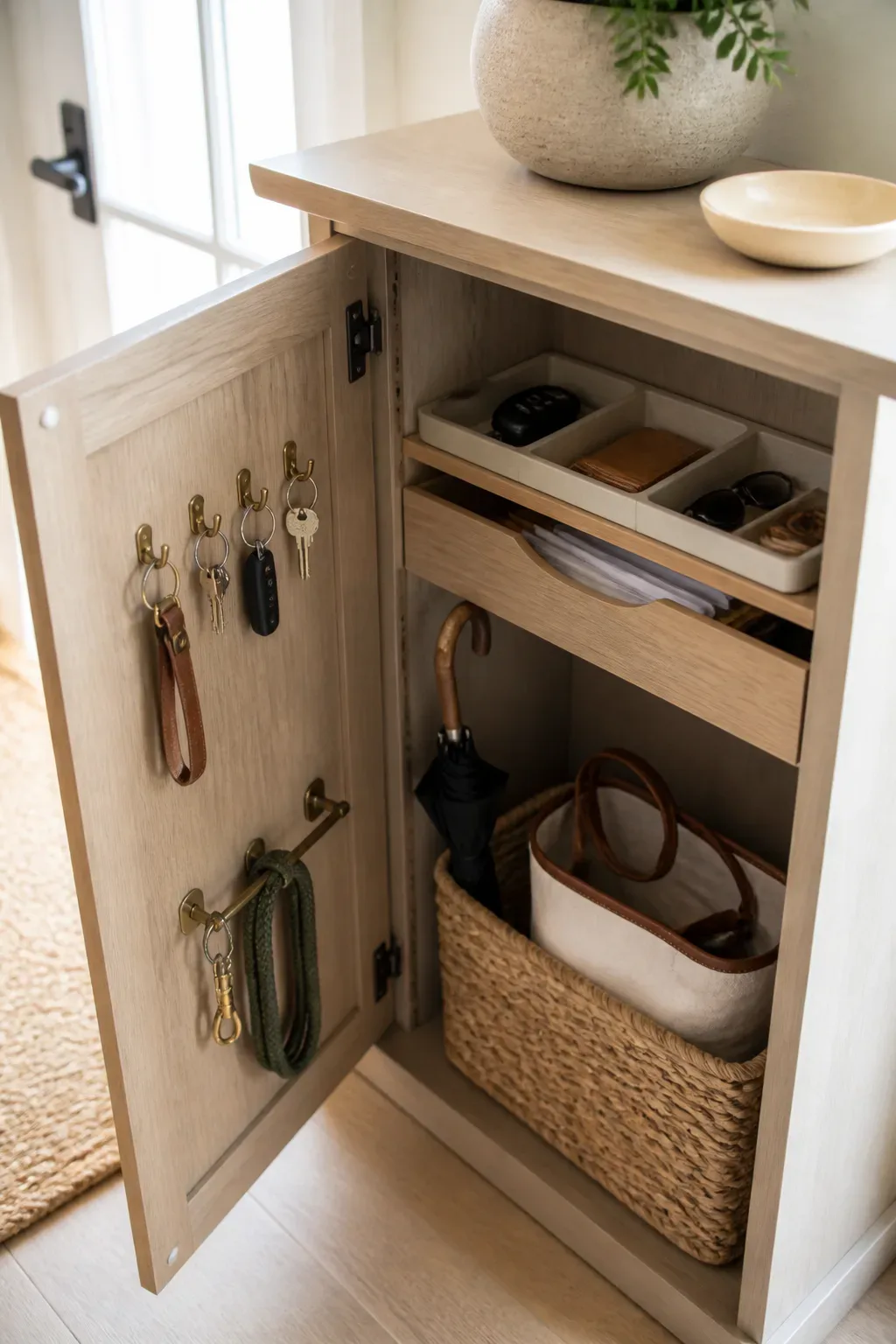
Keys, mail, leashes, and umbrellas can quickly turn an attractive entry into a cluttered one. A concealed drop zone gives those items a designated home while keeping them out of view, making it easier to maintain a calm first impression.
A console with hidden drawers is useful when you want daily essentials close at hand but not on display. If you already have a table, a lidded basket underneath can hold items that don’t need to be visible, such as spare bags or accessories for walks.
Give each everyday item a home
Think through what actually comes through your door before choosing storage. A small drawer may suit keys and mail, while a basket can handle bulkier items; labels or simple categories can help the whole household return things to the right place.
- Keep frequently used keys in one easy-to-reach spot.
- Sort mail regularly instead of letting it accumulate.
- Reserve a basket for items that need quick access.
Concealed storage works best when it supports a simple routine, rather than becoming a place to hide things indefinitely.
9. Make a Statement with Entryway Lighting

Lighting can change the mood of an entryway and give it a clear focal point. Replacing a basic ceiling fixture with a semi-flush pendant or a vintage-style sconce adds character overhead or along the wall without requiring more floor space.
Where a console is present, a table lamp with a pleated shade can add a softer pool of light and make the area feel welcoming in the evening. In a small entry, a wall-mounted option keeps the surface free for practical items.
Choose a fixture that fits the room
Consider the ceiling height, door swing, and how the fixture relates to nearby finishes. A statement light can stand on its own, so keep other decorative elements simple enough that the entry doesn’t feel crowded with competing focal points.
- Check clearance before choosing a hanging fixture.
- Use a sconce where a table lamp won’t fit.
- Coordinate the finish with nearby hardware or frames.
A well-chosen light makes the entry feel more finished while helping you see the space clearly when you arrive home.
10. Install a Minimalist Peg Rail
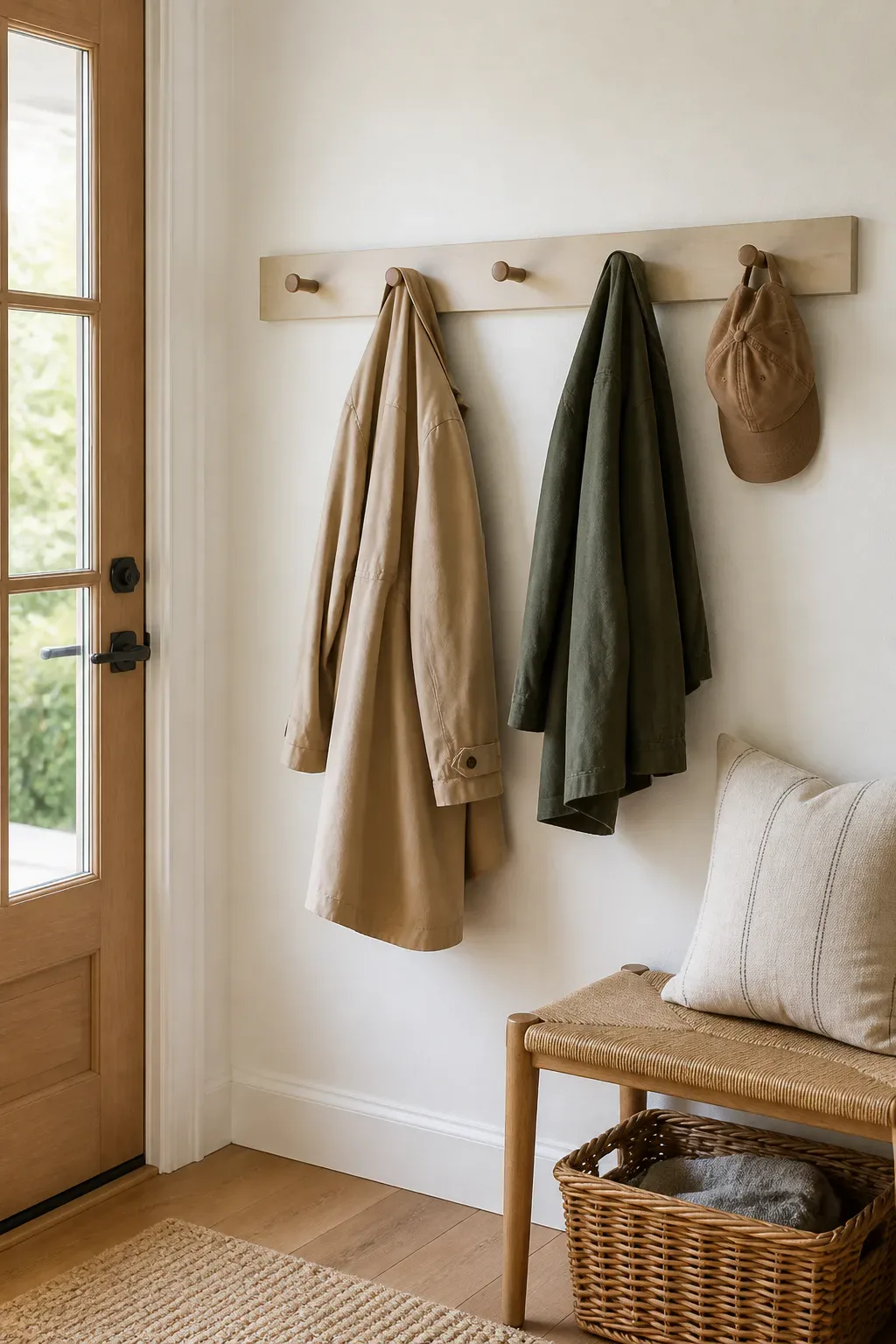
A shaker-style peg rail offers a simple way to hang coats and hats without adding a bulky freestanding coat rack. Mounted on the wall, it keeps frequently used items close to the door and leaves more of the floor clear for walking or shoe storage.
The rail can look clean and understated when it’s empty, so it suits an entry where you want practical storage without a permanent sense of clutter. It can also complement a simple, traditional, or relaxed interior depending on its finish and the objects around it.
Place it where coats won’t block the route
Choose a wall with enough room for hanging items, and consider how coats will fall when the rail is in use. If the entry gets busy, limit how many hooks are used at once; a pared-back rail can help keep the space functional and visually calm.
- Mount the rail within comfortable reach.
- Leave room for door handles and nearby furniture.
- Use a few hooks for everyday coats and hats.
Pair the rail with a basket or nearby closet for overflow, rather than asking a small wall to store everything.
11. Tuck a Bench Beneath the Console

A slim bench beneath a console turns an entryway into a more useful landing spot. It gives you somewhere to sit while putting on shoes, and when tucked away, it can preserve the clean lines of the console above.
Oak brings natural warmth, while a bouclé seat adds a softer texture. The best choice depends on how much room you have and whether the bench will be used often or mainly serve as an occasional perch.
Keep seating compact and easy to move
Measure the space under the console and check the bench height before bringing it home. A piece that slides neatly underneath keeps the walkway open; if it needs to sit beside the console, make sure it doesn’t obstruct the door or narrow the route through the entry.
- Choose a narrow bench for a tight hallway.
- Keep a clear spot nearby for frequently worn shoes.
- Select an easy-care finish for a high-traffic area.
Even a small seat can make the daily routine more comfortable while adding another layer of texture to the room.
12. Fill an Empty Corner with a Statement Plant
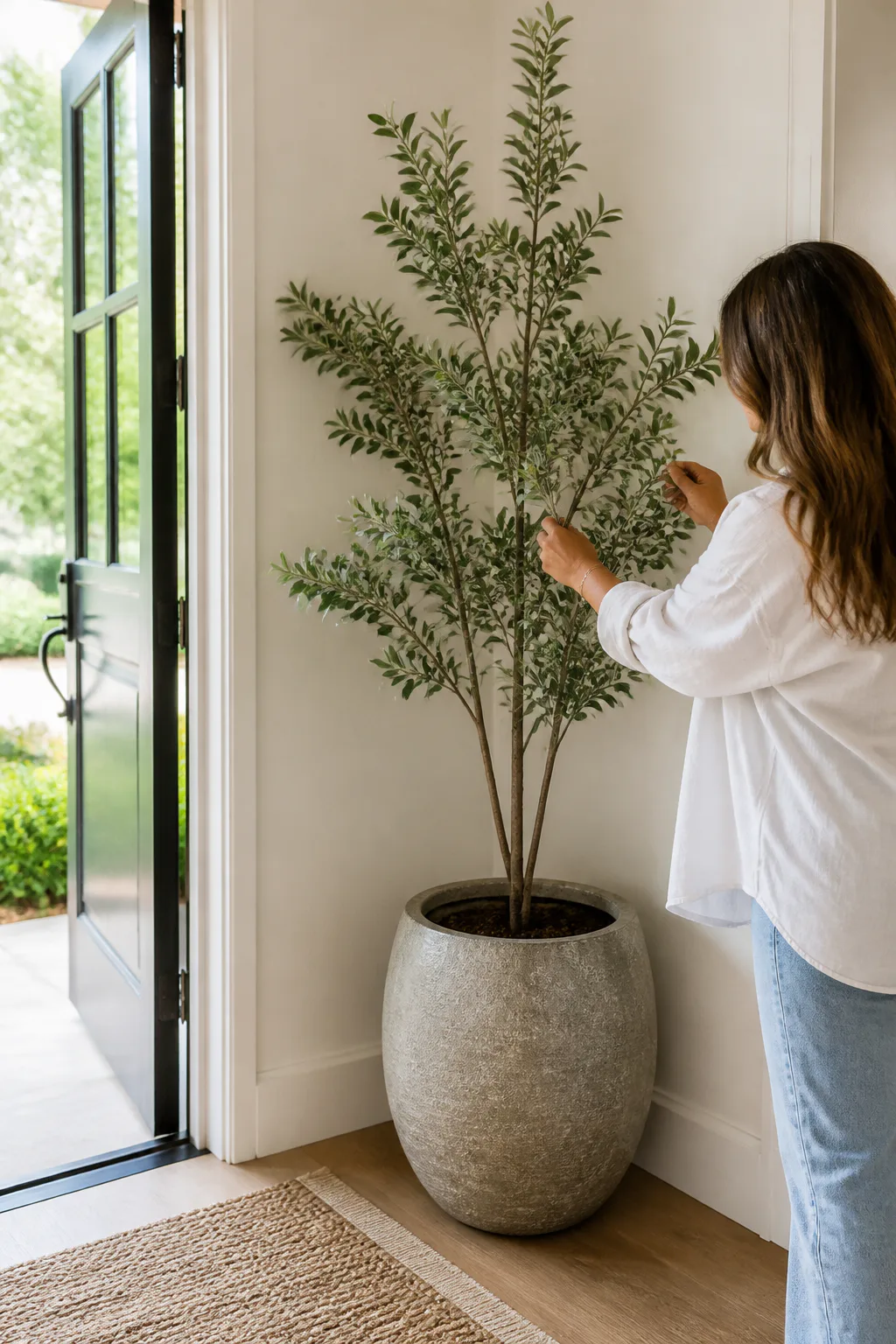
An empty corner near the door can make an entryway feel unfinished, but a large planter and sculptural greenery can give it purpose. A plant adds a natural shape that contrasts with the straight lines of walls and furniture, while a ceramic pot can bring in color or texture.
If the corner receives suitable light, choose a plant that fits the conditions and the amount of care you want to provide. Tall branches can offer a similar vertical accent where a leafy plant isn’t practical, helping draw the eye upward without adding another piece of furniture.
Choose a scale that leaves room to pass
Before setting a planter in place, check that it won’t block a door, catch on bags, or narrow the walkway. A substantial vessel can anchor the corner, but it should feel connected to the room’s palette rather than like an afterthought.
- Match the plant to the available natural light.
- Use a stable pot that suits the plant’s scale.
- Leave enough clearance around the entry path.
A single well-placed plant or branch arrangement can bring life to a blank spot without adding visual clutter.
Final Thoughts
A welcoming entryway doesn’t need a full makeover. A mirror can brighten the space, a runner can soften the floor, and a console or peg rail can make daily essentials easier to manage.
Start with the area that bothers you most, whether it’s an empty corner, a crowded landing spot, or a hallway that feels bare. Choose a couple of ideas that suit your layout and routine, then adjust the details until your entry feels both useful and distinctly yours.



