12 Stunning Curtain Ideas for Every Room
Curtains do more than cover a window: they shape the light, add texture, and influence how spacious a room feels. The right fabric and hanging style can make a simple window feel intentional, whether your home leans modern, relaxed, colorful, or classic.
These curtain ideas cover practical choices as well as decorative ones, from mounting height and panel length to patterns, hardware, and motorized tracks. Each approach can work in different rooms, so think about the light, privacy, and mood you want before choosing a look.
If you’re refreshing a living room, bedroom, dining area, or home office, use these ideas as a starting point. Consider your window’s proportions and the furniture nearby, then choose details that feel at home with the rest of your space.
1. Frame Tall Windows with High-and-Wide Curtains

Mounting a curtain rod above and beyond the window frame can make the window feel larger than it is. A higher rod draws the eye upward, while panels that extend past the sides create a broader-looking frame. This approach is especially useful when a room feels short on height or a window looks small against a large wall.
When the curtains are open, the fabric can stack beside the glass instead of covering it, helping more daylight enter the room. In a living room or bedroom, the extra fabric also gives the window a finished, architectural presence without requiring a bold pattern.
How to get the proportions right
Before installing the rod, check how far the panels will extend when open and make sure they won’t crowd nearby furniture or trim. The goal is to make the window feel generously framed while keeping the curtains easy to draw.
- Place the rod several inches above the top of the window frame.
- Extend it beyond both sides so open panels clear the glass.
- Choose panel widths that create soft folds without looking skimpy.
This simple hanging adjustment works with many fabrics, making it an easy starting point for a more polished window.
2. Dress the Windows in Ripple-Fold Drapery

Ripple-fold drapery uses a track system to create continuous, evenly spaced waves across the fabric. Unlike more traditional pleats, the folds repeat in a smooth line that looks crisp but not stiff. The result suits contemporary rooms, where clean shapes and uncluttered details often work best.
This style can span a wide window or a wall of glass without adding visual fuss. In a living room, it makes a large opening feel cohesive; in a bedroom, it offers a calm, streamlined finish. Because the panels glide along a track, it can also be a practical choice for windows you open and close frequently.
What to consider
Ripple folds depend on the right track and compatible curtain panels, so plan the hardware and fabric together. A fabric with enough body can help the waves hold their shape, while a lighter option keeps the overall effect airy.
- Use a ceiling-mounted track for a nearly uninterrupted line.
- Choose a fabric weight that suits how structured you want the folds to look.
- Keep nearby decor simple if you want the drapery to feel architectural.
The repeating folds bring order to a window while still allowing the fabric to soften the room.
3. Soften Sunlight with Relaxed Linen Curtains

Linen and linen-look curtains add a natural, tactile layer that feels comfortable rather than formal. Their softly textured surface brings warmth to plain walls and simple furniture, making them a good fit for relaxed living rooms, bedrooms, and dining spaces. Faux linen can offer a similar visual effect if you prefer another fabric option.
These panels are particularly appealing when you want to soften bright daylight without making a room feel closed in. The light coming through can take on a gentle, diffused quality, while the fabric’s subtle irregularity gives the window more depth than a smooth, flat panel.
Styling a soft, airy look
Let the fabric’s texture do the work by pairing it with natural materials or quiet colors. If privacy is a priority, check how sheer the panels are in your room’s actual light and consider adding a second layer.
- Try warm white, oatmeal, or another tone that suits your palette.
- Pair linen-look panels with wood, woven textures, or relaxed upholstery.
- Use a lining or an inner sheer when you need more coverage.
The result is a window treatment that feels gentle and inviting without competing with the rest of the room.
4. Layer Sheers Behind Room-Darkening Curtains

Combining sheer inner panels with heavier outer curtains gives you more control over light and privacy throughout the day. Draw the sheers to soften direct sunlight while keeping the room bright, then close the outer drapes when you want more coverage or less glare. The layers also add depth around the window.
This setup works well in bedrooms, living rooms, and any space that shifts between bright daytime use and a more private evening mood. A double track or two rods let each layer move independently, so you can adjust the window without having to choose between full exposure and a fully closed curtain.
Planning the two layers
Think about how the fabrics will look together when both are open and when they are closed. Coordinated tones create a calm effect, while a subtle contrast can make the layers feel more decorative.
- Place the sheer panels on the track closest to the glass.
- Choose outer curtains for the coverage and light control you need.
- Check that both layers can stack without crowding the window.
- Coordinate colors so the combination feels intentional.
Layering gives a single window several useful settings, from softly filtered daylight to greater privacy.
5. Give Drapes a Crisp Floor-Kissing Finish

The way curtains meet the floor can change the whole impression of a room. Panels that just touch the floor, or hover slightly above it, create a tidy, tailored line. This finish feels especially at home in spaces where you want a clean look, such as a living room, dining room, or bedroom with neatly arranged furniture.
Unlike a puddled hem, a floor-kissing curtain is less likely to collect dust or get caught underfoot. It can also make everyday opening and closing easier, particularly near a doorway or a frequently used walkway. Getting the length right takes a little measuring, but the result helps the entire window look more considered.
Measure before you hang
Measure from the point where the curtain will hang to the floor, taking the rod or track placement into account. If you’re using rings or clips, include how they affect the finished drop rather than relying on the panel’s labeled length alone.
- Aim for the hem to just meet the floor or hover slightly above it.
- Check the measurement at several points if the floor is uneven.
- Consider how nearby radiators, vents, or furniture affect the hem.
A precise finish helps even simple curtains feel polished and easy to live with.
6. Add Muted Green Curtains to a Neutral Room

Sage, olive, and eucalyptus-toned curtains bring a gentle connection to nature without overwhelming a neutral room. Against cream, beige, or warm gray walls, muted green adds color while keeping the overall mood relaxed. It can also echo plants, artwork, or small accents already in the space.
Green panels can be used as a quiet background or as the room’s main color note, depending on their depth and the rest of the palette. A soft sage feels light and airy, while olive can bring a little more richness. In a bedroom, the color can support a restful feeling; in a living room, it gives a neutral scheme more personality.
Building a balanced palette
Look at the room’s undertones before choosing a shade. A green that works with the wall color and flooring will feel integrated, while a carefully chosen contrast can make the window a focal point.
- Pair pale sage with warm whites and natural wood.
- Use olive alongside tan, cream, or other earthy shades.
- Repeat the green in a cushion, plant, or small artwork detail.
Muted green curtains offer color with a softer touch than a high-contrast accent.
7. Use Striped Curtains to Shape the Room

Stripes bring pattern to a window and can influence how a room’s proportions feel. Vertical lines encourage the eye to travel upward, which can emphasize ceiling height. Horizontal stripes draw attention across the window and may help a narrow space feel visually wider.
The effect depends on the stripe scale and contrast. Bold black-and-white stripes make a confident statement, while tonal stripes keep the look more subtle. In a living room or bedroom, striped curtains can supply pattern without adding several competing prints, especially when the rest of the furnishings are relatively simple.
Choosing a stripe that fits
Consider the room’s existing lines, including wall panels, furniture shapes, and rugs. A strong stripe can energize a quiet space, but a softer pattern may be easier to live with if the room already contains a lot of visual detail.
- Choose vertical stripes when you want to draw the eye upward.
- Consider horizontal stripes for a narrow-looking window or room.
- Use tonal stripes for pattern that doesn’t dominate the space.
- Keep other large patterns restrained for a more balanced result.
With the right direction and scale, stripes can add both personality and a subtle sense of structure.
8. Pair Drapes with Minimal Matte Hardware
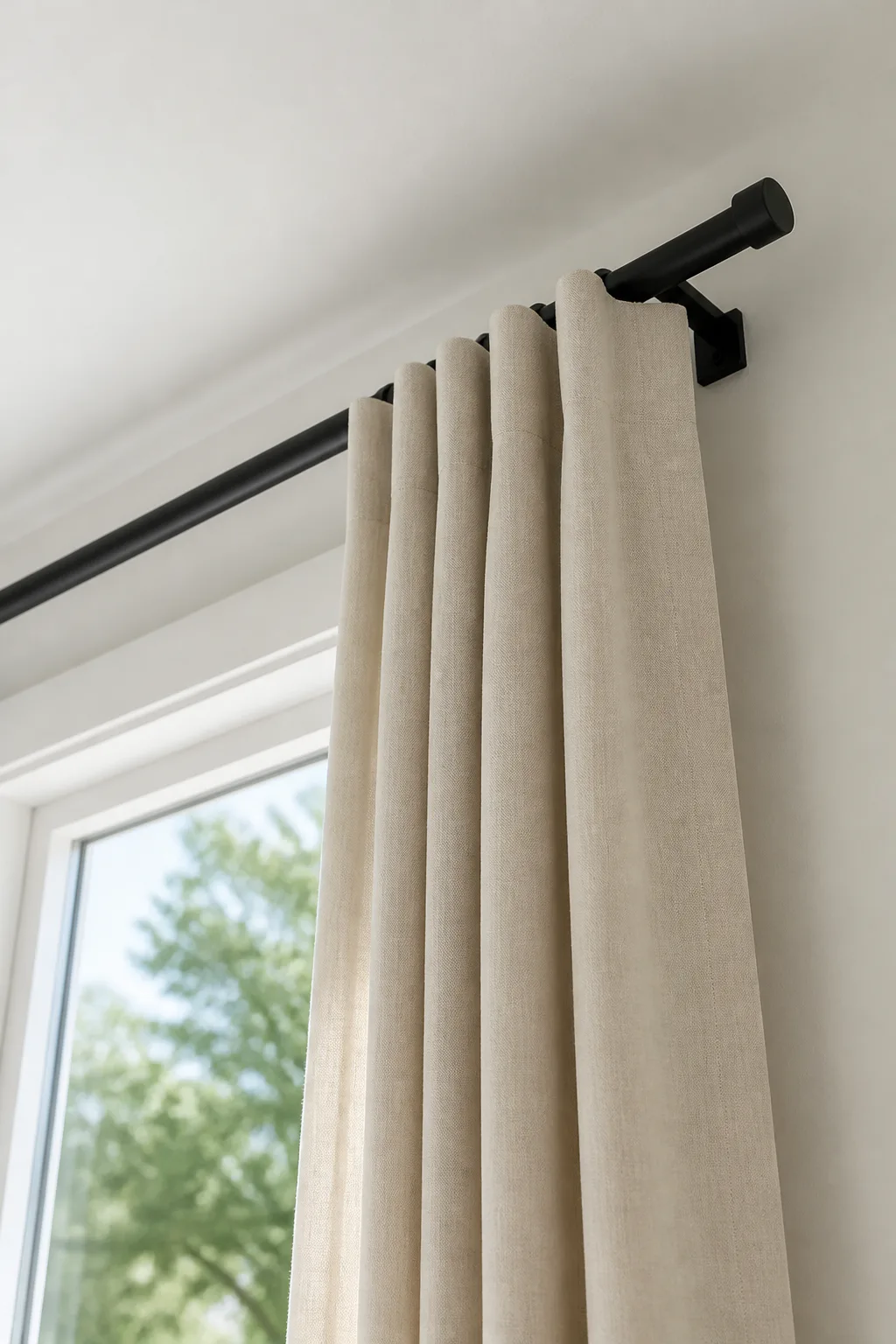
Slim, matte hardware gives curtains a clean finish without drawing too much attention away from the fabric or the view. A simple black or brushed-nickel rod can suit a range of interiors, from modern and industrial to relaxed and transitional. Its understated shape lets the panels become the main decorative feature.
This approach is especially helpful when you want a window treatment to feel finished but not ornate. In a room with patterned curtains or a strong color, minimal hardware keeps the overall look from becoming too busy. It can also provide a quiet visual link to other metal details, such as lamp bases or cabinet pulls.
Keep the hardware in proportion
Choose a rod and brackets that can support the curtain panels while matching the scale of the window. The hardware should feel deliberate, but it does not need to become a feature in its own right.
- Consider matte black for a crisp outline against a light wall.
- Try brushed nickel for a softer, cool-toned metal detail.
- Select simple finials or end caps for a streamlined appearance.
Minimal hardware makes it easier to appreciate the fabric, folds, and changing light around the window.
9. Create Color-Blocked Curtain Panels

Color-blocked curtains combine two or more shades in a single panel for a custom-looking window statement. A horizontal division can place one color above another, while vertical blocks create a side-by-side contrast. This idea adds color and a sense of design without requiring a complicated pattern.
Choose shades that work with the room’s existing palette so the panels feel connected to the furnishings. A warm cream paired with terracotta brings a grounded, welcoming mood, while a deeper navy can add contrast against a lighter section. Color blocking can suit a bedroom, living room, or play space, depending on the colors and overall composition.
Make the color transition feel intentional
Decide which shade should lead and where you want the division to sit. A lower band can visually anchor the panel, while vertical sections create a more graphic effect across a wide window.
- Combine shades that already appear in the room.
- Use two colors for a clear, balanced design.
- Choose a horizontal or vertical division based on the window’s proportions.
- Keep surrounding patterns simple so the panels remain easy to read.
Color blocking turns an everyday curtain into a focal point while still letting you tailor the look to your space.
10. Hang Heavy Drapes to Soften a Noisy Room
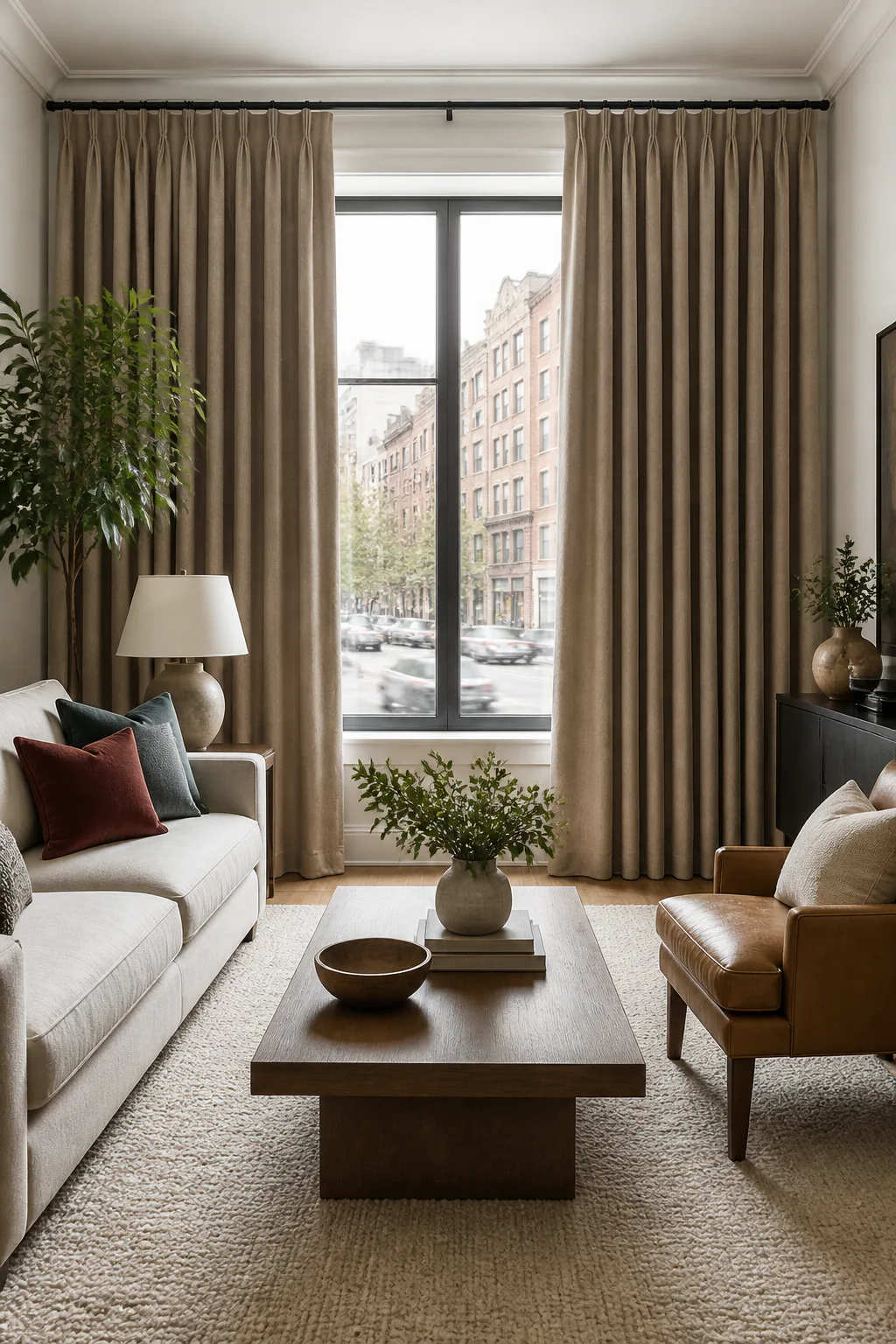
Heavy or lined curtains can help soften the sound in a room, making them worth considering near a noisy street or in a space with hard floors and reflective surfaces. Their substantial fabric adds a soft layer to the room, which can make the overall atmosphere feel calmer and less echoey.
Curtains are only one part of a room’s acoustics, so think of them as a useful addition rather than a complete soundproofing solution. In a bedroom, heavier drapes can also bring a cocooning feel; in a living room, they can balance hard materials such as glass, tile, or wood.
Choose fabric with the room in mind
Look for lined or heavier curtain options suited to the coverage you want, and make sure the rod can support the panels. For the best visual result, select a fabric that complements the rest of the room rather than treating the curtains as purely functional.
- Consider heavier panels where outside noise is a concern.
- Use lined curtains to add coverage and a fuller appearance.
- Extend the panels across as much of the window as practical.
- Balance hard surfaces with rugs or soft furnishings as well.
The extra fabric can make a room feel more comfortable while giving the window a substantial, finished look.
11. Style Windows with Clean Back-Tab Curtains

Back-tab curtains attach to the rod through fabric loops sewn behind the panel, concealing most of the hardware. This creates a neat row of soft folds and a relaxed, uncluttered finish. The look suits casual living rooms and bedrooms, especially when you want a simple panel without visible rings or decorative details.
Because the tabs sit behind the fabric, the curtain rod is less prominent than it would be with rings or clips. The panels can have a tidy appearance when closed, while still bringing texture and softness to the wall. Back-tab styles are a useful option when you want the window treatment to feel easygoing but considered.
Getting a smooth, casual drape
Check how the curtains slide on the rod, particularly if you expect to open and close them often. The fullness of the panels affects how the folds look, so allow enough fabric for the window rather than stretching a narrow panel across a wide opening.
- Choose panels wide enough to form soft, even folds.
- Use a slim rod that fits through the back tabs.
- Match the fabric’s texture to the room’s casual or tailored mood.
Back tabs give the window a clean outline while keeping the overall effect warm and approachable.
12. Install Motorized Curtains for Easy Window Styling
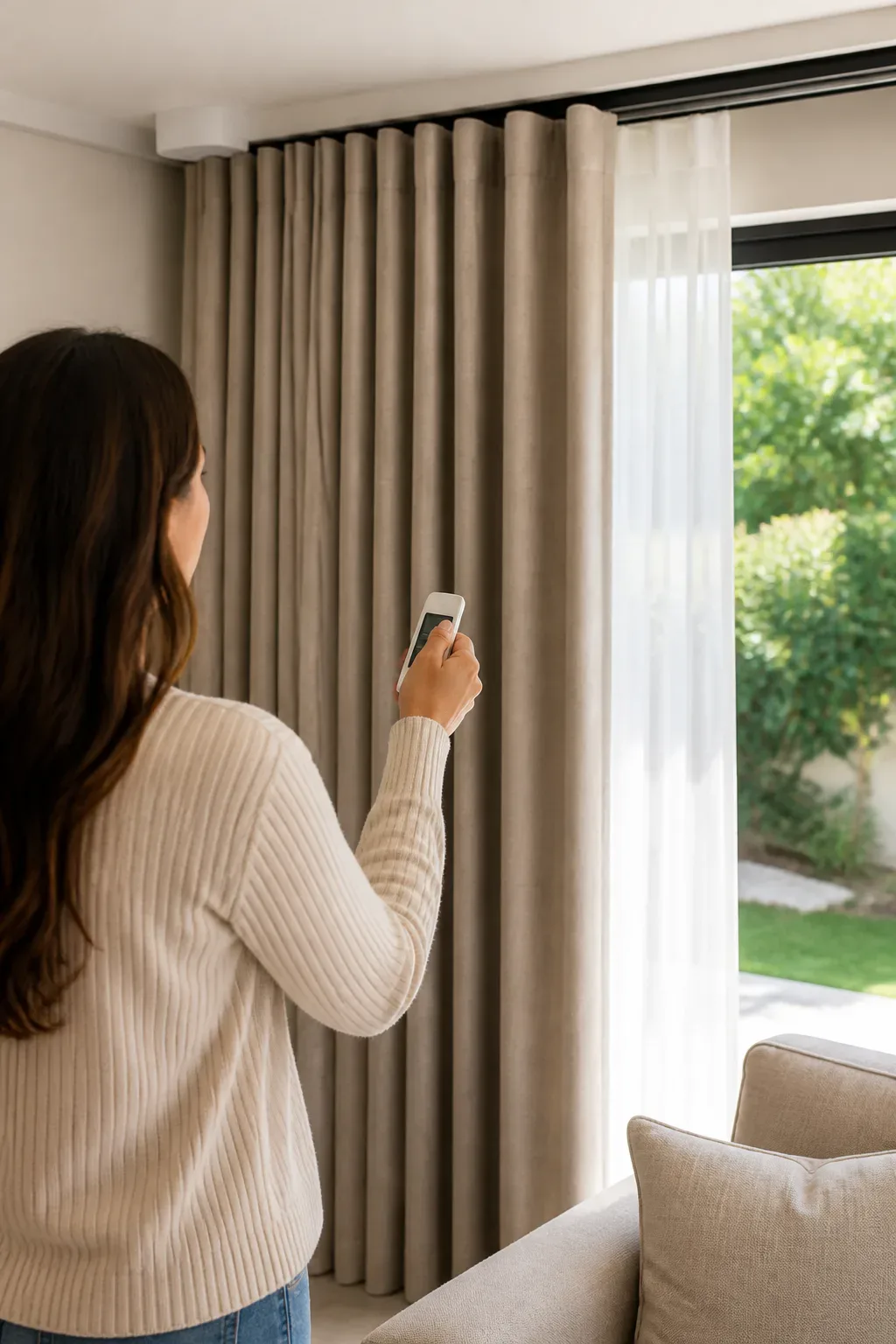
Motorized curtains use a remote-controlled or voice-controlled track to open and close panels without manually pulling the fabric. They can be convenient for tall windows, wide expanses of glass, or windows that are hard to reach. The movement also makes it easy to adjust the room as daylight changes.
In a bedroom, you might schedule the panels to open in the morning or close for a darker, more private evening. In a living room, motorized tracks can help shift the mood for movie time without interrupting the room’s setup. The hardware can be chosen to suit the style of the curtains, keeping the window treatment visually cohesive.
Plan the controls and the curtain setup
Before choosing a system, consider how you want to operate it and whether the track suits your window and curtain fabric. Think about power, access to controls, and how the panels will stack when open.
- Decide whether remote, voice, or scheduled control suits your routine.
- Check that the track is appropriate for the window and panel weight.
- Plan where curtains should stop so they clear the glass when open.
- Choose a fabric and heading style that work with the motorized track.
Automation adds convenience while letting you keep the softness and decorative impact of traditional drapery.
Final Thoughts
The best curtain ideas bring together the look you want and the way you use a room. Hanging panels high and wide can change the feel of a window, while layered sheers, floor-kissing hems, and carefully chosen fabrics help tailor light, privacy, and texture to everyday needs.
Start with one decision that matters most in your space, such as softening bright light, adding a muted accent color, or making a window feel taller. From there, choose hardware and details that complement your room, and let the finished curtains make the space feel a little more personal and complete.