
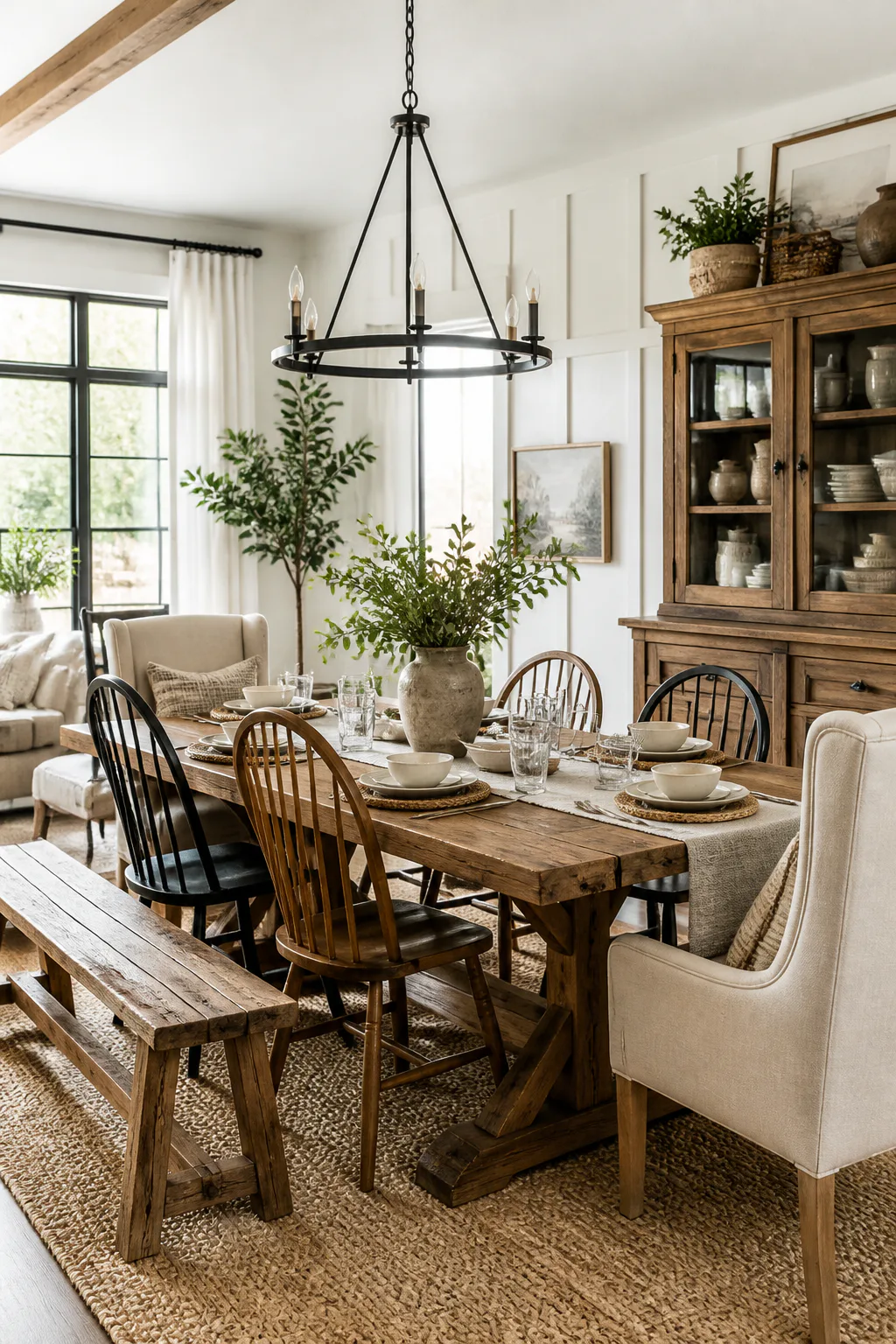
12 Stunning Modern Farmhouse Dining Room Ideas
A modern farmhouse dining room balances the warmth and character of rustic materials with the cleaner lines of contemporary design. The result can feel relaxed and welcoming without leaning too heavily on distressed finishes or matching furniture sets.
These 12 ideas cover the elements that shape a dining space, from the table and seating to lighting, wall treatments, and finishing touches. Each can work on its own or combine with a few others to create a room that feels cohesive rather than overly themed.
Whether you’re furnishing an open-concept dining area, refreshing a separate room, or making a small breakfast nook more inviting, start with the ideas that suit your layout and daily routines. Practical details like chair clearance, storage, and easy-to-clean materials matter just as much as the overall look.
1. Anchor the Room with a Reclaimed Wood Trestle Table
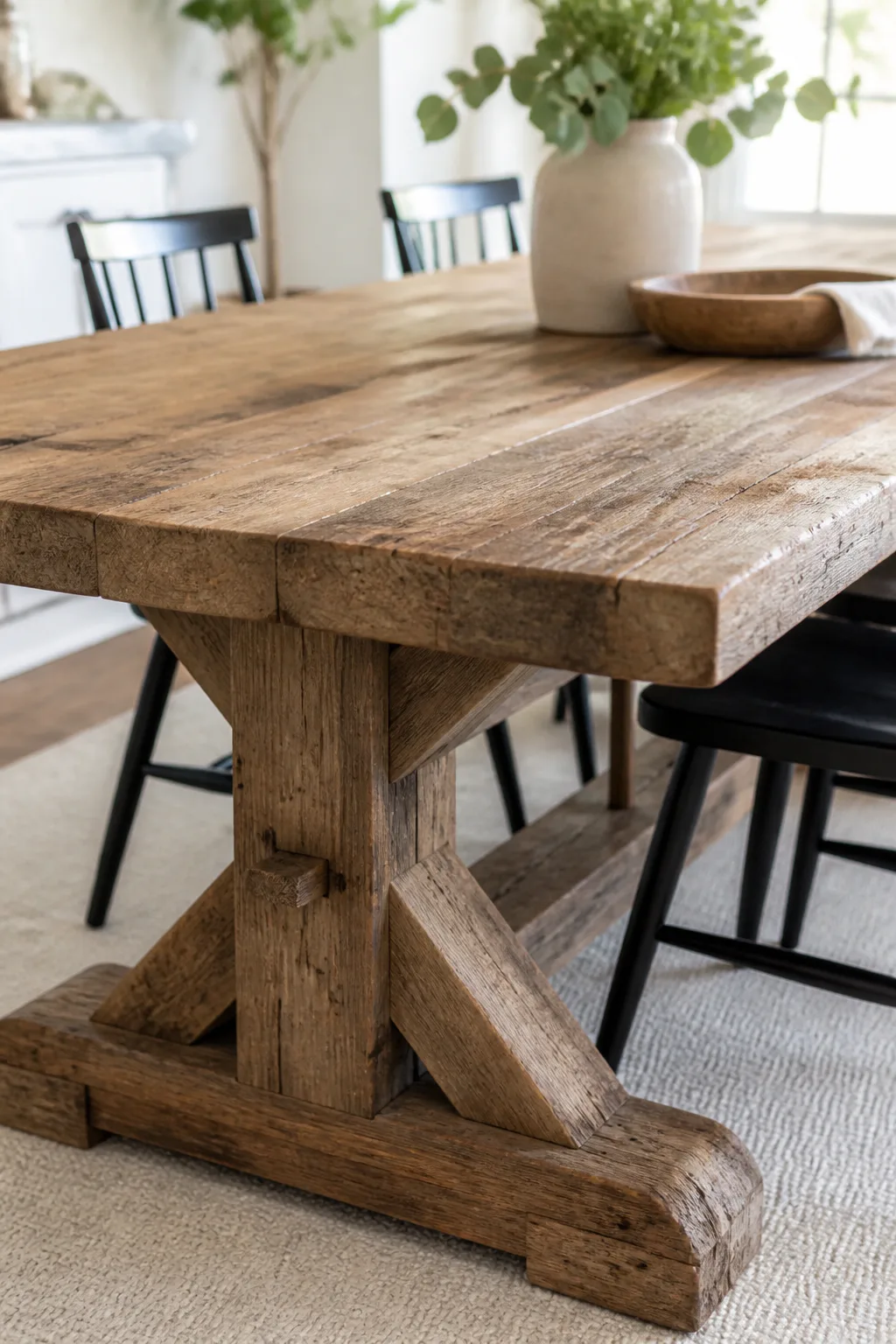
A reclaimed wood trestle table gives a dining room a natural focal point. Its weathered grain and small variations in tone bring warmth, while a clean tabletop shape keeps the look from feeling overly rustic. The sturdy base also lends a sense of permanence that works especially well in a room used for everyday meals as well as gatherings.
To make the table feel modern, pair its textured wood with a matte-black or distressed-metal base. This contrast adds definition and keeps the overall palette from becoming too warm or visually heavy. In an open-concept home, the table can also help establish the dining zone without the need for a wall or divider.
How to choose a table that fits
Consider the room’s circulation before settling on a size. Leave enough space for chairs to pull out and people to move around the table comfortably, and choose a finish that suits the amount of care you want to give it.
- Look for simple geometric lines instead of ornate carving.
- Pair the wood with black or aged-metal details for contrast.
- Choose a tabletop finish that works with your existing floors.
Once the table is in place, let its natural texture guide the rest of the room’s materials.
2. Mix a Wooden Bench with Spindle Chairs
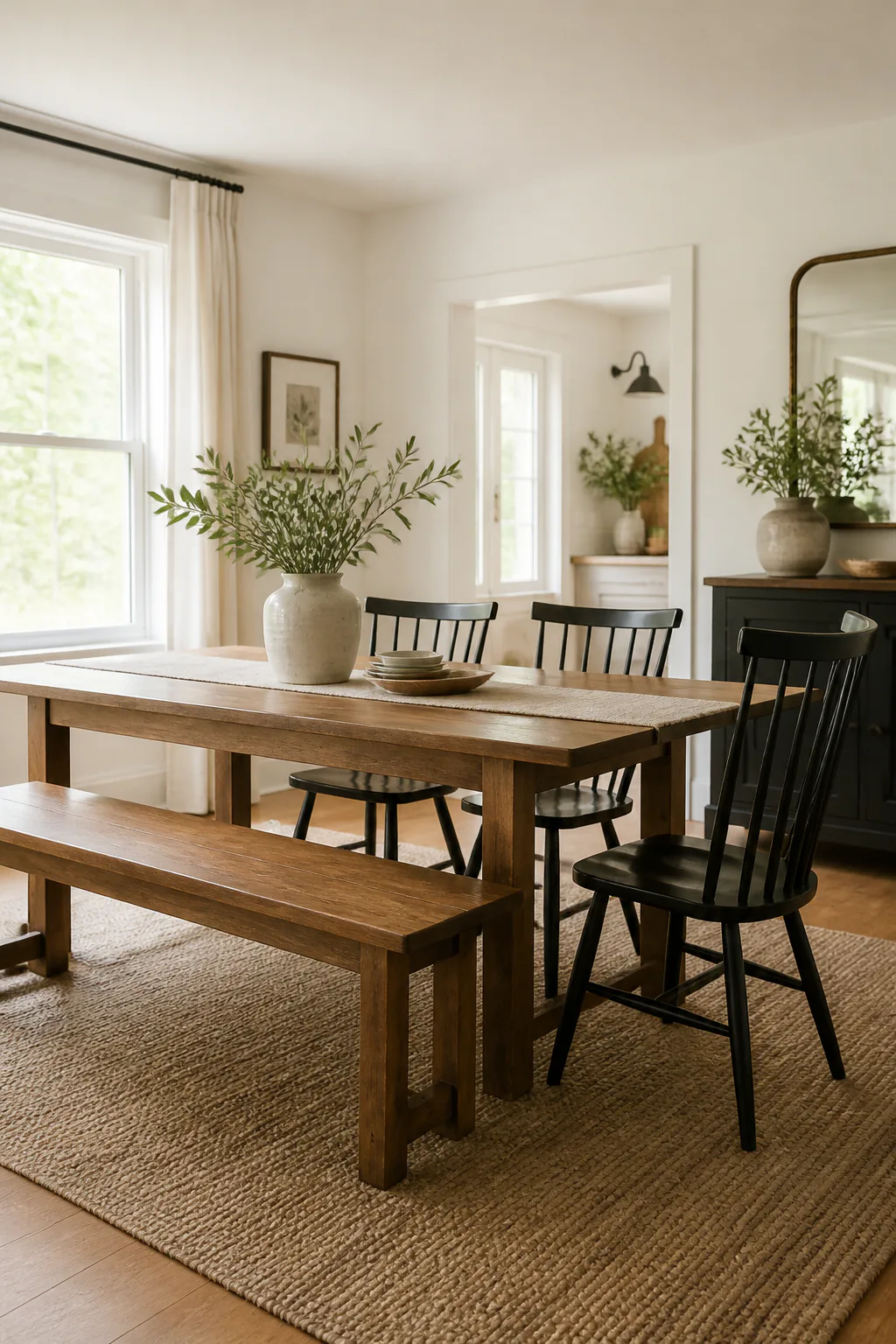
A bench on one side of the table and individual chairs on the other creates an easy, collected-over-time look. The arrangement feels less formal than a matching dining set, while still looking intentional when the seating shares a similar finish or palette. It can also make a family dining area feel more flexible for everyday use.
Try a simple wooden bench along a wall or on the side with the most room to slide in and out. Across from it, linen-upholstered chairs add softness, while Windsor-style spindle chairs bring a familiar farmhouse silhouette with more visual openness. In a smaller room, that open framework can help the furniture feel lighter.
Make mixed seating feel cohesive
Give the different pieces a common thread, such as warm wood tones, neutral fabrics, or dark accents. A bench with a back can offer added support, while a backless style tucks neatly beneath the table when it’s not in use.
- Keep chair shapes varied but within a similar scale.
- Repeat a wood tone or color elsewhere in the room.
- Choose washable or durable fabric for frequently used seats.
The mix adds character without requiring every piece to match perfectly.
3. Hang a Streamlined Black Metal Chandelier
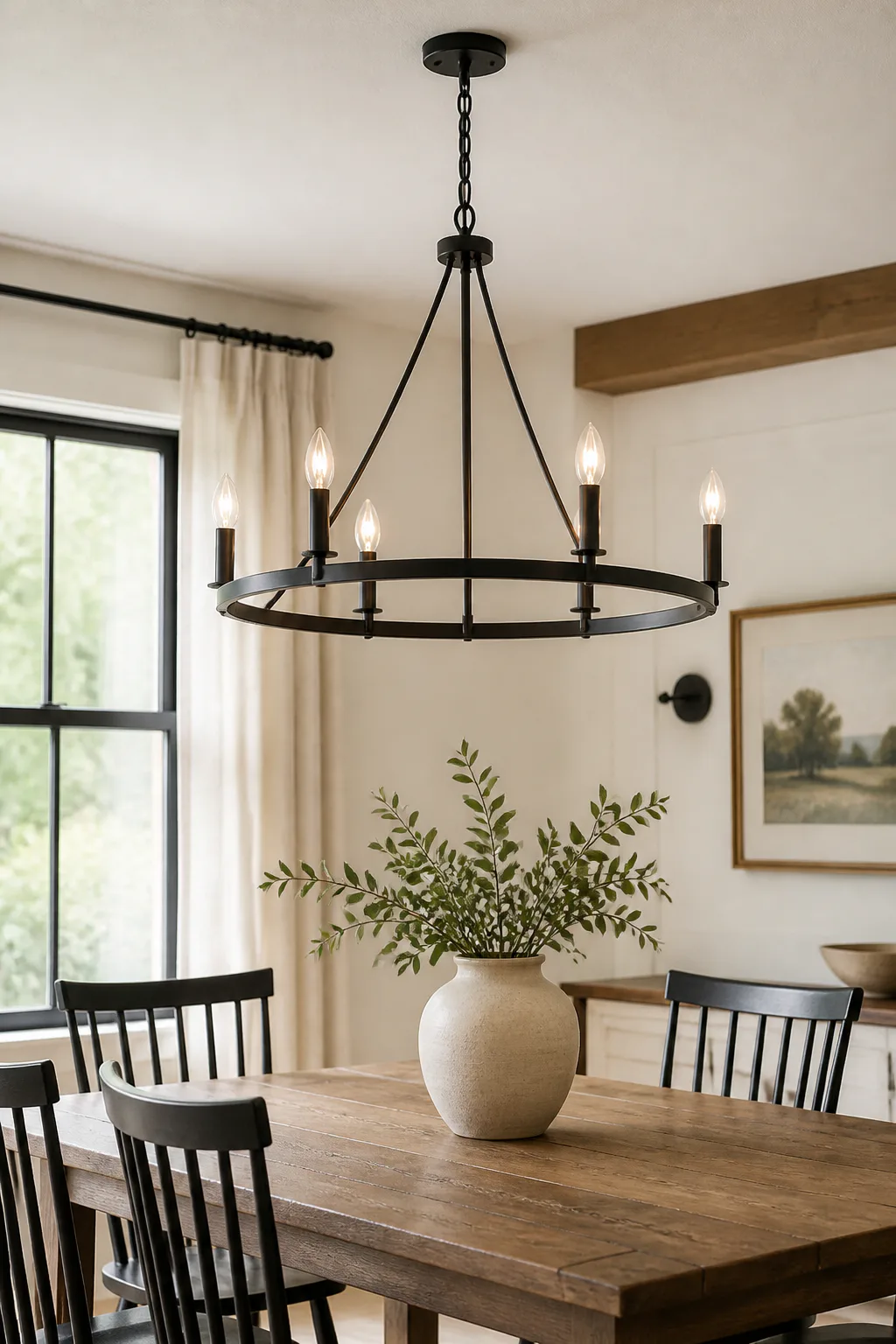
A black metal chandelier gives the dining area a crisp focal point and draws attention to the table. Its dark finish stands out against pale walls and warm timber, bringing a modern edge to traditional farmhouse materials. A streamlined silhouette helps the fixture feel considered rather than ornate.
For a rectangular table, a linear pendant can echo its shape and distribute light along the surface. A minimalist black iron wagon-wheel fixture offers a more rounded profile and can suit a room with softer forms or a larger table. In either case, choose a size and hanging position that keep the fixture visually connected to the dining area.
Choose a fixture for your table
Think about how the light will feel during both meals and evening conversation. A dimmer-compatible fixture can make it easier to shift from bright task lighting to a softer atmosphere, while simple shades help keep the design uncluttered.
- Use a linear form above a long, rectangular table.
- Try a simple wagon-wheel shape for a rounder silhouette.
- Check that the fixture does not obstruct sightlines across the table.
Repeat black in a frame, cabinet pull, or chair detail to make the chandelier feel at home.
4. Add a Board-and-Batten Dining Room Accent Wall
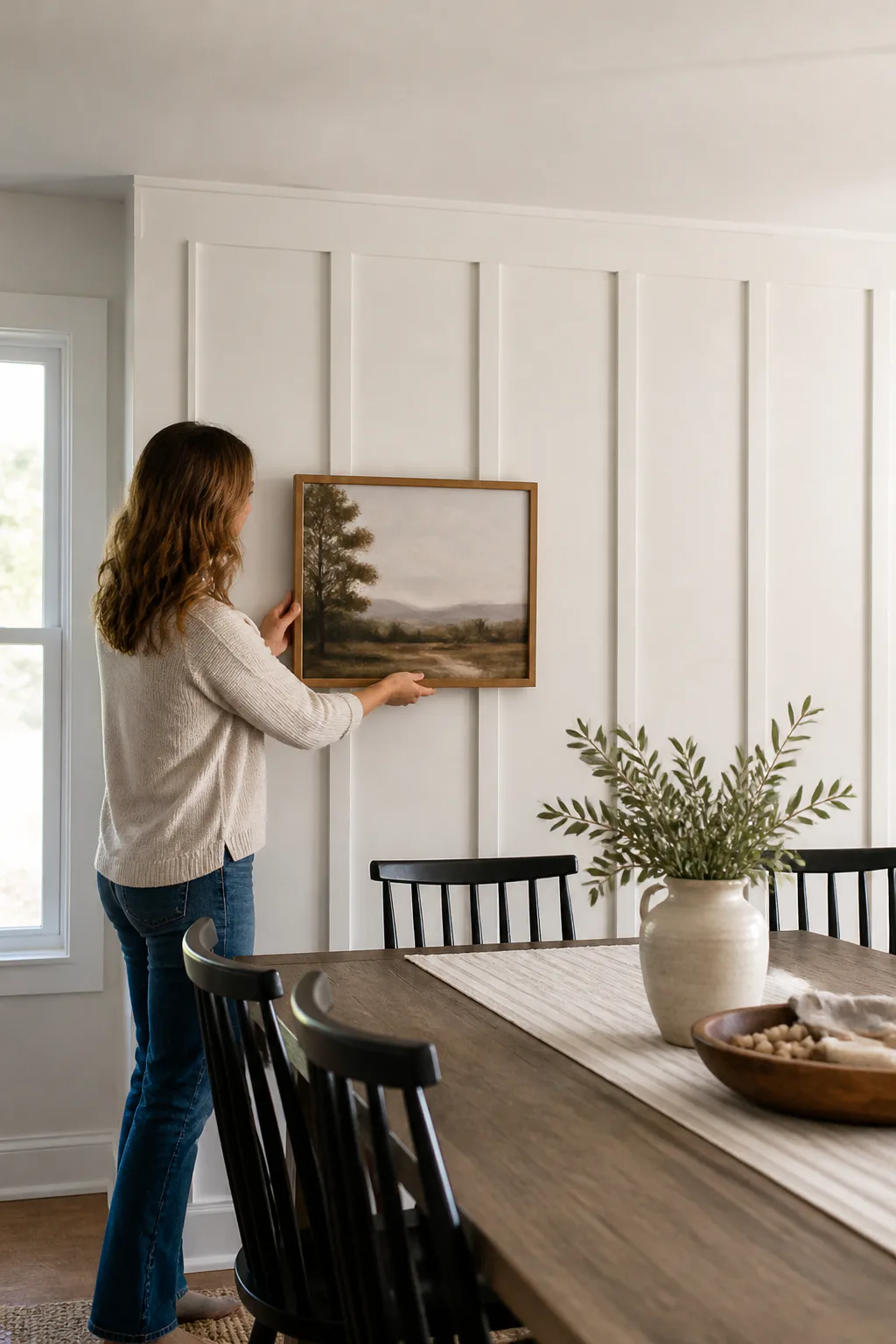
Board-and-batten paneling brings architectural detail to a plain dining room without relying on busy decoration. Its vertical lines add structure and can make the wall behind a table, sideboard, or built-in seating feel more finished. The treatment works in both traditional and contemporary spaces, depending on the panel spacing and paint color.
A warm white finish keeps the effect light and classic, while muted greige adds a little depth. You can cover a focal wall or use paneling on the lower portion of the room to create a defined backdrop. In an open plan, that wall detail can help mark the dining area while keeping the space visually connected.
Plan the wall treatment
Before installing panels, map out the spacing around doors, windows, and outlets so the pattern feels balanced. A smooth, consistent paint finish emphasizes the crisp lines and lets furniture and artwork add the softer texture.
- Choose a focal wall that naturally draws the eye.
- Use warm white or muted greige for a calm backdrop.
- Coordinate panel height with nearby trim and furniture.
Pair the finished wall with simple art or a mirror so the paneling remains part of the room’s design, not visual competition.
5. Place Upholstered Host Chairs at the Table Ends
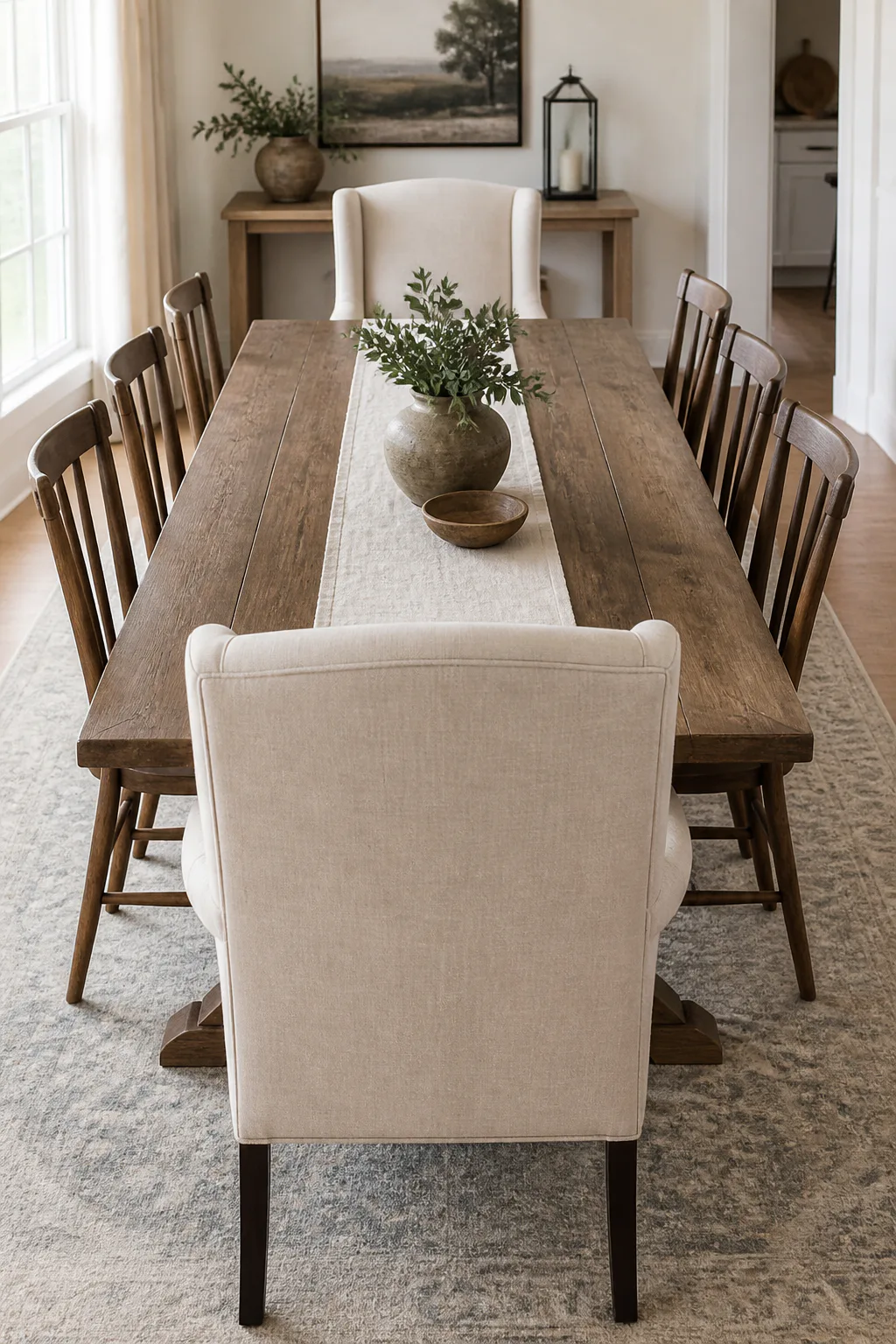
Upholstered host chairs soften the strong lines and hard surfaces common in farmhouse dining rooms. Placing a high-back armchair at each end of the table creates a subtle sense of occasion, while the rest of the seating can stay simple. This arrangement works especially well when the table is substantial and needs a little contrast.
Linen, canvas, or slipcovered fabric brings a relaxed texture that suits the farmhouse style. Neutral upholstery can also connect the chairs to curtains, a rug, or other soft furnishings without making the room feel too coordinated. If you prefer a cleaner look, choose a tailored shape with minimal trim and visible wood or dark legs.
Balance comfort and upkeep
Check the chair width and arm height against the table before committing to a pair. The chairs should slide in without catching, and the fabric should suit how often the dining room is used.
- Choose a supportive back for longer meals and conversations.
- Consider washable covers or easy-care upholstery for busy homes.
- Repeat the chair fabric’s color in a rug or nearby accessories.
These end chairs add a welcoming, finished touch while keeping the rest of the setting flexible.
6. Build an L-Shaped Banquette with Hidden Storage
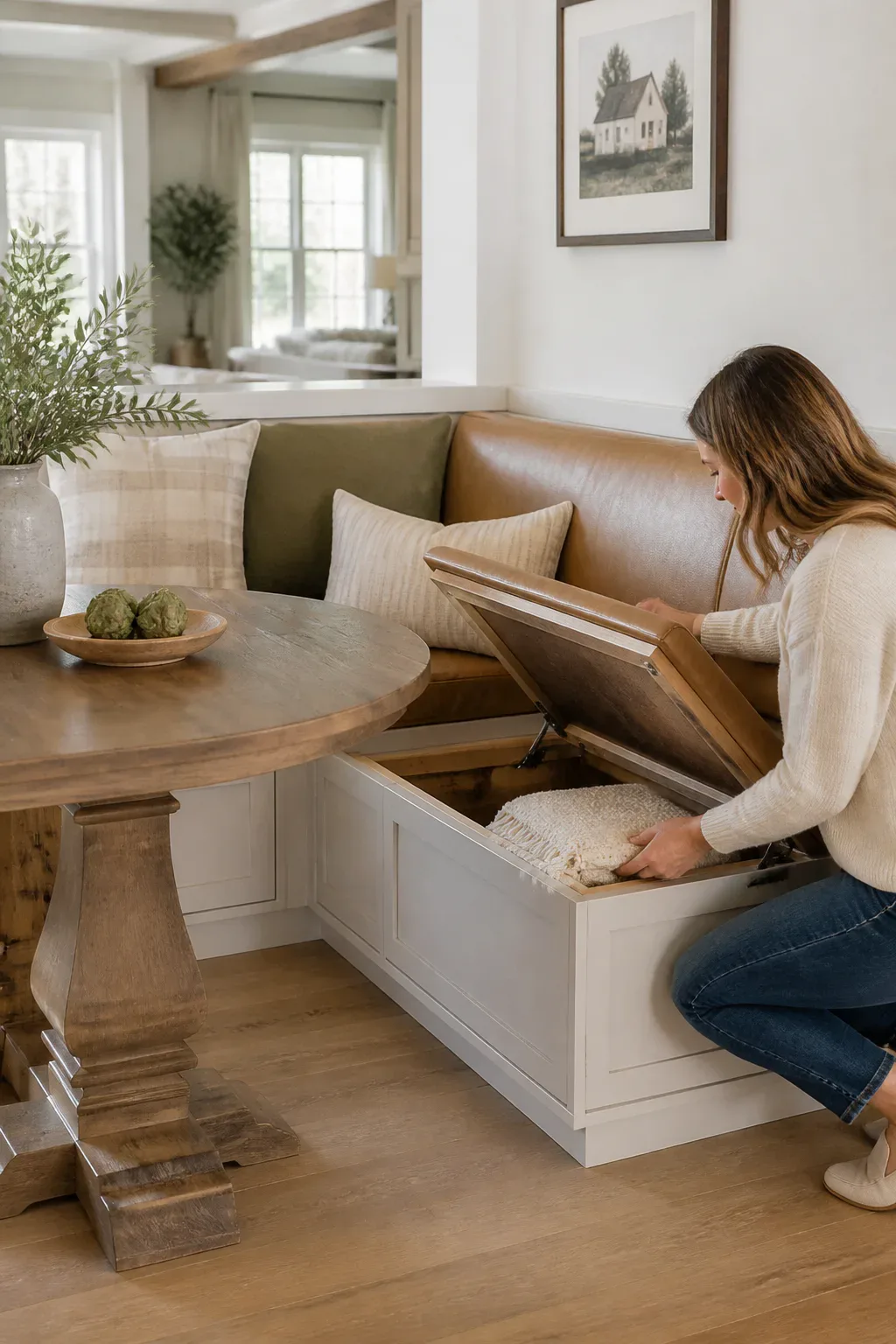
An L-shaped banquette can turn an underused corner into a comfortable dining nook. It is especially useful in open-concept layouts, breakfast areas, or rooms where chairs would make a walkway feel crowded. The built-in shape creates a clear destination for meals and can make a compact table feel more inviting.
Hidden storage beneath the bench offers a practical place for table linens, games, or less frequently used serving pieces. Cushions in neutral leather or a restrained pattern add comfort and give the nook a softer finish. Keep the surrounding table and lighting simple so the seating feels like an integrated part of the room.
Make the nook work day to day
Measure the corner carefully and think through how people will enter and leave the seating. A table with a pedestal base can make it easier to slide along the bench, while removable cushions help simplify cleaning and seasonal updates.
- Use lift-up seats or drawers to make storage accessible.
- Choose durable upholstery that can handle frequent use.
- Keep the table size comfortable for both seated sides.
With thoughtful proportions, a banquette can add both useful storage and a cozy gathering spot.
7. Style a Reclaimed Wood Hutch as a Focal Point
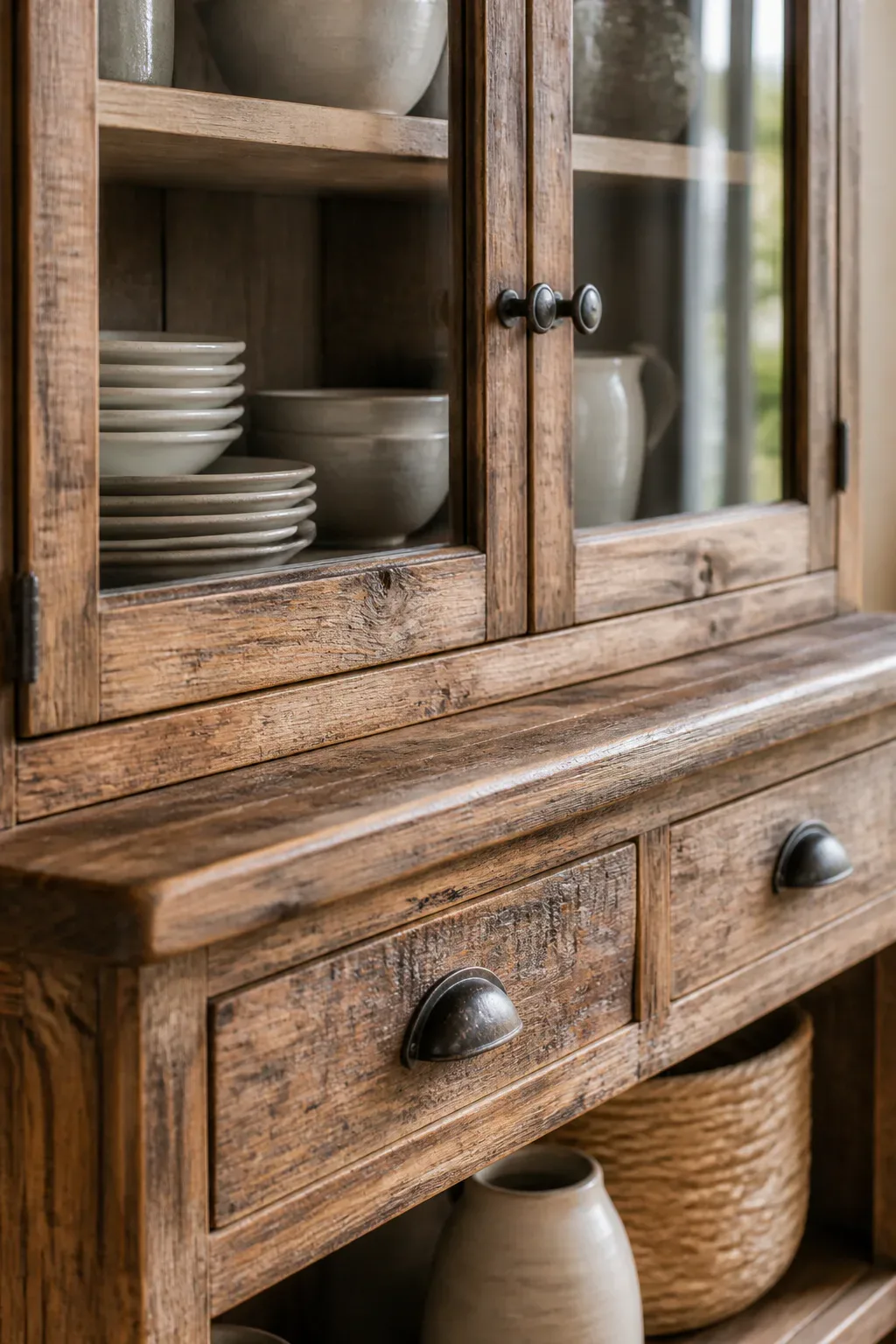
A reclaimed wood hutch or distressed buffet gives a blank dining room wall purpose. Its textured finish adds the character of older materials, while a simple shape and uncluttered styling keep it from dominating the space. A low buffet can feel airy; a taller hutch offers more display and storage opportunities.
Keep the arrangement above and around the furniture restrained. A round bronze mirror can bring a soft shape and reflect light, while simple ceramics provide contrast against the wood. A small tray of greenery adds a living touch without filling every surface. This combination works well opposite a window or beside the dining table, where the furniture can be appreciated from several angles.
Style the surface with intention
Start with one larger piece, such as a mirror, and build a few smaller objects around it. Leave open space on the top so the hutch remains useful for serving dishes or setting down items during a meal.
- Mix ceramic shapes while keeping the color palette calm.
- Use a mirror to add light and balance the furniture’s weight.
- Store everyday serving pieces where they are easy to reach.
A well-edited hutch can bring both practical storage and a layered, lived-in feel to the room.
8. Frame the Dining Area with Black Steel Windows

Thin-profile black window frames create a striking contrast against warm wood and pale walls. They lend a clean, architectural edge that feels at home in a modern farmhouse dining room, especially when the space has timber furniture or visible beams. Black-framed doors can create a similar effect while helping define the dining area.
This detail is most effective when it connects to the room’s layout rather than feeling like an isolated accent. A sliding barn-style door with dark framing can separate a dining room when needed, then open to keep the home feeling connected. If replacing windows or doors isn’t practical, smaller black accents can echo the same contrast.
Use dark frames with balance
Let the frames stand out, but repeat their color in a few smaller details so they feel integrated. Keep surrounding finishes warm and simple to avoid making the room feel stark or overly industrial.
- Use black-framed doors to define a transition between rooms.
- Pair dark frames with warm timber and soft neutral fabrics.
- Echo the finish in lighting, hardware, or a mirror frame.
The result is a sharper outline around the room’s softer farmhouse textures.
9. Layer a Jute Rug Beneath the Dining Table
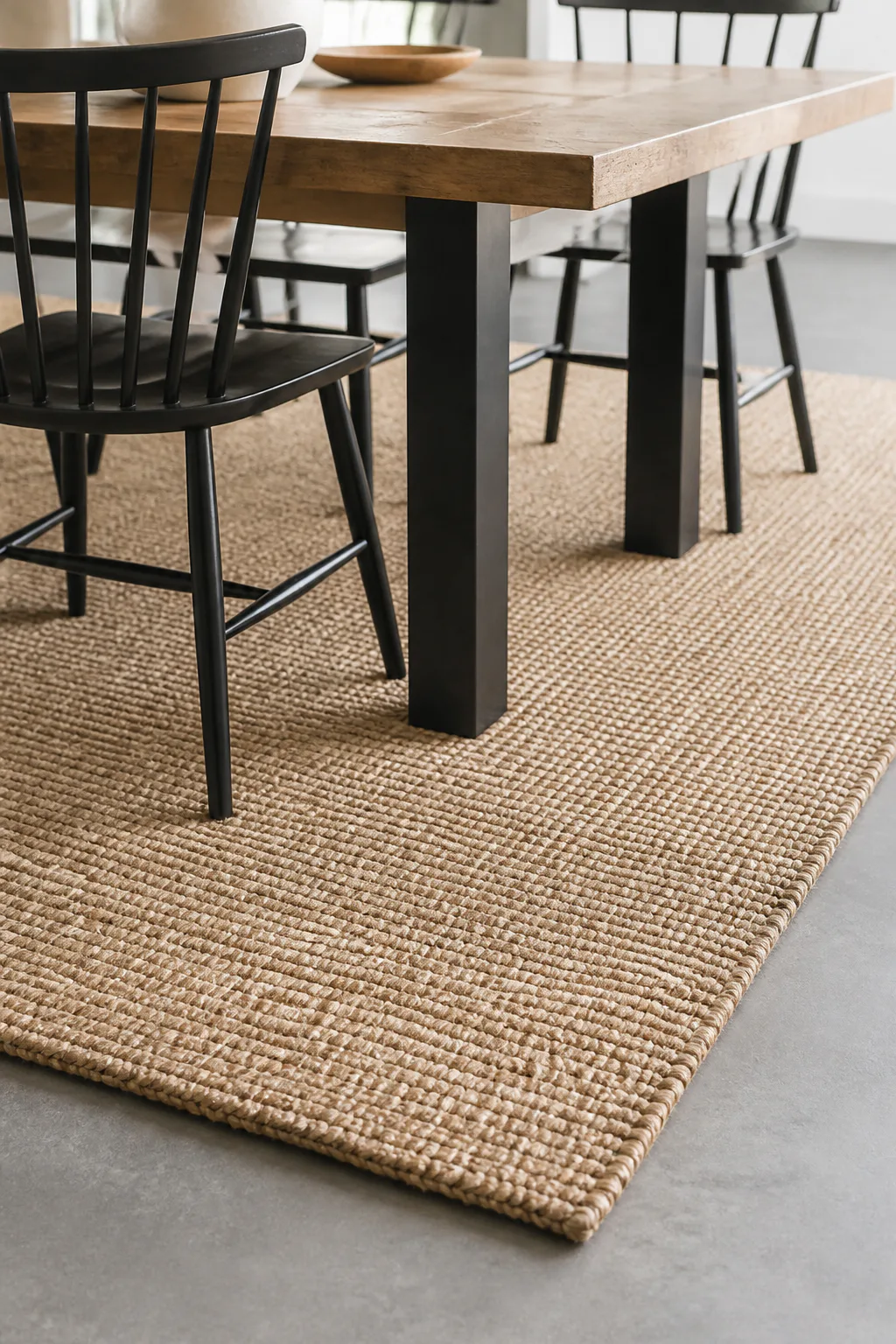
A flat-weave jute rug grounds the dining table and adds natural texture beneath the furniture. Its woven surface brings warmth to hardwood, slate, or concrete flooring without adding a strong pattern. In an open-concept room, a rug can also help distinguish the dining area from nearby living spaces.
Choose a size that allows chairs to remain on the rug when they are pulled back from the table. A rug that is too small can feel disconnected and make chair movement awkward. Natural fibers suit a relaxed look, while a low-pile vintage-wash wool rug offers a softer surface with a little more color and pattern.
Get the size and placement right
Measure the table and account for the chairs in their pulled-out position before choosing a rug. Consider how the material will handle spills and crumbs, especially if the dining room is used for daily meals.
- Leave enough rug beyond the table for chairs to slide out.
- Choose a flat weave or low pile for easier chair movement.
- Use a rug pad to help keep the rug steady.
The right rug makes the dining zone feel anchored while adding a layer of quiet, natural texture.
10. Display Stoneware on Floating Wood Shelves

Floating wood shelves make everyday dishes part of the dining room’s decor. Thick-cut natural wood brings warmth, while the open display keeps a wall from feeling as visually heavy as a closed cabinet. The approach works well near a sideboard or in a breakfast nook, particularly when there is enough wall space to arrange the shelves without crowding the table.
Stoneware, white ironstone, and simple serving pieces create a calm display that still feels useful. A trailing plant can soften the shelf edges, but leave room for the items you reach for regularly. Because open shelves are always visible, a limited palette and thoughtful spacing help the arrangement feel intentional rather than cluttered.
Keep the display practical
Mount shelves securely and place heavier dishes where they are easy to lift down. Arrange items in small groups, varying heights and shapes while leaving some open wall visible to give the collection room to breathe.
- Mix stacked plates with a few upright bowls or serving pieces.
- Repeat natural wood tones found elsewhere in the room.
- Add only a small amount of greenery for a softer finish.
When the display combines useful pieces with a few decorative details, it can be both charming and functional.
11. Paint the Dining Room a Soft Sage Green
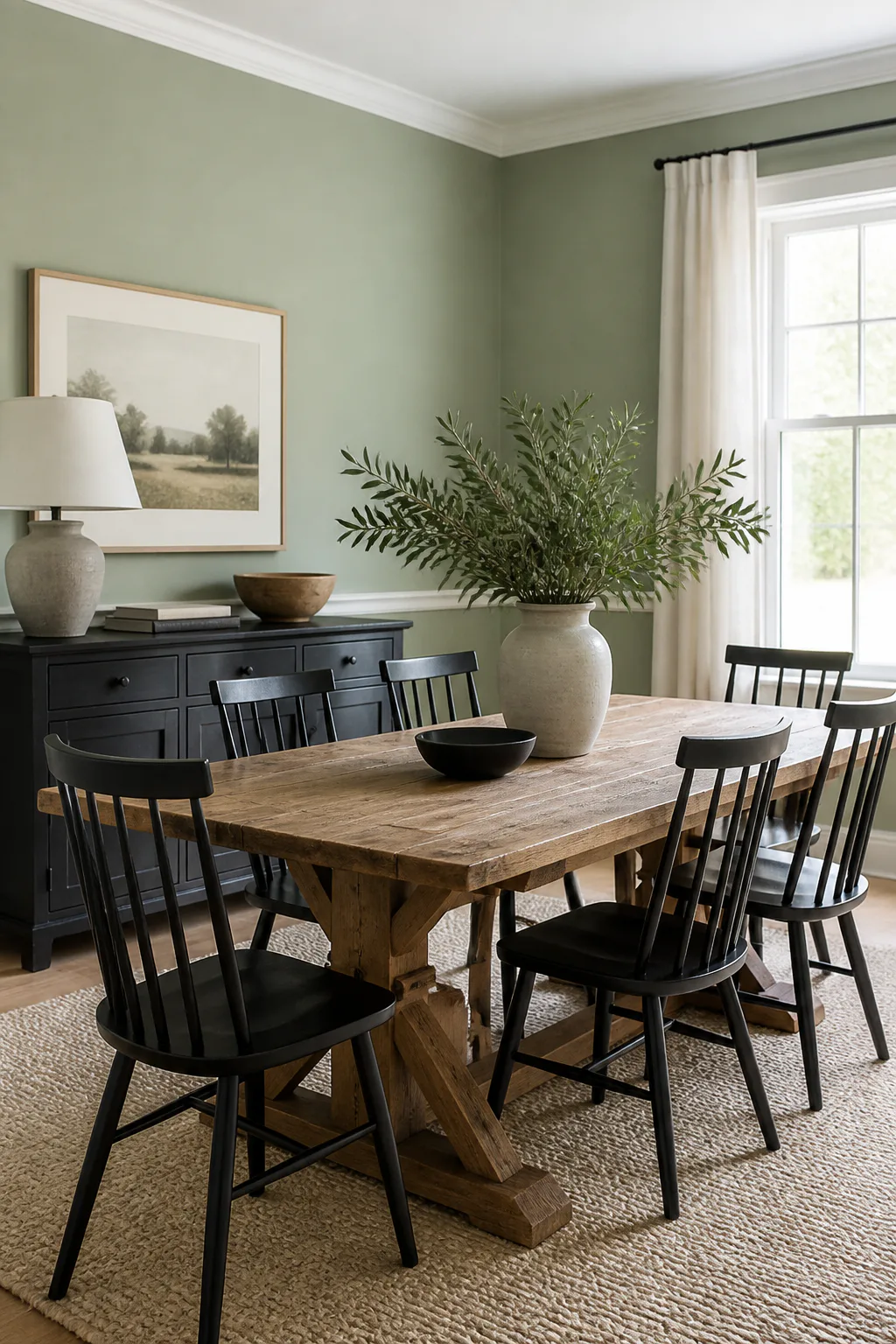
Soft sage green brings an earthy, settled quality to a dining room. It offers more color than a plain white wall but remains muted enough to work with reclaimed wood, black metal, and neutral upholstery. The shade can make a separate dining room feel especially cozy, while in an open layout it adds gentle definition without demanding attention.
Look at the paint alongside the room’s natural and artificial light before choosing a final tone. Some sage shades lean cooler, while others have warmer undertones that pair easily with oak and other honeyed woods. A balanced palette helps the color feel intentional: bring in warm neutrals, simple ceramics, and a few dark accents.
Build a comfortable color palette
Test a sample on more than one wall and observe it at different times of day. If painting the whole room feels like too much, use sage on a focal wall or combine it with light trim for contrast.
- Pair sage with warm wood and cream-colored fabrics.
- Use black accents to give the softer color definition.
- Choose wall decor that complements rather than competes with it.
The result is a grounded backdrop that still feels light enough for everyday dining.
12. Create a Low Olive-Branch Table Centerpiece
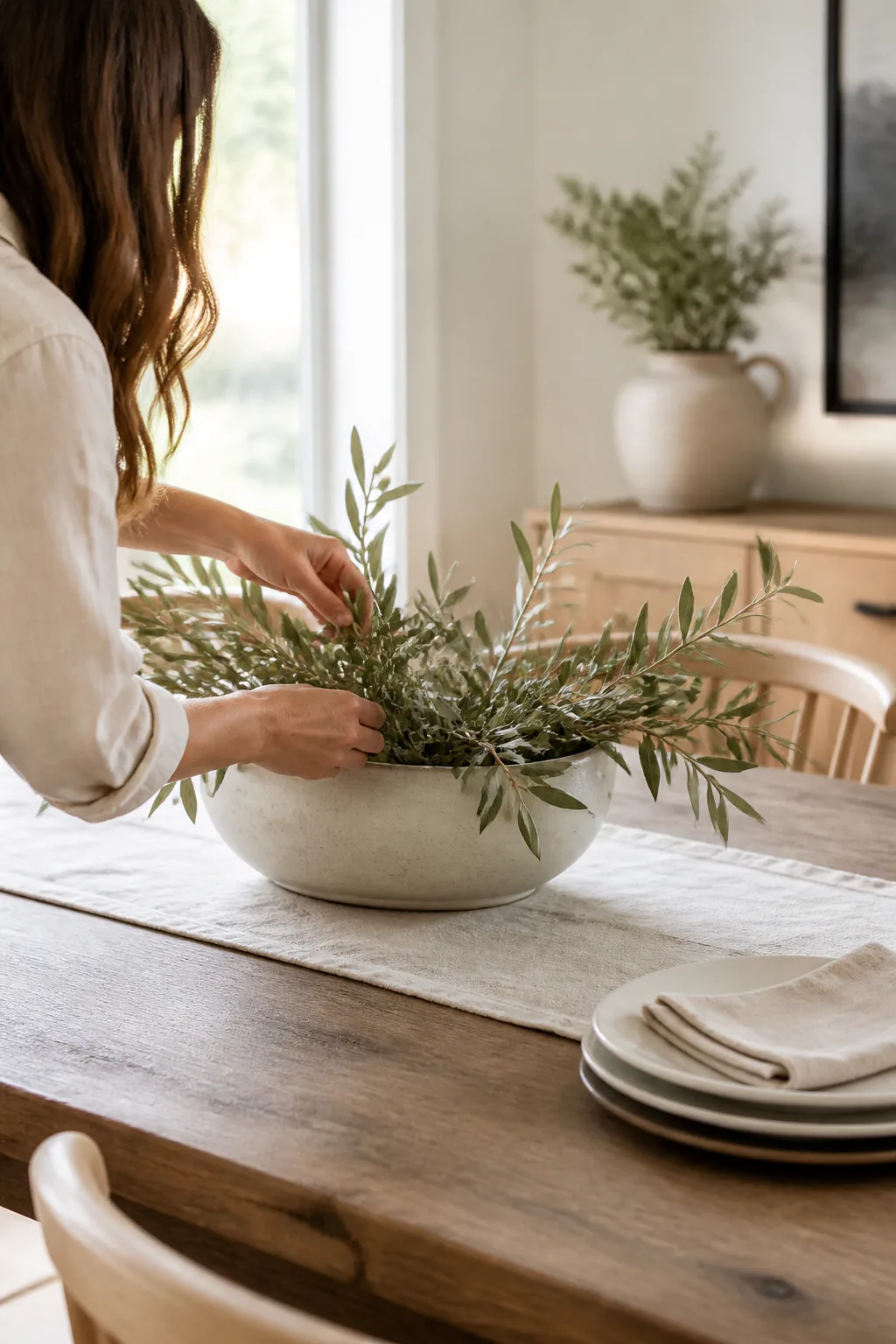
A low centerpiece adds a finished touch without taking over the dining table. Olive branches bring an organic, loose shape that complements farmhouse materials, while a simple ceramic vessel keeps the arrangement feeling relaxed. For a longer table, a low black trough can provide a narrow focal line that follows the tabletop’s shape.
Keeping the arrangement low helps preserve sightlines across the table and leaves room for serving dishes. It also makes the setting easy to adapt: use fresh or seasonal branches when available, or keep the vessel empty when the table needs to be clear. The idea suits both everyday meals and gatherings because it adds texture without requiring a formal tablescape.
Keep the tabletop uncluttered
Choose a vessel with a stable base and a scale that leaves plenty of usable surface. A few stems often look more natural than a tightly packed arrangement, and simple greenery works well with both rustic wood and modern tableware.
- Use a ceramic vase for an easy, sculptural accent.
- Choose a low trough for a long rectangular table.
- Leave enough clear space for plates and shared dishes.
A restrained centerpiece brings the room’s natural textures together without getting in the way.
Final Thoughts
Modern farmhouse dining rooms feel most inviting when rustic textures and contemporary details are in balance. A substantial wood table, streamlined lighting, varied seating, and a thoughtful color palette can establish the look, while storage and durable finishes help the room work for everyday life.
You don’t need to take on all 12 ideas at once. Start with the element that would make the biggest difference in your room, then add a few complementary details over time. Keeping the materials warm, the styling considered, and the layout comfortable will help your dining space feel personal and welcoming.



