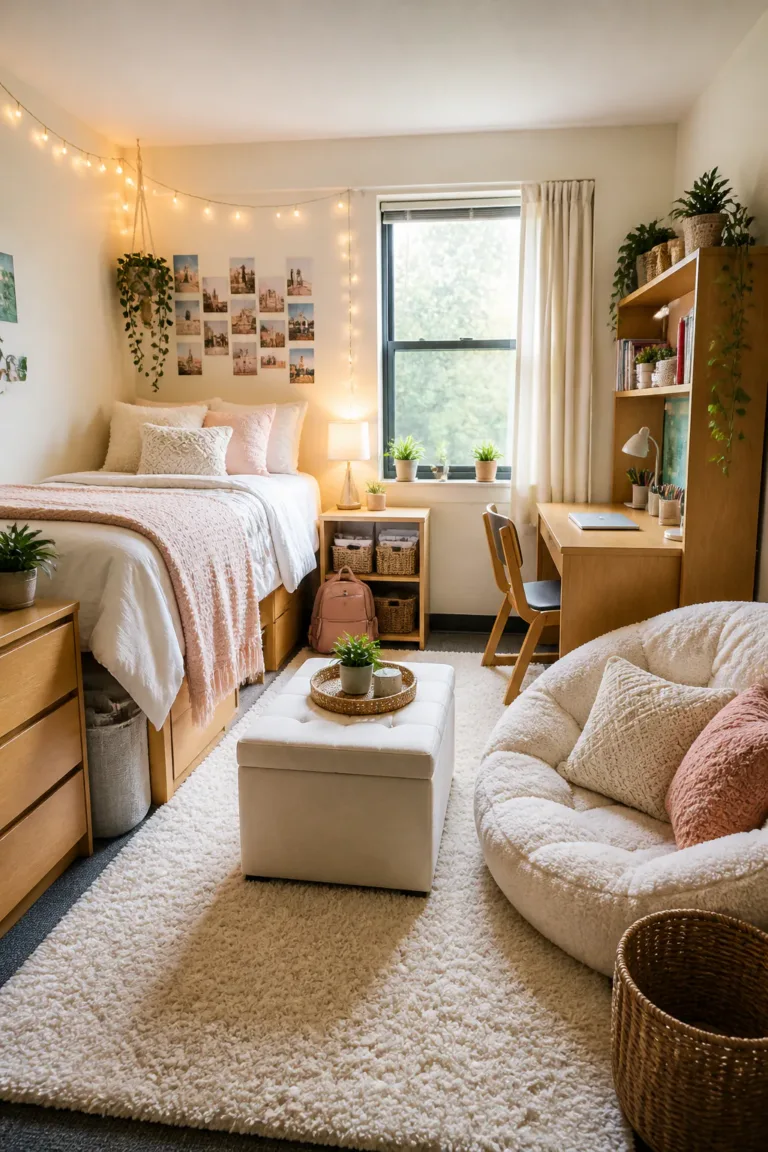
12 Clever Dorm Room Ideas for a Cozy, Stylish Space
A dorm room has to do a lot in a small footprint: support studying, sleeping, relaxing, and sometimes getting ready for the day. A few thoughtful updates can make even a plain room feel more comfortable and personal without filling every inch.
These dorm room ideas balance style with practical details, from softer lighting and layered bedding to rolling storage and a more useful study corner. Each one can stand on its own, so you can choose what fits your room, your routine, and the residence hall’s rules.
If you’re planning ahead, check your room layout and housing guidelines before bringing large furniture or hanging anything on the walls. Then use a color palette or favorite accent to help separate the ideas you love from the ones you can skip.
1. Create a Cozy Fairy-Light Canopy

Warm-toned fairy lights can turn the bed into a gentle focal point and make a basic dorm room feel less clinical after dark. Draped around the bed frame or arranged above the head of the bed, they add a soft glow without taking up desk or floor space.
Keep the display simple enough to complement the rest of the room. A tidy line of lights can feel calm and polished, while a looser canopy effect adds a more dreamy touch. This works especially well in a room where the overhead light feels harsh or the walls need a little visual warmth.
How to pull it off
Check residence hall rules and the light set’s instructions before hanging anything. Use approved hooks or clips, keep cords away from walkways, and avoid covering vents or fixtures.
- Choose warm-toned lights for a softer evening atmosphere.
- Frame the bed or headboard area rather than covering every wall.
- Pair the glow with a small desk or bedside lamp for useful task lighting.
A restrained lighting plan can make the room feel cozy while keeping it practical for reading and winding down.
2. Design a Vintage-Prep Study Corner

A study area can feel more inviting when it has a clear style of its own. Collegiate stripes and gingham accents bring a vintage-prep mood to a standard desk, while a few coordinated colors make the setup look intentional rather than crowded.
Because the desk is already a functional zone, small details go a long way. A striped desk mat, gingham pencil cup, or colorful file holder can introduce the look without sacrificing the surface you need for coursework. This idea suits a desk tucked beside a bed or set against a blank wall.
Design tips
Start with one pattern as the anchor, then use a second pattern sparingly. Keep the everyday supplies easy to reach, and let the desk’s useful items contribute to the decor instead of adding objects that need constant moving.
- Choose two or three colors to repeat across the corner.
- Use a patterned organizer or desk mat as the main accent.
- Keep notebooks and frequently used supplies in accessible holders.
- Add a small framed print or pinboard above the desk if permitted.
The result is a study spot with personality that still has room for the work itself.
3. Layer a Textured Statement Bed
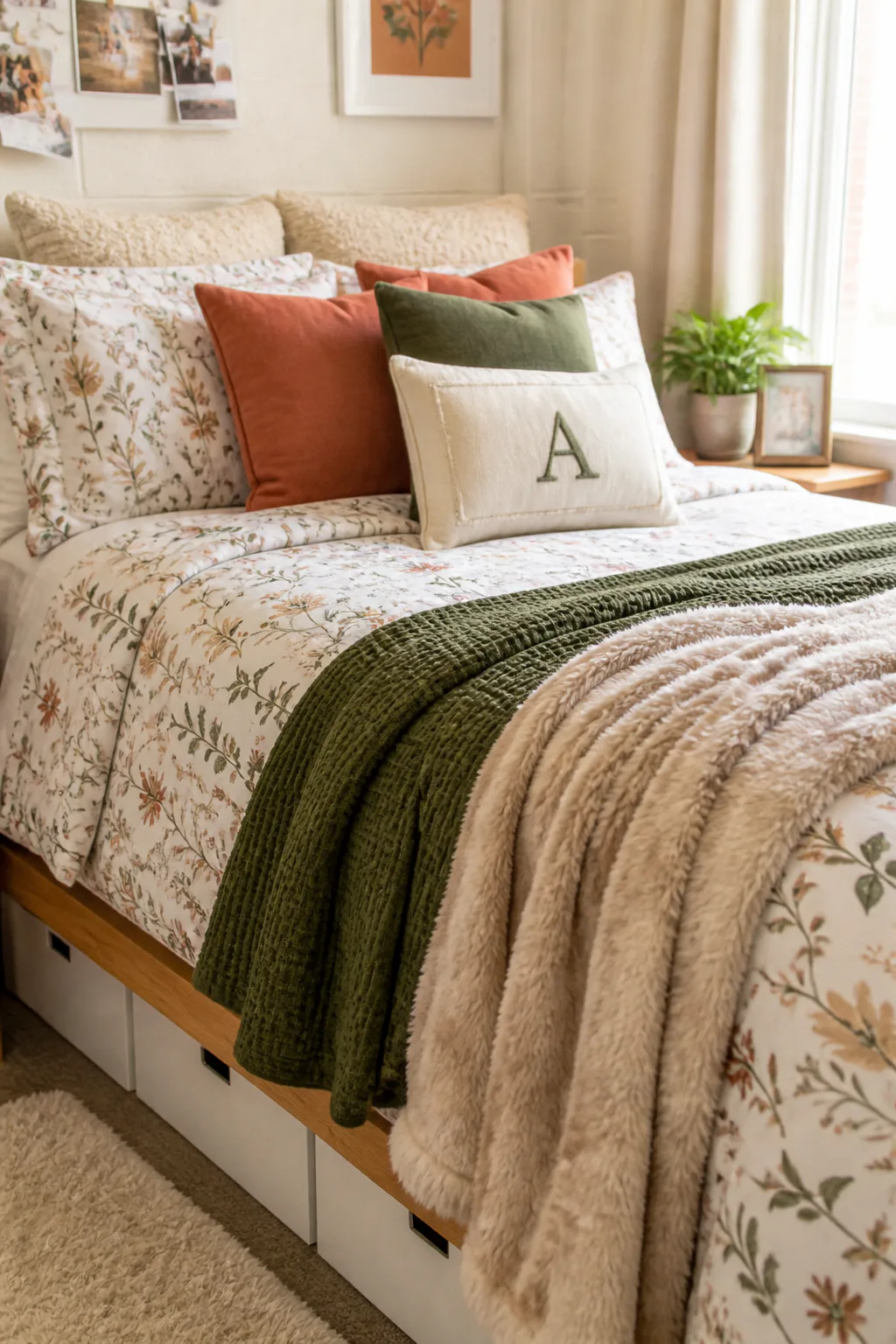
Since the bed often takes up a large share of a dorm room, making it a focal point can help the whole space feel designed. A patterned duvet gives the bed a starting point, while contrasting textures add depth without requiring extra furniture or wall decor.
Think of the layers as both visual and useful: a waffle blanket can add light warmth, and a faux-fur throw can make the bed feel extra cozy. A monogram pillow brings in a personal detail. This approach works in rooms where the bed is visible from the doorway or doubles as seating during the day.
How to layer the look
Keep the palette connected even when mixing patterns and textures. Choose one main print, then let the blanket and throw add tactile contrast rather than competing designs.
- Begin with a duvet or comforter in a pattern you love.
- Fold a waffle blanket across the foot of the bed.
- Add a soft throw where it is easy to grab and put away.
- Use a monogram or accent pillow to finish the arrangement.
When you make the bed in the morning, the layers help the room look pulled together quickly.
4. Build a Soft Alternative Headboard

A dorm bed can look unfinished without a headboard, but a full-size furniture piece may not fit the room or housing rules. A soft alternative creates a visual backdrop and can make sitting up to read or scroll feel more comfortable.
There are several ways to get the effect, depending on the room and what you can attach to the wall. An upholstered panel feels tailored, a wallpaper strip adds pattern, and a tapestry can bring color without bulky furniture. A plush wedge pillow is a simple option when hanging decor is not practical.
Choose an approach
Measure the bed area first so the alternative feels proportional. If you plan to use adhesive or hang a textile, confirm that the method is allowed and won’t damage the wall.
- Use an upholstered panel for a cushioned, finished look.
- Try a peel-and-stick wallpaper strip for a defined accent.
- Hang a tapestry to add softness and a larger patch of color.
- Choose a wedge pillow when you want a moveable backrest.
A headboard alternative can anchor the bed and make the surrounding decor feel more deliberate.
5. Add a Colorful Accent Desk Chair

A standard dorm chair can look plain and may not feel comfortable for longer study sessions. Replacing it with a compact office chair or a velvet-tufted accent chair can bring color into the room while making the desk area feel more personal.
Choose the chair with both comfort and footprint in mind. A chair that looks lovely but blocks a closet or catches on the bed will quickly become frustrating. If the desk is in a shared or narrow room, a compact silhouette and easy movement matter as much as the upholstery.
What to consider
Check the available floor space and the desk height before choosing a replacement. If you want a decorative chair, make sure it still supports the way you actually study and can tuck away when it is not in use.
- Measure the desk area and the chair’s full footprint.
- Pick a color that repeats an accent from your bedding or rug.
- Look for a seat that feels comfortable for your usual study routine.
- Choose wheels or a compact shape if the chair needs to move often.
A well-chosen chair can make the desk feel like part of the room’s design, not just a place to do assignments.
6. Anchor the Room with a Plush Rug

A soft area rug can warm up a bare or institutional-looking floor and make the room feel more finished. It also helps define the shared space visually, especially when the bed, desk, and storage pieces sit close together.
Choose a rug size that suits the layout rather than covering every open patch of floor. A larger rug can bring the main furniture together, while a smaller one may work better in a narrow room. Repeating a color from the bedding or chair helps the rug tie the room’s separate zones into one palette.
Plan the placement
Measure the usable floor area and consider where doors, drawers, and chair legs need to move. A rug should feel comfortable underfoot without becoming an obstacle or making storage harder to access.
- Place the rug partly under the bed to connect the sleeping area.
- Choose a texture that feels pleasant for bare feet.
- Repeat one or two colors already used elsewhere in the room.
- Check that the edges won’t catch on doors or rolling furniture.
With thoughtful placement, a rug adds comfort while quietly organizing the room’s layout.
7. Turn a Rolling Cart into a Mini Station

A three-tier rolling cart offers flexible storage in a room where permanent furniture may be limited. It can sit beside the bed as a nightstand, hold study supplies near the desk, or become a compact skincare or coffee station in an unused corner.
The main advantage is that the cart can move when your needs change. That makes it useful for small rooms, where one fixed setup may not work for every activity. Assigning each tier a purpose also keeps the cart from becoming a catchall for loose items.
Give each tier a job
Keep frequently used items on the top shelf and reserve lower levels for backups or supplies you need less often. If the cart holds drinks or personal-care products, use containers to keep small items from shifting when it rolls.
- Make the top tier a bedside spot for a book and everyday essentials.
- Store notebooks, pens, and chargers beside the desk.
- Group skincare items in a small tray or organizer.
- Use lower shelves for extra supplies or items you reach for less often.
A rolling cart gives you useful storage without committing valuable floor space to another bulky piece.
8. Create a Thrifted Art and Memory Wall

A wall of art and memories can make a dorm feel personal from the moment you walk in. Artist-designed prints bring color and character, while a corkboard or fabric banner gives you a place to display photos, notes, and small keepsakes.
Mismatched frames can make the arrangement feel collected over time rather than overly formal. To keep the wall cohesive, repeat a few colors or use a consistent spacing pattern. This idea works well above a desk, beside the bed, or in a narrow stretch of wall that might otherwise feel empty.
Build a balanced display
Lay out the arrangement before hanging anything, and check the residence hall’s rules about wall attachments. Mix framed pieces with a flexible memory area so the display can change as the semester goes on.
- Combine prints in different frame styles and sizes.
- Add a corkboard for photos, reminders, and mementos.
- Use a fabric banner to introduce a soft texture.
- Repeat a couple of colors to connect the varied pieces.
The finished wall can evolve with you, making it more meaningful than decor that never changes.
9. Frame the Window with a Fabric Cornice

A fabric-wrapped cornice board can soften a stark window area and disguise an exposed blind track. Because it sits above the window, it adds color without using much floor or desk space, making it a useful idea for a compact dorm room.
Choose fabric that connects with the room’s bedding or accent colors, then keep the shape simple so it does not overwhelm the window. A cornice can also make the window feel more finished when the blinds are plain. If a DIY board is not allowed or practical, look for another permitted way to add a fabric accent around the frame.
Before you install it
Measure the window and check campus rules before attaching anything. The covering should not interfere with blinds, block useful light, or create a problem with window access.
- Select a fabric that complements the room’s existing palette.
- Measure the width of the window and blind hardware.
- Keep the design shallow enough to avoid crowding the space.
- Confirm that your hanging method is permitted by housing.
This small detail can make the window feel integrated with the rest of the room instead of like an afterthought.
10. Make a Hidden Storage Zone Under the Bed

The space beneath a dorm bed can hold a surprising amount of everyday overflow, from shoes to off-season clothes. Sturdy bed risers create extra clearance, turning an otherwise unused area into storage without adding a cabinet or taking up more of the room’s footprint.
Before raising the bed, confirm that risers are permitted and appropriate for the bed frame. Once the space is accessible, use bins to keep belongings contained and easy to retrieve. A simple system also prevents the under-bed area from becoming a jumble that is hard to clean or sort through.
Organize the space
Measure the clearance after choosing risers, then select storage containers that fit and can slide in and out. Keep items you use regularly near the edge, and place seasonal or occasional belongings farther back.
- Use sturdy risers that suit the bed frame and follow their instructions.
- Group shoes, clothes, and spare linens in separate bins.
- Label containers so you can find items without pulling everything out.
- Leave a clear path to anything you need during the week.
Organized under-bed storage can free up closet and drawer space for the things you reach for most.
11. Set Up a Compact Marquee Vanity

A getting-ready area does not need a dedicated vanity table. A dresser or desk can become a compact station with a light-up mirror, a cosmetic organizer, and a small jewelry stand, keeping daily routines in one convenient spot.
This setup works best when it is designed around what you actually use. A tidy surface makes the room feel calmer and leaves space available for other tasks, especially if the desk also serves as a study area. Keeping products grouped together makes it easier to clear the surface when you need it.
Keep the setup practical
Place the mirror where you can use it comfortably and where its light does not distract a roommate. Use organizers that fit the surface and are easy to move or clean, rather than filling the area with accessories.
- Choose a light-up mirror sized for the available surface.
- Use a rotating organizer or tray for everyday cosmetics.
- Keep jewelry on a stand or in a small container.
- Store occasional-use items elsewhere to limit clutter.
A small, well-organized station gives daily essentials a home while keeping the rest of the room flexible.
12. Personalize the Dorm Room Door

A personalized door makes your room easier to recognize and gives the entrance a welcoming touch. A nameplate, magnetic message board, or seasonal wreath can add character without taking up valuable space inside the room.
Choose a detail that suits both your style and the door itself. A message board can be useful for notes from friends, while a nameplate makes the room feel distinctly yours. Since residence hall policies and door surfaces vary, check what is allowed before attaching or hanging anything.
Make the entrance your own
Keep the display clear and easy to read from the hallway. If you use a message board, leave enough room for writing and choose markers or magnets that work with its surface.
- Use a nameplate to make the room easy to spot.
- Try a magnetic board for short notes and reminders.
- Choose a seasonal wreath for a simple decorative accent.
- Follow housing rules for attachments and hallway decor.
A thoughtful entrance detail helps your room feel welcoming before anyone even steps inside.
Final Thoughts
The best dorm room ideas make a small space feel more comfortable without making it harder to use. Soft lighting, layered bedding, a practical rug, and a few personal touches can change the mood, while carts and under-bed bins help keep everyday essentials in order.
You do not need to tackle all twelve ideas at once. Start with the changes that solve a real need or make you happiest, check your residence hall guidelines, and build the room gradually as you learn how you use it.