12 Stunning Room Decor Ideas for a Warm, Personal Home
A room can feel more personal without a major renovation or a long shopping list. Often, a thoughtful mix of texture, color, vintage character, and well-chosen focal points is enough to change how a space feels.
These room decor ideas range from simple updates, like refreshing a picture mat, to statement-making touches, such as an oversized photograph or a richly colored accent table. Each one can work on its own or become part of a more layered look.
Whether you’re styling a living room, bedroom, hallway, or reading nook, start with the ideas that suit your existing colors and furniture. A few considered details can help a room feel warm, collected, and distinctly yours.
1. Frame Modern Art in Ornate Vintage Wood

A heavy vintage frame can give a contemporary print or abstract painting a more grounded, collected look. The contrast between a crisp modern image and carved, dark, or gilded wood brings together old and new without asking the rest of the room to follow one strict style.
This approach works especially well above a sofa, on a gallery wall, or against wallpaper with a subtle pattern. The frame adds visual weight, so even a simple artwork can hold its own on a larger wall. It can also echo wood furniture or antique details elsewhere in the room.
How to pull it off
Choose a frame that complements the artwork rather than competing with it. A quiet landscape can handle ornate carving, while a graphic print may look best in a simpler, dark frame with a substantial profile.
- Look for frames with enough depth to feel intentional on the wall.
- Repeat one frame finish elsewhere for a connected look.
- Give ornate frames room to stand out rather than crowding them with nearby decor.
The result feels less like a quick print hung on the wall and more like art that has been thoughtfully collected over time.
2. Dress Windows with Trimmed Bamboo Blinds

Woven bamboo blinds bring natural texture to a window, making them a useful alternative to plain synthetic shades. Their light, organic finish can soften a room filled with painted surfaces and smooth fabrics, while still keeping the window treatment neat and practical.
A cotton or linen edge adds a tailored detail that helps the blinds feel more finished. This combination suits living rooms, bedrooms, and breakfast areas, especially where you want an airy look rather than heavy drapery. Choose a trim that relates to nearby upholstery or wall color for an easy sense of cohesion.
Design tips
Keep the materials simple so the woven texture remains the focus. Consider how the blinds look both raised and lowered, and make sure the edging has enough contrast to register without becoming the room’s main feature.
- Pair pale bamboo with soft white, cream, or natural linen trim.
- Use a deeper trim color to connect the window to cushions or rugs.
- Layer curtains only if the room needs extra softness or privacy.
- Repeat natural textures through baskets, wood, or woven accessories.
Trimmed bamboo blinds add warmth at the window while keeping the overall room feeling relaxed and light.
3. Layer Roman Shades Beneath Flowing Drapes

Combining Roman shades with soft drapes gives a window a fuller, more finished presence. The shade adds a clean fabric layer close to the glass, while relaxed curtains bring movement and softness around the edges. Together, they can make a bedroom or living room feel comfortably dressed without relying on bold pattern.
Tonal fabrics are an easy way to make the combination feel cohesive. A warm ivory shade with slightly deeper beige drapes, for example, creates gentle variation while keeping attention on texture and shape. This idea is especially useful when a window feels bare or when the room needs a softer counterpoint to straight-lined furniture.
How to layer the look
Think about how each layer functions as well as how it looks. The shade can provide adjustable coverage, while the curtains frame the window and add a more relaxed finish.
- Choose fabrics in related tones for a calm, layered effect.
- Use a Roman shade with enough structure to sit neatly when raised.
- Let drapes fall naturally rather than pulling them too tightly.
- Keep patterns subtle if the room already has several visual elements.
The pairing adds depth to the window and helps the whole room feel more considered.
4. Arrange Decorative Plates as Wall Art
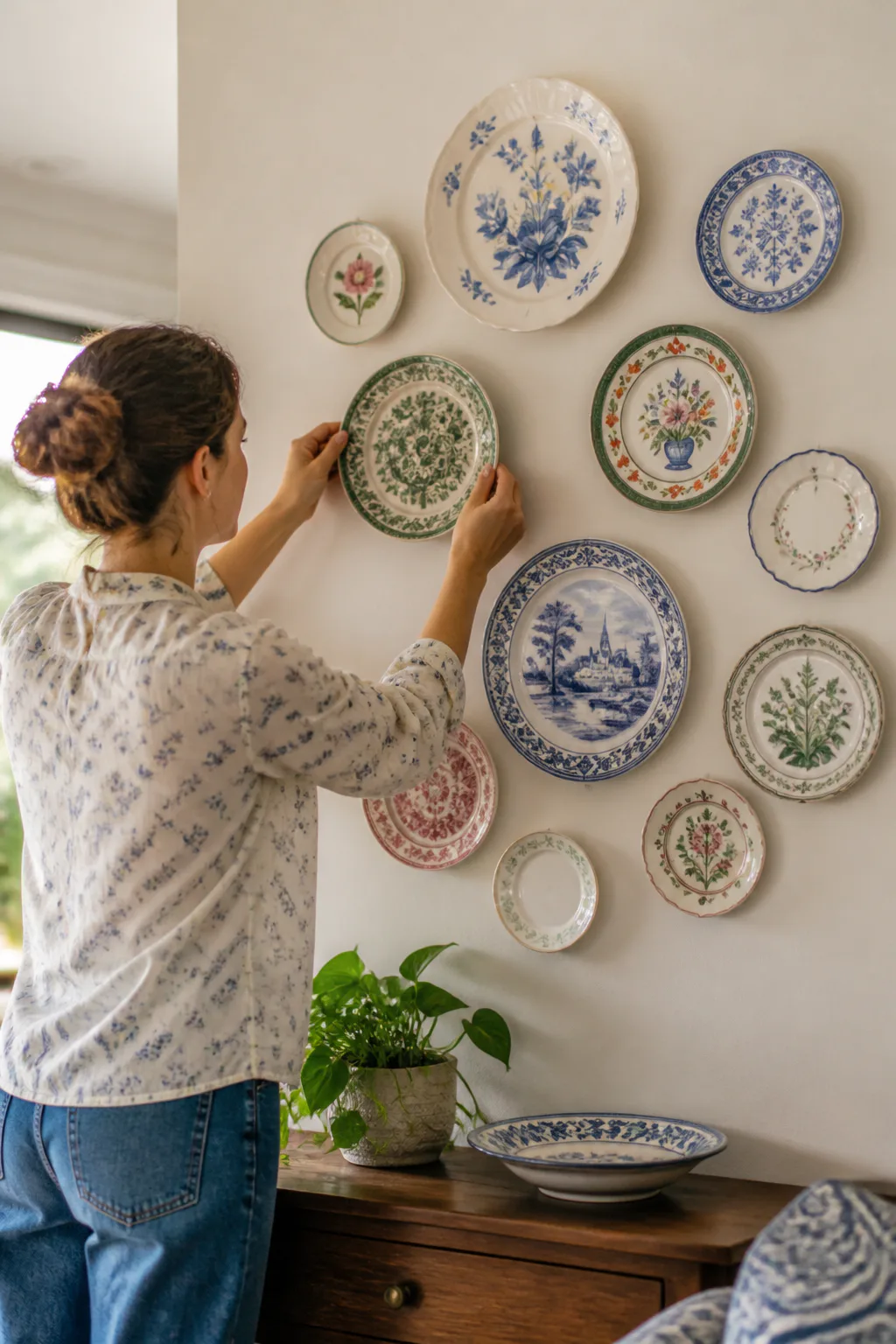
Decorative plates can create a sculptural wall display that feels more personal than a standard row of framed prints. Their varied shapes, colors, and painted details bring dimension to a living room or hallway, especially when the collection includes pieces gathered over time.
A plate arrangement can be neat and balanced or loose and organic, depending on the mood you want. On a broad wall, a cluster can fill space above a console or along a staircase. In a smaller area, a few coordinated plates create a focal point without needing a large piece of art.
Plan the arrangement
Before hanging anything, lay the plates out on the floor or trace their outlines on paper. This helps you adjust the spacing and balance the different sizes without making unnecessary holes in the wall.
- Mix plate sizes while keeping a color or motif in common.
- Place larger pieces near the center to give the display visual structure.
- Leave enough space between plates for each shape to read clearly.
- Use secure plate hangers suited to the weight of each piece.
A thoughtfully arranged collection turns everyday objects into a distinctive, dimensional feature.
5. Add Silver Metalwork to a Room

Silver-toned details offer a fresh alternative to rooms that lean heavily on brass or gold. Polished tin, pewter, and warm silver finishes can bring a bright reflective note to a space while still feeling understated, particularly when used in small, well-placed doses.
Try this finish on a light fixture, tray, or a few tabletop accessories. In a living room, a silver tray can catch the light on a coffee table; in a bedroom, a modest metal accent can bring a crisp note to a softer palette. Mixing silver with wood and woven materials keeps the room from feeling too sleek or cold.
Keep the finish balanced
You do not need to replace every existing metal detail. A deliberate mix can look collected, especially when the different finishes are repeated or connected by other colors and textures.
- Start with one noticeable piece, such as a tray or lamp.
- Choose polished metal for a brighter look or pewter for a softer effect.
- Pair reflective surfaces with matte fabrics and natural wood.
- Repeat the finish in a second small accent to make it feel intentional.
Silver metalwork adds a little shine and variety without requiring a full room makeover.
6. Place a Lacquered Accent Table in a Bold Color

A high-gloss accent table brings both color and sheen to a room. In a saturated shade such as moss green, oxblood, or cobalt, it can turn a useful side table into a lively focal point beside a sofa, armchair, or bed.
This idea is especially effective in a room with a quiet base palette. A bold table can add energy without committing to a brightly painted wall or large piece of upholstery. Its glossy surface also reflects light, creating a small but noticeable contrast with softer materials like linen, wool, and cotton.
Choose the right placement
Think about the table as a color accent as well as a surface for everyday items. Give it enough space to stand out, and use nearby objects to make the shade feel connected to the rest of the room.
- Pick a color that echoes a detail in art, a rug, or a cushion.
- Let the table be the strongest bright accent in its immediate area.
- Keep the tabletop styling simple so the lacquer remains visible.
- Check that the table’s height and shape suit the furniture beside it.
One vibrant piece can make a neutral corner feel more finished and full of personality.
7. Hang One Oversized Nature Photograph
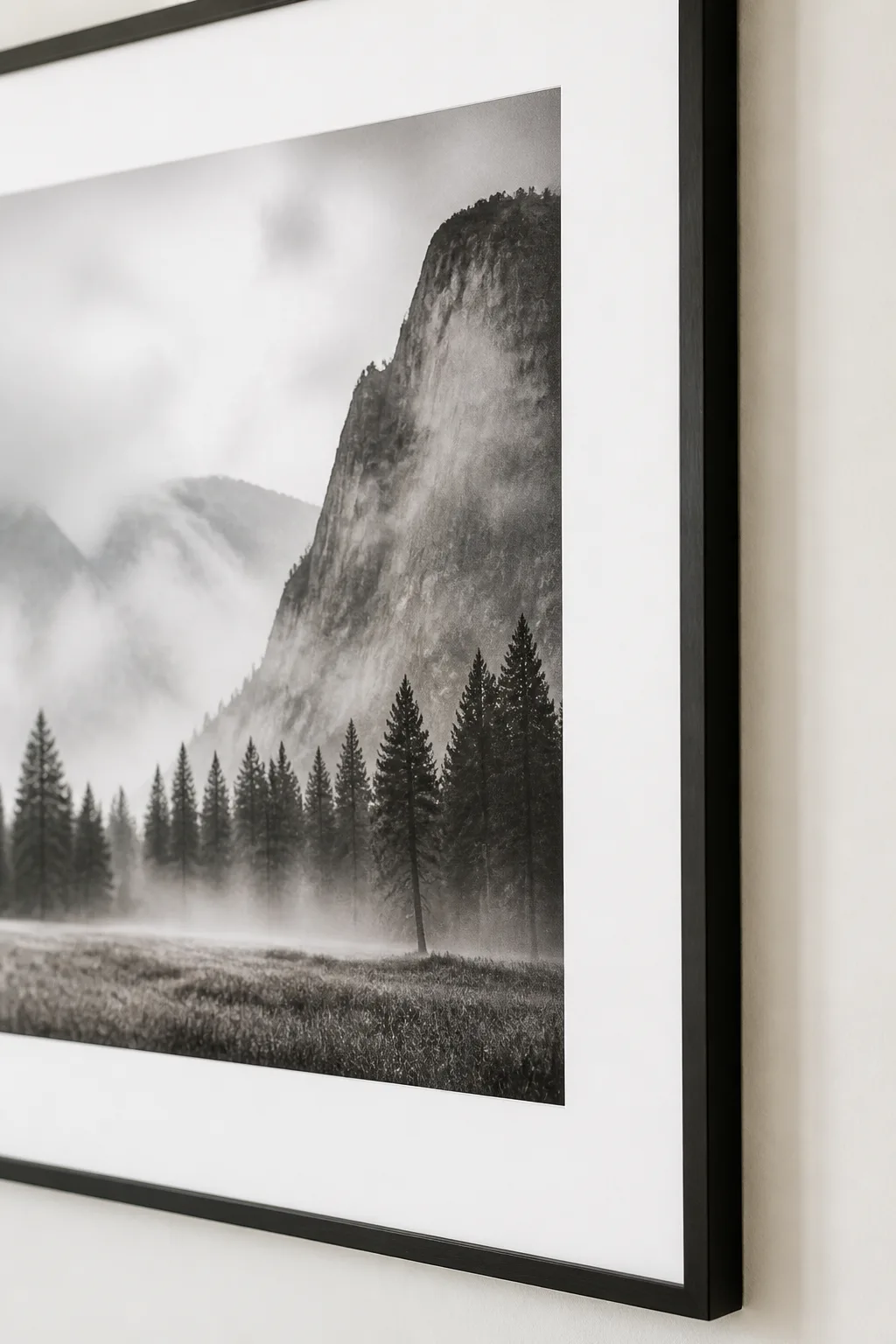
A single large-scale nature photograph can create a calm focal point without the visual busyness of a small collage. A muted landscape or black-and-white image feels especially versatile, bringing in a sense of depth while allowing the room’s colors and furnishings to remain part of the story.
Hang an oversized photograph above a sofa, bed, or console where it can anchor the surrounding furniture. A wide mat gives the image breathing room and can make the piece feel more substantial. This approach works well when a wall needs impact but the room already has enough patterns, objects, or smaller framed pieces.
Make the scale work
Choose an image with a clear focal area that still reads from across the room. Before hanging it, consider the wall and furniture as one composition so the art feels connected to the space beneath it.
- Look for a landscape or nature subject in tones that suit the room.
- Use a generous mat to create a calm border around the photograph.
- Center the piece over the furniture it is meant to anchor.
- Keep nearby wall decor restrained to preserve its impact.
A well-scaled photograph gives a room an easy focal point and a quieter kind of drama.
8. Drape a Plaid Heirloom Blanket Over Furniture

A vintage-inspired plaid or wool blanket adds warmth, pattern, and a sense of history to a room. Draped over a sofa, folded at the foot of a bed, or displayed as a soft wall textile, it makes familiar furniture feel more layered and welcoming.
The blanket can also help bring together different colors in the room. Look for a plaid that includes shades already present in your rug, cushions, or artwork, then let its texture add contrast. This detail suits spaces that feel a little too polished or need an extra cozy layer through cooler seasons.
Style it with intention
How you place the blanket changes the effect. A casual drape feels relaxed, while a neat fold gives a sofa or bed a more orderly finish. Avoid covering so much of the furniture that its shape disappears.
- Fold a blanket across the foot of a bed for a tidy accent.
- Drape one over a sofa arm to make it easy to reach.
- Choose a pattern that complements rather than duplicates nearby prints.
- Use a secure hanging method if displaying it on a wall.
A well-loved-looking textile adds softness and personality wherever it lands.
9. Style a Shelf with Whimsical Swan Accents

Swan figurines, bookends, and ceramic dishes bring a playful, sculptural note to a shelf. Their recognizable shape can make a bookcase or mantel feel more personal, particularly when mixed with useful objects and pieces that have different heights and textures.
The key is to treat whimsical accents as part of a considered arrangement rather than scattering them everywhere. A single swan can punctuate a stack of books, while a small pair might frame a meaningful object. This look fits living rooms, bedrooms, and entryways where a touch of charm will feel welcome.
Build a collected display
Let the swan be one detail among several, and vary the shapes around it. Books, a small bowl, or a framed photograph can keep the shelf from feeling like a themed display while still allowing the motif to stand out.
- Place a figurine beside books or objects with contrasting shapes.
- Use a ceramic dish to hold small everyday items on a console.
- Group accessories in small clusters rather than evenly spacing everything.
- Repeat a color or material to connect the arrangement.
Whimsical accents bring a lighthearted detail to a room while still feeling thoughtfully collected.
10. Give Framed Art a Colorful Patterned Mat

A colored or patterned mat can give existing framed art a fresh look without changing the artwork itself. It draws attention to the image and introduces a new accent at the same time, making it an easy update for a print that feels a little flat in a standard white mat.
Use this idea in a gallery wall, a bedroom, or a small reading nook where a lively detail can add character. A muted color can gently connect the art to the room, while a more graphic pattern can make a simple print feel playful. Keep the frame in place if it suits the artwork, and let the mat do the refreshing.
Pick a mat that supports the art
Consider the image’s palette and the colors around it before choosing a mat. The goal is to highlight the artwork, not overpower it, so even a bold option should relate to at least one detail in the image or room.
- Try a soft color pulled from the artwork itself.
- Use a subtle pattern when the image is simple and uncluttered.
- Keep the frame finish consistent with nearby pieces if creating a gallery wall.
- Check that the mat opening leaves the artwork comfortably visible.
A thoughtful mat choice can make familiar art feel newly considered.
11. Add a Soft Skirt to an Accent Chair

A tailored skirt or soft-skirted slipcover gives an accent chair a gentler, more layered silhouette. The fabric falls around the base, softening the lines of the furniture and adding a touch of traditional charm without requiring a different chair.
This detail works well in a bedroom corner, living room, or reading nook where you want the furniture to feel cozy rather than sharply modern. A skirt can also help a chair sit comfortably alongside drapes, upholstered pieces, and other soft textiles. Choose a shape that suits the chair so the fabric looks intentional, not like an afterthought.
Find the right finish
Consider the room’s overall level of formality. A neat, tailored skirt feels more structured, while a softer version brings a relaxed look. A simple fabric can keep the silhouette as the main feature.
- Choose a skirt length that looks balanced with the chair’s proportions.
- Coordinate the fabric with nearby curtains, cushions, or upholstery.
- Use a slipcover when you want a practical, changeable update.
- Keep surrounding furniture simple enough to let the chair’s shape show.
A skirted chair adds softness and visual weight while making a corner feel more complete.
12. Anchor a Light Room with a Dark Wood Table

A vintage walnut or mahogany side table can bring depth to a room dominated by pale walls, light upholstery, or airy textiles. Its darker tone gives the eye a place to rest and adds the impression of history, especially when the rest of the space feels clean and bright.
Try a small table beside a sofa or armchair, or use one near a bed to introduce contrast without adding a large dark piece. The wood can connect naturally with picture frames, flooring, or other warm materials. A gently worn finish can also make a polished room feel more collected and less uniform.
Balance the contrast
Let the table provide a strong anchor, then repeat its tone in a few smaller details. This keeps the dark wood from feeling isolated while preserving the lightness of the room.
- Choose a table with a scale that suits the seat or bed beside it.
- Echo its wood tone in a frame, tray, or small accessory.
- Keep the tabletop lightly styled so the wood remains visible.
- Mix the table with soft fabrics and lighter finishes for balance.
A single dark wood piece can give a bright room warmth, contrast, and a sense of permanence.
Final Thoughts
Small, thoughtful changes can make a room feel more layered and personal. Whether you add a vivid lacquered table, soften a window with fabric, or give existing art a more distinctive frame, choose details that support the way you want the space to feel.
You do not need to use all twelve ideas at once. Start with one corner or surface, notice what feels missing, and build from there with colors, textures, and meaningful objects that make your home feel like yours.