12 Stunning Small Japanese Garden Ideas
A small Japanese-inspired garden does not need a large yard or an elaborate renovation. Thoughtful placement, natural textures, and a few carefully chosen elements can make a side yard, patio, balcony, or quiet corner feel calm and intentional.
These ideas draw on familiar Japanese garden features, from raked gravel and stepping stones to moss, bamboo, and water. The goal is not to fit every feature into one space, but to choose a few that suit your light, available room, and willingness to maintain plants or water.
Whether you are starting with bare ground or refreshing an existing nook, use these ideas as adaptable starting points. Pay attention to scale and leave open space around your focal elements so the garden feels restful rather than crowded.
1. Create a Raked Gravel Garden Around Mossy Rocks

A compact dry landscape, or karesansui, can turn even a small patch of ground into a place to pause. Arrange a few weathered rocks in fine gravel, then rake sweeping lines around them to suggest rippling water. The contrast between textured stone and smooth, patterned gravel gives the composition interest without requiring a lawn or a large plant collection.
This idea works well in a sunny or partly shaded corner where you can see the patterns from a window, patio, or doorway. Moss on the rocks adds a soft, aged note, while leaving plenty of gravel visible keeps the design from feeling busy.
How to create the composition
Start with a contained, level area and choose gravel that is fine enough to rake but not so powdery that it shifts everywhere. Place stones first, testing their arrangement from several viewpoints before adding the gravel.
- Use an odd-numbered group of stones with varied heights.
- Rake curves around the rocks to suggest movement.
- Add moss only where it can thrive in the available light and moisture.
- Keep the edges neat with a simple border or paving strip.
Because the gravel pattern can be refreshed whenever it is disturbed, this garden offers a simple, hands-on ritual as well as a finished focal point.
2. Anchor a Corner with a Potted Japanese Maple
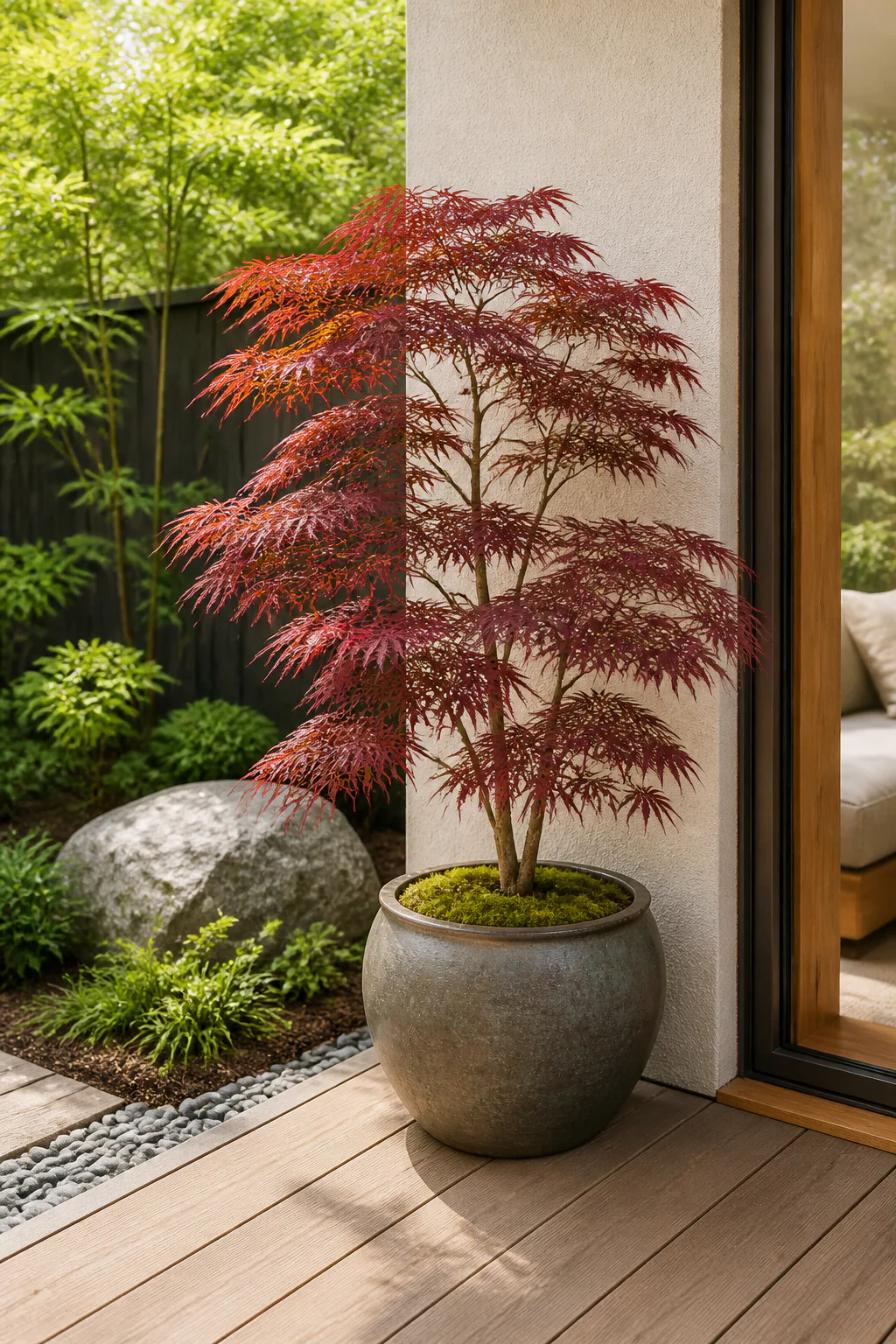
A Japanese maple in a container brings a striking, changing focal point to a small garden without claiming much ground space. A laceleaf variety can have delicate, layered foliage that catches the light, while its seasonal color gives the corner a different character through the year.
Set the tree where its shape can be appreciated from indoors or from a nearby seat. A low stone or ceramic container can make the planting feel grounded, and the pot also lets you define the garden’s edge on a patio or deck. Choose a container size that supports the tree without overwhelming the area.
Choosing a spot and container
Check the maple’s growing needs before settling on a location. Many Japanese maples appreciate some protection from harsh afternoon sun and drying winds, and container-grown trees need regular attention to watering and drainage.
- Pick a pot with drainage holes and room for root growth.
- Use a stable container that will not tip easily in wind.
- Keep the tree clear of narrow walkways and door swings.
- Pair it with a restrained ground-level detail, such as gravel or a single stone.
A potted maple gives a small space height and seasonal color while keeping the overall arrangement open and flexible.
3. Install a Bamboo Shishi-Odoshi Water Feature

A shishi-odoshi adds gentle movement and sound to a tiny garden. Water gathers in a pivoting bamboo tube, which tips when full and then taps against a stone as it empties. That simple rhythm can make a tucked-away corner feel more immersive, especially when the feature is placed near greenery or a small grouping of rocks.
Because the fountain has a clear, sculptural shape, it can serve as a focal point without needing a large pond. It suits a courtyard, sheltered side yard, or patio where you can enjoy the sound without putting the feature directly in a busy path.
Setting it up thoughtfully
Choose a level spot with access to the water and power arrangements required by your particular fountain. Consider sound before installing it: the tapping should be audible from a seating area, but not so close to a bedroom or neighboring space that it becomes distracting.
- Place the spout beside a stone or low planting for a natural transition.
- Make sure splashing will not soak a wall or slippery walking surface.
- Keep the water reservoir accessible for cleaning and refilling.
- Use surrounding plants sparingly so the bamboo mechanism stays visible.
In a compact garden, the changing sound and movement can provide as much presence as a much larger water feature.
4. Turn a Side Yard into a Tsubo-Niwa Courtyard

A tsubo-niwa is a small courtyard garden, making the idea especially suited to a narrow side yard, light well, or enclosed passage. Rather than filling the space with many plants, combine a few defining elements: bamboo fencing, a stone basin, moss, and shade-loving ferns. Each feature has room to register, even within a tight footprint.
The vertical fence creates a calm backdrop and can soften the view of a plain wall or neighboring property. A basin or carefully placed stone gives the eye a resting point, while foliage brings texture at ground level. This arrangement works best when there is a clear view into the nook from a window or doorway.
Making a narrow space feel composed
Think of the courtyard as a small scene rather than a planting bed that needs to be filled. Keep the main route clear, and vary the height of the few elements you choose so the view has depth without becoming cluttered.
- Use bamboo screening as a simple, consistent backdrop.
- Place a stone basin where it can be seen but does not obstruct access.
- Choose ferns and moss suited to the site’s shade and moisture.
- Leave some bare ground, gravel, or open paving around the focal pieces.
A restrained courtyard can make an overlooked strip of space feel like a destination.
5. Wind Stepping Stones Through Ground Cover

Irregular stepping stones create a slow, winding route through a small garden. Set them into moss or fine gravel, and the path becomes more than a practical way to cross the space: it draws the eye from one point to another and encourages a gentler pace. This can make a compact footprint feel more layered than a straight line of paving.
Use the route to connect a doorway, bench, or garden feature, leaving enough room to step comfortably from stone to stone. Moss softens the edges when the conditions suit it; gravel offers a more flexible choice where shade, moisture, or foot traffic make living ground cover difficult.
Planning a comfortable path
Lay the stones loosely on the ground first and walk the proposed route. Adjust the spacing and direction until the steps feel natural, then prepare a stable base so the stones do not rock underfoot.
- Choose stones with a broad, reasonably even surface.
- Vary their placement slightly to create a relaxed, winding line.
- Keep the path wide enough for the way you plan to use it.
- Check that moss or gravel will not make the stones slippery or unstable.
A modest path can give structure to the garden while preserving the quiet, open feeling around it.
6. Place a Low Stone Lantern Beside Ferns

A compact stone lantern, or toro, can provide a subtle focal point without dominating a small garden. Set low near a fern clump or at the edge of a courtyard, it adds a sculptural shape and a sense of permanence. Weathered stone or cast stone pairs naturally with gravel, moss, and other understated materials.
Place the lantern where it can be noticed from a seat or window, rather than putting it in the middle of a walking route. Ferns nearby help soften the base and connect the hard surface to the planting, while leaving some space around the lantern keeps its silhouette easy to read.
Keeping the feature understated
Choose a scale that suits the surrounding plants and paving. If you want a gentle evening glow, consider subtle solar or low-voltage lighting, positioning it so the light feels like an accent rather than a spotlight.
- Set the lantern on a stable, level surface.
- Use nearby ferns or moss to soften its edges.
- Keep its main shape visible instead of hiding it in dense foliage.
- Check that lighting, if included, does not glare into windows.
With just one well-placed lantern, a quiet corner can feel finished both by day and after dusk.
7. Replace a Tiny Lawn with a Moss Carpet
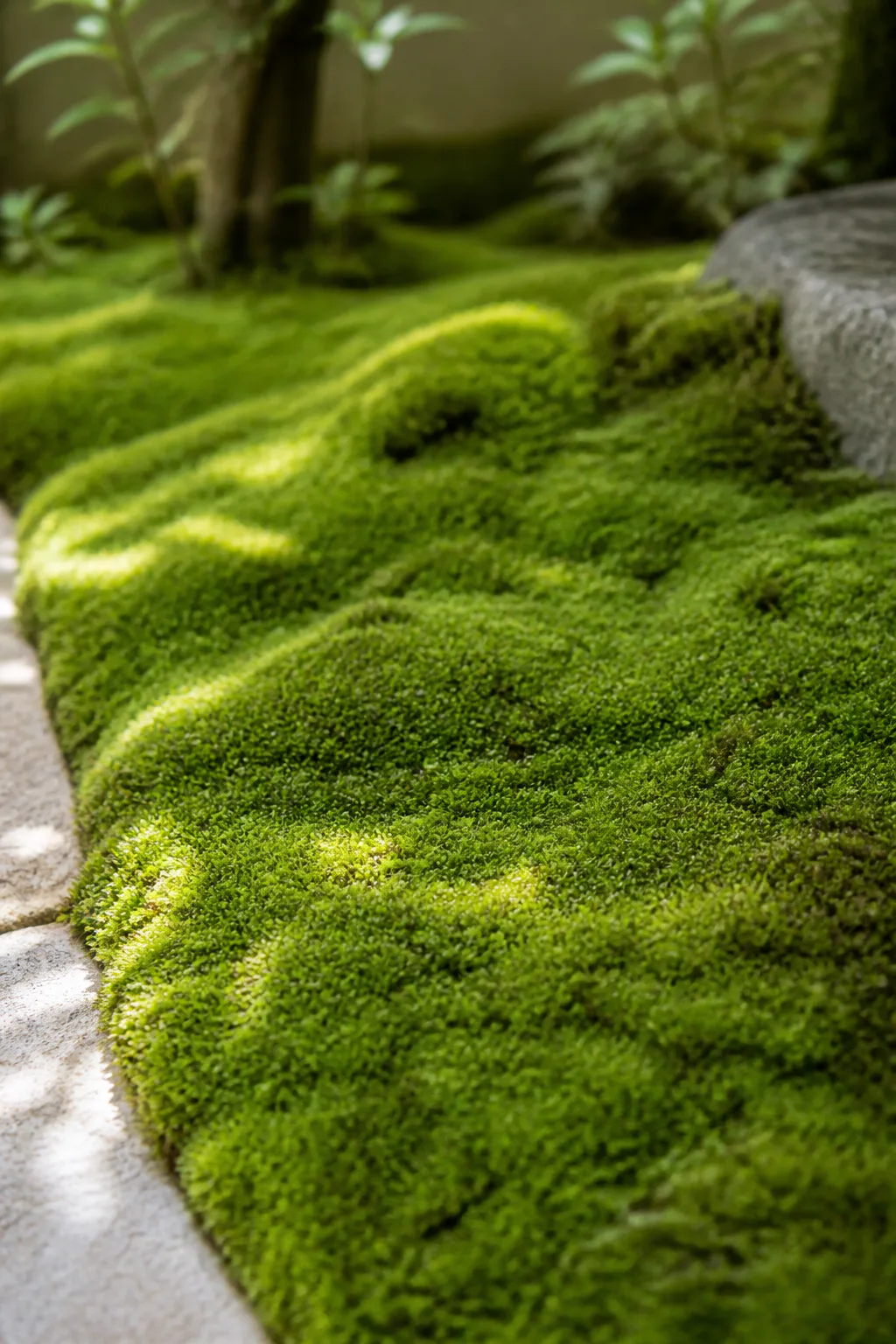
If a small lawn is difficult to mow or never looks its best in shade, consider replacing it with moss where local conditions allow. A soft carpet of moss can give the ground a lush, settled look, and gentle mounds add depth without needing tall plants. It also helps soften the edges of stones, paths, and other hard surfaces.
Moss is not a universal substitute for grass: it generally needs a suitable combination of shade, moisture, soil, and limited foot traffic. Before planting, look at how water moves through the area and whether the site stays damp enough. In the right spot, moss can bring a quiet, aged quality to a compact garden.
Preparing the ground
Begin by removing competing grass and weeds, then shape the soil into low, natural-looking undulations. Choose moss suited to your local climate and conditions, and give it time to establish rather than treating it like a walkable lawn.
- Check that the space is sufficiently shaded and moist.
- Keep regular foot traffic on stepping stones or a separate path.
- Remove leaves and debris that smother the moss.
- Use modest mounds to create variation without making the area feel lumpy.
A moss carpet can make a small garden feel softer and more immersive when its growing needs are met.
8. Screen a Garden Wall with Vertical Bamboo

A bare wall or close neighboring view can make a small outdoor space feel exposed. Vertical bamboo screening adds texture and creates a calmer backdrop, helping the garden read as a sheltered nook. Natural bamboo brings warm tones, while darker slats can provide a more pronounced contrast with foliage and stone.
Because the screen uses vertical lines, it draws the eye upward rather than taking up valuable ground space. It can work along a side-yard wall, behind a patio planting, or at the back of a courtyard. Leave some breathing room in the rest of the design so the enclosure feels restful, not crowded.
Installing the screen with care
Attach the screening securely to a suitable support, following the material’s installation guidance and accounting for local weather exposure. A screen can hide an unattractive view, but it should not block drainage, access, or any openings that need to remain clear.
- Measure the wall before choosing the screen height and width.
- Choose a finish that complements nearby stone, wood, or plants.
- Secure the screen firmly and inspect it for wear over time.
- Add a small planting or stone feature at its base to connect it to the garden.
A simple vertical backdrop can make even a narrow outdoor area feel more private and intentional.
9. Set a Miniature Tsukubai in a Patio Corner

A small tsukubai, or stone water basin, brings the calming presence of water to a porch or patio without requiring a pond. Set it in a corner with a bamboo spout, and the gentle trickle can give the space a soft audio layer. The basin also makes a pleasing focal point among potted plants, gravel, or a few carefully placed stones.
Choose a low-profile design that leaves room to walk and sit comfortably. A quiet corner near greenery often feels most natural, while keeping the basin visible makes it easier to enjoy and maintain. If birds visit the water, regular cleaning helps keep the feature fresh.
Creating a practical water nook
Plan how the basin will be filled, circulated, and cleaned before choosing its final position. Water features need ongoing care, so make sure you can reach the reservoir and any pump without moving heavy pots or disturbing the whole arrangement.
- Set the basin on a firm, level base.
- Place it where splashes will not make paving slippery.
- Pair the stone with a restrained amount of planting.
- Clean and refresh the water regularly.
Even a modest basin can make a patio corner feel quieter and more connected to nature.
10. Sculpt a Small Evergreen into Cloud Pads
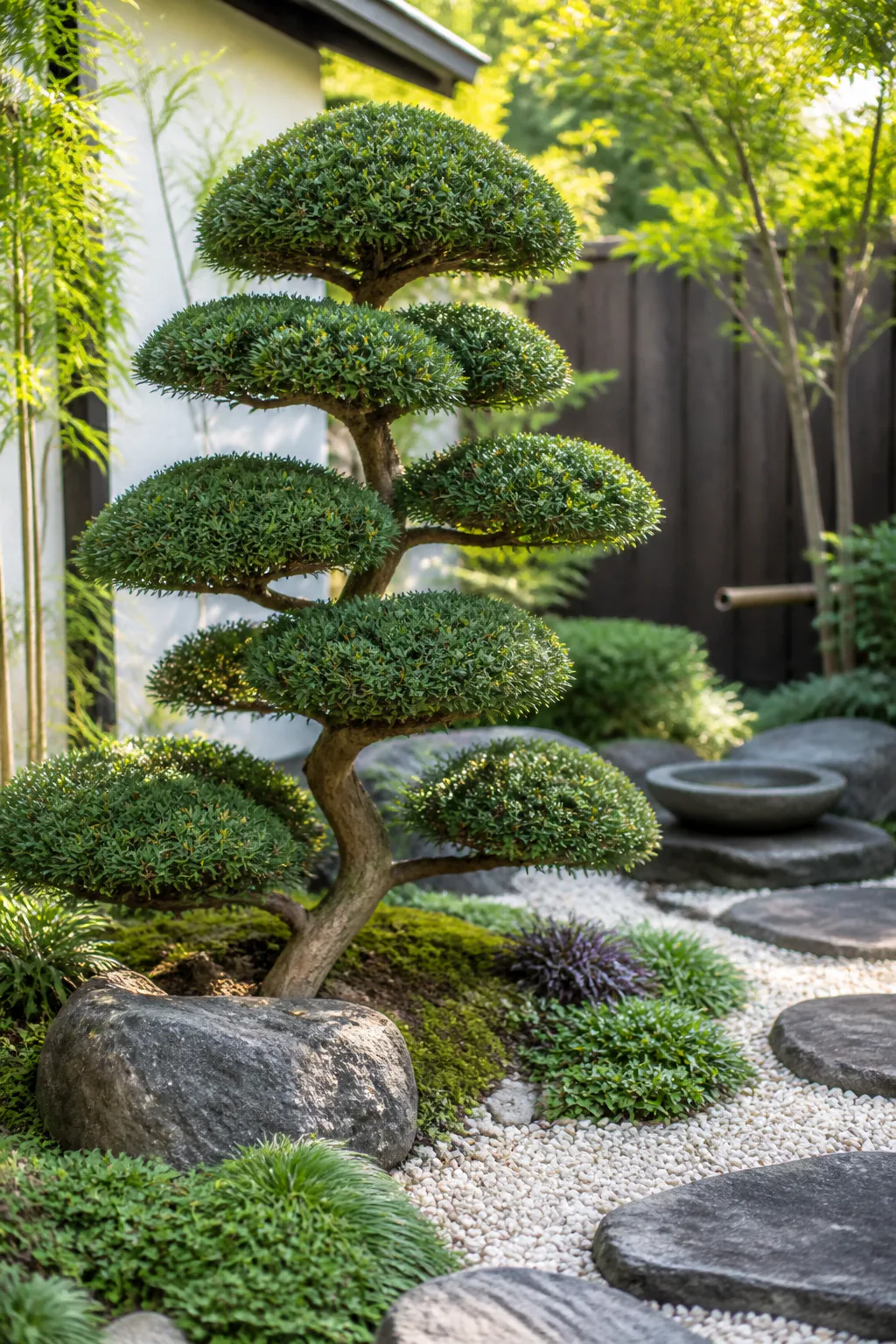
A small evergreen shaped into layered cloud pads offers structure in every season. This niwaki-inspired form gives a pine, juniper, or boxwood a sculptural outline, making it a strong focal point even when surrounding plants are quiet. In a compact garden, one carefully placed specimen can provide more visual impact than several competing shrubs.
Position the evergreen where its shape can be viewed from more than one angle, such as near a path turn or at the end of a small planting bed. Give it enough open space to show the layers clearly, and pair it with low ground cover or gravel rather than crowding its base with other large plants.
Shaping and maintaining the form
Choose a healthy plant that suits your climate and available light, then work gradually toward a balanced silhouette. The amount and timing of pruning vary by plant type, so learn its needs before removing branches or trimming new growth.
- Use an evergreen suited to the garden’s light and climate.
- Keep the lower and upper foliage pads visually distinct.
- Prune thoughtfully instead of removing large amounts at once.
- Leave space around the plant so its shape remains the focal point.
A sculptural evergreen lends year-round form while keeping the rest of the garden simple.
11. Grow Black Bamboo in a Linear Planter
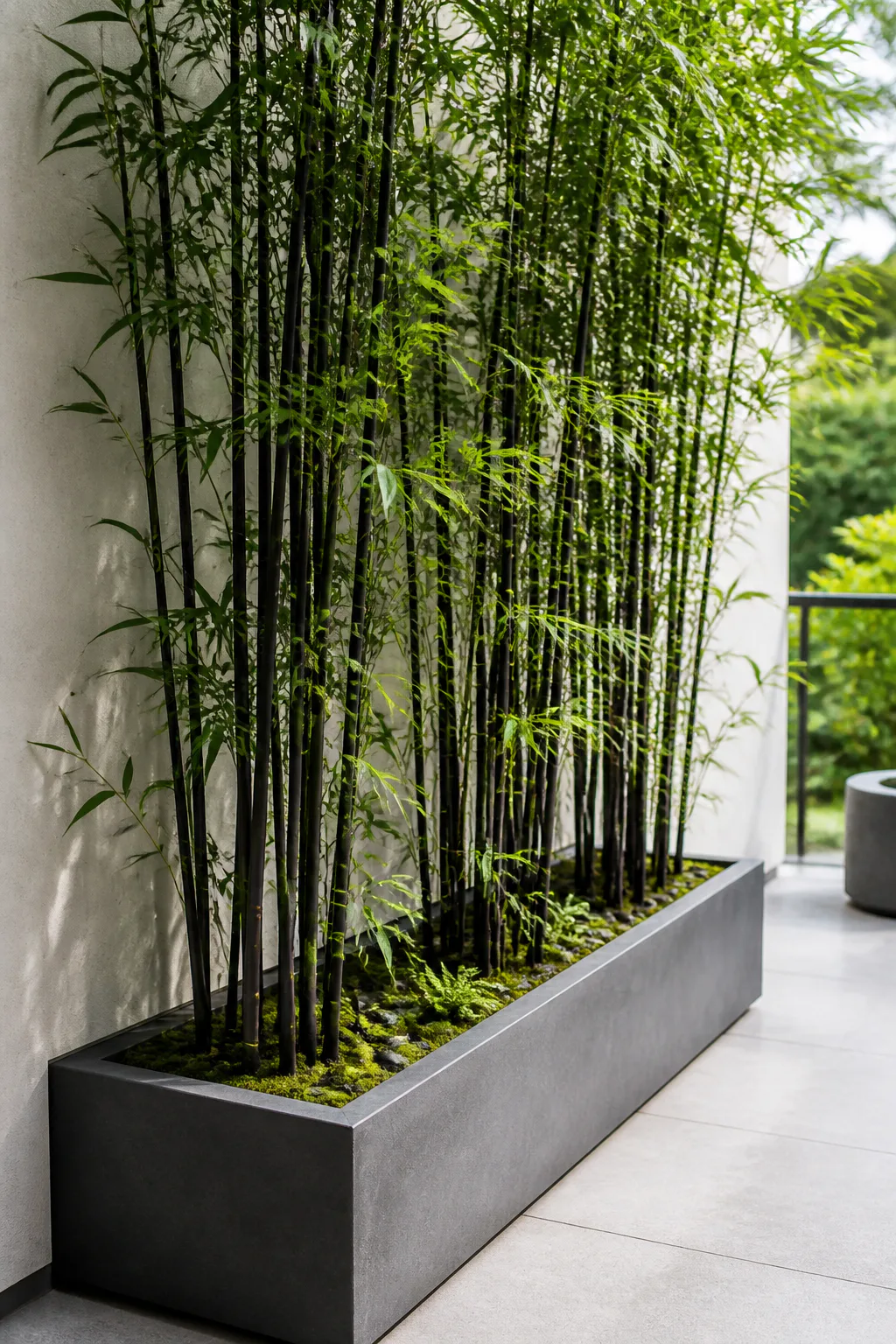
Black bamboo brings tall, dark canes and a graceful rustle to a small outdoor space. A deep, narrow planter lets you use its vertical presence along a wall, patio edge, or balcony without giving up much floor area. The strong lines can also contrast nicely with softer foliage, pale gravel, or a stone feature.
Bamboo can spread vigorously depending on the type, so containment matters. Choose a suitable clumping variety where possible, and use a sturdy planter with enough depth and drainage for healthy growth. A container keeps the planting defined, but it does not remove the need to monitor roots and maintain the plant.
Keeping bamboo contained
Check the plant’s mature size and growing requirements before planting, and make sure the planter is stable enough for the height of the canes. Place it where the bamboo will add privacy or a backdrop without blocking a doorway or making a narrow route feel tight.
- Select a deep, durable planter with drainage.
- Confirm the bamboo type is appropriate for container growing.
- Allow room to inspect and divide or manage the roots as needed.
- Use the canes as a backdrop for lower plants or a simple stone detail.
Contained bamboo can add height and movement while keeping the design organized in a limited footprint.
12. Build a Three-Part Garden Corner Composition

A balanced corner can come together with three elements at different heights: a slender bamboo or potted maple, a mossy boulder, and a low fern or lantern. Arranged in a loose triangle, the pieces guide the eye through the grouping and create a clear focal point without filling every inch. This is a useful approach when you want a finished look but have very little space.
Vary the materials and shapes so each element has a distinct role. The tall feature draws the eye upward, the boulder adds visual weight, and the low detail softens the foreground. Leave open space between them; a little breathing room helps the arrangement feel deliberate rather than like a collection of objects.
Arranging the three elements
Place the largest or tallest element first, then test different positions for the stone and low accent. View the group from the entrance and from indoors, adjusting the spacing until the composition feels balanced from the angles you use most.
- Choose one tall feature, such as bamboo or a potted maple.
- Add a medium-sized mossy boulder for texture and weight.
- Finish with a low fern or compact lantern.
- Keep the arrangement loose and avoid matching the elements in size.
This simple trio makes a small corner feel purposeful while leaving the rest of the garden open.
Final Thoughts
The most inviting small Japanese-inspired gardens are built around thoughtful choices, not a long list of features. A raked gravel patch, a potted maple, or a few stepping stones can be enough to establish a calm mood when each element has room to stand out.
Start with the conditions you have, including the available light, space, and time for upkeep. Choose one focal idea, live with the arrangement, and add another detail only if it helps the garden feel more balanced and restful.