

14 Stunning Boho Garden Ideas for a Relaxed Outdoor Retreat
A boho garden feels collected rather than perfectly matched. Woven textures, relaxed seating, warm colors, greenery, and gentle lighting can turn a patio, balcony, or backyard corner into a comfortable place to linger.
You don’t need a large garden or a complete makeover to get the look. Start with one inviting spot, then add a few layers that suit your space and the way you like to spend time outdoors.
These ideas cover easy styling updates as well as small DIY projects, from hanging a hammock to creating a compact balcony bar. Choose weather-friendly materials where you can, and bring delicate textiles or accessories inside when the weather turns.
1. Layer Rugs and Cushions in an Outdoor Lounge
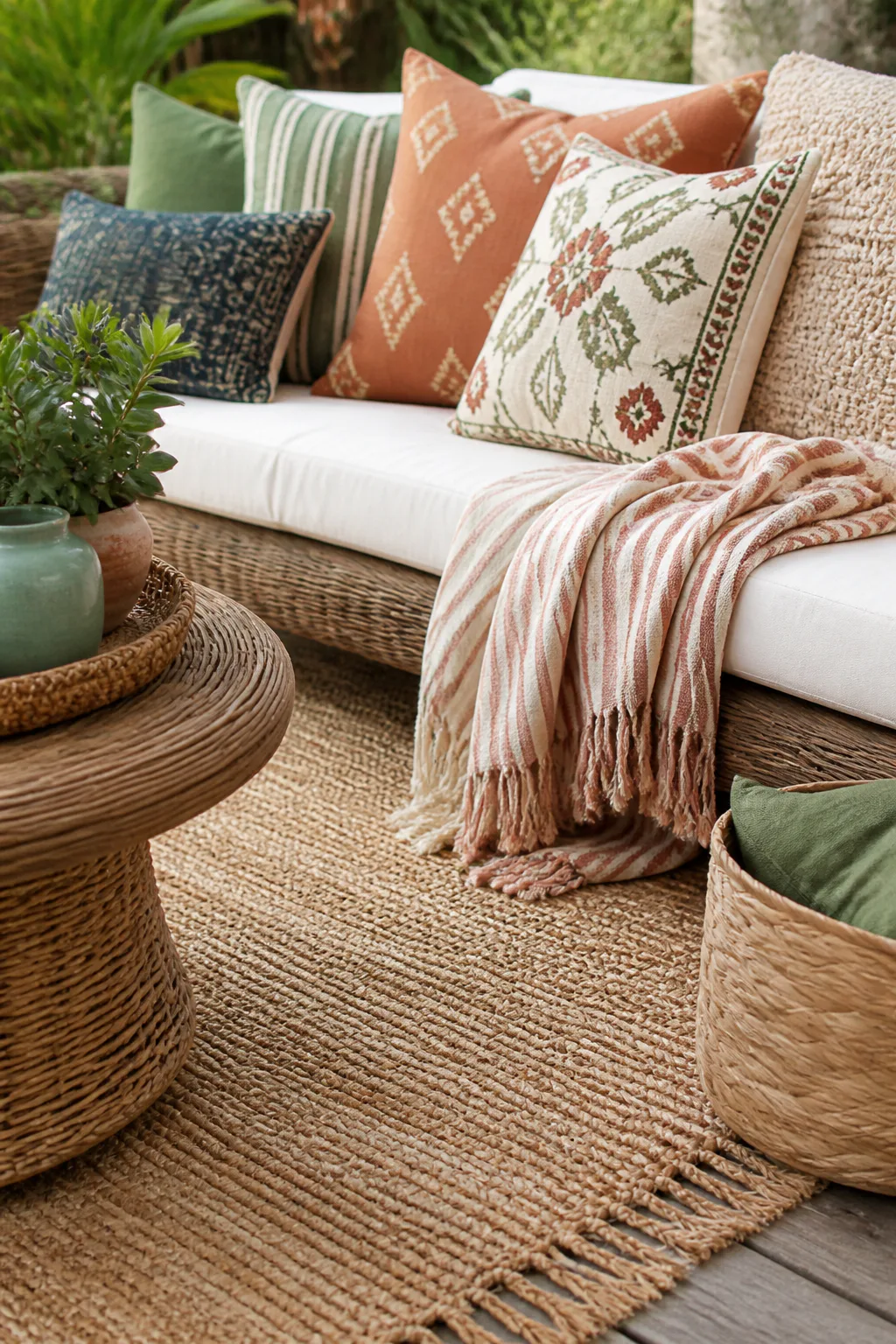
A woven outdoor rug gives a seating area a clear center and softens the feel of a hard patio or deck. Add cushions in a mix of prints and textures, then finish with a throw for cooler evenings. The relaxed layering is a natural fit for a boho garden because it makes even simple furniture feel inviting.
This approach works especially well beneath a pergola or beside a garden sofa, where the textiles help define a lounge zone. Keep the colors connected, even when the patterns vary: a shared shade such as rust, cream, or sage helps the arrangement feel considered rather than busy.
How to pull it off
Choose an outdoor rug that can handle the location, and check that it sits flat so it won’t become a trip hazard. Cushions and throws can be made for outdoor use or stored in a basket indoors when they’re not needed.
- Start with a natural-looking woven rug as the base.
- Mix stripes, florals, and geometric patterns in a related palette.
- Vary cushion sizes and textures for a collected look.
- Keep a basket nearby for easy storage of soft layers.
2. Style a Garden Corner with Moroccan Lanterns
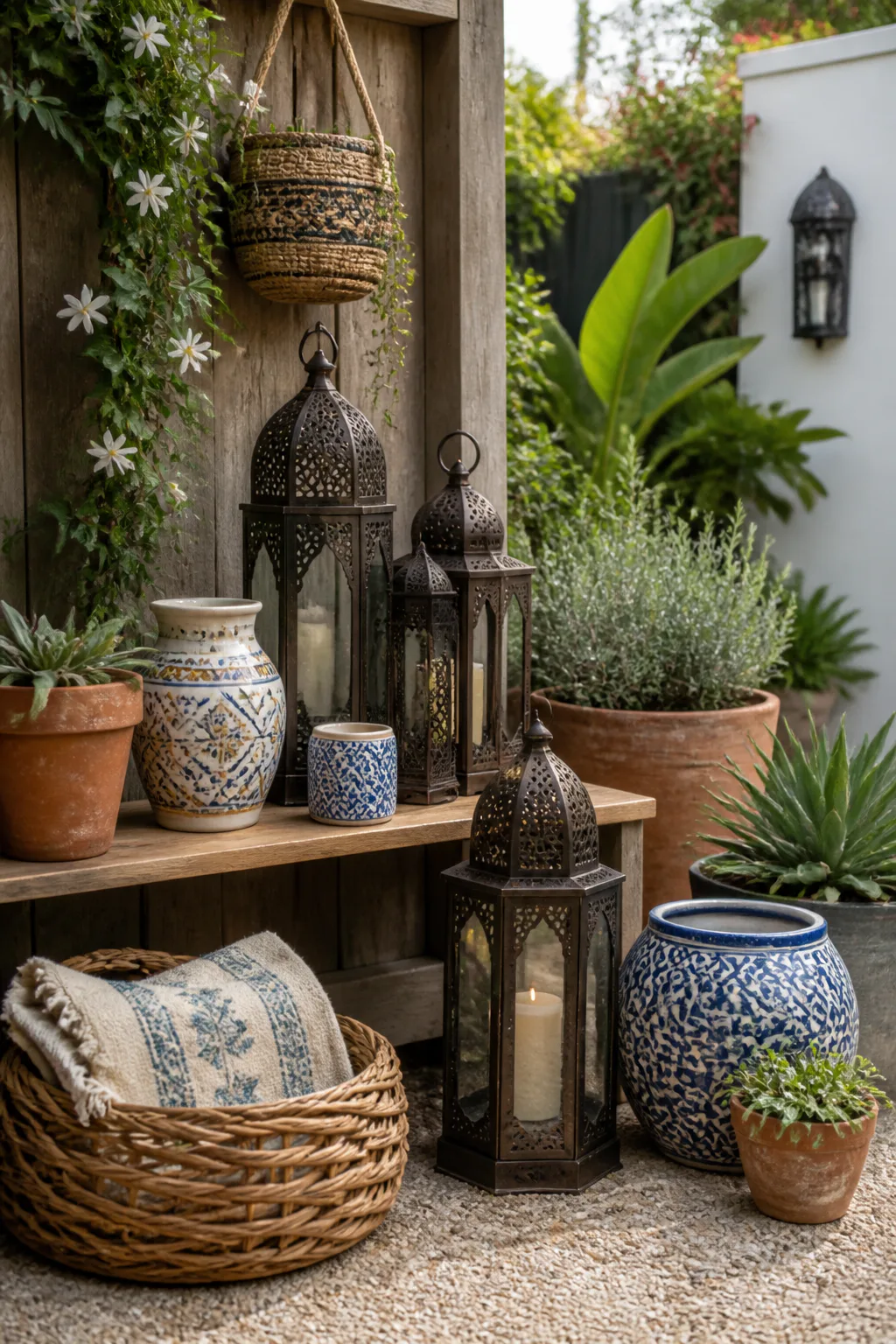
A small arrangement of lanterns and handcrafted-looking accessories can make an unused garden corner feel intentional. Moroccan-inspired metal lanterns bring pattern and visual interest, while rattan baskets and vintage ceramics add softer, more personal notes. Together, they create a display that feels relaxed rather than overly formal.
Try the arrangement beside a bench, at the edge of a patio, or near the entrance to a garden path. Varying the heights helps the grouping feel natural, and a few pieces are usually more effective than filling every available surface.
Build a layered display
Use a sturdy table, low stool, or weather-safe ledge as a base. If the spot is exposed to rain, choose outdoor-suitable accessories or move fragile ceramics under cover, and use lanterns designed for the way you plan to light them.
- Group lanterns in two or three different sizes.
- Add a basket for folded throws or gardening gloves.
- Use one or two ceramic pieces as accents, not clutter.
- Leave breathing room around the display for a calm effect.
3. Hang Weatherproof Art on a Garden Fence
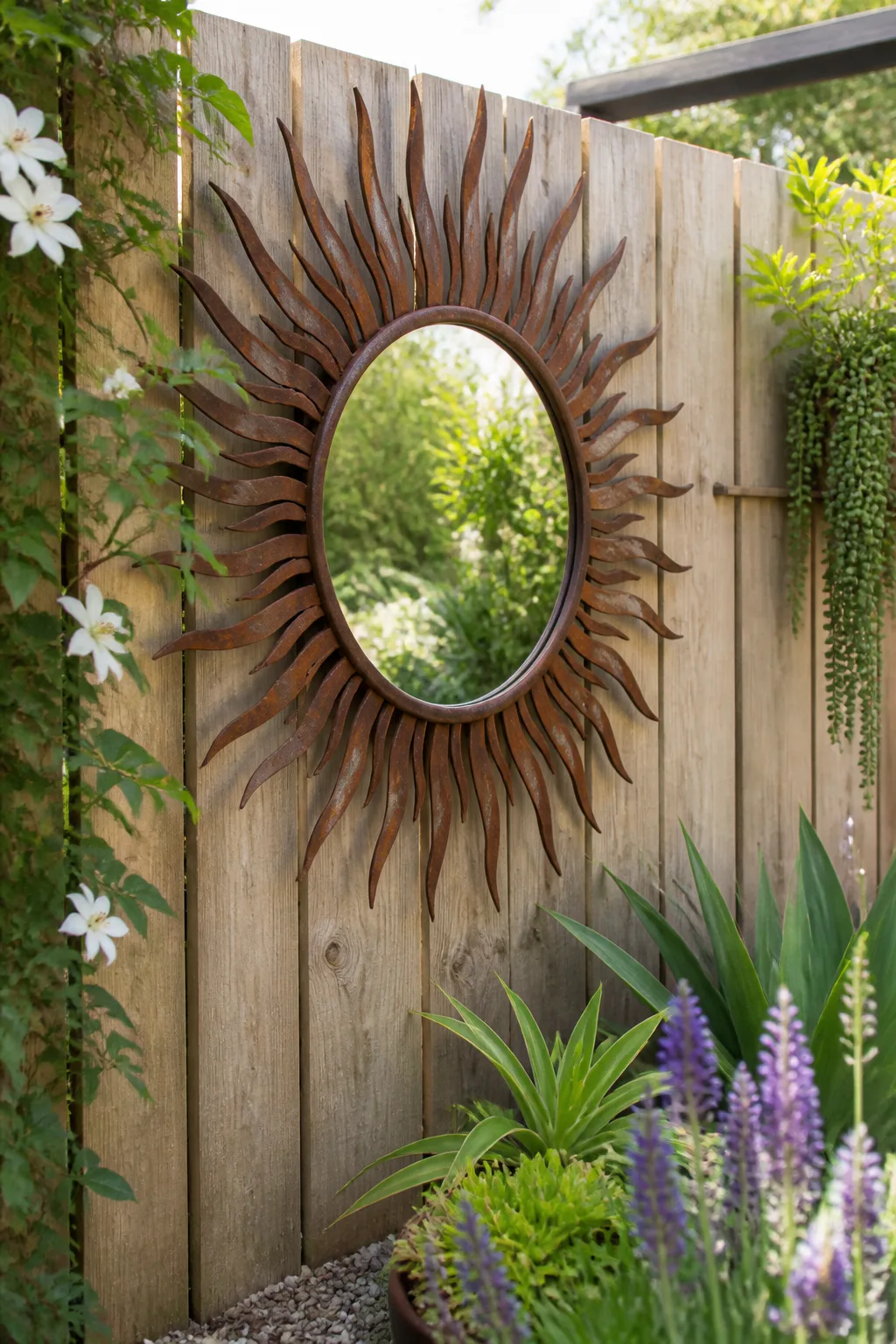
A plain fence can become a focal point with a single piece of outdoor art. A weather-resistant mirror can reflect greenery and light, while a metal sunburst or carved wooden panel adds shape and texture. This is a useful way to give a small patio more personality without taking up floor space.
Think of the fence art as part of the garden’s backdrop. A piece placed behind a seating area can make that spot feel finished, while art along a path can draw the eye toward a planting bed or seating nook. Keep the scale in proportion to the fence so the feature feels deliberate.
Choose and place your feature
Check that the material and fixings are suitable for outdoor conditions, and attach the piece securely to the fence. Mirrors work best where they reflect something attractive, such as foliage, rather than a busy storage area or direct glare.
- Choose one main feature instead of several competing pieces.
- Position a mirror to reflect plants or an open part of the garden.
- Use a metal or wood finish that complements nearby furniture.
- Check the mounting regularly, especially after rough weather.
4. Build a Low Pallet Sofa Chill Spot
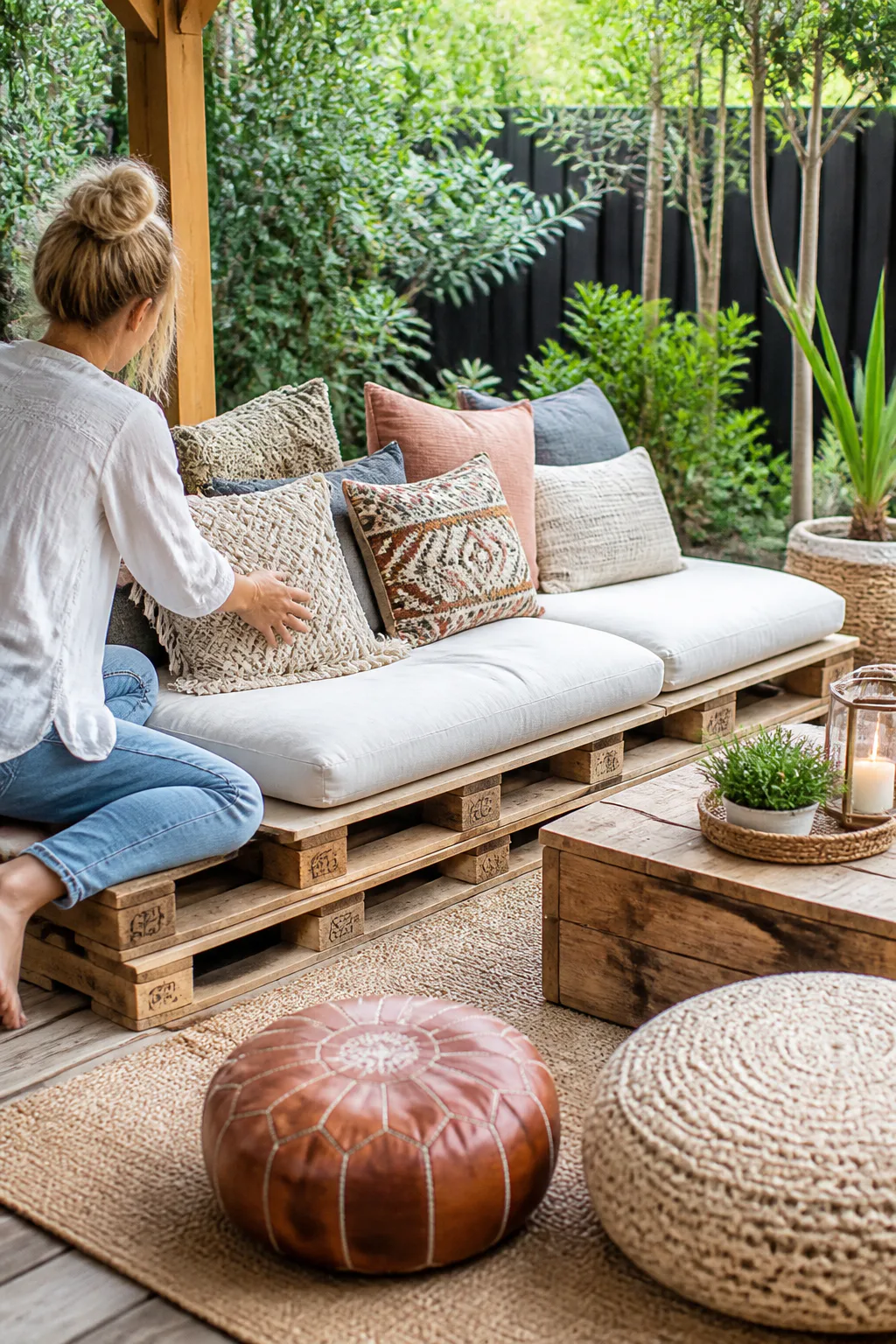
A low pallet sofa creates casual seating that suits the easygoing mood of a boho garden. Add thick cushions and floor poufs, and the result feels more like an outdoor lounge than a standard patio set. It can work against a fence, under a pergola, or in a quiet corner of a backyard.
Before building, consider how people will move around the seating and whether the spot stays reasonably dry. A relaxed layout still needs enough room to sit down comfortably and reach a side table. Use a rug or outdoor mat to anchor the sofa and make the area feel like its own destination.
Make the seating comfortable
Use clean, sturdy pallets intended for reuse, and make sure the structure is stable before adding cushions. A fitted base cushion helps the sofa feel more supportive, while loose pillows make it easy to adjust the look and comfort.
- Arrange pallets into a stable low base before decorating.
- Choose cushions that fit the seat and can be stored easily.
- Add poufs for flexible extra seating or a footrest.
- Include a small table for drinks, books, or lanterns.
5. Drape Fairy Lights Across Trees and Fences
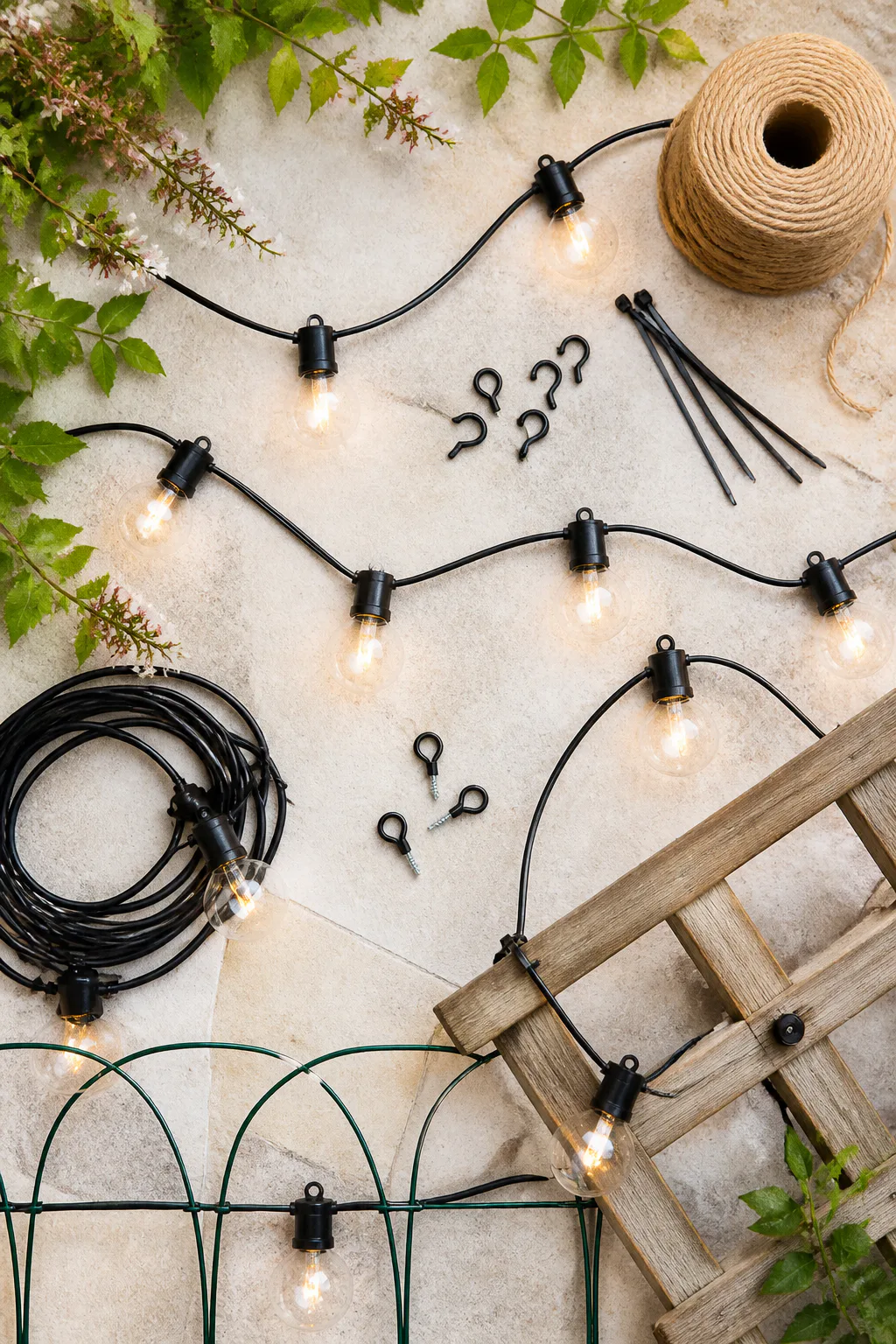
Warm string lights can make a garden feel welcoming after sunset without changing its daytime style. Drape them along a fence, between sturdy trees, or across an arbor to create a gentle glow around a seating area. The light adds atmosphere while drawing attention to the shapes of branches and leaves.
For a small space, a short strand above a bistro set can be enough. In a larger garden, repeat the lights across a few points to connect different zones. Solar lanterns can add another soft layer along a path or near a lounge, especially where running a power source would be inconvenient.
Plan a safe, balanced glow
Use lights designed for outdoor conditions and follow the installation instructions. Avoid pulling strands tightly across a space, and secure them so they don’t sway into walkways or put stress on branches and fixtures.
- Choose warm-toned lighting for a relaxed evening feel.
- Trace a fence line or overhead frame rather than crisscrossing randomly.
- Cluster solar lanterns near seating or along a path.
- Keep cables and hanging lights clear of busy walking routes.
6. Make a Vertical Garden with Crates and Ferns

A vertical garden brings greenery to a fence or wall when floor space is limited. Wooden crates, hanging pockets, or a leaning ladder can hold a selection of ferns and trailing plants, creating layers that make a small patio feel lush. This feature can also soften a blank boundary behind a dining set or lounge chair.
Choose plants according to the light and conditions in the spot rather than selecting them for appearance alone. Ferns often suit sheltered areas, while other trailing plants may prefer more sun. A mix of leaf shapes and heights gives the display a natural feel, but repeating a few varieties can keep it cohesive.
Set up a living display
Secure mounted containers properly, and make sure water can drain without damaging the wall or surface below. A leaning ladder gives you the option to move the arrangement, while wall-mounted crates create a more permanent feature.
- Match plant choices to the available light and exposure.
- Mix upright foliage with trailing greenery.
- Check that containers drain and are easy to water.
- Leave room to reach each plant for ongoing care.
7. Create a Terracotta-Toned Patio Seating Vignette

Warm earthy colors give a seating area an inviting, sun-washed feel. Terracotta, ochre, and burnt orange can bring depth to cushions or planters, while sage and cream soften the palette. These shades work especially well with natural materials such as wood, rattan, and woven textiles.
You don’t need to repaint or replace furniture to introduce the look. A few cushions, a pot, or a throw can shift the mood of an existing patio. Keep one or two colors dominant and use the others as accents so the seating feels layered but not visually crowded.
Bring the palette together
Start with the largest or most visible item, such as a cushion set or planter, then echo its colors in smaller details. If the space already has strong colors from flowers or furniture, choose a quieter version of the palette to complement what’s there.
- Use terracotta or burnt orange as a warm focal color.
- Balance saturated shades with cream or natural woven textures.
- Add sage through cushions, pots, or nearby foliage.
- Repeat a color in at least two places for a connected look.
8. Turn a Pergola into a Breezy Lighted Cabana
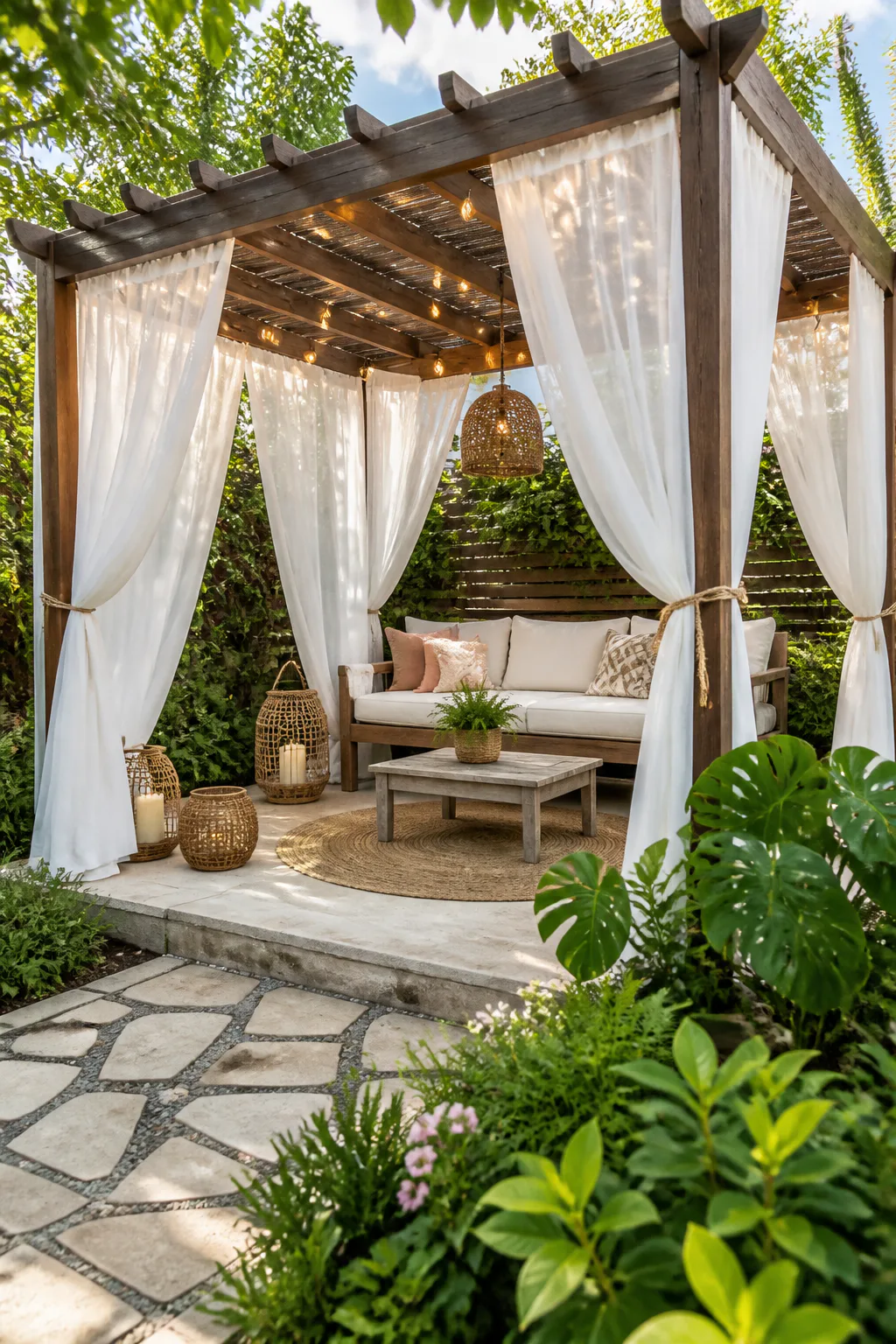
Sheer curtains and soft lighting can transform a pergola into an intimate outdoor retreat. Light fabric adds movement and a little separation from the rest of the garden, while string lights overhead create a welcoming glow in the evening. The combination suits a dining table, daybed, or comfortable lounge beneath the frame.
This idea works best when the curtains can move freely without blocking access or brushing against cooking equipment. Keep the styling simple: a few flowing panels, comfortable seating, and a small number of coordinated accessories can make the space feel like a cabana without overwhelming the garden.
Keep the setup practical
Use fabric that can handle outdoor use, or plan to take it down when the weather changes. Attach the lights securely and consider how the curtains will be tied back when you want an open view or more airflow.
- Hang sheer panels along selected sides of the pergola.
- Use tiebacks to keep fabric clear of entrances and seating.
- Weave outdoor-rated lights along the frame or overhead beams.
- Add cushions in colors that connect with the rest of the patio.
9. Set Up a Rustic Reclaimed-Wood Garden Bar
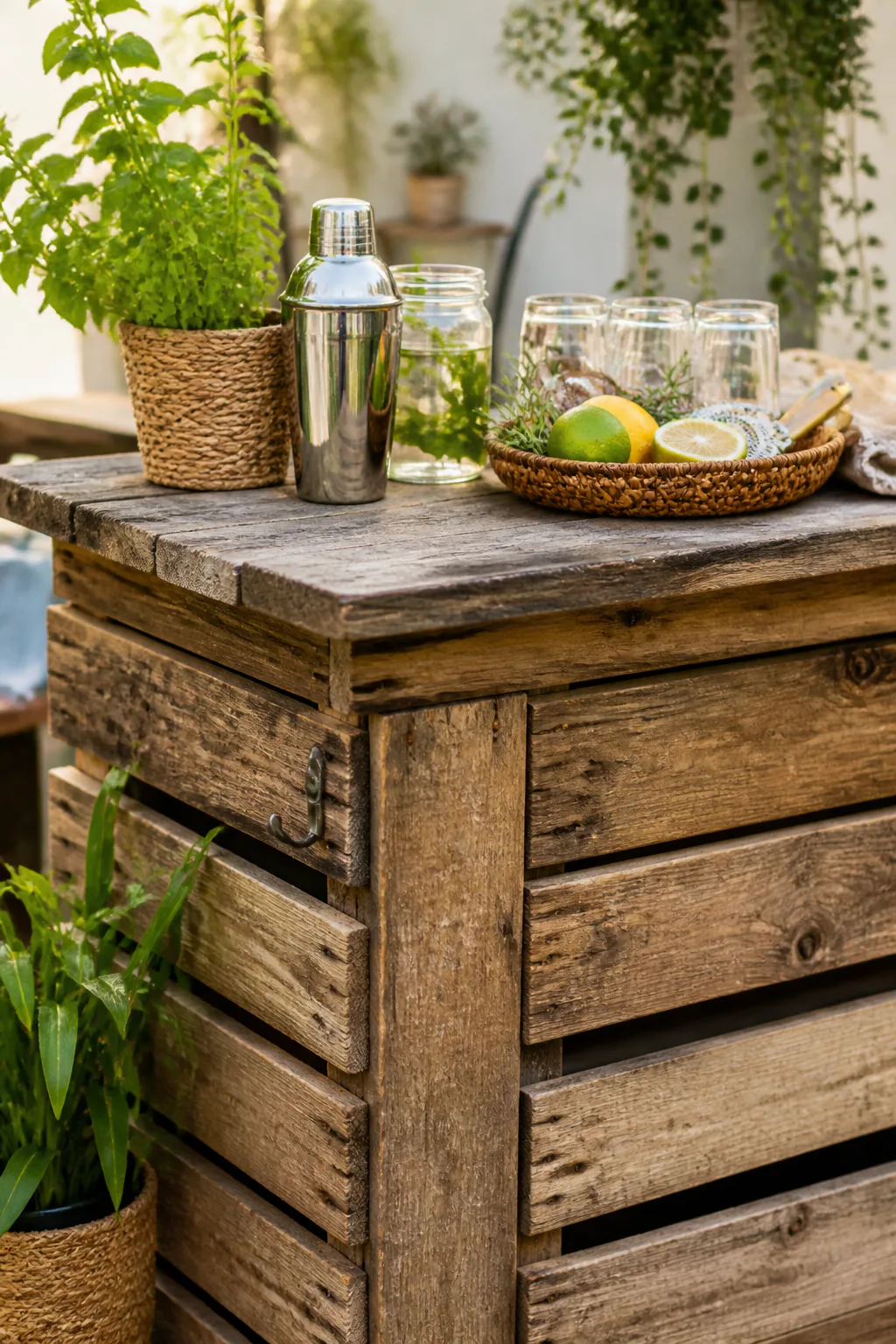
A simple garden bar makes entertaining feel casual and gives drinks and serving pieces a dedicated home. A reclaimed-wood counter or sturdy wooden crate can provide the base, with a few glasses and botanical ingredients ready for guests. Place it near a patio dining area or close to the garden lounge so people can help themselves.
The bar doesn’t need to be elaborate to feel useful. A compact surface and a little storage can be enough for a small gathering, while a larger counter may suit a spacious backyard. Keep the arrangement uncluttered and leave room to set down a jug or tray.
Style a useful serving station
Choose a level, stable surface and protect it from conditions that could damage the wood. Keep glassware and ingredients in a covered basket or indoors when the bar is not in use, especially if the area is exposed to rain or strong sun.
- Use reclaimed wood or a sturdy crate as the main feature.
- Keep frequently used glasses together in one safe spot.
- Add a small tray for garnishes, herbs, or serving tools.
- Decorate with one plant or lantern rather than crowding the counter.
10. Hang a Fringed Hammock Between Garden Trees

A hammock creates a clear invitation to slow down, making it a natural centerpiece for a laid-back garden. A fringed macramé style adds handmade texture, while striped canvas can bring a more graphic note. Hang it between sturdy trees or use a freestanding frame if the garden doesn’t have suitable anchor points.
Place the hammock where it feels restful but still fits the way the garden is used. A leafy corner offers a sense of retreat, while a spot beside a patio keeps the lounger close to other seating. Leave enough space around it to get in and out comfortably and to avoid blocking a path.
Choose a comfortable, secure spot
Follow the hammock or frame instructions for installation, and make sure the anchors are appropriate for the structure supporting them. Check the setup before each use, and consider a cushion or light throw for added comfort.
- Pick a location with enough clearance around the hammock.
- Choose a material suited to the weather and intended storage.
- Add a nearby stool for a book, drink, or folded blanket.
- Use a frame when tree placement is unsuitable.
11. Add Moroccan-Inspired Tiles to a Garden Path

Patterned tiles can turn a plain patio or path into an artistic feature. Moroccan-inspired motifs bring a sense of craft and color, while repeated shapes help guide the eye through the garden. A tiled area works well beneath a small table, at a doorway, or along a path that needs a stronger visual identity.
If replacing a surface isn’t practical, a stencil-painted finish can suggest the same patterned look on a suitable existing surface. Keep the design in proportion to the area: a bold pattern can be striking in a small zone, while a larger patio may benefit from a repeated motif with a calmer palette.
Choose a pattern that suits the space
Consider how the surface will be used and whether the finish is appropriate for outdoor conditions. Test a stencil in a small spot before committing to a full area, and coordinate its colors with nearby plants, furniture, and textiles.
- Use patterned tiles as a focused feature rather than everywhere.
- Choose colors that relate to the patio’s existing palette.
- Try a stencil finish when a full tile project isn’t suitable.
- Keep walking surfaces practical and easy to maintain.
12. Cover a Plain Boundary Wall with Climbing Plants

Climbing plants can soften a plain boundary wall and create a lush backdrop for outdoor seating. Jasmine, clematis, or ivy can add different kinds of foliage and visual texture, helping a hard surface feel more connected to the garden. The greenery also gives a patio a layered appearance without requiring large planters across the floor.
Before planting, consider the wall’s light, the available support, and how much space the climber may need. A trellis can guide growth and keep plants organized, while a container may be useful where planting directly into the ground isn’t an option. The right choice depends on the conditions and the care you can provide.
Guide growth along the wall
Give the plant a suitable support and check how it should be trained as it grows. Keep access to drains, windows, and other features in mind, and trim as needed so the greenery frames the space rather than taking it over.
- Match the plant to the wall’s sunlight and growing conditions.
- Add a trellis or other suitable support where needed.
- Use a large container if there is no planting bed nearby.
- Prune and guide growth to keep paths and features clear.
13. Install a Fold-Down Bar on a Small Balcony
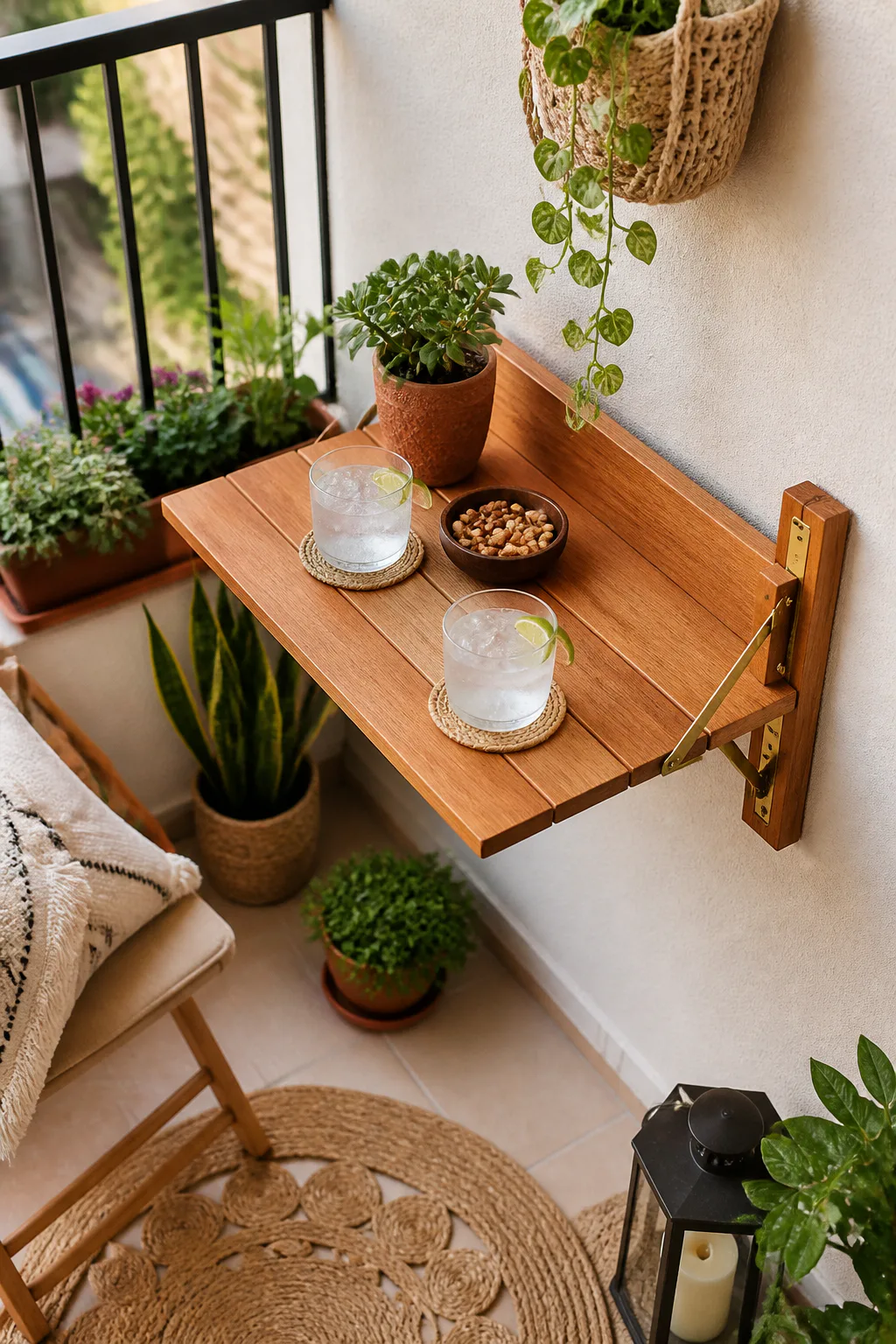
A fold-down shelf makes a small balcony more flexible by creating a surface only when you need one. It can work as a compact bar for a drink with a friend, a plant stand, or a coffee table beside a chair. When folded away, it helps keep the floor open for movement and other uses.
Choose a location that is comfortable to reach from the seating and doesn’t interfere with a door or walkway. A simple wooden finish suits a boho scheme, and nearby pots or a small lantern can help the shelf feel like part of the balcony rather than a purely practical fixture.
Make the small space work harder
Use a wall-mounted design that can be fixed securely to the surface, and follow the installation guidance for the shelf and wall type. Keep the items on top light and manageable, especially when the shelf is folded down over a narrow balcony.
- Measure the available wall space and folded-down clearance.
- Position the shelf near a chair but away from the doorway.
- Use it for a small tray, a few plants, or coffee essentials.
- Keep the surrounding floor clear for easy movement.
14. Create a Secluded Nook with Tall Garden Plants

Tall plants can shape a private-feeling retreat without building a solid screen. Ornamental grasses, bamboo, or large-leaf plants clustered in a corner add height and a sense of enclosure, making a chair or small bench feel tucked away. This is a useful way to give a broad patio a quieter zone or to soften an exposed balcony edge.
Think about the view from the seat as well as the view toward it. Place taller plants behind or beside the seating, leaving an opening that still feels welcoming. Combining different leaf shapes can add depth, while a few repeated pots help the cluster look intentional.
Shape a leafy hideaway
Choose plants that suit the light, available space, and local growing conditions. If you’re using containers, make sure they are stable and can drain properly; keep enough room to water and maintain the plants without moving all the furniture.
- Use height to screen one or two sides of the seating area.
- Combine different foliage shapes for a layered effect.
- Leave an open approach so the nook feels easy to enter.
- Add a chair, cushion, or lantern to make the spot inviting.
Final Thoughts
A boho garden comes together through thoughtful layers: comfortable places to sit, tactile materials, warm color, and greenery that makes the space feel alive. You can start with one small change, such as a patterned cushion, a lantern display, or a few plants along a blank wall, and build from there.
Choose ideas that fit your outdoor space and daily routine, rather than trying to use every look at once. With a few practical, personal touches, a balcony, patio, or backyard corner can become a relaxed place to gather, unwind, and enjoy the garden.



