

15 Cozy Single Dorm Room Ideas for a Comfortable, Clutter-Free Space
A single dorm room gives you the freedom to arrange your space around your own routines, whether you need a calm place to study, a soft spot to unwind, or a little extra room to move. The key is making each piece work hard without letting the room feel crowded.
These single dorm room ideas combine practical layouts, flexible seating, layered lighting, and storage that takes advantage of often-overlooked spots. Small changes—like shifting a bed or adding a shelf above a desk—can make the room feel more comfortable and easier to use.
Use the suggestions that fit your room’s furniture, rules, and available space. Before hanging or installing anything, check your residence hall’s guidelines, and choose removable or freestanding options when you need to avoid making marks on the walls.
1. Push the Bed into a Corner for Open Floor Space

Placing a Twin XL bed against two walls can free up valuable floor space in the center of a single dorm room. Instead of having to navigate around a bed positioned in the middle, you get a more open area for getting dressed, stretching, or moving between the door and desk.
This arrangement can also make the room feel more settled, especially if you soften the exposed bed side with pillows and a comfortable blanket. It works well when the bed is the largest piece of furniture and you want the remaining space to serve more than one purpose.
How to make the layout comfortable
Before moving furniture, consider where the outlets, windows, and closet are. Leave a clear path to the door, and make sure you can still reach anything you use daily. A narrow bedside surface or caddy can keep essentials nearby without taking up much floor area.
- Push the bed into the corner that blocks the fewest windows or storage areas.
- Keep a walking lane open between the entrance and your main furniture.
- Use pillows along the wall to create a comfortable backrest.
- Check whether the bed can be moved under your dorm’s furniture rules.
With the bed tucked neatly to one side, the open center becomes a useful feature rather than a leftover gap.
2. Anchor a Plush Rug in the Center

A soft area rug can make a dorm room feel warmer and more inviting, particularly when the floor is hard, plain, or showing signs of wear. Centering a rug in the open part of the room helps define a shared-use zone for relaxing, getting ready, or sitting with a friend.
The rug can also visually connect separate areas, such as the bed and desk, so the room feels more intentional. Choose a size that suits the available floor space: a rug that is too small may look like a bath mat, while one that is too large can interfere with doors or drawers.
Choosing and placing your rug
Measure the clear area before bringing a rug to campus, and check that it will not cover a vent or create a trip hazard. A low-pile option is often easier to vacuum and move around than a thick shag style.
- Place the rug where your feet land when you get out of bed.
- Use a rug pad if permitted to help prevent slipping.
- Pick a neutral or coordinating color that works with your bedding.
- Leave enough clearance for closet doors and desk chairs.
A well-placed rug adds comfort underfoot while giving the room a cozy central zone.
3. Add a Storage Ottoman for Flexible Seating

A storage ottoman is a compact piece that can earn its place in a small dorm room in several ways. Use it as a footrest while relaxing, a seat when a friend stops by, or a convenient spot to set a book or folded clothes.
Choose a model with a lift-off lid or a foldable design so it can also hide items you want close at hand but out of sight. It can be especially useful when a traditional chair would take up too much floor space or leave little room to move around.
Make the ottoman work harder
Think about where you will use it most before deciding on a size. A piece beside the bed can act like a small nightstand, while one near a floor lounge makes a comfortable place to put your feet. Keep the stored contents lightweight enough to access regularly.
- Store extra blankets, chargers, or small everyday items inside.
- Pick a fabric or color that complements your bedding and rug.
- Choose a lid that is easy to lift without shifting nearby furniture.
- Keep the top clear when you need an extra guest seat.
One flexible piece can reduce clutter while giving your room a comfortable place to sit.
4. Create a Floor Lounge in the Corner

A floor lounge gives you a relaxed place to read, listen to music, or take a break from your desk. Tucking a bean bag or cushioned floor lounger into a corner makes use of an area that might otherwise feel empty, while keeping the center of the room open.
This cozy zone is most useful when it feels distinct from your study space. A soft throw and a nearby lamp can make it inviting without requiring a bulky chair. If you sometimes host a friend, choose a seat that can be shifted easily when you need more floor space.
Shape a comfortable nook
Start with the seat, then add only a few supporting details so the corner does not become a pile of extra stuff. A small basket nearby can hold a blanket or book, and a cushion can make a firmer floor seat more comfortable.
- Set the lounge where it does not block a closet, window, or walkway.
- Choose a washable cover or a fabric that is easy to spot-clean.
- Add a throw for warmth and a quick layer of color.
- Keep a small surface or basket within reach for reading essentials.
A dedicated place to unwind helps the room feel like more than just a bed and a workspace.
5. Pair a Bedside Lamp with Warm String Lights
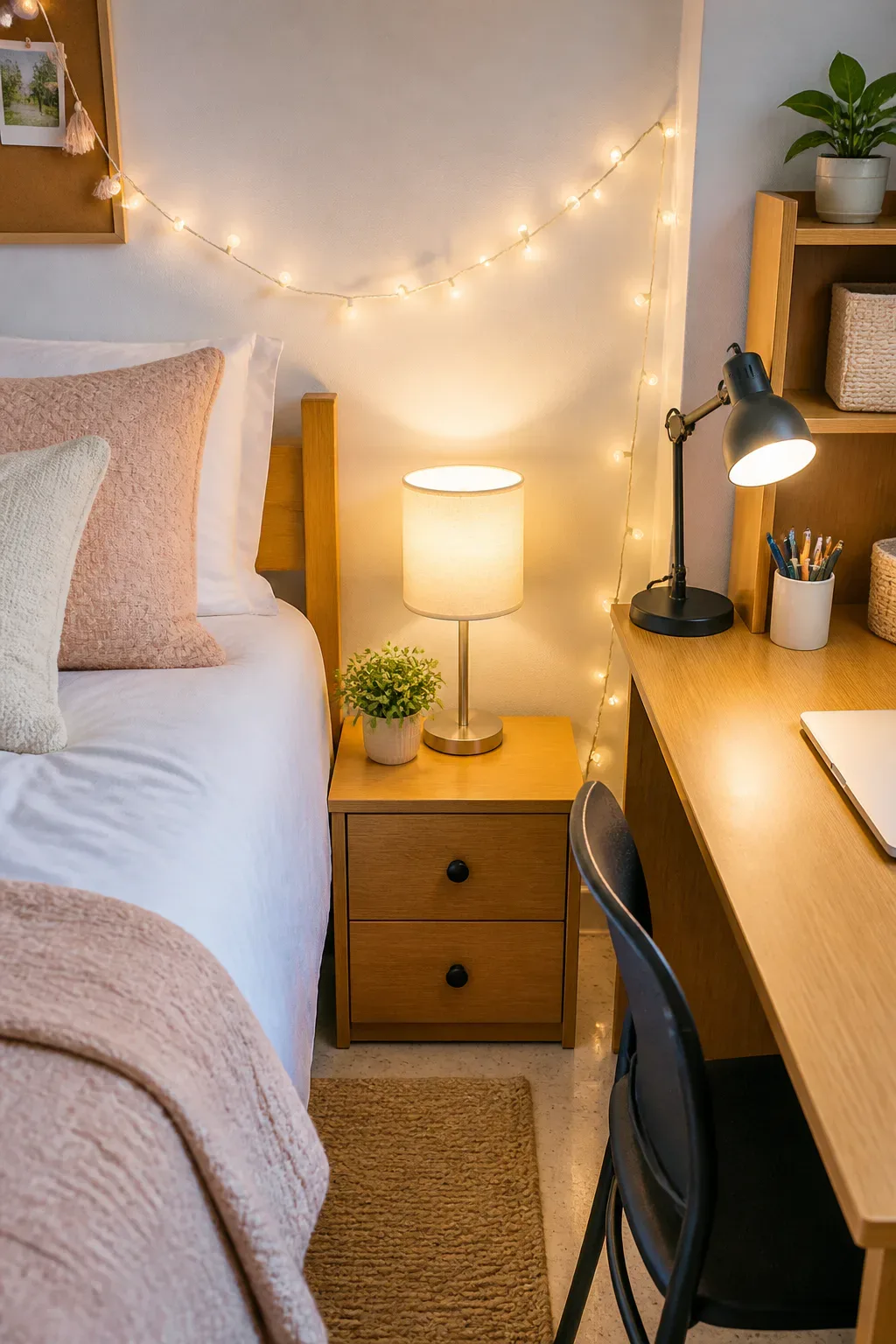
Layered lighting can make a dorm feel softer and more personal than relying on a single overhead fixture. A bedside lamp provides focused light for reading, while a desk lamp helps with homework and warm globe string lights add a gentle glow around the room.
Different sources let you adjust the mood to suit the moment. Use a brighter lamp when you need to find something or work, then rely on softer lighting when you are winding down. Keep cords tidy so they do not cross walkways or get tangled around furniture.
Build a practical lighting mix
Place each light where it serves a clear purpose rather than trying to illuminate every corner equally. Check your dorm’s rules about string lights and extension cords, and choose lighting that can be switched off easily when you leave or go to sleep.
- Put a bedside lamp within reach for reading or evening routines.
- Angle a desk lamp toward your work surface to reduce shadows.
- Use warm string lights as an accent, not your only light source.
- Secure cords neatly and follow residence hall safety guidelines.
A few well-positioned lights make the room more useful throughout the day and cozier at night.
6. Build a Textured Wall Display

A wall display can add personality and warmth without making a small room feel visually crowded. Try a considered arrangement of framed prints, a compact photo cluster, or a woven textile rather than covering a large area with a busy pattern.
Texture can do as much as color to make a space feel welcoming. Matte paper, simple frames, and woven fabric add variation while allowing your bedding and furniture to remain part of the overall look. A display above the bed or desk can also draw the eye upward and make the room feel more finished.
Arrange it with care
Lay out your pieces on the floor first to test the spacing and balance. Follow dorm rules for hanging items, and use approved removable methods if nails are not allowed. Leave enough breathing room around the arrangement so it reads as one intentional feature.
- Choose a small palette that repeats colors already in the room.
- Mix a few sizes or materials while keeping the layout simple.
- Use lightweight pieces and permitted hanging supplies.
- Keep displays clear of switches, vents, and desk task areas.
A thoughtful wall arrangement adds character while preserving a calm backdrop for daily life.
7. Lean a Full-Length Mirror with Hidden Storage

A full-length mirror is useful for getting ready, and its reflective surface can help a compact dorm room feel brighter. Positioning it where it catches natural light may make the space seem more open, while a cabinet-style mirror can provide discreet storage for jewelry and small accessories.
In a room without space for a separate jewelry box, the hidden compartments keep everyday pieces organized and easy to find. A leaning mirror can be convenient, but it should be placed securely and in a location where it will not block a door or become unstable when bumped.
Find a safe, useful spot
Check the mirror’s placement against your daily routine. A location near the closet can make outfit checks easier, while a spot opposite or beside a window may help bounce light around the room. Follow any dorm guidance on securing tall furniture or mirrors.
- Choose a stable location away from heavy foot traffic.
- Use the cabinet space for jewelry, hair accessories, or small items.
- Avoid placing the mirror where it blocks a closet or door swing.
- Keep the surrounding area clear enough to step back comfortably.
Combining a mirror with hidden storage adds everyday function without requiring another tabletop organizer.
8. Add a Vertical Bookshelf Above the Desk

A clamp-on or stackable desk hutch uses vertical space to keep books and supplies from spreading across your work surface. It creates extra room for notebooks, stationery, and a few personal details while leaving more of the desk clear for a laptop or assignments.
This solution is especially helpful when your desk is narrow or shared with several tasks. Keep the items you reach for most often on the lower shelves, and reserve higher or less accessible areas for things you use occasionally. A simple arrangement can make the whole work zone feel calmer.
Keep the desktop usable
Before adding a hutch, check the desk’s dimensions and the clearance above it. Choose a setup that feels stable and does not interfere with shelves, windows, or lighting. Avoid loading a compact unit with more weight than it is designed to hold.
- Sort books and supplies by how often you use them.
- Place heavy items low and lightweight decor higher up.
- Keep the main writing area clear for current work.
- Use small containers to stop pens and clips from scattering.
Going upward rather than outward helps your desk stay functional in a room with limited floor space.
9. Double Closet Space with a Second Rod

If your dorm closet has a single hanging bar, a second rod beneath it can create another level for shorter clothes. This can make more of the closet usable without adding a freestanding rack that takes up valuable floor space.
A hanging tension rod or closet extender works best when the upper bar is sturdy and the lower level has enough clearance. Use the extra space for items that fit comfortably, such as shirts or folded-over trousers, rather than forcing long garments into an arrangement that wrinkles them.
Set up a practical two-level closet
Sort your clothes before adding the rod so you know what needs to hang and what can be stored elsewhere. Leave room to move hangers easily, and make sure the lower rod does not interfere with shoes, drawers, or anything else at the closet floor.
- Hang shorter items on the lower rod to make the best use of space.
- Keep longer garments on the main bar where they can hang freely.
- Check the extender’s fit and stability before loading it.
- Use matching slim hangers to keep the closet easier to navigate.
A second hanging level makes a small closet more efficient without changing the room layout.
10. Slide Rolling Storage Bins Under the Bed

The space under a dorm bed is useful for items you need to keep but do not reach for every day. Rolling bins can hold off-season clothing, spare bedding, or bulk snacks while keeping those belongings off the floor and out of sight.
Choose containers that fit the bed’s clearance and can slide out without catching on nearby furniture. Clear bins make contents easy to identify, while fabric zip-up bags can be a good option for soft items. Group similar things together so the under-bed area does not become a jumble.
Organize the hidden space
Measure the height and depth available before choosing storage, especially if the bed frame is low. Leave a little room to pull each container out, and avoid storing anything that could be damaged by dust or by being compressed for a long time.
- Label bins by category, such as bedding or seasonal clothes.
- Use rolling containers for items you expect to access regularly.
- Store less-used belongings toward the back.
- Keep daily essentials somewhere easier to reach.
Well-organized under-bed storage keeps useful supplies close without taking over your visible space.
11. Turn the Door into a Pocket Organizer

The back of a room door can become useful storage for small essentials that otherwise end up scattered across a desk or dresser. A clear or canvas over-the-door organizer can hold shoes, toiletries, chargers, cleaning supplies, and other lightweight items in separate pockets.
This idea works well when drawers and shelves are limited, but the organizer should not interfere with the door opening or closing. Clear pockets make contents easy to spot, while fabric versions offer a softer look and keep items less visible from across the room.
Give each pocket a purpose
Group related items together so you can find what you need quickly. Keep heavier objects low to reduce strain on the hanger, and check whether your dorm allows over-the-door accessories or requires a specific kind of hook.
- Use one area for shoes and another for toiletries or hair supplies.
- Keep chargers and small accessories in separate pockets.
- Place lightweight cleaning items where they are easy to reach.
- Test the door’s full swing before filling the organizer.
Using the door for storage frees up shelves and makes small everyday items easier to manage.
12. Set Up a Cozy Coffee and Tea Cart
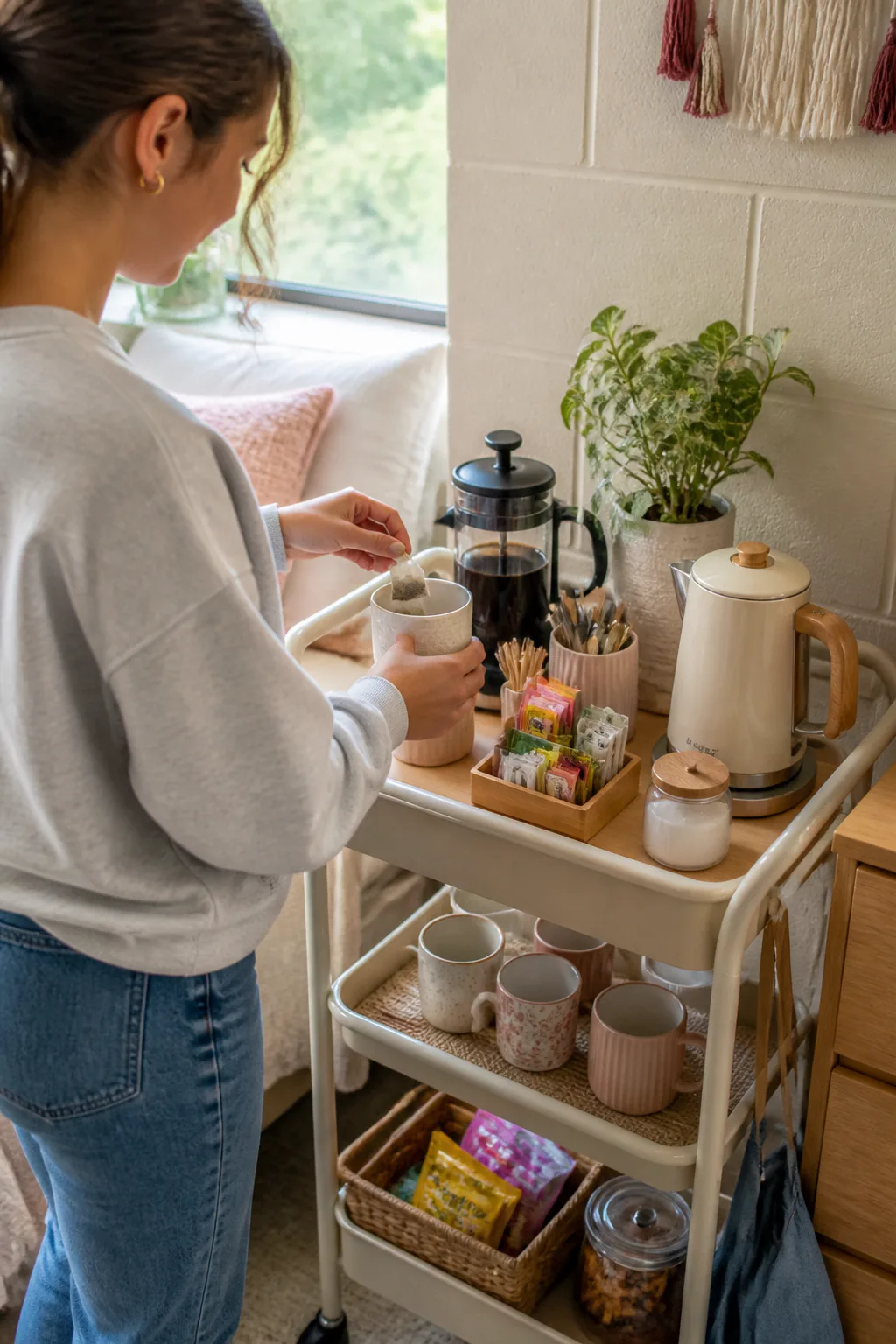
A small beverage station can make a dorm room feel more personal and convenient. Gather mugs, tea or coffee supplies, and snacks on a compact cart or a corner of your dresser to keep everything together rather than spread across the room.
Think of the setup as a tidy landing spot, not a full kitchen. Keep the surface uncluttered and make sure any appliances are permitted in your residence hall. If you have limited counter space, a rolling cart can be moved when you need access to other areas.
Keep the station simple and safe
Place the cart or dresser corner away from bedding, papers, and the busiest walking path. Store only the supplies you use regularly, and follow campus rules for electric kettles and other appliances. A small tray can help contain packets and keep the surface easy to wipe down.
- Arrange mugs and tea or coffee supplies together.
- Use a caddy or tray for snacks and small packets.
- Keep cords and hot appliances clear of clutter.
- Restock only what fits neatly on the station.
A compact beverage corner adds a welcoming touch while keeping your morning routine organized.
13. Hang a Bedside Caddy by the Pillow

A bedside caddy keeps nighttime essentials close when a traditional nightstand will not fit. A felt pocket that slips between the mattress and frame can hold a phone, book, glasses, or a charging cable without taking up floor space.
This is particularly handy for a lofted bed or a layout where the bed is pushed against a wall. A compact shelf can serve a similar purpose if your dorm permits the mounting method. Keep the contents light so the caddy stays secure and does not turn into an overflowing catchall.
Choose what belongs within reach
Think about what you actually use while in bed, and reserve the caddy for those items. Put heavier belongings elsewhere, and route any charging cord so it does not snag as you get in or out. A simple system makes it easier to keep the bedside area tidy.
- Store a phone, glasses, and one current book or notebook.
- Choose a caddy that fits the bed frame and mattress setup.
- Keep cords accessible but away from the walking path.
- Empty the pockets regularly to prevent clutter from building up.
A small bedside organizer gives everyday essentials a reliable home, even without room for a table.
14. Coordinate Bedding and Storage in Two Colors
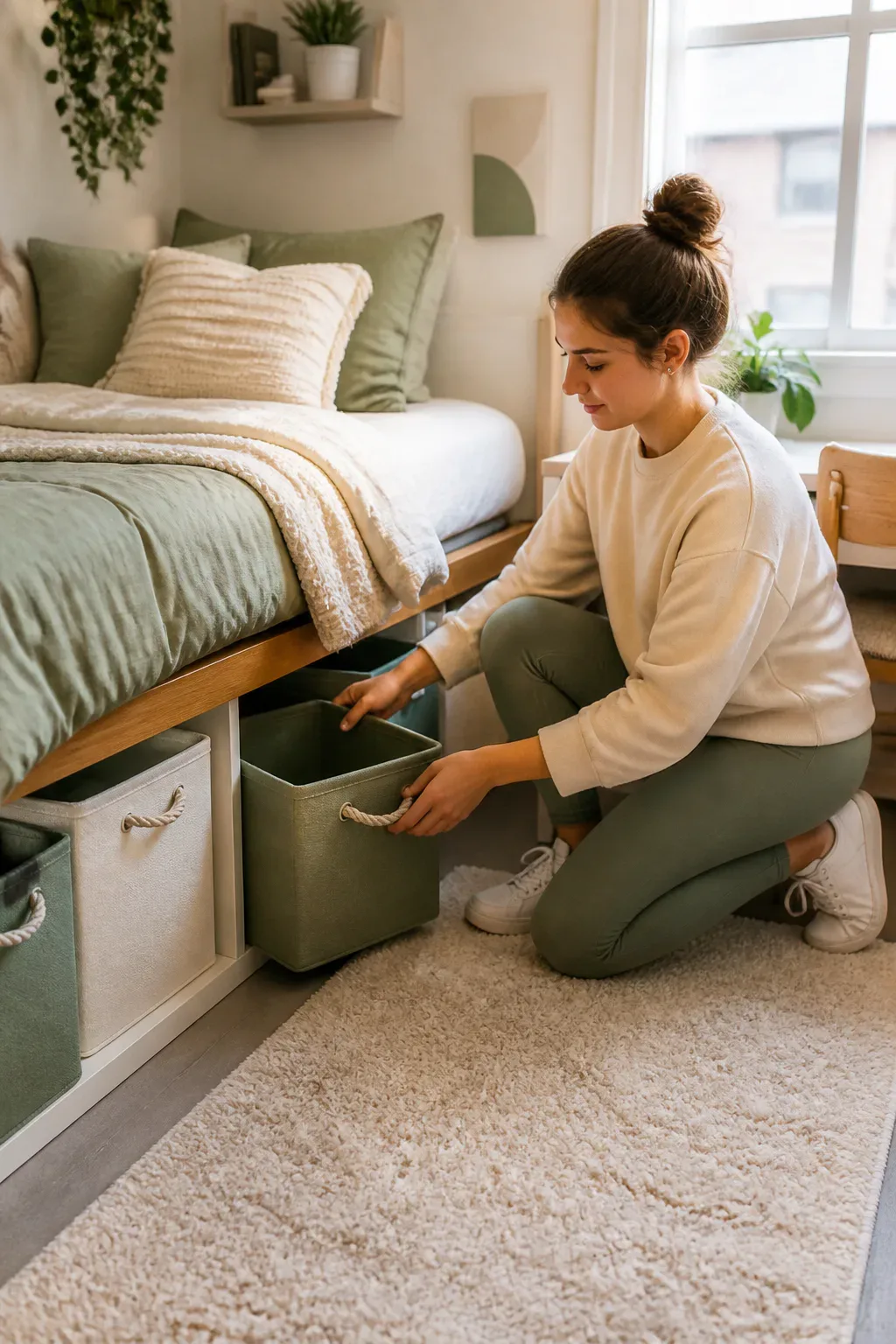
A simple two-color palette can make a small dorm room feel more pulled together. For example, sage and cream can create a soft, restful look, while navy and warm wood can feel grounded and classic. Repeating those colors in bedding, a rug, and storage bins helps different parts of the room feel connected.
You do not have to match every item exactly. Instead, use one color as the main backdrop and the second as an accent, leaving room for natural textures or a few personal details. A limited palette can also help the room feel calmer when furniture and storage are close together.
Repeat colors without overdoing it
Start with bedding as the largest color area, then echo the palette in a few smaller pieces. If you already own storage containers, use a throw, pillow, or desk accessory to bring them into the same visual scheme rather than replacing useful items.
- Choose two colors that feel comfortable to live with every day.
- Repeat them across bedding, rugs, and storage where practical.
- Add texture through woven fabric, wood, or a soft rug.
- Use a small accent color sparingly for contrast.
A consistent palette brings visual order to a room where every inch has a purpose.
15. Create a Desk-Side Memo Board

A cork or magnetic memo board above the desk gives schedules, reminders, photos, and ticket stubs a designated home. It keeps important notes visible without covering the desktop, and it lets you add personal details to the area where you already plan your day.
Keep the display useful as well as decorative. A board filled with outdated reminders can become visual noise, so leave some open space and refresh it as your classes and plans change. If wall mounting is restricted, consider a freestanding board or an approved removable hanging method.
Make the board easy to maintain
Organize the board by purpose, with current schedules or deadlines in the easiest-to-see area and personal keepsakes arranged around them. Use clips or magnets that hold papers securely, and make a habit of removing notes you no longer need.
- Pin up the current schedule and a short to-do list.
- Add a few photos or keepsakes for a personal touch.
- Leave open space so new reminders are easy to notice.
- Choose a mounting option that follows dorm guidelines.
A well-kept memo board turns your desk area into a practical planning spot that still feels like yours.
Final Thoughts
A cozy single dorm room comes together through choices that make everyday routines easier: a bed layout that opens the floor, storage that uses vertical and hidden space, and lighting and textures that soften the room. You do not need to use every idea; a few thoughtful changes can make a noticeable difference.
Start with the biggest challenge in your room, whether that is a crowded desk, a sparse closet, or a lack of comfortable seating. Then build around what you already own, keeping your layout practical and your details personal. The best dorm setup is one that feels welcoming and works for the way you live.



