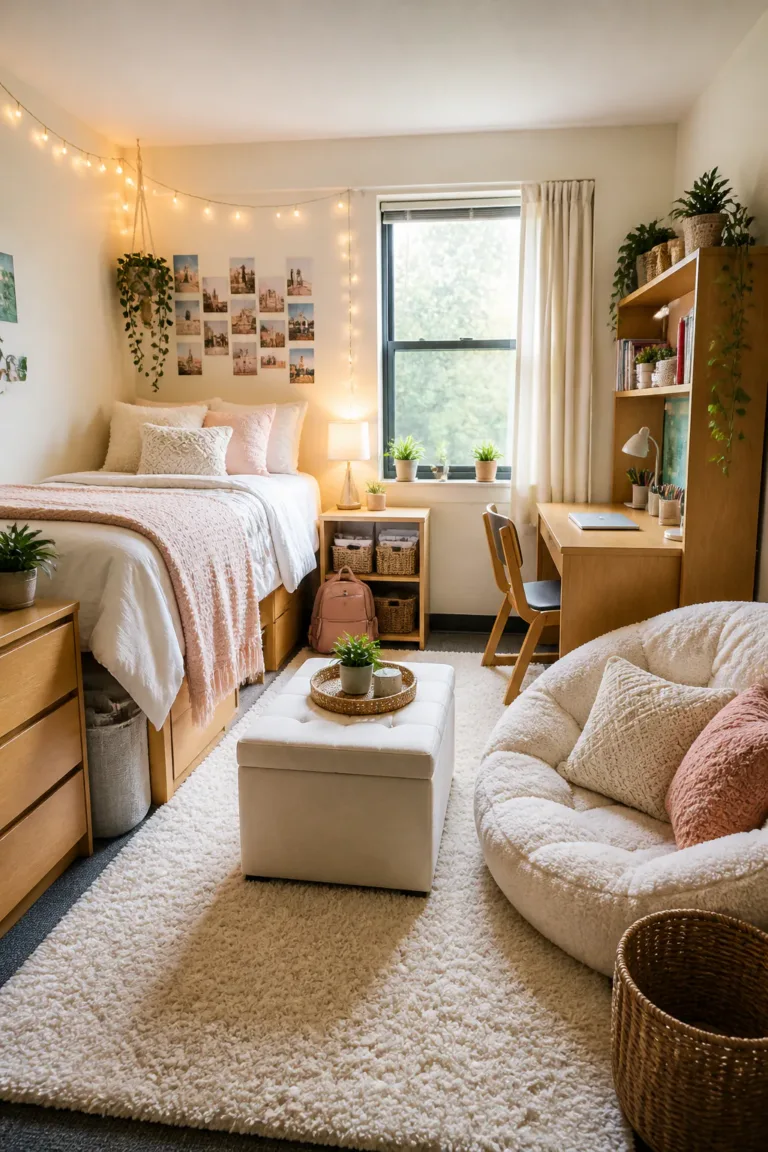
16 Clever Apartment Decorating Ideas for a Stylish, Functional Home
Apartment decorating works best when every choice adds either function, personality, or both. You don’t need a large floor plan to make a home feel considered; a thoughtful furniture layout, a little color, and a few meaningful details can make even a compact room feel like yours.
These ideas suit renters and homeowners alike, with a mix of flexible furniture, wall treatments, window ideas, and small finishing touches. Some can be done in an afternoon, while others are helpful when you’re planning a room refresh.
Start with the area that bothers you most or the detail you’re excited to change. Use the suggestions as a guide, adapting colors, scale, and materials to fit your space, existing furniture, and lease requirements.
1. Anchor Your Entry with a Lacquered Console

A compact entry can set the mood for your whole apartment, even if it’s only a short stretch of wall near the front door. A lacquered console in a deep color gives that spot presence, while its glossy finish catches available light and adds visual richness without needing a large piece of furniture.
Choose a console that leaves a comfortable path through the entry and doesn’t interfere with the door. In a narrow hallway, a slim profile is more useful than a wide cabinet. A tray or small dish on top gives keys a landing place, while a mirror or artwork above helps the arrangement feel intentional.
How to style the console
Keep the surface useful and edited so the bold finish remains the focus. Combine one practical landing spot with a few objects that add height or texture.
- Pick a color that connects to an accent elsewhere in the apartment.
- Use a tray to corral keys, mail, or sunglasses.
- Add a small lamp or vase if the surface has room.
The result is a welcoming first impression that earns its footprint.
2. Create a Small Living Room with Storage Ottomans

Storage ottomans make a small living room work harder without looking like a collection of utility pieces. They can serve as extra seating when friends visit, a footrest during a quiet evening, or a soft alternative to a coffee table when topped with a stable tray.
The hidden compartment is especially useful for everyday clutter that tends to gather in a shared space. Blankets, magazines, toys, or spare cushions can be put away quickly, leaving the room feeling calmer. Choose an ottoman that fits the sofa and still leaves enough room to walk around it.
Make one piece do several jobs
Think about what you need to store before choosing the size and opening style. A hinged lid keeps the top attached, while separate pieces can be moved around as seating.
- Match the upholstery to your sofa for a quiet, coordinated look.
- Choose a contrasting fabric to make the ottoman a focal point.
- Use a tray on top for drinks or small objects when it acts as a table.
- Leave a clear route between the ottoman and nearby furniture.
It’s a simple way to make a living area feel more flexible and less cluttered.
3. Fit an Extendable Table into a Dining Nook

A dining nook doesn’t need a permanently oversized table to accommodate occasional guests. An extendable table can stay compact for daily meals, then open up when you need more room. That flexibility is useful in an apartment where dining space may share a corner with the kitchen or living room.
Before choosing a table, measure the nook in both its closed and expanded configurations. Include the space needed to pull chairs out and move around them. A simple shape and light visual profile can help the dining area feel less crowded when the table is in everyday use.
Plan for both sizes
Consider how the table extends and where extra chairs will live when they’re not being used. The best arrangement is one that remains easy to navigate on ordinary days.
- Check the expanded footprint against nearby doors and walkways.
- Choose chairs that tuck neatly under the table.
- Keep a small serving surface nearby if counter space is limited.
- Use a pendant or wall art to give the nook a sense of its own zone.
A flexible table helps a small dining spot serve both everyday routines and shared meals.
4. Turn a Studio Corner into a Sleeper Sofa Lounge

A sleeper sofa can help a studio apartment feel like a living room by day and a guest space when needed. Placing it in a dedicated corner gives the room a clear place to relax, rather than letting the bed define the entire layout. A rug, lamp, or side table can make the lounge feel like a distinct zone.
Comfort and clearance matter as much as appearance. Check how far the sofa opens and whether it blocks a doorway, storage, or the main walking path. If the room is tight, keep nearby furniture light and easy to move so converting the sofa doesn’t become a complicated rearrangement.
Keep the lounge inviting
Layer in the familiar comforts of a living area, but avoid crowding the sofa with bulky pieces. A nearby place for a book, drink, or lamp makes the setup feel complete.
- Measure the sofa both folded and fully opened.
- Choose bedding that can be stored close by.
- Use a small side table that can move when guests stay over.
- Define the corner with a rug or a focused light source.
This setup gives a studio a more versatile rhythm without adding a separate guest bed.
5. Build a Vertical Plant and Book Display

Floating shelves draw the eye upward and create display space without using valuable floor area. In an apartment, that makes them useful for books, small plants, framed art, and collected objects that might otherwise crowd a table. A vertical arrangement can also help a blank wall feel more connected to the rest of the room.
Choose a wall where the shelves won’t interrupt doors, windows, or daily movement. In a living room, they can sit near a reading chair or sofa; in a kitchen, they might hold a few cookbooks and small decorative pieces. Keep the display varied but not overloaded so it feels airy rather than like extra storage spilling into view.
Arrange shelves with balance
Mix different heights and shapes, leaving some open space between objects. Plants add softness, while books and framed pieces create structure.
- Confirm the wall and mounting hardware can support the intended load.
- Place heavier books lower and lighter objects higher.
- Use trailing plants where their leaves won’t block a walkway.
- Repeat one or two colors to make the display feel cohesive.
Going vertical keeps the floor clear while giving favorite things a place to be seen.
6. Separate Your Studio with Two Zoned Rugs

In an open-plan studio, rugs can suggest where one activity ends and another begins. A rug under the sofa and coffee table establishes a living area, while a second rug near the bed helps the sleeping zone feel separate. The boundary is visual rather than physical, so the room stays open and easy to move through.
To make the arrangement feel connected, choose rugs that relate in color or texture without necessarily matching. Their placement matters: the living room rug should anchor the furniture, while the bedroom rug can sit beside or partly beneath the bed. Avoid sizes that leave every piece of furniture stranded around the edges.
Use rugs to define, not divide
Think of each rug as a soft outline around a purpose. Keep enough exposed floor between the zones for a clear transition, especially near the main route through the studio.
- Measure furniture groupings before selecting rug dimensions.
- Repeat a color or pattern detail across both zones.
- Use a rug pad to help prevent slipping.
- Choose low-pile options where chairs or doors need to move easily.
Two rugs can bring order to a studio without making it feel boxed in.
7. Warm a Bedroom with Woven Bamboo Blinds

Light-toned woven bamboo blinds bring natural texture to a bedroom and soften the look of a plain window. Their woven surface filters daylight into a gentle glow, which can make the room feel warmer without relying on additional color or pattern. They work especially well with simple bedding, wood furniture, and relaxed neutral palettes.
Consider how much privacy and light control you need before settling on a style. A woven blind can be layered with a lining or curtains if you want more coverage, while a lighter treatment may suit a window where privacy is less of a concern. Measure carefully so the blind fits the window and operates comfortably.
Make the texture part of the room
Let the blinds add an organic note, then echo that feeling with a few natural materials elsewhere. Keep surrounding decor simple enough that the window remains a calm focal point.
- Choose a tone that complements the bedroom’s wood finishes.
- Check how the material filters light at different times of day.
- Add curtains if you want softer edges or more privacy.
- Keep nearby patterns restrained to avoid visual competition.
The result is a bedroom window that feels warm, layered, and restful.
8. Layer Drapes over Relaxed Roman Shades

Pairing drapes with relaxed Roman shades gives an apartment window a fuller, more tailored appearance. The Roman shade offers a neat fabric layer across the glass, while drapes frame the sides and add softness. Together, they can make an ordinary window feel more finished without changing the architecture.
For a cohesive look, select fabrics that share a color family or a subtle texture. The shade can be a quiet base, with drapes adding a little contrast, or both layers can be close in tone for a calm effect. Make sure the treatment still suits the window’s everyday needs, including access to handles and the amount of light you want.
Layer with proportion in mind
Mount the drapery hardware high enough to give the window a lifted appearance, while ensuring the panels don’t overwhelm the wall. A relaxed shade should fold naturally rather than appear stiff.
- Use a simple shade fabric if the drapes have a noticeable pattern.
- Choose panels that can open without covering too much glass.
- Repeat the window treatment color in pillows or bedding.
This combination adds softness and a more considered finish to a rental or owned home.
9. Make a Window Feel Larger with a Mirror

A decorative mirror placed opposite a living room window can reflect daylight deeper into the apartment. It also gives the eye another view across the room, which may make a compact space feel more open. The effect depends on what the mirror reflects, so consider the view from the sofa and entry before choosing its location.
A mirror can function as wall art as well as a light-enhancing detail. An interesting frame adds character, while a simple shape keeps the focus on the reflected light. In a small room, one well-placed mirror often feels more intentional than several scattered reflective accents.
Find the right angle
Try the mirror in a few positions before securing it. Aim to reflect daylight or an attractive part of the room rather than a cluttered corner or an awkward sightline.
- Place it across from or at an angle to the window.
- Choose a scale that suits the wall and nearby furniture.
- Check the reflection while seated as well as standing.
- Secure the mirror with hardware appropriate to its weight and wall.
Used thoughtfully, a mirror adds brightness while giving a living room a stronger focal point.
10. Style a Sofa Wall with Oversized Photography

One large photograph above a sofa can make a stronger statement than a cluster of small prints. Nature imagery, a travel scene, or a lifestyle photograph gives the wall a clear focal point and helps anchor the seating area. It’s a practical approach when a gallery wall feels too busy for a compact room.
Scale is important: a piece that is too small can look lost above the sofa, while one that is too large may crowd the surrounding wall. Consider the sofa’s width and the height of the ceiling, then choose an image whose colors work with the upholstery and other accents. The photograph doesn’t need to match everything, but a visual connection helps the room feel composed.
Hang it with the sofa in mind
Center the artwork over the furniture rather than treating the entire wall as the reference point. Leave breathing room around the frame so it remains easy to appreciate.
- Use a mat or frame to give the image a finished edge.
- Echo one color from the photograph in a cushion or throw.
- Keep nearby wall decor minimal to preserve the focal point.
A single oversized image can bring personality and balance to the living room.
11. Create a Plate Display in the Kitchen

A collection of colorful or vintage wall plates can bring warmth and character to a kitchen nook. Plates introduce pattern and shape in a way that feels collected, especially when their designs vary but share a few colors. They can also make an unused wall feel connected to the everyday rituals of cooking and eating.
Arrange the plates in a compact cluster above a breakfast table, bench, or small stretch of counter wall. Before hanging anything, lay out the arrangement on the floor or trace the shapes on paper to test the spacing. A tight composition usually looks more deliberate than plates scattered across a wide area.
Build a balanced arrangement
Mix a few different sizes and motifs, then let one or two pieces provide visual anchors. Use display hangers or mounting methods suited to the plates and the wall surface.
- Repeat colors that already appear in the kitchen.
- Vary plate sizes while keeping the overall cluster contained.
- Test the layout before making holes in the wall.
- Keep the display clear of areas where plates may be bumped.
The finished grouping adds a personal, collected touch without taking up counter space.
12. Add a Peel-and-Stick Wallpaper Accent Wall

Peel-and-stick wallpaper gives a rental bedroom or living area a chance to take on pattern without committing to a permanent wall treatment. A single accent wall can add color and depth behind a bed, sofa, or dining nook, while leaving the rest of the room calm. It’s a useful option when paint isn’t allowed or you want a change that can be removed later.
Choose a wall that naturally draws attention, and consider how the pattern will relate to furniture and textiles. Large-scale motifs can feel bold, while smaller patterns may create a softer backdrop. Always review the product’s removal guidance and test it in an inconspicuous spot, since wall finishes and materials can respond differently.
Prepare before applying
A clean, smooth surface makes it easier to align the panels and achieve a neat result. Take your time around corners, outlets, and trim rather than stretching the material to force a fit.
- Measure the wall and plan where pattern repeats will fall.
- Check that the wall surface is suitable for removable wallpaper.
- Start with a level reference line for the first panel.
- Keep extra material for careful trimming and future repairs.
A focused wallpaper moment can personalize a room while keeping the rest of the apartment adaptable.
13. Drape an Heirloom Blanket over the Sofa

A vintage-inspired geometric or plaid wool blanket adds softness and a sense of history to a living room. Draped across the sofa back, it can make a simple piece feel more layered and personal. This is also a practical way to keep a favorite textile visible instead of folded away in a closet.
Let the blanket’s colors guide a few smaller choices around the room, such as a cushion or a ceramic accent. If the pattern is strong, balance it with quieter upholstery and simpler decor. A relaxed drape feels welcoming, but a deliberate fold over one arm can suit a tidier arrangement.
Show the textile without hiding the sofa
Arrange the blanket so its pattern is visible while leaving enough seating space. Natural folds add texture, and a small adjustment can make the display feel effortless rather than overly arranged.
- Choose a blanket with colors that sit comfortably beside the sofa.
- Fold it lengthwise for a neat line along the back or arm.
- Use a contrasting cushion to pick up one shade in the pattern.
A well-loved textile makes the room feel more individual and comfortable.
14. Give a Plain Wall a Vintage Frame Treatment

Substantial antique-style frames can give a plain apartment wall depth and character. Their carved edges and warm finishes make even a simple print or photograph feel more considered. A single bold frame works as a focal point, while a small grouping can add the collected feeling of a personal gallery.
Frames don’t need to be genuine antiques to bring this effect. Look for shapes and finishes that suit your furniture, whether that means dark wood, a worn gold tone, or a painted finish. In a rental, leaning a large framed piece on a sturdy shelf can be an alternative to putting several holes in the wall.
Make ornate frames feel at home
Give detailed frames enough space to stand out, and keep the artwork inside them simple if the frame is especially decorative. Repeating a finish elsewhere in the room helps the look feel connected.
- Choose a frame size that suits the wall and nearby furniture.
- Pair ornate edges with a clean, uncluttered image.
- Mix frame shapes carefully, keeping a shared color or finish.
- Use secure hanging hardware or a stable surface for larger pieces.
This small change brings texture and a sense of history to an otherwise simple wall.
15. Refresh Rental Cabinets with Wooden Knobs

Swapping generic cabinet or dresser hardware for wooden knobs is a small update with a noticeable tactile effect. Square or rectangular shapes add a little architectural character, while the natural grain can soften plain cabinetry. It’s an easy detail to consider when a rental’s existing cabinets are functional but feel impersonal.
Before making the change, check your lease and store the original hardware in a labeled bag so it can be reinstalled later. Measure the existing holes and compare them with the replacement knobs; matching the current setup helps avoid extra drilling. A consistent finish across a run of cabinets creates a more intentional look.
Choose hardware that fits the furniture
Think about both appearance and daily use. Knobs should feel comfortable to grasp and suit the scale of the cabinet fronts, rather than looking oversized or awkwardly small.
- Measure hole spacing and knob dimensions before purchasing.
- Choose a wood tone that complements nearby furniture or flooring.
- Keep the original hardware safe for a future move-out.
- Tighten each knob securely without overtightening the fastener.
It’s a low-commitment way to add warmth to a frequently used surface.
16. Style an Apartment Shelf with Whimsical Ceramics

A playful ceramic accent, such as a swan-shaped object or bookend, brings an unexpected note to a bookshelf or console. Whimsical pieces help a room feel personal and relaxed, especially when most of the surrounding decor is practical or neutral. One small surprise can make a familiar shelf feel newly arranged.
Place the ceramic where its shape can be seen, rather than wedging it between objects. On a bookshelf, it can support a short row of books or sit beside a framed photograph. On a console, give it space next to a tray or lamp so the display feels playful but not crowded.
Give a quirky piece room to shine
Balance the accent with books, natural materials, or simple shapes. If you have several playful objects, group a few together rather than scattering them across every surface.
- Choose a piece that connects to your colors or interests.
- Use bookends to combine function with personality.
- Vary object heights to make the shelf arrangement more lively.
- Leave a little open space around the ceramic.
A whimsical detail adds charm without requiring a full room makeover.
Final Thoughts
The most effective apartment decorating ideas make a room feel more like you while respecting the space you have. Flexible furniture can support everyday routines, while rugs, mirrors, window treatments, and artwork help define a room without major renovation.
You don’t have to tackle all sixteen ideas at once. Pick one practical change and one personal detail, then notice how they affect the room before adding more. Small, thoughtful choices can gradually turn an apartment into a home that feels welcoming, functional, and distinctly yours.